
茶 FIRST IMPRESSIONS
茶 REVIEW OF BOOKS & FILMS
[REVIEW] “Tammy Lai-Ming Ho’s If I Do Not Reply Is Poetry, Gentle Irony and Defiance” by Cyril Camus
Click HERE to read all entries in Cha
on If I Do Not Reply.
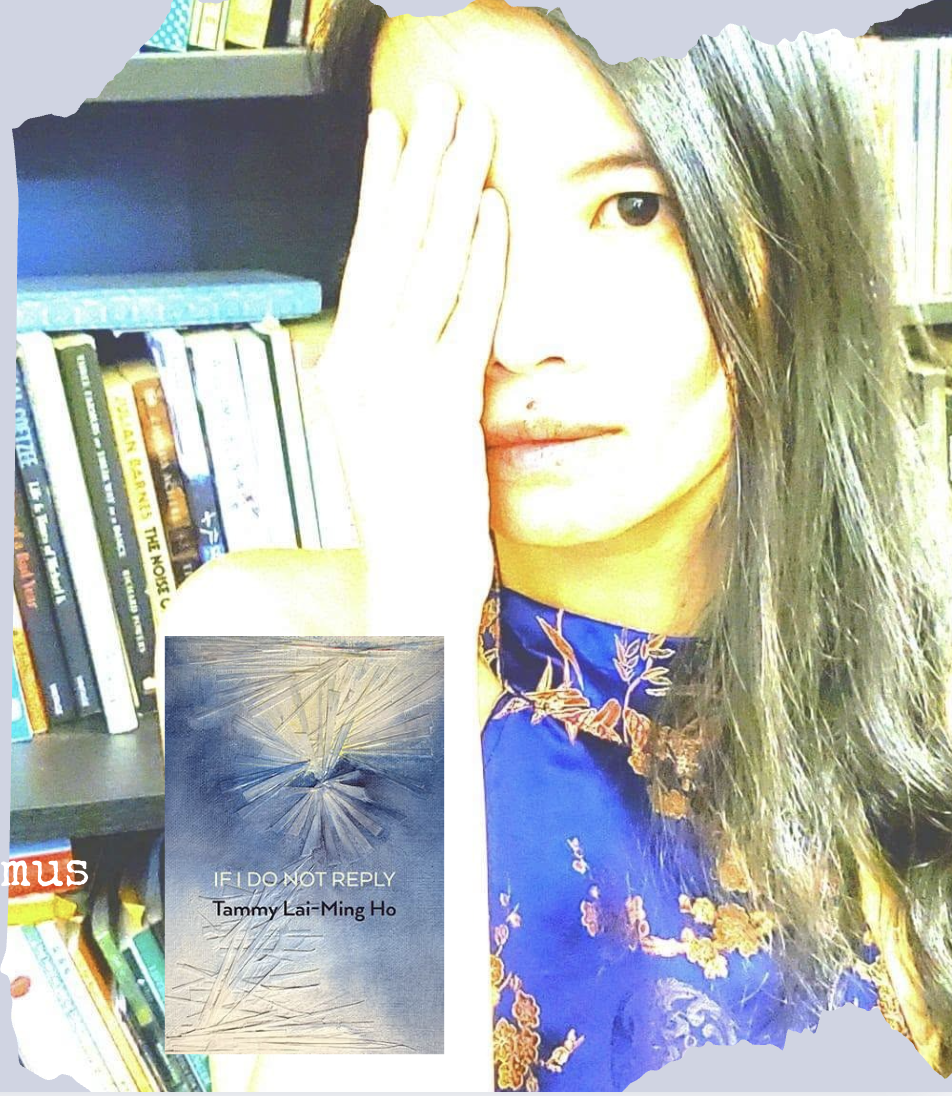
Tammy Lai-Ming Ho, If I Do Not Reply, Shearsman Books, 2024. 110 pgs.

Tammy Ho in Chicago, November 2024
Tammy Lai-Ming Ho’s “Poem with Cantonese Sight Rhymes” is not merely about the reality to which its words refer. As a poem, it is concerned, more than most forms of writing, with the careful choice and connection of words. More specifically, the title refers to the poem’s structure, built around pairs of English words whose Cantonese counterparts are characters that echo one another visually (as cogently explained by Lucas Klein in his chapter on “Sinophone Poetry, Global English, and Translational Poetics” in Brill’s Mother Tongues and Other Tongues: Creating and Translating Sinophone Poetry).
Yet, reading this 2021 poem now (September 2026), as the author has relocated to Europe and the grip of the mainland’s tyrannical regime has become impossible to overlook in Hong Kong, especially since the young activist Joshua Wong, who played such a prominent part in the 2014 Umbrella Revolution, has just pleaded guilty to “colluding with foreign entities” (on the very day I am beginning this review), I cannot help finding the following lines distressingly prescient:
I’m afraid of the faint beating
of the heart of home, now loud
only in our vivid memory. Those calligraphied
banners wielded by marchers
are now objects of terror. (p. 22)
The fact that the “beating of the heart of home” is “faint” and “loud only in […] vivid memory” refers to the loss of democracy and freedom in a Hong Kong increasingly aligned with the mainland, but may now also be read as expressing the homesickness of exile, even though that could not have been Ho’s intention when she wrote it (in August 2021), because she was not yet in that situation. As for the marchers’ “calligraphied banners” becoming “objects of terror”, this could not have referred to the latest depressing development, but it already prefigured it by invoking previous instances of the gradual erosion of political freedom in Hong Kong, such as the 2020 National Security Law, which made it possible to indict Wong for that specifically Orwellian and vaguely defined crime of “colluding with foreign entities”.

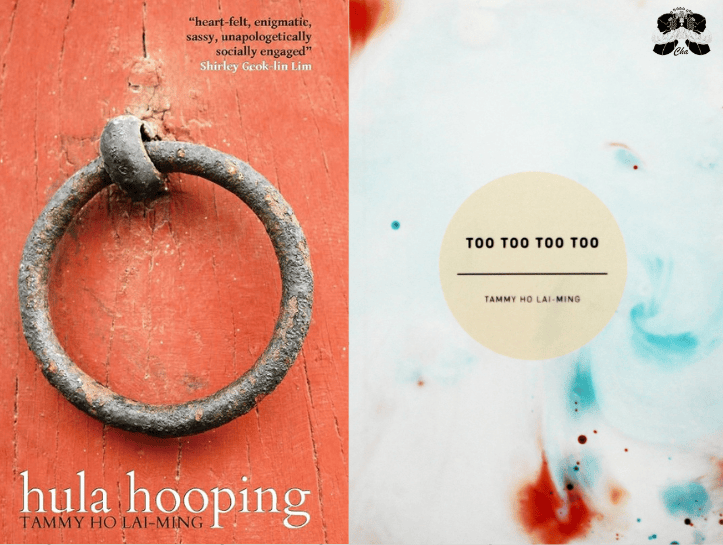
The poem lends its title to the first of four parts of If I Do Not Reply (2024), Tammy Lai-Ming Ho’s third poetry-only collection, after Hula Hooping (2015) and Too Too Too Too (2018). This part comprises pieces that often share with “Poem with Cantonese Sight Rhymes” an evident delight in witty, playful conceits and verbal experimentation. One is literally a “Love Poem with Typos”, in which the substitution of paronyms for more obvious words produces cleverly surrealistic phrases such as “sweat note”, “fail out of love” or “it is immortal to be teaching such early glasses”. Another, called “Sometimes a Poem”, is a metapoem that seeks to define what makes poetry so elusive and uncertain a form. Another metapoem, entitled “Scared”, explains part of the book’s typographical layout by attributing a feeling to the poems: they are “scared”.
Yet now and then, as in the title poem, those seemingly light-hearted clusters of wordplay reveal an undercurrent of righteous anger at the disastrous changes inflicted in recent years on Ho’s native Hong Kong, and a frustrated desire to find a way to act against those harmful tides of history. They do so through a few words that point to the serious political concerns beneath this agreeable, clever verbal whimsy, or, at the very least, a concern with defying norms.
Thus, “Sometimes a Poem” briefly discusses the degree of subversiveness a poem strives to achieve, or whether subversion is its aim at all. Its immediate successor, “In Some Cases Only”, takes the form of a list of “facts” that can be true “in some cases only”, and while most of them concern the ordinary matters of everyday life (“Planning for tomorrow’s trip follows weather forecast”, “A person loves you back with the intensity you desire”, “a coffee cup ring on a page signifies attentive reading”), while at least one is, again, somewhat metapoetic (“Adding a stanza to a poem improves it”), there is one line that could, if decontextualised, be seen as a broad philosophical statement, but which, caught as it is in the middle of one of Ho’s seemingly playful poems, reads as a melancholy but level-headed assessment of the situation in Hong Kong on the one hand, and of the struggle against tyranny and oppression more generally: “Rebelliousness changes politics” (this, after all, is one of the things that happens “In Some Cases Only”).

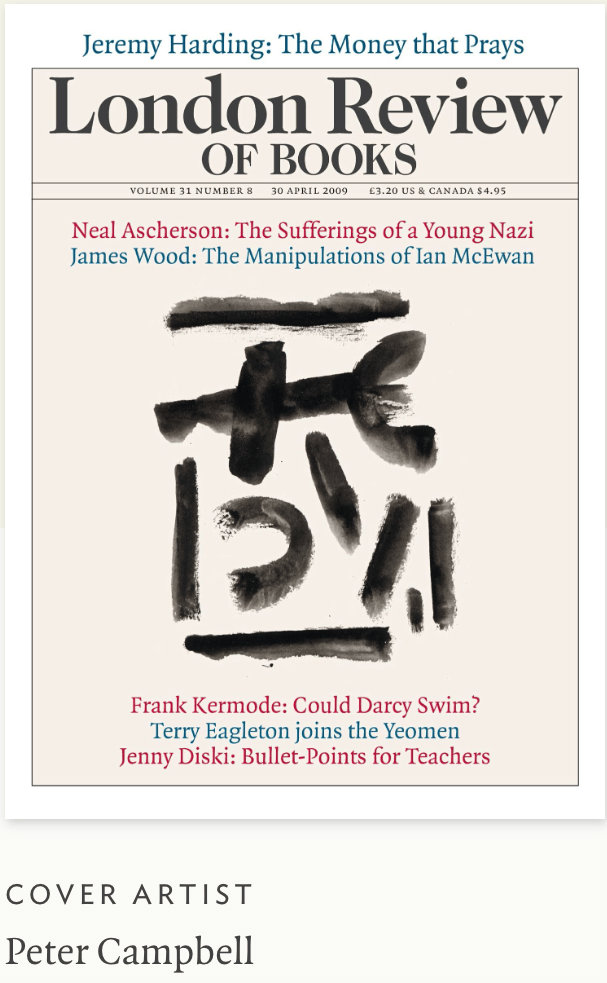
The cover of the 30 April 2009 issue of the London Review of Books (Vol. 31, No. 8), one of the inspirations for Ho’s poem “Here’s a Mahjong Table”.
The second part of the collection, “Here’s a Mahjong Table”, forms a markedly different group. For one thing, its poems are in prose, and they seem to offer a succession of impressions, snapshots and reflections on disparate subjects, from arrangements to save a university library’s books from disposal, to Percival Lowell’s misconceptions about the planet Venus, to the author’s musings on whether all other Sinophones see, as she does, tentative Chinese characters in abstract images. One poem is a selection of “Potential Last Words”. It includes amusingly logical examples such as “Have I been trying hard?”, “Should I have regrets?” or “Don’t put me in an urn”; more fanciful or unexpected ones such as “You really dislike potatoes?”; or even Charles Foster Kane’s famous final single word. These poems do not contain explicit references to politics, oppression, tyranny or an insurgent frame of mind (although I wonder: one sentence among the “Potential Last Words” is “They did everything to keep us asleep”), but there is one common thread that brings us back to the main theme and concrete entity whose trials fuel Ho’s political consciousness and insurgency, as well as many of the emotions, personal stories, memories and dreams chronicled in her poetry: references to “the city”, “my city” or “a city”, which one can only assume to be Hong Kong, are methodically distributed throughout most of the poems in this second part: “In my city which is a city of shame” in “I Just Don’t Understand Art”; “All cities by definition are lonely, their people steeped in a deep-rooted layer of sadness” and “in this city, mine, the burdens of history, money, betrayal, power and choked air are too great” (this one does have some very clear political undertones, or indeed overtones) in “Loneliness in the City”; “a city is ruined only when a certain percentage of its physical appearance is no longer recognisable” in “Measures”; “Is the city getting better?” in “Potential Last Words”; and “An invisible and unwanted timeline for this city, like mysterious corpses, washes up in the harbour” in “On the Day of the Eclipse”. While all of these allude to Ho’s native and beleaguered city, “Saved from the Stacks”, the poem about the university library’s books, explicitly references it.
Thus, the Fragrant City is established early in the collection as a pervasive presence, whether in the form of direct evocations of distressing events unfolding there, or in the more elusive figure of “the city” that looms in the background of some of the most seemingly unrelated poems. As Hannah Steurer points out in her own illuminating review of the collection, the poems in If I Do Not Reply are emphatically a “record [of] [Ho’s] experiences and observations in urban space each day”, created during a period of intense upheaval (“during the 2019 protests, with some written during the later lockdown period”) and intended to be read as a record of their time (“these daily notes [are] often “signed” with the date on which they were first written”), which leads Steurer to see the collection primarily as a “lyric archive”, that is, “a subjectively constituted, formally shaped record that transforms personal observation into collective testimony”.

This dimension as a record of those troubled times is perhaps most evident in the third part of the collection, entitled “Are You Becoming Critically Endangered?”, a part that is obviously meant to be the very core of the book, since it contains 32 poems (while the other three comprise 9, 12 and 16 respectively), and it also includes the collection’s title poem.
Upon entering this third stage of the poetic journey offered by Tammy Lai-Ming Ho, the semantic field of political violence becomes omnipresent, be it the dauntless but unnerving vocabulary of rioting or the merciless, bone-chilling, sadistic language of repression. The first poem, “Begins Mid-May”, already quotes Carrie Lam’s out-of-touch depiction of the 2019 anti-government protests (“unforgivable havoc”) when she apologised to businesses for igniting the unrest with her bill to allow extradition to the mainland, and includes the line “Chinese calligraphy meets full-gear missions”, which I take to be a description of preparations for protest, with “Chinese calligraphy” referring to signs and slogans (the latter also being explicitly mentioned two stanzas later) and the warlike phrase “full-gear missions” referring to the personal protective equipment protesters are often forced to wear in the face of the repressive apparatus deployed by the authorities, including such dangerous weaponry as tear gas or rubber bullets, at best. An echo of those two same ideas occurs five pieces later, in the prose poem “Doubtless” (“Doubtless a people are propelled to be creative with words and images when so much of their protective gear is homemade”). Despite the prospect of violent confrontation with ruthless authorities, the end of “Begins Mid-May” still sounds uplifting, combative, perhaps even anticipatory of eventual victory:
[…] enough
light comes through. Enough hope.
We continue to be with this city.
(p. 39)
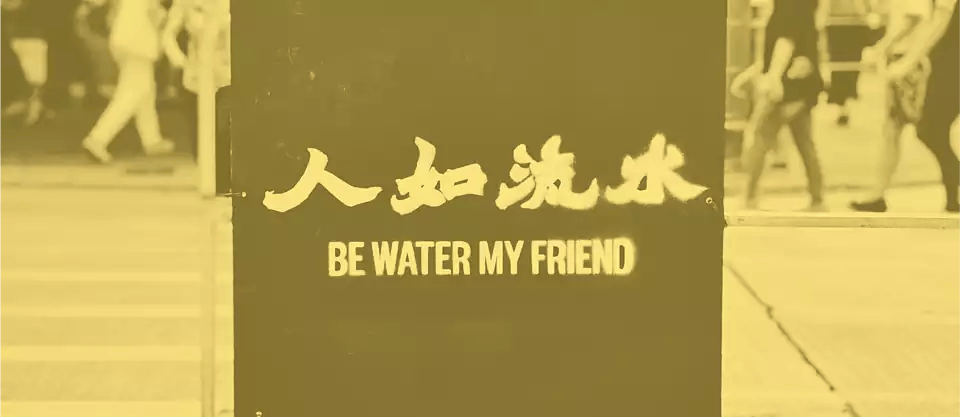
Such words of hope permeate the long series of protest poems that follow: “Every Hong Konger who has a conscience is my rising sun” in “Crude Insistent Passion”; “even the most landlocked part of the city becomes part of the Be Water movement” in “Doubtless”; “All the voices in the dark enliven this street in the poorest neighbourhood in Hong Kong” in “One Person”; or, in the second entry (“Hongkongers”) of the three-part prose poem “Nights”:
This call and response, this solidarity, this strong demonstration of love for the city, is remarkable. Leaderless, but at any given moment, anyone can lead, then another person will take over. And another. And another. And another.
(p. 50)
Yet the overall impression left by this breathless alternation of prose and verse is that of a bustling city suddenly transformed into a quasi-apocalyptic landscape by the callousness of the government’s response. It would be disproportionate in a review such as this (and perhaps redundant, as people really ought simply to read the book instead) to list, let alone analyse, every single reference to the smoke of tear gas, which “engulfs everything” not only “[suddenly]” in the dream evoked in Part ii of the five-dream verse poem “Licking Graffiti on Cement Walls”, but throughout this verbal mosaic depicting the explosion of state terror unleashed upon the brave protesters of the island city. Every encounter seems to emerge, clad in gas masks or other makeshift protective face coverings, from the authoritarian fog of the toxic gas:
Goggles wear young faces […].
They walk towards me in dreams,
on a landscape
of billowing acrid smoke”
(“Simplicity Is Not An Option”, p. 47)
You are in my memories, emerging from engulfing smoke, your helmet broken in symmetrical halves.
(“One Person”, p. 51)
teargas smoke engulfs everything […].
Two youngsters
walk towards me to offer help.
In my dream, under their plain masks
are the faces of mere infants
forced into playing the role of
protesters.
(“Licking Graffiti on Cement Walls”, p. 56)
Every place, every type of place, is swallowed up by this smog of democracy’s end times, this grey, formless slayer of rights, speech, lungs and breathing:
Artificial fog everywhere:
Fog in residential areas,
fog in homes for the elderly.
(“Simplicity Is Not An Option”, p. 47)
Doubtless it is no longer surprising a district famous for its temple where citizens go to pray for good health, good grades, good marriages, harmonious families, and speedy promotion at work, should also be covered with teargas smoke as if by drifting clouds.
(“Doubtless”, p. 45)
Yet, while a word cloud (pun unintended; I like puns, but none would be proper here) created from this part of If I Do Not Reply would display the whole semantic field shared by “tear gas”, “smoke”, “cloud”, “fog” and “gas masks” in gigantic letters, the extent of the horrors inflicted on Hong Kong by its government, and evoked in Ho’s testimonial, archival poetry, is far from limited to this attempt to suffocate the marchers. There are, of course, the indiscriminate, traumatic blows inflicted on bodies, the cracked skulls and fractured limbs:
At which point we are beaten
we stand up again
against the brickbats
of unvarnished tyranny. […]
kicked about
by Asia’s finest.
(“Crude Insistent Passion”, p. 41)
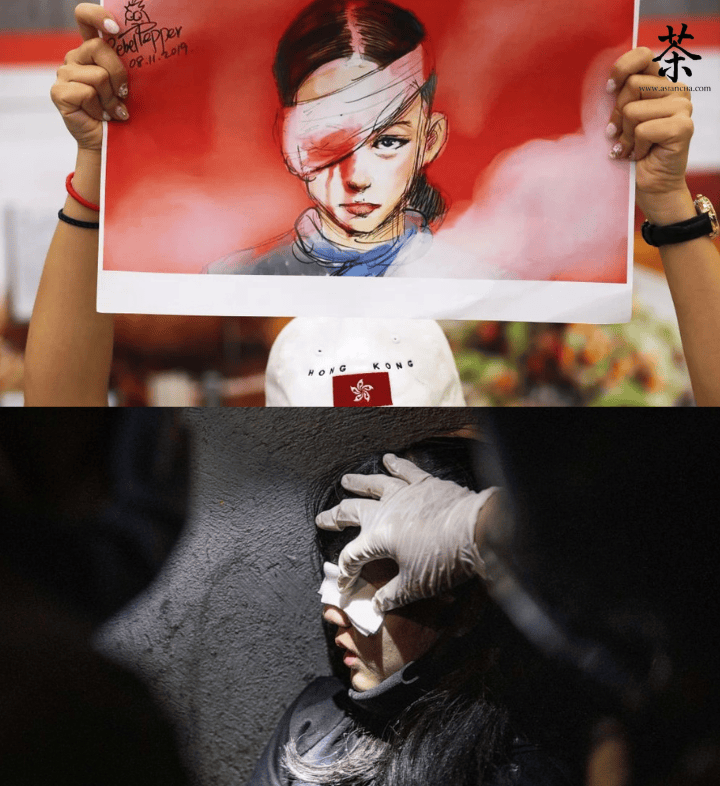
These assaults have harrowing and sometimes irreversible consequences that anyone can imagine (or recall from many episodes of state violence against protesters around the world in recent years; as a Frenchman, I necessarily think of the Yellow Vests protests in 2018-19, or, more recently, climate activists’ 2023 occupation of the digging site of a wasteful “mega-basin” water reservoir in Sainte-Soline). The “Blood of protesters shed on the streets” (“Laid Bare”, p. 49) offers the more general depiction of these bodily impacts, while the terrible prose poem “The Eye” (p. 48), about the female protester who was believed to have lost an eye after being shot in the eye with a beanbag round during protests at Tsim Sha Tsui Police Station in August 2019, focuses concretely and devastatingly on one specific, horrific personal story.

Then there are the strange, suspicious deaths of protesters, such as 15-year-old Chan Yin-lam, who was found naked and drowned, floating in the sea, in September 2019, or 22-year-old Chow Tsz-lok, who fell from the third floor of a car park in November, was hospitalised with multiple injuries and died of cardiac arrest four days later, as well as the many reports, at the time, of protesters disappearing mysteriously before being found drowned, like young Chan. There were also higher-profile cases of disappearances that remain well documented today, such as that of 66-year-old Alexandra Wong, who was secretly detained for months in Shenzhen. This climate of deadly fear “engulfed” protesters as suffocatingly as the smoke of tear gas, and this, too, is repeatedly reflected in Ho’s poems about this period. First, there is the collection’s title poem, “If I Do Not Reply”, which centres this then-widespread feeling of being discreetly hunted down, one by one, by Hong Kong’s authorities, forcibly disappeared and killed in a manner that might then be ruled a suicide or accidental death. Indeed, the anaphora “If I do not + [verb of communication]” (“respond”, “call”, “reply”, “say anything”), and the hazy explanations offered for the radio silence this anaphora envisages, reflect both lyrically, almost dreamily, and ironically the practice among some protesters of announcing publicly in advance that they did not intend to commit suicide, so that their anticipated disappearance and death would not be accepted as such.
The book’s title poem is not the only text in this tumultuous and nightmarish third part to address this particular aspect of the overall climate of terror. In “On the Day of the Eclipse”, the aforementioned mixture of simile and metaphor, in which the “invisible and unwanted timeline for this city” is compared to “mysterious corpses” and said to “wash […] up in the harbour”, is an allusion to the disturbing disappearances and deaths. The question that opens “One Person” (“If I tell you my full name, will you only say it when I drown or fall?”) does likewise, as does the question asked in “The Fall” (pp. 79-80), part ii of the multilayered prose poem “At This Moment, Everyone is a Revolution” (“What must have gone through his mind as he fell?”). The following lines from “A Lie and a Promise” (p. 60) also evoke it:
Missing people are missing
people too. The list,
whatever list, cannot be updated
fast enough
to meet everyone’s imagination.
Besides being a poet, Ho is also an academic and the editor of multiple volumes of poetry and scholarly essays, and, as such, she has demonstrated over the years a keen interest in dystopia, among other subjects. When she was teaching at Hong Kong Baptist University from 2013 to 2022, she designed and taught a course on dystopian fiction, and her engagement with the subject has since extended across her scholarly and editorial work. She has written on dystopian literature, including Hon Lai Chu’s Mending Bodies, and on gestational imaginaries in Sinophone dystopias, as well as the spectral representation of Hong Kong in Western media. She also edited a special poetry feature on “Dystopia” for Voice & Verse Poetry Magazine. As an academic myself, and a specialist in genres such as horror, fantasy and science fiction, I have had the opportunity to observe that Ho is indeed a connoisseur of these genres. Yet even when one knows about her experiences in Hong Kong during the protest years, reading her poetry about them always makes one realise anew how concretely, and how deeply in their own flesh, Ho and her fellow Hongkongers have experienced dystopia first hand, without the reassuring mediation of merely reading about it in some frightening but ultimately innocuous fictional narrative.
I mentioned earlier the “frustrated desire to find a way to act against those harmful tides of history”. The sentiment is perhaps nowhere as striking, or as naked, as in those awe-inspiring ruminations of righteous anger mingled with the silent scream of powerlessness that close the prose poem “To Thine Own Self Be True” (p. 46):
Sleepless nights beckon conscience. Do we turn a blind eye, or do we fight? A city of people reevaluating life, calculating what is worthwhile. I look at myself in the mirror: why the hell can’t you do more?
Note, however, that the powerless, frustrated figure’s chosen pronoun is “I”. The flashes of hope noted above, by contrast, often refer to the joy of the collective nature of the struggle, especially the excerpt from “One Person” quoted several paragraphs earlier (“All the voices in the dark enliven this street in the poorest neighbourhood in Hong Kong”), or this magnificent, heart-warming observation from “Nights”, part ii, “Hongkongers”, quoted immediately afterwards (“This call and response, this solidarity, [etc.]”). Even such a grim statement as “When they used water cannon they hijacked our story, our story” (in “One Person”) sounds more like an affirmation of Hongkongers’ collective ownership of their “story” than a mere complaint about the dispossession that the sentence is evidently about.
Yet the nightmare that comes at the end of “Licking Graffiti on Cement Walls”, seizing upon the previous image of “Blood of protesters shed on the streets” (“Laid Bare”) and extending it to provide a complete vision of the deformed allegory of a Hong Kong beaten to a pulp by the police (“everyone’s face is covered / with dripping blood. […] Some have hands / that are no longer shaped / like hands. Some have broken / collarbones”) and made monstrous by the torturous blows (“We have become a city of freaks”), is also a vision of the collective of Hongkongers, and a resolutely less hopeful one than the examples cited above. Furthermore, at this stage, the reader can begin to notice sinister references creeping into the poems’ visions of the threats and constraints imposed by COVID-19 (“Some lose their sense of smell” in “Licking Graffiti”; “Who can afford to wait / for the pandemic to pass?” in “Wait”, p. 63), and particularly to the tearing apart of the collective by social-distancing measures: “the walls grow impatient: no more breathing through the cracks of hope”, “millions of distraught, distracted masked mouths” (“Open Secrets”, p. 52);
My fellow citizens
walk home after work, purposeful
but, in truth, directionless,
in anticipation of a sofa that lets
them linger maskless
(“Open Secrets”, p. 54)
We frame
everything like Zoom windows;
restaurant tables partitioned
with makeshift dividers, on mathematical
principles.
(“Open Secrets”, p. 55)
Even in those passages that methodically depict the psychologically destructive tragedy of social distancing, however, the viewpoint adopted is not an isolated “I”: this solitary confinement of everyone is still presented, and experienced by the reader, as the collective experience of Hongkongers, showing perhaps most expressively how, to quote Hannah Steurer again, Ho’s poetry “transforms personal observation into collective testimony”. The “love for the city” observed by the poet’s persona in “Nights”, part ii, “Hongkongers”, and the obsessive return to the pervasive background figure of “the city” noticed by the present reviewer in the poems of “Here’s a Mahjong Table”, may all provide clues to the creative principle and purpose that allow Ho to achieve this “transformation”, as do these lines from, again, “Open Secrets”: “I’m not a poet of protests / but someone who cautiously writes / about Hong Kong” (pp. 53-54).

I wrote somewhere, and it was edited out, that Ho’s poetry simultaneously delivers playful, inventive texts and subtle testimonies to ordinary as well as historical moments in the life of a female Hongkonger, and that, for people who have partly shared her experience by living on the illustrious island and witnessing the dramatic changes it has undergone in recent decades, her work has been welcomed with both the painful pleasure of recognition (of the small moments and momentous events she evokes) and the knowing appreciation of how deftly she puts them into words, scansion and pauses.
I added that, for people like me, who know nothing of Hong Kong beyond what its great films, history books, news websites and Ho herself have told me over the years, her writings could literally be seen as her taking us by the hand and embarking with us on a journey through the trials of Hong Kong and its inhabitants, or at least one deeply endearing inhabitant, who also happens to be a delicate, wise, funny, provocative and infectiously meditative guide. This is also true of this group of poems (If I Do Not Reply, part three, “Are You Becoming Critically Endangered?”): they may concern moments of exceptional intensity, the city’s experience of the dark momentum of societal collapse, prefiguring the unfortunately more durable collapse of its freedom, but those nightmarish, apocalyptic visions are also another episode in the endless saga of Tammy Lai-Ming Ho using the expressive means of poetry to guide us, not gently in this case, but expertly as usual, through what it is to experience the world that is Hong Kong.

Hence the progressive re-emergence, amid the nightmarish visions of dystopia, of more subdued depictions or expressions of everyday experience and ordinary sentiments, such as a pang of nostalgia for one’s former home’s “elephant-shaped flower pots” and now unlit “abandoned windows” (“Formerly”, p. 66), or the half-hazy, half-vivid impressions left by a walk through such a crowded city, from numerous encounters with “someone I know / from a long time ago. So long ago / each of us wilfully resorts to deceptive amnesia” to “a word said by a stranger […] that enters my ear like a curse” (“Tomorrows”, p. 67). Or the fanciful musings introduced by the titular anaphora “Maybe” in a poem successively about what may happen in the minds of telepathic products on display in Mong Kok’s goldfish market, how the letters on street signs in Lan Kwai Fong may conspire to confuse inebriated night owls, or the potential metempsychosis that may have turned dead soldiers into stray dogs in Tin Shui Wai (p. 70). Such pieces in the mosaic offered by Ho’s collection, realist and minimalist snapshots and surrealistic (or indeed supernaturalistic?) touches blooming now and then amid the ruins of dystopia, especially with the focus on “walking” (“Formerly”, “Tomorrows”) as a way of stumbling upon these samples of ordinary life and feverish dreams as elements in the overall understanding and depiction of a city, remind me of how I have always felt, when reading Ho’s books, that she was engaging in the same kind of “psychogeography” that Alan Moore has been pursuing in his novels about his native and lifelong home town of Northampton, Voice of the Fire (1996) and Jerusalem (2016), and which he defines thus:
Psychogeography would be the understanding that in our experience of any place, it is the associations, the dreams, the imaginings, the history, it is all the information that is relevant to that place which is what we experience when we talk about a place. That is what we’re talking about. We’re not actually talking about the hard bricks and mortar.
[…] It is always that psychological effect the place has on us that is going to be paramount, and that is psychogeography, a way of considering the landscape around us as more than its physical components […]. The bigger part of our experience is spent in this vague, drifting, entirely immaterial world of associations.
I suppose that the first time I ever heard that term, it would have been in the context of my first discovering the extraordinary work of Iain Sinclair. During the early stages of From Hell, I had been sent a copy of Lud Heat, which was one of Iain’s early super-dense poems that are on the verge of turning into prose. He was dealing with his time spent maintaining the lawns and gardens of the churches in East London when he was working for the council. A lot of these were Nicholas Hawksmoor’s churches. Iain started to notice some alignments between these churches, which were suggestive. He put all this into Lud Heat.
I was fascinated because this seemed to me to be a new way of engaging with place. […] It wasn’t really until I discovered Iain’s work that I saw the kind of focus Iain was capable of that I had been missing, and I quickly understood that this wasn’t something Iain had invented. There were all sorts of people who had made “walking with an agenda,” as Iain calls it, into a kind of art form. There was Arthur Machen with his illuminating strolls around London. There were the situationists, the surrealists with their walks that would be like planned experiences. There were the flâneurs. There were all these people for whom walking around and looking at things had been a substantial part of their work.
Moore’s practice of allowing himself and his work to be permeated by his psychogeographic study and experience of Northampton is one in which I have always felt that the eminent Canadian filmmaker Guy Maddin also engages, whether or not he has ever used the word himself (I am not aware that he has), in his dazzling, hallucinogenic poem of a documentary, My Winnipeg (2007). So that is the triad of psychogeography that my mind has assembled over the years: Alan Moore’s Northampton, Guy Maddin’s Winnipeg, Tammy Lai-Ming Ho’s Hong Kong.
As it happens, I recently had the opportunity to reread Hula Hooping, Ho’s first poetry collection, and rediscovered something that I had completely forgotten, something that shows that she (long before I formed this idea) concurred in advance with my feeling about her writing and her approach to her specific urban subject: in the “Envoi” at the end of the collection, she wrote at the time (as long ago as 2010), “I want to write about Hong Kong like Guy Maddin wrote about Winnipeg” (p. 90). Either great minds think alike, or her statement of intent continued to influence my perception of her writing long after I had forgotten the statement itself. In any case, because there may be unconscious connections between their creative processes and approaches to their subjects, Alan Moore’s idea that “[t]he bigger part of our experience is spent in this vague, drifting, entirely immaterial world of associations” may offer an explanation for Luca Griseri’s perception (in his review of If I Do Not Reply) that, in Ho’s depictions of Hong Kong, “[s]pecific details are few, and when mentioned […] they lack vivid description.” She is not writing about Hong Kong’s “bricks and mortar”, but “the associations, the dreams, the imaginings, the history, […] all the information that is relevant to that place which is what we experience when we talk about a place”.

Despite these varied glimpses of everyday (matter-of-fact and/or dreamtime) Hong Kong, the end of If I Do Not Reply’s third part never relinquishes its main theme of the protests. Most of the poems at the end of this grouping seem to be various meditations on the lasting effects of that period. The terrifyingly titled “Removed and Rectified” (pp. 73-74), which could be seen as a dictatorial-state euphemism for disappearing a dissident for “reeducation”, is built upon two different and conflicting leitmotif phrases: on the one hand, a supposedly reassuring “it’s almost back to normal”, “life is almost back to normal”; on the other, “on strict government orders”, which suggests that the “normal” to which “life is almost back” is not necessarily much less dystopian than the apocalyptic visions of the previous poems, weeks and months. The title poem of the part, “Are You Becoming Critically Endangered?” (pp. 79-80), articulates the questions left about Hong Kong’s new political identity, protesters’ safety, and whether they have done or are doing enough in the aftermath of the movement. Many of these are expressed through enigmatic imagery. Thus, it is clear that in “Whose antlers are used to make handles / of umbrellas?” the umbrellas are the revolution, but I can only speculate about the use of the word “antlers” (since the author’s Cantonese name, “Ho Lai-Ming” 何麗明, contains the symbol for a deer, 鹿, perhaps she is suggesting that her “antlers” are the ones fit to make “handles” for revolution, or rather “umbrellas”; yet such bragging about bravery, however subtle, would be uncharacteristic of someone who has tended, in the previous poems, to efface the more obvious expressions of her authorial self in favour of her rendition of the voices of the collective). These two more straightforward interrogations summarise the mood:
Can you be shot legally? When was the last
time you congregated in large numbers
to unlearn self-censorship?
And this question, too, “What prominent mythologies / are associated with your city?”, may be of the utmost importance for a mind like Ho’s, psychogeographic and centred on Hong Kong, a focus she best explains in this essay, in which she defines her own personal identity as being one with the city, and the self-awareness she has developed over time as encompassing the city rather than merely herself as an individual.
Then “Art” (p. 78) is bittersweet because, with its emphasis on “the art of staying” as opposed to “the art of leaving”, it reminds readers who have known Ho for a while of the time when she was determined to stay in Hong Kong despite all the dangers, inspiring admiration as well as fear for her, in contrast to her current days of exile, in which she is relatively safe but cut off from her family. “At the Moment, Everyone is a Revolution” (pp. 79-83) offers a long, multifaceted assessment of the situation (it is dated July 2019), and it ends on a highly optimistic note:
The disobedient citizens
are determined to be,
to be disobedient,
in all parts of the city, flowers
blossom everywhere. All
walks of lives, all hues of hair,
cut open our regular existence
to forge a new Hong Kong.
Yet the final poem of that chapter is the title poem of the book, “If I Do Not Reply”, which recalls the playful imagery found in the poems of the first two chapters, but has a much darker underlying theme, as “If I Do Not Reply” here means, essentially, “if I have (been?) disappeared”, and the main pleas for the reader to remember, in the event of such a disappearance, are “it’s not what they tell you” and “believe me”.

The fourth and final part of the collection, “Time and Tide”, could scarcely be more different from the third. It is mostly a meditative and contemplative sequence of poems, including some sweet and sensuous love poems evoking the caress of the persona’s fingers upon her lover’s palms as she “practice[s] / writing complicated / traditional Chinese characters” on the beloved’s skin (“Your Palms”, p. 99), or the planting and growing of a palm tree as a metaphorical occasion to think of her lover’s body and loving embraces (“Palm Trees”, p. 96). There is also a deeply meditative piece on time, built around the extended metaphor of time understood as waves slowly and sometimes rapidly crashing upon the shore, then disappearing almost at once (the section’s title poem, “Time and Tide”, p. 94). Another piece concerns the soothing nocturnal experience of listening to a neighbour’s musical performance while imagining, lulled by the sound of the piano, a convivial scene between imagined people, involving a kiss (“Keys”, p. 93). Hong Kong is seldom mentioned in these delicate, gentle pieces. There is one quite political simile, though:
I miss you […]
like a wall in Hong Kong
misses graffiti
screaming decay and democracy
(“Absence”, p. 91)
Meanwhile, “Your Palms” cites a poet’s very elusive and symbolic thought on the island city’s identity: “a dove, an umbrella / and a discoloured bauhinia, together, / create the story of Hong Kong”.
Perhaps Ho felt that the final part of her collection needed to be subdued, offering a moment of respite after the sustained emotional blow of Part Three. There is certainly a sense, while reading it, that most of these poems gently accompany us towards a return to the normal, everyday state of mind of someone who is not engulfed in the reading of If I Do Not Reply. The word “decompression” comes to mind. The phrase “coming down” (as in “after a bad trip”) does too. Another explanation is that these pieces may have been completely or partly written after Ho’s departure for France. Indeed, in “Keys”, the musician next door is said to be a potential amateur French teacher for the poet’s persona. Furthermore, there is a long prose text called “Pillow Books” (the penultimate piece in the collection, pp. 106-108), composed of lists, and one of them (the penultimate in the piece) is called “Things that give me pleasure”. One of the things on the list (the last one) is “Listening to my father sing old Mandarin songs, perfectly-pitched and confident”, and it is qualified by the detail “something which has not happened for three years”. Thus, another idea that may be conveyed by this final chapter is that, after leaving, Hong Kong and the temporarily apocalyptic but enduringly dystopian atmosfear that has overtaken it have drifted into the realm of distant, softly painful memory.

Readers should not be deceived (and probably are not; I imagine Ho’s readers must all be very smart) by this false sense of safety and subdued nostalgia that seems to emanate from the concluding part of Ho’s collection. First, the point about not hearing her father’s singing voice in three years stings a little more sharply than mere nostalgia. I think it is a very poignant expression of the constant inner pain of exiles. Besides, there is a prose poem called “Navigation” (p. 103), which seems, at first sight, to be merely about maps, but actually contains reflections on how a dictatorship uses them, much as Oceania’s regime uses photographs and other historical records in Nineteen Eighty-Four: “Censorship doesn’t happen to language only, but to maps too. Entire nuclear waste dumps, detention camps, vanish.” Then the whole chapter opens with “時間保留” (“Time Keep”), a poem that envisages the end of humankind rather serenely, merely hoping for Earth’s continuation (pp. 89-90), and, more unsettlingly still, the whole part and the entire collection end with “Salpetrière” (pp. 109-110), a poem about Ho’s hospitalisation for very serious heart and other health problems at the beginning of her stay in France, in 2022. A deeply unsettling way of ending both the collection and its apparently gentler final chapter. It is actually still quite painful to read for someone who has known Ho for a while and was worried about her at the time. Yet, for those very reasons, this conclusion is all the more appropriate, as it would not befit such a profound literary work suddenly to begin hiding struggles, horrors and despair so that readers can close the book content in the belief that the whole thing has ended on a happy note.
I have been writing a novel about a dictatorship other than the People’s Republic of China, but I have also been planning to dedicate it to Ho, calling her “poetry, gentle irony, and defiance”. To me, this perfectly summarises her creative imagination and imaginative worlds, from her previous poetry collections to the narratives and even the scholarly output discussed in this “partial retrospective”. All of this is again very true of If I Do Not Reply, a poetic rendition of the life of Hong Kong that is not always gentle, that knows how to be rather brutal when necessary, but which can alternate striking examples of the frightening testimonial “poetry of protests”, the deeply necessary “lyric archive” described by Hannah Steurer, with playful, light-hearted conceit poems that also reveal the important political core of Ho’s creative impulse without abandoning their pleasingly whimsical nature (without “breaking character”, contrary to Jimmy Fallon), as well as beautiful, longing love poems that, combined with Ho’s obvious love of her city, have led Jonathan Han to depict the collection as mostly an example of “love poetry”.
All of this is adeptly assembled, as in her previous works (but perhaps with greater intensity because of the harrowing experience of real-life dystopia that explodes in the reader’s face when they reach Part Three), to create a new chapter in Ho’s fascinating psychogeography of Hong Kong that should endure as an important sequence of writings and lyric chronicles for anyone interested in the island city, its bustling cultural life and its struggles, or simply in good writing. If I Do Not Reply is poetry, gentle irony and defiance, but it is also despair, whimsy, hope, solidarity and unrelenting lucidity. It is a world which, fractured though it may be, is contained within a slim volume of merely 110 pages that nevertheless offers, through powerful words, an illuminating and necessary journey through that fractured world named Hong Kong.
How to cite: Camus, Cyril. “Tammy Lai-Ming Ho’s 𝐼𝑓 𝐼 𝐷𝑜 𝑁𝑜𝑡 𝑅𝑒𝑝𝑙𝑦 Is Poetry, Gentle Irony and Defiance.” Cha: An Asian Literary Journal, 20 Sept. 2026, chajournal.com/2026/09/20/gentle-reply.

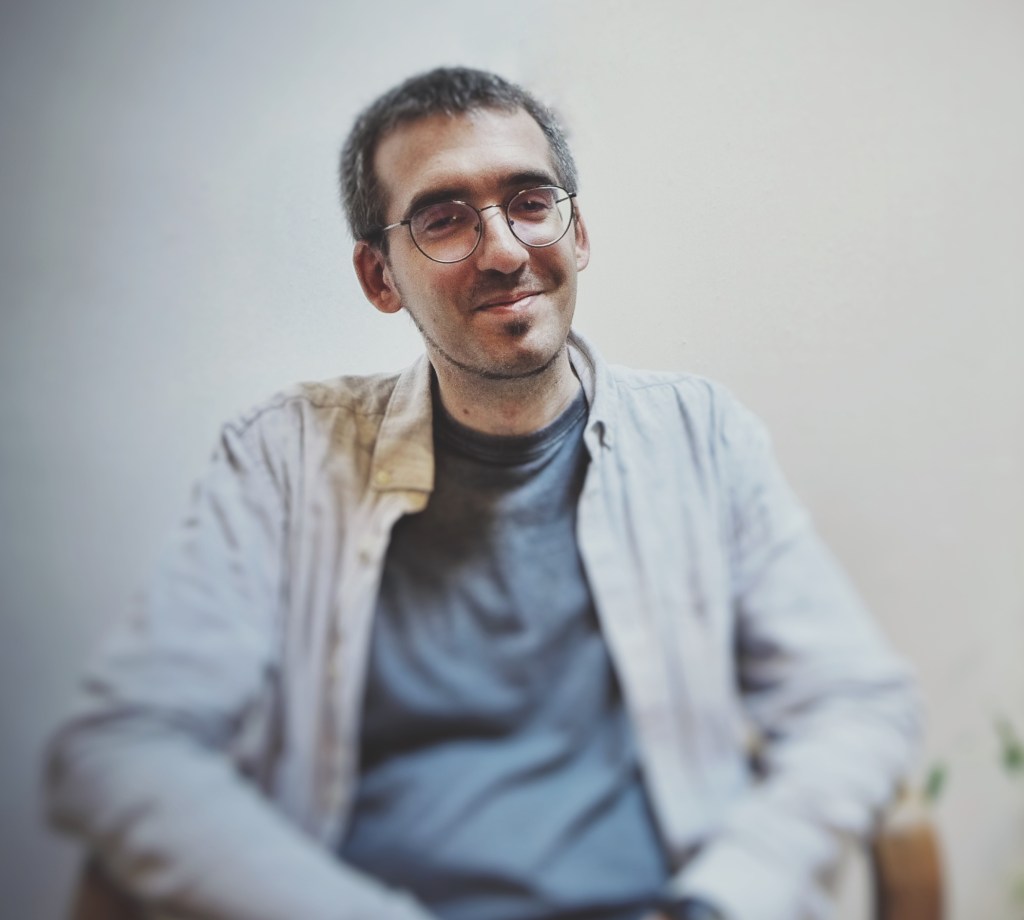
Cyril Camus teaches English to post-secondary students at Lycée Ozenne in Toulouse and is an associate member of the Centre for Anglophone Studies at Toulouse University. He is the author of Myth and Fabulation in the Fantasy Fiction of Neil Gaiman, originally published in French in 2018, with an English-language edition published by McFarland in August 2026. He also wrote the historical horror novel Grand Guignol, published in October 2026, which had previously appeared with another publisher, in a slightly different version, under the title Sang de bœuf between 2019 and 2025. His academic publications address Neil Gaiman, Alan Moore, comics, music, and postmodern fantasy. He also co-edited a 2021 journal issue on societal and environmental collapse in fantasy and science fiction. Further information is available on his website. [All contributions by Cyril Camus.]
 Cha
Cha 