
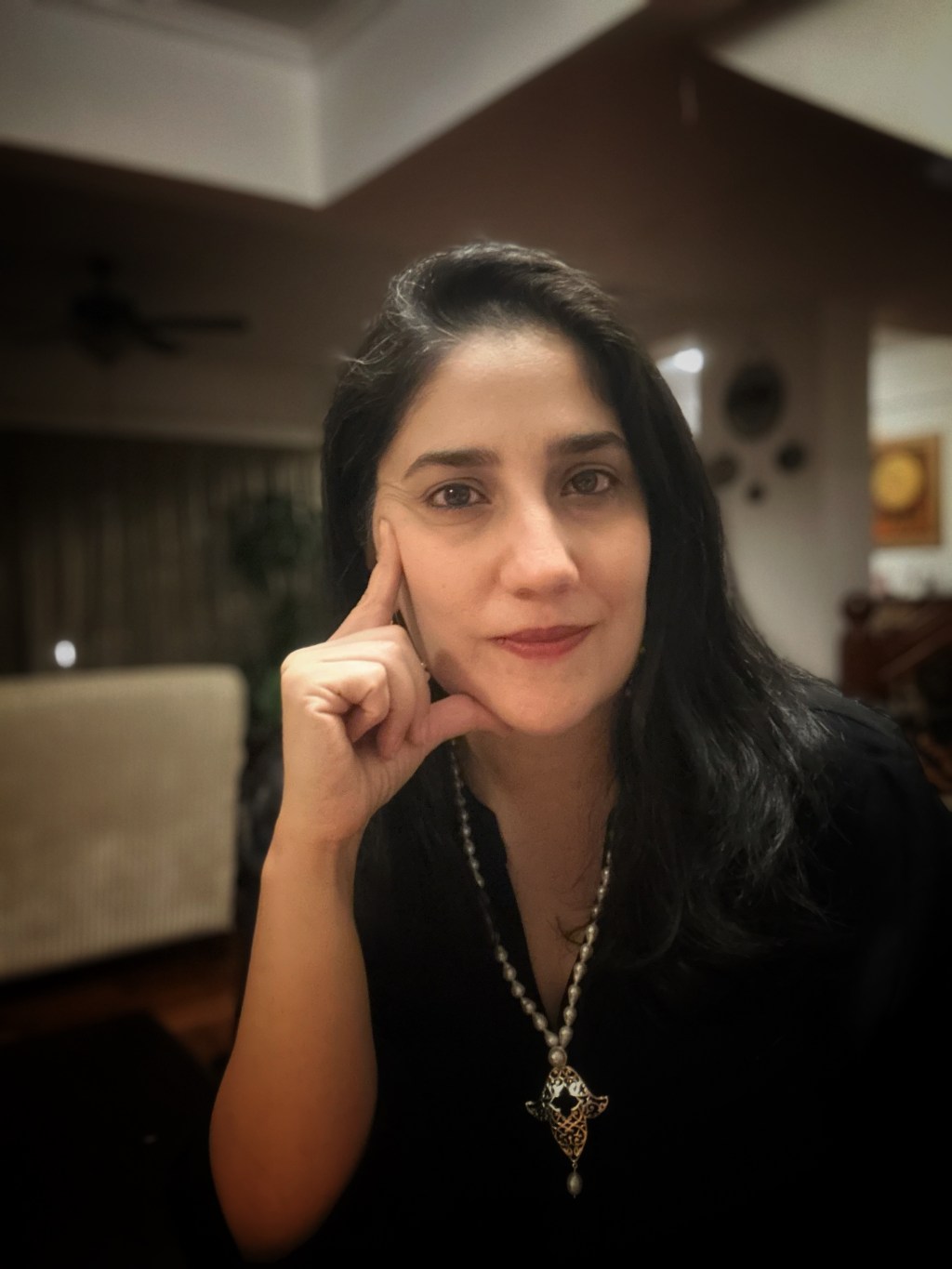
[CONVERSATION] “Challenging the Patriarchy with Poetry and Prose” by Sadie Kaye and Shikha S. Lamba
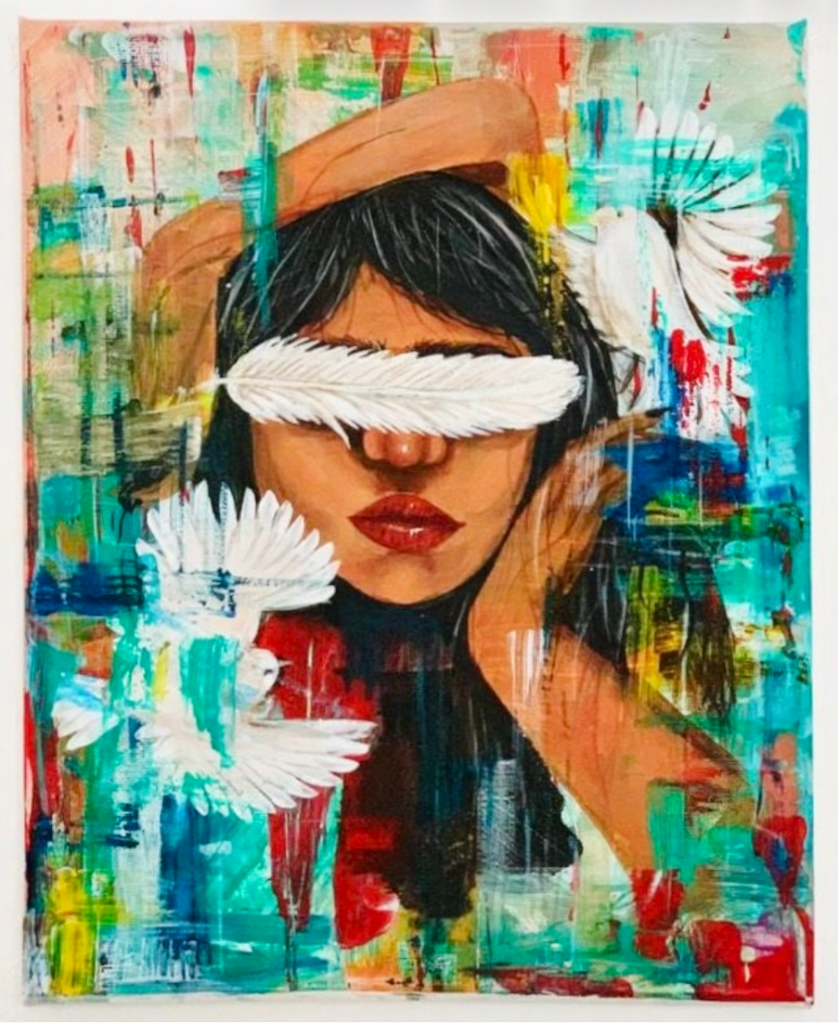
The Weight of Silence by Zuhra Nadem
Sadie Kaye’s introduction: Some interviews begin with a résumé. This one began with a single sentence that clicked into place. Shikha S. Lamba, a globally published poet, jewellery designer and gemologist, editor of Coffee and Conversations magazine, and women’s rights advocate now living in Hong Kong, moves between creative forms the way a reader moves between pages: alert to patterns, hungry for the truth, unwilling to flinch and look away.
In our conversation, Shikha traces an origin story that starts with two novels read in a time of upheaval and ripples outward into community, craft, and solidarity. There are books that become lifelines, candles that become altars, poems that empower and emphasise the gentle art of showing up for women, for stories, for Afghanistan.
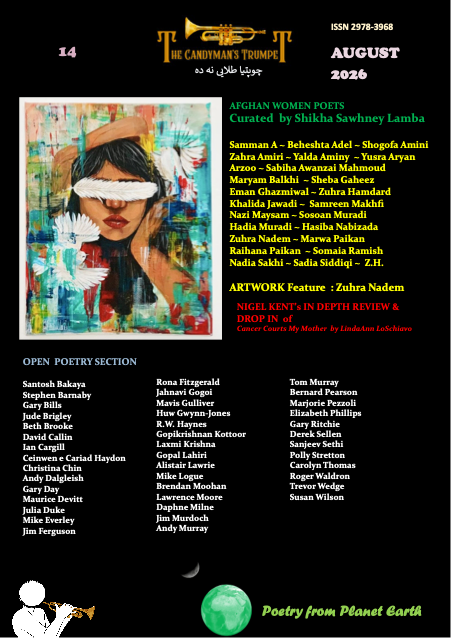
In 2025 she began curating a collection to raise the poetic voices of Afghan women in creative partnership with @JackCaradoc’s literary magazine The Candyman’s Trumpet. The collection was published in August 2026.

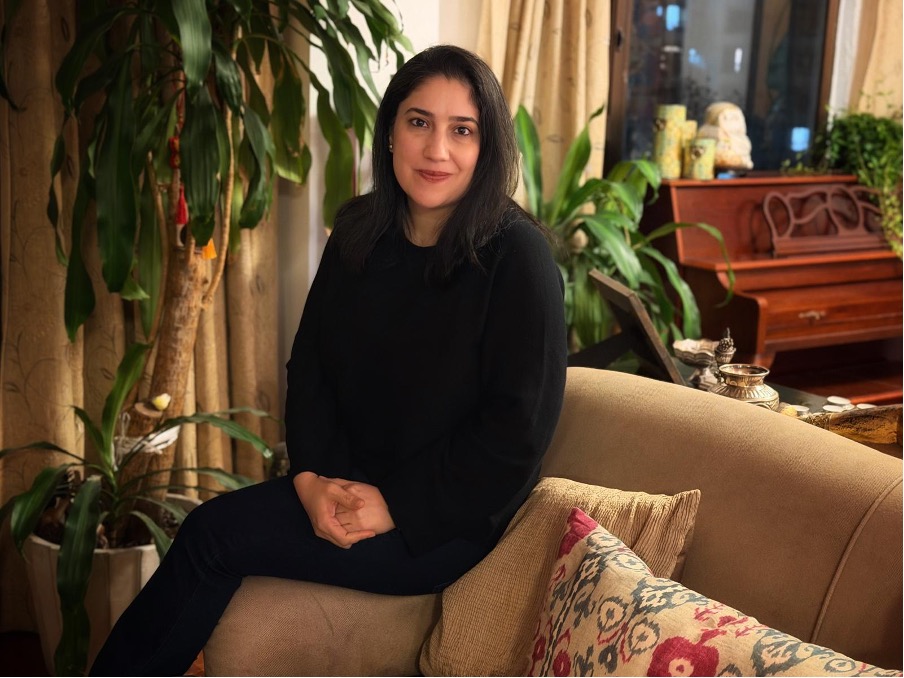
Shikha S. Lamba
Sadie Kaye: How did your deep connection to Afghanistan begin?
Shikha S. Lamba: I would say my connection to Afghanistan truly began in 2019, when I read two books by Afghan-American author and women’s rights advocate Nadia Hashimi, bestselling author of The Pearl That Broke Its Shell. It was a very difficult time for me, and those two books… they impacted my life deeply. Advocacy was the furthest thing from my mind then. I was simply focused on piecing my life back together. For the next couple of years, I read other books by her, and with her author events shifting online because of COVID, I joined as many as I could. Conversations around her books and their characters always struck a deep chord with me and became a source of strength.
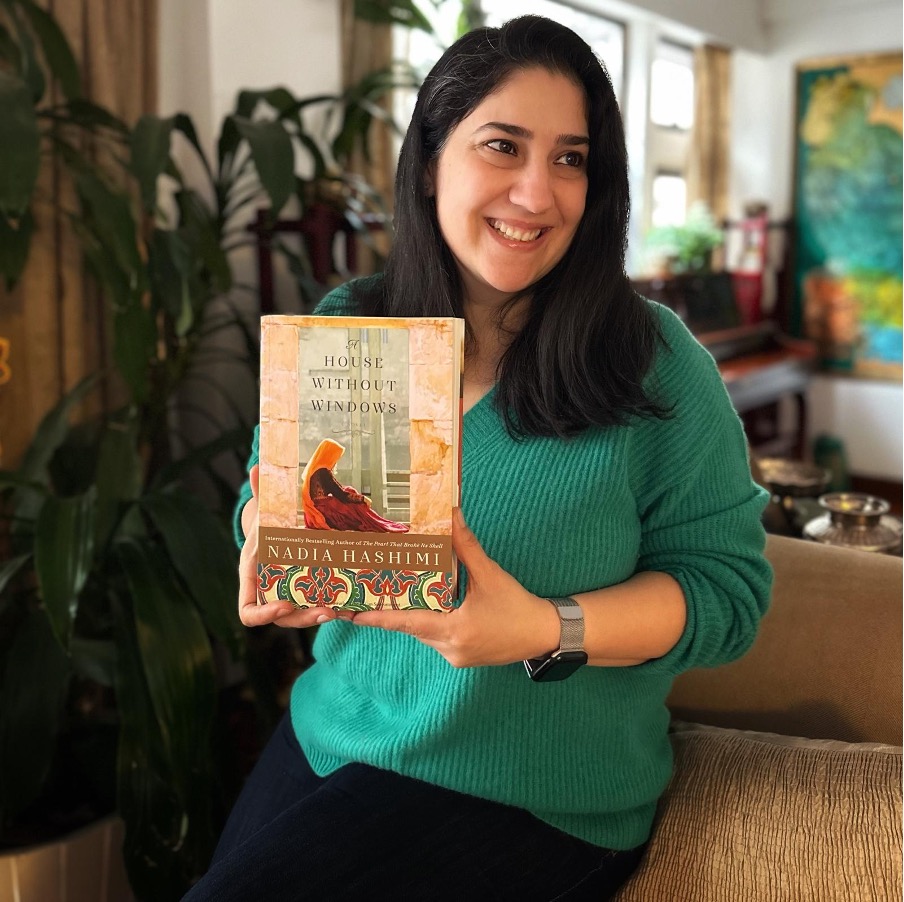
Shikha with one of Nadia’s books that made an indelible impression on her
Sadie: What happened next?
Shikha: About a year and a half after I had read the books, sometime in March 2021, I reached out to her to interview her for my magazine, Coffee and Conversations, and she said yes! She’s a wonderful person: very down-to-earth, gracious, an amazing writer and conversationalist. The interview did very well after it got published. That interview garnered a lot of interest in her work here with book clubs and other groups. In fact, in all these years, it’s still our most-read author interview. By August 2021, we had been in touch multiple times, and when the Taliban took control of the country, I knew people living there, and I knew I had to do something to help.
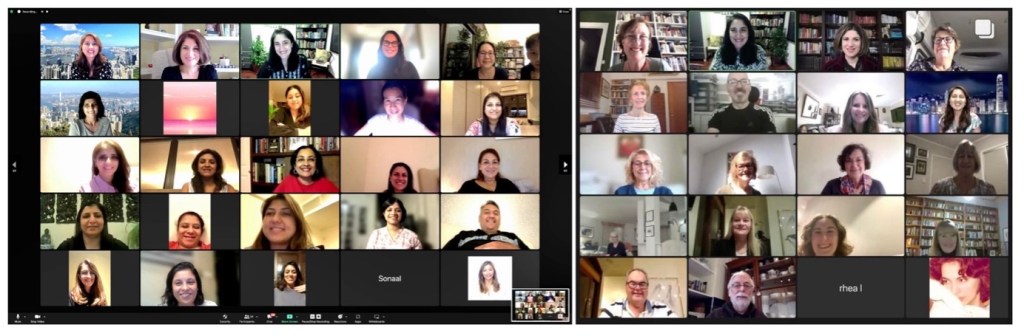
Online fundraising event with Nadia Hashimi
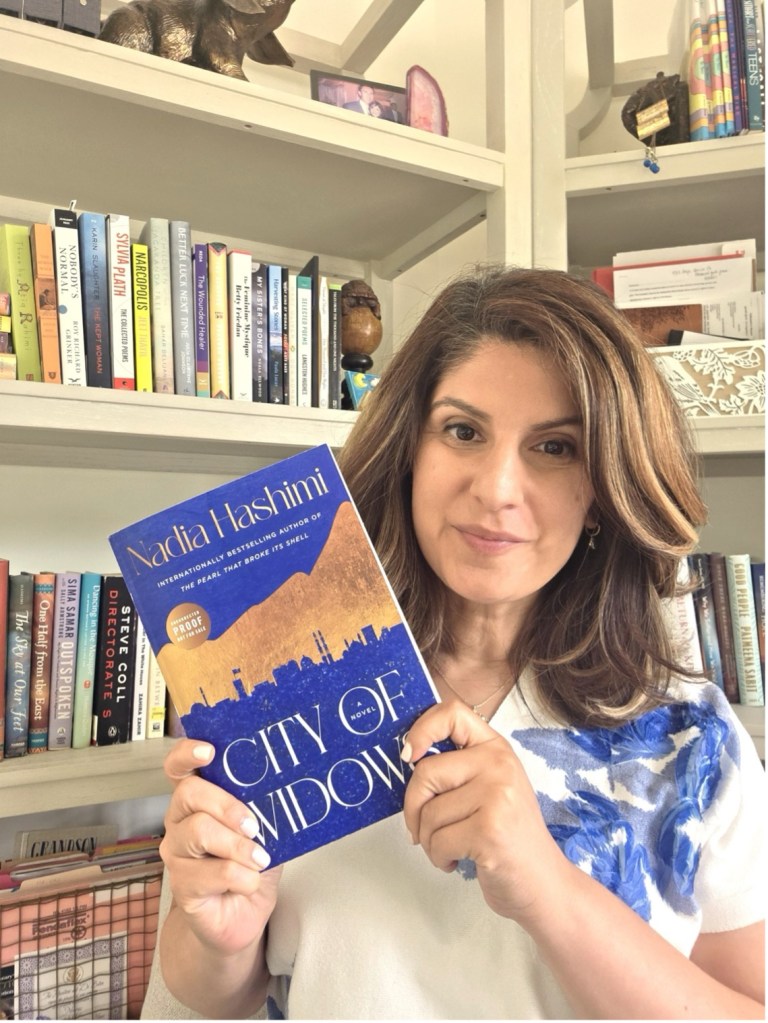
Afghan-American author Nadia Hashimi with her latest book City of Widows
Sadie: You’ve mentioned your work feeling like a “calling”. What did your body know before your mind caught up?
Shikha: When the Taliban took over in 2021, I felt this urge for urgency, along with panic and fear. I remember feeling grief for a place I had never been to, and for people I barely had any connection with. I remember feeling very unsettled. I think everyone who knew their history was distressed and scared. It was a time of absolute grief for most Afghans, for sure, especially Afghan women. I remember something Nadia had written at the time, that the fall of Afghanistan to the Taliban was like ‘watching someone take their last breaths’. That was how traumatic it was for most Afghans.
I remember an overwhelming urge to do something, even if it was to share the news and keep people here informed on what was happening. It was then that I started an online Facebook group called Hong Kong for Afghanistan. Apart from sharing news about Afghanistan, I also launched my first fundraiser there.
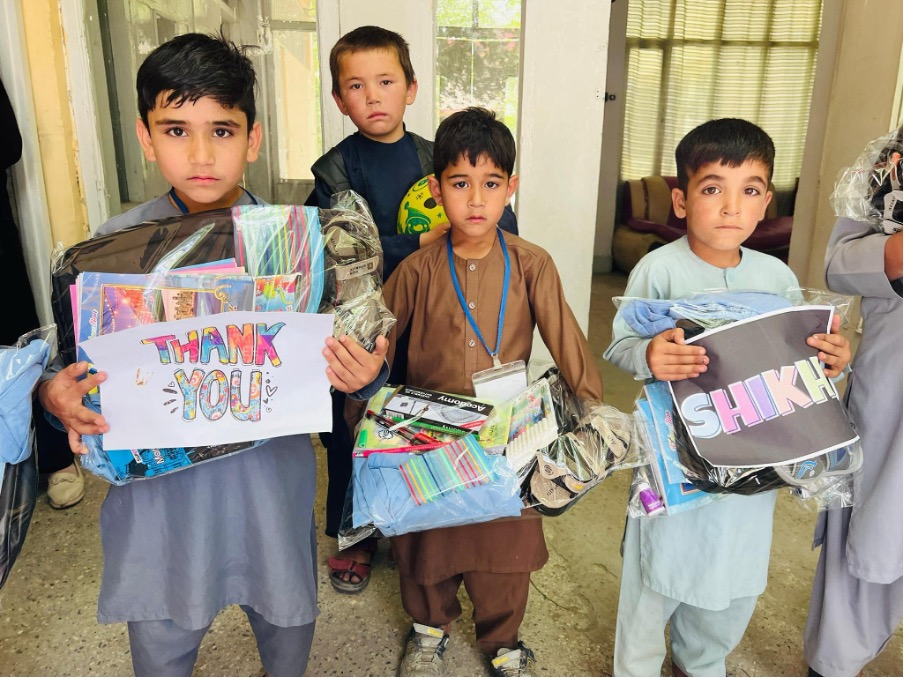
School supplies for Afghan children
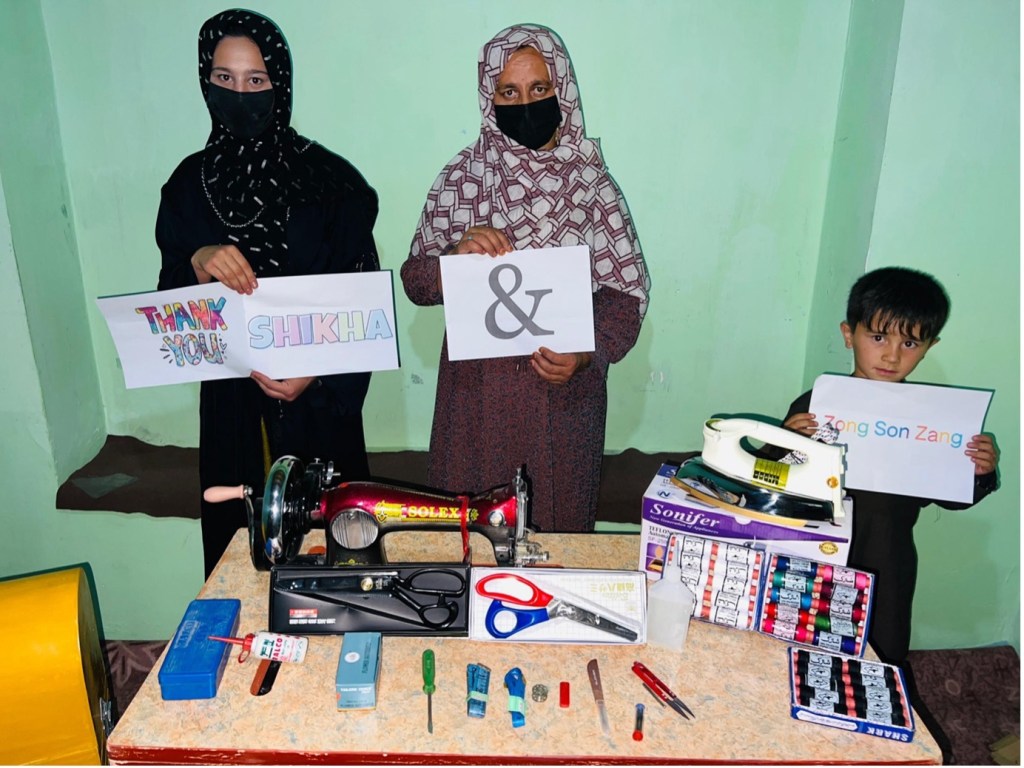
Sewing machines for Afghan widows
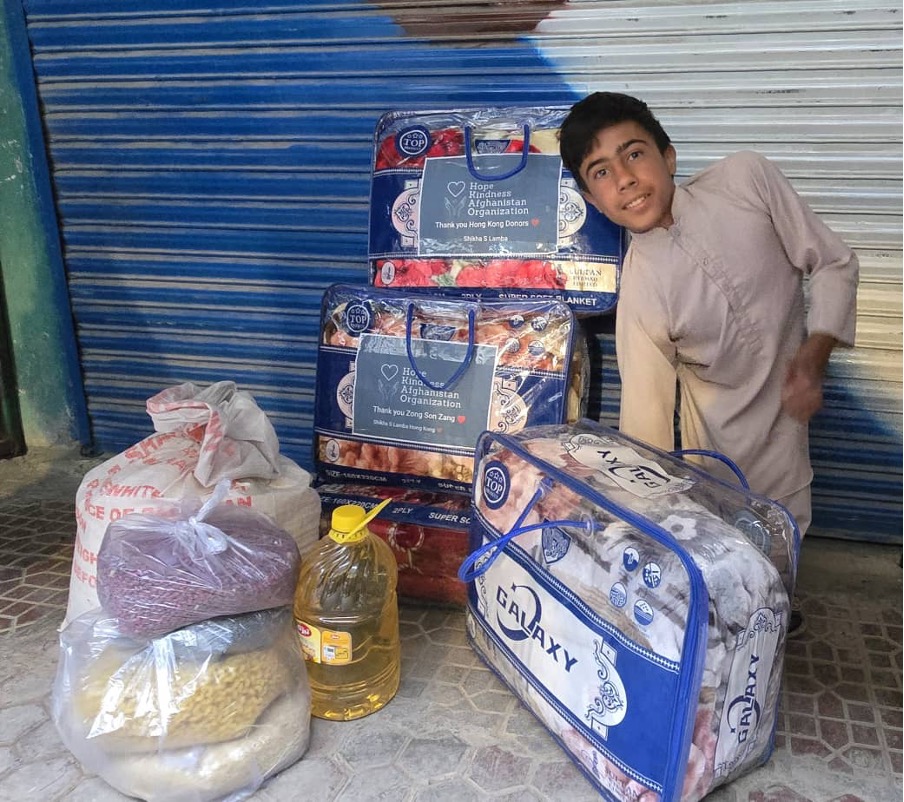
Winter aid and food aid for Afghanistan
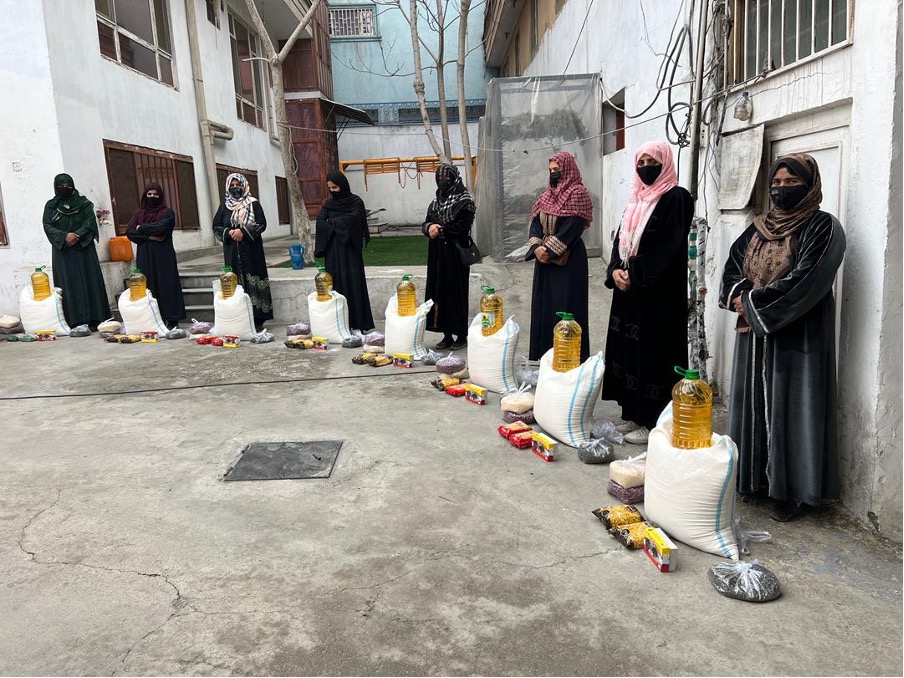
Food Aid for Afghan widows
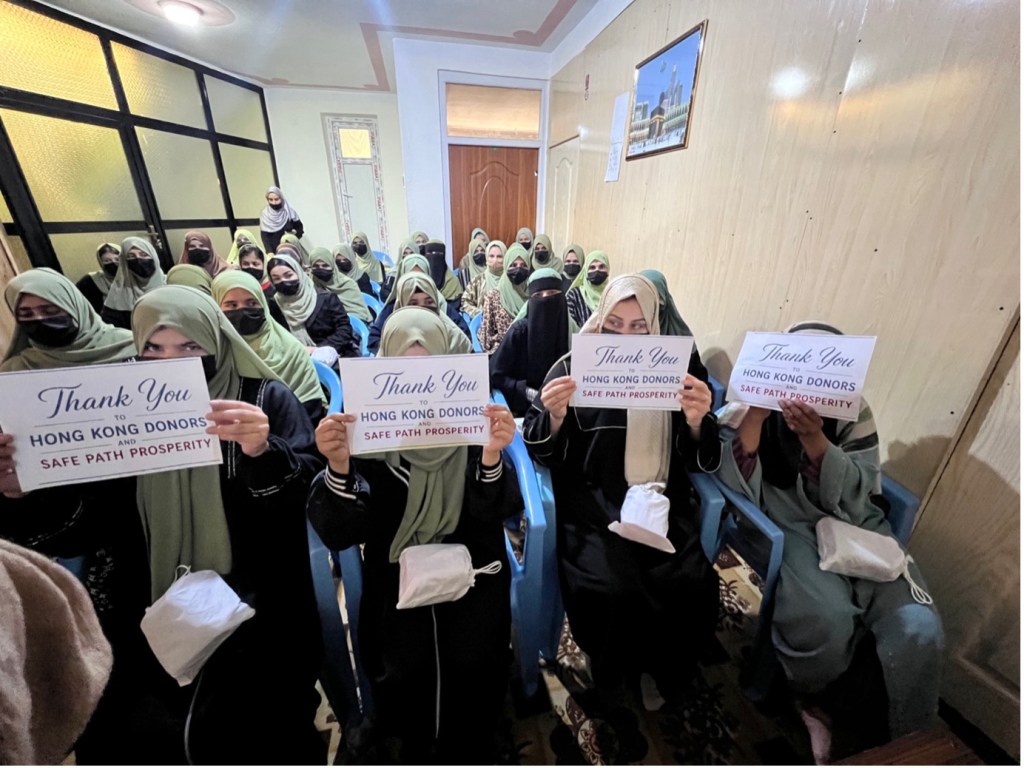
Sanitary products for Afghan women
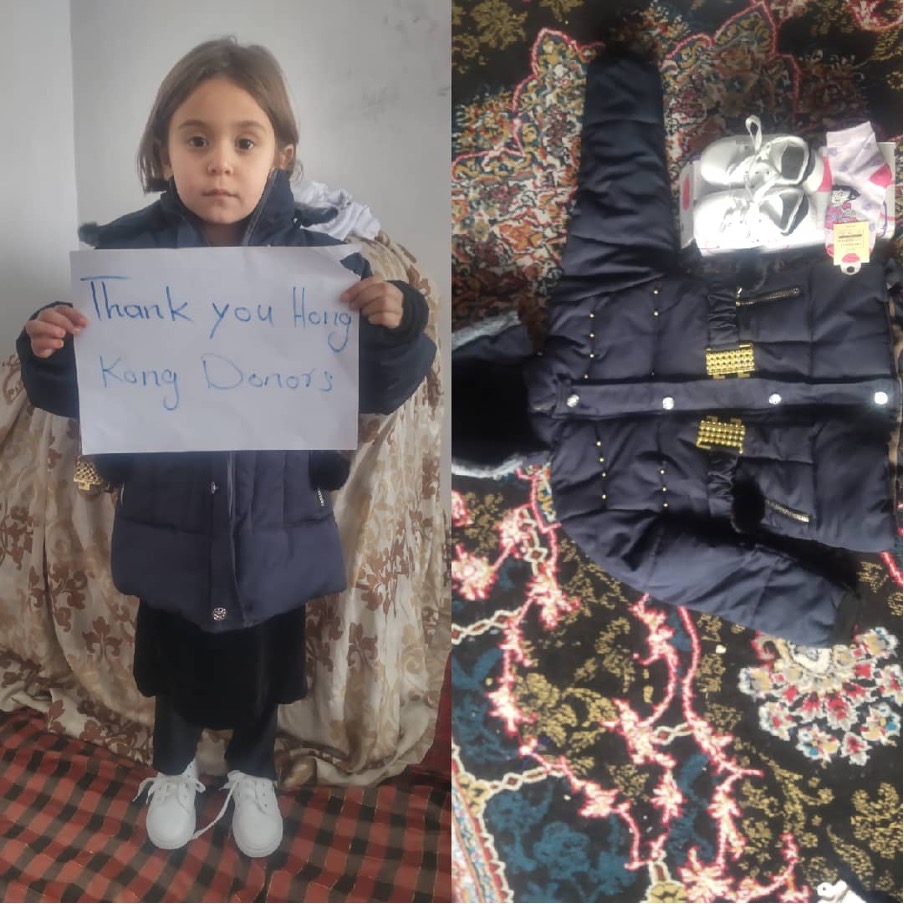
Winter clothes supplies for Afghan children
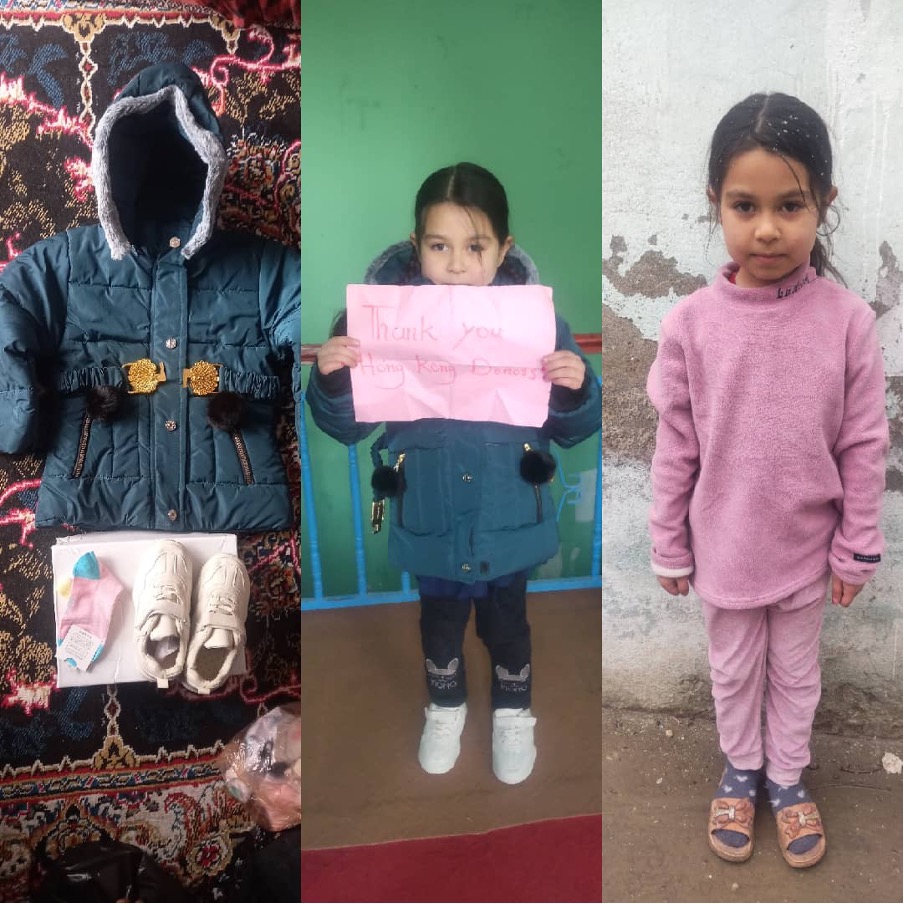
Winter clothes supplies for Afghan children
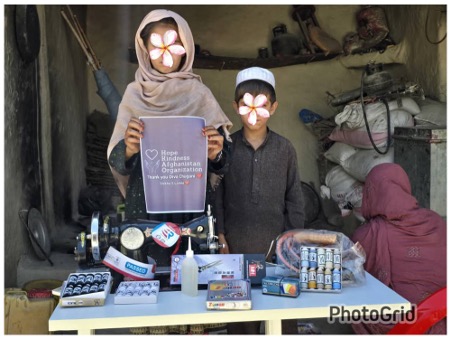
Collaborating with Hope Kindness Afghanistan Organisation
Sadie: You’ve mentioned your work having a “literary angle”. What do you think books can do in the real world?
Shikha: Books are more than just words on a page; they can spark real change in the world. They inspire people to take action and encourage empathy. I truly believe in the power of literature because I have felt it myself. There are books, including the two she has written, that have transformed my life in many ways.
Sadie: People sometimes ask if you’re doing this because of the author or the books. How do you clap back?
Shikha: I’ve been asked this by a handful of people, and honestly, the question always makes me laugh. While I am a very enthusiastic and dedicated fan, the answer is still “No”. But would I have had as deep a connection, or would I have felt that calling as profoundly, if I hadn’t been moved or impacted as I was by her books? They can’t be taken out of the equation for sure.
My advocacy stems from my belief that every human deserves education, autonomy over their bodies, access to health care, and food, which are really just basic human rights. And it’s unacceptable to me that in today’s day and age, we have groups of men taking away these rights from women and girls, denying them even the absolute essentials. What’s happening in Afghanistan should never be allowed or normalised.
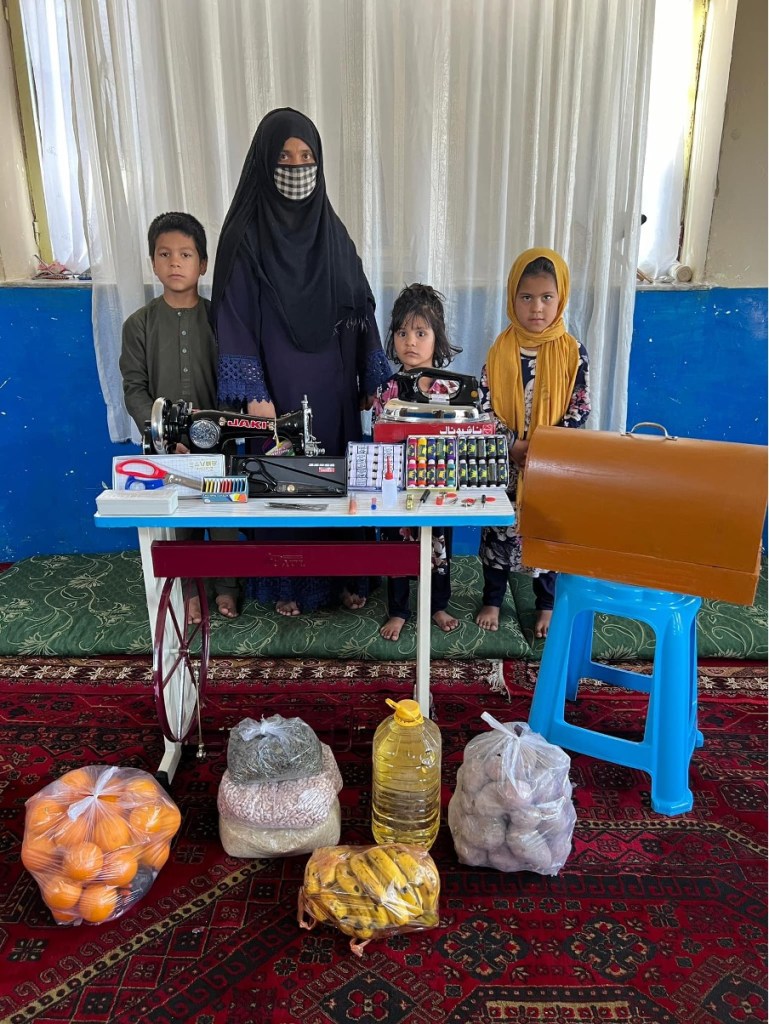
Sewing machine and food aid for Afghan widows
Sadie: How do books fit in with your fundraising?
Shikha: As part of my fundraising initiatives, I make candles that I sell and donate 100% of the profits towards critical aid for Afghan women and children. Most of my aid work is done through a wonderful grassroots organisation called Hope and Kindness Afghanistan, which was founded by a very inspiring Afghan woman, Khalyla Harito. Coincidentally, Khalyla, who is an avid reader, and I connected on social media over books, and specifically Nadia Hashimi’s books.
I also do candle-and-book gift sets. This is how I share my love for books and reading, by sharing stories that I find impactful and powerful. I donate 100% of the sales from the book-and-candle fundraisers, and I choose books by authors I truly love, and stories I feel should be in the hands of more readers. I’ve put together candle-and-book sets for charities doing aid work in Gaza and Vietnam as well. Nothing connects people more than stories.
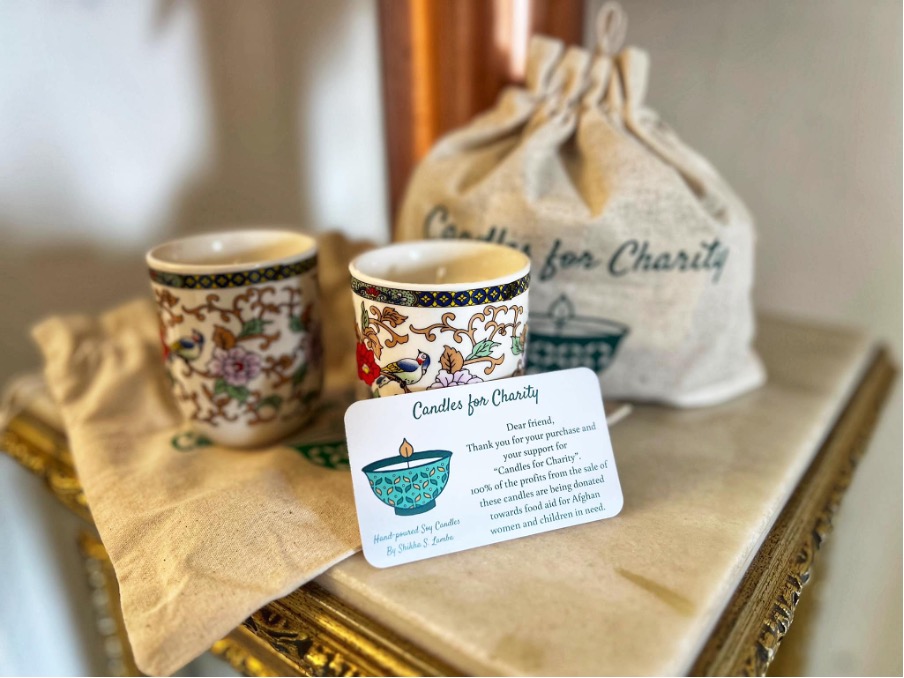
Shikha’s hand crafted candle and book gift sets
Sadie: Beyond literature, what values or experiences have shaped your advocacy, especially around women’s rights?
Shikha: I’ve always believed in women’s rights and, in my own way, I’ve advocated for causes I’ve believed in since my school days. Many of the values I carry are those my mother has instilled in my sister and me. Both our parents worked, and it was because of both their earnings that we received the education we did and had the life we had. Our mother started working when she was nineteen. She travelled the world on her own and put together her own trousseau with her earnings after her father passed away when she was in her early twenties. She has always been an independent woman and a feminist.
Also, something our mother ingrained in us at an early age is that if we’re ever in a position to feed someone who is hungry or give water to a thirsty person, we should. There is no service higher than that in the eyes of any god.
Sadie: What do you wish people understood about women’s rights advocacy that isn’t a clickbait slogan?
Shikha: Women’s rights advocacy needs both women and men. The world we live in runs exactly as it was designed. Patriarchy is the one poison we must eradicate from all sectors of society if we are to see a more peaceful and less violent world. I’m tired of people saying feminism is about hating men. Feminism doesn’t exist to attack men; it exists to ensure men don’t receive special privileges simply because of their gender. We need women and men to pay more attention; otherwise, our daughters and granddaughters will continue to be treated as second-class citizens, their freedoms constantly at the mercy of those in power.
Sadie: What’s something you protect fiercely these days: your time, your attention, your softness?
Shikha: My energy, what I spend it on, who I spend it on. Living with chronic illnesses and going through perimenopause, energy is in short supply.
Sadie: What are you chasing on the page lately: music, truth, permission, revenge, tenderness?
Shikha: Tenderness, beauty, hope. Much of my poetry speaks of war, violence, and all that is wrong in the world. I desperately want to write and discover poetry that can see beyond all of that and inspire me. That’s what I chase, or rather hope for, when I sit down to write. I’m always chasing rainbows of inspiration, humanity and stories around creativity.
Sadie: What’s your pet peeve in literary spaces, something tiny that makes you want to flip a table, gently?
Shikha: Unfavourable author reviews broadcast by readers and gatekeeping in poetry.
Sadie: Which do you trust more: your first instinct, or the one that arrives after you’ve walked away and come back?
Shikha: Both, depending on the situation. I’ve come to recognise situations where my first instinct is to operate from a place of fear rather than from one of opportunity. In those cases, I like to step away and then re-evaluate. My first instinct about people has usually been quite accurate, but I try to keep room for change.
Sadie: When you look back, how have books helped you, and what would you like the reader to take away from your story?
Shikha: Honestly, I’ve never spent much time thinking about “my story”. I’m still getting used to the idea of having one that might be of interest to others. I guess I could take a page from one of my chapters and share this: Help often arrives from unexpected places. Keep your heart open to new possibilities. It’s also important to recognise something that truly resonates with your soul. You’ll know it, and feel it like a truth you can’t deny. Answer the call, whatever it may be, whenever it comes. Don’t overthink it, don’t give in to doubts. It just might be the start of a most extraordinary and meaningful journey.
How to cite: Kaye, Sadie and Lamba, Shikha S. “Challenging the Patriarchy with Poetry and Prose.” Cha: An Asian Literary Journal, 19 Sept. 2026, chajournal.com/2026/09/19/shikha-s-shikha.

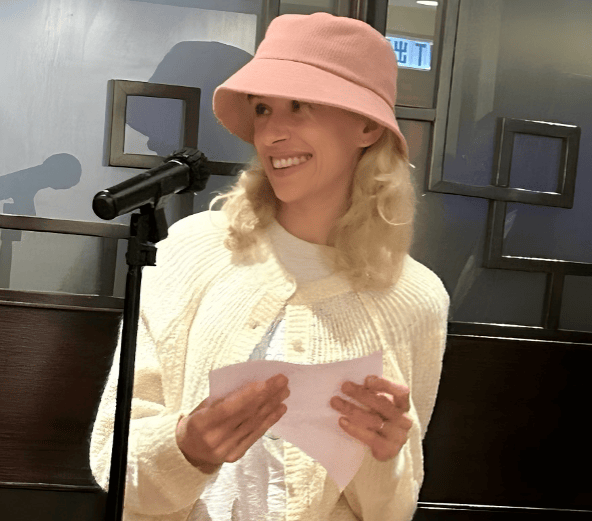
Sadie Kaye is a storyteller from Hong Kong who creates quirky podcasts, offbeat documentaries, and independent films. Her humour columns for RTHK Radio 3, rants, reviews and essays on mental health have been published by the South China Morning Post, Cha, The Hooghly Review and featured in many anthologies. Her work has received recognition from the Association for International Broadcasting, the New York Festivals Radio Awards, On Air Fest, International Women’s Podcast Awards and Comedy Women in Print Prize. She has produced two feature films for Contro Vento Films. Transference (2020) went viral on YouTube, exceeding 30 million views. To Love a Narcissist was released in North America 19 May 2026. [All contributions by Sadie Kaye.]

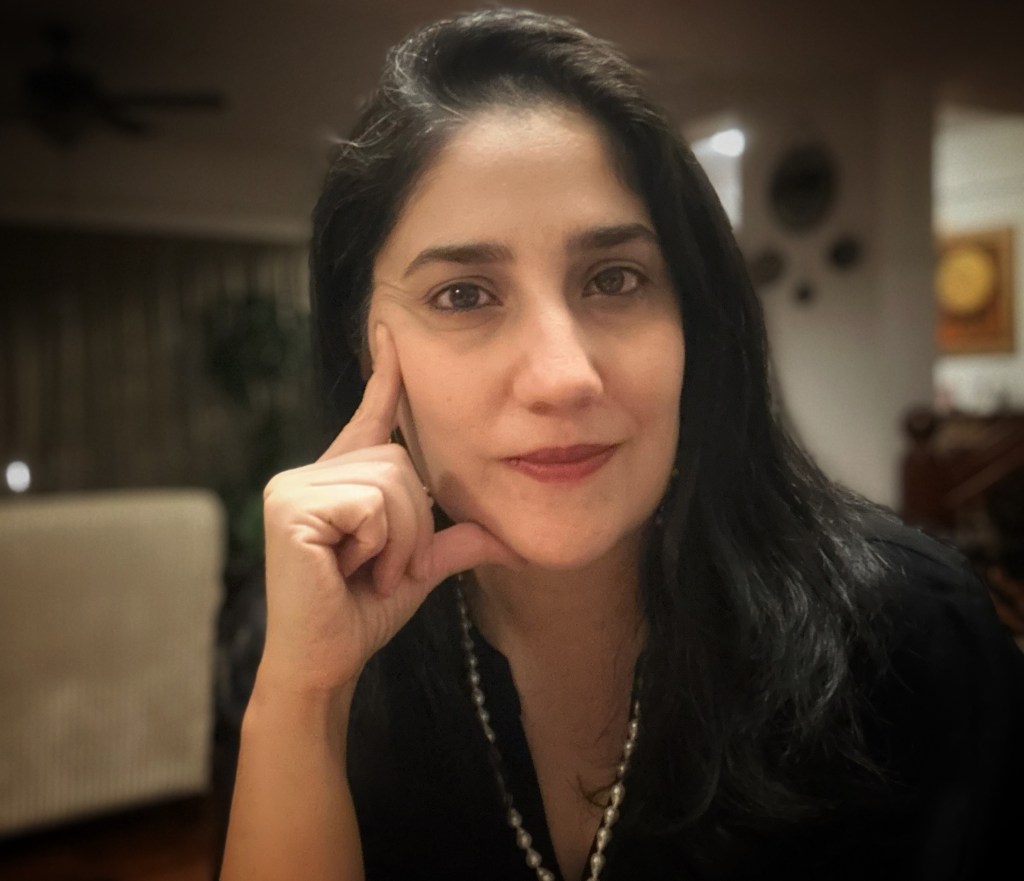
Shikha S. Lamba is a jewellery designer, poet, co-editor of the online magazine Coffee and Conversations, and passionate advocate for women’s rights living in Hong Kong. Her creative work has been published in journals globally and featured in Being Neighbourly HK, Thorn and Bloom Magazine UK, CNN and The Hooghly Review. and her poems and photography have been nominated for Best of the Net and the Pushcart Prize. Her advocacy currently focuses mainly on Afghanistan, where her fundraising has supported over a thousand families in the past five years with food, medical, rent, winter and sanitary aid. With the help of donors, she has provided Afghan girls barred from school and university with phones, tablets and laptops to continue their learning online, enrolled children in schools, distributed sewing machines to Afghan widows, helped renovate and repair their homes, and supported two orphanages in Kabul with food, hygiene and other aid. As a poet and editor, she has also collaborated with other writers and editors to create spaces where Afghan women’s creative work can be heard and shared. In 2026, she curated a collection of poetry amplifying the voices of Afghan women for The Candyman’s Trumpet, published on 2 August 2026. She admittedly lives a large portion of her life online and can be found on most social media platforms through her writing, jewellery and magazine. @shikhaslamba (IG) @shikhaslamba (FB)
 Cha
Cha 