
Editor’s note: We are pleased to present the first chapter of Liang Xiaosheng’s My Destiny, translated by the renowned Howard Goldblatt, whose work has played a defining role in bringing modern Chinese fiction to an English-speaking readership. Readers interested in Goldblatt’s reflections on the challenges of translating the novel, including his negotiation of its philosophical nuances and linguistic demands, are invited to turn to his accompanying essay, “Me and My Destiny.”

[MY DESTINY] “One” from Liang Xiaosheng’s My Destiny, translated by Howard Goldblatt
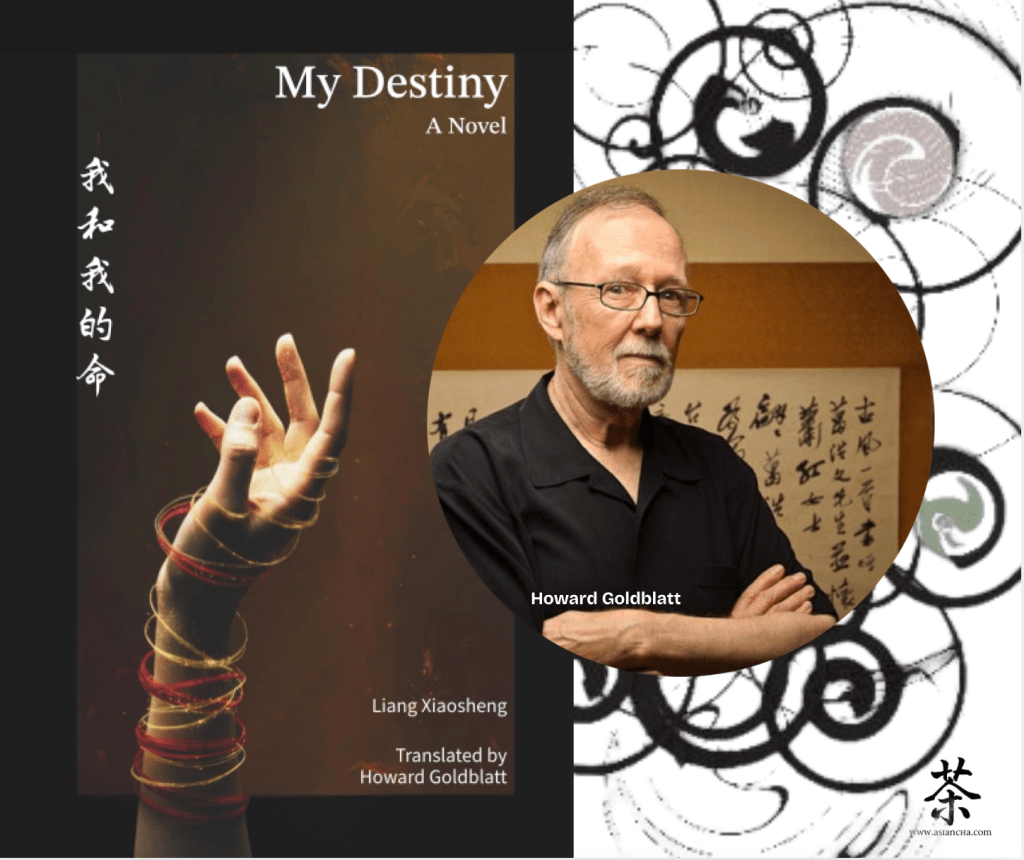
Liang Xiaosheng (author), Howard Goldblatt (translator). My Destiny: A Novel, Long River Press, 2026. 388 pgs.
One
The date was 13 September 1982. I was yet unborn, though I retain an espe- cially clear memory of the day, and that is because whenever my first and second sisters talk about me, this is where they start; so too my father. The day appears to have a direct connection with my birth two days later.
The mid-day sun was beautiful.
“The sun comes up, yo-ha/happiness is on its way, hey!” goes the first line of a Sichuan folk song. Farmers in Guizhou’s mountain areas share a kinship with and love of the sun. The most glorious season of the year in my hometown, Shenxianding, arrives in the ninth month. That is when people finally see a col- or other than green—a golden yellow. Now green is a popular color, but if your eyes are treated to only green most of the year, it can become oppressive. You get the feeling you inhabit a green prison, not unlike the melancholy of life on an island surrounded by a sea of blue.
Shenxianding is the name of a place, it is also the name of a small village with fewer than a hundred families. No one can say which comes first, the name of the place or the name of the village.
As its name implies, Shenxianding is a village atop a mountain, not the highest mountain around, but one encircled by peaks it must look up to. Situated on a flatland about the size of a soccer field, the village came into existence with the gradual influx of new residents. When the commune system was in place, the village was known as Production Team Two. Whenever people men- tion Shenxianding, that is the place. When they mention Production Team Two, that too is the place. All the other mountains are bereft of a flatland, so no one has ever lived there. The village was bang up against one county line, with no signs of human habitation deeper into the mountains. A twenty-li walk will take you to the boundary of yet another county.
“Walk” is but a figure of speech, for there was no road, and so no walking, and, for sure, climbing the mountain was unheard of.
With the advent of the eighth month, rice paddies turn from green to yellow on the flatland. After the tenth day of the following month, a radiantly smooth carpet spreads out, bringing joy to the villagers’ hearts. Their homes sit in the periphery above the flatland, small structures made of bamboo stalks over stone foundations. In contemporary terms, calling them “sheds” would not be inappropriate. But the mountain folk back then weren’t fussy about how they lived, having few if any needs. What did concern them was how they filled their bellies. No villager would have the temerity to build a structure worthy of the name home, because the little available farmland was off-limits for personal use. Everyone knew that, and it was not really a matter of “temerity.”
Fortunately, the ninth month, a season of radiant sunshine, saw little rain, providing the grateful villagers with a chance to enjoy bright sunny days. They gratefully welcomed a whole month of fine weather. Grateful to the sun, grateful for the harvests, grateful for a golden yellow flatland.
In the eyes of Shenxianding villagers, flowers were highly admired, but no one—man, woman, boy or girl—ever planted any. To do so would have been considered abnormal. With so little land to go around, every container, even cracked pots and leaky jars, held seedlings. A nearly morbid and contagious reverence for the land was passed down from one generation to the next. Flow- ering trees, once plentiful, were no longer seen. They had been, a long time ago, but as public property belonging either to the production teams or to the commune, thus county owned meant country owned. Flowering trees were still trees, but were something to look at, in no way useful or usable, so they were cut down over time, turned into logs and distributed to households for the winter. Families with children, old folks, or people who were unwell were given extra allotments, so that all members of the production teams were comfort- ably warm, one big family. In the absence of floral plantings, wildflowers were cherished. Any place where they poked up out of the ground was talked about in casual conversations. People who had only heard talk of wildflower sightings found time to go see for themselves, bringing children, young and old, to one of those rare finds. This sort of fondness for the beauty of flowers led to a sense of appreciation toward Nature, at the same time supplying proof of people’s deeply rooted thirst for beauty.
Parents would admonish their children: “Don’t sneak over there and pick any of those. People will be angry if you do. Leave them in the ground for everyone to see instead of taking them home, where no one else can see them.”
By setting a good example, the adults ensured that their children, even the youngest, grew up well behaved. Wildflowers may just have been blossoms in the wild, but picking one and bringing it home was a really bad thing.
On 13 September 1982, around noontime, my sisters were harvesting rice in our family paddy. My eldest sister, Xiaoqin, was seventeen going on eighteen, the prettiest girl in Shenxianding, people said. My second sister, Xiaoju, was fifteen, plain-looking, not nearly as attractive as her older sister, and not as smart or quick-witted either. A slow girl, in truth, borderline stupid, I’d say. I later heard her mention one day that she took after our mother in many ways.
On this day, she was getting tired.
So she laid down her scythe and, hands on her knees, just gazed at the daz- zling carpet of gold. “I hate having to cut all that down before I’ve seen enough of it,” she said.
“What makes it so special?” Big Sister scolded. “It’s the same every year, isn’t it? Keep cutting. When we’ve finished this little spot, we can go home for something to eat. I’m starving.”
Big Sister was more practical.
A field, wheat or rice, presents a nice view during that short period when the yellow first shows, and only when the sun shines down does it fashion the notion of a carpet of gold. By harvest time, the yellow has lost most of its beauty, looking more like water-soaked cardboard.
Xiaju ignored Xiaoqin.
Hands on hips, she straightened up, leaned back, and gazed into the sky. Her back was sore, her neck was stiff.
That is how she was witness to something she’d never seen before: a parachute with a man underneath slowly drifting her way.
“Look, Sis, hurry!” she shouted excitedly.
Big Sister straightened up and looked into the sky. “Ah, it’s a paratrooper.” “Oh, how I’d love to marry a soldier boy one day,” Second Sister said. “Dream on!” her sister snapped. “No wonder people say you’re dumb. You think any soldier would marry a girl from Shenxianding? Do you think all the girls in China already have husbands?”
As the sisters talked, the paratrooper descended onto our family’s paddy. Landing in a peasant’s paddy was unplanned, the sisters could see that, since he’d struggled to avoid it. But his unruly parachute appeared to have decided on a wet landing. And to settle over all three people while it was at it. The para- trooper first untangled himself, having unfortunately sprained an ankle while landing, yet he still helped my sisters out from under the canopy.
Twenty-six years later, Second Sister told me, “I wished I could have stayed under that thing longer.”
That was the first time I’d sat down with her, our first ever sister-to-sister chat, and, most significantly, the time she filled me in on what happened on 13 September 1982.
I asked her why.
“It was like a sedan chair.”
What sort of sedan chair?
“The one a bride rides in, of course.”
What happened next was inevitable—Second Sister ran for help, the paratrooper, or should I say, “paratrooper brother,” sat on the ground, instructing my eldest sister on how to gather and roll up the parachute.
Second Sister said the soldier boy was very handsome.
Like “Lin Daiyu falling out of the sky,” he descended right in front of my sisters, any mention of which thrilled Second Sister for the longest time afterward. In her own words: “Nothing in my life ever made me so happy.”
For my big sister it was not good, not good at all. But “paratrooper brother” wasn’t to blame. And he didn’t know that.
Second Sister came running up in the company of Branch Secretary Hou Guangtai with some men who then carried the paratrooper to our house on a door panel.
My father, Hou Yongwang, was a peasant. So was my mother, Hou Hua. Most families in Shenxianding were named Hou, and many adults were related, with intermarriage quite common. When a child was born, they could take the name of either father or mother and still be named Hou. The good news was, husbands and wives got along fine; the bad news was, a depleted intelligence generation to generation. Like my second sister.
Big Sister was the exception.
Oldtimers related how a member of a rich family named Hou in the pro- vincial capital had been a rebel leader in the waning years of the Qing Dynasty. The patriarch, fearing the possible liquidation of his family, fled, taking everyone, even the servants, male and female, into the mountains, settling in Shenxianding. Most local families with names other than Hou were descendants of those servants.
Second Sister said, “Our name is Hou, which proves we have upper-class blood.”
This she said while cleaning the guts of chickens. Back then, few Chinese peasants willingly threw out the guts of the chickens they killed, finding ways to cook and eat them. It was a fussy, messy job. They cleaned the skinny, slithery strips, pulling out more, and cleaned them, over and over, until they had cleaned them all. Her son, my nephew, Zhao Kai, was cleaning the ashes off a chunk of tofu he’d bought for me at the low-lying market the day before. In keeping it from going bad overnight during those hot days, he’d buried it in stove ash, a trick to retain its freshness. In the absence of medicine, a handful of ashes could also be used as an antiseptic and as a staunch for a bleeding injury.
That was 2008, my second sister’s forty-first year. By then she was the mother of a married daughter, Zhao Jun, and the boy, Zhao Kai. Mother and daughter, who had worked together here and there for years, had come back for a sort of reunion during my visit home from Shenzhen to see our father.
That comment from my sister caught me by surprise. It also surprised her daughter, who was cleaning vegetables. Like me, she gaped at her mother. After a few seconds of that, she slowly turned to me, the look on her face saying: “What did she mean by that, Auntie?”
How was I supposed to know what she meant? No, I did understand, I knew what she was saying, which was that our family enjoyed a good bloodline. There was more to it than that, I thought, but just saying it made her feel good about herself.
That something more was what Zhao Jun could not understand.
As for me, I knew my Second Sister was not very bright, not nearly clever enough for her words to carry meaning below the surface. I figured she’d just blurted out a gladdening thought.
Then she went back to cleaning chicken guts, as if she hadn’t said anything.
In 2008, at age twenty-six, having established residence in Shenzhen, I was a bona fide city dweller, making more than seven thousand yuan a month. I was the only sister who had actually accomplished something, the sole person who could pitch in to help three generations of the family. All my relatives, includ- ing my father and two brothers-in-law, treated me with respect. If not for that, Second Sister wouldn’t be cleaning chicken guts in front of me, although they looked pretty clean to me.
I said nothing in response.
Yet I felt sorry over her lack of intelligence in uttering such a baffling state- ment. At the same time, I was reminded of another term close to “bloodline,” and that was “destiny.” Thinking about my big sister’s destiny, to begin with, and from there, to my own, was enough to sadden me. But I didn’t show it.
I’d made a habit of hiding sadness and worries from my family and had gotten quite good at it. It was important to do that, because in their eyes, I was a lifesaver. Any sign of distress on my face would have made them quite anxious.
I said nothing to Zhao Jun or to her brother.
What could I say?
I smiled and held my tongue, sadness building inside.
Zhao Jun’s cell phone rang. She left the vegetables she was washing and went out to take the call . . .
Shenxianding had no electric service in 1982, and no telephones. China at the time was home to vast numbers of similar villages, most of them located in the mountains.
A paratrooper landing in Shenxianding was a novel experience for everyone. Things were hopping at the Hou household, with adults and children going in and out, all wanting to see what the paratrooper looked like.
A disciplined man, he explained to Branch Secretary Hou how he’d wound up in Shenxianding: a reconnaissance aircraft with a complement of scouts had taken off from Kunming’s military base, their destination the border between Yunnan and Guizhou, where, when told to jump, they were to parachute to a landing spot that turned out to be a mountain forest. There they would be searched for by a squad of Guizhou-based soldiers.
It was a joint army-air force training maneuver with scouts and scout-hunters from the two provinces, part of a routine exercise, with no signif- icant military relevance. Soldiers have to train, don’t they? The aircraft encountered extreme turbulence and crosswinds en route and was forced to fly across the Yunnan border into Guizhou, where the paratroopers landed. Our soldier was the last man out of the plane. Landing on a Shenxianding rice paddy was not something he’d intended.
Secretary Hou wasted no time in sending someone on the village bicycle to the township to report what had happened. Land had been allocated to the peasants that year, and what for a while had been a production brigade was now a village again. The commune had been replaced by a county government. Happily, the surge to seek city jobs had only barely begun, so there were still plenty of young men in the village, many of whom fought over the reporting duty. Shenxianding was no more than fourteen or fifteen li down the mountain from the township.
Xiaoju told me she and Xiaoqin weren’t the only ones who said the soldier cut quite a figure. The villagers all agreed.
She went on: “If your big sister and ‘soldier boy’ had gotten together, it would have been a marriage made in Heaven, wouldn’t it? Just think how gor- geous their children would have been.”
She was forty-one when she said that, soon to be a grandmother, and still could not stop talking about “soldier boy.” I felt so bad for her.
Stretcher-bearers from the county government arrived a little more than two hours later to carry “soldier boy” down to town. During those two hours, the branch secretary let only my first sister talk with the paratrooper, allowing no one else into the room. Even he stayed outside to sit on the step with his pipe. Our father and his second daughter stayed outside, like everyone else. Only my mother remained inside, in bed in another room, my birth imminent, which made it hard for her to get around.
No one knew what the paratrooper and Xiaoqin talked about in there, but many people heard her singing Guizhou mountain ballads for him. My first sister was more than beautiful, she also had a lovely singing voice. Outside the room, Father, Second Sister, and our mother, who was inside, heard the soldier applaud and praise Xiaoqin’s singing.
The county government sent a member of its military support unit with a uniform to Shenxianding, probably thinking the visitor had ruined his in the landing. They were wrong—his uniform was in fine shape. But he put on the new jacket and gave his old one to Xiaoqin. It was unlined black leather with brass buttons on the cuffs. Soft, smooth leather.
As he waved farewell from the stretcher, Xiaoqin stood at the window watching him being carried away, her face tear-streaked.
The branch secretary came to the house around dusk.
Father was making dinner, Second Sister was keeping the fire going, while her elder sister was with my mother, helping her wash up—face, hands, feet.
Skewers of strange smoked objects were stuck in cracks on our beat-up dining table.
Hou Guangtai asked what they were.
Father told him it was frog’s meat that Zhang Jiagui had sent us. Zhang was a young man who had returned home after being sent down to the countryside as a high school graduate during the Cultural Revolution. The best educated individual in the village, he’d had his heart set on getting into college, something for which his teachers and schoolmates considered him a shoo-in. He knew he’d make it. But his ideals were crushed by being sent down. He hadn’t recovered from the setback after returning home and showed no interest in a marriage. When the college entrance exam was reinstated, his aging mother, who depended on him to get by, was bedridden. By the time he’d carried out his filial duty upon her death, it was already 1981. By then, Xiaoqin had grown into a lovely young woman with a face like a blossoming peony. The branch secretary had talked to Zhang about my sister as a match. He’d agreed without hesitation. The residents of Shenxianding believed there were only three possible reasons he would give up his long-cherished college dream. Life had rubbed the luster off the hope itself, like a rusty lock on a rundown courtyard, the holder of the key having lost interest in seeing if it still fit. That was one. Or, maybe, as the newly elected village chief, he was overwhelmed by villagers’ expectations and wanted to prove himself capable of handling matters. Number two. Finally, he could have been smitten by my sister’s beauty.
The third possibility was the one everyone found most likely. According to Xiaoju, Zhang Jiagui had taken no notice of her sister in the past, and when the attraction did take hold, he’d developed a bit of an inferiority complex. He was, after all, a thirty-two-year-old Shenxianding bachelor with average looks. His high-school-graduate status had been lost in the march of history, along with the capital of enjoying an advantage over most people. Xiaoqin was sixteen, half his age.
Even if he passed the college entrance exam at the age of thirty-two, what of it? He’d be thirty-six after four years of college, and whether in school or a graduate, how would he find a wife as beautiful as Hou Xiaoqin? For men, how one’s life turns out is determined by four elements: wealth, position, gourmet’s luck, and a good love life, with love life at the top of the heap. A man with an active love life is the envy of high officials and the very rich. How about Zhang Jiagui, Shenxianding’s over-the-hill bachelor? A marriage contract with Hou Xiaoqin would be all he’d need to ensure a good life. That is how the village men, especially the bachelors, viewed the prospect of my sister, Hou Xiaoqin, marrying Zhang Jiagui.
What were her thoughts about all this? Had she accepted the proposal willingly or grudgingly? I never asked Second Sister that question, and she never brought it up. And there was no way I could raise it with Father, who was equally silent on the matter, so I never knew.
My father however, had said this: The people of Shenxianding were secretly happy Zhang Jiagui had not become the village’s first ever college student, because he was not a Hou, he was a Zhang. If our first college product had been born into any other family, it would have been a loss of face for villagers named Hou, a communal sense of diminution. Even Hou Guangtai, the party secretary, felt that way. Yes, people were unwilling to envision Zhang Jiagui as Shenxianding’s first ever college graduate, but at the same time, they supported him as village chief, unanimously entrusting him with all sorts of fanciful expectations.
The human heart can be quirky, not unlike the stuff on the skewers stuck in the gaps of our dining table. After being smoked and roasted, you’d never know what they were if no one told you.
The branch secretary walked up to the table, hands clasped behind him, and bent low to examine the skewers. “It’s more than frog on these, isn’t it?”
Father said a few had snake meat. Zhang Jiagui had killed a three-foot grass snake and roasted it as a gift for his future father-in-law.
Second Sister later explained that Zhang Jiagui had given the gift to please our sister.
The party secretary sat down on a stool at our table, commenting that he hadn’t tasted meat in a long time. Snake counts as meat, and is something only the fortunate get, at least occasionally. With that, he snatched up one of the skewers and started in on what he assumed was snake meat. He even asked my second sister for some salt, saying salt turns tasteless food into a delicacy. It also won’t be a waste of good food.
Father told him we’d run out of salt and had planned to buy some in town that day. The surprise descent of the paratrooper had put an end to that. He told Second Sister to get a little dish of pickling water from the vat for our elderly party secretary.
Our elderly secretary wasn’t elderly at all, only fifty-three, but had been many years in office, which was why they referred to him that way, a measure of respect for the party representative.
He had dropped by to talk about the jacket.
He said the gift ought not to belong only to our family. A leather jacket like that would easily bring in fifty or sixty yuan in town, and villagers were unhappy that we were keeping it for ourselves.
Second Sister reacted angrily. She tossed down her poker, stood up and, hands on her hips, said, “He gave that jacket to my sister, we’re not ‘keeping it for ourselves’! People can have all the shitty opinions they want, but there’s no need for you as party secretary to come to our house with this ridiculous non- sense.
The elderly secretary wasn’t angry, likely figuring it would be beneath him as party secretary to argue with a slow-witted, half-grown girl.
He continued with his eye on Father. If Shenxianding had still been a pro- duction brigade, anything a soldier gave to a member of the brigade in thanks for the brigade’s help would have been seen as a PLA gift to everyone, in other words, communal property . . .
“But times have changed,” Father gently rebuked him.
With a sigh, the party secretary stood his ground. “Yes, times have changed, but you must agree that the men who ran around working themselves into a sweat were the ones who really helped, weren’t they? After all they did, they are unhappy about not sharing in the benefits. That’s only natural, isn’t it?”
Second Sister opened her mouth, but nothing came out.
Momentarily silenced, Father forced a retort. “Are you saying you want to take the jacket from us, then have someone sell it in town and divide up the money?”
Big Sister walked out of her room just then with a basin of water. “When the paratrooper gave me the jacket, he said, ’Here’s a keepsake for you.’ He didn’t say ‘for you folks.’ You were there, you heard him, Secretary. Since he gave it to me, no one is going to take it out of this house.”
The secretary was embarrassed. He tried to explain that he hadn’t come for the jacket and certainly wasn’t thinking of selling it and dividing up the money.
He stepped away, skewer in hand, walked over to the stove, and squatted down to say to my father, “Yongwang, there are kinship connections between our families, and you know very well how I’ve treated you, don’t you? I didn’t come with any plan, I just wanted to let you know how things are. It’s not unrea- sonable for people to be a bit unhappy. It wouldn’t take much to change that, say buying a carton of cigarettes and passing them around. That’s worth doing, don’t you think. We may not be a collective any longer, and I don’t have much author- ity, but I’m still responsible for seeing we all get along.”
There was nothing Xiaoqin could say to that.
But what he said made sense and was good-intentioned. It was the right thing to say. Father cast a look at his daughter and lowered his head to think for a moment. “All right,” he declared, “I’ll take your advice, Secretary, and buy a carton of cigarettes for you to distribute among the villagers.”
He took another look at Xiaoqin.
She turned and said no more as she walked out to dump the water.
Father lowered his voice and told the secretary he didn’t have the money to buy cigarettes, but he’d have Zhang Jiagui buy a carton for the secretary to distribute.
It didn’t matter to the secretary who bought it, since Jiagui wasn’t an outsider. Besides, he’d be marrying Xiaoqin over New Year’s, and she’d take the jacket to her new home with her, making it something that then belonged to the two of them.
As he walked out, he picked up another skewer of snake meat dipped it in the pickle vat, obviously finding it quite tasty.
My sister tried on the leather jacket after dinner and looked at herself in the mirror with the broken corner. One of our two bedrooms was for our par- ents, the other for my sisters. The damaged mirror rested atop an old chest that was part of my mother’s dowry. The mercury surface offered only blurred reflec- tions because of the dampness. Xiaoqin seldom looked into it, Xiaoju told me. She knew how beautiful she was, so why should she? But Xiaoju’s stops at the mirror increased, she admitted, and now she felt like smashing it. She’d stopped being jealous of her sister once the engagement to Zhang Jiagui was arranged. What good had Xiaoqin’s pretty face done her? She too would have to be mar- ried in Shenxianding, wouldn’t she? To some ordinary man a decade or so older than her.
On the evening of the thirteenth day of September 1982, in the light of a shrinking candle, Second Sister would later tell me, her sister was breathtaking- ly beautiful in her leather jacket. In today’s Internet speak she’d be “drop-dead gorgeous!”
Big Sister appeared surprised by what she saw, and not in a self-satisfied way. Quite the opposite, in fact, it was a blank look, as if her soul had flown off.
My parents shut the door to their room that night, something they seldom did. Without an open door the small room lacked fresh air, making it stuffy. They slept with it shut only in the winter.
Alerted to this unusual occurrence, Second Sister tiptoed up to the door to hear what her parents were saying.
Our father was an only child, as had been his father, a single son in each generation. Both my parents were named Hou, but our mother had given birth to two daughters only. No matter how many girls she had, they did not add up to one son. Girls married into someone else’s family.
This was a sore point with our father.
Our mother was guilt-stricken.
Then I came along, in Mother’s belly, about to be born.
Family planning for the countryside at the time allowed for two children to increase the chances of a son in the family for each generation. What went on elsewhere was none of our business; this is how it was done in our county. Families that already had their two children, both of whom were girls, could only swallow their tears. Policy allowed for no sympathy.
Father deployed a strategic plan in eager anticipation of my birth. Mother saw it as “brilliant.” Xiaoqin was betrothed at sixteen. A year later, in September of 1982, she’d be seventeen. The wedding was to take place over New Year’s, two months shy of her eighteenth birthday. In Shenxianding, it was acceptable to file formal documents two months after the wedding.
So now, there would only be one daughter in the family, Xiaoju, which meant my birth as a second child, would not exceed the quota.
The party secretary was a distant relative, and as such shared my parents’ anxieties. “Of the three unfilial acts, having no heir is the worst.” In ancient times, an heir was any child, but in our village, no son meant no heir, and that was a bad situation. With the party secretary out spreading the news, the villag- ers viewed my mother, who was about to have another child, with a blind eye.
The matter was reduced to the question, was I going to be a boy or a girl?
My parents agreed that time was of the essence, that it was critical to learn as soon as possible, even one day early, if necessary. They could see that my el- dest sister’s situation wasn’t quite normal and were worried that if her marriage didn’t work out, my impending birth would be a thorny issue—boy or girl.
They decided to go into town the next day to see a soothsayer who was expert at determining the sex of a fetus and who charged little for her expertise. If they secretly came to her, she would not refuse to see them. Father could afford a bit more than a carton of cigarettes, and he’d take his ten or fifteen yuan he owned into town.
If I turned out to be a girl, they’d follow the “established policy” of giving me up.
They prepared for that possibility by contacting two families down the mountain. One was willing to give us two bags of sweet potatoes as a token of gratitude; the other offered thirty or forty roof tiles, to be used to stop some of the leaks.
As a result of my parents’ negotiations, the decision was made to give me to the sweet potato family, since that would save grain, which they could then sell for more than thirty or forty roof tiles.
After several months of no contact with the two families, my parents were worried about the possibility of their going back on their word.
“What do we do if that happens?” my worried mother asked.
Father sighed pensively. “Give her to anybody who’ll take her.”
“Is that what I’d get for carrying her all these months?”
“What choice do we have? I’m tired of raising a child just so she can belong to someone else’s family. Aren’t you?”
Mother could only sob.
“What are you crying for? Don’t think yourself into a corner. Maybe it’ll be a son this time.”
Twenty-six years later, by the time I was twenty-six, on the night of my
Second Sister and my conversation, she talked about the past, laughing as she told me about the scheme they’d come up with.
I wasn’t laughing.
I wanted to but couldn’t.
It felt like my heart had suffered a spasm.
I was feeling sorry again, sorry for myself, sorry my destiny had been determined before I was even born, sorry over the poverty of Shenxianding during those years.
How to cite: Goldblatt, Howard and Liang Xiaosheng. “One.” Cha: An Asian Literary Journal, 28 Apr. 2026. chajournal.com/2026/04/28/one-my-destiny.

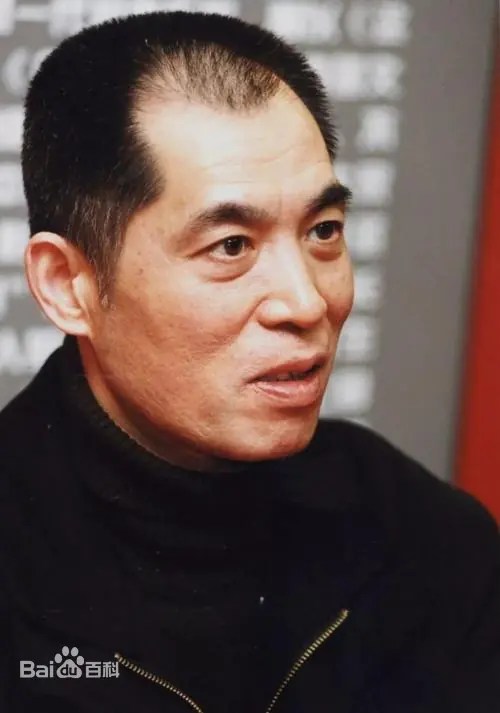
Liang Xiaosheng was born in 1949 in Harbin. A member of the China Writers Association, he is also a professor at Beijing Language and Culture University. Liang began publishing novels in 1979, and since then his works have received the National Excellent Short Story Prize, the Flying Apsaras Award, and the China TV Golden Eagle Award. In 2019, he was awarded the Second Wu Chengen Prize for Novels and the Mao Dun Literature Prize. His most well-known works are The Human World, The Floating City, A Red Guard’s Confessions, From Fudan University to Beijing Film Academy, The City of Snow, and The Depressed Chinese. His novels have been translated into English, French, Japanese, Russian, and Italian.

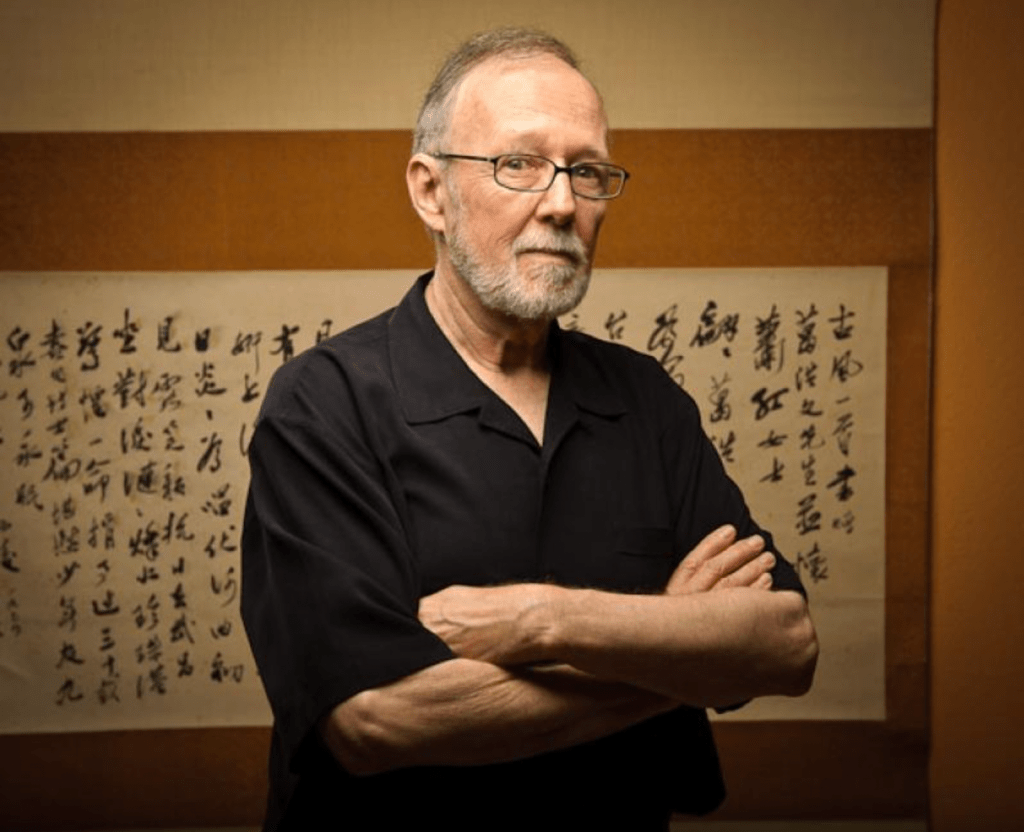
Howard Goldblatt has translated the work of virtually all major Chinese novelists of the post-Mao era, producing more than fifty books in total. Just before and immediately after the announcement of the 2012 Nobel Prize, his translations of two novels by the laureate Mo Yan, POW! and Sandalwood Death, were published. He has also translated two winners of the Man Asia Literary Prize and, in 2009, received a Guggenheim Fellowship. More recently, he has translated several novels from Taiwan with his co-translator, Sylvia Li-chun Lin. Together, they have received three translation awards from the NEA. Among their two dozen joint translations, two have received major prizes: the ALTA Translation of the Year Award for Notes of a Desolate Man, and a Man Asia Literary Prize for Three Sisters. They reside in Lafayette, Colorado.
 Cha
Cha 