
Editor’s note: We are delighted to present an essay by the distinguished translator Howard Goldblatt, whose work has been instrumental in introducing modern Chinese fiction to English-speaking readers. In his essay, Goldblatt reflects on his translation of Liang Xiaosheng’s My Destiny , examining the challenges of rendering a text shaped by the concept of mingyun 命運, in which fate and change exist in tension. His essay offers a candid account of the translator’s craft, from negotiating the philosophical nuances of the title to balancing tone, structure, and linguistic equivalence between source text and target language. We are also pleased to present the opening chapter of mingyun in his English translation, inviting readers to engage both with his process and with the work itself.

[MY DESTINY] “Me and My Destiny” by Howard Goldblatt
Liang Xiaosheng (author), Howard Goldblatt (translator). My Destiny: A Novel, Long River Press, 2026. 388 pgs.
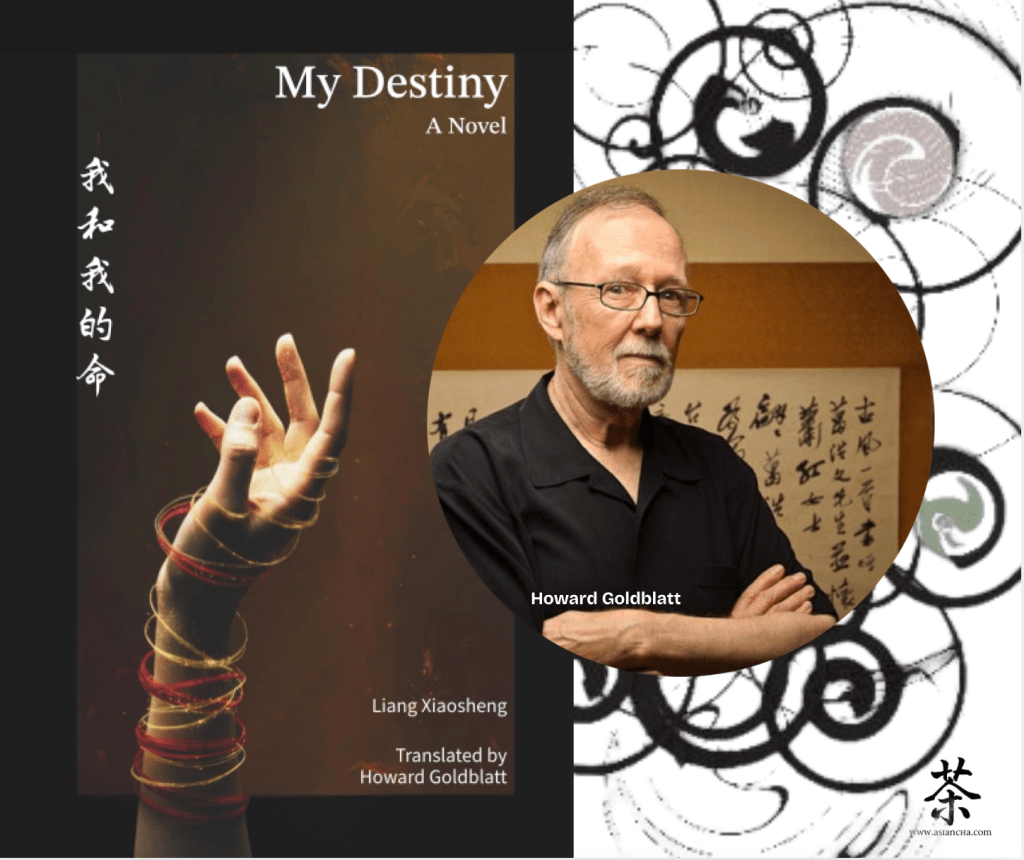
Mingyun 命運 is what Chinese generally use when referring to destiny and fate. Ming 命 is the lot one is born with, what we might refer to as fate, predetermined and unchangeable. Yun 運 is the equivalent of luck and fortune, connoting movement and motion, destiny, perhaps. For the Chinese-speaking world, together mingyun signifies both predestiny and the possibility of changing one’s fate.
Wanzhi, the protagonist of Liang Xiaosheng’s My Destiny, exemplifies the interplay between ming and yun. Born into a peasant family, she is predestined to live a life of hardship, to toil away in the field, and perhaps to grow into a conniving woman like one of her elder sisters. But yun interferes. The pregnant mother is taken into town, where, in the home of a woman skilled in such matters, she gives birth to Wanzhi, the youngest of three girls, who is then abandoned by her mother and her still-and-forever heirless father. The midwife and her husband, the mayor, decide to raise the child as their own. Well educated and with admirable moral character, Wanzhi’s adoptive parents give her a stable family and an enviable upbringing. Unaware of the existence of her natal family as she grows up in the city, she blithely lives on until one day a trip to the countryside brings her face to face with her fate. Now she knows not only that she was abandoned and adopted but also the kind of preordained future she was born into. She begins to experience self-doubt and questions her own ability to do well, for her ming has put her in the same lowly category as her parents. A series of events takes her from her adopted family into a world where she works menial jobs to support herself, the product of a changing yun. Eventually, she will own a convenience store, meet her future husband, and switch careers to work for a multinational corporation.
)
After agreeing to translate My Destiny, I was immediately confronted with the matter of how to render the title Wo he wode ming 我和我的命 (“Me and my ming”). Should ming here be understood as fate or as destiny? Thanks to the publisher, I did not have to agonise over that, although the abbreviated English title elides the duality between life as lived and life as formed, a sort of internal/external dichotomy. The range of characters in a story that spans many decades is substantial and diverse, revealing not only individual qualities but societal changes and characteristics as well. Language, of course, is a translator’s stock-in-trade. Obviously, disparate renderings from any language, but especially those that have so little in common with the receptive language, can and do vary considerably in linguistic style, interpretation, tone, and quality. My experience with the two works by Liang illustrates the difference, a hard-hitting late-20th-century memoir and a sort of bildungsroman about a young woman in the 21st century.
A translation, once published, is a fait accompli, in this case, a novel to be read with no thought to how it came into being. For me, however, “how it came into being” and how it moved on the page comprised my thoughts about the work. Basically, there are two ways I approach a work: reading it from beginning to end before starting or reading it as I go. Both have virtues. For My Destiny, I combined the two: first I read about the novel, then decided on a translation strategy that most befitted the work, translating paragraphs and skipping ahead in places to get a sense of the mise en scène, the balance of dialogue and narration, and pace, adjusting as I proceeded. Sometimes it was a simple change of tense to better convey the overall impact of a passage, while at other times a more significant shift, such as tone and diction. After finishing, I had the translation read by a native speaker of Chinese. Then I moved on to the next draft and read my translation against the original, followed by another draft that was read with only occasional consultation with the original. Before sending the manuscript to the publisher, I read the translation once more, focusing on readability.
Time consuming, sure, but for me, the only way for the “result” to be worthy of the project. Translators are tight-rope walkers whose pole balances between author and reader. The reader of Liang Xiaosheng’s My Destiny will find his writing engaging and his narrative relatable, something I hope I have been able to replicate in my translation.
How to cite: Goldblatt, Howard. “Me and My Destiny.” Cha: An Asian Literary Journal, 28 Apr. 2026. chajournal.com/2026/04/28/my-destiny.

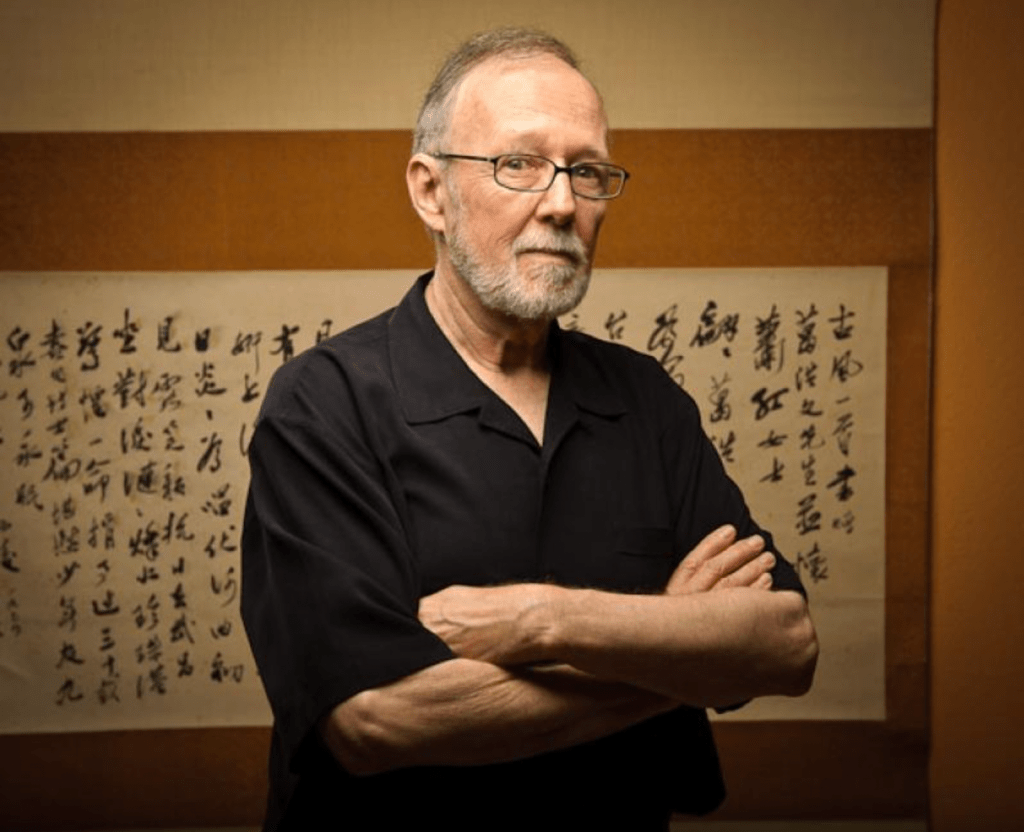
Howard Goldblatt has translated the work of virtually all major Chinese novelists of the post-Mao era, producing more than fifty books in total. Just before and immediately after the announcement of the 2012 Nobel Prize, his translations of two novels by the laureate Mo Yan, POW! and Sandalwood Death, were published. He has also translated two winners of the Man Asia Literary Prize and, in 2009, received a Guggenheim Fellowship. More recently, he has translated several novels from Taiwan with his co-translator, Sylvia Li-chun Lin. Together, they have received three translation awards from the NEA. Among their two dozen joint translations, two have received major prizes: the ALTA Translation of the Year Award for Notes of a Desolate Man, and a Man Asia Literary Prize for Three Sisters. They reside in Lafayette, Colorado.
 Cha
Cha 