
茶 FIRST IMPRESSIONS
茶 REVIEW OF BOOKS & FILMS
[REVIEW] “Back Then: Memory and the Cultural Revolution in Zhang Yueran’s Cocoon” by Seiya Tanase
All things Jeremy Tiang in Cha.
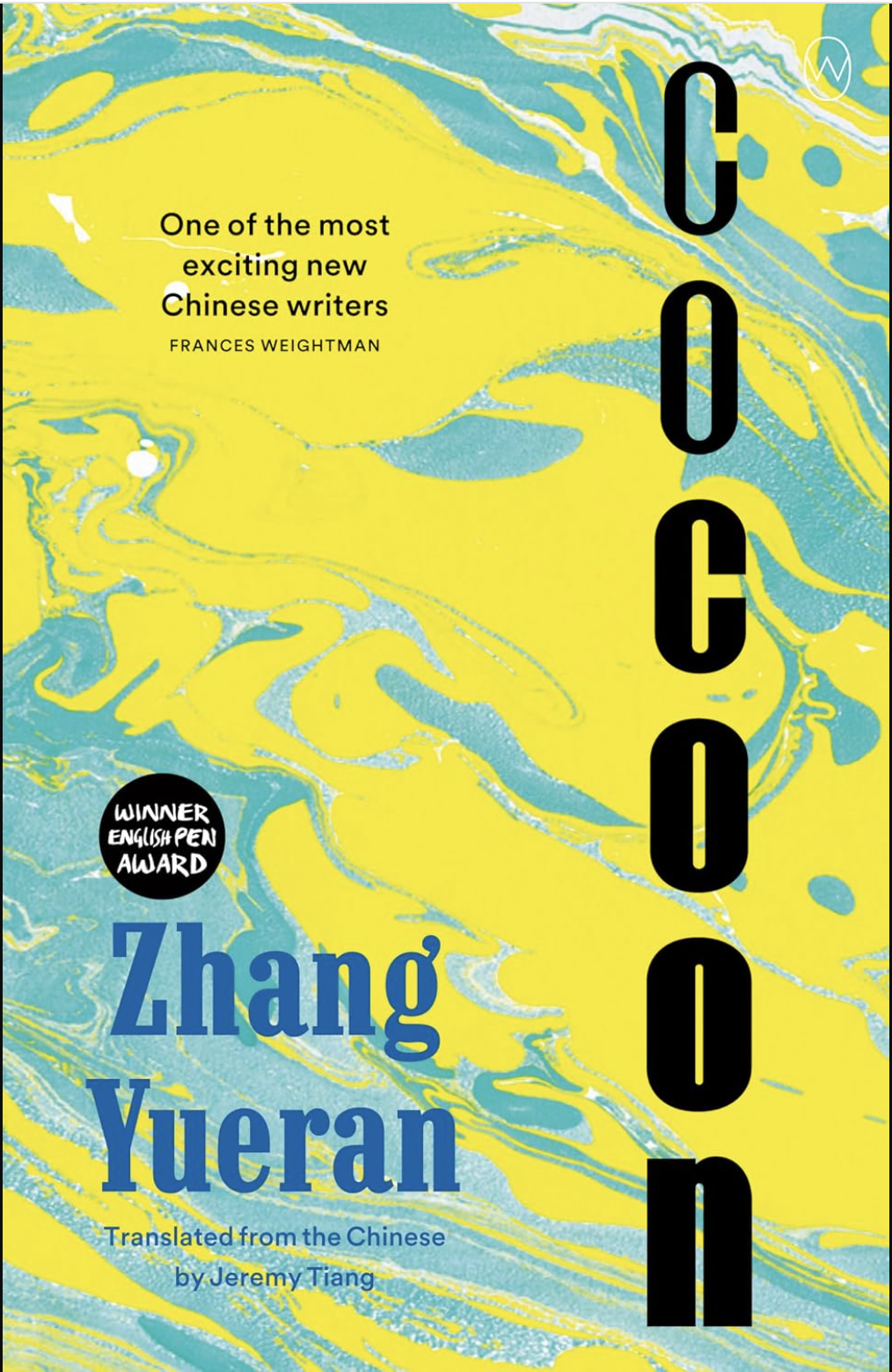
Zhang Yueran (author), Jeremy Tiang (translator). Cocoon, World Editions, 2026. 276 pgs.


As if to define the liminal space between her characters, Zhang Yueran renders the reunion of Li Jiaqi and Cheng Gong as parallel first-person monologues, each following cleanly on from the words of the previous speaker. Every reply swells beyond the bounds of ordinary conversation to become an independent story in its own right, rich in the kind of detail that only a novel can hold, detail that would be superfluous were Zhang merely writing a dialogue between the two. Jiaqi and Gong never react to one another; neither interrupts the other, and each recounts shared, unfiltered memories from their own perspective.
A man was slumped on the couch with his eyes shut. Even through the gloom and foggy air, after more than a decade, I recognised you. Cheng Gong, I said quietly. (p. 22)
When we first meet the pair, Jiaqi’s grandfather is dying, and she has appointed herself his carer in anticipation of his impending funeral. She pictures the grotesquely scripted “grand send-off” that awaits a man once counted among China’s most prominent heart surgeons: politicians would “offer their condolences, a Steadicam following them like a loyal dog to capture the appreciation on my face” (p. 23). Gong’s grandfather, meanwhile, has lain unchanged for the past ten years, unloved yet needed, in a vegetative state, the result of a two-inch nail hammered through his head while he was under arrest during the Cultural Revolution. His immobility sustains the family through relief payments and through the hospital post that was once his, which has passed to Gong’s aunt, who in turn uses her salary to pay his school fees.
As Jiaqi treads warily around her grandfather, who, though on his deathbed, remains in full “possession of thought and determination” (p. 17), it becomes clear that the relationships in Cocoon are founded on fear and trauma rather than trust: a mutual unwillingness to “look at me… Both afraid we might accidentally glimpse the person caught between us” (p. 17). Unlike her precocious yet dutiful cousin Peixuan, who clothes herself in a “family glory” as “delusional” as it is sustaining (pp. 40-41), Jiaqi, despite her freedom, half-accepts the tragedy her life has become. Still, she cannot deny her regret: “All I wanted was to be kinder,” she says at one point, of her unkindness towards Peixuan (p. 41). Jiaqi is persistently self-destructive; her compulsion to know her father, and to feel the love she never received from him, leads her to his former students and colleagues, with whom she sleeps only out of a desire to reminisce afterwards:
“Tell me more about back then,” I said. Back then. A phrase we often used, although not quite in the same way. His “back then” meant his university days, while mine was the three years my dad had spent with him. (p. 92)
If love is “impossible to compel” and can be nothing but “a gift” (p. 59), then those who long for it are, in effect, trapped in a doomed and abusive relationship. Though the story Zhang tells is long and painful, her delirious prose, estranged from familiar imagery, is delicious: “I stood by his bed, feeling death hover like a flock of bats” (p. 20); “he’d just taken a shower and was in white long underwear, looking like a giant mollusc that had finally crawled out of its confining shell” (p. 59).
❧
In the translator’s note that follows the novel, Tiang describes Zhang’s post-1980s generation as inhabiting an “in-between space” that represents “both the violent ideological terror of the past and the alienated, sterile prosperity that her generation has grown up in”. Cocoon is, in part, a thriller, and traces of the genre surface as Gong sets out to hunt down his grandfather’s attacker; yet the novel is far more effective in its relentless pursuit of the lasting damage wrought by the Cultural Revolution, and of the secrets that those scarred by its violence kept from their children and grandchildren.
“Maybe this was the truest representation of childhood,” Gong says midway through the novel. “Walking through a fog made of secrets, stumbling along a path we couldn’t see, not knowing where we were going.” (p. 220)
Like Virgil guiding Dante through Hell, Zhang leads the reader through the twinned story of two families across three generations, from the bitterness and despair of Mao Zedong’s Cultural Revolution to the millennials of contemporary China, born under Deng Xiaoping’s one-child policy. This context matters, of course, but Cocoon transcends its historical trappings. Though Zhang herself has sought to downplay the significance of her story, insisting that it matters only to her, the novel’s tale of a grief that spans generations, deepening as it passes through them, can surely be understood universally.
How to cite: Tanase, Seiya. “Back Then: Memory and the Cultural Revolution in Zhang Yueran’s Cocoon.” Cha: An Asian Literary Journal, 17 Aug. 2026. chajournal.com/2026/11/10/cocoon.


Seiya Tanase is a London-based writer. Born in New York City and of Indian and Japanese descent, he has lived and studied in both London and Tokyo. His writing explores art, language, and cities, often in search of solace. In his spare time, he may be found reading, wallowing in coffee, or photographing the streets. More of his essays and fiction can be found on his Substack, @seiyatanase. [All contributions by Seiya Tanase.]