
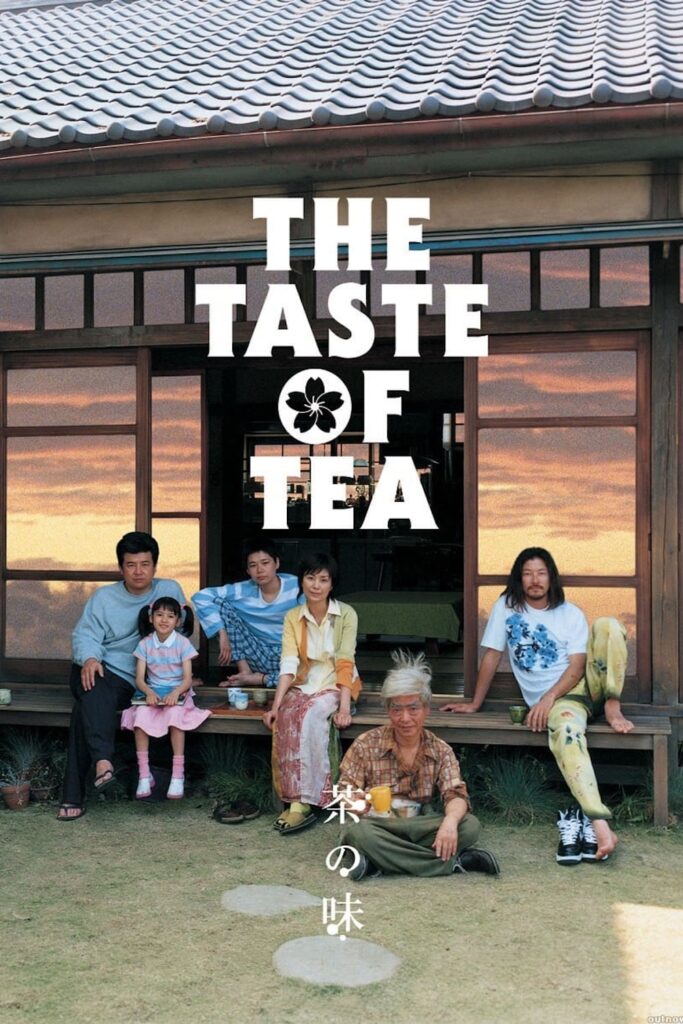
[FIRST IMPRESSIONS] “Slow Down and Sip the Tea: The Delightfully Surreal World of Katsuhito Ishii’s The Taste of Tea” by Nicola Ulaan Wan
Katsuhito Ishii (director). The Taste of Tea (Cha no Aiji), 2004. 143 min.
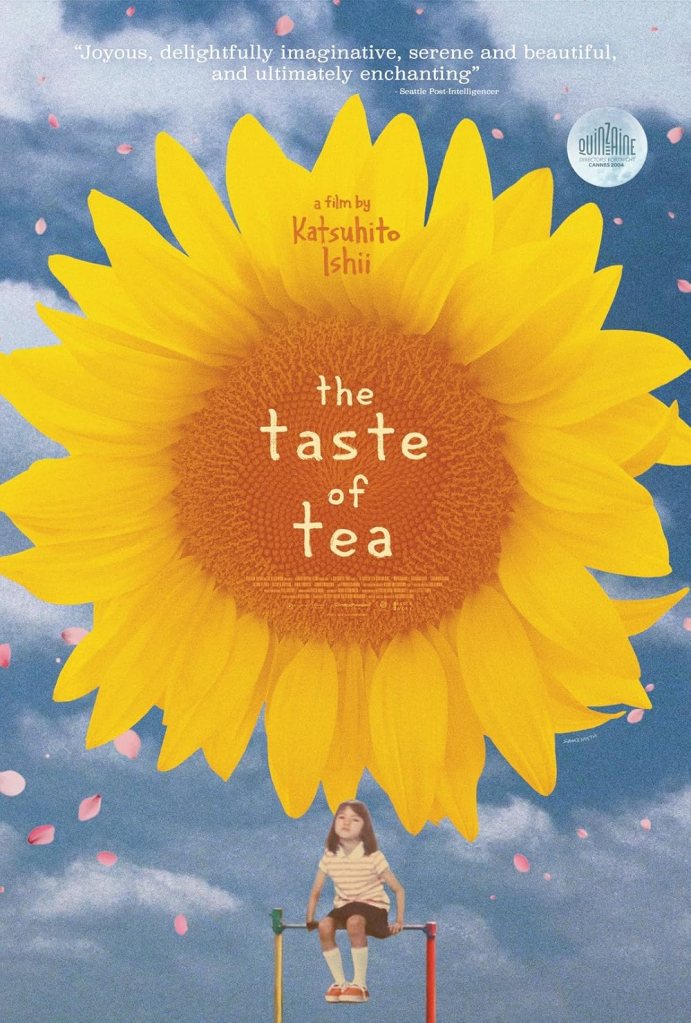

When Katsuhito Ishii’s The Taste of Tea (Cha no Aji) (2004) opens on a genfukei-like Japanese landscape, with the rustic, rolling hills of rural Tochigi Prefecture, it seems to promise the aesthetic philosophy of peaceful quietude discernible in many Japanese films. Almost immediately, however, the film introduces a portrait of the Haruno family that veers into the eccentric and idiosyncratic: eight-year-old Sachiko is haunted by a giant, silent double of herself; her brother Hajime endures the awkward heartbreaks of high-school Go matches; their hypnotherapist father plays mind games; their mother works on whimsical animation projects; and their grandfather adopts bizarre poses as a model and secretly observes the family’s activities in search of artistic inspiration.
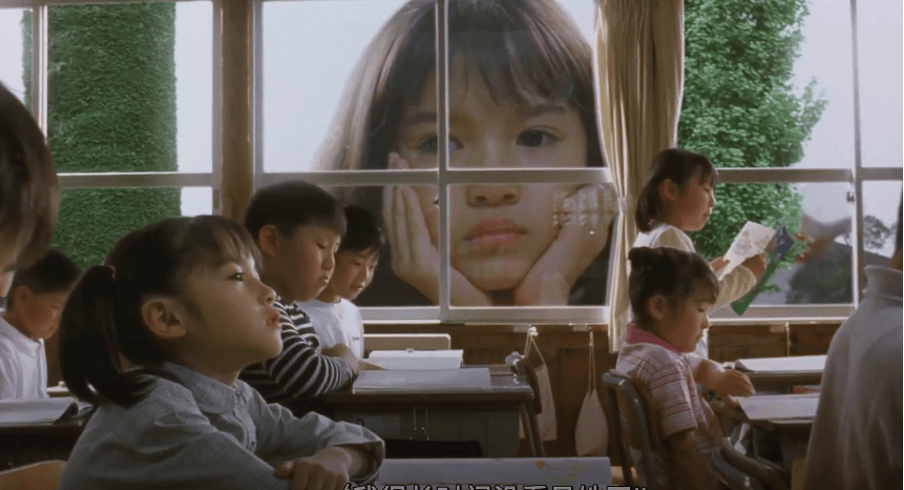
The film is often described as “surreal” because of its surrealist imagery: a train sprouts from Hajime’s forehead in a scene reminiscent of René Magritte’s “Time Transfixed”, while a giant double of Sachiko peers over a mountain. Yet this surrealism does not operate conventionally, seeking to liberate the human imagination by privileging the subconscious and dreams over the familiar and everyday. Instead, Ishii applies it mischievously to the mundane, using it as a playful means of unravelling different rites of passage. The absurdities lurking within everyday life, together with the film’s skit-like exchanges, cast otherwise inexpressible experiences in a funny, warm, and comic light. For example, when Uncle Ayano, a sound engineer, sits at the back of the veranda and casually recounts a strange childhood memory involving a tattooed, bleeding spectre who appeared after he defecated on a giant, half-buried egg, he is not simply telling a story to pass the time. Whether intentionally or not, he is passing on to Sachiko a secret language that may help her make sense of her own giant double:
Ayano: I never found the egg again. And that’s when the guy showed up, a guy with tattoos and bleeding. He kept watching me, especially when I let my guard off; when I was cleaning up at school, raking the backyard, cleaning the chicken coops. One day, I was working the horizontal bar while he kept on staring at me, I didn’t pay attention to him anymore. And I played the whole day, finally did a horizontal bar somersault and he’s gone forever.
Another conversation that inspires Sachiko occurs when her mother imaginatively encounters whimsical beams of light, which she calls a “3D burst of colours”, emanating from her body:
Sachiko: Then what happened?
Mother: Then I became part of it. And nothing mattered anymore. It’s not about what happens next… Probably because it [that world] belongs to my subconsciousness… It may be difficult for you to understand because it’s my world and I don’t even get it.
These tacit conversations feel authentic to the lived experience of growing up in an Asian household, where grief, romantic loss, and coming of age are seldom addressed through open dialogue and, when discussed at all, may be approached awkwardly. More often, such experiences are quietly negotiated through shared space and time, as well as through the quirks of domestic life. While Ayano offers Sachiko the beginnings of a possible course of action, her mother gives her permission to accept the unknown. By admitting that her own subconscious world is confusing and inexplicable, she suggests to Sachiko that possessing strange, immense inner landscapes is an entirely natural part of being human.
On a simple level, The Taste of Tea reminds us that the extraordinary often hovers at the edges of the mundane. In the end, Sachiko’s attempt to rid herself of her giant phantom by mastering a backflip on the horizontal bar becomes a moving metaphor for growing up: we overcome our internal giants through small, daily acts of patience and persistence. Like the beverage in its title, the film’s richness lies in its aftertaste, in the lingering appreciation of the layers of sweetness, astringency, and bitterness that hold a family together.
How to cite: Wan, Nicola Ulaan. “Slow Down and Sip the Tea: The Delightfully Surreal World of Katsuhito Ishii’s The Taste of Tea.” Cha: An Asian Literary Journal, 27 Sept. 2026, chajournal.com/2026/09/27/taste-of-tea.



Nicola Ulaan Wan holds a PhD in comparative literature and is currently an academic researcher whose interests centre on Hong Kong studies, Japanese literature, literature in translation, urban narratives and literary criticism.

