
[FICTION] “An Asian Study: January” by Anna Nguyen
Anna Nguyen on “An Asian Study: January”: My forthcoming chapbook, Cruel Sentimentalism, begins with a scene from my memory of watching The Assassin, the last film directed by Hou Hsiao-hsien. This particular title is significant because it was the last film I watched in a theatre, symbolising my many moves between countries and cities. The narrative of the chapbook is not necessarily linear, but there is a chronology of disruption and disappointment that I am attempting to trace.
Cruel Sentimentalism takes inspiration from Lauren Berlant’s Cruel Optimism, which I read during my first MFA in creative nonfiction. The idea of optimism being cruel seems paradoxical, yet it makes sense in Berlant’s framing of how one’s goal or desire may actually compromise one’s well-being. As I wrote the pieces that would become Cruel Sentimentalism, I also found myself thinking of Trisha Low’s Socialist Realism, which is described as a book-length essay. Low’s cinematic references are woven into deep meditations on politics, identity, dispossession, and the idea of home or home-seeking. But Cruel Sentimentalism feels incomplete, perhaps because there is no concrete beginning, middle, or end. The stories shared in that small book are elliptical. I suppose I am rewriting those stories as autofiction, notably my first attempt at writing fiction, in which many of the cinematic references from the chapbook return in An Asian Study. The story chronicles a year, beginning in January, in which the nameless second-person narrator, a poet and instructor at a nondescript New England college, decides to write a novel after viewing Bi Gan’s Resurrection. What unfolds is a subversion of the campus novel that highlights racial capitalism and racialised labour, the gig economy, a racialised relationship, intimacies, and the instability of marriage.
The title itself, An Asian Study, reflects the way whiteness is viewed as universal. During a workshop, a fellow participant remarked that my references were erudite, an adjective that made me raise an eyebrow because of the unspoken racialised assumption underlying the comment. In the “January” excerpt, many of the references may be readily identifiable to members of diasporic communities.
Even more, I am trying to untangle my own analysis of identity and representation through various media. Coincidentally, I have just read Rey Chow’s Sentimental Fabulations, Contemporary Chinese Films, and I found the first line of the introduction particularly provocative. Chow asks, “Where is the movie about me?” She does not provide her analysis immediately, instead asking a litany of similar questions, including “How come I am not represented?” and “What does it mean for me and my group to be unseen?” These are questions I find fascinating in the present moment, especially as I grew up with translated media. Much of the media I consumed came from Hong Kong, Taiwan, and China, all dubbed into Vietnamese, my mother tongue. As such, in An Asian Study, I have deliberately used the Cantonese spellings of celebrities’ names, English titles for “foreign films”, and Vietnamese titles for TVB soaps. This is the kind of linguistic inconsistency I grew up with. As the narrator is quite hostile towards the reader in any case, I hope the text challenges the kind of linguistic standard, and even narrative standard, that is expected.

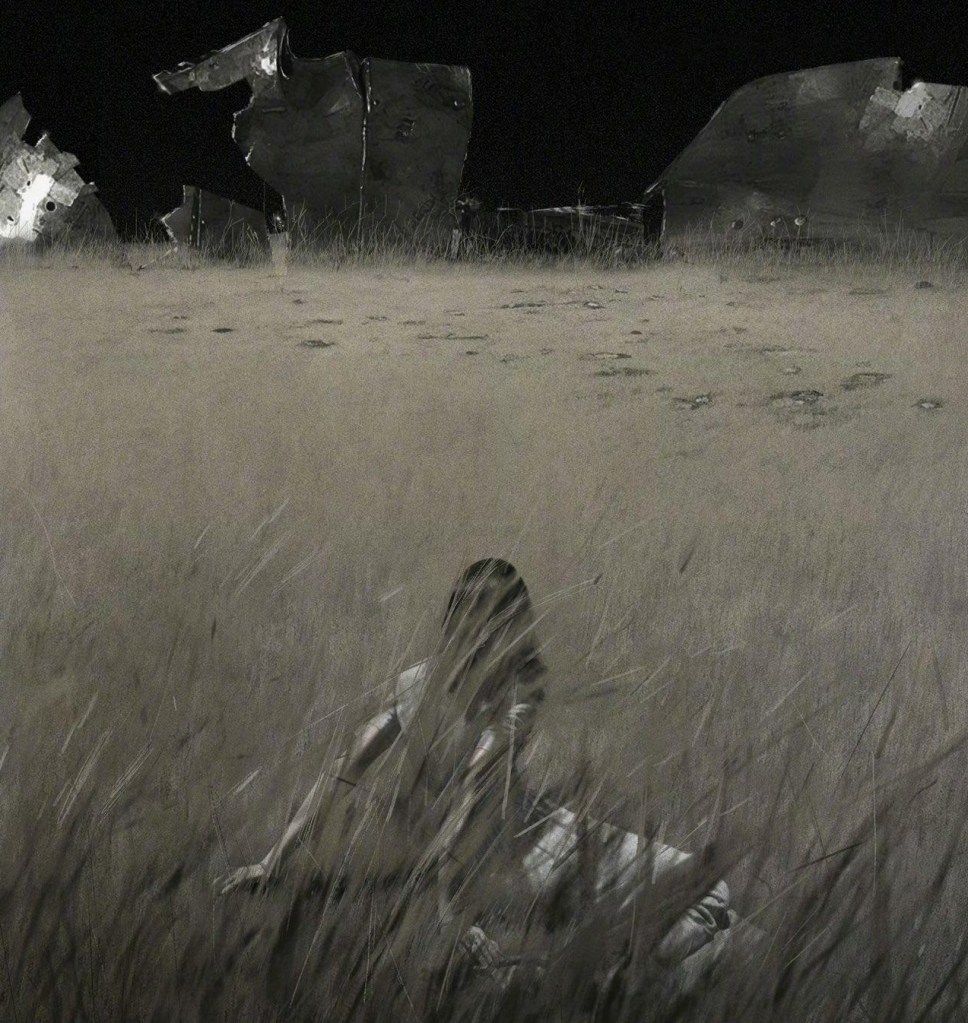
An Asian Study: January
It was just a few days after the first of January and you and your spouse decided to go see a film. He and you rarely left the house during the holidays, choosing to spend your days off dishevelled and watching Shark Tank on a non-linear loop. One morning, you woke up and tried to put a stop to being mildly entertained by bad capitalist arguments. Down with capitalism. Resist capitalism. Do something meaningful.
And so on another day, after carefully dressing up and applying foundation and powder on skin that hadn’t been made up for a week, you ushered your spouse out of the house and into a theatre that operates as a non-profit. After spending three hours watching Bi Gan’s Resurrection at Coolidge Corner in a very small room, you walked out into the icy cold and thought to yourself, I’ll write a novel. It’s the new year. New things should happen.
❧
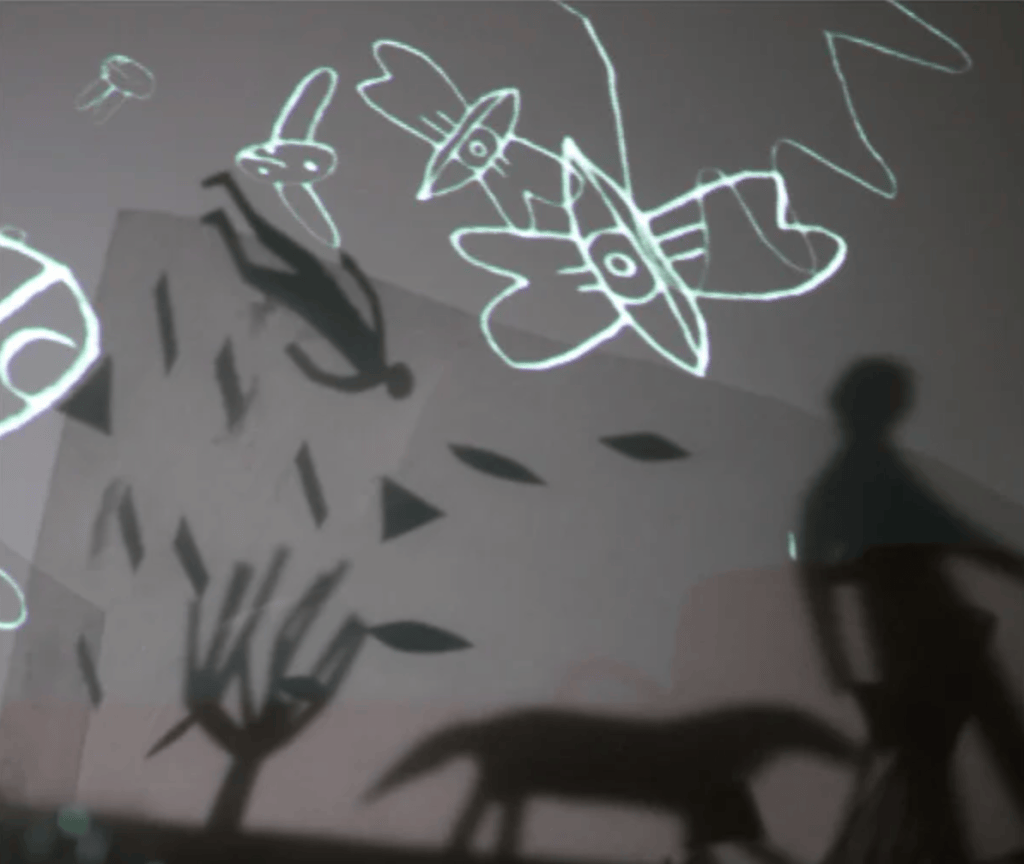
The first sentence of his Wikipedia page lists Bi Gan as a Chinese film director, screenwriter, poet, and photographer. You could see Resurrection as a cinematic visualisation of poetry. Arresting images and set designs prioritised before conventional narrative structure and dialogue. Meaning through the senses, not merely through words.
You and Bi Gan do not have parallel occupations. He’s an auteur and a Renaissance man, though his media seem interconnected, so perhaps he really is not a Renaissance man. You’re a PhD dropout, turned to an MFA in creative nonfiction in hopes you would see something different. You hadn’t and hated it. You’re more of a theorist than a memoirist, and so you received another MFA degree in poetry.
Poets are theorists, more so than essayists, and theorists want to be poets. When you were still, however reluctantly, in your creative nonfiction track, your assigned mentor, a poet, suggested that you read The Hundreds by Lauren Berlant and Kathleen Stewart. And as the title indicated, Berlant and Stewart wrote collaborative and speculative poetry, incomplete essays? Of no more than 100 words. As if writing theory could not get any more erudite and arcane.
You’re still not sure what you want from poetry, your poetry. Or your words. Or your prose. And so you turned your attention to fiction.
Your spouse has been patient with you while you switched degree programmes. And added more degrees. You once said the MFA in creative nonfiction would be your last. Now you’re saying that the MFA in poetry will be your last.
He enjoys reading your poems more than your longer work. You press him for specifics, and he just shrugs and says just cuz. You can’t argue with taste.
I might as well just complete the trifecta and get that final MFA in fiction, you joked.
His face paled.
I might have to earn more money.
❧
You weren’t married ten years ago, when you two last saw a film at the AMC in downtown Boston. The Assassin, also starring Shu Qi.
You don’t know why you stopped going to the ciné. You stopped looking for theatres whenever the two of you began moving in and out of countries and apartments. You could barely plan for a life, or two lives, without having to think about the next move. If you didn’t have class, didn’t have to teach, you stayed home trying to write and read, but really you were waiting for a sense of stability. But this wouldn’t happen for another ten years.
Stability happened for him. There were gaps of uncertain time, long gaps of unhappy work. But he was always salaried and had a direction.
Maybe that’s why you’ve switched genres. You thought genres could provide a sense of direction, a map of sorts. You wanted to be a doctor of philosophy and literature and letters. It couldn’t happen, so you switched to creative nonfiction. Had you not read poetry, you would have likely left your first MFA programme. Your spouse jokes that your primary hobby is collecting degrees.
You once had hobbies before. But things change when you’re married.
This is not quite right. You’re simply always looking for opportunities to quote In the Mood for Love.
There’s a scene when Mr. Chow runs into Mrs. Chan on a lonely street. He asks if she just got off work. She tells him, quite aloofly, that she’s been to see a picture. Mr. Chow wants to continue this stilted conversation and shares that he used to like going to the pictures. Mrs. Chan quips he seemed to have had many hobbies before. He says that when one is on their own, one is free to do many things, but things change when one gets married. Every decision must be decided between the couple.
You don’t know if this is true for the two of you. He was often at work. And you were often alone in the house. On a work evening, you two might share a few hours together.
One night, after a dinner of butternut squash soup and sandwiches, you sat next to him on the burnt orange velvet couch. He was watching something you didn’t care to watch, so you read a book with the television on. You read something you thought he’d appreciate and you read the passage aloud. It was late, your voice was tired, and you stumbled on a long word.
You’re alone too much in the house, he said, his head resting on the cushion of the sofa. You don’t talk to anyone and now you’re beginning to mispronounce words. You never used to do that. You should go out more.
You taught twice a week. You didn’t tell him you sometimes stumbled on words that were more than two syllables during your lectures. You eventually got the word right after a few attempts.
And besides, you said, you never really talk to me once you return from work.
I’m just so tired, he said, his eyes closed.
❧
You were sitting on the same burnt orange velvet sofa, a shiny black cat asleep on the heated blanket. You should have been starting your fiction novel; instead, you had been on the phone for nearly an hour to change your insurance plans. The kind lady over the phone kept asking you the same questions. She asked for your Social Security number twice. She asked for your date of birth three times, and your spouse’s birthday four times. The answers never change.
Before you began this Q&A, you told Sonja that you needed to cancel your health insurance because you just got married. You were a newlywed. Your spouse had already listed you under his health insurance. But Sonja insisted that you had to do it this way.
The sociologist in you told you she was being bureaucratic; the sentimental poet in you told you she was being thorough and wanted to make sure you knew your options outside of your spouse’s plans. Maybe she knew something you didn’t.
She shifted to the salary questions. Sonja asked, once more, how much you would make in this new year. You said zero. It’s not really zero, but you basically made no money as an adjunct. She asked again, and you said not really zero but basically zero. When she asked how much he made, you texted him, hoping you didn’t interrupt a meeting in his office somewhere in the financial district. You didn’t know anything about his salary, his Social Security number, his employment dates, his work address.
He responded with his exact salary, and you gave her a number with some extraordinary zeros. She asked you to repeat, and you repeated the numbers with the many zeros.
You wondered how much money poets make. At a book talk at the Harvard Book Store, a fiction writer said she makes negative dollars. You suppose a poet makes even more negative dollars. This is poetry math. The fewer the words, the zero integer moves even more to the left.
The questionnaire ended. Your plans had been updated and she said you, as a married person, made too much money to be on your former insurance plan. You already knew this. Your spouse already knew this.
Thank you, Sonya, I mean Sonja, I’m sorry, I keep messing up your name, you said. Sonja laughed at the thank you that quickly turned into an apology and said she wished that you would find everything you’re looking for in the new year.
❧
You were up at 5:45 in the morning. You did not rise to begin writing. You woke up early because your spouse woke up early. He wanted you to wake up with him so you two could drink coffee together on the couch. Monday through Friday, he gave himself about an hour to himself before fielding calls from his financial partners in Singapore, India, Hong Kong, and England.
Maybe you’re Mr. Wonderful, you said. Money never sleeps.
It’s too early to talk about capitalism, he said. He was on his phone, scrolling through the morning news.
Don’t cry for money, it never cries for you, you quoted. That would be a good anti-capitalist lesson. Unfortunately, nothing Mr. Wonderful says is anti-capitalist.
Precisely at 6:30 a.m., your spouse placed his empty coffee cup into the sink. He headed upstairs.
He’s so disciplined and regimented, you thought to yourself. He should have been a writer.
After refilling your second cup of black coffee, you headed to your office, a converted sunroom that faces the backyard. A foot of snow stared back at you. You hadn’t turned on the lights yet, so you weren’t sure if the family of squirrels or the outdoor house bunny had marked the snow.
You opened your laptop and ignored the many tabs of Google Docs with half-finished, incoherent fragments. Perhaps they were the beginnings of poems. Or the middle. Or the end.
You found the YouTube tab and turned on the next episode of Đại Thời Đại, a 1992 TVB drama series starring a very young Sean Lau Ching-wan. You turned on shows that have Vietnamese dubbing, a habit that started five years ago, after your Ba had passed away from Alzheimer’s. When you flew back and forth from Montreal to Fayetteville, Arkansas, you realised that your once-primary language wasn’t as strong as it used to be. When you tried to talk to Ba, your vocabulary was inadequate and you stumbled on completing sentences for Ba. You began relearning Vietnamese, especially after seeing how the white, English-speaking nurse was ineffective in helping him. She spoke in English and you had to translate. English was a language non grata.
You may have saved your own Vietnamese, but you couldn’t save Ba. His mind kept going and going. There was a stranger inhabiting the man who resembled a frailer version of your father. You tried to be kind to the stranger, even when he insulted you, when he tried to strike you, and when he couldn’t remember you.
During a workshop, one of your instructors once told you to write a poem about Ba losing his language at the end of his life. You had written a slightly abstract poem about a dying language, so abstract that your instructor pressed for more details. You told her that painful event of losing a parent and of language dying as possible context.
Your instructor was more interested in your personal story than your draft of a poem. She told you to write about your father. It’s important to write about these painful events as therapeutic poetics, your instructor said to everyone in class. Let the language guide you. She was always saying these kinds of self-help universalisms. She once told you to go to therapy because you wrote a poem about being annoyed by whiteness.
The whole class nodded. White people love romanticising trauma. White people welcome therapy in lieu of the workshop space. Therapy capitalism.
If you wanted to go to therapy, you would have found your own therapist. Now that you’re married, you have the privilege to go to one.
Your spouse began seeing a therapist months before the new year, months before your marriage.
But you don’t see a therapist. You can articulate your anger, nightmares, fixations, depressions, and pain to yourself, to your spouse, sometimes to your mother, sometimes to close friends. You cry when you’re sad, you open your mouth to laugh when you’re happy, you’re silent when you don’t wish to speak.
Your instructor became emotional talking about the therapy she received when she began writing serious things. When she was finished, she looked at you.
I’ll think about it, you said at the time. It’s a response you always say to people when they want something you don’t want to give in writing.
❧
You took the cursed Green Line to Allston for your hair appointment. The Green Line has never improved since your commute to Boston University, when you were studying food and literature for your first master’s degree. That seemed like a lifetime ago.
You speed-walked to the hair salon, nestled between a Korean restaurant and a small convenience store. You opened the door, breathless while the ahjussi finished a transaction. He and the client looked up at you while you tried to catch your breath.
Hello, the ahjussi said, looking down at his POS system. He looked at you again, recognition settling in. Oh, hi, he said more enthusiastically.
Hi, you panted.
His wife came over and also greeted you.
So beautiful today, she said, looking you up and down. It’s makeup, right?
You had just placed your black N95 mask over your face, hiding the big smile that was spreading on your face. Ahjumma was always so honest and direct. She and her husband rarely saw your face because you always wore a mask.
Yes, it’s makeup. You placed your tote bag and coat in the locker that ahjussi assigned you.
Ahjumma ushered you to her chair and pinned a full-length poncho cape on your body. Cut today?
Cut and colour, you said as you took your thick tortoise frames off your face. Maybe cut two inches? Your wavy hair was already quite short, the strands skimming your ears.
She stood in front of you, her own surgical mask exposing half of her nose, narrowing her eyes as she examined the hairs at your temple. What happened? she asked. Why so much white?
You squinted at your reflection but couldn’t see what she saw. I’m old, you offered.
No, not old, she said, swatting your shoulder. You weren’t being self-deprecating. You were probably closer to ahjumma’s age than not. Unlike your hair, ahjumma’s hair was a reddish brown, not a grey hair in sight. Her skin was a lot glassier than yours.
Ahjumma continued her inspection. Your perm still good. Cut, colour today. Perm next time.
Perm next time, you acquiesced. New perm for the new year.
❧
After washing two cups of rice, you place the rose-gold pot into the Yum Asia rice cooker. Since your spouse’s eosinophilic esophagitis diagnosis, he had eliminated all gluten, all dairy, and soy from his diet. And ever since, you’d been cooking more rice and veggies. You even learned how to make Burmese tofu using the cooked juice of chickpeas.
When you unpacked, your spouse had wanted it hidden away in a cabinet, a decision he’s made time and again throughout your many moves in different cities and in different countries. In the new home, you finally told him, no, you grew up with a rice cooker displayed prominently in the kitchen. And so the rice cooker has been sitting on the counter, to the right of the oven, ever since.
In the second A Better Tomorrow film, Chow Yun-fat returns as Ken, the twin brother of the slain Mark. Ken is not in Hong Kong but in New York City, managing the Four Seas Restaurant. There are white guests who complain about the saltiness of the fried rice. After remaking their fried rice, Ken leaves the kitchen and confronts them at the dining table.
It’s not really about the fried rice. The white guests have guns—oh, they’re gangsters, and want Ken to pay them protection money. Unfazed, Ken taunts them with a momma Mia remark—oh, they’re Italian, and escalates the interaction. One of the men throws a plate of fried rice in Ken’s face, and Ken then dramatically drops to the floor to scoop up some of the rice.
What’s wrong with the food? Ken asks. He takes a bite. It is beautiful for me. And he fake cries.
For you, rice is nothing. But for us, rice is just like my father and mother. Don’t fuck with my family. Apologise to the rice right now.
Fuck your rice, the white man snarls. It becomes clear that it’s a John Woo film when Ken points a gun at the offender and tells him to eat the rice.
One night, when you watched the film, your spouse was playing a game on his laptop. When he heard the English dialogue, he laughed and said Ken was like you.
When we first started dating and you’d cook rice or if we ate rice at a restaurant, you watched me eat. If I didn’t finish a grain of rice, you told me not to waste and urged me to eat it all. You didn’t care if there was one fry on the plate. But if there was a grain or two left, you said I was disrespecting rice.
When you were a child, your parents told you that for all of the grains wasted, you would starve in the afterlife.
Yes, you understand what rice means to Ken. And you also really love your rice cooker.
❧
Má told you it’s bad luck to leave your spouse at home by himself as a newlywed. Who told you that? you asked her. My father, she answered. Or maybe it was my grandfather.
Your mother believed in fate and superstition. She had a habit of tautologically responding to someone’s fate or coincidence with the utterance of duyên phận. Your decision to adopt a black cat after the death of your first stately tortie cat? Duyên phận, she said. Your mailperson giving you a bottle of hot sauce from Barbados? Duyên phận, she said, even after you explained that you often gifted him with mochi cakes and jars of jams and curds.
A decade ago, when you began dating your now-spouse, she had asked for his birthday and time of birth. She had sent his information, along with yours, to one of her tea-drinking buddies who claimed to be a fortune teller.
The pairing must not have been desirable. Má never told you what her fortune-teller friend’s reading was.
You’re reminded of an ’80s Hong Kong soap you watched that starred one of your favourite childhood actresses. Idy Chan Yuk-lin or Trần Ngọc Liên. Sometimes you think of her fondly by one of her most famous character names, Tiểu Long Nữ. In the first episode of the drama, its Vietnamese title Duyên Nợ Xuân Thì, her character, Fan Lin, is dressed in a traditional high-collared top and matching pants set. She bumps into a blind man, whom she guides to his destination. He claims to be a fortune teller and asks for her birthday and time. She’s sceptical. He doesn’t request payment. If she thinks his fortune-telling seems right, she can accept his words; if not, she can dismiss them as rubbish. It’s too good a transaction to pass up and Fan Lin plays along. He’s counting the zodiac wheel on his fingers to calculate her cosmology, trying to conjure her fate, life cycle, and personality traits. He correctly guesses that she grew up in wealth and that her parents treat her as a special treasure. It’s no wonder you have such soft bones, he says, which makes Fan Lin silently chuckle. He grows sombre as he tells her she has a bộ xương tương tư, a lovesick skeleton. After informing her that her love life will be a trial, he asks if she’s married. You can’t guess? Fan Lin asks the blind man. He doesn’t answer but responds that her love life will be a trial. In her dramatic love life, she will at least go through two marriages and one divorce.
It’s hard to hide from fate, he says. Tất cả là điều ý trời. All of it is Heaven’s Will.
Fan Lin walks away without saying farewell to this stranger. He sighs before uttering his last line. Your fate is full of suffering.
You believed in the concept of ý trời more so than duyên phận. No one’s fate to capitalism is tied to duyên phận. Your skeleton’s structure had been weakened by capitalism. Capitalism là điều ý trời.
❧
You left your spouse in Boston and you headed to Provincetown. You’ve always wanted to visit the town with your spouse. But he had been too busy with his corporate job. He rarely asked for days off. If he used his PTO, it was to relax or to very slowly renovate his home.
You were in Provincetown by yourself because you had been invited to be a guest poet at the low-residency MFA programme. But the residency would not be located on a campus this winter. It was located at an inn; based on the photos online, it looked swanky and expensive. The programme had paid for your room and board in advance.
You had reservations about the low-residency model. On an abstract level, you understood why the model was created, with aspirations to subvert the traditional on-campus MFA programme. Students of all ages who had working jobs could participate and advance their writing journeys that weren’t so rigidly structured around typical academic-semester programming. But a graduate programme will always be expensive, replete with its own organisational problems. And someone is always willing to pay for the seductive eventual diploma.
Well, why are you teaching there if you’re so critical of it? your spouse asked you during dinner. He sat on the barstool, pushing away his bowl that had been filled with vegan corn chowder across the island. The remains were an odd light-brown roux, the colour resembling the gluten-free flour you used. Your spouse didn’t really like corn, though it was one of the few foods he could eat. He had been slightly more complimentary about the chowder. It reminded him of chicken pot pie.
Before you could respond, he said, you don’t really have to work more of your low-paying teaching jobs. Your salaries don’t really contribute to our overall finances.
To the outsider, maybe he sounded like a controlling man seeking a more domesticated wife. But you’ve been accustomed to your spouse’s stilted way of speaking. His therapist had probably told him to open up more, to communicate more. And this was your spouse attempting to be supportive, reassuring you that you needn’t be stressed about money.
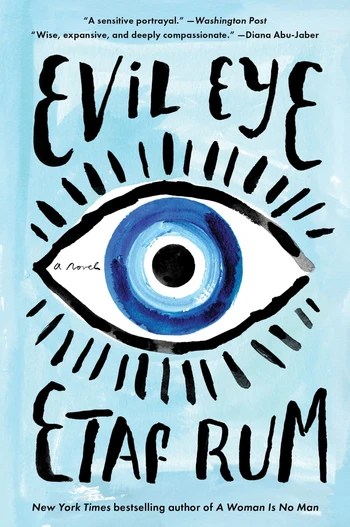
You know that book I just finished reading, Evil Eye by Etaf Rum? you asked. You had been eating across from your spouse, standing with your back to the sink. It’s a striking pale-blue cover and there’s one big blue eye? Yara is the main character and she was a part-time art professor. She was let go because she dared talk back to a white woman during a faculty meeting. Her husband wants her to stay at home and cook and clean all day. He said her part-time income contributes nothing.
The more you spoke, the more his eyes changed in expression, from confusion to annoyance to alarm.
Same messages from different messengers, you said. It really depends on the messenger, doesn’t it?
You leaned on a deck and stared at the ripples of the water as the ferry left 1 Long Wharf. Your spouse’s downtown office was close to Seaport. He used his lunch break to see you off. You waved and waved at your spouse until he became a blurry dot in the distance.
❧
The residency began a few days ago. You arrived on the fourth day, just in time for dinner and that night’s faculty readings. A fellow poet and a fiction writer. You have to admit, you weren’t really paying attention to the reading. You were still slightly drowsy from the Dramamine you took, in case you succumbed to motion sickness.
After the reading in the inn’s community room, no one was in a hurry to leave. The students wanted to linger, to talk to each other, to purchase books by the instructors or readers, to get their just-acquired books signed. As you rose, the faculty director Maggie came up to you.
We didn’t get a chance to chat, she said. I haven’t seen you since last year’s AWP.
At one of her panels, she had offered a positionality statement before discussing the works of Audre Lorde and June Jordan. She had pontificated on the necessity of white writerly communities reading difficult, inaccessible texts to educate themselves. After her talk, she had come up to you and asked what you thought of her panel.
I couldn’t read your expression, Maggie had said, laughing nervously.
It’s the mask, you had explained. It was fine. A lot of things you said, others have said. Your response seemed to appease Maggie. You didn’t clarify that by others you meant other white women.
Glad you’re here with us, Maggie said. You’re part of the family now.
The mask you wore concealed your grimace at her saying the word family. Everything has become a compulsory family, as if family was a positive concept. You were in Provincetown for work. If you made friends, that was fine. But you were not searching for another family.
White women frightened you, more so than white men. A controversial statement, but one that made sense to you and others. White women sought kinship from others. The Other others. When you expressed this sentiment to your friends, it was received differently.
Dee, a Black preschool art teacher in Cambridge, often complained about her white co-workers. During the first year of the pandemic, you often sat on the steps of the front porch drinking tea. She, then your neighbour in Watertown, would come out and join you. You both traded stories about work. Her young students were the children of Harvard faculty. You were at Harvard for a research fellowship. She once said she’d rather work with white men because she knew where she stood with them. If they were racist, they didn’t hide it. White women wanted to befriend her but grew hostile if she didn’t reciprocate their well-intended affections. And they’d isolate her. You recognised these encounters too well. A space that had been created for you and your lived experiences had become a space where you easily wounded the feelings of white women. It became a battlefield where white women wanted you to apologise for misinterpreting their intentions, for twisting their words, for not understanding them.
Leah had been part of your PhD cohort in Montreal. You noticed that most people racialised them as white, but they often reminded people of their great, great, great Latina grandmother. They always checked “Other” in the race categories. They once told you that you were too hard on women, women, not white women, and that you were part of the problem of accepting how society pitted women against each other.
Maybe they were trying to recite June Jordan’s consciousness of race and class and gender. June Jordan believed in connection that was not merely about organisational grief. But this was if white women weren’t so extractive and transactional. At the time, you had confided to Leah about another white woman professor in the engineering department who was too reliant on you to write a research paper. She had hired you with research funds. And so you wrote and wrote. She offered no contribution but did present at a conference with the rough draft of the paper you had been writing. You were curious how she presented the content, especially when she said she hadn’t read any of the sources you cited.
You wanted a way out of this job. Publishing academic papers was not at the top of your priority list. You simply did not want your name associated with a thief. When you discussed your concerns with the professor, she said that she had been too busy with her family.
You knew time was unkind to many academics, particularly women with kids. But she also benefited from whiteness that saw her as different but not different enough to be part of the problem. And so you told her that wasn’t your problem and she shouldn’t make it your problem. She blew up at you, calling you the reason why you couldn’t find supportive professors and saying that you were much too arrogant already in your early doctoral days.
This had been a professor who was not your professor. She had hired you for a research job. You didn’t want to be another student whose labour was exploited by someone who never did their work after receiving their PhD and who would always be first author.
Leah had clicked their tongue and told you that was just the way it was in academia. And that you needed to be humble. Leah was also the type of PhD student who proselytised about how the academy would never love you back, the university was harmful, kindness over rigour. And yet, she followed the academic books to a tee. That was how she was able to finish her degree programme.
That was years ago. The last time you heard from them, they had been part of a DEI initiative at a small college in Ottawa. They had contacted you to be part of a discussion panel that included another white anthropologist colleague. They were interested in your first poetry collection.
You never answered their email.
❧
You didn’t have to give your presentation until later that afternoon, after lunch, so you had asked Maggie if you could sit in one of the fiction workshops. Only men were leading the day’s fiction workshops.
You randomly chose Mike Beauchamp’s workshop. All of the meeting rooms at the inn looked the same. What may have been a spotless carpet was now lightly littered with trash; empty or half-empty plastic water cups sat on the edges of the fold-up chairs.
You introduced yourself. Hi, Mike Beauchamp.
He corrected your pronunciation. Bee-chum, he said. I grew up in Louisiana, but I have lineage in France and in Quebec. He pronounced it, kwuh-bek.
Why are you interested in fiction? he asked.
I’m trying to write long-form.
Ambitious. A novel?
I’m interested in autofiction.
He made a face that revealed what he thought of the term autofiction. That was the end of your conversation with Mike Beauchamp.
Mike ran his workshop exactly the way you imagined a middle-aged white man would teach fiction. The cone of silence was mainly for Mike to talk. He talked a lot; many of his non-lessons reminded you of your first workshop in creative nonfiction. You had written about Ba’s first stroke and how he, unable to speak, experienced medical racism. One of the white EMT men was inexplicably shouting at your father in Spanish. Ba had very dark skin, which often confused people, and you didn’t seem to resemble him from afar. He may have learned some Spanish from his colleagues at the chicken factory, but your family language was Vietnamese. He kept shouting and shouting at your frightened father in a language he didn’t understand and one you couldn’t translate for him.
The workshop leader had said you misunderstood the situation and the culture. It was cultural difference, not racism, that you were writing about. And he also had qualms about the multiple stories of institutional racism. Too much was going on in that short essay, he had said. Don’t lose focus on Ba, he had said, don’t lose focus on Ba. He said it so theatrically you wanted to scoff in anger.
You never forgot about Ba. You watched him die from careless medical practice, from unthinking racism masquerading as care.
In Mike’s workshop, no one wrote about experiencing racism. There were allegorical or metaphorical stories about racism and struggle, you think, but there were no experiential accounts of racism and race. Mike and the students said a lot of MFA buzzwords: craft, interiority, conceit, witnessing. Show, don’t tell was the funniest to you. Rather than use a concise word like sadness and be done with the character, Mike and the students traded advice on how to depict sadness. You heard so many metaphors and clichés that day.
You knew your problem with writing. Rather than begin writing with a positive project by seeking the possibilities of language, you sought to think about the impossibilities of language. Remembering how your father struggled to speak with strength and remembering how he was so weak that no sound could come out continued to break your heart.
But the students seemed happy with Mike. They hung on his every word, his sentences very punctuated with verbiage.
❧
Men in MFA programmes love talking about philosophy. When they learned that you had dropped out of your PhD in philosophy, they circled you like vultures. After your reading at a small university in Salem, a man came right up to you and asked you to give him some advice on writing clearly and carefully whilst using philosophical concepts. Your writing is just so easy to understand, he had said. You laughed. No one has ever told me that my writing was easy to understand, you had restated. But that’s nice to hear.
One of the few things you remembered from the previous faculty reading was Mike Beauchamp’s in-progress manuscript, about a sad philosopher following an epistemic crisis. He had said he was inspired by Walter Benjamin’s life. The instructor was only interested in an internal bout of self-doubt and how an ageing philosopher cannot make sense of the contemporary landscape. He could have named any man philosopher. But he chose Walter Benjamin, erasing his political demise.
For your seminar, you chose some excerpts from The Hundreds. “You have to start somewhere.” “Writing, Life.” “The New Ordinary.” “The Things We Think With.” “Today in Political Emotions.” “Against literal-minded explorations of the ordinary.” “No world beyond the world.” You were told the students were interested in philosophy. But, really, they were more interested in philosophical abstraction. This desire contrasted with the general MFA style of showy and indulgent prose.
And yet, Lauren Berlant and Kathleen Stewart provided enough abstraction in their 100-word vignettes. From theory to the ordinary everyday. How description could and should be in service of theoretical worldmaking. Like Bi Gan’s film.
When you shifted the discussion to the citations at the end of the vignettes, the tempo of the conversation drifted. You wanted to talk about how to write with textual fidelity and without betraying the political insights of Berlant and Stewart and others. This was not so interesting to many of the students. This sounds so academic, one student said.
You have an apprehension of being misquoted. When you’ve shared this with others, they misinterpreted your worry. People will always misquote you, that’s just going to happen.
Yes, you worried about the meaning of your words, but, no, that’s not what you were worried about. Those who have deliberately misquoted you have done so to silence you. That’s why your words were economical when you had to be in these spaces. Someone is always likely to ask you for more. And more. And more.
❧
More often than not, you despised Q&As. The questions rarely considered the guest speaker but were a kind of performance for the question asker and seeker. When you were in academia and were expected to attend many, many conferences, you heard very long, rambling questions. Repetition occurred and by the end of the soliloquy, the question had doubled or tripled.
The lament of this is more of a comment than a question has now become an earnest statement at the start of the question seeker. You know and they know that questions are rarely questions.
That night, you read two poems. One was slightly long, about getting married after more than a decade of cohabitation. Another was about love, an essentially contested concept. The first round of questions was slightly abstract, always about craft and writing practices. A student asked you why some of your poems resembled essays and why you were more academic than poetic in your poetry. You answered honestly. Sometimes you reworked a rejected essay into a poem that resembled an essay more than it did a poem. You wanted to use academic language in ways that people you’ve admired have used. You named Sylvia Wynter, Bhanu Kapil, Ama Ata Aidoo, and June Jordan. You wanted to protest language.
Another student wanted to discuss a poem you didn’t read, the one where you wrote about science and grief after your first cat had passed away from nasal cancer. They then began talking about their own grief.
You stood away from the podium, next to the other faculty member, Sally, who read before you. In her hand was a copy of her memoir, about teaching English in rural China. The cover featured an elaborate decorative blue bowl and a pair of chopsticks. As you watched the student speak, you remembered attending an event where Yiyun Li was a guest. Inside the packed room at the Cambridge Public Library, Yiyun Li spoke about writing about her two sons’ suicides and how she wanted to write about accepting that grief cannot truly be resolved and explained. During the Q&A, one of the guests used the space to talk about their own depression and voluntary hold. You couldn’t remember if the guest had asked a question. You did remember that Yiyun Li had graciously, if slightly awkwardly, thanked the guest for sharing her story. How else could someone respond to such a personal moment in another’s life that had nothing to do with the writer? No, you weren’t against talking about trauma. You wanted readers who were also strangers to know when to ask a question in a public space and when to share matters privately. A performance can be private.
Sometimes you were troubled by trauma as expected kinship. That was why you didn’t read that poem. And that was why you didn’t really talk about the most traumatic aspects of seeing your cat endure pain. That was not the point of that poem. It was about the limits of expert civility and care that was unable to be grounded in language.
You were glad when the other faculty member spoke up. It wasn’t out of care for you. She wanted to talk about her own trauma experienced in China, where she couldn’t speak the language and felt like an outsider.
Everyone likes feeling like an outsider. You overheard a student remark that everyone in this exceptional MFA programme was a misfit. They could very well be a misfit, but they were misfits in a conventionally structured MFA programme where outsiders were testing their limits of whiteness. Like Leah. They quoted Toni Morrison’s quotable “I’m gonna stay out here on the margin, and let the center look for me.” But Leah had remained in the centre in hopes of claiming marginality while desiring the university to recognise them.
Another student asked a question that was directed at you but said Sally could also answer. You recognised the student. During one of the coffee breaks, Gabrielle had asked you how you could write the poems you published. She worried that she didn’t have enough content to make big proclamations about the world. You understood the question to be one about age and living.
Gabrielle asked the same question. How do you know when you’re ready to write? It was one of the more interesting questions directed at you.
I like to read and read until I feel an emotion, usually anger, you replied. But I think you don’t have to immediately write anything. I know this is going against what MFA programmes tell you, but if you feel uninspired and don’t have anything to write, then perhaps you don’t have something to write just yet.
You couldn’t read Gabrielle’s face. You thought you saw a flicker of disappointment or surprise.
❧
On the penultimate day of the residency, you awoke to a snowstorm. You opened the blinds and saw the brilliant white gleaming in the sunlight. You received an email saying that your return trip to Boston was cancelled because of the icy conditions.
You walked over to the kitchenette area, where the Keurig machine sat. As you waited for the pod to magically turn into coffee, you looked around your hotel room. Fancy hotels assumed white was minimalist chic, and your room was decorated with white furniture and linens. But there were pops of colour that communicated to you that the hotel was hip. A bright orange armchair sat in the small dining area. Novelty pillows with images of sardines and birds sat on the bay window.
The residency seemed like a vacation though it was part of the academic semester. It was off-site, not too far from the campus but far enough that the work seemed distant. The coastal town was alluring for students who had to travel to the residency from afar. But upon a closer look, the façade of the inn was similar to the university. There were cracks in the well-maintained walls, a kind of mustiness from being used.
You had told Maggie you needed to leave to prepare for your own upcoming semester. Your teaching resumed a week after the residency. In your free time, you had finalised your syllabus and uploaded your reading materials. The days at the residency were just so long, and you felt trapped and held captive in this small space. Sometimes you took a stroll on the private beach in the evening, bundled up in your body-length black parka and beanie. But the roads were usually too icy to walk outside. Even if you braved the weather conditions, you were not interested in visiting the Pilgrim Monument with Mike and Sally.
Looks like I’m stuck here, you texted your spouse as you drank your black coffee. My ferry was cancelled.
bad luck for you. snowing here but doesn’t seem bad.
❧
There has always been an apparent gender divide in creative writing programmes when it comes to theory. The men instructors loved to fancy themselves as theoretical autodidacts and heavily cited some obscure old men. They knew they had an advantage. The students, some older, many younger, perhaps did not know the cited theorists, their words disembodied from their disciplinary canons and bodies of literature. Mentors often preyed on the ignorant student, one they could shape and mould and claim.
In the early afternoon, you watched two graduating men present their academic component to those in attendance. They relied heavily on philosophy, as if Cartesian dualism could answer the pressing dilemma in literature. And they both cited Mike Beauchamp as their mentor. One of the graduating men had asked a question at the professional panel. He was interested in getting into a PhD programme and wondered what his options were. Maggie had told you that the student, Martin, had posed this very question during the past four residencies. You wondered why no one talked about the recent emergence of a PhD in creative writing and how its promises eclipsed an MFA in creative writing, also a terminal degree. The university preyed on students who wanted more after an MFA programme. And that glimmering, competing PhD in creative writing was that desirable object.
You never understood the academic component in the MFA. The practice seemed so half-hearted. At your first MFA programme, one of your mentors told you that the director of the programme had warned them that you might pull the academic card on them. The programme director hadn’t told your mentor the complete story. You had talked to the programme director and expressed your annoyance at workshop leaders saying you were too academic. One woman had even offered to help you rehab your academic self. You hadn’t asked for any rehabilitation nor for instructors to be more academic. You had simply asked the programme director how the writing instructors could possibly guide or grade any student’s formal research papers when they had no background in it. The discrepancy you saw was another symptom of the lazy programme that was much too expensive for its value.
But the programme director saw your critiques as a failed academic as mere superiority. He was happy to be paid as the programme director doing the bare minimum while the university collected cheques from the debt-ridden students who had hopes of being a writer.
And you saw, again, the allure of PhD studies in this small room in the seemingly quaint hotel in Provincetown. The men played dual roles of the writer and now the hopeful scholar. There were many citations but not citational discussion. Theoretical nonsense.
Their presentations contrasted with the three queer and women students who also offered some theoretical framings. But they deviated from mere and pure theory into a discussion about lived experience. Their experiences were important, they said, thus their analyses of queer and women’s identities mattered because of their own identities.
You were tired of the needlessly ongoing discussion of lived experiences. While you agreed with the concept as alternative empiricism, white subjects have used it to centre their feelings. Their feelings transformed into expertise, which seemed to contradict the point of intersubjectivity. Feelings can and should be articulated, but not as a source of power. Power analyses became forces for the oppressed to feel powerful rather than to oppose power.
You shifted uncomfortably in your chair and looked around the room. There were twelve instructors, predominantly white, though the programme had recently hired two faculty of colour. Tess was an Afro-Asian essayist based in Vermont and Alex was a sci-fi writer who lived in Puerto Rico. You three always found each other during mealtimes. During a lunch, Tess had shared that they finally understood what their mentor experienced. Tess had also graduated from a low-residency programme and her mentor said he felt isolated during these residencies and often ate his meals alone. He, a queer Black man, said the programme director and instructors never thought about including non-white folks in white spaces. Until Tess entered the programme, their mentor seemed aloof, hard to get to know.
You and Alex didn’t ask Tess why their mentor never sat at a table with the faculty. You both knew why he made the choice he did. Something as innocuous as lunch and dinner was never part of white folks’ organisational planning. Programmes thought hiring faculty of colour was enough. The instructor of colour was tasked with making themself comfortable and approachable. A performance that relied too much on unpaid and emotional labour.
It was time for Q&As for the graduating students. You had many, many questions, but you didn’t raise your hand. You were a guest, not an instructor, after all.
❧
The lobby of the historic inn was more classic than your room. You sat in front of the cosy fireplace and drank the black coffee you swiped from the dining room. It was too early for you to stomach food, but you had saved a blueberry muffin for your trip.
Good morning, you heard. You turned and saw Gabrielle approaching.
Morning, you said.
Are you staying for graduation?
You shook your head. My ferry was rescheduled for today. I’m leaving in a couple of hours. You were relieved you weren’t staying. It would have been odd to stay and watch students you didn’t know graduate.
Then I’m glad I ran into you. I’m graduating in two semesters and wondered if you could be my second reader for this coming semester. I’ll be working on my thesis.
At the student open mic, Gabrielle had read a working poem about being in love while walking in nature, inspired by Mary Oliver. Aside from the textual reference, you didn’t know anything about her. You guessed she was in her early twenties.
Can I ask why you want to work with me? you asked.
Gabrielle nervously tucked a strand of her neon-green hair behind her ear.
I just really like your work, she said. And you’re different from the instructors here.
Different?
You know, your writing is different. I learn a lot from you.
That’s nice to hear. I don’t know much about the procedures of this programme, so you’ll have to ask Maggie. If she allows me to be your external reader, I’m happy to read your work.
Gabrielle clasped her hands together. Thank you so much! she exclaimed.
We’re not sure yet if this is possible, you reminded her. Why don’t you email Maggie and CC me? In a separate email, please send me a couple of poems that might tell me what your style is and what you’re interested in.
I’ll go do that after breakfast, Gabrielle said. She stood up, as if unsure what to do next.
Look forward to hearing from you, you offered.
Safe travels, she said.
Just as Gabrielle walked over, you saw Maggie walking towards you. You took a sip of your cooled coffee.
So happy to see you’ve connected with Gabrielle, she said as she sat down next to you. She seems to really like your work.
She just asked me to be her second reader, you said. But I’ll let her write the formal email to you.
About that, Maggie said. What are your thoughts on teaching here?
Are you inviting me to be part of the faculty?
Well, you’d have to formally apply, but that would just be for paperwork reasons.
You want to hire me, but I still have to apply? Am I guaranteed a position?
We’d like you to be a part of the faculty, but you must formally provide the necessary documents. Maggie was being careful with her wording to avoid institutional liability.
Who else is full-time here? You and?
Tommy and Mike. They also teach in the undergraduate creative writing programme.
Why don’t you send me all of the paperwork, telling me what’s expected of me, commitments, salary, you said.
Maggie blinked at your response but quickly recovered. Of course. Are you worried about something?
I’m in the middle of edits for my next poetry collection, so I’m trying to manage my current workload. But I am interested in the position. Thank you for the offer.
We think you’ll be an asset here.
You’ve heard that very statement many times. When you were a doctoral student many times over, everyone said you’d be a wonderful asset to the academic community. When MFA programmes were trying to court you, they said you’d be a wonderful asset to the writing community. When you interviewed for teaching positions, they said you’d be a wonderful asset to the programme. When they realised you didn’t bring any financial value anywhere, they let you fall through the cracks.
You stood up. I should get ready to leave. Good luck with the coming semester and we’ll keep in touch about next steps.
How to cite: Nguyen, Anna. “January.” Cha: An Asian Literary Journal, 26 Sept. 2026, chajournal.com/2026/09/26/asian-study.

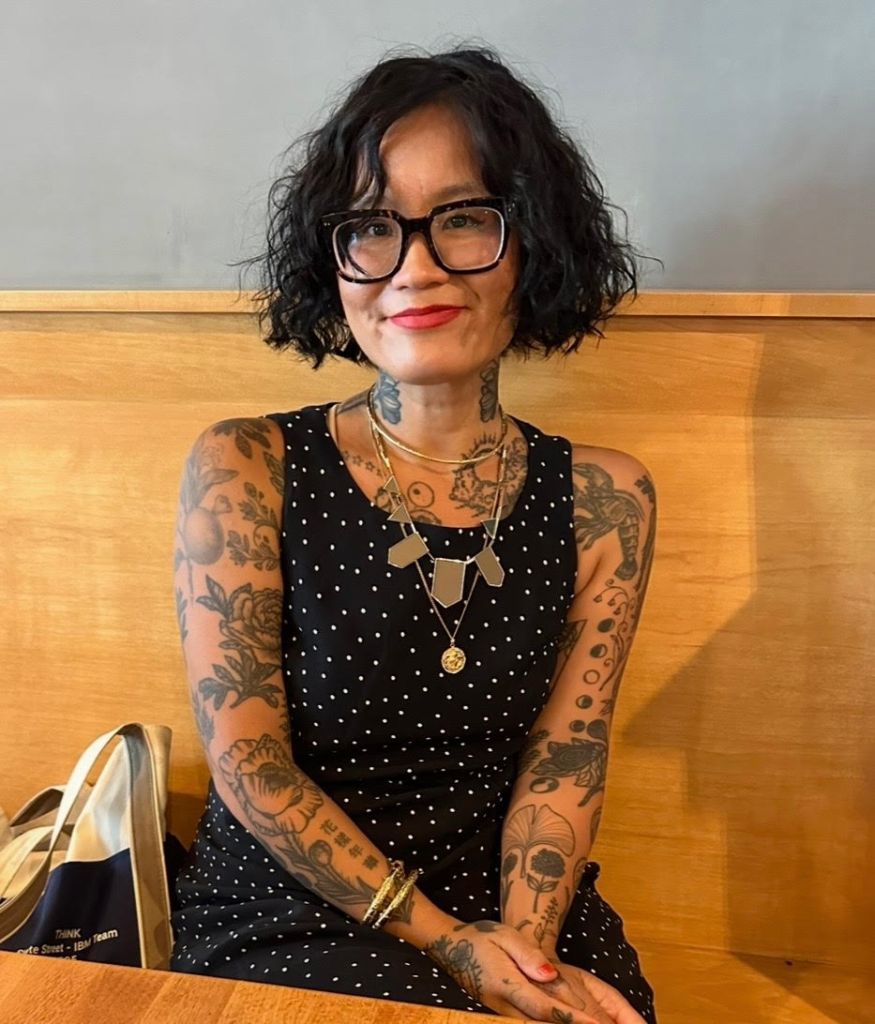

Anna Nguyen left her PhD programme and reworked her dissertation into a work of creative non-fiction while studying for an MFA at Stonecoast, University of Southern Maine. Her work brings together literary analysis, science and technology studies, and social theory to examine institutions, language, expertise, citation practices, and food. She is currently undertaking a second MFA in poetry at New England College, where she also teaches first-year composition. She is the host of the podcast Critical Literary Consumption. “An Asian Study: January” is her first published work of fiction. [All contributions by Anna Nguyen.]

