

[ESSAY] “There Is Never Anything So Difficult That It Cannot Be Resolved: Translating the Ma Yongzhen and Ma Suzhen Novels of Qi Fanniu and Zhu Dagong” by Paul Bevan
🌻Paul Bevan (translator). Murder in the Maloo: A Tale of Old Shanghai, Earnshaw Books, 2024. 226 pgs.
🌻 Paul Bevan (translator). The Adventures of Ma Suzhen: An Heroic Woman Takes Revenge in Shanghai, Palgrave, 2022. 186 pgs.
Editor’s note: Alongside Paul Bevan’s reflections on translating the Ma Yongzhen and Ma Suzhen novels of Qi Fanniu and Zhu Dagong, Cha is delighted to present four chapters from Murder in the Maloo: A Tale of Old Shanghai. These extracts offer readers a chance to encounter Bevan’s translation at greater length and to see how some of the linguistic and stylistic choices discussed in the essay find expression in the translation.
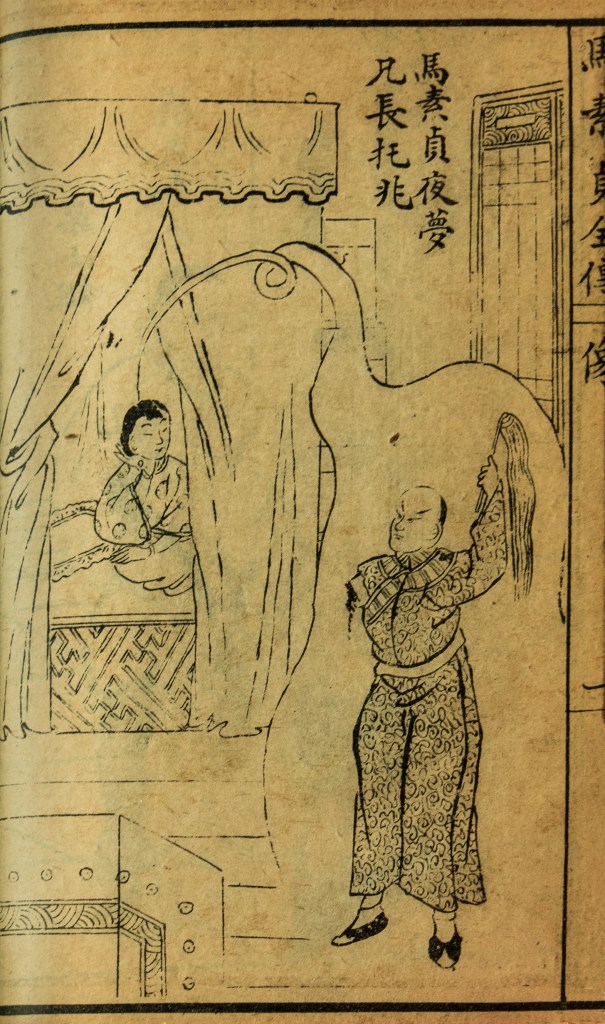
“At Night Ma Suzhen Dreams of Her Brother and Receives an Omen”,
from The Adventures of Ma Suzhen: An Heroic Woman Takes Revenge in Shanghai.
My first years as a translator began with the translation and interpretation of calligraphic inscriptions on Chinese art objects, ceramics, jades and paintings, etc. I did this for a number of years for art galleries, collectors and private individuals. Translating inscriptions was something I really enjoyed: the deciphering of calligraphy, the translation process from one language to another, and the polishing of the final result. With all sorts of specialist dictionaries and reference books piled around me, small pocket-sized volumes, huge multi-volume sets, I was able to lose myself in another world, what seemed to me to be my own private world, a world of Chinese history, calligraphy and poetry. The reference works I routinely consulted are perhaps more rarely used today, as so many shortcuts have become available on the internet, and in recent years students have not been sufficiently encouraged to use physical dictionaries and reference books. Certainly, online resources have much to offer both researchers and translators, but so do all the reference works that Chinese scholars have relied on for centuries. The exclusive use of internet tools surely takes much of the magic out of working with and enjoying poetry and the “classical” Chinese language.
These days, as far as poetry goes, I mostly translate modern poems from the 1920s and 1930s and am gradually accumulating enough individual examples to make into a small volume. Working with this material opens up a different world to the “classical” sphere and gives rise to a different sort of magic, a magic that is nonetheless equally addictive.
Compared with many translators, my oeuvre is small. I have published ten stories by the New Sensationist writers Mu Shiying 穆時英, Liu Na’ou 劉吶鷗 and Hei Ying 黑嬰, a couple of dozen modern poems in various styles, half a volume of essays by the cultural figure Shao Xunmei 邵洵美, the other half translated by my colleague Susan Daruvala, and two novels from the so-called “Mandarin Ducks and Butterflies School”. It is these two novels I would like to introduce here. They are about two nineteenth-century figures: Ma Yongzhen 馬永貞, a horse trader and martial artist who lived in Shanghai during the 1870s, and Ma Suzhen 馬素貞, Ma Yongzhen’s sister, a fictional character who was introduced to spice up the Ma Yongzhen story. Both books were written in the 1920s.
Why did I choose to translate these books?
)
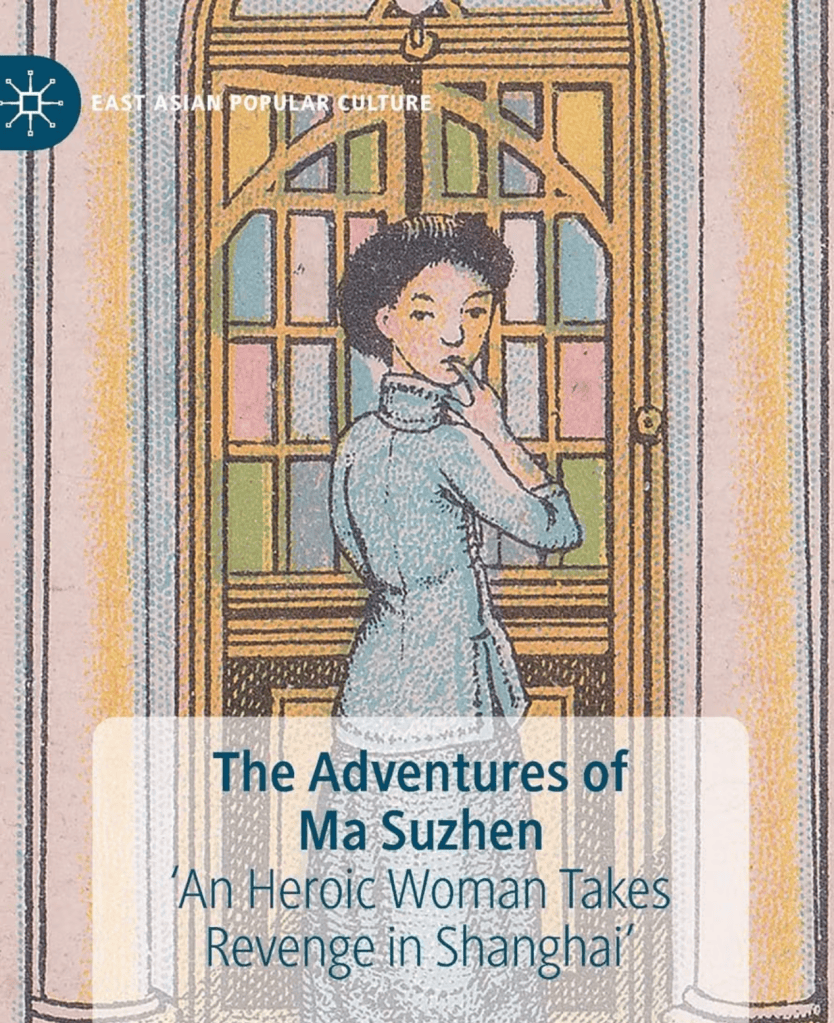
It all began with The Adventures of Ma Suzhen: An Heroic Woman Takes Revenge in Shanghai, which I happened to stumble across in the library. In the beginning, I had no plans to translate it, but once I began reading it, I was hooked. I read it once and couldn’t put it down. I read it a second time and enjoyed it even more than the first. Then, after a third reading, I decided I had to share my enjoyment by translating it into English and looking for a publisher. I was lucky with this, as I found one almost immediately. Yasue Kuwahara and John A. Lent were looking for suitable additions to their East Asian Popular Culture series with Palgrave, and my book happened to be the sort of thing they were looking for.
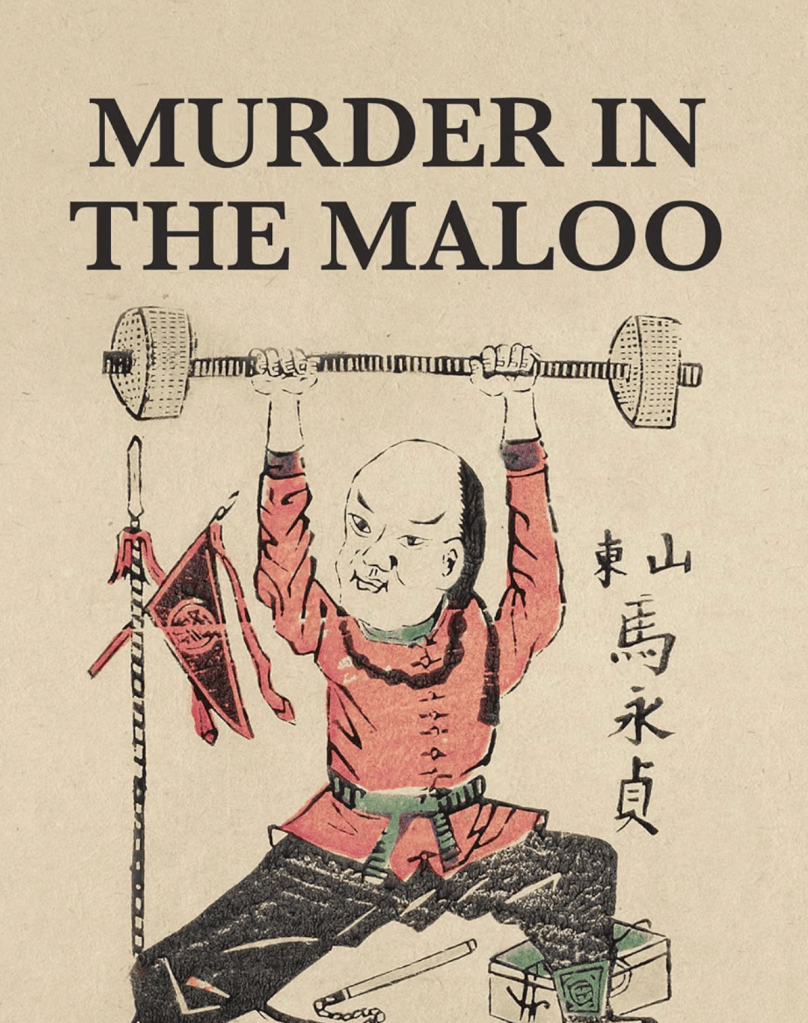
I was fully aware at this stage that this was the sequel to another novel, Murder in the Maloo: A Tale of Old Shanghai, which tells the story of her brother, Ma Yongzhen, but it took me a while to realise that the Ma Yongzhen book had just as much to offer as the Ma Suzhen story. There was one thing in the first place that had stood out to me about the Ma Suzhen book: it was about a woman martial artist. This is not actually at all unusual, as there is a whole tradition in literature and film of nüxia (female “knights errant”), but even so, it was this that originally attracted me to the story.
To begin with, I had thought the Ma Yongzhen book was just a series of fights in which Ma Yongzhen demonstrated his martial prowess and prodigious strength. How wrong I was! It was sometime after the publication of the Ma Suzhen book that I decided to translate its pair. As I read it over and over again, I became increasingly enthralled by the way the story unfolds. The Ma Yongzhen story is based on the protagonist’s experiences and ultimately his death, following his arrival in Shanghai, having travelled from Shandong to make his fortune in the big city as a horse trader and martial artist. What I hadn’t realised before giving the book a really thorough reading was just how funny it is. The Ma Suzhen story is also highly comical, and this had originally been one of its attractions for me, but just how funny they both are, when read together as a pair, had not occurred to me.
)
These books are both related to the popular fiction that was current in the Ming and Qing dynasties and are examples of what became known in the early twentieth century, somewhat scornfully, as “Mandarin Ducks and Butterflies fiction”. This is a type of writing that is still looked down on in certain circles as frivolous and shallow when compared to the classics of modern literature written during the Republican Period (1912 to 1949). I remember giving a couple of online talks on the Ma Suzhen book during the pandemic, and the same professor of Chinese literature was there at both. In the Q&A session, she asked me exactly the same question both times: Why did you translate this book? I had assumed that this question meant she was interested in the book as an example of a genre of literature that has rarely been translated into English, but it wasn’t until after the talks were over that it became clear in my mind what she had actually meant by her question.
She was not seeking an answer as to what the book had to offer English language readers, or what the subtleties to be found in it were, or even what idiosyncrasies it possessed or difficulties it posed, but simply wanted to make a statement, and did this by couching it as a question, “Why did you translate this book?” In other words: with all the great books written during the first decades of the early twentieth century, why did you choose to translate this boring and poorly written example of popular fiction that has no worth in today’s society? Or something to that effect.
“Mandarin Ducks and Butterflies fiction” is a much-neglected area of study, even today. I do not like this term and prefer to refer to it simply as early twentieth-century popular fiction, leaving the derogatory tag to the unbelievers. Novels by some of the best-known names writing in the genre are actually widely read today, but are still frowned upon by some, often by those who grew up with the idea continually drummed into their heads that “Lu Xun was the greatest writer of the twentieth century.” Lu Xun was indeed one of the most important writers of the period, not just from the Chinese point of view but from that of world literature, but to deify him and put him and his work on a pedestal, as some have done, is not all that helpful when it comes to forming a true picture of the history of modern Chinese literature.
)
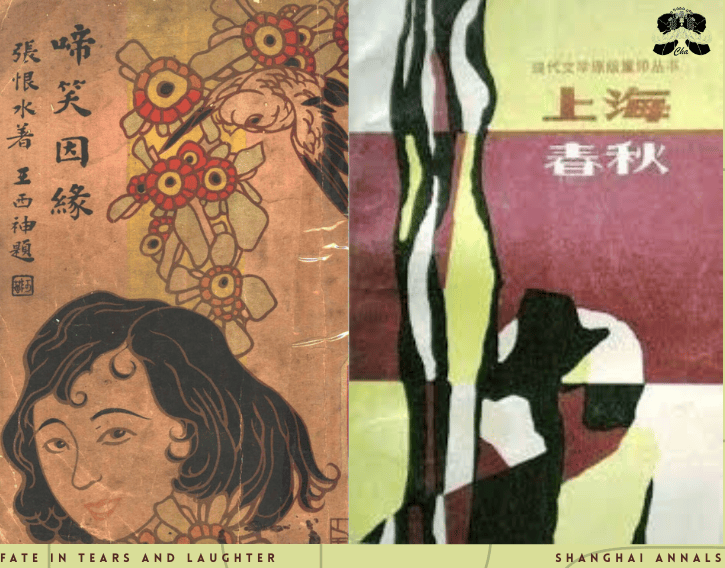
The language in which the authors Qi Fanniu and Zhu Dagong wrote the books is a sort of hybrid, typical of the popular fiction of the time, and can be found, for example, in the novel Tixiao yinyuan 啼笑因緣 (Fate in Tears and Laughter) by Zhang Henshui, or Bao Tianxiao’s Shanghai chunqiu 上海春秋 (Shanghai Annals).1 They are written in what might be termed “antiquated baihua”. That is, for the most part they reflect the way people spoke in the late nineteenth century, while at the same time they are deeply rooted in semi-classical styles and earlier literary trends, with a traditional stylised format that was still popular in the 1920s
Due to the antiquated nature of the original language, when it came to rendering it into English I decided to try to find a close equivalent. I am aware that some translators have seen fit to translate books written with comparable linguistic idiosyncrasies directly into modern vernacular English with liberal scatterings of contemporary slang, but this seems totally wrong to me and is something I just cannot bring myself to do. Some who are critical of my approach might have failed to understand the difference between what I was trying to do and some of the worst examples of textual “Chinoiserie” that can be seen in early twentieth-century writings, examples of which might include the flowery and almost laughably mannered language used in Louise Jordan Milne’s novelisation of the play Mr. Wu of 1918, the following being perhaps the most extreme example of this in the book:
Most Honorable, thou art a thousand years old, and, O thrice Honorable Sir, ten thousand times wise. Thy despicable worm entreats thy jadelike pardon that he pollutes with his putrid presence thy plum-blossomed eyes.2
Likewise, the slightly antiquated linguistic style I chose to adopt should not be mistaken for the highly distinctive dialogue adopted by Pearl Buck in her novel The Good Earth.3 In this, she was no doubt trying to reflect the manner in which the peasants in the story spoke in their regional dialect, but has, quite rightly, received much criticism for the final result. My translations, on the other hand, were attempts at rendering the semi-classical form of writing or speaking found in the Ma books into a direct equivalent in English. My inspiration for this was George Eliot. I cannot pretend to have got anywhere even a little bit close to the profound subtleties that exist in Eliot’s writing, but she was my inspiration nonetheless. I must qualify this by saying that this was most certainly not an attempt at imitation, and additional inspirations to me, Trollope, Dickens and other pre-twentieth-century writers, have been equally important to my growth as a writer and reader.
)
The four chapters from Murder in the Maloo I have chosen to include in Cha show many of the things that are typical of the book. Written and published in the 1920s, it looks back to the previous century and introduces some well-known figures of that time, as well as some popular landmarks to appeal to readers in Shanghai. Having said that, the book is by no means historically accurate and was never intended by the authors to be so.
In Chapter Four, the day after visiting a courtesan house at the invitation of Ma Yongzhen’s new friend Chai Jiuyun, where Ma and his fellows are introduced to the games of penghu and wahua in the company of Shanghai’s big bosses and glamorous courtesans, Ma and the gang take a stroll round the garden of a well-known scholar and publisher of the time, who will have been known to all readers of the book. Even though this is somewhat anachronistic, as this famous garden was not yet built at the time Ma was in Shanghai, it still makes for entertaining reading, relating the unlikely scenario in which a famous poet and his fellow literati interrupt their poetry contest to cheer on the feats of strength demonstrated by the Shandong strongman.
Chapter Seven tells of the preparations for a fighting tournament, a contest between Ma Yongzhen and a foreign strongman, Yellow Beard. This is the closest that the book gets to being a “martial arts novel”. Both novels were sold by the authors and publishers as Jiji xiaoshuo 技擊小説, which literally means “skill-strike novel”, a martial literary genre that was current before the standardised concept of wushu (martial arts), or the kungfu of Bruce Lee, came into being. Neither of the Ma books really falls into the category of what might be considered a martial arts novel today, though the Ma Suzhen book is slightly more geared towards that.
In Chapter Fifteen, Ma Yongzhen and his friend Chai Jiuyun leave the Longhua Pagoda, where they had been admiring the scenery of the great metropolis of Shanghai and the flying of pet falcons down below. After a while, they decide to visit Puqingli in one of the areas in Shanghai where courtesans plied their trade. This passage is one of the notably humorous episodes in the book. In it, Ah Hong, the servant of high-class courtesan Hua Baoyu, can’t understand what Ma Yongzhen says, as his northern accent is too strong, and, in turn, Ma hasn’t got a clue about what Ah Hong’s saying, as she is speaking in the local language, Shanghainese. In this passage, I have translated what Ah Hong says into an old-fashioned style of Cockney to accentuate the fact that what she is saying is incomprehensible to Ma Yongzhen.
In Chapter Seventeen, two of the baddies, Scrofulous Bai and Lu the Lackey, make preparations to murder Ma Yongzhen. Scrofulous Bai’s hatred of Ma had grown out of their rivalry as horse traders and gangland bosses, and Lu the Lackey is an unprincipled “yes man” who will do whatever his boss tells him. This is the build-up to the final chapters, which end with the death of Ma Yongzhen at the hands of the Axe Head Gang, loosely describing a series of events that actually took place in April 1879. Ma’s murder was reported in great detail in both the Chinese- and English-language newspapers in Shanghai and was later retold in many martial arts films of the 1970s. Now, to paraphrase the stylised sentence that appears at the end of every chapter: “If you want to know what happens next, please read the rest of the book.”
- Zhang Henshui 張恨水, Tixiao yinyuan 啼笑因緣 (Fate in Tears and Laughter) (Shanghai: Sanyou shushe, [1947]) and Bao Tianxiao, 包天笑Shanghai Chunqiu 上海春秋 (Shanghai: Shanghai guji chubanshe, 1991). ↩︎
- Louise Jordan Miln, Mr. Wu (Frederick A. Stokes 1918), p. 3. Paul Bevan’s “The Lives of Mr Wu: Chinoiserie on Stage and Screen”, will soon be published as Chapter 6 in a forthcoming collection of essays, Chinoiserie: Mirror of Modernity. ↩︎
- Pearl Buck, The Good Earth (London: Methuen, 1931). ↩︎
How to cite: Bevan, Paul. “There Is Never Anything So Difficult That It Cannot Be Resolved: Translating the Ma Yongzhen and Ma Suzhen Novels of Qi Fanniu and Zhu Dagong.” Cha: An Asian Literary Journal, 18 Sept. 2026, chajournal.com/2026/09/18/bevan-on-translation.


Paul Bevan is a Sinologist, researcher, literary translator, curator and lecturer. From 2020 to 2023 he was Departmental Lecturer in Modern Chinese Literature and Culture at the University of Oxford and Retained Lecturer in Chinese at Wadham College. From 2018 to 2020 he worked as Christensen Fellow in Chinese Painting at the Ashmolean Museum, Oxford. He is currently a Research Associate at the School of Oriental and African Studies. Paul’s latest book Shanghai’s Shadow Waltz – From Hollywood to Hongkew: A New-sensationist Fantasia is soon to be published by Earnshaw Books. This looks at popular song, dance band culture, and film, as they relate to the writings of the ‘New-sensationist’ authors during the 1930s. Paul continues to explore aspects of Shanghai popular culture in his latest research project ‘Hollywood in Shanghai’. To date, in addition to many book chapters, journal articles and translations, he has published two monographs: A Modern Miscellany: Shanghai Cartoon Artists, Shao Xunmei’s Circle and the Travels of Jack Chen, 1926-1938 (Brill, 2015), and Intoxicating Shanghai: Modern Art and Literature in Pictorial Magazines during Shanghai’s Jazz Age (Brill, 2020). John A. Crespi’s review of the latter calls attention to the translations embedded in the book: “Featured within the book’s densely informative analyses are translations of four modernist short stories. [These] in themselves contribute significantly to modern Chinese literary studies…”. [All contributions by Paul Bevan.]
 Cha
Cha 