
茶 FIRST IMPRESSIONS
茶 REVIEW OF BOOKS & FILMS
[REVIEW] “The Taste of Loneliness: On Joseph Hsu’s Little Big Women” by Ray Singh
Joseph Chen-Chieh Hsu (director). Little Big Women (孤味), 2020. 124 min.
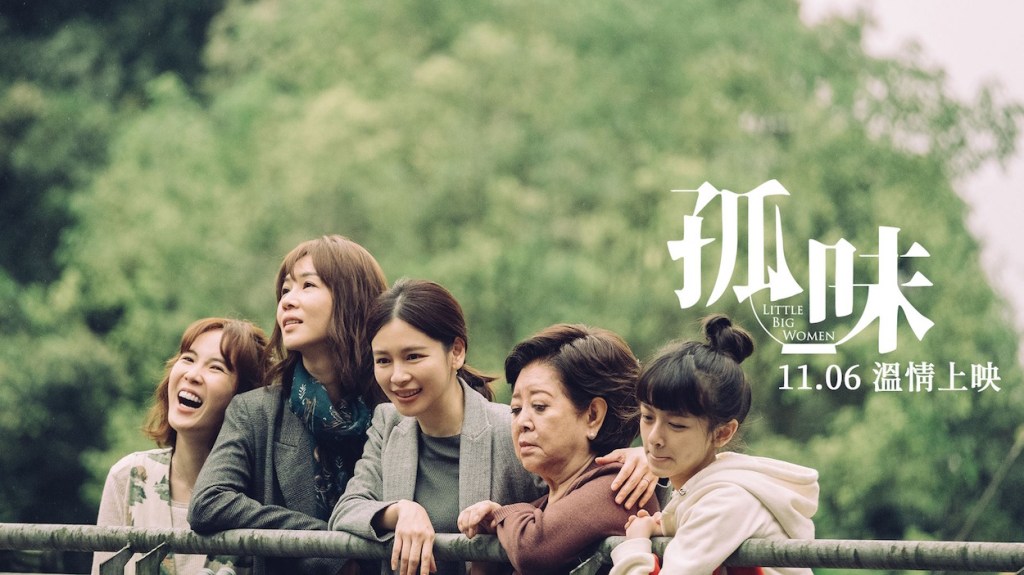
East Asian cinema has always possessed a cadence that feels deeply reflective to me. Whether in family dramas or coming-of-age stories, there is often an acute awareness of the social and cultural forces that shape an individual’s identity. Intimacy is never quite personal but is instead represented through a lens of social realism entangled with history, obligation, and memory. Joseph Hsu’s Little Big Women shares this thematic DNA. Through striking visual metaphors and the historic city of Tainan, the film crafts an emotionally resonant portrait of grief, inheritance, and the lingering weight of the past.
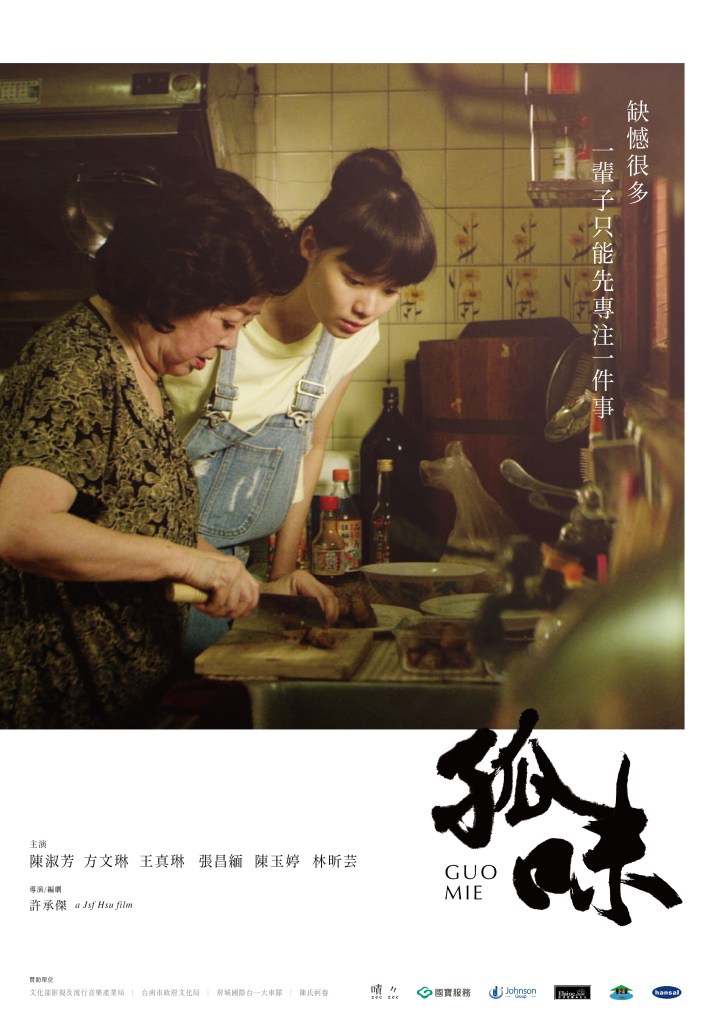
The title was what initially caught my attention. As an international viewer, I assumed Little Big Women to be a contemporary East Asian reimagining of Little Women. After watching the film, however, I found myself captivated by the cultural contexts embedded within the movie and its title. The original Chinese title of the film is Gūwèi (孤味), which roughly translates to “the taste of loneliness” and carries distinct culinary associations. While capturing the title’s meaning in translation is impossible, its essence permeates the film through deliberate pacing, careful framing, and attention to the silences that follow the characters.
In culinary contexts, gūwèi is most often associated with small food stalls that perfect a single flavour through years of lonely persistence and repetition. Lin Shiyoyu, the film’s seventy-year-old protagonist, embodies this idea. She transforms her humble shrimp stall into a successful restaurant while raising three daughters alone in the face of her husband Chen Bo-chiang’s abandonment. While she persists in her resistance, it comes at a cost: the singular devotion that allows her to survive also isolates her. She remains emotionally tethered to a husband who has spent decades living with another woman in Taipei, while her relationships with her daughters are defined more by rules and duty than by communication. Like the shrimp rolls she spent a lifetime perfecting, Shiyoyu’s loneliness is cultivated through years of repetition and sacrifice.
Hsu’s film, though, opens a conversation deeper than enforced loneliness. Read alongside the similarly sounding phrase gǔ wéi jīn yòng (古为今用), often translated as “making the past serve the present,” Gūwèi (孤味) reveals a symbiotic relationship between memory and the lonely labour of carrying unresolved trauma. In the context of the film, the phrase illuminates a central concern: how people negotiate inherited histories. If Gūwèi represents the loneliness of carrying the past, then gǔ wéi jīn yòng addresses how to treat the past and what to pass on to the future. This tension animates the film’s visual language. Family members, though they always gather together, remain emotionally separated. Hsu frequently frames conversations across dining tables, through doorways, or on opposite sides of a room. Emotional exchanges are diluted through food and funny stories from the past. The camera lingers on these divisions, quietly emphasising the distance between people who are meant to know one another best. Even when the family gathers after Chen’s death, the past remains a physical presence in the room. Shiyoyu sits in stoic silence on one side of her husband’s coffin while her daughters sit on the other, attempting to comfort one another, each carrying a different understanding of the father they have lost.
The film’s most compelling relationships are similarly mediated through memory. The youngest daughter, who appears most sympathetic toward Chen, seeks a connection with him through stories shared by Miss Tsai, the woman with whom he spent the final decades of his life. Their conversations concern less the present than the reminiscence of a man who now exists only through memory. Likewise, the funeral itself becomes an arena in which competing versions of the past collide. Relatives continue to discuss Chen’s abandonment, while the old Taoist and the new Buddhist rituals unfold in succession, with neither past nor present gaining any relief.
Even the film’s most significant moment of reconciliation is inseparable from the past. When Shiyoyu and Miss Tsai finally acknowledge each other’s grief, the encounter takes place in a temple filled with shared memories. In the room of the Love God, the two women arrive at a fragile understanding of their respective places in Chen’s life. The scene aims not for cathartic reconciliation or confrontation but for recognition.
This is what ultimately makes Little Big Women so captivating. Hsu, inspired by his own life and by the memories of his grandmother, understands that reconciliation is rarely absolute. Shiyoyu signs the divorce papers only after her husband’s death. Miss Tsai, who shared the last twenty years of his life, receives only a fleeting acknowledgement at the funeral, and the history and silences that shaped Shiyoyu’s relationships do not disappear simply because they are finally acknowledged.
The film offers no absolutes, leaving its characters suspended between acceptance and uncertainty. The ghost of the past remains present in the final taxi ride, but with Shiyoyu’s smiling face, we can hope that it no longer holds her entirely captive. In this sense, Little Big Women exists in the space between Gūwèi and gǔ wéi jīn yòng, between the loneliness of carrying past secrets and the difficult work of transforming them into something that can sustain the future. Its greatest achievement lies in recognising that the two are inseparable.
How to cite: Singh, Ray. “The Taste of Loneliness: On Joseph Hsu’s Little Big Women.” Cha: An Asian Literary Journal, 25 Jun. 2026, chajournal.com/2026/06/25/little-big-women.


Ray Singh is a writer, editor, and independent researcher based in Delhi. Their work spans cultural criticism, literary studies, and independent research, with particular interests in Asian cinema, postcolonial aesthetics, memory, and queer identities. They hold an MA in English Literary Studies from the University of Exeter and have published essays and criticism in GirlUp Magazine, Swasa Life, and People’s Reflections. When not writing, they can usually be found reading dystopian fiction or seeking their next cinematic obsession.

