
茶 FIRST IMPRESSIONS
茶 REVIEW OF BOOKS & FILMS
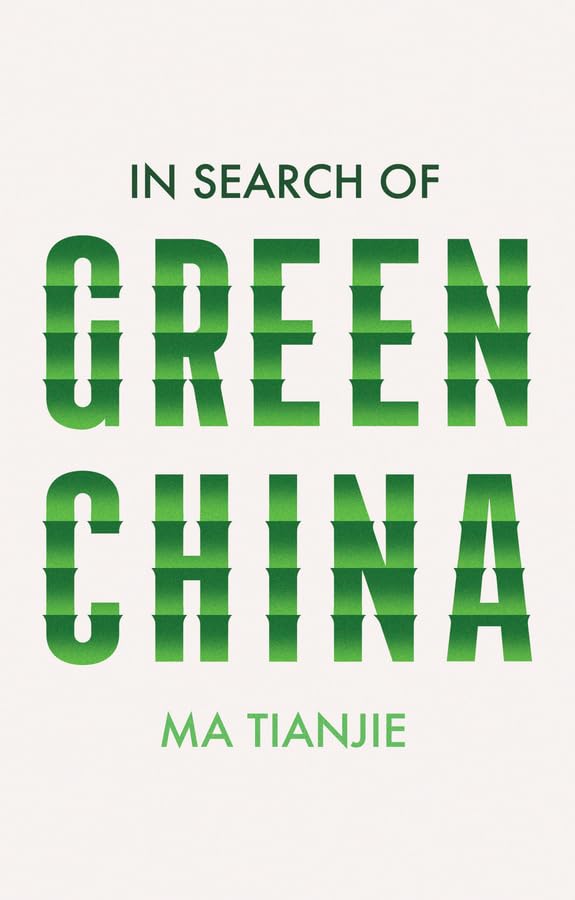
[ESSAY] “A Landmark in Environmental Science: Ma Tianjie’s In Search of Green China“ by Laurence Westwood
Ma Tianjie. In Search of Green China, Polity Books, 2025. 272 pgs.
Beginning in the mid-1940s, Rachel Carson, an American marine biologist, had grown concerned about the use of pesticides and their effect on the environment. She began to study the subject more closely in the late 1950s, when controversy arose over the spraying of DDT and other pesticides by the US Federal Government against such pests as fire ants and gypsy moths, eventually concluding that many of these pesticides had a detrimental effect on the environment.
Not only were such pesticides dangerous to wildlife, the decline in bird numbers in the sprayed areas being impossible to ignore, but there was a wealth of evidence that they were carcinogenic and therefore highly dangerous to human beings. Her book on the subject, Silent Spring, published in 1962, the title a reference to the disappearance of birds, has since become a landmark in environmental science. The British broadcaster and naturalist David Attenborough has described Silent Spring as second only to Charles Darwin’s On the Origin of Species in importance to the zoological scientific community.
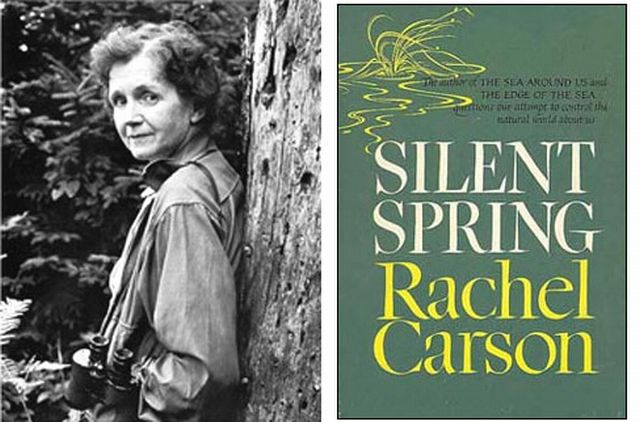
Not only did it galvanise the nascent ecology community in the United States into greater efforts to persuade politicians and legislators to do more to protect the environment, it also provoked the chemical industry into violently pushing back against Carson and her publishers. Chemical companies even threatened her with lawsuits. She was labelled an environmental fanatic by the chemical industry, possibly even a communist, someone who wished to turn back all the industrial progress that had been made in the United States in the twentieth century. But both she and her publisher were confident in her research, and very quickly public opinion moved in their favour. Sadly, she died far too young, in 1964, and did not live to see the far-reaching legacy of her book in the Western world. As the environmental engineer H. Patricia Hynes stated in 1989, “Silent Spring altered the balance of power in the world. No one since would be able to sell pollution as the necessary underside of progress so easily or uncritically.” We should bear this statement in mind when we begin to consider the progress of environmental protection in China.
)
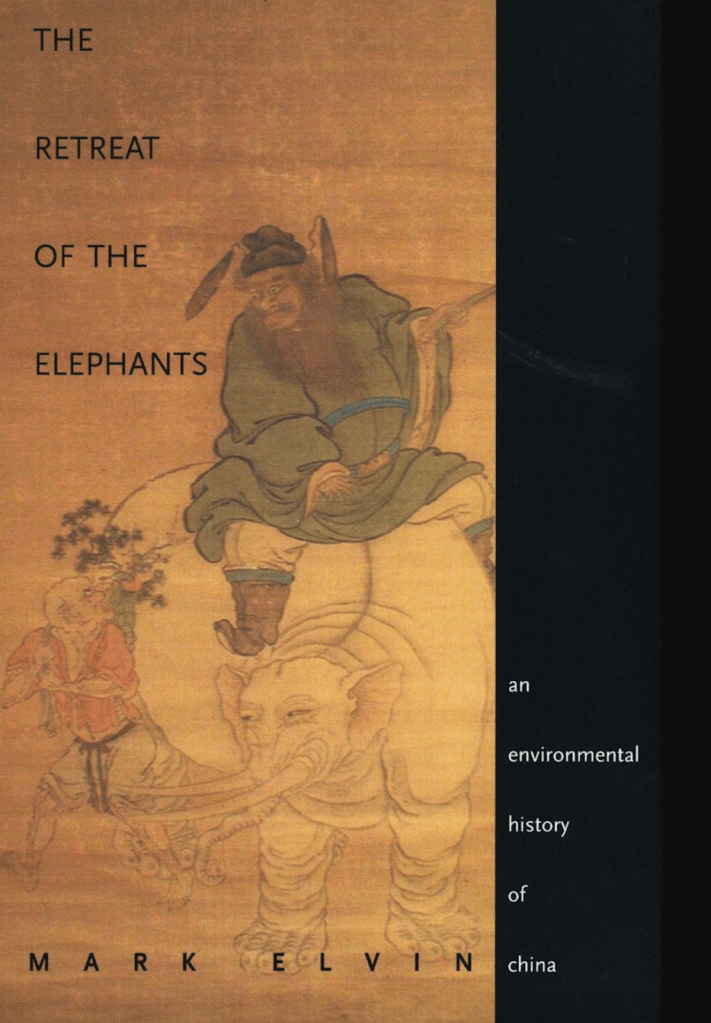
Before we get to In Search of Green China by Ma Tianjie, however, we must first understand how the environment in China has been shaped by human beings throughout history, and for that we must turn to another remarkable book, Mark Elvin’s The Retreat of the Elephants (2004). Since I am reviewing In Search of Green China, I will not say too much about it, except that anyone even faintly interested in the history of China should read it.
As the title suggests, elephants were once widespread across China, as were other large animals such as rhinoceroses and apex predators such as tigers, wolves, leopards, and bears. The loss of these creatures can in some ways be attributed to climate change, the cooling of China over a thousand years ago, but the story is much more about settlement, hydraulic management, massive deforestation, and intensive farming: the war waged by the people of China against the elephants, against those creatures that would disrupt the cultivation of crops, against nature itself. Elvin quotes Mencius speaking about the Duke of Zhou (reigned 1042-1035 BCE): “He drove the tigers, leopards, rhinoceroses, and elephants far away, and the world was greatly delighted.”
And to quote Mark Elvin directly:
Through more than three thousand years, the Chinese refashioned China. They cleared the forests and the original vegetation cover, terraced its hill-slopes and partitioned its valley floors into fields. They diked, dammed, and diverted its rivers and lakes. They hunted or domesticated its animals and birds; or else destroyed their habitats as a by-product of the pursuit of economic improvements. By late-imperial times there was little that could be called ‘natural’ left untouched by this process of exploitation and adaptation.
Even dragons have quietly disappeared from the Chinese landscape, which saddens the romantic in me more than I can say.
And all this despite the philosophical influence of Daoism and Buddhism, despite the increasing reverence for nature that developed among the literati, the conviction that in nature one could observe and meditate on the workings of the cosmos. The Chinese landscape was transformed and exploited to a degree hardly seen anywhere else in the world. As Mark Elvin observes, most of European farming depended on rainfall rather than the hydraulic systems and irrigation that supported much of Chinese agriculture. Even dragons have quietly disappeared from the Chinese landscape, which saddens the romantic in me more than I can say. Commonly seen by groups of people up until the sixteenth century, sightings of dragons have since become few and far between.
)
The twentieth century was tumultuous for China. It spent much of that century at war with itself, at war with Japan, and at war with nature. Mao Zedong, though born into a peasant family, had little farming experience and even less respect for nature. As detailed in Judith Shapiro’s ground-breaking book on the wholesale destruction of the environment under Mao, Mao’s War Against Nature (2001), it was political struggle that defined Mao’s entire life: struggle against everything he thought was holding China back. In 1917, as a young man, he famously wrote, “Struggle with Heaven, boundless joy! Struggle with Earth, boundless joy! Struggle with people, boundless joy!” Ignoring the views of environmental scientists and intellectuals whom he instinctively distrusted, Mao believed that nature had to be moulded by the will of the people, that it had to be struggled against in order to create the Marxist utopia he envisioned. “Man must conquer nature,” Mao declared. And wholesale environmental destruction ensued.
Mao believed the more people the better to achieve his political aims. These people had to be fed, leading to over-fishing, over-hunting, and the widespread misuse of poisons and pesticides. They moved into hitherto unpopulated wildlife habitats, disturbing and undermining fragile ecosystems. Forests were cut down to provide yet more agricultural land to feed this growing population, as well as to fuel the steel furnaces needed for his Great Leap Forward (1958-62), his drive for rapid industrialisation, with desertification as the result. Even more natural wilderness then had to be destroyed for the planting of grain as the Great Leap Forward became a catastrophic failure and the greatest human-made famine in history took hold of China, with as many as thirty million people eventually losing their lives.
As part of his war on nature, Mao targeted four pests for elimination: rats, flies, mosquitoes, and sparrows.
The disregard for environmental scientists under Mao is perhaps best exemplified by the Four Pests Campaign, which took place during the Great Leap Forward. As part of his war on nature, Mao targeted four pests for elimination: rats, flies, mosquitoes, and sparrows, the last because it was thought they consumed too much grain. The entire population was mobilised to annihilate these four “pests,” schoolchildren included. It is estimated that 2.1 billion sparrows were killed. This resulted in an ecological disaster. Sparrows do indeed eat grain, but they also eat insects. After the annihilation of the sparrows, locust and insect populations exploded, leading to wholesale destruction of crops. By 1960, the Eurasian Tree Sparrow was for all intents and purposes extinct in China, its removal from the skies estimated to have caused as much as a twenty per cent loss in crop production. The ornithologist Zheng Zuoxin, who had spoken out against the campaign and contributed to the eventual cessation of the policy, China being obliged to import 250,000 sparrows from the Soviet Union to recover the population, was vilified during the Cultural Revolution, declared a criminal for having opposed Mao, and told that “birds are public animals of capitalism,” whatever that might mean. And so the madness continued.
The war against nature ended with Mao’s death in 1976. Judith Shapiro makes the interesting point that had Mao’s industrial policy not been such a failure, considerably more harm could have been done to China’s already overstressed environment. But though the ideologically driven war against nature was over, there was far worse to come.
)
China was dying, and its people were dying with it.
In 1978, Deng Xiaoping ushered in the Reform and Opening Up era, transforming the planned economy into what has become known as the “socialist market economy.” Peoples’ communes were abolished, agriculture decollectivised, foreign investment welcomed, and private enterprise permitted to flourish. What came next has rightly been described as an economic miracle. By 2010, China had become second only to the United States in terms of GDP, and was now the manufacturing hub of the world. But this economic miracle had come at a tremendous cost. In the process, China had been transformed into one of the most polluted countries on the planet. Its rivers ran with toxins from industrial run-off, its soil was contaminated with heavy metals that in turn entered the food supply, and its air was filled with particulates pumped out of steel mills and coal-fired power stations. China was dying, and its people were dying with it. Which brings us to the beginning of the 1990s, where China was first forced to confront its abuse of the environment, and where Ma Tianjie begins his story of the development of China’s environmental consciousness: an awakening similar, one assumes, to that which had been forced upon the United States in the early 1960s by the publication of Rachel Carson’s Silent Spring, though he does point out that he considers the more apt parallel to be the pollution-caused Cuyahoga River fire of 1969 in Cleveland, Ohio.
)
Though this might have seemed an unnecessarily long preamble to what is essentially a book review, I thought it important to set the scene. With the present popular focus on green industry and climate change, many may not be conscious of the relatively short history of environmental awareness, and even fewer have any knowledge of China’s fractious relationship with nature throughout the twentieth century. In approaching his book, Ma Tianjie assumes some prior knowledge of Chinese history on the part of the reader. As he explains in the introduction, owing to constraints of space he has confined his case histories to industrial pollution, believing that biodiversity conservation deserves a separate treatment. This is both a strength and a weakness. In Search of Green China is a slim volume, very well written, and tightly focused on the development of environmental politics and policy in China. Only indirectly do we learn about the rise in environmental awareness among the Chinese people, or about their relationship with the natural world that China’s evolving environmental policies are designed to conserve. If you are expecting to read about pandas, that lovable creature that has been doing its best to make itself extinct with or without humanity’s assistance, you will be disappointed. But this specific focus on the damage wrought by industrial pollution tells only part of the story of modern environmental policy in China, and it is an unfortunate omission in an otherwise superbly told narrative.
Ma Tianjie is well placed to tell this story. He holds a Master’s degree in environmental policy from American University in Washington D.C., was formerly Greenpeace’s Programme Director for Mainland China, and has personal knowledge of many of the case histories he discusses, as well as of the people and personalities involved. He states in the introduction that the book makes no pretence of being an academically objective analysis of Chinese environmental politics, but is rather a blend of journalism, history, and personal reflection. In my view, this is all to the good. Ma Tianjie’s approach makes the book considerably more accessible to the general reader than the majority of academic papers written on environmental policy. And though he describes his approach as both subjective and opinionated, nothing stands out, to me at least, as odd or outlandish. Furthermore, those new to Chinese history who have picked up the book out of an interest in environmentalism will receive a very useful introduction to Chinese politics. For a supposedly centrally administered authoritarian regime, nothing in China is quite as simple as it might first appear.
It is also worth noting, as Ma Tianjie observes, the scepticism of Western countries regarding the environmental progress made in China. In comparison to China, Western countries possess considerably stronger environmental institutions and norms. With China’s environmental agency so weak relative to the powerful industrial ministries, civil dissent so quickly suppressed, and legal protection for victims of pollution so limited, how has China nonetheless been able to advance an environmental agenda? As Ma Tianjie explains, China has made progress despite all these systemic weaknesses, and he offers an explanation for this: an “environmentalism with Chinese characteristics,” if you will.
)
The River, The Dam, The Hurricane, The Incinerator, The Smog, and The Peak.
Ma Tianjie tells his story chronologically, each of the six chapters a case history that carries us from one political evolution to the next. The six chapters are succinctly named: The River, The Dam, The Hurricane, The Incinerator, The Smog, and The Peak. I will not venture too deeply into any of them, not wishing to rewrite Ma Tianjie’s book for him, but I will try to distil their essential elements so as to give a sense of the book’s overall arc and the development of its argument.
He begins in 1994, when a group of officials, including Xie Zhenhua, the young chief of SEPA, the State Environmental Protection Administration (latterly the Ministry of Ecology and Environment), visited the Huai River to assess the situation and seek solutions to the pollution afflicting it. China Central Television (CCTV) had broadcast scenes of the river a few months earlier, and the pollution had caused a public scandal. Not only was the river biologically all but dead, but there were increasing instances of cancer among the people living near its banks. The day after their visit, these officials approved China’s first systematic pollution-fighting package, aimed at constraining industrial development along the Huai River basin within the environment’s biophysical limits. This plan, which has undergone many revisions since, was an attempt to balance the needs of a developing industrial economy with the protection of the environment.
The economic miracle of the Reform and Opening Up era was propelled by “contracting,” or chengbao, which, as Ma Tianjie explains, became the watchword of the 1980s. Farmers were permitted to sell their surpluses after meeting state quotas, state-owned factories could contract out their workshops to entrepreneurs, and local governments were allowed to retain their fiscal surpluses after remitting their fixed quota to central government. Towns, cities, and provinces were soon in a race to get rich quickly. With GDP adopted as a measure of political success at the local level, and the careers of local Party cadres therefore tied to GDP growth, local governments had a vested interest in permitting unbridled industrial development regardless of the environmental cost.
Here already we can see the political tensions at play within China in regard to environmental protection: the powerful industrial ministries, representing the economic development bloc and determined to press ahead with China’s rush towards modernisation, ranged against the comparatively weaker environmental protection agencies such as SEPA, alongside the tensions between central government and the local governments of the provinces, cities, and towns, which had a vested interest in the continuing success of the development bloc. For those who view China as an authoritarian, monolithic political entity, the latter may seem rather surprising. But the authority of central government is not necessarily absolute. If central government decides on a strict environmental policy that threatens the financial interests and career ambitions of local Party cadres, whether or not endemic corruption is a factor, then local governments may well do all they can to undermine or simply ignore that policy, or to manipulate data in such a way as to demonstrate compliance where none exists.
These tensions between the industrial development bloc and the environmental agencies, and between central and local government, persist to this day, and they are at the heart of Ma Tianjie’s story. There is a further political tension that should not be overlooked: that between the Chinese Communist Party (hereafter the Party) and concerned actors among the people, namely environmental activists, lawyers, and NGOs. It is perhaps no coincidence that in the same year that Party officials came to view the polluted Huai River, the very first NGO was established in China: the Friends of Nature (FON), founded by the environmental activist and historian Liang Congjie.
It was in 1996 that concern for the environment moved onto the national political stage. The 4th National Conference on Environmental Protection established an overarching policy to enforce a cap on emissions, with an allocation and reporting scheme made the responsibility of every level of government. As Mu Guangfang, one of the drafting delegates at the conference, stated: “The predominant sentiment was that nature could no longer take it anymore. Everywhere you looked, you saw a desolate, ruined landscape.”
This new policy set the scene for the years that followed, with certain productive industries actually dismantled to make way for greener alternatives, local governments compelling certain companies to close in a distinctly Chinese manner, something that has come to be known as “environmental authoritarianism” or “coercive environmentalism.” What we see here is a remarkable reimagining of China’s industrial modernisation, reframed so as to take place within the country’s ecological constraints. However, local governments still intent on meeting their GDP targets, and local Party cadres still mindful of their career prospects, continued to find ample opportunities to look the other way, to measure emissions rather less accurately than they might have done. The tension between local and central government continued as before.
It is worth noting that in 1995 a relatively obscure young Party secretary from Fuzhou in Fujian had published an opinion piece in the China Environment News arguing that local industry had to be actively pruned in order to maintain the environment whilst still growing the economy. His name was Xi Jinping. But more on him below.
The chapters “The Dam,” “The Hurricane,” and “The Incinerator” trace the rising assertiveness of SEPA and the careers of its officials Xie Zhenhua and the outspoken Pan Yue. But SEPA was soon to face serious embarrassment in 2005, with the explosion at the Jilin Petrochemical Company on the Songhua River and the resulting pollution and diplomatic fallout. As the drinking water supply to Harbin, a city of ten million people, had to be suspended, and the Russian Foreign Ministry requested an explanation from just across the border, SEPA went mysteriously silent for ten days, unable to comprehend the scale of the disaster or determine how to respond. Heads had to roll. Though neither Xie Zhenhua nor Pan Yue had ever argued for de-growth, both believing that economic development had to continue but be balanced with ecological responsibility, their removal was a grave loss to SEPA, the ecological voice within government severely weakened in consequence. Worse was to come with the financial crash of 2008, which forced Premier Wen Jiabao to inject four trillion yuan into the economy, with ecological concerns firmly on the back burner.
These three chapters also trace the growing public awareness of ecological concerns, the rise of protests against proposed industrial developments, NIMBYism for want of a better term, and the emergence of “green citizens”: environmental activists, environmental lawyers, and environmental NGOs. Central government was thrown into confusion by the public outcry against its plans to build a hydroelectric dam on the Nu River. Worse was to come with the protests against waste incinerators. China was becoming submerged in waste, a by-product of its rapidly developing economy, and the waste had to go somewhere. Incinerators seemed the answer, but the increasingly vocal middle classes, now able to communicate and organise with ease thanks to the internet, objected strenuously, arguing that incineration merely transferred pollution from the ground into the atmosphere. Other measures were available, the people argued, such as the promotion of waste reduction and waste sorting. Local governments, which saw financial incentives in the quick fix of incineration, simply relocated the incinerators to areas of lower population density, among communities less able to organise and defend themselves, whilst ensnaring protesters in administrative procedural knots. The problems of waste management and the siting of incinerators continue to rumble on to this day.
)
In the chapter entitled “The Smog,” we see China coming to terms with atmospheric pollution. In 2000, China had committed to improving air quality to the satisfaction of the International Olympic Committee (IOC) in order to host the Olympic Games in 2008, a significant challenge given Beijing’s notorious smog. The solution would mark a fundamental shift in environmental governance. The environmental scientist Tang Xiaoyan and others developed a mathematical model that simulated and predicted air-quality changes by inputting data from various sources, including factories and vehicle emissions. This model, adapted from a US Environmental Protection Agency model, proved so successful that it enabled central government to go to the provinces and make the case for closing certain factories at certain times. Using this modelling tool, air quality could be improved at the regional or national level. Beijing achieved what became known as its “Olympic Blue” air quality. But, as we have seen, after the 2008 financial crash the focus shifted to economic stimulus, and the smog returned to Beijing. Then came the so-called “airpocalypse” of 2013, a heavy veil of smog blanketing the whole of north-east China, attributed by officials to unusual weather conditions, crop burning by farmers, and the start-up of Harbin’s coal-powered district heating system. Harbin was obliged to close its airport for three days. By 2013, however, there was a new leader in Beijing: Xi Jinping.
I have already mentioned Xi Jinping’s interest in balancing economic development with environmental responsibility, as expressed in his 1995 piece in the China Environment News. In 2005, during his tenure as Party Secretary of Zhejiang Province, he elaborated further on his environmental philosophy. He put forward his “Two Mountains Theory,” or liangshanlun, writing, as quoted by Ma Tianjie, “Green mountains can bring gold mountains, but you cannot buy back green mountains with gold.” I have also encountered this rendered as “Clear waters and green mountains are in fact gold mountains and silver mountains.” The meaning is the same: ecological wealth sustains economic wealth. Of course, Xi Jinping’s Two Mountains Theory was not in itself new. Since the 1990s, environmentalists in China had been arguing along very similar lines, drawing on their own readings of Friedrich Engels’s Dialectics of Nature, his unfinished work written between 1873 and 1886. What was new was that when Xi Jinping came to power in 2012, unlike his predecessors, he made environmentalism a key component of his political legitimacy. Under Xi Jinping, the Party’s view of its own historical arc was reframed: it had taken China from an agricultural civilisation to an industrial civilisation under Mao Zedong, to a material civilisation under Deng Xiaoping, and now, finally, to an ecological civilisation under Xi Jinping himself. As Xi Jinping stated in the wake of the “airpocalypse” of 2013, “We should no longer judge our performance based on GDP alone. The environment must be given due importance in our assessment of socio-economic development, and our cadres should be held accountable for the environmental quality of their jurisdictions.” Henceforth, the performance of provincial government cadres would be assessed not only on GDP, but also on their environmental record.
However, if the “green citizens” of China believed this new direction from central government to be an unqualified good, and at first they did, they would soon discover that life in China would be very different for environmental activists, lawyers, and NGOs under Xi Jinping. He had no objection to using the voices of the masses, echoes of Mao and the Cultural Revolution, to keep the provinces in line and advance his environmental aims, but it quickly became clear that it was the Party that would not only take the lead in all matters but must be seen to do so, not the “green citizens,” not the people. Under Xi Jinping, the Party set about reclaiming the ideological dominance that had been eroded in recent years by domestic and foreign actors. In 2013 there was a crackdown on internet influencers. In 2015, international NGOs were placed under direct regulatory oversight. The voices of the “green citizens” were suppressed, and the domestic media was compelled to concentrate on positive news rather than scrutinising questionable environmental policy. And though Ma Tianjie does not mention it, 2015 also saw what has since become known as the “709 crackdown,” beginning on 9th July, with the arrest and detention of hundreds of human rights lawyers, the Party attempting, and since then largely succeeding, to bring the legal profession fully under its control. As for Party cadres in provincial, city, and town governments, not only must they now demonstrate their environmental credentials, but they must forever look over their shoulders in anticipation of Xi Jinping’s ongoing anti-corruption campaign. That is not to suggest that such cadres are necessarily innocent victims. Corruption remains endemic in China. It simply means that Xi Jinping has greater power to remove those local government officials who might obstruct his environmental agenda.
In the final chapter, “The Peak,” Ma Tianjie relates the story of China’s engagement with climate change and carbon emissions, a story involving not only a new figure, the energy modeller Jiang Kejun, but also the return of a familiar one, Xie Zhenhua, now at the forefront of climate diplomacy. This chapter is very much about politics, and in particular about the diplomatic relationship between China and the United States. China had surpassed the United States in 2006 as the world’s leading carbon emitter. The United States demanded that China take action. China replied that the United States should act first, the two countries locked in what was described as a “suicide pact.” Xie Zhenhua established himself as a pragmatic, no-nonsense international negotiator, arguing that China had to be permitted to continue developing economically, whilst Jiang Kejun’s energy modelling had already persuaded the highest levels of government that climate change would have a seriously detrimental effect on the country. Though the general reader may find this chapter somewhat drier than those preceding it, in the sense that there is no immediate environmental calamity to be resolved, it is nonetheless a fascinating account of how central government had already begun to steer China’s economy towards a greener future through its nurturing of energy-saving technologies, renewable energy sources such as solar panels and wind farms, and electric vehicles. In 2014, Xi Jinping called for an “energy revolution,” and a target date of 2030 was set for the peak of carbon emissions, lending this chapter its title, and thereby establishing an important ecological boundary to China’s economic development.
Nothing in China, naturally, was quite so straightforward.
Nothing in China, naturally, was quite so straightforward. Local government and businesses were already growing weary of ministerial red tape and frustrated by corruption within the National Development and Reform Commission (NDRC), which directed economic development across the country, with senior provincial officials sometimes reduced to petitioning lower-ranked NDRC officials to approve industrial projects. One of Premier Li Keqiang’s initiatives was to “reduce red tape and devolve power,” or jianzheng fangquan, aimed at restoring greater autonomy to local markets and curbing the authority of NDRC regulators. Approval for new coal-fired power stations was devolved to the provinces, with central government no longer required to approve the very industrial development most consequential to China’s climate strategy. Local governments wasted no time in demonstrating their commitment to GDP over environmental concerns, with twenty-three gigawatts of coal-fired capacity brought online in the first six months of 2015 alone. China appeared to be at odds with itself over its own environmental goals.
There is much more to the story, both domestically and internationally, than can be related here, but Ma Tianjie tells the intricate and convoluted tale very well. In 2020, Xi Jinping announced that China would reach peak carbon emissions before 2030 and achieve net zero by 2060, net zero being the balance between greenhouse gases emitted into the atmosphere and those removed from it. Ever the optimist, Jiang Kejun believes net zero could be achieved in China as early as 2050. And yet, owing to fluctuations in the energy market, China still found it necessary to approve the construction of additional coal-fired power stations in 2022 and 2023. It is also worth noting that, though hundreds of carbon emission inspectors are at work across China, the manipulation of data on coal consumption and emissions by local governments, still driven as they are by GDP targets, continues to threaten the entire environmental campaign.
)
Despite such setbacks, Ma Tianjie ends his book on a note of considerable optimism, reflecting on China’s thirty-year journey towards an “ecological civilisation” and the successes of its developmental environmental strategy, which steers the economy towards green industries whilst forcibly closing highly polluting factories, rather than constraining industrial development through strict environmental regulation. As he states:
This integrated approach to environment and development is probably the most significant feature that distinguished the ‘China model’ from the usual pillars such as strong regulatory agencies or a judicial system ready to prosecute polluters. Such a wholesale green transformation of the Chinese state would not have been possible without an ideological renewal that put nature closer to the centre of the CCP’s guiding philosophy.
Ma Tianjie readily acknowledges that the journey towards a fully realised ecological civilisation is far from over. Waste management remains an ongoing challenge, with China now operating 648 incinerators and burning seventy per cent of its municipal waste. He also notes the continuing importance of environmental NGOs such as the Friends of Nature, which remain willing to challenge local government development projects, including those that appear “green” on the surface but would have a deleterious effect on vulnerable ecosystems.
Ma Tianjie’s final paragraph is worth quoting in full, as it provides a useful point of departure for a broader assessment of the book:
China’s 30-year environmental journey is a tale of reimagination: the gradual adoption of a new perspective on nature, with all its limits and possibilities, has inspired people to oppose a growth-obsessed paradigm. The fundamental motivation that sustains the movement is people’s growing awareness of nature’s centrality to everything they value: their livelihood, well-being, and health all rely on a thriving planet that continues to provide. The task of internalizing this understanding into the national psyche is far from accomplished, no matter how successful the drive for an Ecological Civilisation appears on the surface. And in that spirit, the search for green China continues.
For the record, I have no background in environmentalism beyond a passing interest, and I certainly have no experience of conditions on the ground in China. I have read reviews of the book by people active in the international environmental movement who can find little fault with the narrative, wishing only that Ma Tianjie had inserted himself more fully into the story, reflecting on his personal involvement and on how his views may have evolved over time. To a degree, I concur. It is one of the best books on China I have read in recent months: so well conceived, so clearly written, and above all so accessible to the general reader, even if some background in Chinese history and politics would not go amiss, and even if the reader is prepared to pass lightly over the occasional brief excursion into Marxist ecological theory and “metabolic rifts.” Though clearly emotionally engaged with the narrative, and personally acquainted with some of the major figures, Ma Tianjie tells his story with objectivity and equanimity. And the optimism of that final paragraph is, as he himself might say, hard to ignore and equally hard to criticise.
For the ardent China-watcher, or for anyone interested in green industry and environmentalism, this book is warmly recommended. It is quite superb. As Ma Tianjie acknowledges in his introduction, he was constrained by space, leaving no room for discussions of biodiversity, pandas, and suchlike. This laser-like focus on pollution and the evolution of environmental politics in China is the book’s great strength.
And yet it is also the book’s great weakness. There are other stories, somewhat darker stories, to tell.
A brief word about the United Kingdom. Though China is still considered a developing economy in contrast to the developed UK, tensions between environmentalists and industrialists are often at the forefront of domestic British politics. In 2019, the UK committed to reaching net zero by 2050, a target that many consider economically ruinous, citing, for example, the present government’s reluctance to exploit further oil and natural gas resources in the North Sea. I will not enter into the merits of this debate, nor state my own position; I raise it simply to observe that China is not alone in attempting to balance environmental protection against industrial development. Though nothing on the scale of the tensions between local and central government in China, such tensions exist in the UK as well. There are continuing arguments about polluted rivers and about rewilding, about the reintroduction of apex predators such as wolves and lynx. Some reintroductions aimed at restoring ecological balance have been great successes: beavers, otters, storks, white-tailed eagles, and the now near-ubiquitous red kite. But there is a very long way still to go. Thirty years ago, after a few hours’ drive, it was common to find the windscreen of one’s car covered in dead insects. Today, such a sight has become a rarity. Some estimates suggest that the insect population may have declined by as much as eighty per cent in the UK, a pattern repeated across Europe and elsewhere in the world. Whether this is attributable to climate change, loss of habitat, or pesticide use, no one yet knows.
What is conspicuously absent from Ma Tianjie’s book is any sustained sense of what it means to live in a country where ecological policies are handed down from the very top.
I mention the UK as a reminder that ecological destruction is not peculiar to China, and that China cannot be considered in isolation from the rest of the world. What distinguishes China is its political system. In most other countries, there is an ongoing negotiation, or at worst an ongoing argument, between environmentalists and industrialists. What is different about China is that the Party can coerce or compel the Chinese people to adopt its approved environmental policies in ways that most other governments cannot. What is conspicuously absent from Ma Tianjie’s book, then, is any sustained sense of what it means to live in a country where ecological policies are handed down from the very top, where people are required to adopt those policies with little say in whether they make any sense. The suppression of environmental activists under Xi Jinping, and his insistence that the Party must be seen to lead the people in all things, sits uneasily alongside the sentiment of Ma Tianjie’s final paragraph, in which he speaks of a growing environmental awareness among the people themselves. We are introduced to individuals in the book who have fought hard for the environment and continue to do so. But nowhere do we gain a real appreciation of the work of environmental activists and conservationists, or any sense of the lives of ordinary people and their interactions with nature. China is changing quickly in this respect, with the rise in pet ownership and birdwatching club membership, and the growing popularity of nature tourism, which is often ecologically destructive in its own right, but none of this finds its way into Ma Tianjie’s narrative.
As already noted, the scope of In Search of Green China is deliberately tight, its focus trained on environmental policy. The book could easily have been twice the length had it ventured more deeply into human interactions with nature, or into the human suffering caused by industrial pollution. Or, on the other side of the coin, the suffering caused by the forced closure of factories and businesses, and the vulnerability of those most exposed to ever-shifting ecological policies, however well intentioned. This absence of the human factor in top-down ecological policy-making is very noticeable. In 2010, for instance, an American documentary entitled The Warriors of Qiugang told the story of a group of villagers in Anhui Province who fought against three chemical factories polluting their land and causing illness among the local population. One wonders whether such a documentary could be made in today’s political climate in China, whatever its new green credentials. It is interesting to note that the Financial Times journalist Leslie Hook wrote in 2019, perhaps wryly, that China “is the greenest in the world, but also the most polluting.” By the end of Ma Tianjie’s narrative, and despite his optimism, we still have little real sense of how serious the situation in China remains, how much people continue to suffer, and how polluted the countryside and cities still are.
The undoubted successes of ecological authoritarianism in China, or “environmentalism with Chinese characteristics,” must be weighed against the obvious weaknesses of such a system, not least the adoption by senior levels of government of profoundly flawed policies then imposed upon the people. I have already mentioned the infamous Sparrow War of 1958, which unwittingly caused devastating ecological damage, but there was another notorious environmental policy that affected the Chinese people directly: the One-Child Policy.
Persuaded by advisors including the rocket scientist Song Jian, who had calculated that China’s population would reach four billion by 2080, a figure deemed unsustainable both environmentally and economically, Deng Xiaoping implemented the One-Child Policy in 1980, restricting most families to a single child, with a concession of two children in rural areas if the first was a girl. Exceptions existed, but even so this exercise in enforced social engineering caused suffering on a scale that is difficult to imagine. This is not the place for an extended discussion of the policy, its lasting social effects, or its environmental impact. Suffice it to say that it continues to have both supporters and detractors in terms of that impact, with the basic inhumanity of the policy often lost in the ongoing debate. I mention it only because restrictions on family size in China were not fully lifted until 2021, well within the timeline of Ma Tianjie’s narrative, and yet it does not receive a single reference. I am at a loss to understand why. True, Ma Tianjie’s focus is on pollution, but it is people who pollute, and the One-Child Policy was, whether or not one immediately recognises it as such, an environmental policy. Perhaps so dark a human story did not sit comfortably within what is, on the whole, a dispassionate narrative with a broadly affirmative arc. Who can say?
Deng Xiaoping also liked trees. It was under his watch that the Three-North Shelter Forest Programme, also known as the Great Green Wall, was initiated: the planting of billions of trees at the margins of the Gobi and Taklamakan deserts to slow desertification, due for completion by 2050. It was also at his suggestion that 12th March was declared Arbor Day, or Tree-Planting Day, with a new law stipulating that every man between the ages of eleven and sixty, and every woman between eleven and fifty-five, was required to plant three to five trees each year. This legal obligation technically still exists, though it is neither enforced nor widely observed. Nevertheless, many people continue to participate in tree-planting as a way of expressing their concern for the environment, with an estimated four hundred million people having planted up to seventy billion trees across China over the past four decades.
There is no doubt that China is considerably greener as a result of all this tree-planting, but so heavy-handed and simplistic an approach to a complex ecological problem has not necessarily yielded the results that Chinese authorities have claimed. Soil erosion has worsened across China in recent decades, desertification has increased, and there is considerable debate over whether dust storms, a form of pollution that I feel ought to have featured in Ma Tianjie’s book, have diminished in frequency or intensity. Tree species such as poplar, aspen, red pine, and locust were selected for their speed of growth. However, monoculture, the planting of a single species across large areas, leaves those trees highly vulnerable to disease and, unlike natural forests, provides a poor habitat for wildlife. Furthermore, species such as poplar and aspen have deep roots that deplete underground water sources, thereby exacerbating desertification and often causing irreparable damage to the ecosystem. It might fairly be said that the nationwide afforestation campaign has been more politically than ecologically successful. Much like the Sparrow War, perhaps the scientists and ecologists should have been consulted first.
)
As I noted in my brief discussion of the environmental debate in the UK, China is not alone in confronting its ecological challenges. Nor can it be considered in isolation. Ma Tianjie’s final chapter, with its focus on greenhouse emissions, carbon trading, climate change, and international diplomacy, tells only part of the story. In 2013, China launched its Belt and Road Initiative (BRI), a vast global development and economic investment strategy aimed at revitalising the old Silk Road economic corridor across central Asia (the “Belt”) and establishing a new maritime trade route along the coasts of south Asia to Africa and the Middle East (the “Road”). This initiative encompasses not only the construction of roads, energy facilities, and deep-water ports, but also the projection of Chinese soft power through the promotion of Chinese culture, the financing of scholarships, anti-poverty programmes, and medical assistance, among much else. Since 2013, the BRI has expanded across the world. In 2017, following sustained international criticism, the BRI was relaunched as the Green Belt and Road Initiative (GBRI), with Chinese investment banks agreeing to adhere to green principles, though the criticisms have persisted. China continues to be accused of relocating its most polluting industries abroad, thereby appearing considerably greener than it is in practice, as well as showing insufficient regard for road and rail construction projects that damage fragile ecosystems far beyond its own borders. That Ma Tianjie does not so much as mention this in his narrative is, I feel, a considerable oversight.
As noted above, Ma Tianjie opens his narrative by acknowledging the scepticism of Western countries towards China’s greening process, drawing attention to the weakness of China’s environmental institutions. This strikes me as something of a sleight of hand. Western countries are not so much concerned with the comparative strength or weakness of those institutions as with what they actually observe of China’s behaviour: the continuing construction of coal-fired power stations, and the ongoing environmental concerns surrounding the GBRI.
In this regard, it is also worth highlighting the continuing operations of China’s distant-water fishing (DWF) fleet, which has scandalised environmentalists for decades. Subsidised by the Chinese government to the tune of seven billion US dollars per year, thousands of fishing vessels are owned by small to medium-sized private companies, often subsidiaries of much larger organisations concealed behind complex corporate structures that do nothing to aid transparency. In 2013, Xi Jinping gave a speech on Hainan Island urging Chinese fishermen to “build big boats, to go forth into the deep sea, and to catch big fish.” Chinese fishing stocks had become seriously depleted, and there was a hungry nation to feed. By 2012, thirty per cent of China’s fisheries had collapsed, with a further twenty per cent said to be over-exploited. No one knows with any certainty how severely fish stocks in international waters are being depleted, or how much damage is being inflicted on delicate marine ecosystems by over-fishing. China’s DWF fleet operates across the globe, and wherever it has gone it has attracted accusations of illegal fishing and environmental vandalism, particularly through its use of indiscriminate bottom trawling, in which the seabed is raked over, disrupting fish spawning grounds and resulting in the capture and subsequent discarding of large quantities of unwanted fish.
)
I very much hope that Ma Tianjie will soon turn his attention to biodiversity in China.
In conclusion, In Search of Green China by Ma Tianjie is a superb slim volume for environmental specialists, enthusiastic China-watchers, and the general reader, within its acknowledged limitations. It is entirely possible that a reader more knowledgeable about China, environmental politics, or environmental science might find either more to praise or more to criticise. Speaking only as a general reader with a passing interest in environmentalism and a deep sadness that elephants and tigers, not to mention dragons, no longer roam across China, and that wolves can no longer be heard howling across the British countryside at night, I found it a very fine introduction to the subject. I learned a great deal. For the general reader and environmental specialist alike, it may well prove a starting point for further study. It is one of the best books on China I have read this year. I very much hope that Ma Tianjie will soon turn his attention to biodiversity in China and to China’s environmental interactions with the wider world. It is perhaps only through observed human interactions with nature, with flora and fauna, with our growing awareness of the loss of so many species to extinction, that we come truly to understand what we have done, and continue to do, to this planet.
)
The following list of suggested further reading is selective rather than exhaustive.
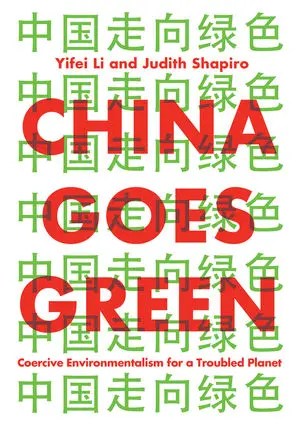
China Goes Green: Coercive Environmentalism for a Troubled Planet by Yifei Li and Judith Shapiro (2020). More academic and somewhat less accessible than Ma Tianjie’s book, it is nevertheless considerably more detailed and more critical of China’s environmental authoritarianism. It also treats China as inseparable from the wider world.
The Water Kingdom: A Secret History of China by Philip Ball (2016). A wonderful and highly accessible history of China’s relationship with water and hydraulic management.
The Yellow River: A Natural and Unnatural History by Ruth Mostern (2021). A three-thousand-year history of the Yellow River, widely considered the definitive work on the subject to date.
Circular Ecologies: Environmentalism and Waste Politics in Urban China by Amy Zhang (2024). A detailed examination of China’s waste crisis and the strategies employed by environmental activists under authoritarian conditions to confront it.
Remaking the Earth, Exhausting the People: The Burden of Conservation in Modern China by Micah S. Muscolino (2025). This work tells the story of how the state placed the burden of conservation on rural communities in Gansu between the 1940s and 1960s.
An Ecological History of Modern China by Stevan Harrell (2023). A substantial and detailed account of China’s environmental history from 1949 to the present day. Interestingly, and I have not read it so will refrain from further comment, Harrell is said to downplay the importance of China’s ecological authoritarianism, observing that Japan, South Korea, and Taiwan have followed similar environmental policy trajectories.
A further substantial volume is due for release later this year: China’s Environmental History: A Reader, edited by Brian Lander and Peter B. Lavelle (December 2026), comprising ninety-two chapters of translated primary source texts covering the many dimensions of Chinese environmental history across three thousand years, with suggestions for further reading.
Two recent titles in the Cambridge Elements series are currently available as open-access publications: Chinese Global Environmentalism by Alex L. Wang (2026) and Green BRI as the New BRI by Min Ye and Jiaqi Wang (2026).
Finally, it is worth noting that environmentalism has also entered the literary imagination. Waste Tide by Chen Qiufan (2013), reviewed in Cha, After the Dragons by Cynthia Zhang (2021), and Wolf Totem by Jiang Rong (2004) all merit attention. The last is a particular favourite: it tells the story of the extraordinary ecological balance achieved on the Mongolian steppe among humans, horses, and wolves, and of the catastrophe visited upon that balance by Maoist agricultural policies.
How to cite: Westwood, Laurence. “A Landmark in Environmental Science: Ma Tianjie’s In Search of Green China.” Cha: An Asian Literary Journal, 19 Jun. 2026, chajournal.com/2026/06/19/green-china.



Laurence Westwood is a retired criminal investigator and security consultant with a long-standing fascination with the history of China—with a special focus on Chinese legal and military history. He currently writes the Philip Ye crime novels set in contemporary Chengdu, Sichuan, and the Magistrate Zhu mysteries set during the Song Dynasty. He can be found on twitter/X at @LWestwoodAuthor and his website. [All contributions by Laurence Westwood.]
 Cha
Cha 