
[REVIEW] “Does Rabbit God Dream of a Queer-Asian Hot Pot?” by Felicia Jiang
Click HERE to read all entries in Cha
on Hot Pot.
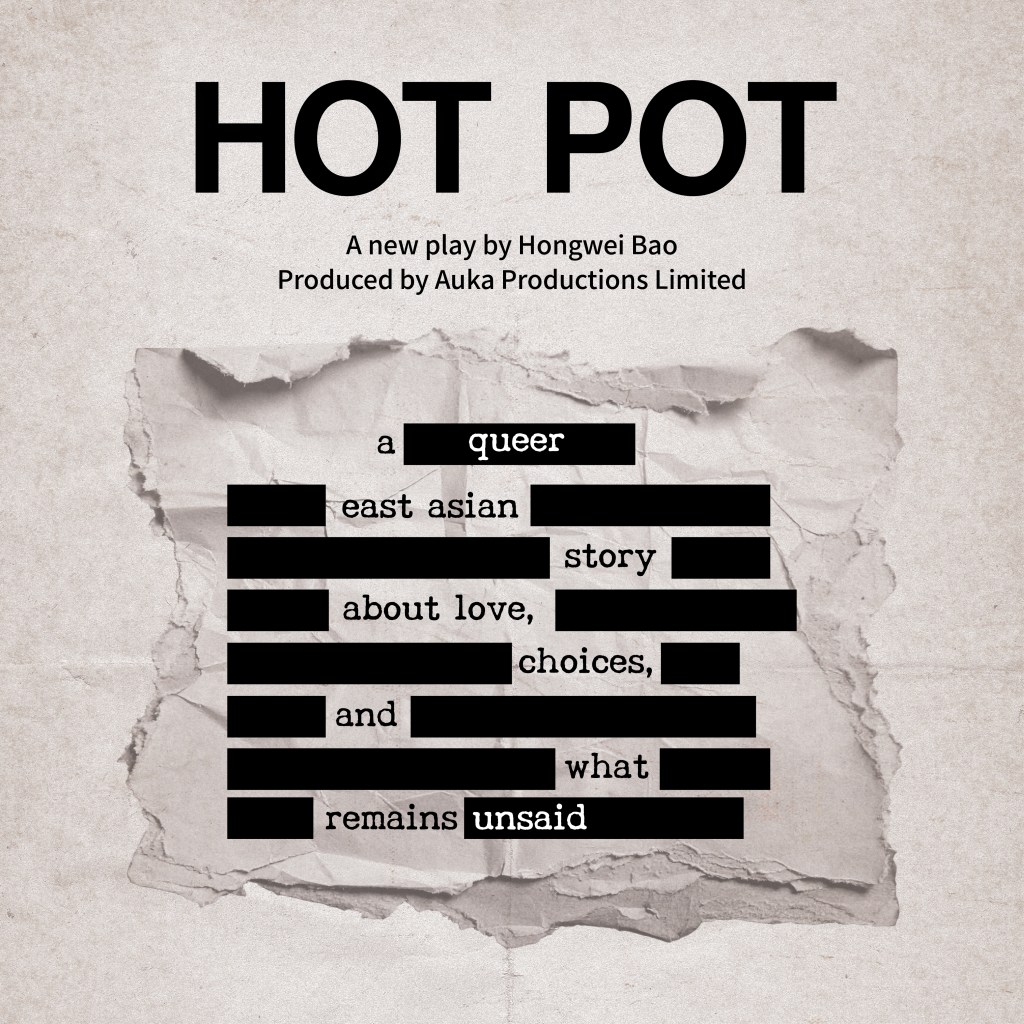
Hongwei Bao (playwright) and Namoo Chae Lee (director). Hot Pot: A Queer East Asian Play About A Meal, Four Friends and What Remains Unsaid. Produced by Auka Productions. UK Tour, 16 June-5 July 2026. All photographs featured in this review are by Brett Kasza.
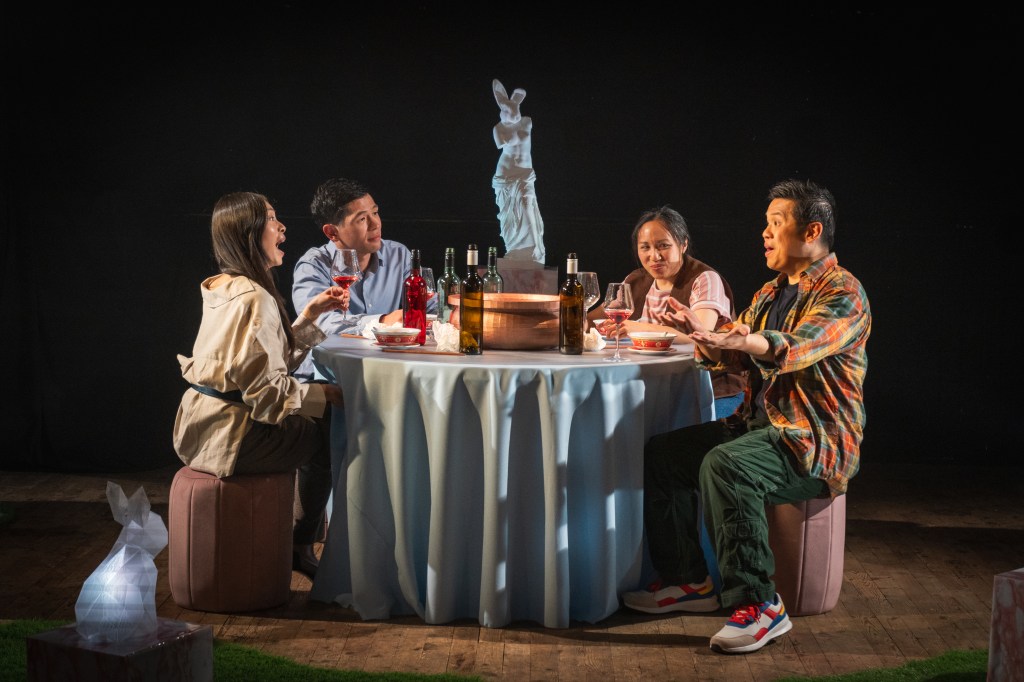
Taking life choices, ideals, friendship and queer love as the main ingredients of this hot pot dinner among four old university friends, Hot Pot weaves memories, emotions, silenced stories and unspoken confessions that remain between the lines, leaving the audience with a bittersweet aftertaste and, as they walk out, a thought-provoking residue.
Written by Hongwei Bao and directed by Namoo Chae Lee, Hot Pot made its stage debut at Playhouse East in London, followed by a tour across the UK. One senses readily the lived experience and autobiographical elements of writer Hongwei Bao behind the story, which lends the play sincerity and tenderness, and allows it to resonate strongly with ESEA queer communities.
… could life have been different? How might it have been different?
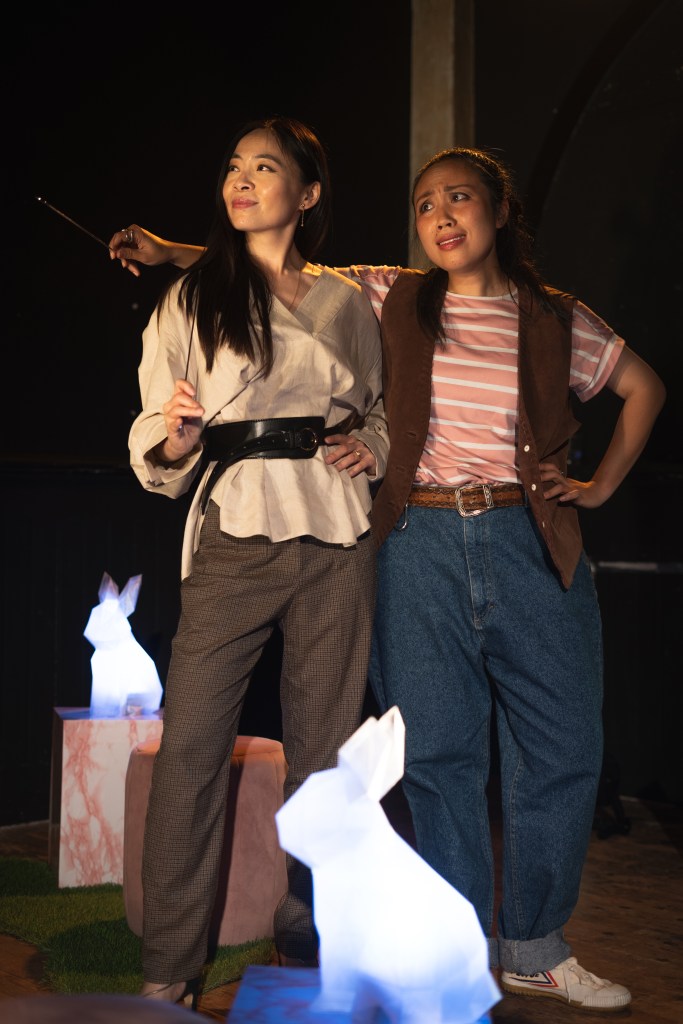
The two pairs of characters, Tao (Windson Liong) and Ming (Struan Davidson), and Mei (Shin-Fei Chen) and Lin (Michelle Yim), mirror and reflect upon one another’s life journeys and relationships, offering differing perspectives on navigating societal and political change in China. Ming and Mei chose similar paths for themselves after graduating in journalism, immersing themselves in their careers as editors and building towards a “successful” life as director, husband and wife, and parent. But when their university friends reunite, Tao, Ming’s queer lover from years past, returns home from London for a visit, and Lin, a Danmei (boys’ love fiction) writer still living with her parents, the two idealists and romantics prompt Ming and Mei to wonder: could life have been different? How might it have been different?
)
… the Rabbit God, an ancient Chinese deity created by the King of Hell to bless the love of gay men.
The intimate, secret romance between Tao and Ming unfolds in flashback as the hot pot simmers; in its steam appears the Rabbit God, an ancient Chinese deity created by the King of Hell to bless the love of gay men. Each character carries their own bitter memories, xenophobia, censorship, classism and the weight of Confucian values. Are they blessed by the Rabbit God?
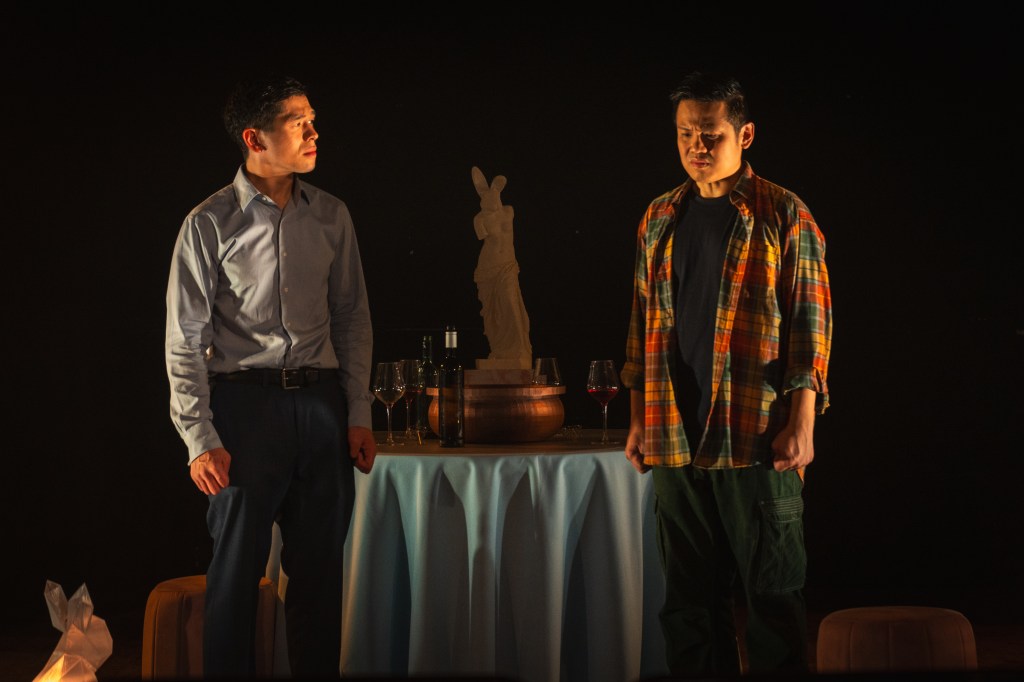
Director Namoo Chae Lee skilfully weaves the mythology of the Rabbit God into the fabric of the storytelling. The god himself emerges as a response to a comment made by Ming towards the protagonist Tao, accusing him of being too “westernised” for wanting a future, a properly acknowledged and equal relationship with his same-sex lover. We do have a history of homosexuality, of queer love, of difference, our own roots and our own language for them, as for almost everything else. To stare back at the “western-centred gaze,” we, as ESEA queer people, do have a history of homosexuality, of queer love, of difference in our histories and cultures; we have our own roots and our own language for them, as for almost everything else.
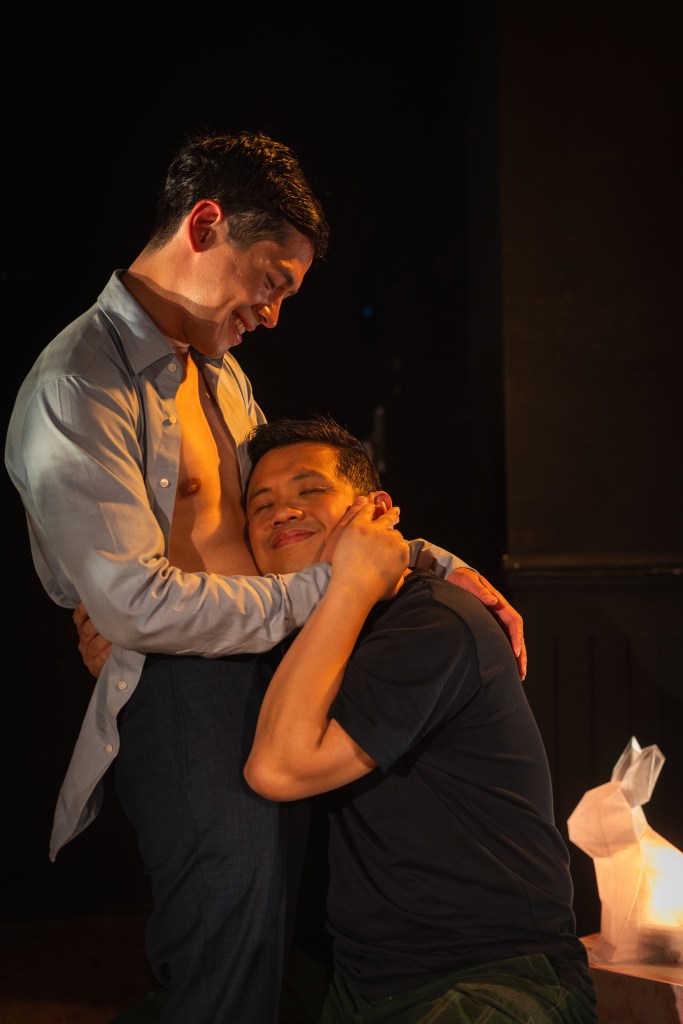
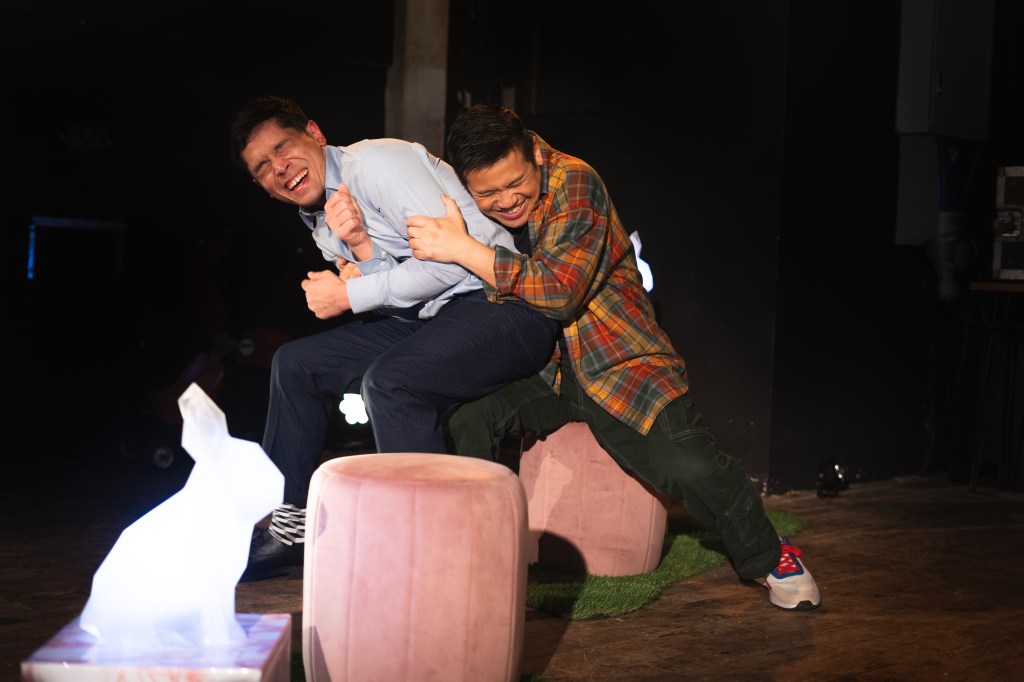
There seems to be an itch left unscratched here, however: does the Rabbit God himself need to be “queered up”? In the play, the Rabbit God appears as a symbol of gay existence, a witness to the characters’ journeys, though chiefly through his connection with the two male characters, Tao and Ming. Their physical intimacy was beautifully choreographed by movement director Suyoung Park, and actor Windson Liong delivered his demanding monologues, as Tao, as Tao’s father and as the Rabbit God, with great skill.
Yet I found myself wondering about the two female characters, Mei and Lin. Who bore witness to their growth and struggles? Did the Rabbit God notice the ambiguous feelings Lin harboured towards Mei? Was there a way out for either of them from the age-old duty of womanhood? What left the strongest impression on me was the performance of Mei, played by Shin-Fei Chen, whose deeply moving and courageous acting brought further depth to the character. The chains remain unbroken; one hopes the Rabbit God might yet prove a queer feminist too.
)
As a Chinese queer diasporic person myself, getting to see plays like Hot Pot on stage means something beyond representation: a story that resonates, a full ESEA cast on stage, a queer-led production team, and, with the sophisticated, minimalistic set design of the play, spaces opened up for the two timelines to flow and intertwine, while still drawing everything back to the hotpot table. My thoughts began to wander onto the stage too: does the Rabbit God dream of a queer Asian hotpot? Does he struggle to get through the identity crisis of being diasporic, like me? What might the future of ESEA queer stories look like? Will there be more stories to tell on stage, and how?
Hot Pot, as the first production from Auka Production Company, marks a solid and beautiful beginning; I guess we shall see how they are going to take these questions further, by going along with them throughout the journey.
How to cite: Jiang, Felicia. “Does Rabbit God Dream of a Queer-Asian Hot Pot?” Cha: An Asian Literary Journal, 25 Jun. 2026, chajournal.com/2026/06/25/hot-pot-play.

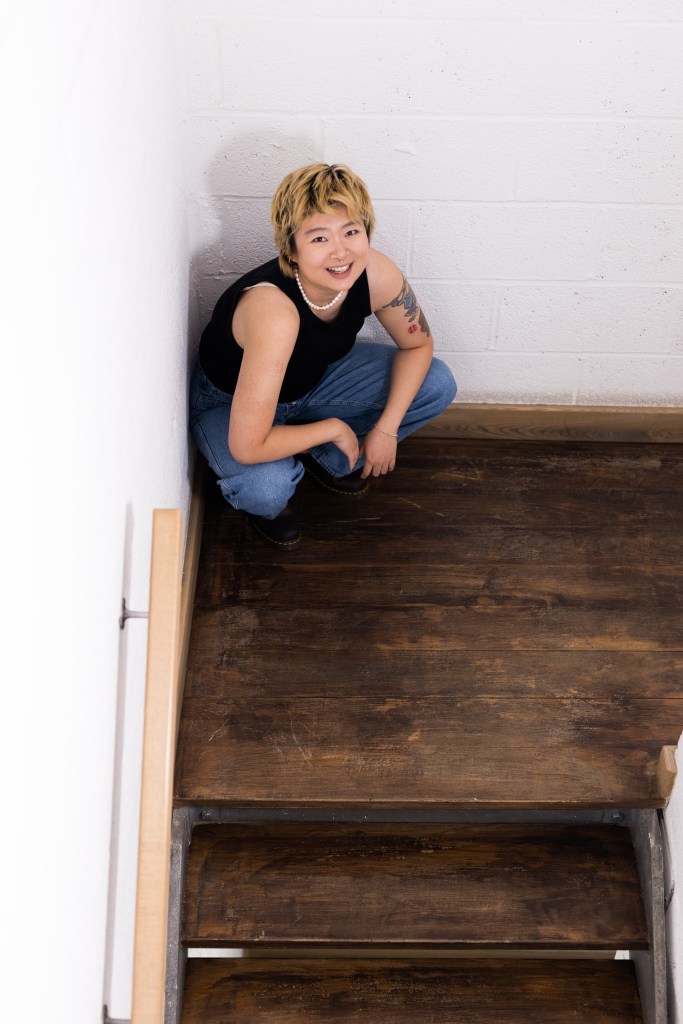

Felicia Jiang (FJ): they/she, is a queer Chinese theatre maker and community organiser based in London. Since 2021, they have been working closely with and for queer diaspora communities and individuals across the UK, using interdisciplinary creative approaches. In 2023, FJ initiated Drag Up!, a decolonising performance-making project engaging Chinese queer individuals through drag performance-making to explore the intersectionality of their queer identity and diasporic living experience. Taking an active part in the London drag scene in the meantime, FJ also performs as “404 Not Found” and “FunFun” across various venues. As part of QueerChinaUK since 2024, FJ has contributed as an artist educator to projects such as We Are ESEA LGBTQ+ at Queer Britain, among others.

