
茶 FIRST IMPRESSIONS
茶 REVIEW OF BOOKS & FILMS
[FIRST IMPRESSIONS] “Borrowed Strength: Longman Leung’s Cold War 1994” by Jonathan Han
Longman Leung (director). Cold War 1994, 2026. 123 min.
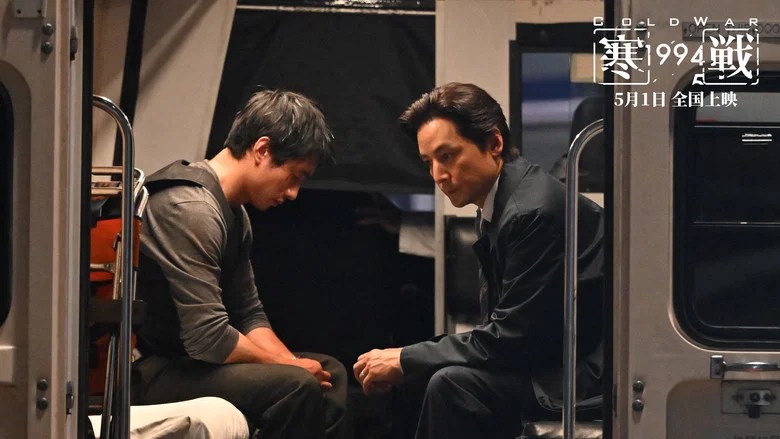
Prequels make for demanding films. They demand a connection to a future already known. They must also remain effective as standalone films. While sequels might openly carry forward the momentum of a cliffhanger, well-defined characters, or an established setting, there are limits to how much prequels can draw their narrative strength from what, sequentially speaking, lies ahead. Longman Leung’s Cold War 1994 tries to work around this.
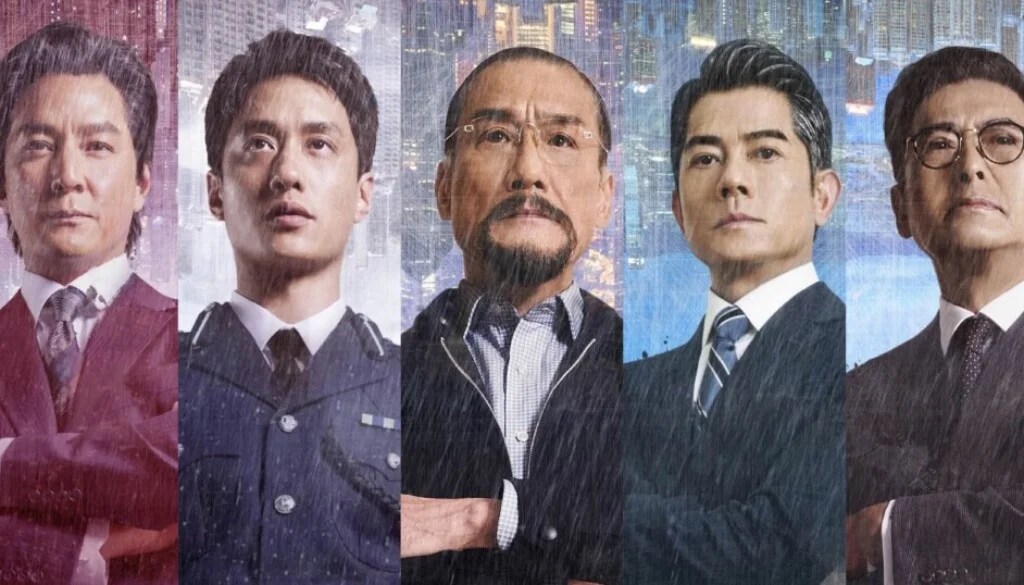
The police procedural thriller begins in 2017, shortly after Adrian Yip, a mishmash of Donald Tsang (with the bow tie) and John Tsang (with the moustache), is elected Chief Executive. Played by Louis Koo, the character serves primarily as a framing device, introducing the main protagonist, M.B. Lee (Tony Leung Ka-fai), the newly appointed Secretary for Security. After M.B. is attacked in his home and goes missing, the Commissioner of Police (Aaron Kwok) visits Oswald Kan (Chow Yun-fat), a senior counsel who reveals M.B.’s history in the police force through a thick manila folder. The inclusion of these actors gives a sense of continuation from the original Cold War series and, by the end of the film, a segue into the next entry in the series, Cold War 1995.
Exposition and conclusion aside, these characters appear infrequently: often enough to remind us of the framework, but not to the point of disrupting the retelling of the past. Now set firmly in 1994, the film opens with a member of the business elite, K.F. Wong, being kidnapped by the triads. His brother-in-law, Sir William Poon (Tse Kwan-ho), organises a ransom and an exchange. A personification of Hong Kong’s old-money aristocratic families, the Poons have their own internal plots and factions. Reinforced by their relationships with the city’s political players, the suits and scheming evoke the tired trope of wealth entangled with political power.
Parallel to these events, M.B. (his younger self played by Terrence Lau) prepares his team for a drug bust, which unwittingly targets the same gang responsible for the kidnapping. The drug bust ends tragically with the death of an officer and jeopardises the ransom operation. M.B. is expected to take responsibility, and would have done so if not for the intervention of the Deputy Commissioner (Daniel Wu). On the run, M.B. finds shelter with the Old Yuen Triad, joining them on the night of a planned assassination attempt against the triad’s leader, Jodie Yuen (Louise Wong). A fight ensues. Enemies become friends; friends, enemies.
Little progress has been made on developing the duality between the triad and the police force since the first Cold War film. The film flattens this duality: there is no question that M.B. regards his relationship with the triad as a means to discharge his duty as a police officer. Terrence Lau plays the leading role with charm, portraying a man certain that he has done his best to do the right thing. He is a protagonist of generic loyalty and general principles.
The film does try to complicate the ideals of loyalty by adding a geopolitical layer. The old colonial overlord, in its bid to retain control over its former colony, may have its shadowy hand behind the assassination, the kidnapping, and the subsequent cover-up. Even the report in the thick manila file, which frames the story, might be an invention of the crafty British, casting the narrative in an unreliable light. Yet the establishment of this layer, however ambitious, is less than artful and more than overt. Take, for example, one of the few lines from the MI5 head (Aiden Gillen): “We don’t break the law, we make the law”.
The intricate plot moves quickly enough to prevent critical questions from fermenting. With such a large ensemble cast and a heavy narrative, the pace is not so much driven by narrative quality as by the rapid introduction of familiar elements. The standoff between police officers loyal to separate causes, the deliberately misplaced shot that fakes a death, an argument in a chapel: these sequences borrow their strength from the long tradition of Hong Kong gangster films. In return, Cold War 1994 contributes a sign that such blockbusters, however contrived, can still be produced by a stagnant Hong Kong film industry.
How to cite: Han, Jonathan. “Borrowed Strength: Longman Leung’s Cold War 1994.” Cha: An Asian Literary Journal, 28 May 2026, chajournal.com/2026/05/28/cold-war-1994.

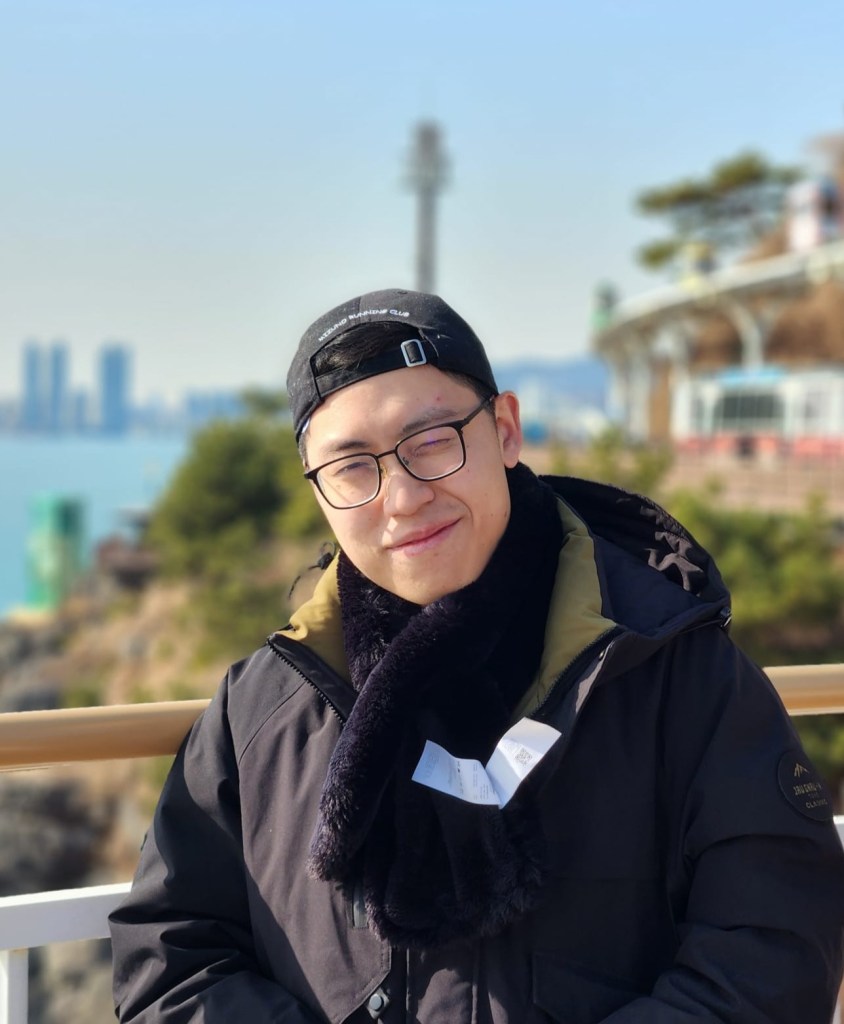
Jonathan Han is a Hong Kong-based writer. His work has appeared in Essays in Criticism, Hong Kong Review of Books, and Asian Review of Books. His chapbook Quinquennial was published by Pen and Anvil Press. Follow his Substack @jhantheman. [All contributions by Jonathan Han.]
 Cha
Cha 