

TIFF 2025
▞ 10. The Archivist’s Film: A Conversation on Kunsang Kyirong’s 100 Sunset
▞ 9. She Was Screaming into Silence: A Conversation on Cai Shangjun’s The Sun Rises On Us All
▞ 8. You Don’t Belong to Anyone: A Conversation on Kalainithan Kalaichelvan’s Karupy
▞ 7. The Paper Boy: On Park Chan-wook’s No Other Choice
▞ 6. Saigon Does Not Believe In Tears: On Leon Le’s Ky Nam Inn
▞ 5. The Need for Change: On Kei Ishikawa’s A Pale View of Hills
▞ 4. The Angel of Death: On Jafar Panahi’s It Was Just An Accident
▞ 3. Of Eros & Of Dust: On Ratchapoom Boonbunchachoke’s A Useful Ghost
▞ 2. Light At The End of the Labyrinth: On Genki Kawamura’s Exit 8
▞ 1. Affairs of the Heart: On Cai Shangjun’s The Sun Rises On Us All

Leon Le (director), Ky Nam Inn, 2025. 140 min.
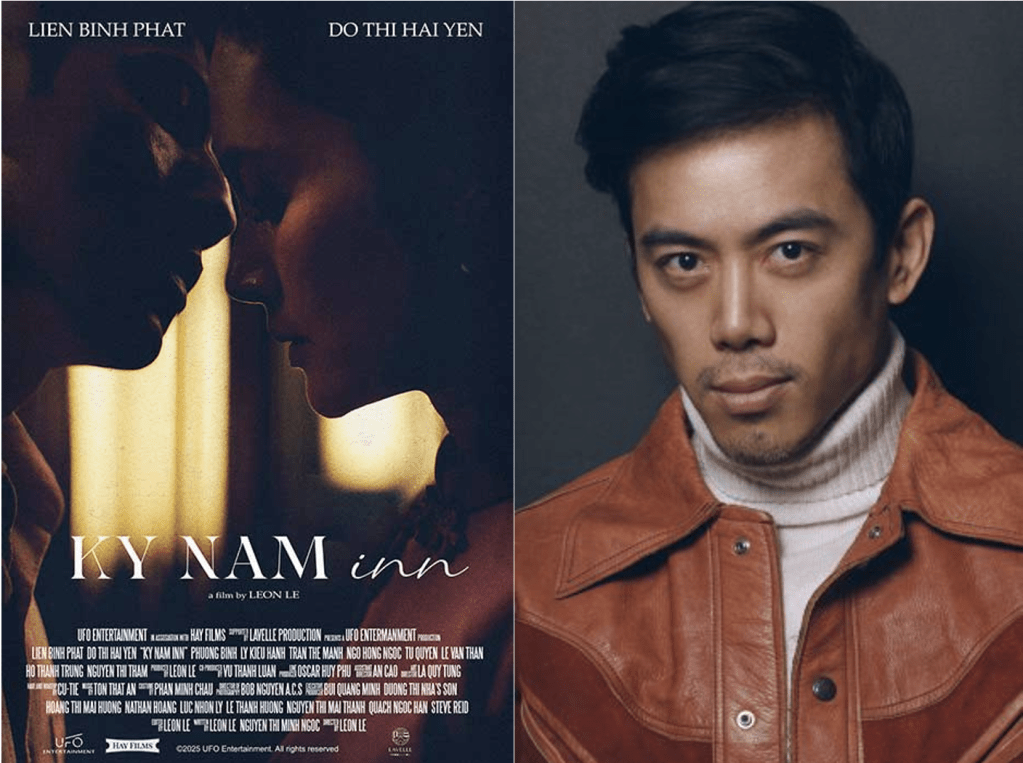
Leon Le
Leon Le’s newest film, Ky Nam Inn, which had its world premiere at the 2025 Toronto International Film Festival, is framed as the unforgettable memory of a summer in the life of a literary man. When we first encounter him, in a grainy black-and-white image, Khang, played by Lien Binh Phat, is in his Hanoi flat filled with reminders of the recent past. From the outset, in voice-over, he explains the significance of the film’s title:
Ky Nam. A rare and precious type of agarwood that only forms when its tree is wounded. To save itself, the tree releases a mysterious fragrant resin. One drop at a time. It takes many years, even decades, for that resin to become Ky Nam. And only through good fortune can one come across it. For me, even more precious and rare than this agarwood is a woman who shares its name.
The fact that the film then flashes back a single year, brought to life in 35mm by cinematographer Bob Nguyen’s florid and vibrant style, only becomes clear towards the end of its languid 103 minutes. This belated revelation undermines the central metaphor, since not enough time has passed for Khang’s memories to deepen, for his insights into the woman to mature into consequence.
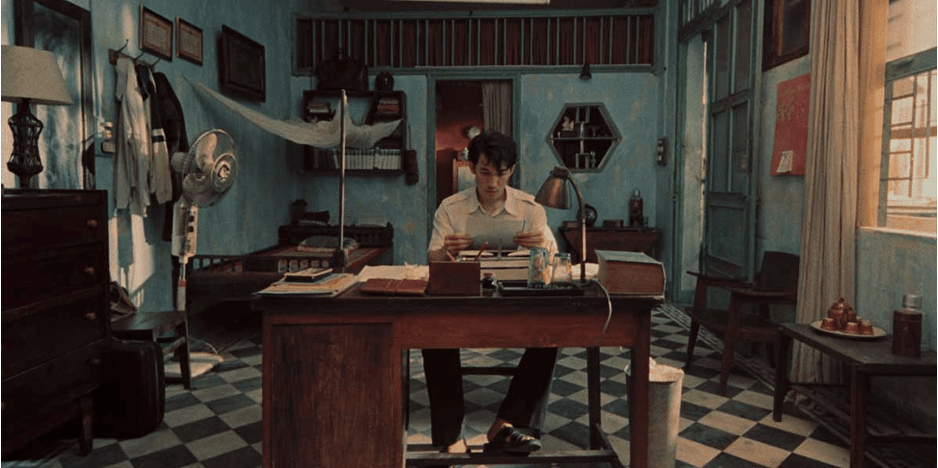
After being robbed upon his arrival in Saigon, Khang finds himself barred from entering a housing complex where he has been sent by his uncle, the unseen Mr Tan, to work on his Vietnamese translation of Antoine de Saint-Exupéry’s 1943 novella Le Petit Prince. From behind him, first as a blurred figure in the background, emerges the titular Ky Nam, played by Do Thi Hai Yen, whose grace immediately captivates him. This charged moment of star-crossed attraction, destined to bloom into unrequited affection, together with the film’s heightened style, inevitably invites comparison to Wong Kar-wai’s In the Mood for Love (2000). Yet such comparisons overlook the sensualist tradition established by directors such as Tran Anh Hung, to which Le is more directly indebted.
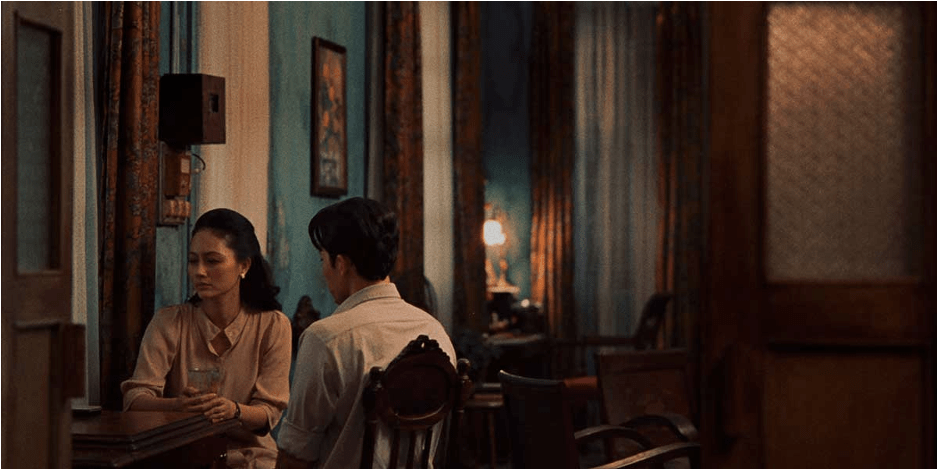
Over time, Khang’s presence in the complex enlivens not only the widowed chef Ky Nam but also the surrounding community: Luyen (Hong Ngoc Ngo), an infatuated young woman; Mr Hao (Van Than Le), a wise old man craving companionship; and Su (The Manh Tran), a mixed-race teenager who rediscovers his education and begins to dream of emigrating to America. Khang’s influence derives not merely from his beauty but also from his status as a “red youth,” the relative of a communist official. This background stands in sharp contrast to the “Southern” Ky Nam, whose husband died in a labour camp. Such political and generational divides, together with the larger fact that Khang’s privileged life extends beyond Saigon in ways hers cannot, form the true barriers to their union. She is an anchor, heavy and fragrant with unspent grief.
With a nostalgic score by An Ton That, a remarkable scene featuring Ha Thanh’s rendition of “Ben Giang Dau,” and Quy Tung La’s meticulously realised period design, Ky Nam Inn explores these tensions among characters whose desires overlap within a confined space haunted by the lingering trauma of war. Khang’s role as translator is emblematic: his task is one of meaning, redefinition, and the possibilities of language. One word in particular troubles him in his translation: “apprivoiser,” which appears in Chapter 21 of Le Petit Prince. “It’s a process,” he explains to Su, “whereby two strangers gradually become familiar, understand one another and grow intimate.” In English, it is simply rendered as “tamed.” It is this verb that best describes what Ky Nam Inn, co-written by Nguyen Thi Minh Ngoc, attempts to do. Each encounter is a site of acclimatisation, strangers becoming less so, even as departure looms. Yet the film overstays its welcome and loses momentum. Le, who also serves as editor, pursues archetypal patterns without subversion, producing a work that is modernised but not modern, shaped by tidy resolutions and faint gestures towards feminist critique that cannot be realised because the narrative clings too closely to Khang’s limited perspective.
Ky Nam Inn is a film of undeniable style, and its political context lends weight, but beyond the elegant surface there is hollowness where there should be wounds. The yearning it seeks to conjure is never truly felt. It is, in the end, too tamed.
How to cite: Nagendrarajah, Nirris. “Saigon Does Not Believe In Tears: On Leon Le’s Ky Nam Inn.” Cha: An Asian Literary Journal, 9 Sept. 2025, chajournal.blog/2025/09/09/ky-nam-inn.



Nirris Nagendrarajah (he/him) is a Toronto-based writer whose work has appeared in paloma, Polyester, Fête Chinoise, In the Mood Magazine, Tamil Culture, in addition to Substack. He is currently at work on a novel about waiting. [All contributions by Nirris Nagendrarajah.]
 Cha
Cha 