
TIFF 2025
▞ 10. The Archivist’s Film: A Conversation on Kunsang Kyirong’s 100 Sunset
▞ 9. She Was Screaming into Silence: A Conversation on Cai Shangjun’s The Sun Rises On Us All
▞ 8. You Don’t Belong to Anyone: A Conversation on Kalainithan Kalaichelvan’s Karupy
▞ 7. The Paper Boy: On Park Chan-wook’s No Other Choice
▞ 6. Saigon Does Not Believe In Tears: On Leon Le’s Ky Nam Inn
▞ 5. The Need for Change: On Kei Ishikawa’s A Pale View of Hills
▞ 4. The Angel of Death: On Jafar Panahi’s It Was Just An Accident
▞ 3. Of Eros & Of Dust: On Ratchapoom Boonbunchachoke’s A Useful Ghost
▞ 2. Light At The End of the Labyrinth: On Genki Kawamura’s Exit 8
▞ 1. Affairs of the Heart: On Cai Shangjun’s The Sun Rises On Us All

Kei Ishikawa, A Pale View of Hills, 2025. 123 min.
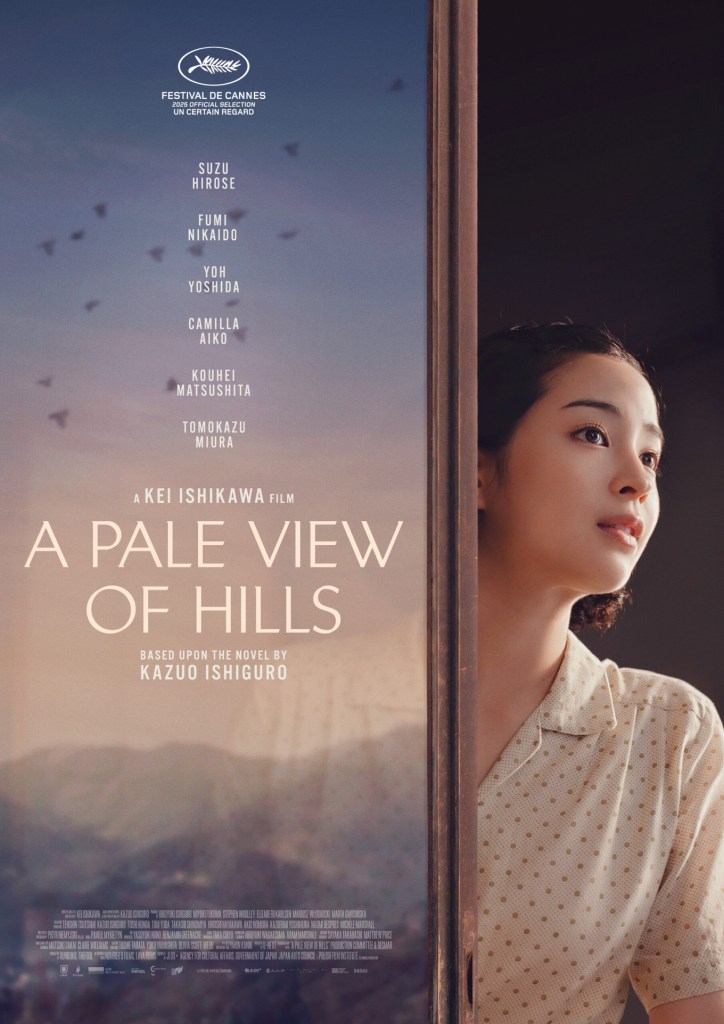
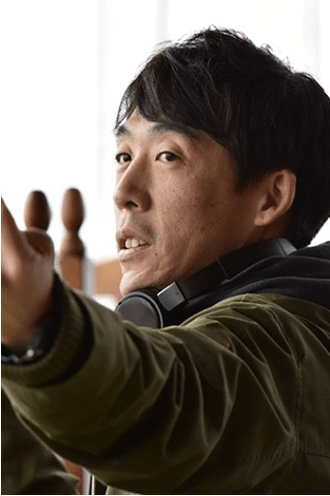
In his Art of Fiction interview with The Paris Review, the novelist Kazuo Ishiguro, whose debut novel A Pale View of Hills was published in 1982, explained that what he sought to achieve with his complex yet not complicated first work was “to have somebody who finds it too painful or awkward to talk about his own life appropriate someone else’s story to tell his own.” In Kei Ishikawa’s (pictured) adaptation of the novel, which premiered in Un Certain Regard at the 2025 Cannes Film Festival, that character is Etsuko, portrayed by two actresses across the film’s dual timelines: Yoh Yoshida in “1982, England” and the luminous Suzu Hirose in “1952, Nagasaki.” When we first encounter her, Etsuko has sold her family home and finds herself haunted by memories of the past, while her surviving daughter Niki, an aspiring writer played by Camilla Aiko, is drawn to uncovering her family’s hidden history.
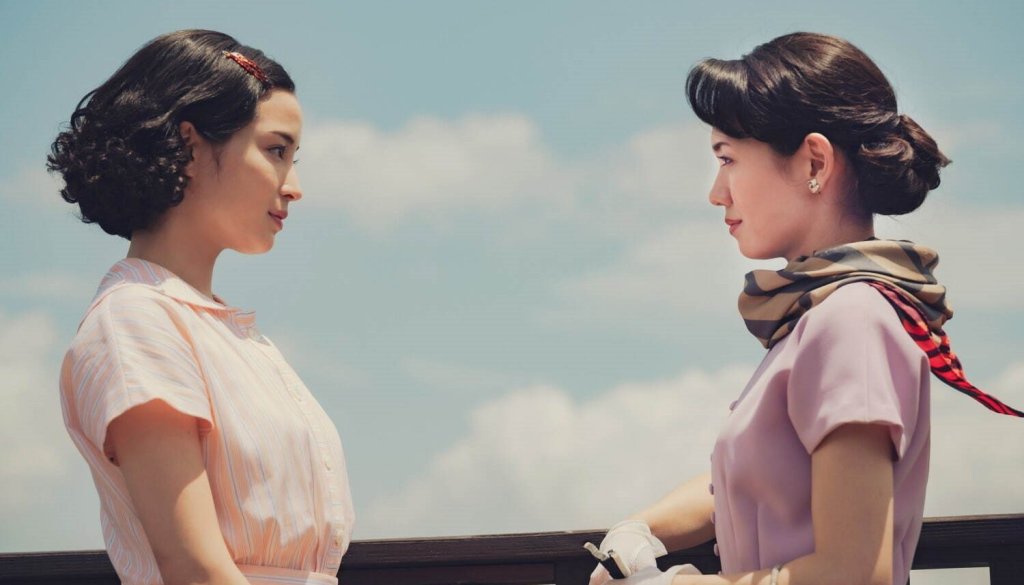
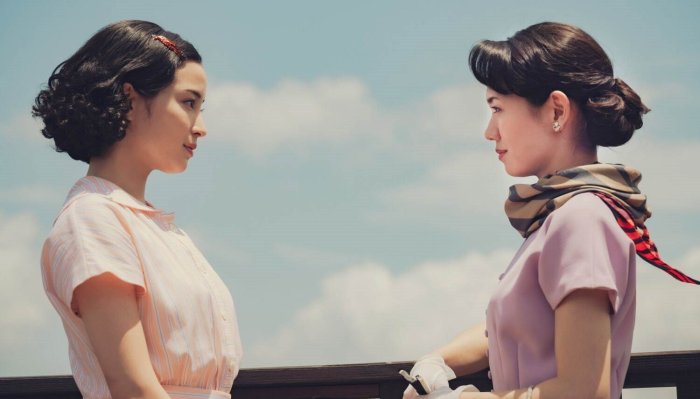
As Niki, who is mixed-race, struggles to persuade her mother to speak openly about the grief surrounding the death of her elder sister Keiko, she turns instead to the suitcases filled with objects and letters that awaken her imagination. These fragments allow her to construct a narrative to which, as a second-generation immigrant, she has no direct access. Within the 1952 timeline we meet the younger Etsuko, a pregnant housewife who becomes fascinated by Sachiko, played by Fumi Nikaidô, a woman living across the street with her American lover and wayward daughter. A chance encounter ignites a friendship between the two women, whose lives differ starkly. Both, however, share the experience of having lived through the atomic bombing. Sachiko and her daughter, exposed and stigmatised by their community, yearn to migrate to America in pursuit of imagined stardom.
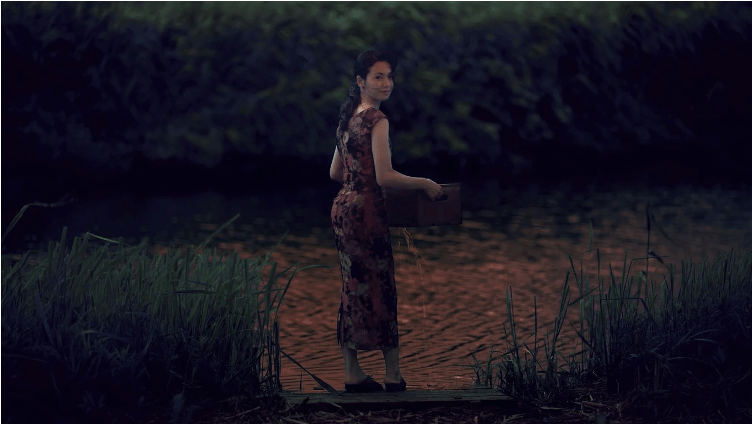
Etsuko, more privileged yet still carrying the post-traumatic burden of survival, suffers a form of survivor’s guilt. This emerges when her father-in-law, Headmaster Ogata, played by Tomokazu Miura, uncovers the violin she once played before the war. Though she does not recall having touched it, she is said to have played it in the middle of the night, rousing the household. Holding the violin in her arms, her face outlined against the brightness of the sun, she begins to weep. Cinematographer Piotr Niemyjski frames the moment within a crisp, colourful landscape where day-for-night sequences attain a dreamlike quality. “On that day,” she confesses, “this was all I could save. But the children…it was my fault.” It is this sense of guilt that both draws her towards and repels her from Sachiko.
Mr Ogata is one of the film’s more intriguing figures, although his importance is not immediately evident. Arriving a few days early for a school reunion, he laments his inclusion in an essay by a former student who claims that Ogata’s forced departure from school years before was justified. The essay suggests he “should’ve been purged as soon as the war ended” because of his fierce nationalism and conservatism. Later, when Etsuko accompanies him to confront Shigeo, the author of the essay, played by Daichi Watanabe, Ogata is compelled to reckon with shifting times and values that undermine what he had believed immutable. “This is a new dawn,” Shigeo declares, though his expression betrays dissent. At the station, as Ogata departs, Etsuko gives the subplot its resolution: “We all need to change.” The line echoes in the 1982 storyline, which entwines with the past until the characters, together with the mysteries they embody, collapse into one another.
As the older Etsuko and her daughter draw closer, A Pale View of Hills meditates upon a generational divide shaped by historical trauma, a silence that denies words to experience and instead fills the void with fractured imagination open to interpretation. “I’d spent a lot of time working with homeless people,” Ishiguro reflected, “listening to people’s stories about how they’d got to this place, and I’d gotten very sensitive to the fact that they weren’t telling those stories in a straightforward way.” Ishikawa’s non-linear approach, supported by his own elegant editing, heightens the suspense as the film reaches its final movements. The work ultimately demonstrates that we often use the lives of others to tell our own stories. Such reframing of narrative has profound literary and cinematic implications, yet also reveals how fiction can bring us closer to our most unendurable truths.
How to cite: Nagendrarajah, Nirris. “The Need for Change: On Kei Ishikawa’s A Pale View of Hills.” Cha: An Asian Literary Journal, 9 Sept. 2025, chajournal.blog/2025/09/09/pale-view.



Nirris Nagendrarajah (he/him) is a Toronto-based writer whose work has appeared in paloma, Polyester, Fête Chinoise, In the Mood Magazine, Tamil Culture, in addition to Substack. He is currently at work on a novel about waiting. [All contributions by Nirris Nagendrarajah.]
 Cha
Cha 