
Editor’s note: In “When Everything Becomes a ‘Gender Issue’ in Asia”, Zheng Wang argues that across Asia, public debate often compresses diverse injustices into the single language of gender. While this framework can demand justice, it also displaces other issues—class, caste, labour, governance, and history. Institutions increasingly reward simplified narratives of trauma, privileging clarity over complexity. From activism to academia, art to policy, this flattening silences contradiction and discourages slower, more difficult inquiry. The challenge is not to abandon gender, but to break its monopoly—so Asia may confront injustice in its full multiplicity.

[ESSAY] “When Everything Becomes a ‘Gender Issue’ in Asia” by Zheng Wang
Across much of Asia today, we witness a striking paradox: societies racing ahead in economic and technological modernisation, yet growing increasingly reductive in their public discourse. Social conflict, institutional injustice, personal harm, and collective trauma are frequently collapsed into a single narrative vessel: “gender issues.” In this linguistic compression, gender becomes both shield and sword—a means of demanding justice, but also a device for deflecting deeper, more intractable questions.
Nowhere is this more apparent than in Asia itself, where historical hierarchies, colonial legacies, state-directed narratives and high-context cultures combine to discourage complexity. Within this landscape, gender provides a socially acceptable idiom of critique. It lends moral clarity and institutional purchase. Yet it also distracts. It shifts attention away from structural analysis, reframes institutional failure as interpersonal melodrama, and privileges legibility over contradiction.
Judith Butler once argued that gender is not essence but performance—a repeated doing shaped by norms. In Asia, that performance now extends to public suffering: one’s voice is heard only if pain is articulated in the correct gendered grammar. Trauma becomes credible when affixed to recognisable identity scripts. Complexity, ambivalence, contradiction—these are construed as liabilities. Accordingly, individuals swiftly learn to self-narrate in the idiom of trauma capital.
The problem extends far beyond online activism. It permeates art, academia, publishing, and policymaking. From grant applications to exhibition catalogues, from DEI panels to public apologies, a particular narrative mode predominates—one that privileges emotionally legible pain, symbolic clarity, and identity representation. As Michel Foucault observed, this is not merely repression but production. Institutions do not silence dissent; they format it.
This dynamic is sharply illustrated by the aftermath of South Korea’s Nth Room case. Public outrage was justified, but the political response soon metastasised into sweeping suspicion towards young men, a flattening of gender discourse, and an evasion of harder questions about digital culture, class, and adolescent alienation. Likewise, in Taiwan, debates around sexual misconduct in academia frequently collapse into symbolic purges, with scant attention to mentorship structures, intellectual hierarchies, or the precarious mental health of graduate students.
Such flattening has penetrated Southeast Asia’s cultural and educational institutions as well. In Malaysia and Indonesia, students and emerging artists increasingly feel obliged to package their work around themes of identity trauma to gain visibility. Grant panels favour narratives of victimhood over experimentation; critics elevate clarity above contradiction. This is not to impugn the legitimacy of such experiences, but rather to ask why our institutions appear structurally incapable of recognising ambiguity as intellectually or aesthetically valuable.
In the Philippines, the #BabaeAko movement first arose as a feminist rebuke to President Duterte’s openly misogynistic remarks, yet swiftly expanded into a broader cultural moment that, while amplifying visibility, struggled to bridge urban feminist discourse with the lived realities of working-class and rural women, particularly those scarred by the War on Drugs. Meanwhile, in India, high-profile gender cases—such as the 2018 MJ Akbar defamation trial—have energised essential debates about sexual violence and accountability, but also laid bare the fault lines between Anglophone elite feminism and the complex intersections of caste, class, and linguistic divides that define most Indian women’s lives.
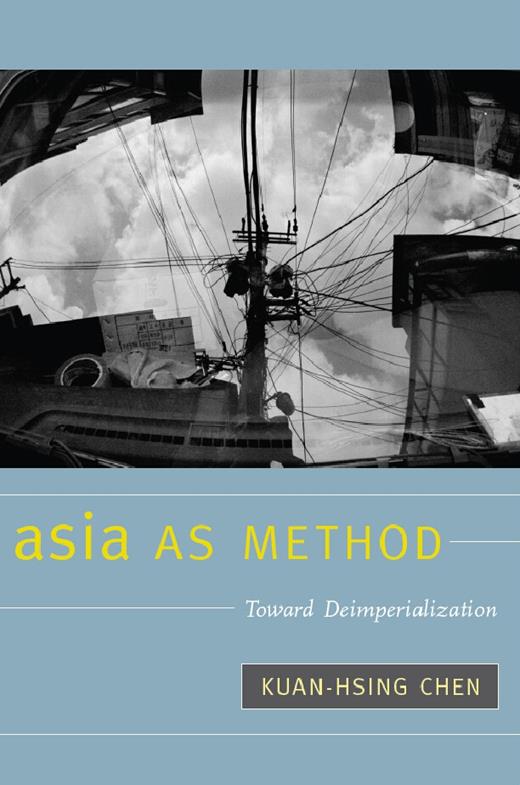
These regional intricacies call for theoretical frameworks grounded in Asia’s own intellectual traditions. Taiwanese scholar Chen Kuan-Hsing, in Asia as Method, insists that decolonisation requires turning away from the West as the primary theoretical reference point, and instead cultivating lateral affinities and contradictions within Asia itself. Similarly, Indian political psychologist Ashis Nandy has long critiqued the colonisation of consciousness, urging attention to the ways in which modern institutions suppress indigenous moral worlds. Dipesh Chakrabarty, in his project of “provincialising Europe,” reminds us that universals must always be situated—that Enlightenment values need not be abandoned, but must be mediated through local histories and plural modernities.
The danger is not the attention to gender—which is indispensable—but the way in which it has become the singular lens. Angela Davis cautioned that feminism stripped of attention to race, class, and state violence degenerates into bourgeois moralism. In Asia, the predicament is yet more acute. Gender discourses are often borrowed, translated, and re-exported without attending to local specificities: migrant labour, linguistic exclusion, authoritarian governance, and intergenerational trauma.
Japanese philosopher Kojin Karatani once observed that modern societies do not abolish hierarchy; they circulate it through exchange. The same may be said of pain. In Asia, trauma increasingly functions as a form of cultural currency: institutionally recognised, socially negotiable, publicly monetisable. Yet, like all currencies, it demands conversion. Private pain must be rendered into public grammar. Those unable—or unwilling—to translate their suffering into the sanctioned codes remain illegible.
Lauren Berlant termed this the cruel optimism of identity politics—the belief that visibility yields change. In Asia, however, visibility more often yields judgement, surveillance, and subtle censorship. Social media, with its reward mechanisms of outrage and purity, trains young people to enact clarity rather than complexity. Those who attempt to pause, to reflect, to sustain contradiction are punished by tempo and drowned by noise.
Susan Sontag reminded us that to capture suffering is to aestheticise it. Today, suffering is also incentivised. Narratives of victimhood become prerequisites for funding, publication, and inclusion. The consequence is a flattened emotional economy in which only certain pains count, and only certain performances of pain are validated. Meanwhile, more difficult questions are deferred: What produces abuse? Who finances silence? How does structural injustice reproduce itself through ostensibly liberal mechanisms?
This is not an argument against gender justice; it is a call to reclaim its depth. Gender must remain a site of critique, but it cannot be the sole one. When every question is collapsed into gender, nothing escapes simplification. Class becomes romance. Bureaucratic failure becomes emotional harm. Political violence becomes interpersonal toxicity.
Asia deserves more. We deserve a politics capable of dwelling with contradiction, of speaking across identities rather than solely through them. We deserve to ask questions that are not immediately profitable, emotional, or symbolic. We deserve the time to think slowly, to risk ambiguity, and to remember that not all pain seeks a microphone.
As Dave Chappelle remarked, becoming a hero is not about sitting at the front of a symbolic bus—it is about stepping off the bus, entering the messy streets, and refusing easy scripts.
In Asia, the pressure to simplify is immense. But our histories are not simple, and our futures should not be either.
To reduce the political to the symbolic is not progress—it is displacement. If identity becomes the only framework for reading injustice, the material systems that generate inequality remain unchallenged. The task before Asian societies is not to abandon gender discourse, but to break its monopoly. We must craft languages robust enough to contain multiplicity, deliberate enough to hold memory, and courageous enough to hold silence.
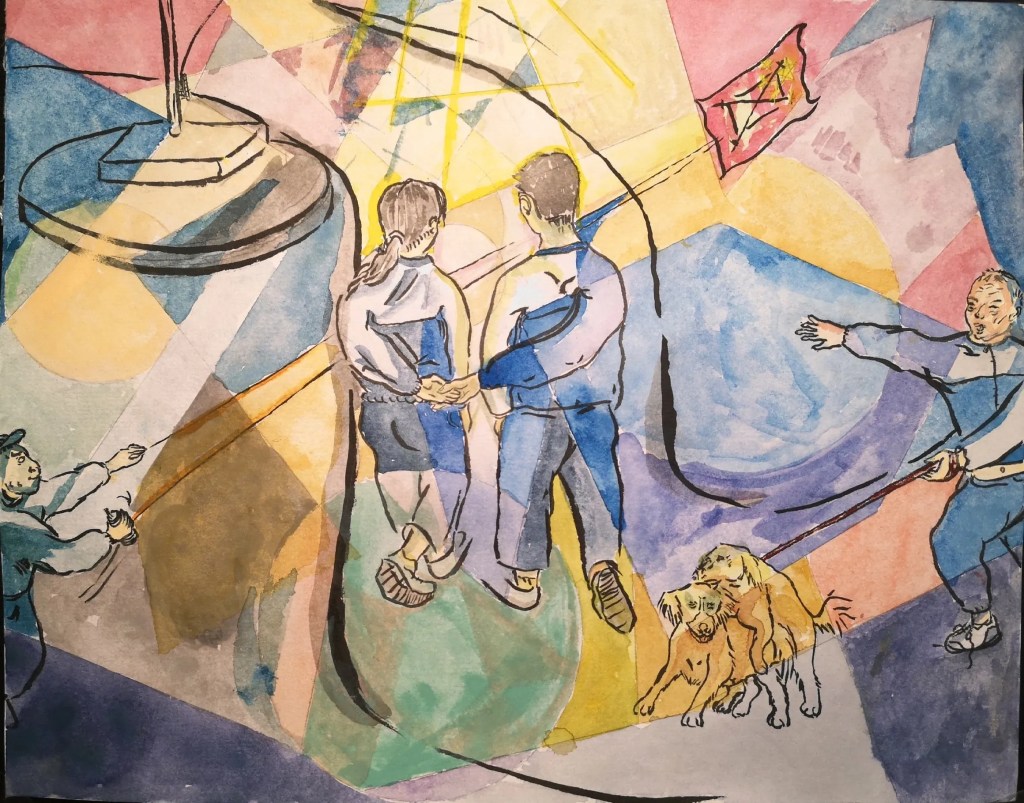
“Love but in Secret” by Zheng (Moham) Wang, 2021, watercolour
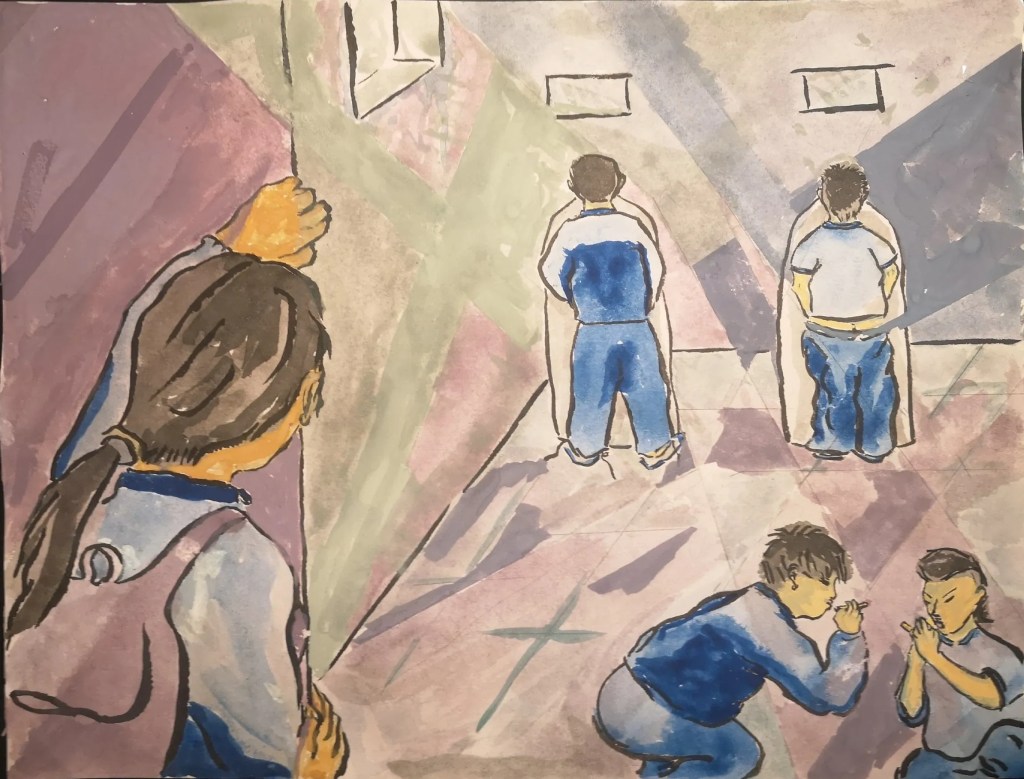
“Female Gaze” by Zheng (Moham) Wang, 2021, watercolour
Photo by Markus Winkler on Unsplash.
How to cite: Wang, Zheng. “When Everything Becomes a ‘Gender Issue’ in Asia.” Cha: An Asian Literary Journal, 9 Sept. 2025, chajournal.com/2025/09/09/gender-issue.



Zheng (Moham) Wang, originally from Wuhan and of Yao (Iu-Mien) ethnicity, currently resides in Singapore. A member of the Independent Chinese PEN Centre, he was awarded the Wang Guozhen Poetry Prize in 2020, the Taiwanese “Fourth Luo Ye Literary Award” for fiction in 2023, the Singapore “Xinhua Youth Literary Award” for poetry, and the 2024 Lianhe Zaobao Gold Prize (Fiction Category), among others. His poetry and fiction have appeared in Qingdao Literature, Youth, Young Writers, Taiwan’s Taike Poetry, Vineyard, China Daily, Liberty Times, and Hong Kong’s Voice & Verse, P-Articles, and Hong Kong Literature. His English-language poetry has been featured in Queer Southeast Asia, Malaysia Indie Fiction, Woman, Cha, and Voice & Verse Poetry Magazine, among others. His poetry and illustrations were also selected for the 2023 Chengdu Biennale parallel exhibition “Perceiving Geography.” He holds a BA in Studio Art and Art History from Rice University (USA), an MA in Aesthetics and Politics from the California Institute of the Arts, and is currently pursuing a fully funded PhD in Art, Design and Media at Nanyang Technological University, Singapore. More at mohamstudio.com. [All contributions by Zheng Wang.]
 Cha
Cha 