
[INCIDENTAL] “Bear, Boar, Monkey, Mouse, and Cat” by Marsha McDonald

Bear
© Dima Solomin and Marsha McDonald
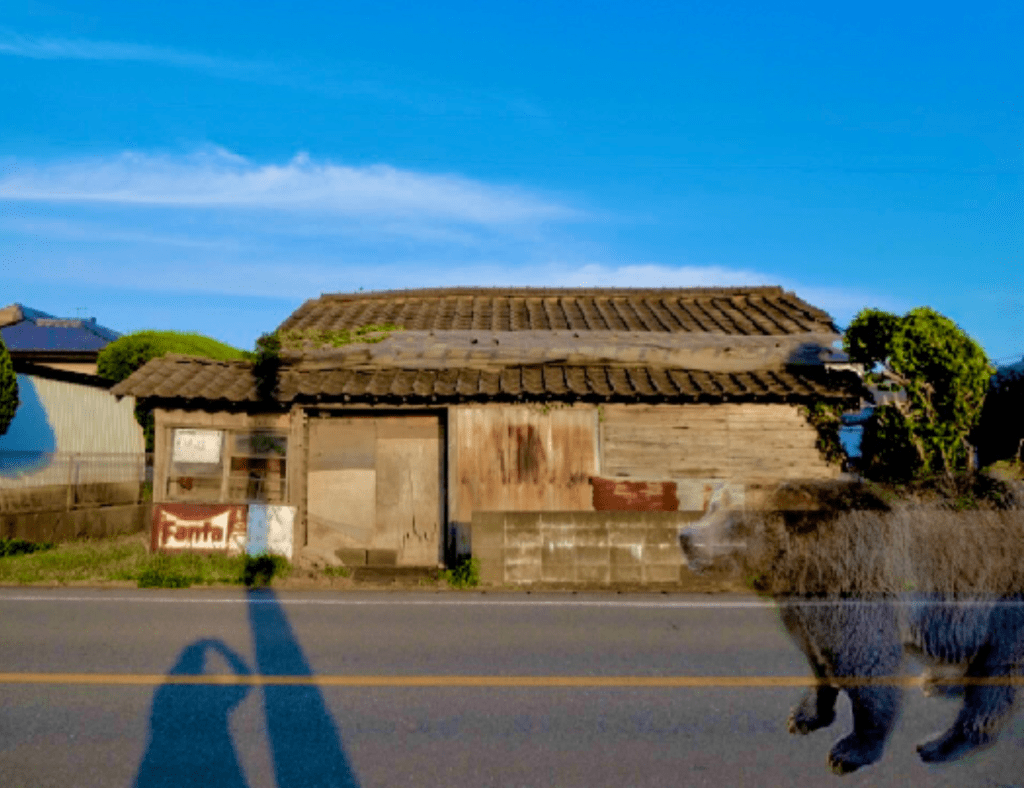
I am returning this year to Japan for a month mid-November, staying near Osaka, and visiting friends, doing my creative work. I will visit an artist friend living in Niigata for a few days. Her area has lost a lot of population. It’s also an area that has seen bears returning. But it seems bears have been sighted in many places in urban and rural Japan these days. Other animals often know things we humans don’t, or that we have forgotten.
I wonder what the bears know?

Boar
© Marsha McDonald
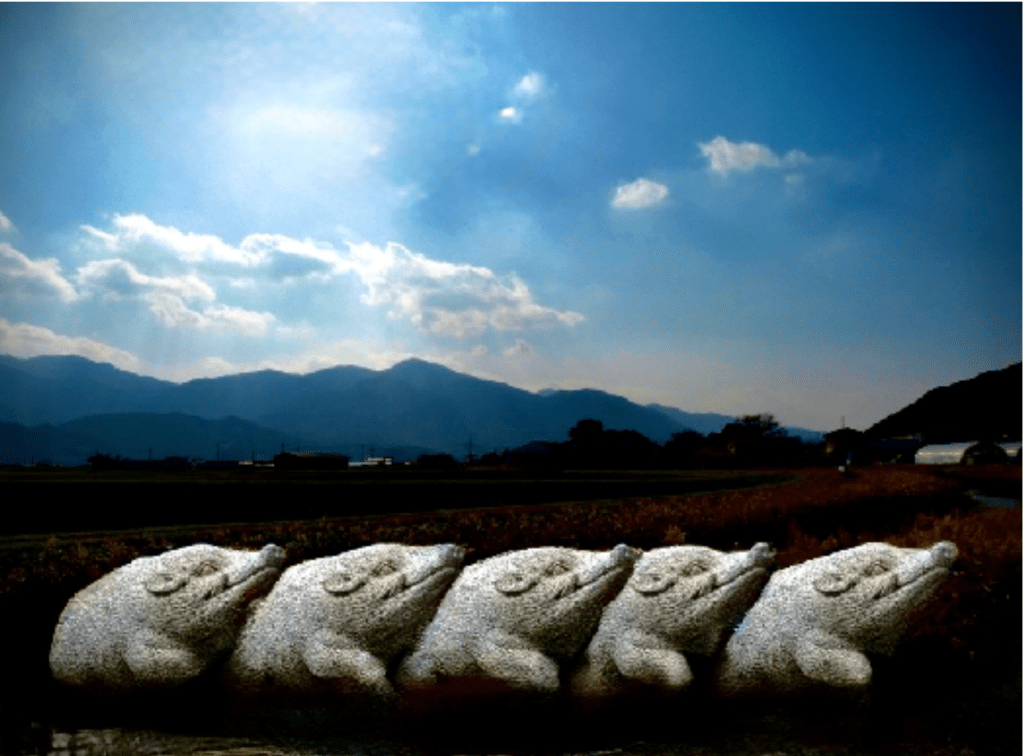
After a restless December night, I’m taking a walk, before dawn, in farm fields not far from Fukuoka. I hear gunshots. I hurry back to the main road. Later that morning, passing a local barn, I see three men with rifles behind a neat row of wild boar. After laying aside their guns, the men lift each dead animal onto an open truck bed. The bodies are hoisted with care. There is little talking. I learn from a neighbour that many more boar are coming down from the nearby mountains, to feast on winter crops. That evening, after supper with friends, I walk past my neighbour’s prized apple trees. In the dark, there is the ominous groan of bending boughs, followed by satisfied grunts and crunching. Several sets of small brightness blink at me through a thinning hedge.
I sprint past the last few village houses to my home.
Monkey
© Marsha McDonald
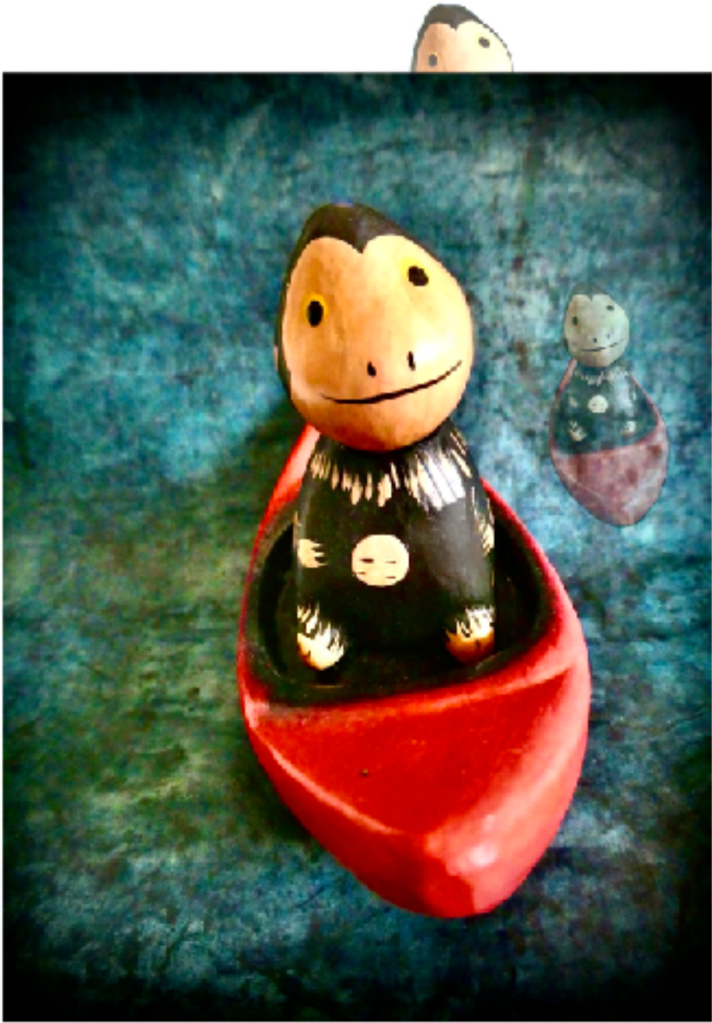
During a stay in Kansai, I found a worn wooden souvenir, from Bali, in a secondhand shop. A stoic monkey, long horizontal line for a mouth, sits in a palm-sized red river boat, loosely pegged to his seat. I like to occasionally turn him away from the bow, to face port, starboard, or stern, so that he can have a full view of his new surroundings. With a few nicks of a knife, the carver gave him a reed raincoat, but nothing covers his bare head. I imagine a child fashioning a tiny conical hat, gifting it to him with a pole, spear, or net. Wet weather is best for biting fish, yet his drawn features seem opaque. Perhaps, I think, he is up to something: monkeys often are. But what?
Mouse
© Robert Owen Wahl and Marsha McDonald
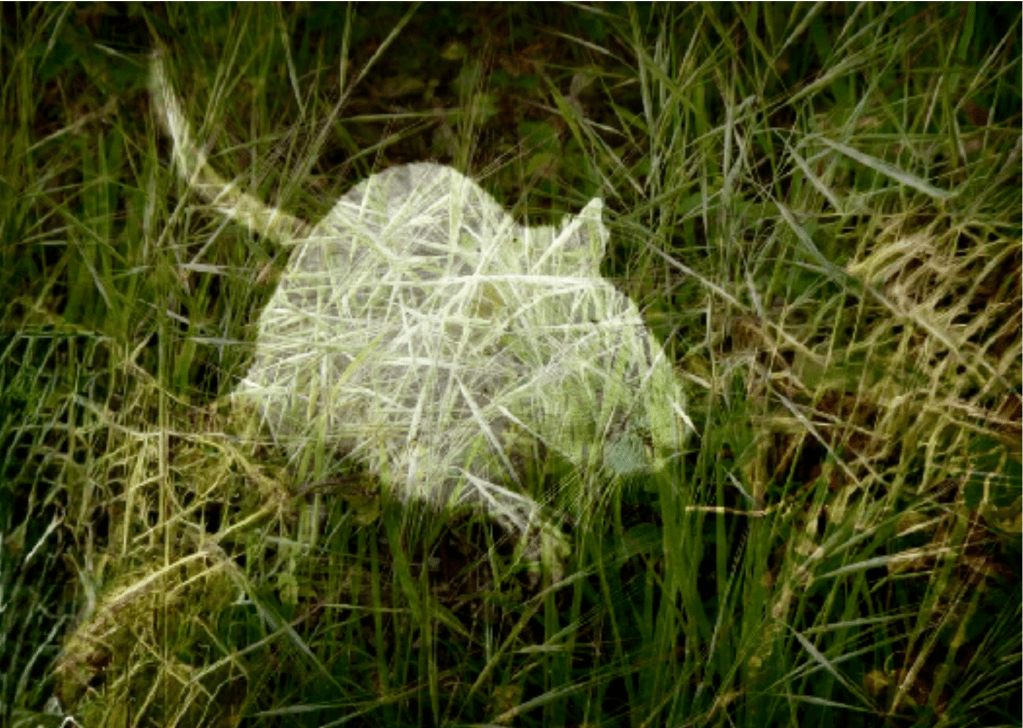
ネズミ not マウス. Nezumi needed time within my brain before I could visualise the cute creature it represented. I could see the rat in the name, but not her little sister. I slid into using mausu, a more familiar set of sounds. But mausu is often used for laboratory mice. I wanted to remember free grey flashes in fields and gardens. So I read and listened to the sound of nezumi in poetry and in the everyday banter of friends.
Slowly, slowly I am beginning to hear and see two nezumis, two differing voices, two images barkish brown and intelligent, but one has become small and soft.
Cat
© Marsha McDonald
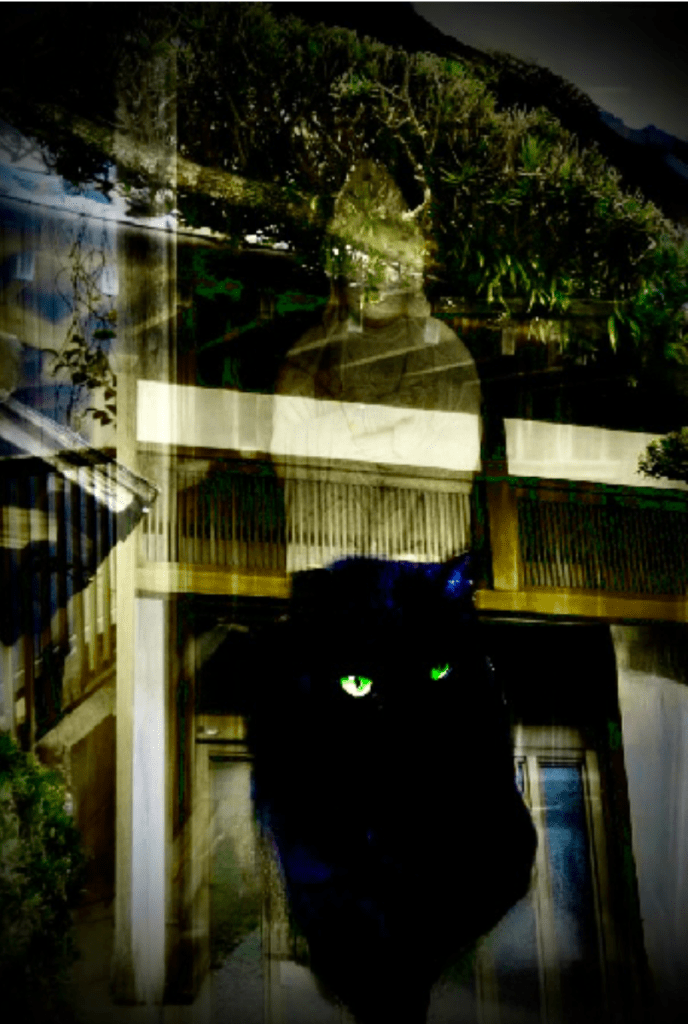
I sat upon the steps of a small closed shrine, took out my journal and sketchbook, rummaged in my bag for a favourite pencil. I had opened both books, the smaller drawing book inside the journal, when I felt something nudge my hand. I looked down into the great green eyes of a grizzled but sturdy black cat. She gently but insistently nosed my notebooks until I closed them. Satisfied, she crept into my lap. She didn’t ask to be petted. She just sat. I put my notebooks away, and just sat too.
Earlier that day I’d been thinking about my husband and beloved grandmother, both dead for years. A wave of sorrow had then swept through me. It felt good to support the warm living weight of a cat.
I like cats. So had my husband. My grandmother, a rural woman, had cared for up to 21 of them.
In about an hour, a monk appeared. When he saw the cat, he smiled. She doesn’t like everyone, he said. Neither do I, I said. We laughed. The monk then opened the shrine. The cat and I looked at each other. I need to go now, I said. The cat carefully rose, licked my hand, and disappeared into the shrine.
I returned to the shrine several times during my stay. Each visit, I sat on the steps. Soon I’d feel a nudge, and the old black cat would once again climb into my lap. After some time, she would rise, and quietly, quickly, slip back into the shrine.
How to cite: McDonald, Marsha. “Bear, Boar, Monkey, Mouse, and Cat.” Cha: An Asian Literary Journal, 11 Jul. 2026, chajournal.com/2026/07/11/bear.

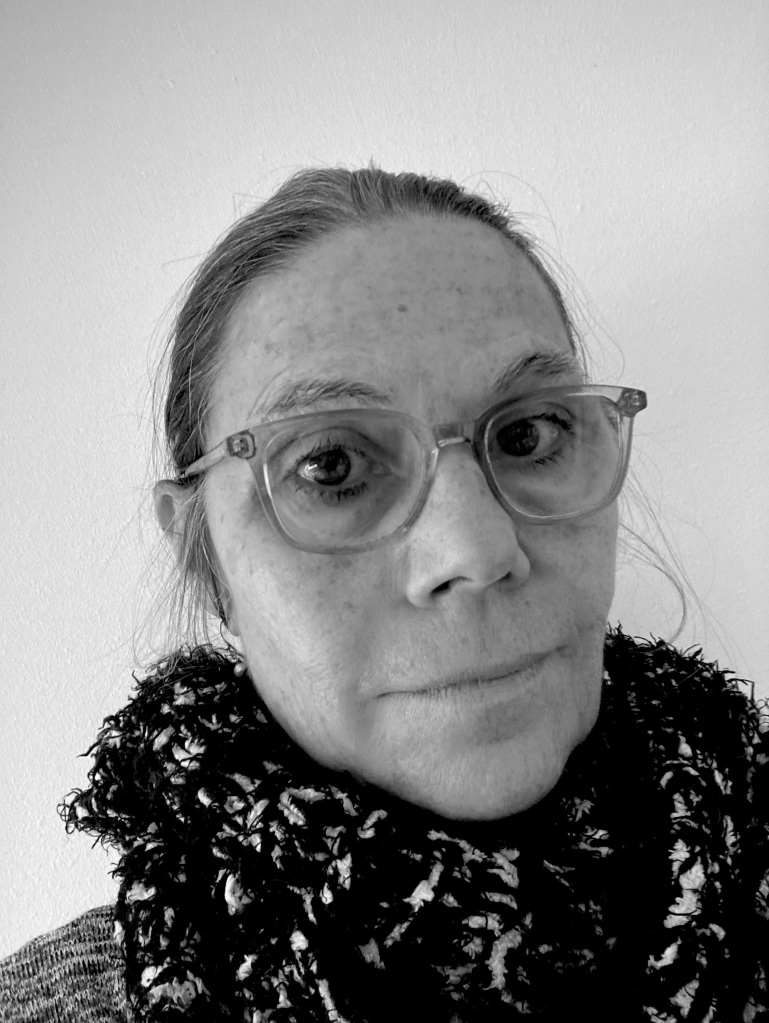
Marsha McDonald lives in Vilar de Andorinho, Portugal. An artist and writer, she works and exhibits between North America, Europe, and Asia. She has received grants from the Pollock-Krasner, Puffin, Mary Nohl (travel), Lynden Sculpture Garden, Gallery 224 Artservancy (artist working within conserved land in Wisconsin USA), and a New York Fellowship. Her writing has appeared in Otoliths (Australia), The Drum and The Cantabrigian (Cambridge MA), Voice & Verse Poetry Magazine, Cha (Hong Kong), and La Piccioleta Barca (Milan). She has collaborated with artists and writers in the UK, France, Spain, Germany, Portugal, North America, and Japan. In 2024, she will be an arts resident at the Tyrone Guthrie Centre in Ireland and Studio Kura in Kyushu, Japan. Visit her website for more information. [All contributions by Marsha McDonald.]
 Cha
Cha 