
茶 FIRST IMPRESSIONS
茶 REVIEW OF BOOKS & FILMS
[REVIEW] “Out of the Footnotes: Women of the Tang Reimagined in Natsu Hyūga’s The Apothecary Diaries” by César Zetina Peñaloza
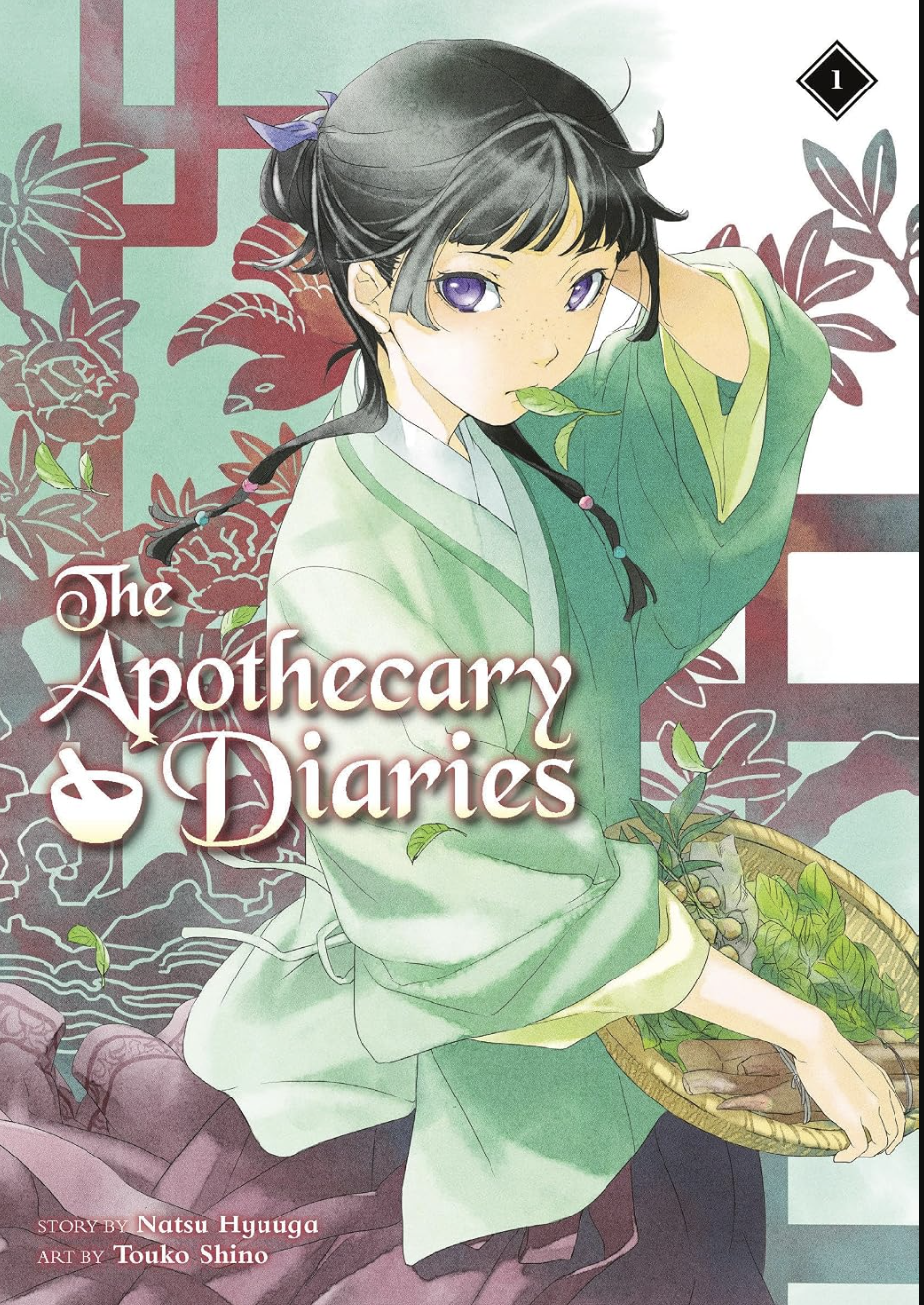
Natsu Hyūga (author), Touko Shino (illustrator) and Kevin Steinbach (translator). The Apothecary Diaries: Volume 1 (Light Novel), Square Enix Books, 2024. 272 pgs.


It was an anime. An anime, my dear reader, that rekindled my hope of understanding the world of women in imperial China. The Apothecary Diaries did me a favour I sorely needed: it offered a deeper look into the forgotten work of women. It may sound like an exaggeration, but it is not, not in the slightest.
For some time now, my dear reader, I have been interested in medieval life in China and Japan. What began as a hobby soon blossomed into a great passion. I read about figures from Japan’s Sengoku period and China’s Three Kingdoms period, and in this way became acquainted with the likes of Nobunaga Oda, Hideyoshi Toyotomi, Liu Bei, Sun Quan and many others.
Yet however much I read about their stories, a curiosity grew within me that I could not shake: I longed to know more about the women who had stood beside them. Oichi, Ginchiyo Tachibana and Lady Su became figures of great interest to me. With this in mind, dear reader, you will understand the anger and disappointment I felt upon learning that several women from both periods are regarded as legends or mere secondary figures, little more than appendages to the stories of their male counterparts. Indeed, there has been scant interest in compiling a comprehensive record of their exploits.
It is clear that articles on female historical figures are scarce, and that within this small body of work a considerable number seem to be fan-made, with little grounding in academic scholarship (and for this very reason, their contributions are all the more appreciated). And now, thanks to an invitation from my sister and mother to watch this anime, I have found reason to hope that I might satisfy this curiosity, at least in part.
The anime, produced by Toho Animation Studio, is an adaptation of the light novel of the same name, written by Hyūganatsu and illustrated by Touko Shino. It will feel familiar to anyone who enjoys mysteries and stories built around clinical cases. If you have seen House, Death Note or Grey’s Anatomy, believe me, this anime will captivate you with situations resolved in much the same fashion as in those shows, with a touch of Sherlock Holmes besides. This is because the story revolves around its protagonist, Maomao, a seventeen-year-old girl who is one of the finest apothecaries in China and who, in the first episode, is kidnapped and sold into service as a maid in the inner palace. There she meets women from all walks of life, from those responsible for cleaning the palace to those devoted to entertaining the emperor and safeguarding his lineage. What makes the story so intriguing is that, owing to her lack of social graces and her remarkable talent for solving riddles, Maomao crosses paths with several figures of imperial life who indirectly draw her into a web of conspiracies and threats of political instability, culminating in a plot to stage a coup against the empire (this brief summary covers events up to the second season).
Anyone who has seen even a little of this anime and knows something of Chinese history will recognise that many of its elements are inspired by imperial China, particularly the Tang Dynasty. Often hailed as China’s golden age, it was a period that offered abundant opportunities for artistic creation and greater social and political freedom for women. Even so, it remained an era characterised by patriarchal ideology and considerable political instability. These elements are well represented in the characters and plot of the series, in which we witness the diverse activities women undertook beyond those of courtesans, servants or concubines, for they also played a part in the political and medical life of their time. This is discussed in various articles and books on daily life in imperial China, yet it is not given sufficient emphasis and is often relegated to a footnote rather than a fuller, more comprehensive treatment. Figures such as Wu Zetian, Princess Pingyang, Princess Taiping and the poet Yu Xuanji challenged the patriarchal thinking of their contemporaries as political leaders, military commanders or artists in their own right, and they clearly exerted a profound influence on the Tang Dynasty.
The series takes some of these pivotal moments in the development of China’s social and cultural life and weaves them into a fictional narrative, presenting a daily life which, though perhaps exaggerated, is undeniably real. It uses a fictional setting to develop its story freely and places these women in situations rarely explored in academic texts. They are emotional, intelligent and independent women who, within the constraints of their society, do everything in their power to achieve their goals. The protagonist, Maomao, for instance, was raised by an unusual eunuch who had once served as a palace physician. He was masterfully trained in preparing plant-based remedies, but through unexpected twists of fate he was reduced to poverty. This does not prevent the protagonist from developing her skills as an apothecary to the full. On the contrary, she draws on her mentor’s knowledge and, in her spare time, treats her own arm as a testing ground for poisons and their effects, a habit she keeps up even after she is kidnapped and put to work as a maid in the inner palace.
Within the palace, Maomao meets the emperor’s four concubines, women distinguished by their differing physical and psychological attributes, who fall victim to various political intrigues and perilous schemes devised by other women for rather sinister ends (which I shall refrain from revealing so as not to spoil the experience for the dear reader).
Furthermore, the plot features other women who, though they remain in the background, take on a variety of roles: doctors, students, readers of romance novels, storytellers, political manipulators and even architects of military strategy. This complexity is certainly acknowledged by various authors who write about life in imperial China, but should the reader consult their trusted encyclopaedia, they will find that such information is seldom presented so explicitly or in such detail.
Although there were individuals who held diverse positions and fulfilled varied functions, such things tend to be overlooked, as texts tirelessly point out that “this era was mostly patriarchal”, as though that were sufficient grounds to dispense with any information about female figures, erasing the unpredictability of the human spirit and the surprising capacity to seek meaning in life (as several women throughout history have shown us).
Nothing that happens in the story of The Apothecary Diaries is accidental, for it also rests on another fact that readers and fans of the series can appreciate: during the Tang Dynasty, China maintained frequent contact with the peoples of the Eurasian steppe and Central Asia, who lived in societies with greater gender equality. This cultural exchange shaped perceptions of the role of women, which in turn reinforced the (admittedly modest) ease with which women were able to carry out their duties.
For me, the importance of this adaptation lies in its visual reinterpretation of those appendices and footnotes concerning women from eras before our own, revealing more than many dare to reconstruct in their narratives. Exploring the past through fresh and challenging perspectives also awakens doubt and curiosity in the viewer, which will surely inspire some who may one day change this state of affairs.
How to cite: Peñaloza, César Zetina. “Out of the Footnotes: Women of the Tang Reimagined in Natsu Hyūga’s The Apothecary Diaries.” Cha: An Asian Literary Journal, 14 Nov. 2026, chajournal.com/2026/11/14/Apothecary-Diaries.


César Zetina Peñaloza is a Mexican writer whose poems, haiku, and short stories have appeared in a variety of magazines and anthologies in Mexico. He is currently translating history articles into Spanish for the World History Encyclopedia.