
茶 FIRST IMPRESSIONS
茶 REVIEW OF BOOKS & FILMS
[ESSAY] “Reading María Teresa Ogliastri’s From the Diary of Madame Mao: Poetry, Politics and Memories of the Cultural Revolution” by Ming Wan
All entries in Cha
on Madame Mao.
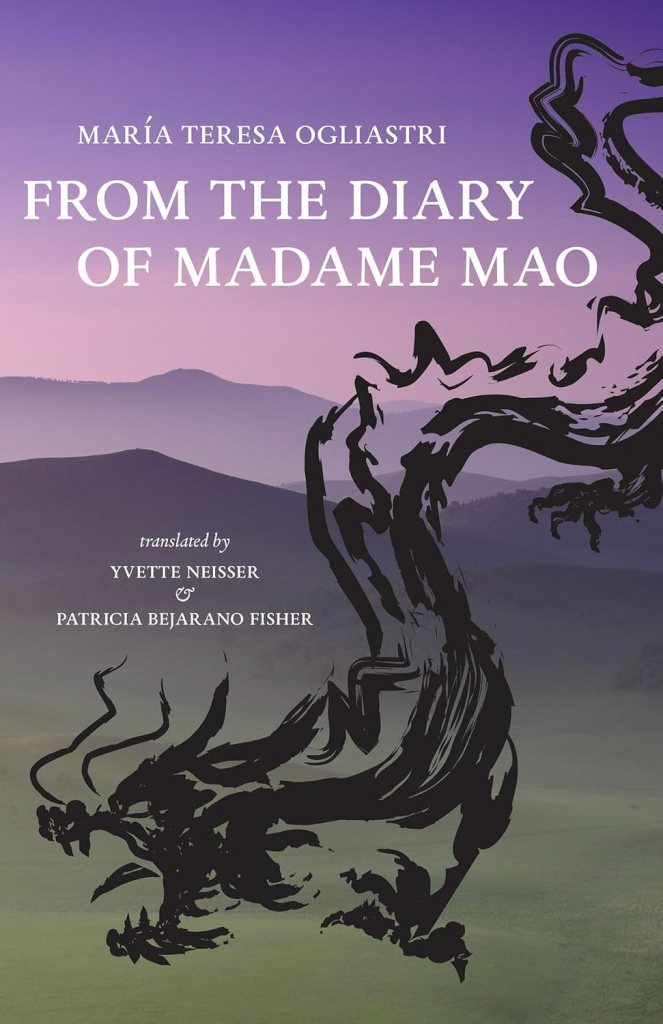
María Teresa Ogliastri (author), Yvette Neisser and Patricia Bejarano Fisher (translators). From the Diary of Madame Mao. Carnegie Mellon University Press, 2026. 136 pgs.
I have not reviewed literary works before. As a social scientist, when I write book reviews, I draw on the training I received, which is to approach a work “objectively” and assess it on its own terms. I would typically begin by reading the work straight through to develop an overall impression. I would then return to it several times, focusing more closely on its aims, arguments, methods, evidence, and implications. The emphasis would vary somewhat depending on the mission and expectations of the journal to which I have been invited to submit the review.
When Yvette Neisser invited me, through a mutual friend, to write a book review, she was hoping that I would focus on the socio-economic context rather than on the poetry itself. I was told that she and Patricia Bejarano Fisher had translated María Teresa Ogliastri’s collection of imagined diary entries written from Madame Mao’s prison cell, an intriguing artistic creation. That exchange made it possible for me to agree to take on this challenging task. I am not qualified to review poetry as poetry. At the same time, I recognised that the work is still a literary work rather than a piece of social science scholarship. This means that I cannot simply apply the conventions and evaluative criteria I would normally use as a social scientist; my approach has to adapt to the nature of the work itself.
I decided to begin by recalling my lived experience under Chairman Mao, growing up in Beijing, China. In some ways, when I review works of social science, I already have the necessary background knowledge. There is also a selection process: editors approach me with an understanding that I am qualified to review a particular work, and as a reviewer, I can clarify what I know and where the limits of my expertise lie.
In this particular case, I was approached because I had grown up during the Cultural Revolution, which could be seen as one form of qualification, along with my academic background in political science and my research on China. I therefore needed to step back and consider what I could genuinely bring to this review project and what I would need to do differently to engage with the work in a way that would do it justice.
Time flies. Until recently, I had not actively thought very much about the political turmoil I experienced growing up in China. Living through the present moment in the United States has brought some of those memories back to me. The United States and China could hardly be more different in many respects, yet at times the current political climate here feels reminiscent of the period when the Cultural Revolution began in China in 1966.
I was six years old at the time. It is difficult to know how much a child could really understand about the political turmoil unfolding around them, and I recognise that my recollections have inevitably been shaped and refracted by everything I experienced and learned in the years that followed. What I remember today is therefore not simply a record of what I knew or understood as a six-year-old, but also a memory reconstructed through the lens of later lived experience.
Adults tried to shield children from sensitive topics, partly out of a desire to protect us, but also as a form of self-protection: a child might innocently say something that could bring disaster upon the family. But children still saw things.
I was enrolled in a competitive kindergarten in Beijing when the Cultural Revolution began. One day, young people wearing armbands identifying them as Red Guards walked into the kindergarten and seized the director, a well-known expert in early childhood education. They cut her hair into a yin-yang style in public and confined her in a small room on the kindergarten compound. We were fascinated and, despite explicit instructions not to do so, occasionally sneaked into the room. By then, it was filled with big-character posters hanging from ropes.
Soon afterwards, the kindergarten closed. So did the universities.
Growing up during the Cultural Revolution, Madame Mao was everywhere. Of course, she was not as prominent as Chairman Mao, but she was certainly more publicly visible than other state leaders. She was closely associated with the Red Guards and often appeared at or led their rallies.
When she and her fellow members of the Gang of Four were arrested after Mao’s death, China celebrated. Students and citizens took to the streets to denounce the Gang of Four and express their support for the new Chinese leadership. I was in middle school at the time, and our entire school organised marches to nearby Tiananmen Square.
Most of those who had been closely associated with leading the Cultural Revolution were purged, while most of those who had been purged during the Cultural Revolution were rehabilitated. The prevailing narrative now was that virtually everyone had quietly resisted Madame Mao, though not Chairman Mao himself. The Chinese Communist Party leadership settled on the formulation that Mao had been 70 per cent right and 30 per cent wrong.
But what about his wife, Madame Mao? There was no corresponding official formula assigning her a percentage of right and wrong. Instead, she was tried, convicted, and sentenced to death with a reprieve in 1981; the sentence was commuted to life imprisonment in 1983. The Chinese leadership wanted to move on, and since then, the Cultural Revolution has rarely been officially acknowledged or publicly discussed.
The Cultural Revolution, however, remained a fascinating topic outside China. I served as a teaching fellow for Professor Roderick MacFarquhar’s popular undergraduate course, East Asian Studies 197: China’s Cultural Revolution, which often attracted hundreds of students at Harvard. MacFarquhar was a British parliamentarian and a well-known expert on the Cultural Revolution.
To give students a sense of the atmosphere of the period, he asked the teaching fellows once in every class to sit together in one place and, at a given moment, suddenly jump up and shout, “Mao zhuxi wansui” (“Long live Chairman Mao!”) in unison, repeatedly. From that experience, I learned that I could not make a career in historical re-enactment.
Then Madame Mao was out of my mind. Since the poetry was written by a South American poet, my mind was probably searching for some connection. I was in Buenos Aires, walking around the Plaza de Mayo, when I asked our guide to show me the window of the presidential palace from which Madame Eva Perón had famously addressed massive crowds. Madame Mao suddenly came to mind: the glamour, the oratory, the revolutionary fervour. There have not been many women like that.
To summarise my state of mind before reading the poetry: I do hold Madame Mao responsible for abuses committed during the Cultural Revolution. She was not singularly responsible for what happened, nor was she the only person involved in the larger scheme of things. But I do not feel that I should apologise for her actions. At the same time, I remain open-minded about how others might understand or view her differently.
I also did some mental preparation for reading poetry again. I spoke with a relative who had actually studied poetry in college. He advised me to embrace a “suspension of belief” when reading poetry. Good advice.
I am ready now.

The poems
I read the poems quickly, twice, to get a general impression. I found them overwhelming in their imagery, Chinese images, and mostly images of an old China. At times, the experience did feel somewhat like an Orientalist gaze. I then let that initial reading sit without immediately doing more. I tried to be patient, like a tea drinker, even though I am a coffee drinker. I was also busy with other things.
But when I had time to think about the poetry, or when the poems simply came back to me on their own, I began to feel their beauty, or perhaps the beauty of the English translation, with its unmistakable Chinese ambience. I do not actually recall all of the Chinese “cultural elements”, except for the more striking ones, such as “lotus feet”, a cultural practice of binding women’s feet with few, if any, parallels elsewhere. There was a dreamlike quality reminiscent of Amy Tan’s The Joy Luck Club, but alongside that beauty was the ever-present cruelty towards women, indeed, a socially sanctioned exploitation of women’s bodies and sexuality. That was the old China that also produced Madame Mao.
Did Madame Mao try to make sense of why she had become the person she was, or was she simply reminiscing? To understand this better, I read the preface carefully before returning to the poems. María Teresa Ogliastri made her purpose clear: “I wanted to reach a deep understanding of the soul of Jiang Qing, the fourth wife of Mao Zedong, who took part in a form of absolute, tyrannical power. While writing this book, I was overwhelmed by conflicting feelings. At times I felt scruples in presenting Madame Mao in such a kind way. I realize now that this fictional diary shows the mental illness of a character who shares a kindship of evil with Lady Macbeth. To face these totalitarian entities, one must understand why they lost their humanity.”
I was glad that I started reading the poems before reading her preface, which might have influenced my interpretation. I did not sense any conflicting feelings or signs of mental illness in the poems. My guess is that Ogliastri did not articulate her thoughts about writing as Jiang Qing until after the poems had already been composed.
Reading the poems again with the author’s intent in mind, I still did not see it. In my view, this was a good thing, because the author allowed her artistic talent to speak for itself rather than moralising or lecturing.
If we intend to understand how Li Yunhe became Jiang Qing, the first poem, “Since Then I Have No Mercy”, is not a particularly strong starting point. Readers indeed have to suspend disbelief to accept that a child pinched by a crab on the beach would become merciless as a result of that experience. Nor was it a matter of family socialisation, since her grandfather released the attacker. The second poem, “Lotus Feet”, was, by contrast, a non-trivial event, to say the least. It was beautifully written, involving her mother, Chinese traditions, and Jiang Qing herself. As someone born into Chinese culture, I immediately found myself looking for her mother. She was a good mother in the Chinese context and, indeed, in a universal sense, because she was preparing her daughter for the world based on her own socialisation and understanding of it. It was also fitting that Jiang Qing’s father did not play an explicit role. As will be revealed, he was a tyrant. So far, however, the only male figure to appear was her protective yet compassionate grandfather.
“Lotus feet” refers to the practice of foot binding. One may wonder why her mother gave up the effort so easily. Foot binding required multiple stages carried out over a long period, and the practice was primarily imposed on girls from upper-class families. Peasant girls, by contrast, needed their feet to work in the fields. When the Qing dynasty was overthrown in 1911, the new republic outlawed foot binding the following year, although the practice appears to have persisted in some areas for much longer. Jiang was born in 1914 in a coastal province, where things were already changing. If her mother had insisted on continuing the practice, Jiang might have become one of its last victims. In this sense, Jiang was a product of changing times.
I did flinch at the line, “the bind failed and my feet came out, gnarled like an old tree”. It is such a striking image, deliberately grotesque. But Jiang would not have seen it that way, as a young girl whose feet simply snapped back to their original form after an initial failed attempt. More to the point, I would never use that expression to describe my beloved grandmother, who raised me in Beijing. She had bound feet. Of course, I was familiar with the expression “lotus feet” in literature. Lotus feet have become a symbol of Chinese eroticism when viewed from the outside looking in. But that is not how people talked about it. They simply referred to it as “chanzu”, meaning bound feet. Growing up with my grandmother, I do not recall anyone commenting on or making fun of her bound feet. Come to think of it, the Cultural Revolution began with an attack on the “Four Olds”, seeking to destroy what were considered backward Chinese traditions, under the leadership of Madame Mao. Yet, as I recall, they never came after women with bound feet, which would seem to have been among the most visibly “backward” practices. I am glad that did not happen. Without my grandmother, I do not know where I would be today.
Feminists never approached my grandmother. But I believe she would not have wanted sympathy or solidarity anyway. Her focus was on her family and her neighbourhood. That, to me, is a very Chinese way of thinking, though certainly not unique to China.
Looking at my grandmother, a product of old China, I often wondered deep down: Was old China really that bad? When reform first began, people were worried about surviving in a rapidly changing and uncertain environment. The joke was that you could wake up one morning and find yourself back in old China.
My grandmother, however, called the family together and declared that, if necessary, she would start a business. Our family would survive.
The matriarch. I was deeply impressed.
The third poem, “Fallen Fairies”, is so beautiful. I actually spent some time learning Spanish during the Cultural Revolution, although there was very little learning material available. I did manage to borrow a recording of Fidel Castro’s Declaration of Havana. It was fiery. I thought, This must be what Spanish sounds like: people fighting all the time.
I do not speak Spanish, but I tried to read “Hadas Caídas” aloud in total privacy. I particularly liked the lines “en mi jardín, ya no hay ogros”. I do not know why. I simply like the way they sound; they remind me of the rhythm of a Chinese stanza.
The book took a sharp turn with “Alfalfa Sprouts”, when Jiang Qing’s violent father entered the scene. From there, her family experience went steadily downhill. I do not have time to go through all the poems, but several dominant themes recur: the kept garden, the caged and abused woman, and abusive men. Her grandfather was the exception. Madame Mao also had a caring mother who, however, could not really protect her. Where was her grandmother?
The book then jumped straight into her confinement, beginning with “My Entertainment”. From there, it seemed to retrace her steps towards her eventual imprisonment. What was noticeably absent, however, was any reminiscence of her glorious days during the Cultural Revolution. There were few images of that period at all. As someone who experienced the Cultural Revolution, that was the part I cared about most and the period about which I most wanted to know her thoughts.
In “Colors of Violence”, Madame Mao wrote bitterly about the First Tiananmen Incident. I was there. When Premier Zhou Enlai died, the nation mourned. Tiananmen Square became a sea of flowers and poems, and the public expression of grief was also a rejection of the Cultural Revolution. When the crackdown came, we were told to stay inside. We lived only an arrow’s flight from the square.
Jiang, however, responded as one might expect a political figure to respond: she doubled down rather than reflecting.
The political plot would now thicken. The next poem, “Rain”, about an exchange with her husband over where her army was, was oddly endearing. Don’t we all ask our spouses for support when we are in a tough spot, even if not everyone asks for an army? Jiang knew where her army came from.
The poem “Return to the Countryside” refers to Mao’s decision to send urban youths to the countryside to experience the realities of rural China. There were, after all, few jobs in the cities anyway. China’s current leader, Xi Jinping, was among those sent-down youths. As I recall, many sent-down youths resented the arrangement, and their discontent became an important factor in the downfall of the Gang of Four. Jiang, apparently, saw things differently.
The poem “White-Boned Demon” shows Jiang Qing at her most defiant.
my loyalty proved me a hyena
if he said attack
I attacked
the army was my dagger
I was my master’s dog
his bone
his dark side
Jiang Qing defended her actions in another poem, “Just Following Orders”. Like so many other Chinese, I watched her defiance during her televised trial. It was an astonishing spectacle in a tightly controlled system, which may help explain why there have been so few comparable public trials in which defendants were allowed to speak publicly.
Madame Mao was not conflicted.

The three cultures
I agreed to write a review essay about poetry in part because I wanted to explore how the humanities and social sciences relate to one another. Jerome Kagan published a book with exactly this theme, The Three Cultures: Natural Sciences, Social Sciences, and the Humanities in the 21st Century (2009), following C. P. Snow’s influential 1959 lecture, “The Two Cultures”, which contrasted the natural sciences with the humanities. This is not the place for a scholarly discussion of the natural sciences, social sciences, and the humanities. But reading and writing about poetry has given me an opportunity, albeit in a limited way, to sort through my own thinking about these questions.
Reading poetry, while enjoyable, also reminds me why I stopped reading fiction a long time ago, even though I was an avid reader throughout my teenage years. Ana María Velázquez Anderson, a humanities professor at Universidad Metropolitana in Venezuela, introduced the book. She began by noting how difficult it is for a female poet to write about Madame Mao because “nothing is farther from creativity than power”. I do not agree. Power is all about creativity. Some political tricks and actions are simply unfathomable. Put simply, with politics like this, who needs fiction?
Ogliastri seeks to use poetic imagery to reveal the “true” humanity of her subject because people like Madame Mao, in her view, had lost their humanity. “Poetry exists because it can redeem the polis and thus free the human soul from the sickness of power.” Even though she does not want to be ideological, that position is itself ideological and consistent with views held by many in the humanities. But what if the pursuit of power is also part of being human, as many social scientists have found? Put differently, what if Madame Mao was not mentally ill, but was simply being political?
To that point, as an example of how the arts can help us understand politics, the poem “To Be Empress” contains the following lines:
To be empress
It wasn’t enough
to have a jade seal
or to ravel our scales
on the imperial bed
I needed an armor of rock
the heart of a lizard
and to swallow things whole
but the taller the tree
the longer its shadow
Niccolò Machiavelli, whom some political scientists regard as the father of modern political science, could hardly have put it better.
How to cite: Wan, Ming. “Reading María Teresa Ogliastri’s From the Diary of Madame Mao: Poetry, Politics and Memories of the Cultural Revolution.” Cha: An Asian Literary Journal, 22 Sept. 2026, chajournal.com/2026/09/22/from-diary-madame-mao.

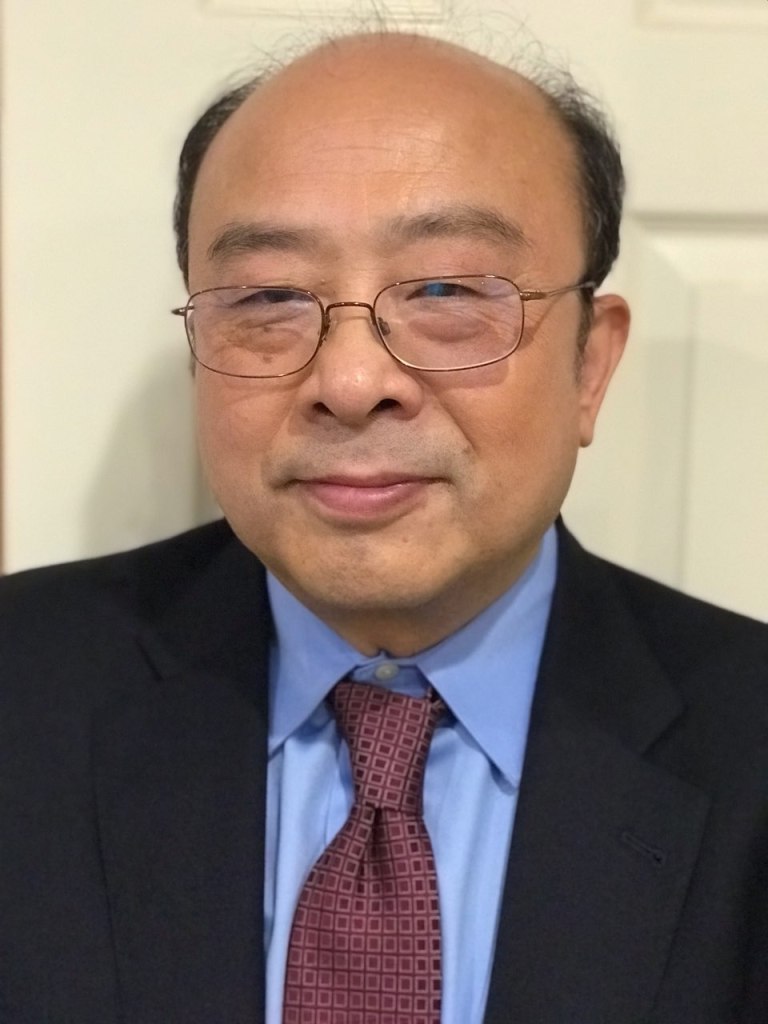
Ming Wan is Professor and Associate Dean at George Mason University’s Schar School of Policy and Government. He received his PhD from the Government Department at Harvard University. He held postdoctoral fellowships at Harvard with the Program on U.S.-Japan Relations, the John M. Olin Institute for Strategic Studies, and the Pacific Basin Research Center. He has authored more than ten books, including East Asian International Relations: Evolution and Social Construction (Cambridge University Press, 2025). He has published more than 60 articles and chapters in journals and edited volumes, including Foreign Affairs, Human Rights Quarterly, Journal of Conflict Resolution, Pacific Affairs, Pacific Review, and International Studies Quarterly. His current research interests include comparisons between the United States and China.
 Cha
Cha 