
茶 FIRST IMPRESSIONS
茶 REVIEW OF BOOKS & FILMS
[REVIEW] “Joanne Leow’s Exhumations: The Body as Counter-Archive in Singapore” by Aleithia Low
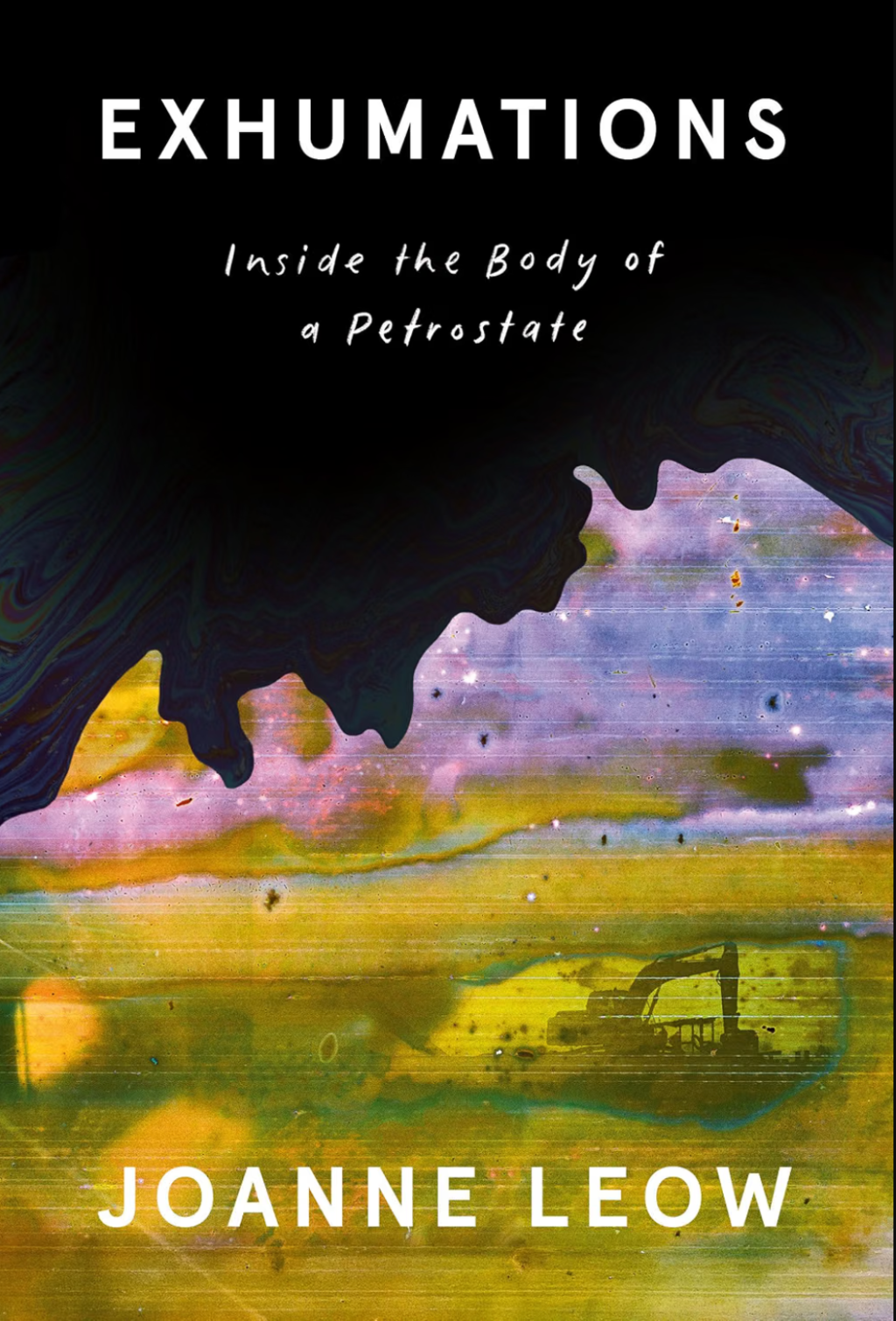
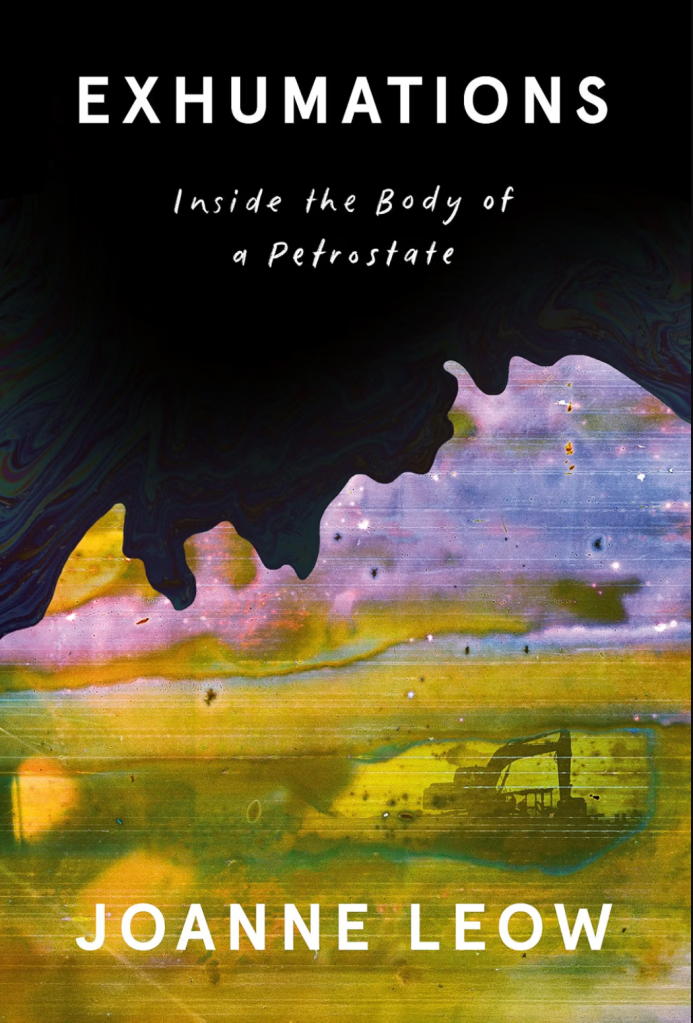
Joanne Leow. Exhumations: Inside the Body of a Petrostate. Alchemy by Knopf Canada, 2026. 216 pgs.

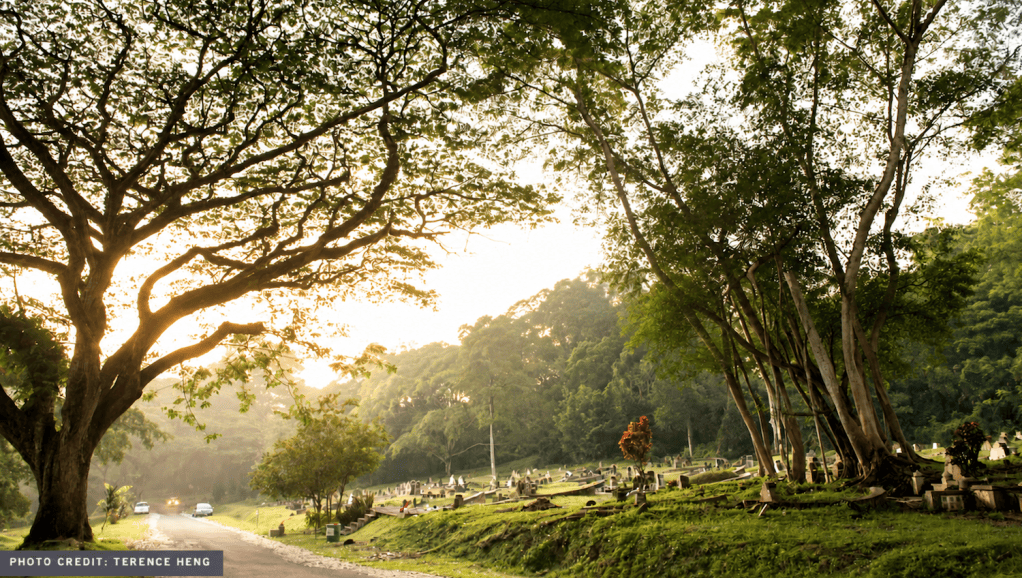
“When is a landscape grievable in a history of demolitions and master plans? In a history of the state’s constant recalibration of control over its space and its bodies?” (p. 44)
Referring to the exhumation of Bukit Brown Cemetery, Joanne Leow asks what sacrifices Singapore has had to make, over and over again, in the name of progress. What has Singapore’s wealth, built on its occluded petrochemical industries, demanded from its subjects, including the right to memorialise and to grieve? Her first creative non-fiction book, Exhumations, is an elegy to the country that co-constitutes her, sand, oil, control, wealth and all. It grieves loss and argues that bodies carry a record of harm that defies the state’s control.
Exhumation refers to the disinterment of a dead body from its resting place. It also calls to mind the subterranean nature of oil, produced through sedimentation and immense pressure and heat over millions of years. In what might be a surprising move for admirers of the rapidly ascendant nation state, Leow calls Singapore out as a petrostate: it is one of the world’s largest oil refiners and exporters, despite having no oil reserves of its own. This contradicts the image Singapore projects of itself as a “city in nature”, through its “Clean and Green” campaign and its reputation as a world leader in sustainable development.
While the official archive may not be honest with itself, Leow traces how the body testifies to the country’s shadow side. Her own body is inextricable from that of the state. She traces her family’s entanglements with the oil industry across generations, from her grandfather’s job with Shell in Malaysia to her settling on the unceded territories of the xʷməθkʷəy̓əm (Musqueam), Sḵwx̱wú7mesh (Squamish) and səlilwətaɬ (Tsleil-Waututh) Nations, in what is also known as British Columbia, Canada. Her narrative circles questions of complicity: her increasing awareness of the harms Singapore perpetrates and the opportunities her family’s background has afforded her, as well as the role she played in the state media apparatus as a broadcast journalist and news presenter in her twenties.
The parallel narratives of Singapore’s petrochemical industry and Leow’s time as a news presenter reveal the immense pressure under which Singaporeans are placed. There is a script: one is funnelled through hallways and newsrooms and into broadcast news vans. Through her account of her time in the state media apparatus, we see Leow as a conduit of state control, but also see how her own body and mind are bound up within that apparatus. She is shaped by it, from the micro-movements required to control the teleprompter to the cultivated fear response to political protests that she carries with her to her new home in Canada. The process also mimics the production of oil: organic matter is pressurised for extraction to drive the country’s economic engine.
Illness, however, acts as a form of resistance and as a counter-archive, contesting the varnished image Singapore has painted of itself. Leow draws connections between Singapore as a petrostate and her family’s bodies, including her own, positing that they have metabolised the country’s taint. Her testimonies demonstrate that there is a cost, and that the ill body exceeds the state’s ability to control it, becoming an entity that can no longer be exploited without end.
She also harkens back to bodies that are unable to testify. She returns us to the pandemic and to the migrant workers who were confined to dormitories in dehumanising conditions on the fringes of the city. Exhumations also widens its aperture to encompass the costs of Singapore’s development by travelling to Cambodia, where sand mining for Singapore’s land reclamation projects has caused riverbanks to collapse, displacing people and destroying ecosystems.
Leow can write in vague and abstract terms, at times devoting entire pages to questions and musings. It can be difficult to follow the threads or immediately identify whom she is discussing, particularly in critical references to a looming male figure who is never named, unless one is an insider, bred within Singapore’s pressure cooker. As a Singaporean living overseas, the references are more legible to me, but they may be less accessible to a reader unfamiliar with the Singaporean context and its political history.
However, working in abstractions, gesturing towards what and who cannot be named, and encountering the invisible walls of power that may seem absurd to those on the outside (such as Leow’s Canadian colleagues, who uncharitably criticise her “lack” of “political purity” without understanding how surveillance lives in the body) are also symptoms of having been born and nurtured in an authoritarian state.
While Leow’s body lives on as testimony to the state’s extractive nature, Exhumations also recognises the impossibility of purity. As the granddaughter of a man who supported his family by working in the oil industry, and as a former instrument of Singapore’s media apparatus, she is not exonerated by her critique of her home country.
Exhumations zooms in and out of Singapore, coming closer and then retreating, or reorienting itself towards Leow’s chosen home. Her love and care for her mother, amid her deterioration and eventual death, evoke the same push and pull dynamic. It gestures towards the vulnerability and lack of safety one can feel when raised by a parent, or a parent state, where the desire for connection coexists with the need for distance. Leow’s book thus proffers an honest, complicated elegy: it gives credence to, and grieves, the body’s embodiment of the state’s contradictions, while allowing for a narrative that remains unresolved, as grief so often does.
How to cite: Low, Aleithia. “Joanne Leow’s Exhumations: The Body as Counter-Archive in Singapore.” Cha: An Asian Literary Journal, 22 Sept. 2026, chajournal.com/2026/09/22/exhumations.

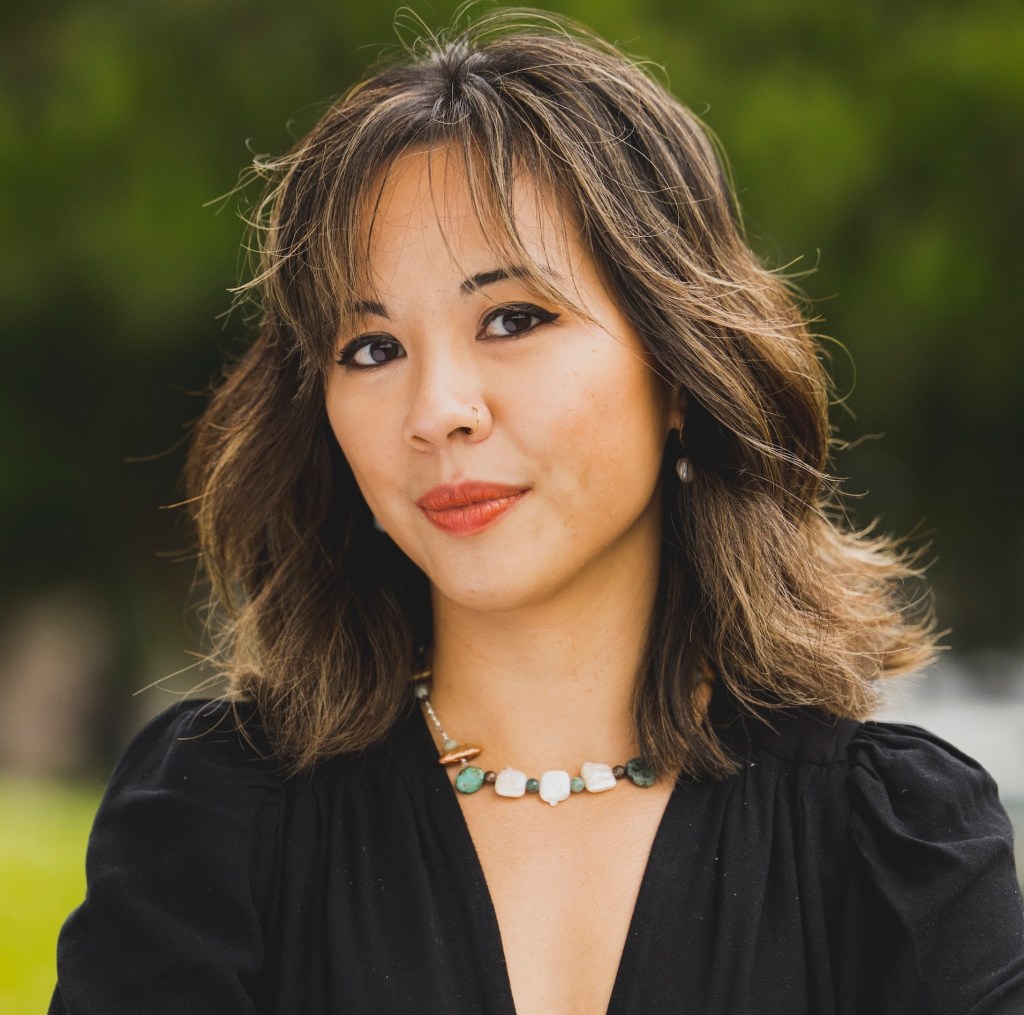
Aleithia Low (she/her) is a Melbourne-based writer and researcher from Singapore. She is currently pursuing a PhD at Monash University, exploring more-than-human relations and climate change. Her previous research and writing have focused on socio-environmental rights, including the Rights of Nature in peacebuilding processes, agricultural development, the just energy transition, the intersection of climate change and human trafficking, and the impacts of conflict on the environment. Her writing has been published in Jom and chlorophyll journal.
 Cha
Cha 