
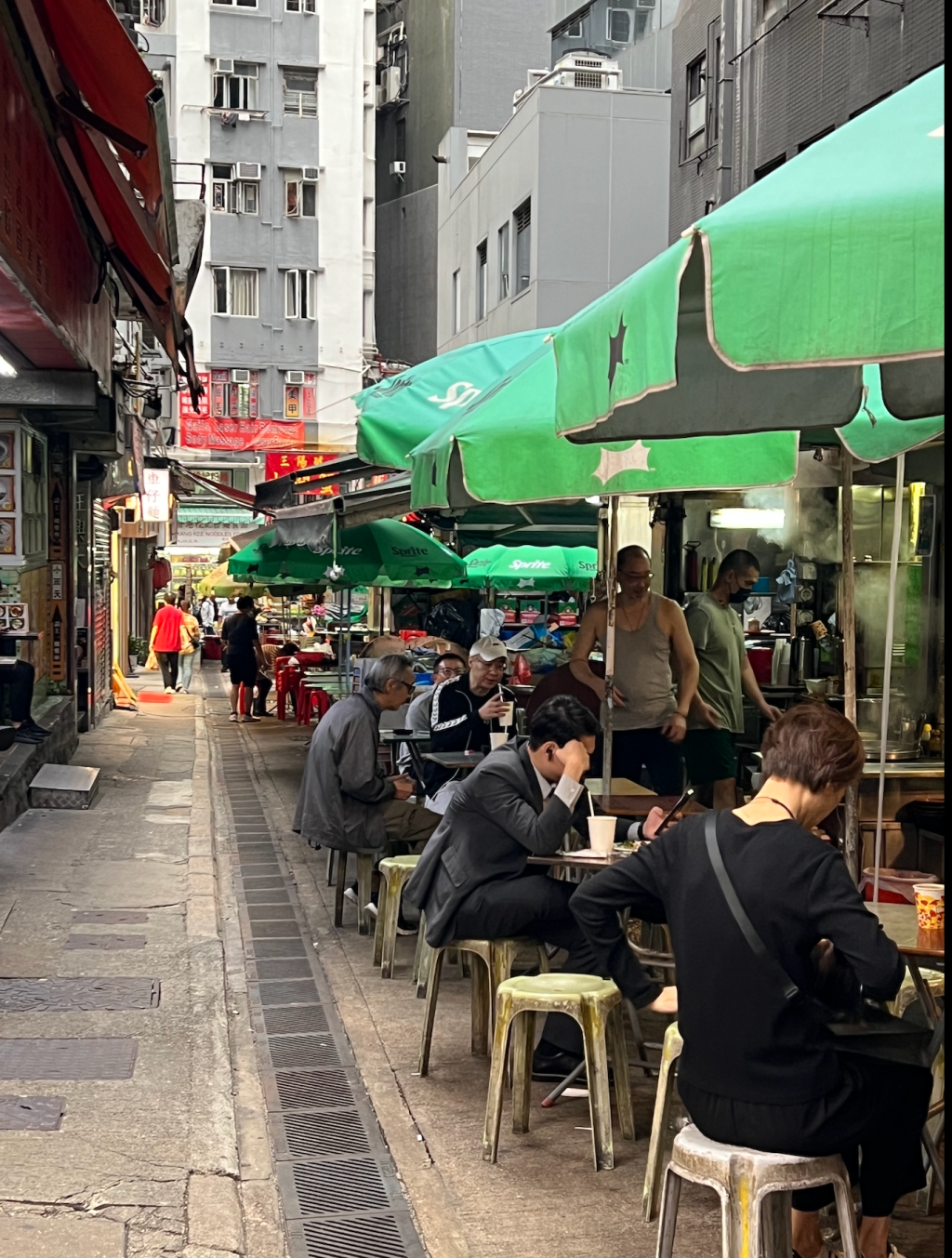
[ESSAY] “Hong Kong: A Lover’s Meditation” by Jeff Beyl
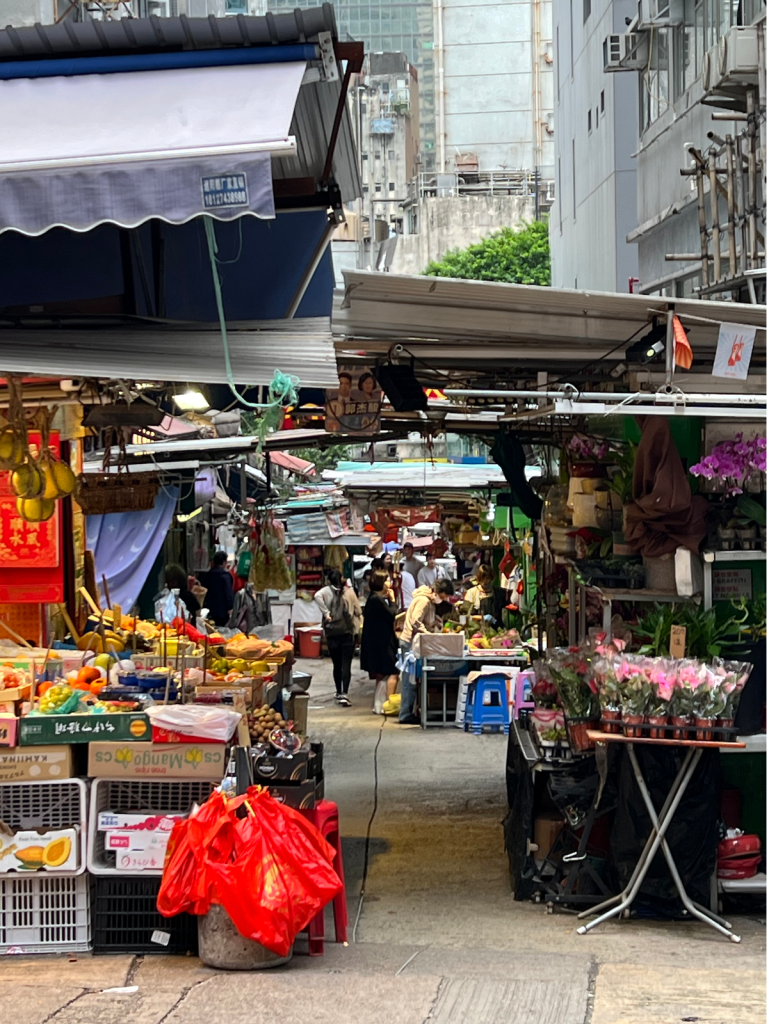
Photo © Jeff Beyl

Hong Kong Works
To paraphrase travel writer Jan Morris, Hong Kong works.
Someone asked me, many years ago, after my first trip to Hong Kong, “What’s it like there?”
My answer: “It is like a blast to the face.”
Strong image, perhaps, but it seemed to work. The person looked at me like, what? I didn’t want to sound clichéd and tell him, ya gotta see it to understand. But ya kinda do. Like seeing the Grand Canyon for the first time. You have to see it for yourself to truly understand.
Hong Kong is a commotion, a pandemonium, a jagged clamour. It is a symphony, a string quartet, a chorale. It is a ringing of bells, a banging of drums. Turn another corner and it is a bamboo flute. It has been said that Hong Kong is a city of contradictions. Opulence dwells beside extreme poverty. But that is true of all big cities. Hong Kong lets you know that you have arrived. It storms upon you. One does not ease gently into Hong Kong. It is a wake-up ring, a bugle call, a vigorous shaking. But it is also a velvet sway. A sleek pirouette. A silken caress.
It is not smooth.
Or it is.
Hong Kong stimulates like fireworks exploding and expanding across the sky. Tall buildings enveloped in bamboo scaffolding. Double-decker buses clogging the streets. Flashing lights and multicoloured neon signs hanging out over the streets. Laundry drying on poles sticking out of windows. People. People. People. Brightly lit stores displaying the latest in high-fashion trends. Watches and cameras. Jade carvings and jewellery. Electronics. Antiques. Whatever you want, Hong Kong has it. Hong Kong is an onslaught on the senses. Walking along any street in Hong Kong, one is inundated with aromas. The salty odour of dried shrimp. The sweet scent of flowers and fruit. Hot cooking oil. Exhaust fumes. The tang of people crowded together. Incense and agarwood. The alluring essence of perfume gliding by.
Heung Gong. Fragrant Harbour.
Hong Kong is sensible and nonsensical at the same time. Like any large city, Hong Kong is jarring and jangling. The honking of horns. The rise and fall of voices. The hubbub of restaurants. Cacophony. Racket. Din. But there is cadence within the clamour. Composure within the chaos. Tranquillity within the turbulence. A pulse. A beat. A rhythm. Crescendo and decrescendo. One can be lost and alone within a surging downtown crowd, or one can find solace on a peaceful corner of a waterfront park. A quiver and a tremble. A stillness and a hush. A breeze off the water in the evening.
Hong Kong is a work of art. It is a poem. A painting. A concerto. A soft melody. An echo of birdsong through the buildings in the morning. The staccato clack of mahjong tiles. The reverberation of traffic sounds. The soft click of ivory chopsticks. Steamed dumplings in a bamboo basket. Chrysanthemum petals floating in a porcelain teacup. The sensual grace of a cheongsam. The beguiling lilt of a woman’s voice.
Delicacy. Elegance. Sophistication.
Synchronicity. Harmony. Balance.
Hong Kong moves like a living thing. Like a murmur of starlings or a school of fish. Bamboo swaying in a breeze. Hong Kong writhes and shakes and rumbles. It floats and hovers and glides. Day and night. Cars, buses, trams. Boats bobbing in the harbour. Throngs in the streets. The hubbub of dim sum carts in a busy restaurant. Tai Chi in the parks in the morning.
The only thing to do is just go with the flow. Swim to the middle and let the current move you along like a river.
To paraphrase travel writer Jan Morris, Hong Kong works.
Connection
In an essay about cultivating a deeper connection to the natural world, American writer Barry Lopez spoke of what he termed a “technique of awareness”. He writes of nurturing a conscious, thoughtful approach to appreciating and engaging with our surroundings. While Lopez was referring to our relationship with nature, ecosystems and the environment, this technique of awareness can also be applied not just to landscapes but to the cityscapes that we find ourselves in as well. It’s just a matter of observing and letting the city envelop us. Like Siddhartha beside the river.
You Oughta Write That Girl a Letter
I found love in Hong Kong and I wasn’t even looking for it.
“Jeff, this trip is going to change your life.”
That’s what my father said to me right before my first trip to Hong Kong.
My father operated his own public relations company in San Francisco, and among his many clients was the city of Hong Kong. He wrote magazine articles about travel in Hong Kong: hotels and restaurants, things to see, and Chinese culture such as food, art and music. He flew there several times a year for meetings and research. He arranged tickets for us with Cathay Pacific Airlines, another client of his, and rooms at the Peninsula Hotel, yet another client. Known as the Grande Dame of the Far East, the Peninsula Hotel is a luxury hotel located in Tsim Sha Tsui on the Kowloon side of Hong Kong.
I had no idea what was in store.
One day, as I wandered through the downtown area of Hong Kong Island, known as the Central district, I felt hot and uncomfortable in the humidity, which hung thick and viscous in the air. I had been taking photos of the bamboo scaffolding that caged many of the tall buildings throughout the city centre. Long stalks of thick, green bamboo, five to six inches in diameter, zip-tied together like strange Erector Sets. I was to rendezvous with my father at the Government Information Service, or GIS, office where he had some meetings. We were to go to lunch at the FCC, the Foreign Correspondents’ Club, for a San Mig and a sandwich. After lunch, he planned to take me to an area called Hollywood Road and to the Man Mo Temple, where we could take photos of the large, curlicue incense rings hanging from the ceiling.
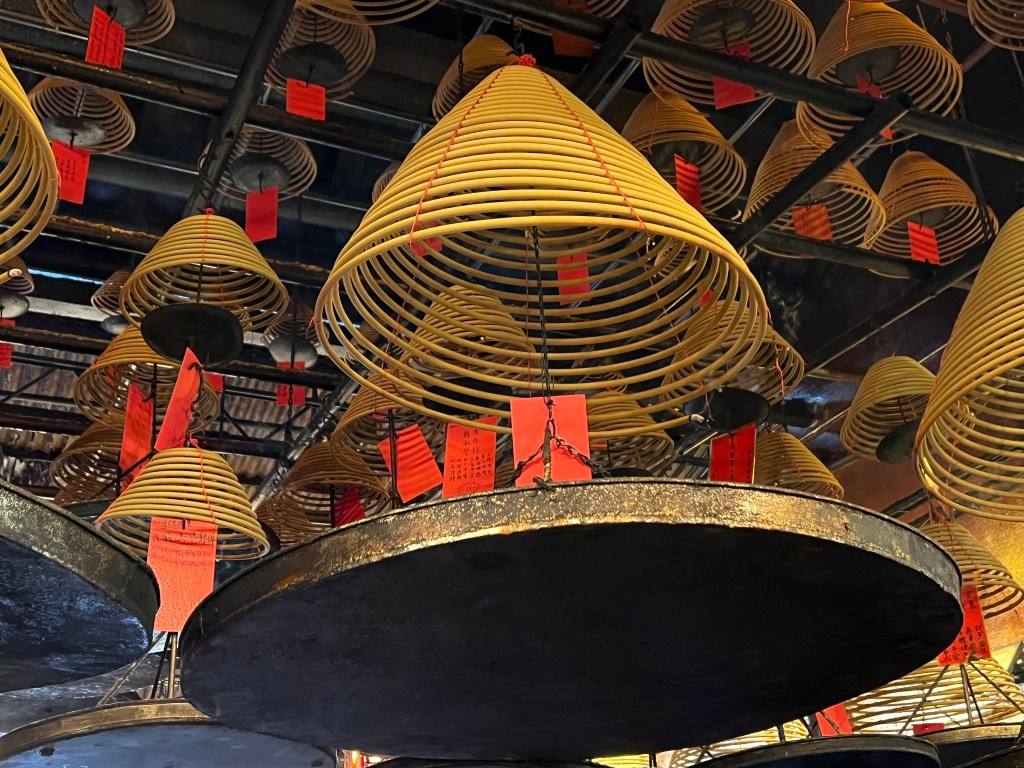
Photo © Jeff Beyl
I could feel the air-conditioned chill immediately upon entering the office. It felt good after my long walk in the heat. She was sitting at a desk over by a bank of windows. She was typing without looking at the typewriter. Her eyes looked down at some papers stacked by her left elbow. Her fingers flew across the typewriter keys. Her hair was jet black, like obsidian, falling below her shoulders. She wore glasses that were slightly too large for her face, and they had slipped slightly down her nose. Like a typical man encountering a beautiful woman, I approached her a little uneasily. She looked up at me. I imagined her thinking, oh no, what does this guy want? But she smiled. Her smile was like a splash of cool water. I asked her if there was a drinking fountain.
“Oh, yes,” she said. “It is hot today, isn’t it?” She giggled a little. “I will get you a glass of water.”
Her voice had what is sometimes called a Chinese lilt. I started to say something like, no, that’s okay, just point me in the right direction, but she smiled and said, no, no, sit down, I will get it. She made a comment about how tall I was, giggled again, then turned and walked through a doorway leading into another room. I sat down in a chair in the waiting area. She came back a minute later, holding a tray with a glass of water on a coaster. There was condensation beading on the outside of the glass. There was a small, white paper napkin folded beside the coaster. I drank the water quickly. She stood there holding the tray and watched me drink. I even used the small napkin, dabbing gently at my mouth. For some reason, I felt that was necessary.
“That’s just what I needed,” I said. “Thank you.”
She asked if I would like another.
“No,” I said. “That hit the spot. Thanks.”
“You are Jek-Fu. Yes?”
“Jeff,” I corrected.
She told me that Jek-Fu is the Cantonese pronunciation of my name. She related that my father had told her he was expecting me. She said that his meeting should conclude soon. I couldn’t remember the last time I had heard an American use the word “conclude”.
“Your father asked me to take care of you,” she said.
“Take care of me?”
“Yes,” she said, and there was that great, bright smile again.
She asked me if this was my first time in Hong Kong. She pronounced it Heung Gong. I told her it was, and she asked me if I liked the city. I told her that it was a new, awe-inspiring experience for me and that I liked it very much. Her eyes were so dark they were almost black. She had thin shoulders and small hands.
She turned and her hair swung slightly and caught the afternoon light that was streaming through the window. She smiled and went back to her desk and resumed typing. I sat in a chair across the room. I kept stealing glances at her, hoping she would not catch me looking. I felt like a kid peeking furtively at a movie star. At one point, she did look up from her typewriter and caught me looking at her, and she smiled. I wanted those moments to last longer. I wanted to keep looking at her, but a few minutes later a door opened off to her right and my father walked out. They exchanged hellos, and he laughed and thanked her for “watching after the big guy”. She laughed along with him and made a joke about how watching me was easy and that I had been “a good boy”. Then she said she had to return to her work. Her laugh sounded like the tumble of water over rocks in a mountain stream. I thanked her again for the glass of water.
A couple of days later, my father and I were strolling through the crowded streets of the city and we ran into her. The chances of running into someone you know on the teeming, crowded pavements of Hong Kong, especially if you have only met them briefly and you are a stranger in the city, are about one in seven million.
But there she was.
Her smile was open and lively, and she laughed a little, and once again I was reminded of the sound of a glacier-fed mountain stream. Her hair glistened like black lacquer. Her cheeks flushed in the afternoon heat. She told us that she was on her lunch break and was running an errand. We told her that we were leaving the next morning to go back to San Francisco. She said she was pleased to have met me, and I returned the sentiment. She said she hoped we had had a nice time in Hong Kong and wished us a pleasant flight home. She smiled again and waved goodbye, and then she turned and I watched her walk away and disappear into the crowd.
“You know,” my father said. “When you get home, you oughta write that girl a letter.”
He said he would give me the address of the GIS office and I could write “PERSONAL” on the envelope and it would surely get to her. So, when I got home, I did write her a letter. I told her that I enjoyed meeting her and that I would like to come back to Hong Kong and take her out to dinner. I figured it was a long shot, but I took it anyway. I mailed the letter and settled back into my life, fully expecting never to hear back, but about three weeks later I got an envelope in the mail with Hong Kong stamps on it.
Considering that it took about a week for my letter to get from San Francisco to Hong Kong and another week for her letter to come back, it seemed to me that she had responded pretty quickly. After the first wave of excitement upon seeing the letter, a foreboding feeling sank into me. I imagined opening the letter and reading her response to having dinner with me as an emphatic NO. I imagined her saying that she could not have dinner with me as she had a boyfriend or that she was engaged to be married. I opened the letter quickly and scanned it. I did not notice the words “no” or “buzz off” or “boyfriend” or “husband” anywhere, so I forced myself to slow down and read the letter calmly. She told me that she lived with her sister and brother-in-law in an area of Hong Kong Island called North Point. She said that the weather was still hot in Hong Kong but that she knew where I could get a glass of cold water. Finally, at the end of the letter, she said that it would be her pleasure to have dinner with me on my next trip to Hong Kong.
Wow.
That started a period of about a year of letters crisscrossing the ocean between San Francisco and Hong Kong. It turned out that my father’s advice, “you oughta write that girl a letter”, was the best piece of advice I ever got. She ended up accepting a position in the New York branch of the Hong Kong Government Information Service and she moved to America. On her way to New York, she first flew to San Francisco to visit me for a few days. I finally did get to take her out to dinner, but in San Francisco rather than in Hong Kong. A few months later, a San Francisco branch was opened and she put in for a transfer. We eventually got married.
I guess my father was right. That trip did change my life.
It Was Good
to Be in Hong Kong Again
Hong Kong has been called the vertical city. The city of skyscrapers. Hong Kong has the most skyscrapers of any city in the world, over 560 as of this writing. New York has 329. Dubai has a mere 265. Shanghai has around 250. San Francisco has around 50. Hong Kong has something like seven million residents living in only about 400 square miles. With so many people and so little space, the only place to build is up. Hence, the skyscrapers. Looking down at the city from Victoria Peak or from the air, it is beautiful. However, it almost seems out of place, as if it does not belong there. Like someone nestled it there amid the hills on two sides of the harbour but, oops, they meant to put it somewhere else. They did not expect the cityscape to grow so big. It was once a small harbour where boats plied their trade. Boats still ply their trade there, but the city grew up around the harbour.
Looking from either side of Victoria Harbour, from Hong Kong Island across to Kowloon or in the reverse direction, the buildings almost look indiscriminate, like stalagmites growing up from the floor of a huge cave. The green mountains rising in the distance are arbitrarily speckled by groupings of greyish-coloured structures. Quadrangular. Trapezoidal. Cubic. From a distance, there does not seem to be any rhyme or reason, no organisation to the layout of the buildings. They stand side by side like children’s blocks dumped from a bucket. Slapdash and irregular. Like a Jenga tower that collapsed. Like one of those grow-your-own crystal experiments gone wrong. Or, perhaps, tilting your head and looking at it from a different angle, gone right.
I guess all cities look like that from a distance. I once heard someone describe the view of San Francisco, looking at it from Sausalito across the bay, as like looking at crumbled crackers. The same can be said about looking across Hong Kong harbour at the buildings in the distance. Messy. Jumbled. Chaotic. Like crumbled crackers. Like stacks of books. Like a forest of fossilised tree trunks. Like a game of Tetris come to life.
Hong Kong, it seems to me, is holding tenuously onto its exotic roots. The Fragrant Harbour. The Gateway to China. The Pearl of the Orient. When I first went to Hong Kong many years ago, it seemed so exotic. Oh, I know, that word is overused. There must be a better word than exotic to describe Hong Kong. But to me, it was. Hong Kong was mysterious, enigmatic, strange. Hong Kong was like a flash to the senses. The smells, the sounds, the lights, the colourful signs hanging out over the streets. It was a big, busy, foreign city, but somehow, to me, it also seemed quaint. Charming. Old-world. I went to Man Mo Temple and Ladies’ Road and Bird Street. I walked around Mong Kok and wandered up and down streets that seemed to specialise in specific things like hardware, women’s clothing, fruit, vegetables, meat, fish, even turtles. I hate to use the word “alien”, but it was kind of alien. At least it seemed so to a young surfer who grew up on the beach in California.
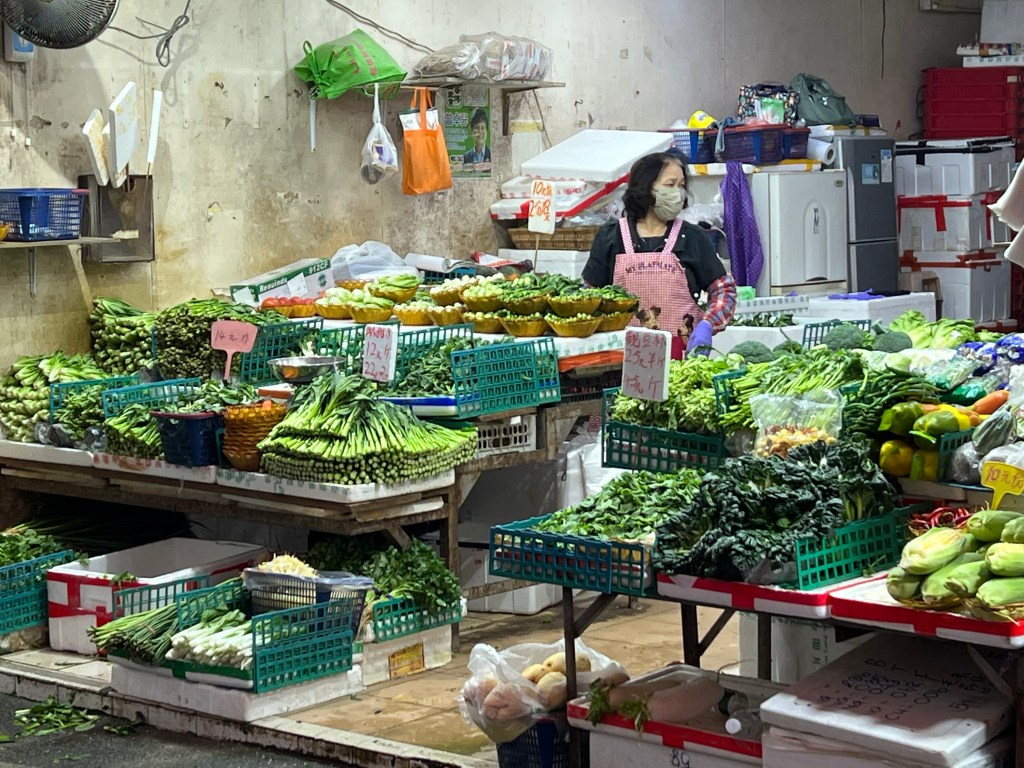
Photo © Jeff Beyl
All these years later, Hong Kong seems different. It was always a city of contrasts, but now it seems that it is trying to put those contrasts aside, to break free from its quaint, exotic past. Hong Kong is a modern city of the future. One can still eat at the occasional dai pai dong or hear the high-pitched wailing of a ye-wu threading through the buildings. The Jade Market is still there. There are still fortune tellers and seers. One can walk along Ladies’ Road and still see women’s brassieres stacked cup on cup on fold-out tables. One can still see tiny birds in tiny bamboo cages. But one will also see stores full of high-tech electronic devices that he may not find even in Seattle or San Francisco or New York. The Hong Kong of today is like a city in a futuristic movie. Blade Runner. The Fifth Element. Minority Report. One almost expects to see hover cars flying over the tops of the buildings.
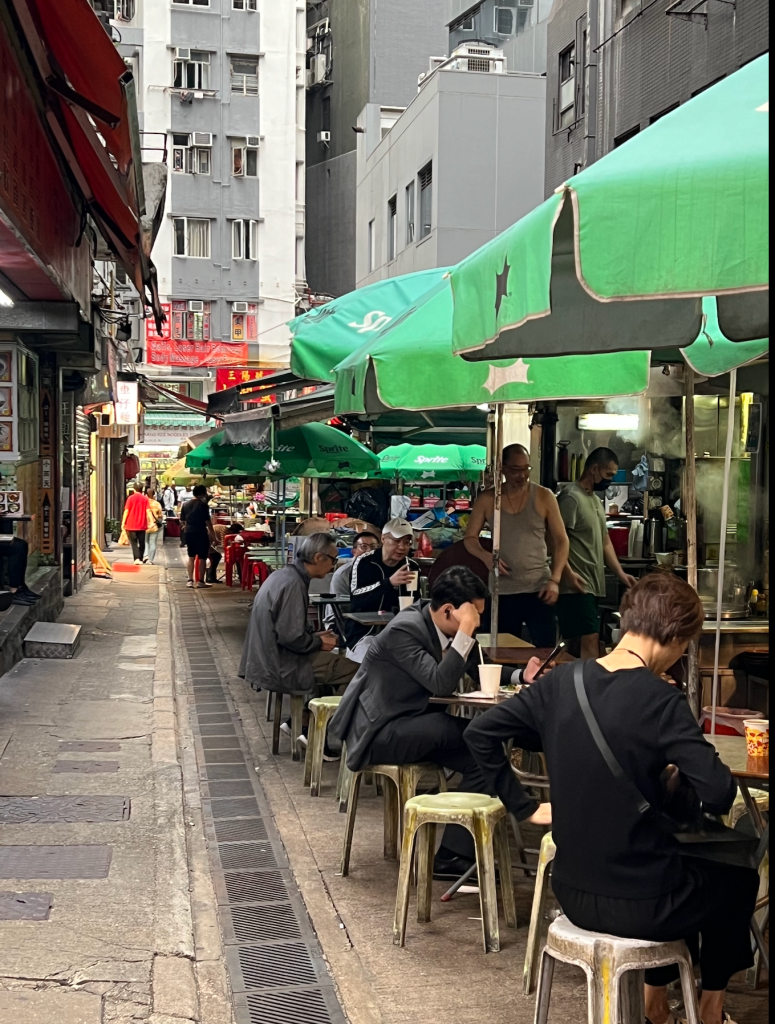
Photo © Jeff Beyl
I was contemplating all of this one morning while looking out the window across the water towards Tsim Sha Tsui from our hotel room in North Point. I decided to go downstairs to get some pastry and tea for my wife. There was a little Chinese girl with her parents in the lift. She looked to be about four, maybe five years old. She stood about two feet tall. Her hair was tied in pigtails with blue ribbons. She wore a blue and white dress like Dorothy in The Wizard of Oz.
She looked up at me. I am a six-foot-four bearded American man. I looked at the girl and thought, she is so small, I might frighten her, like a large Cowardly Lion, so I took a step backwards in the lift. But she looked up at me and smiled. Her eyes crinkled and sparkled and, if I may use the cliché, her face lit up. She appeared so joyful and delighted. Her smile was as dazzling as any smile I have ever seen.
“Hello,” she said in a tiny voice. She pronounced the word as if it were two syllables, “Hel-lo”, with an up-lilt to the first syllable, like the ding-dong of a doorbell. She kind of wiggled when she spoke and she asked, “Are you hap-py?”
Her smile and her innocent question seemed so genuine, so open and honest that I realised, indeed, I was happy. I looked at her parents. Some people do not like it if you talk to their children, so I wanted to make sure it was all right. They both smiled, and the woman nodded her head, so I looked back at the little girl. She was still smiling brightly. I smiled back.
“Yes, I am happy,” I answered. “Are you happy?”
“I am hap-py,” she said. She giggled and wiggled, then she said it again, “I am hap, hap, hap-py.”
She didn’t care how many skyscrapers there were. She didn’t care about fancy, colourful nicknames for the city. She didn’t care about quaintness and picturesque old-world style set against advanced, futuristic modernity. She didn’t care about exoticism or mystery. She had never seen the film Blade Runner. She smiled and she was happy and she made me smile and she made me happy.
Outside, the day was thriving and bright, and the morning light made everything look crisp and luminous. A warm, soft breeze blew off the harbour and it felt fresh and lovely. What a great day to be alive, I thought. My wife, who was born and raised in Hong Kong, was upstairs in our hotel room. I was going to go get some pastry and some tea and take it back to her. I looked across the harbour at Kowloon in the distance and I suddenly didn’t care about crumbled crackers or the haphazard layout of the buildings. I felt hap, hap, hap-py.
It was good to be in Hong Kong again.
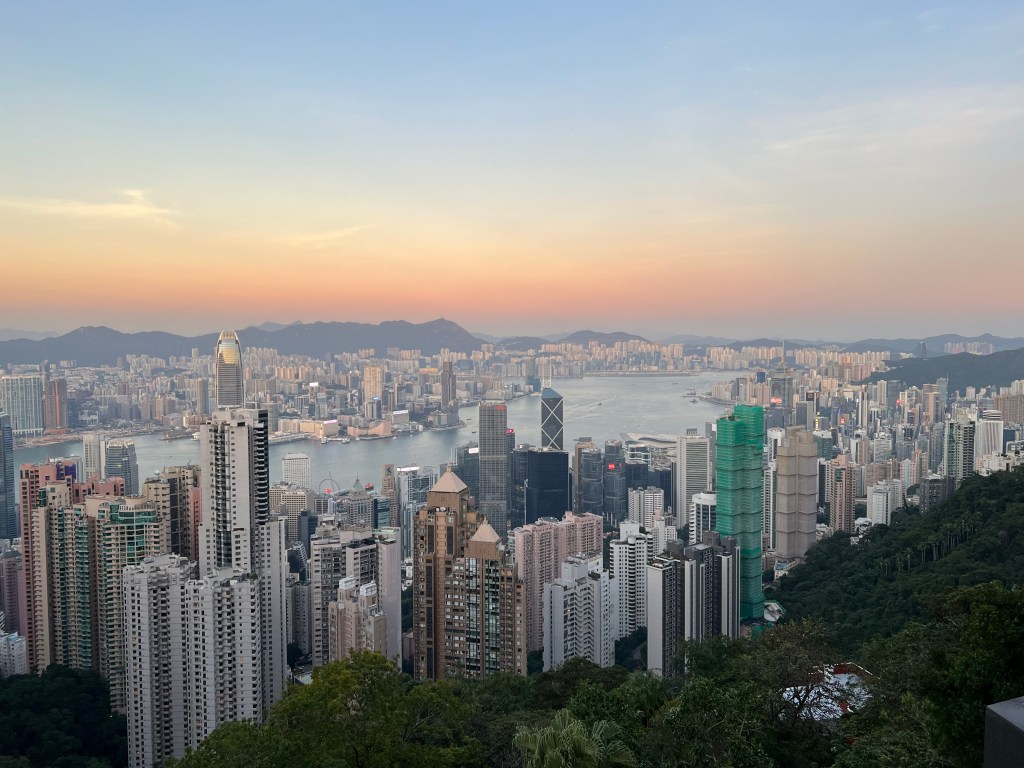
Photo © Jeff Beyl
How to cite: Beyl, Jeff. “Hong Kong: A Lover’s Meditation.” Cha: An Asian Literary Journal, 21 Sept. 2026, chajournal.com/2026/09/21/hong-kong-meditation.



Jeff Beyl writes about nature, fly-fishing, music, geology, surfing, and the ocean. He has been published in several magazines such as Big Sky Journal, Outside Bozeman, Montana Fly-fishing, Idaho Magazine, Northwest Sportsman, Ocean Magazine, Snowy Egret Literary Journal. His book, A Conversation With the Earth, was published in 2020. He has travelled widely through Asia, Hong Kong, Japan, Europe, the Caribbean and the Mediterranean. He is a jazz guitarist and photographer, scuba diver and fly-fisherman. He lives in Seattle with his wife. [All contributions by Jeff Beyl.]
 Cha
Cha 