
[CONVERSATION] “Mapping Loss in a Crowded City” by Sadie Kaye and Holly Sykes
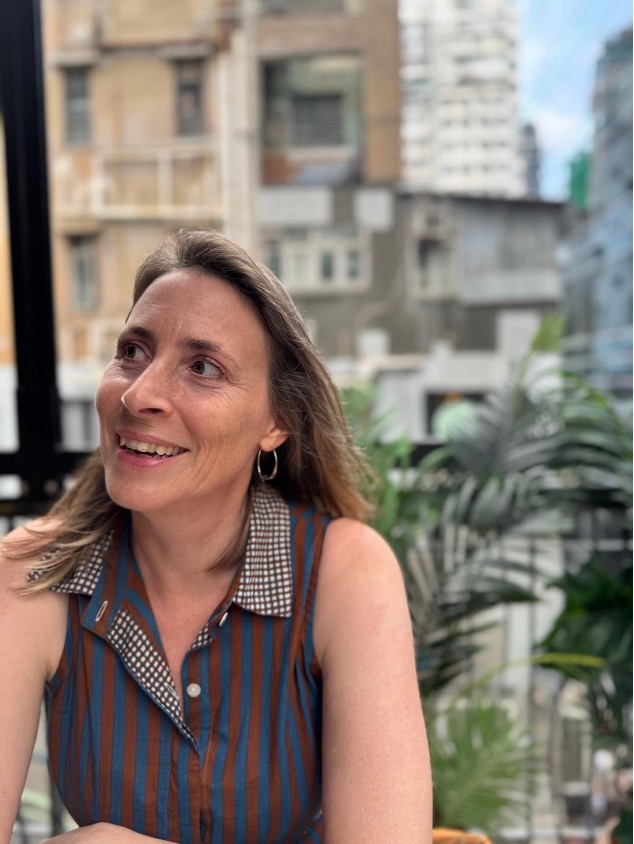
Holly Sykes at home in Hong Kong
Sadie Kaye’s introduction: What happens when a self-proclaimed “shy, bookish person” swaps the muddy, rolling hills of northwest England for the densely populated, neon-lit streets of Hong Kong? For award-winning novelist Holly Sykes, it was the perfect catalyst to explore the deep, universal geography of human emotion. I sat down with Holly, winner of the 2024 Page Turner Award win for Best Unpublished Contemporary Fiction, for a refreshingly candid, surprisingly uplifting chat about the creative power and geography of grief, breaking out of the perfectionism trap, flirting with imposter syndrome, the search for belonging and why writing about loneliness is actually the ultimate way to connect. Far from being a sombre meditation on isolation, Holly’s insights serve as a masterclass on how loss can sharpen our memories, fuel our art and ultimately bring us closer together.

Sadie Kaye: What are you chasing on the page lately: truth, permission, revenge, tenderness, hope?
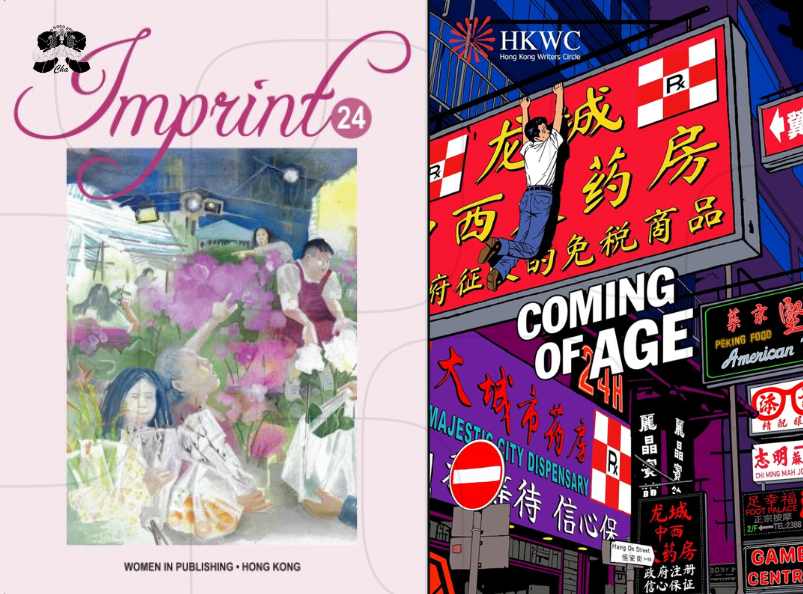
Holly Sykes: I have always been interested in the search for belonging and, even before I relocated from the UK to Hong Kong, my stories followed characters who were exploring this idea. As part of my research for my first manuscript, I came across a wonderful scrapbook-style book called Heimat (a German word which means homeland but also embodies feelings about home, belonging, heritage, culture). The project I’m currently working on follows a pair of siblings who first appeared in a couple of short stories I wrote last year for Hong Kong anthologies (Imprint 24, Women in Publishing Hong Kong, and Coming of Age from the Hong Kong Writers Circle). For the purpose of this new novel, I am relocating the siblings from Hong Kong to the northwest of England. They are both searching for a sense of belonging, the younger brother by seeking love beyond the family, and the older sister by cleaving to him.
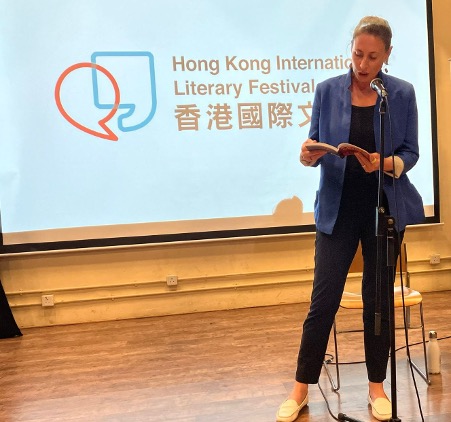
Holly Sykes reading her short story in Coming of Age
at the Hong Kong International Literary Festival 2026
Sadie: Most people describe loneliness as a lack of sound. Is the sound of silence comforting or terrifying? How does loss haunt you? When you’re writing about themes of loss and loneliness, what does loneliness actually sound like? Is it a hum, an alien ringing, or something else entirely?
Holly: Silence feels restorative to me. My breathing slows, I feel calm and peaceful. I can get my thoughts in order and begin to tease them out of my head and onto the page. I think my desire for silence comes from spending many of my teenage days striding across muddy English fields. I recently discovered that noise-cancelling headphones will block out drilling coming from the flat upstairs but not birdsong from outside. This is my idea of perfection. I enjoy being alone. But this is not loneliness. I feel most lonely when I miss people I love. The sound of loneliness, for me, is anything that reminds me of the person I’m missing, so it could be a favourite song of theirs, or remembering something they would say.
Sadie: If the loss your characters experience were a physical landscape, what would the weather and terrain look like? Would it be the wilds of Yorkshire or the crowds of Causeway Bay? What’s the geography of your grief?
Holly: An overcast day in northwest England is the most evocative landscape for me. This is my heimat, my homeland. It’s where a lot of my most formative memories were made: in a small town on the edge of the Peak District. Many of my stories grow from this setting and my characters’ losses and battles and fears and hopes are reflected in this landscape of rolling hills and murky canals.
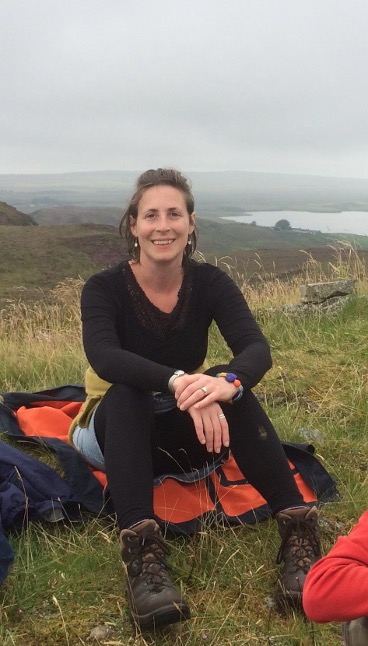
Holly Sykes in her north of England homeland
Sadie: Your work often blends the mundane with the mysterious. Do you believe the most haunted spaces in Hong Kong are physical locations, like abandoned villages, or crowded, yet lonely, digital spaces?
Holly: A physical landscape can be a living presence, a character in its own right. It’s difficult not to feel this way stumbling upon abandoned villages on a hike, or walking the twisted backstreets of Sheung Wan. When I’m writing a new story, landscape is often the first character I write. I don’t have that same connection with, or desire to write about, digital spaces.

“Hong Kong Storm” by Kasra Shroff
Sadie: What’s the most “unpoetic” place you’ve ever been hit by a great line?
Holly: When I’m on the bus or the MTR or the ferry. If I’m stuck, travelling is a great way to get unstuck. It feels like I’m making progress somehow because the vehicle is going forward, and that usually helps me get going again with my writing.
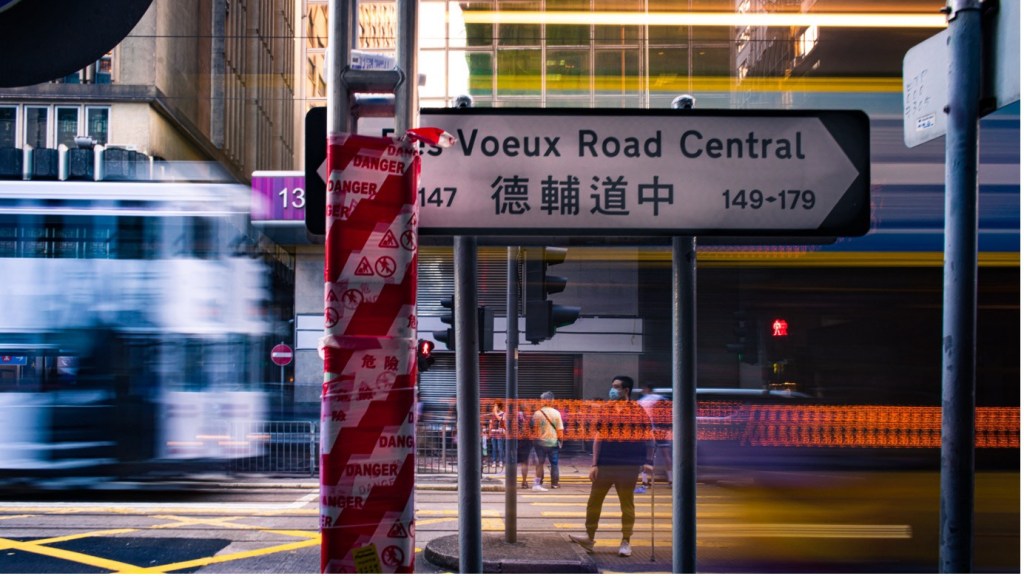
“Des Voeux Road” by Kasra Shroff
Sadie: We often talk about the inheritance of loss as what loss takes away. In your writing, what’s the one thing loss gives a character that they couldn’t otherwise have gained any other way?
Holly: In my stories, characters who experience loss are left with sharp and vivid memories of those who’ve gone. I think grief can enhance and intensify what you remember about someone and what they meant to you. It can teach you about them in a new way, a way you’ve never thought about them before. As time passes, the person who died becomes newly constructed in your mind, a narrative you have complete control over. They have grown into a new version of themselves that is yours to keep; that is what my characters gain.
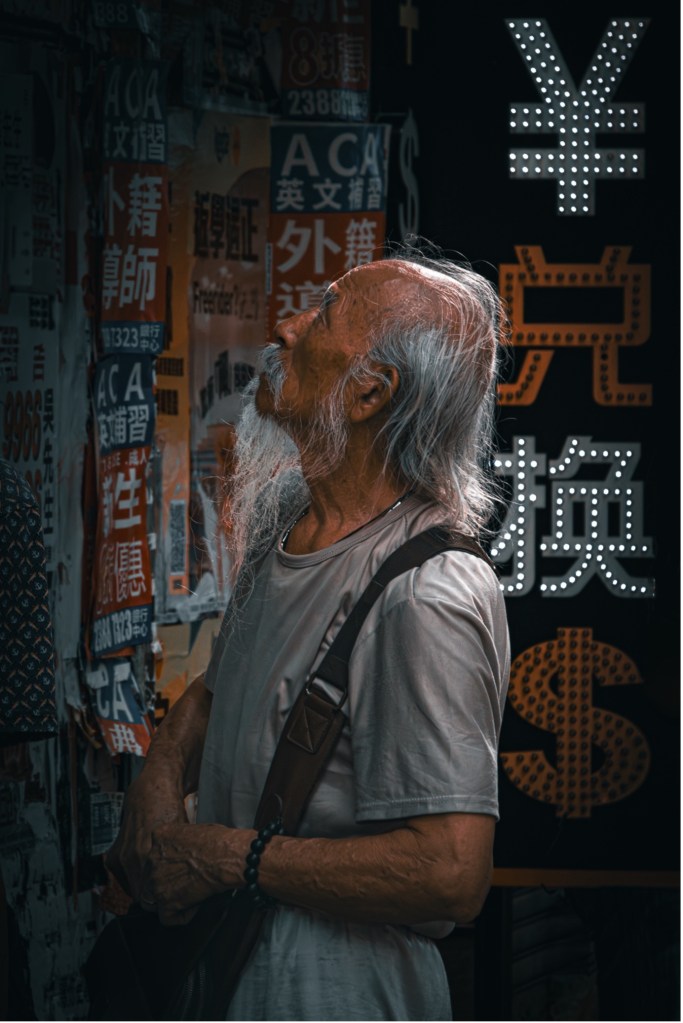
“Character” by Kasra Shroff
Sadie: When you write about two people drifting apart, do you treat the loneliness between them as a “third person” in the room? How do you give that “space” its own identity or personality?
Holly: I think this is where the idea of landscape being a character in the story really beds in. And because it is a character, it is in the relationship too, so whether it’s a Hong Kong apartment or the wide plains of Cheshire, the environment becomes a comfort or a menace, and it will reject or embrace or be indifferent to those it’s in a relationship with.
Sadie: Which word do you overuse because you love it, and which word are you currently avoiding?
Holly: I write about doors too much because it’s an easy symbol to fall back on. Coming in, going out, a silhouette in the doorway, slamming the door, letting it close with a soft click. In later drafts, I have to go through and delete all references to doors.

“The Door” by Ricky Sadiosa
Sadie: Is there a certain safety net in loneliness that your characters are afraid to leave? Why do some of them choose to stay there? Is there comfort in the ache?
Holly: Making a meaningful connection with another person is difficult for a lot of my central characters. They tend to be shy, retiring types, content within their small circles. They’re loyal to those they love and it takes them a long time to build trust with new people. When they lose a loved one, they find comfort in their grief because remembering that person keeps them close.
Sadie: Loss is often perceived as a battle against forgetting. The preservation of memory is what’s stirred humankind to create since cave times. We know that photos lie, but that doesn’t strip us of the urge to curate art exhibitions of our own lives. Which specific, tiny detail (a scent, a sound, a habit) do you find yourself utilising to anchor a character’s grief to the real world?
Holly: When my dad died a few years ago, I wrote a collection of short stories about his childhood. I had scant knowledge of this time in his life, but it was a way for me to think about him without remembering the difficult few months before his death. When he was alive, I neglected to ask him about his childhood, so most of what I wrote was invented. Rightly or wrongly, for me these stories have now become part of the bigger story of My Dad’s Life. The warmth of an egg taken straight from the nest, the weight of the wood he carries in for the fire, the sound of his sister’s voice as she reads him a Bible story before bed. These details evoke Dad as he was when he was a small boy, even though it’s impossible for me to know these things truly.
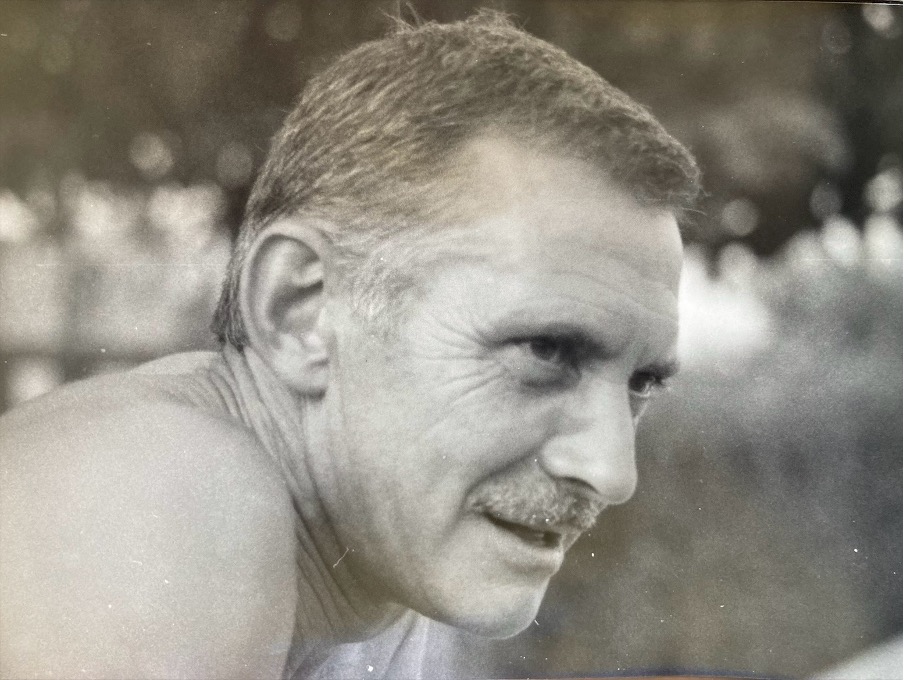
Holly’s father, who passed away in 2023
Sadie: When you finish a particularly heavy scene, do you feel a responsibility to rescue the reader from the burden of feeling those intense emotions, or is it more honest to leave them there in the dark to find their own way out?
Holly: The character is more important than the reader, so I have to follow whatever the character wants to do. But if I have developed my characters’ storylines fully, readers should feel ready for what’s coming. Readers are insightful. They understand tone, and they can read warning signs. But even if I haven’t prepared them, I know that readers are also pretty resilient.
Sadie: A disproportionate number of writers and actors battle imposter syndrome, probably because we spend so long in other people’s heads. Being somebody else for long periods can manifest self-doubt and I don’t know if this resonates with you. I’m not a psychiatrist. I’m the patient of a psychiatrist. There’s a subtle difference, according to my psychiatrist. Does this resonate?
Holly: Definitely.
Sadie: So, if your imposter syndrome tells you that you aren’t a “real” writer, what else does it tell you?
Holly: It tells me all sorts of mean things. And there is very little to keep that self-doubting, self-sabotaging voice at bay. Writers have limited avenues to external validation. Writing is a solitary experience. There’s no one telling you you’re doing a good job, and there is rarely any money coming in to confirm your work is valued. I taught secondary school students for fifteen years and even on the days the students were uncooperative, they were at least acknowledging my existence and I felt the work I was doing impacted them in some way (regardless of whether it was negative or positive). Finding a writing community here in Hong Kong has been important to me for all sorts of reasons, but especially as a source of encouragement and validation. We know how hard it is to write into what feels like a void for so long before plucking up the courage to share our work and open ourselves up to criticism. The writing community is well-practised at recognising that struggle and being supportive.
Sadie: Do you ever find writing about heavy themes like loss and isolation is a double-edged sword in the sense of feeling you aren’t qualified to hold space for such big emotions? How do you gently challenge your inner critic?
Holly: Thankfully, I’ve never felt unqualified to write about any emotion, but that might be because I came relatively late to writing. I was in my late 30s by the time I wrote my first short story, and by that time I’d experienced both big love and big loss. Having said that, I’m not sure anyone is unqualified to write about human experience. If you’ve been through adolescence, then you’ve had enough life experience to write about all sorts of big emotions.
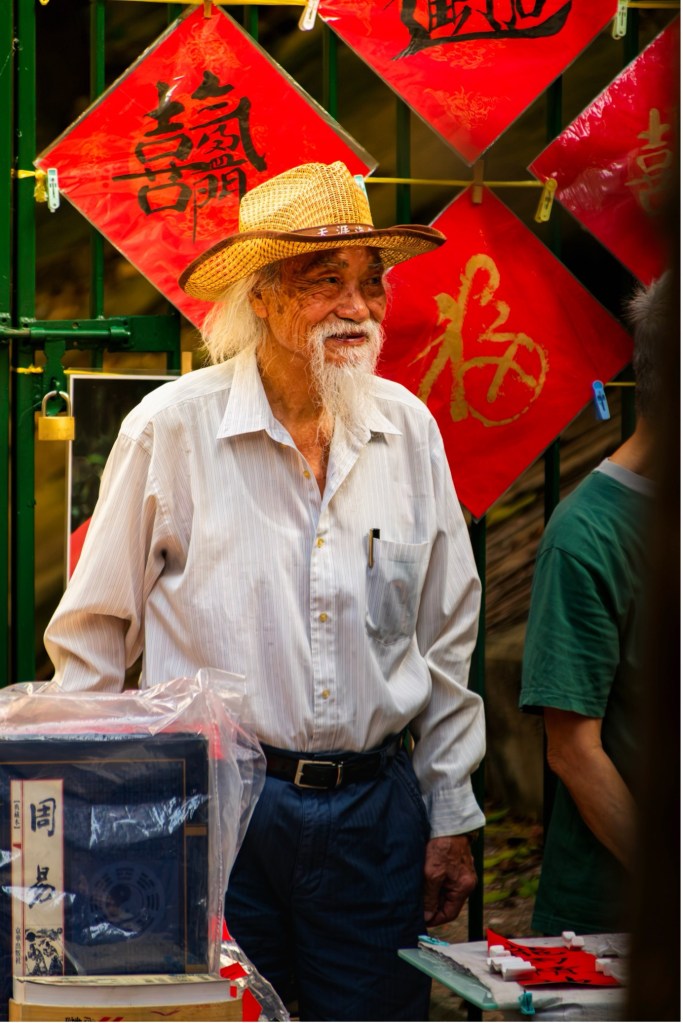
“Calligraphy” by Kasra Shroff
Sadie: Do you ever worry that you’re stealing grief that isn’t yours to tell? How do you negotiate with the feeling that you haven’t earned the right to describe a specific kind of pain? Or do you feel intoxicated by the feeling that you’re an unauthorised witness?
Holly: I can only write truthfully about what I know, but that doesn’t mean I shouldn’t write about things that haven’t happened to me. If I haven’t been through the specific circumstances of a character, I will draw on experiences that are similar to find the path my character will take, the emotions they feel. Writers can find the truth of the feeling regardless of whether they’ve been through the experience themselves. This is what actors do and writers do the same.
Sadie: When you write a particularly poignant line about loneliness, is your first instinct to celebrate the win, or worry that performative emotion feels fraudulent?
Holly: Whenever I’m tempted to celebrate an emotive line, I know I have to cut it because if it’s self-aware, it’s not true. Those lines are usually the ones that I’ve worked and reworked until all truth has been lost. But it can be difficult to keep the raw, first draft of a line. It can feel exposing, but you have to learn to be okay with that.
Sadie: Does writing about characters who are lost or lonely in some way feel like a way to mask your own feelings, or does it feel like you’re overexposing yourself? Do you find the mask of fiction easier to wear than facing your own emotions? Are you masking or facing?
Holly: Fiction can feel more exposing than non-fiction. With a character, there is more freedom to really dig down into their fears and motivations and needs and desires, but by doing so, we’re revealing the truth about what it is to be human. I have realised that one doesn’t hide behind the mask of fiction; rather, fiction reveals something about human nature that’s beyond the individual. For writers, this is the truth we’re chasing.
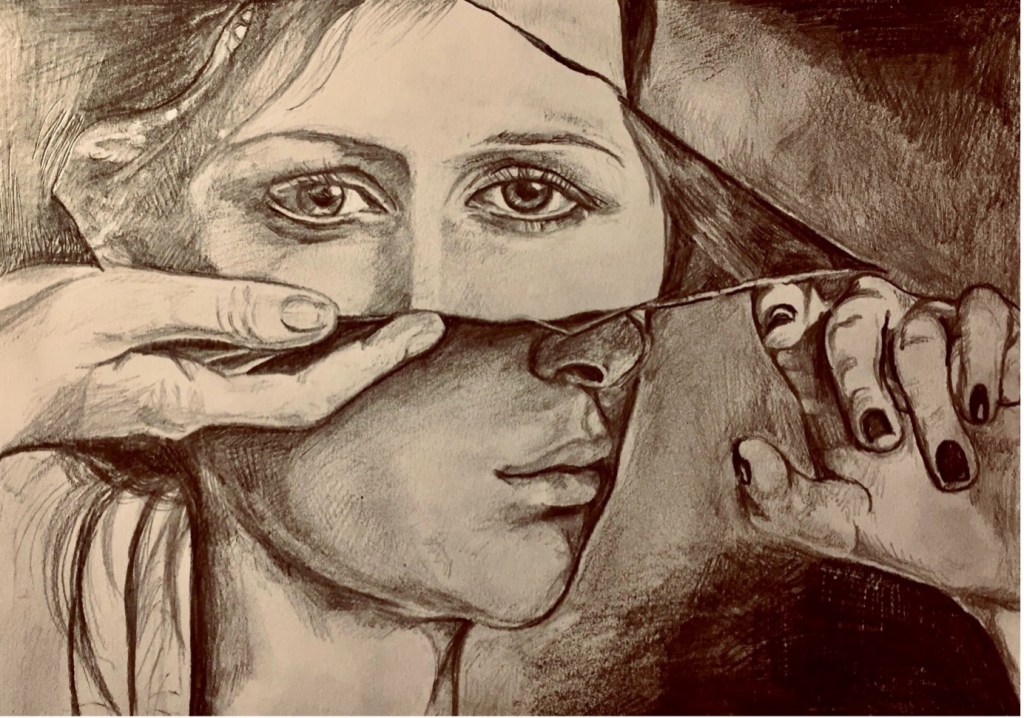
“Behind the Mask” by Rebecca Dandridge-Walker
Sadie: Have you ever written a scene of loss and reflected later that you were actually describing a time in your own life? How do you handle the exposure of your own truth in your writing? To what extent do imagination and reality mirror each other?
Holly: This is one of the reasons I write: to understand myself better, and to make sense of the things in my life. It’s only after I’ve finished a story that it occurs to me that I was exploring something within myself. In the last year, I’ve started writing short memoir pieces on Substack. It’s the first time I’ve intentionally written about myself. I don’t journal, I’ve never kept a diary: writing about myself has always felt a little cringe. So it has been a surprise to discover how much I’ve enjoyed writing these memoir pieces. But although they’re about things that have actually happened, there is a fictionalised feel to a lot of them and I’m definitely in control of the narrative. I include what I’m happy for people to know about and omit the parts I don’t want to tell. Unlike fiction, where a writer can reveal deep human truth, writing memoir is an act of agency over one’s own life.
Sadie: Are you a perfectionist? Do you feel like you have to write perfectly to honour the weight of loss? How does the pressure to be good enough for the subject stop you from just being honest?
Holly: Recently, a participant in a writing group told me that my writing was too controlled and he felt manipulated into feeling certain things about the character. As a reader, he would much rather come to his own conclusions. He was right on that occasion. If I want to chase truth (and I do), then I have to let go a little. I have to let go of the pressure to be perfect, or even good, to be able to write freely.
Sadie: You’ve immersed yourself in the local literary scene. What’s your pet peeve in literary spaces, something tiny that makes you want to flip a table (gently)?
Holly: Writers who can’t receive feedback quietly. I think it shows a lack of confidence in your own work if you feel the need to argue every point and defend every choice. Later, when you’re back home, you can reflect on the feedback and accept or reject whatever you like. But when the feedback is being given, you have to allow people the space to do that freely and without challenge, otherwise they won’t be honest.
Sadie: Has involvement in local writing groups helped you to overcome perfectionism or is it actually harder to be constantly judging the merit of your own work and career against other people’s?
Holly: Being involved in writing groups is a great wake-up call. There are so many talented writers out there, and all of them are trying to get published. The competition is high, the chances of getting published extremely slim. Even if you’re a great writer, it doesn’t count for much. Most writers I meet are amazing at what they do. It made me realise how soul-destroying it can be to write in order to be published. That cannot be the aim. I write because I love it and because it helps me understand things in my life better.
Sadie: What’s a mistake you’ve made that later became a signature of your creative process?
Holly: For a long time I thought I needed certain conditions to be able to write: I had to have a swim then write at home, with coffee, for an uninterrupted few hours. This is still my ideal, but it was a relief to realise it wasn’t essential. I found I was able to write on the train, in a busy café, with or without swimming first, with or without coffee. It gave me the freedom to write more often, and in between other activities.
Sadie: What’s a belief you hold now that you had to earn the hard way?
Holly: The story you tell and the perspective you tell it from really matter. I spent years working on a novel about a mother/daughter relationship before I was able to sign up for an MA in Creative Writing. I had in mind that I would use the MA to finish my nearly completed novel. In my first tutorial, my tutor advised me to write the daughter’s story rather than the mother’s. She said the daughter’s story was the more dramatic and engaging of the two. I did finish the novel and was very happy with it by the end, but it was a completely different story from the one I’d started out with.
Sadie: When a reader tells you that your words helped them through their own loneliness, do you tend to believe them, or do you feel like you’ve tricked them into being moved and then feel guilty about it? To what extent do you rely on validation from first readers in your circle?
Holly: If a reader tells me they connected with my writing, it feels like a very personal thing to admit, so I can get embarrassed about that sort of thing. It feels like an exposure for both of us. But it’s different when readers in a critique circle praise my work as part of their constructive feedback. When that happens, I’m often simply waiting for them to get to the parts they didn’t like. That’s the stuff that’s going to help me improve the story. Like many writers, I’m poor at accepting praise. It’s part of a wider defence strategy to convince myself that reviewers’ opinions don’t matter so that when the rejections or bad reviews come in, I can shrug them off more easily, although unfortunately criticism is much easier to believe. There aren’t many wins in this game, so I would like to be better at believing the good as well as the bad.
Sadie: I’ve not read every single one of your short stories, poems and WIPs, but from those I have had the pleasure of reading, it seems you’re often drawn to characters experiencing loss or some kind of lack. Some of your characters seem lonely. I know you’ve experienced grief and loss, as we all have or will do eventually. Yet you live in one of the most populated parts of the world, with your husband and two teenage sons who adore you. Why do you think it is that you’re drawn to characters quite unlike yourself?
Holly: I don’t think they are unlike me. You’re right about my wonderful husband and gorgeous sons, but they will tell you I am a shy, bookish person who would quite happily spend most days in a solitary state reading and writing. We have personas we put on for the busy outside world because it’s necessary to go out there and be with people, and I enjoy that too, especially with those special people I love, but I also cherish my alone time and guard it carefully. The tension between the person we are at home compared to the role we play in the outside world is a great source of energy when thinking about my characters and how they journey through life.
Sadie: When a character decides to defy your original plot designs for them, do you feel a sense of loss or do you lean into the thrill of them enacting their own agency?
Holly: They have to go where they want to go and do what they want to do. I only feel a sense of loss if the story gets published. At that point, I have lost them. They are set in stone and cannot be altered unless I revive them in another story.
How to cite: Kaye, Sadie and Sykes, Holly. “Mapping Loss in a Crowded City.” Cha: An Asian Literary Journal, 19 Sept. 2026, chajournal.com/2026/09/19/holly-sykes.

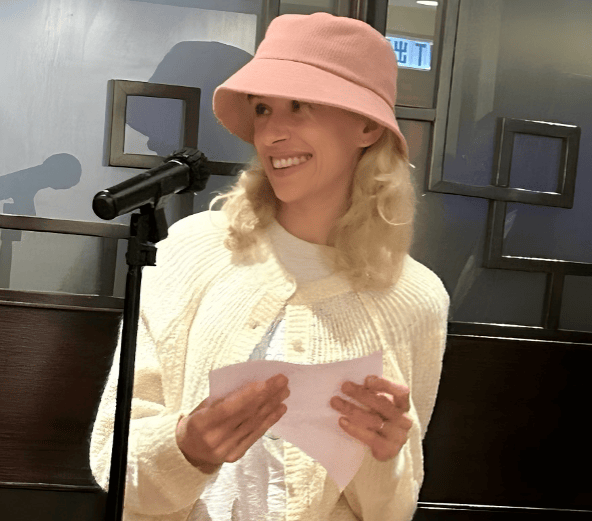

Sadie Kaye is a storyteller from Hong Kong who creates quirky podcasts, offbeat documentaries, and independent films. Her humour columns for RTHK Radio 3, rants, reviews and essays on mental health have been published by the South China Morning Post, Cha, The Hooghly Review and featured in many anthologies. Her work has received recognition from the Association for International Broadcasting, the New York Festivals Radio Awards, On Air Fest, International Women’s Podcast Awards and Comedy Women in Print Prize. She has produced two feature films for Contro Vento Films. Transference (2020) went viral on YouTube, exceeding 30 million views. To Love a Narcissist was released in North America 19 May 2026. [All contributions by Sadie Kaye.]

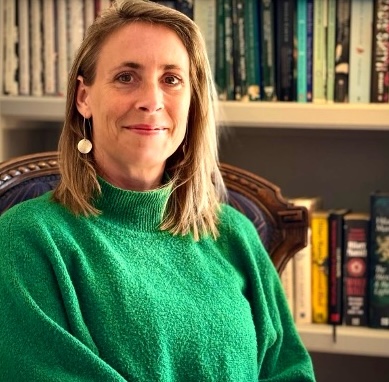
Published author of short fiction and writer of female-led novels, Holly Sykes won the Page Turner Award for Best Contemporary Fiction 2024 with her first unpublished manuscript, Wooden Dolls. Previously, it won the Portfolio Prize 2023 (MA, University of Lancaster). You can find her short stories and poetry in Stand Magazine, Dreamcatcher Magazine and Fairlight Books (UK), and The Apostrophe and Voice and Verse Poetry Magazine (HK). Alongside working on her current novel and short stories, Holly also publishes Beyond the Book Cover on Substack, which was featured in the Spring 2026 issue of Mslexia. Originally from the UK, she has lived in Hong Kong for five years. @hollysykeswriter (IG) @holly.sykes.79 (FB)
 Cha
Cha 