
茶 FIRST IMPRESSIONS
茶 REVIEW OF BOOKS & FILMS
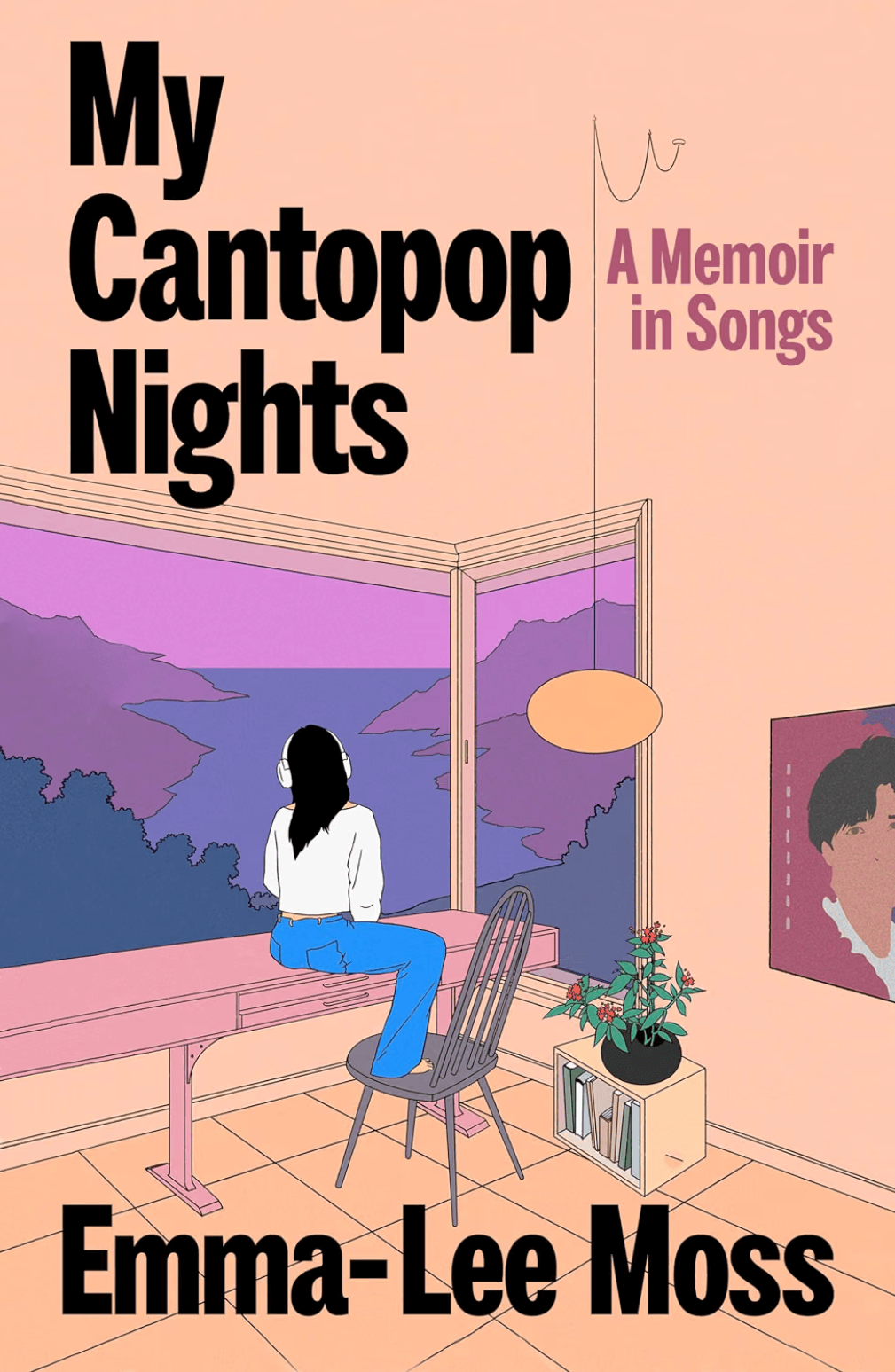
[REVIEW] “Hong Kong, Cantopop and the Memory of Home: Emma-Lee Moss’s My Cantopop Nights” by Susan Blumberg-Kason
Emma-Lee Moss. My Cantopop Nights: A Memoir in Songs. Jonathan Cape, 2026. 352 pgs.

The memories of the golden age of Hong Kong cinema and Cantopop are lovingly preserved in the pages of Moss’s memoir.
I remember the summer of 1995 as if it were yesterday. I was a newlywed, and I had just finished my first year of graduate school in Hong Kong. But I wasn’t going to be spending the summer in Hong Kong. Instead, I was off to mainland China, mostly to my husband’s hometown in Hubei Province, with a few interludes in Shanghai. I had visited his hometown months earlier for Chinese New Year, but three weeks is not the same as the better part of three months. When I reached my in-laws’ small town, I found nothing familiar until I was in a car and my brother-in-law popped in a cassette of Teresa Teng’s greatest hits. I knew every song. Another day, I found a VHS recording of a 1994 Faye Wong concert. When we watched it back at my in-laws’ flat, they seemed mystified by Faye’s long dreadlocks and extra-long sleeves, while I felt as if I were back home in Hong Kong.
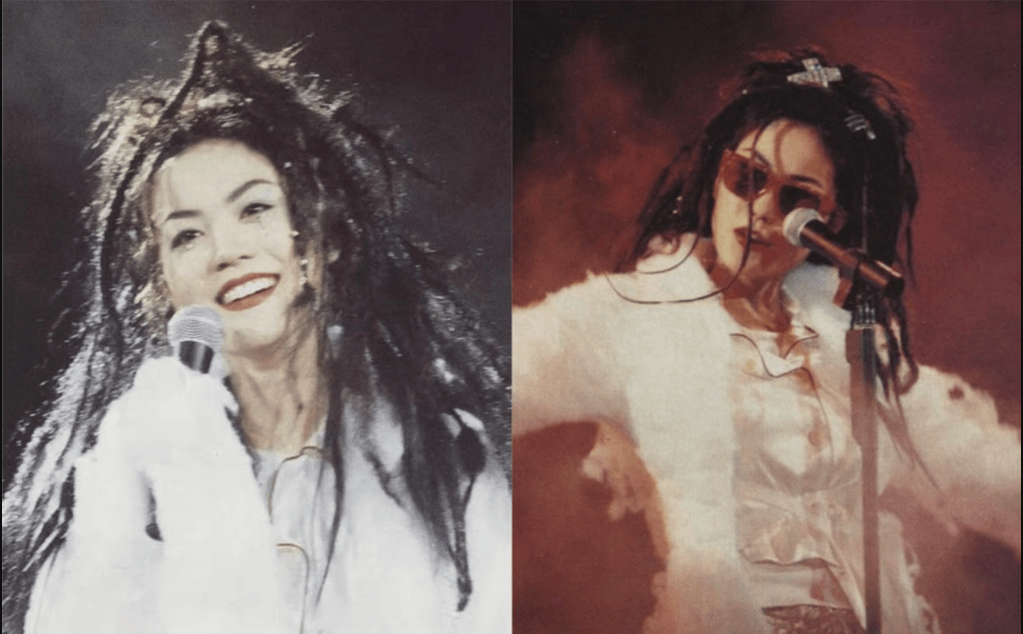
Faye Wongin concert in 1994
I was most certainly not alone. There was something magical about Hong Kong at that time, just before the Handover. The Hong Kong film industry was at its peak, and the stars of many of the most beloved films got their start in Cantopop. So it was no coincidence that this period was also the golden age of Cantopop. Yet it wasn’t all glitz and glamour, as many people in Hong Kong worried about the future after the Handover, believing it was not a matter of if the city would change, but when that would happen. Emma-Lee Moss’s family didn’t want to take any chances and emigrated to the UK around the time I spent that summer in China. Moss writes about her physical and emotional journey in her new book, My Cantopop Nights: A Memoir in Songs, which includes tributes to Teresa Teng and Faye Wong, among many other musical icons.
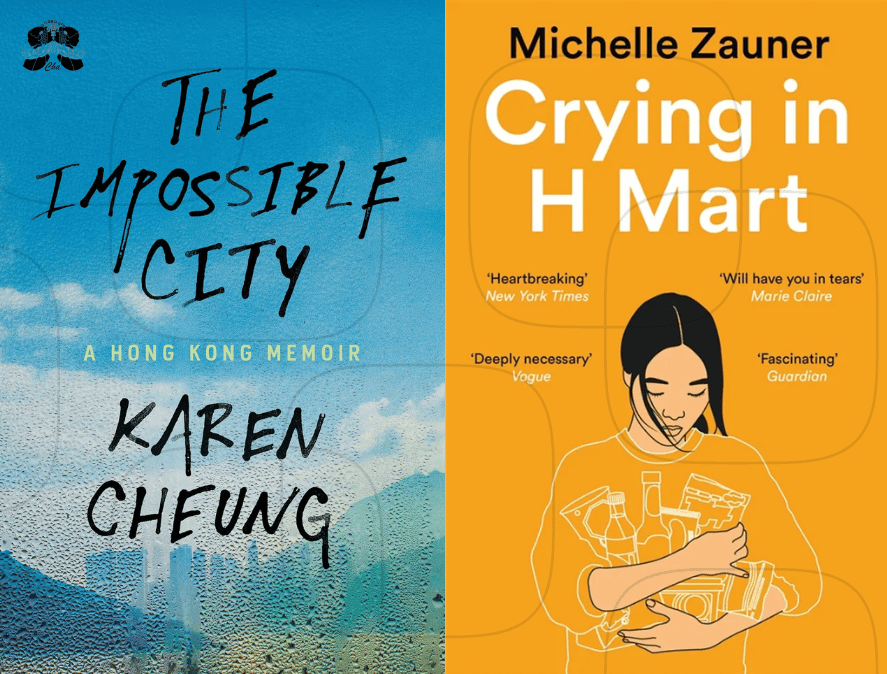
Moss’s story is reminiscent of Karen Cheung’s The Impossible City and Michelle Zauner’s Crying in H Mart, and the thread that runs through her memoir is Cantopop, an influence that, interestingly, stems from her white British father rather than her Hong Kong Chinese mother. Well before Moss was born in the early 1980s, her father had helped a Hong Kong band called the Wynners with its English lyrics. Two members of that band were Kenny Bee and Alan Tam.
Decades later, as Moss and her family prepare to leave Hong Kong for the UK, she listens to the Four Heavenly Kings of Cantopop: Leon Lai, Andy Lau, Jacky Cheung and Aaron Kwok. But she finds herself most influenced by Faye Wong, whose rise to fame coincides with Moss’s departure for the UK.
She finds a kindred spirit in Faye Wong, who moved to Hong Kong from Beijing in her late teens. After Wong is discovered in the late 1980s, she is first known as Shirley Wong, yet she never feels as if she fits into the Hong Kong music industry. Moss recounts how Wong moves to New York to work on her repertoire, finding inspiration in indie groups such as the Cranberries and Cocteau Twins. When she returns to Hong Kong in the early 1990s, she reinvents herself as Faye Wong on her own terms. Throughout the book, Moss chronicles Wong’s career through her Wong Kar-wai films, motherhood and retirement.
As a biracial British Chinese girl growing up in Hong Kong, Moss also goes by different names according to the setting.
When I was at school, my name was Mok Ngoi Ming, but when I got home, it was Emma-Lee. On the weekends, when we hung out with our expat friends, the kids said my name as though it was ‘Emily’. It was only when I was with our family—my mother’s sister, brothers, and my cousins—that my name existed in its natural state, an English name in a Cantonese voice. Eh-ma-lee, like Julie Andrews singing ‘fa-fa-fa’.
Moss is sent to boarding school in the UK and loses her Cantonese. She has few Chinese classmates, and her parents hope she will assimilate. To fit in, she joins a band in her teens. As a young woman, she transforms into Emmy the Great, releasing four albums. She learns to appreciate her Hong Kong identity as her music career advances.
Other Cantopop stars who figure prominently in her book include Anita Mui, Leslie Cheung and Wong Ka Kui of the band Beyond, who died after a freak accident on stage in Japan in 1993. She also pays homage to Teresa Teng, the Taiwanese megastar beloved throughout the Chinese diaspora. Faye Wong was also a fan of Teresa Teng, as Moss writes in her book:
As a teenager, Faye had a recording career that was mostly cassettes of Teresa Teng’s songs. She’d been picked up by a producer, who had heard home recordings of Faye covering Teresa. Later, at the height of her fame, Faye persuaded her Hong Kong record label to fund another album of Teresa’s songs.
Teng was living in Thailand at the time, and the record label was planning a duet between Teng and Wong, but before that could happen, Teng tragically died from an asthma attack. Faye Wong was devastated and would emerge from retirement decades later, in 2013, to perform a tribute song to Teng in Beijing.
Moss was born a year before the Joint Declaration and emigrated to the UK two years before the Handover. Her childhood coincided with the major political events in Hong Kong at that time, including the Tiananmen vigils, when they were the largest in the world. She returns for months at a time as an adult after her parents move back to Hong Kong. Moss was part of the gathering around Anthony Bourdain’s last segment to be filmed in Hong Kong. That part of her book is especially chilling.
There are other chilling parts of her memoir, and by the end, after the lifting of pandemic restrictions, Moss finds that the city has changed, both in terms of places that no longer exist and the unsettling atmosphere surrounding the national security law. To many who love Hong Kong, Moss’s book may seem nostalgic, suggesting a yearning for a beloved time and place, but she embraces a different definition of nostalgia when it comes to Hong Kong:
Nostalgia, in its first form, was a name for a disease of homesickness among soldiers. I knew that, for me, nostalgia was not a wistful or bittersweet feeling, as it has come to be known, but closer to the original form, when one of its symptoms was to be visited by a dead loved one in a dream. Back then, a cure for nostalgia was to ban the music and instruments of the homeland.
This nostalgia, in both senses, is also present in Wong Kar-wai’s films, many of which Moss writes about in her book. Faye Wong’s acting career took off in Chungking Express, and Teresa Teng’s “Forget Him” (忘记他) was covered in Fallen Angels by Shirley Kwan. The title of Moss’s book, meanwhile, takes its name from Wong Kar-wai’s first English-language feature film, My Blueberry Nights. The golden age of Hong Kong cinema and Cantopop may be long gone, but these memories are lovingly preserved in the pages of Moss’s memoir.
Teresa Teng’s “Forget Him” (忘记他) was covered in Fallen Angels by Shirley Kwan.
How to cite: Blumberg-Kason, Susan. “Hong Kong, Cantopop and the Memory of Home: Emma-Lee Moss’s My Cantopop Nights.” Cha: An Asian Literary Journal, 19 Sept. 2026. chajournal.com/2026/09/19/cantopop.


Susan Blumberg-Kason is the author of Bernardine’s Shanghai Salon: The Story of the Doyenne of Old China, a 2023 Zibby Awards finalist for Best Book for the History Lover. She is also the author of Good Chinese Wife: A Love Affair With China Gone Wrong and the 2024 Zibby Awards winner When Friends Come From Afar: The Remarkable Story of Bernie Wong and Chicago’s Chinese American Service League (University of Illinois Press, 2024). She is the co-editor of Hong Kong Noir and a regular contributor to the Asian Review of Books, Cha and World Literature Today. Her work has also appeared in the Angeles Review of Books and PopMatters. Visit her website for more information. (Photo credit: Annette Patko) [Susan Blumberg-Kason and ChaJournal.]
 Cha
Cha 