
茶 FIRST IMPRESSIONS
茶 REVIEW OF BOOKS & FILMS
[ESSAY] “What’s Queer about Hong Kong Comics” by Ronny Chan

What’s queer about comics? I’ve been grappling with this question ever since I took a stab at crafting my first queer autobiographical comic for Dr Elizabeth Ho’s undergraduate course “Comics, Graphic Novels and Theory”. As a medium often condemned as frivolous, shovelled into the dustbin of literary history, and subjected to institutional censorship, comics bear an unruly intimacy with queer subjects, who are likewise pushed to the fringes of mainstream society. But beyond this shared marginality, how do the medium’s formal affordances lend themselves to expressing non-normative erotic encounters, embodiments, and entanglements? And how might comics, and the community of artists and fans they constellate, cultivate alternative infrastructures for circulating queer knowledge and affects?
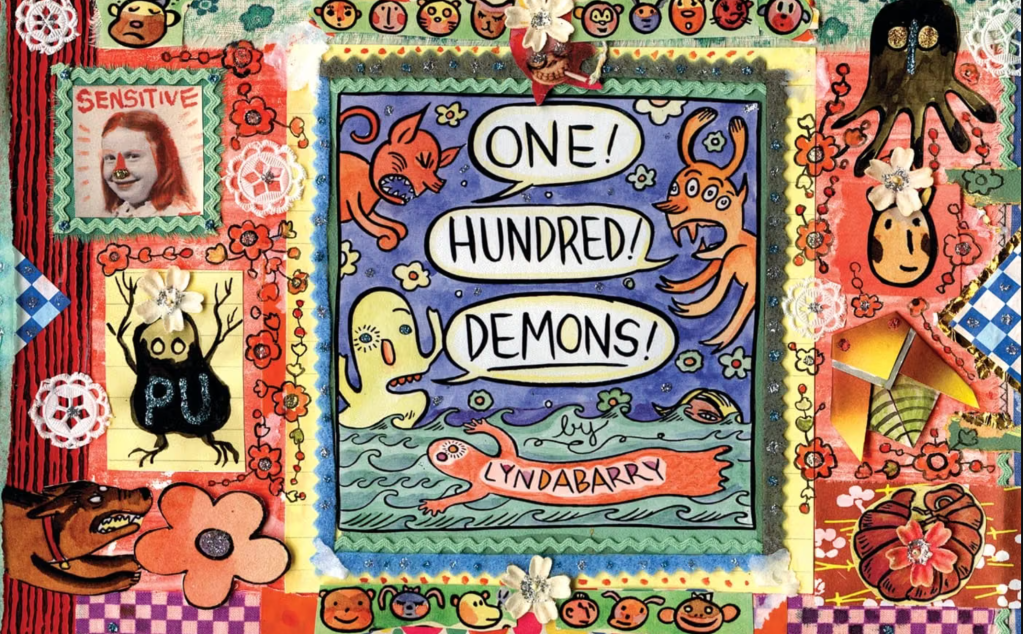
With these questions in mind, I drew inspiration from Lynda Barry’s One! Hundred! Demons! to create my DIY comic “Monster” (Fig. 1). Despite my crappy illustration skills, I reclaimed the pictorial icon of monsters, much as Susan Stryker aligns herself with Frankenstein’s creature to articulate transgender rage and marginalised subjectivity, and employed the comic frame to (re)frame my unpleasant encounters with microaggressions as a queer child. Working in a scrapbook aesthetic, I inserted my present narratorial voice into the captions to renarrativise queer memories visualised in each panel. Self-reflexively, I drew myself doodling and cartooning to reflect on the role of comics in viscerally engaging the fragments, lacunae, and loops of memory, all while embedding my work in an intertextual web of kinship with other queer comics, such as Alison Bechdel’s Fun Home and Alice Oseman’s Heartstopper, to forge textual intimacies. Comics became some sort of scrappy aesthetic medium, or better yet, a survival tool for queer folks like me to reconcile with our sense of self. Their unique juxtaposition of text and image and embodied materiality is where the magic unfolds: they allow for the layering of multiple temporalities and the imagination of alternative life-worlds.
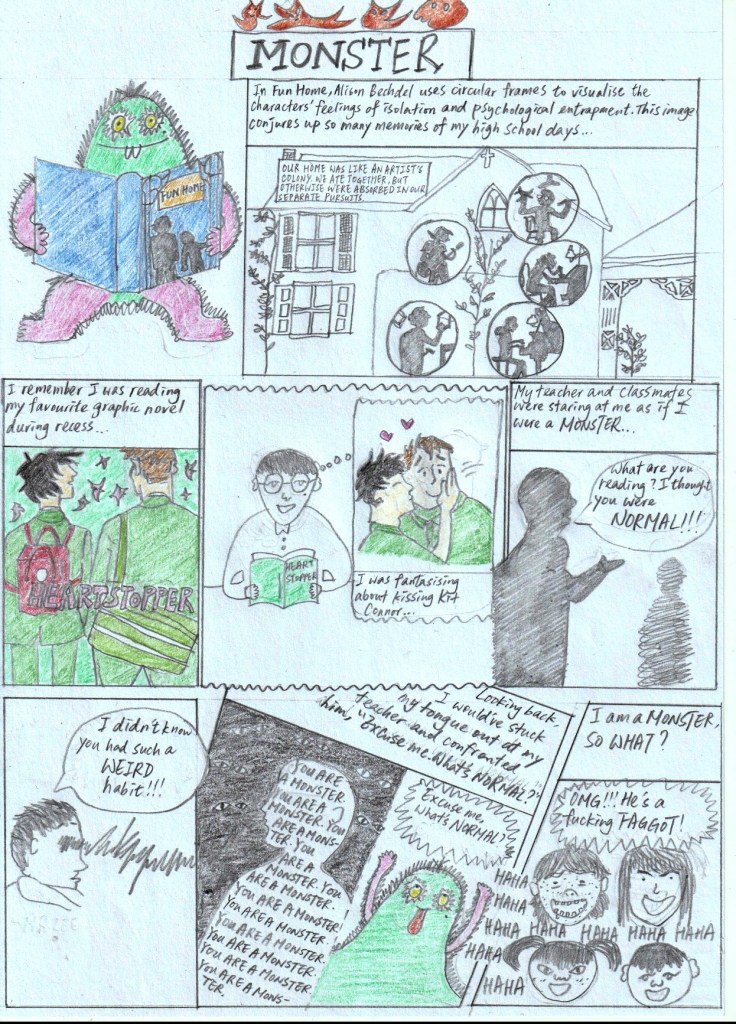
Fig. 1. Cropped image of “Monster” by Ronny Chan; unpublished comic.
As somebody who researches queer literature of Hong Kong and its art of irreverence, I find myself drawn to queer and feminist graphic narratives, even though my focus is on written texts. Notably, Hong Kong boasts a rich genealogy of comics. As Wendy Siuyi Wong delineates in her historical survey of manhua (the Chinese term for cartoons and comics), this genealogy stretches from the revolutionary political cartoons during the anti-Qing movements and the wartime cartoon boom in Hong Kong during the Sino-Japanese War, when the city became the production base for Chinese cartoons after Shanghai and Guangzhou were occupied, to the rise of daily-life comic strips and tabloid “penny papers” in the 1950s and ’60s, which flourished alongside children’s pictorials and serial manhua as Hong Kong replaced the mainland as the primary source of Chinese-language comics. The 1970s and ’80s then saw the emergence of kung fu and fighting genres, inspired by Bruce Lee’s films and influenced by American action comics and Japanese manga. It was not until the 1980s and ’90s that Hong Kong witnessed the diversification of comics and the proliferation of alternative and feminist work, as some artists began working independently or outside the mainstream fighting genres to experiment with new themes and techniques.
In this creative-critical essay, I want to offer an intimate, affective, and perhaps obsessive engagement with some queer and feminist comics from Hong Kong that speak to me. I like to think with and alongside the multifarious ways they experiment with aesthetic form to accommodate sensuous modes of meaning-making and to imagine non-linear forms of survival and relationality. In scavenging these graphic narratives, I’m not so much invested in the artists’ sexual orientation as in the visual composition and aesthetic texture of their works, where queerness has diffused into form itself. Queerness, then, isn’t so much a fixed being as a mode of doing, critiquing, and relating that unsettles gender and sexual normativity, a mode that finds in comics’ architecture a peculiarly generative medium. Within my personal archive are the comics of Craig Au-Yeung Ying Chai, Lily Lau Lee-lee, and Kaitlin Chan, spanning zines, books, and social media. Far from comprehensive, this essay simply attempts to connect the dots in the tangled histories of queer-feminist comics, or, in José Esteban Muñoz’s terms, the “traces, glimmers, residues, and specks of things” (p. 10) in the genealogy of graphic literature in Hong Kong. To linger with their works is to give time and space to the physical and aesthetic labour that these artists have invested to vitalise open-ended possibilities of erotic intimacy and affective vibrancy.
Let’s begin with some queer indie zines from the 1990s, where I came across Craig Au-Yeung Ying Chai’s comix. I use the term “comix” in alignment with the artist’s own positioning of his work to denote countercultural, self-published, or underground works that usually feature rebellious, satirical, and anti-establishment politics. Although queer zines in the 1990s, such as Hong Kong Ten Percent Journal (香港十分一會會刊), Nu Feng Liu (女風流), and Nu Tong Zhi (女同誌), are not technically comics, they share many affinities with the medium: their use of DIY aesthetics, cut-and-paste collages, and visual juxtaposition invite us to perceive what Colin Beineke terms “comicity”, the comic-like visual language and structure in zines. Take the April 1996 cover of Hong Kong Ten Percent Journal, for example (Fig. 2). Though not a sequential narrative, the graphic collage evokes comic aesthetics, the collision of cut-out images and stylised texts, and borrows the “cut-and-paste” technique of punk zines to reclaim derogatory queer stereotypes and flip them into a risqué and ribald celebration. Against the teal background, photographs of shirtless, muscular men are layered with images of toilets and “slippery floor” signs, superimposed with words like “sex”, “crime”, and “hot”, as well as the Chinese characters “尿” (urine) and “瀉” (diarrhoea), which allude to queer cruising culture and critique the stigmas that conflate gay male sexuality with disease, filth, and criminality. Moreover, phallic-shaped food objects like bananas and hotdogs, along with a large red apple, are layered in to inject a campy element and elicit readers’ carnal desires. Through its visceral immediacy and interplay of text and image, this comicitous graphic evokes a playful politics of queer sexuality that flirts with institutional control and heteronormative strictures.
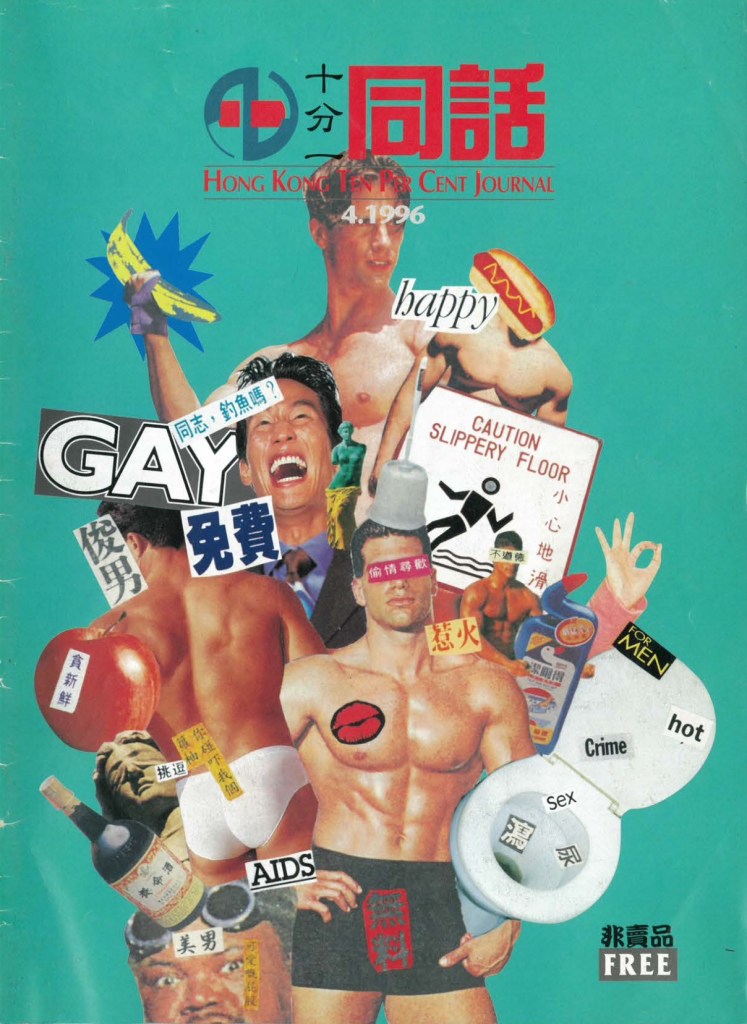
Fig. 2. Cover of Hong Kong Ten Percent Journal, April 1996.
Pre-Internet Era HKLGBTQ+ Printed Matter Archive.
Leafing through various issues of the same queer zine, we encounter Craig’s comix in the section “同夢”, which literally translates as “common” or “queer dream”. He signs his work with “應霽連環圖”, lianhuantu (連環圖) referring to traditional Chinese picture books featuring sequences of line-art drawings with script overlaid on the visuals, a form closely associated with Hong Kong’s comic culture. In a comix titled “M and M, S and S”, he mobilises what we may call serialised proliferation to animate a multitude of erotic intimacies and sexual tensions. As its title suggests, this work concerns BDSM dynamics and the plethora of ways that S (sadistic) and M (masochistic) subjects relate to one another. Rather than drawing actual human bodies, Craig uses abstract geometry, coils, jagged lines, and ribbons, to render sexual dynamics visible. His aesthetic choice refuses the pornographic spectacle and complicates the fetishising gaze. Employing what Scott McCloud calls “amplification through simplification” (p. 30), it invites readers to extrapolate the force and tension of BDSM acts through the icons. The structure of the comix pivots on the proliferation of panels, each representing a particular dynamic between S and M, M and M, or S and S, as pictorially limned in the panel and textually described in the caption. With two fixed variables (S and M) and a growing set of relational modes (trust, control, support, abandonment), the grid of five panels across and six panels down unfolds open-ended combinations and permutations of sexual dynamics. (It turns out the boring maths lesson on probability isn’t entirely useless after all!) Put otherwise, the panels do not follow the linear progression of events; rather, as Darieck Scott and Ramzi Fawaz argue, by way of Eve Sedgwick’s concept, the panels unravel as “an ‘open mesh’ of pictorial icons organized in countless sequences, underscor[ing] the limitless differences produced between an ever-expanding range of images and the figures and worlds [the comics] depict” (p. 203). Readers can start from any of the panels, just as one might begin any S/M dynamic at any moment. Such a non-linear configuration confounds any prescribed directionality of reading and, by extension, fixed sexual orientation. Queerness here crystallises as a structural property rather than a representational theme, activated by the contingency of readerly engagement to engender multiple erotic possibilities.
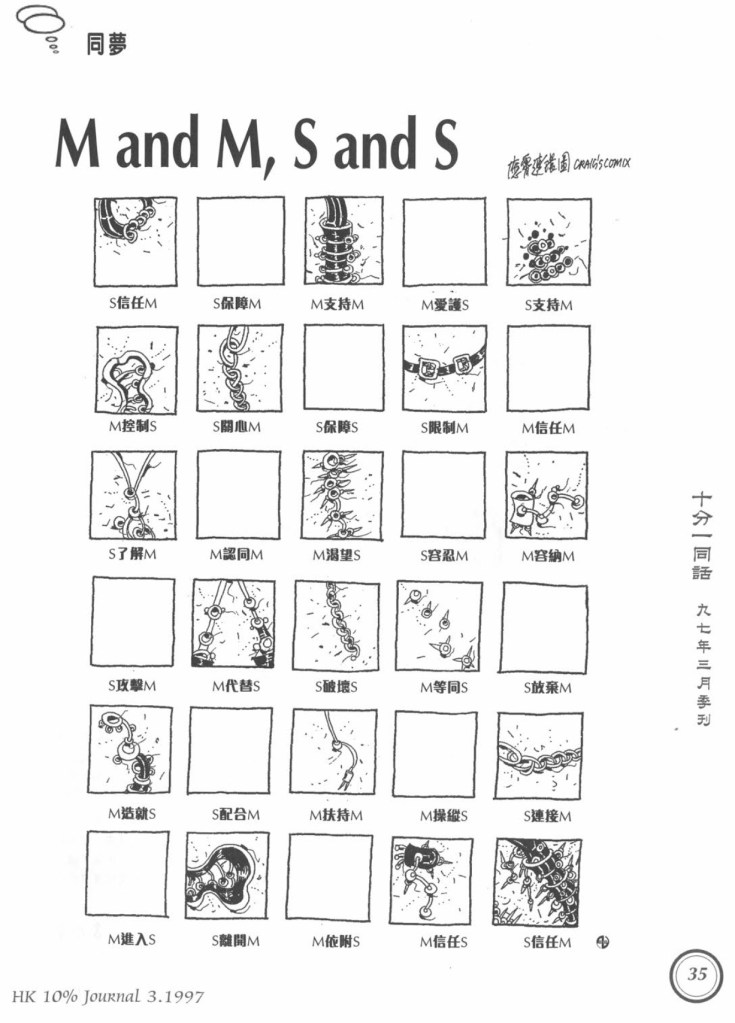
Fig. 3. Cropped image of “M and M, S and S” by Craig Au-Yeung Ying Chai, from Hong Kong Ten Percent Journal, March 1997 (p. 35). Pre-Internet Era HKLGBTQ+ Printed Matter Archive.
If we look closely at the panels, they are rather difficult to decipher, but isn’t this precisely what makes reading comix fun? Let’s try the second row (Fig. 3). When M controls S, two wavy ribbons hook onto a segmented metallic-looking chain, seeming to pull against each other and intimating a kind of gripping tension. When S cares for M, the chain spirals vertically upwards like a vine, acting as a central spine that holds softer folds together and exudes an entwining, enveloping sensation. When S restricts M, a horizontal strap stretches across the middle, pinned at its centre by heavy clasps; this belt-like form suggests a binding force. Across these panels, the repetition of similar pictorial icons with variation, the same chains and ribbons appearing in both dominant and submissive positions, accentuates the fluidity of sexual dynamics, toppling the rigid dichotomy between S and M roles. And when S protects S, and M trusts M, the panels go blank. I like to think that these negative spaces, as well as the gutters, are where the dialectical tension between lack and plenitude, absence and presence, plays out. In their non-presence, readers are lured to indulge in erotic fantasies and fill out the missing moments through imagination. It’s also worth noting that the comix starts and ends with the same caption, “S trusts M”, suggesting a cyclical, off-kilter erotic temporality that diverts from linear progression. But the visuals in the panels are drastically different. In the first panel, a tube-like structure descends from the top margin and curls to the right, reaching towards a cluster of small, round pods, suggesting a tender connection. The last panel, by contrast, visualises an explosion of spiky lines, segmented shafts, and twisted ribbons all tangled together, with debris and sparks flying outwards, mimicking a massive release of energy and chaotic intimacy. Through the technique of serialised proliferation, Craig’s comix gives material form to the abundance of erotic and emotional intimacies, however fleeting and ephemeral they may be. His work illuminates, in Fawaz’s terms, the “medium’s capacity to rethink sequence as a site of open-ended multiplicity, rather than a linear or teleological form” (p. 362). For all its playful fanning out of erotic possibilities, his comix keeps the body at bay, rendered as geometry and shape. What happens when comics refuse that distance and confront readers with corporeal matters and fleshy openings?
Lily Lau Lee-lee answers that question by diving headlong into the visceral. If Craig experiments with the sequentiality of comix to unravel a plenitude of erotic possibilities, Lily at once deploys and inflects comix’s visceral idiom to create graphic narratives that are “graphic” in both senses, explicit and drawn, and that drive home feminist messages. As Wendy Siuyi Wong and Lisa M. Cuklanz observe, “in the late 1990s, Lau Lee-lee’s self-proclaimed feminist work has brought gender issues into the public eye through the use of keen observation of taboo and uncomfortable subjects” (p. 255). Through a grotesque aesthetic and witty style, her comix often delineate women’s quotidian experience, erotic autonomy, amorphous desires, and human-environment relationships, offering a trenchant critique of heteropatriarchy, neoliberal capitalism, and human exceptionalism. I’m not, however, making the naïve argument that the spilling of bodily fluids and splaying of oozy flesh is inherently liberatory, that it provides a straightforward (pun intended) way out of oppressive systems. In their strikingly original article “Cartoon Viscera”, Tony Wei Ling wagers that the promise of viscera in the comics medium, a literal form of “pulling the insides out”, of revealing one’s “unrestrained” interiority, is haunted by the unspoken assumption of race, where whiteness promises an “independent position from which to claim viscera’s unruly subjecthood and explosive self-shattering”. For racialised and gendered subjects, flesh has always already been marked by “overriding metaphors of value or abstract labour” that preclude them from attaining autonomous subjecthood. And so, cartoon viscera doesn’t offer a way out of this bind so much as a way of working through it, an idiom whose supposed transgressive force must be understood as a historically specific negotiation of value, race, and labour rather than as the medium’s incontrovertible essence. Following Ling, then, in Lau’s comix visceral immediacy is inherently gendered, grounded in the flesh of Asian women, and it does not bring out the characters’ interiority or promise a liberation outside of the interlocking structures of power. Rather, it serves as an aesthetic mode to confront readers with what’s deemed abject, leaky, and excessive and to invite them to question the dominant parameters that adjudicate these judgments.
Consider “A Record Throw” (還還擊) from Mom’s Drawer Is at the Bottom: Sex, Gender, Gender Politics (媽媽的抽屜在最低 : 性・性別・性別政治), which I came across in the Asia Art Archive (Fig. 4). The title is a double entendre that plays on both her athletic skill and her flinging of blood-soaked sanitary pads, which frames her bodily waste as a projectile weapon (p. 53). The comic tells the story of a girl called Huiyan and her experience of menstruation: while she fears menstruation at first, she soon develops the habit of hoarding used sanitary pads; whenever she sees people who have humiliated her pass by, she throws the pads at them, and she ends up becoming a stellar handball athlete. The final panel, Huiyan mid-throw on the handball court, her arm cocked back, the ball frozen in flight, serves as a punchline that suggests her transformation of shame. Crucially, it is a visual rhyme with the top-left panel, where we see a tiny figure playing handball in the background. The final panel enlarges this peripheral figure and turns it into Huiyan, transforming a minor detail into the comix’s climactic image and revealing that the seed of her empowerment was being sown in the moment of her humiliation. The graphic medium, in particular, the gutter and the “bleeding” panel, heightens the power of this humorous story. The gutter, as Scott McCloud’s avatar tells us, “plays host to much of the magic and mystery that are at the very heart of comics” (p. 66). In the top-left panel, we see Huiyan peeking at the people below; this immediately segues into two terrified monstrous faces, drawn with more scratchy and expressionist line work, followed by a spreading bloodstain uncontained by any frame. What happens between these panels? Does Huiyan throw the blood on the perpetrators from above, or in their faces? Does she run and chase them? Does she confront them? The blank space between panels invites readers to perform “closure” and to become co-participants in Huiyan’s revenge plan and empower themselves against bullying. Moreover, Lily’s visceral depiction of menstrual blood forces readers to face what patriarchal systems consider abject, fluid, and gross. Though it’s technically a borderless panel, it does what a “bleeding panel” does: it “hemorrhages and escapes into timeless space” (p. 103), animating a temporality of irreverent girlhood that cannot be contained by patriarchal linearity. However, instead of offering a clean escape from patriarchy and promising a utopian elsewhere, it shows how teenage girls endure and repurpose shame within a toxic environment.
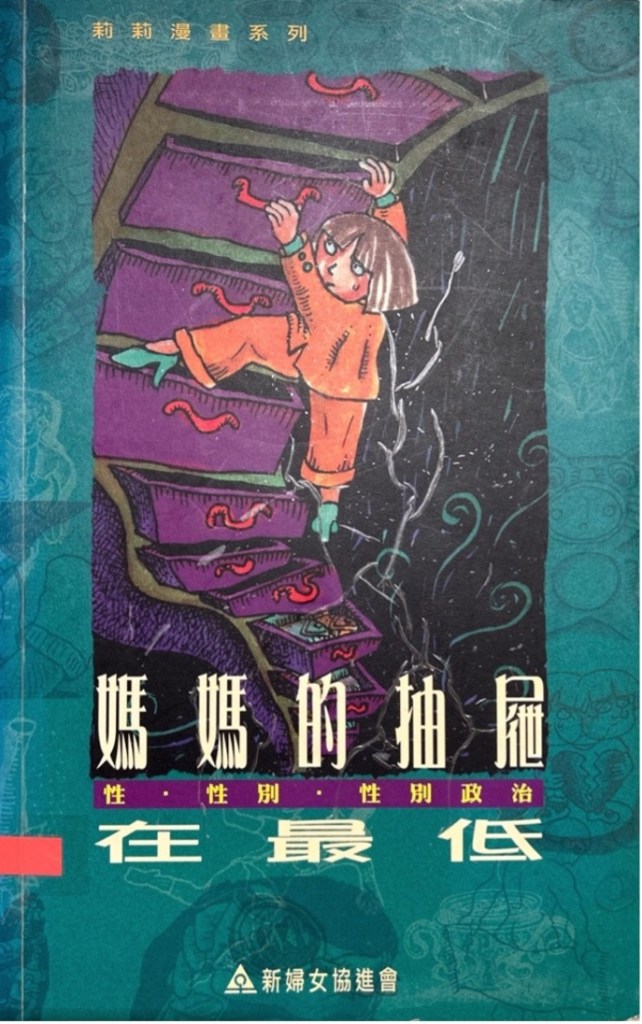
Fig. 4. Cover of Mom’s Drawer Is at the Bottom: Sex, Gender, Gender Politics, by Lily Lau Lee-lee, The Association for the Advancement of Feminism, 1998.
Photograph by Ronny Chan, 5 Sep. 2026, from the copy held at Asia Art Archive.
Another comix from the same collection similarly deploys the power of the grotesque, but this time shame is deflected onto male genitals. In “Old Problem” (老問題), we’re presented with a girl resembling Medusa, who grows phallic-shaped hair (p. 119). Medusa has attracted much fixation in psychoanalysis; a man called Sigmund Freud once claimed that her snake-filled head evokes the castration complex, symbolising the terror a young boy feels when discovering the absence of the penis in females. Lily Lau seems to parody this patriarchal psychoanalytic tradition: she turns the script on its head, viscerally jolting readers with blood-like drips and severed organic shapes that read as penises, only to reveal in the final panels that these are merely her unwashed, matted hair. By depicting scissors literally mutilating the phallic-shaped forms, she deploys visceral immediacy as a decoy to hook the (male) readers’ nervous systems and trigger their castration anxiety. More comically still, she inserts psychoanalytical vocabulary like penis envy and Electra complex to poke fun at the fetishistic attachment to the phallus and the projection of male anxieties onto female bodies in classic Freudian thought. By listing the most terrifying psychoanalytic diagnoses, Lily deliberately baits (male) readers into high anxiety, only to yank the rug out from under them. In the last panel, the narrator reveals that the girl’s most pressing issue is not having washed her hair in a long time. The slippage of the visual signifier, from penis to hair, is yet another visual punchline that mocks the (male) readers’ panic and overreaction, exposing the absurdity and narcissism of the psychoanalytic framework that positions the female body as nothing more than a reflection of male anxiety. In Lily’s hands, the visceral idiom of comix becomes a vehicle of queer feminist humour that ridicules patriarchal fixation on genitals, without promising a liberatory future after or beyond oppressive structures.
An analysis of Lily Lau’s comix wouldn’t be complete without considering “Minor Cut” (割) (p. 101). It is distinctive in its reliance on both visceral immediacy and visual opacity. Like “Old Problem”, it uses a bait-and-switch comic structure to overturn readers’ expectations, but this time the focus is on medical misogyny. It tells of a woman called Meiyi, who visits four doctors because of a stomachache. All of them advise her to remove certain organs, including her ovaries, uterus, vagina, and breasts. And, akin to her other comix, the final panel introduces the punchline, where Meiyi refuses the surgical cuts, only to discover that the root cause is an unwashed navel. Here, Lau uses visceral explicitness to dramatise how the doctors project their gynaecological anxieties onto her body and assert their patriarchal authority. In the seventh panel, her naked body is strapped down, pinned to the surgical table, and surrounded by a ring of ogre-like doctors pointing at her. The abstracted figure gives visual form to the medical violation of women’s bodies. But in the other four panels, her figure is stripped away, leaving only four sharp scalpels and captions that describe the doctors’ advice. In the final panel, she raises her hand in a gesture of refusal, rejecting the doctors’ attempts to pull out her reproductive organs. The removal of Meiyi’s figure, on the one hand, amplifies the stripping of her voice and subjectivity. But on the other hand, can we perceive this visual removal as a refusal to violate her body at a formal level? If the scalpel represents the patriarchal cut, the biopolitical desire to pull out the insides of the female body, then the choice not to iterate her abraded flesh and dripping blood can be read as a denial of gendered visual pleasure. The “minor cut” in the title, then, registers as a form of visual opacity, a refusal to compound patriarchal violence with artistic violence. We may compare this to Tony Wei Ling’s reading of Hellen Jo’s comic, A Bleeding Cut, which turns the visceral idiom of “pulling the insides out” on its head by having the speaker curl up inside a bleeding cut and minimising the representation of pus and wounds. Ling uses the term “minor cut” to theorise this graphic flattening and affective inscrutability as a challenge to the promise of visceral entry and autonomous subjecthood after the cut. In Lily Lau’s comix, the denial of reader access to her insides, the hiding of her figure behind a screen of visual opacity, and the deadpan face and raised hand in the last panel all frame the “minor cut” as a non-event, one that prevents the second violation of her body, the graphic exposure of her viscera for readerly consumption, while throwing into relief the absurdity of the doctors’ intervention.
Across these three comix, Lily Lau draws on the visceral idiom of the comic medium, the blood, the flesh, and the grotesque, but she does so without the deceptive promise of unrestrained interiority or liberation outside of oppressive structures. Instead, she uses the visceral as a mode of queer feminist humour that mocks male anxieties projected onto female bodies, presenting, as Jeffrey Mather puts it, “a series of polemics against the marginalisation, and self-marginalisation, of women in Hong Kong society” (p. 79). For all its disruptive energy, Lau’s work is mainly anchored in the present tense of the joke. What would it mean to draw queerness as a form of relationality across the past and present, a way of reaching across time towards other modes of living and loving?
The final artist considered here, Kaitlin Chan, takes up that question. Where Lily’s works explode the present moment, Kaitlin’s comics dilate it, stretching the panel into a visual space where multiple temporalities can coexist, a technique we may call temporal layering. Kaitlin is a cartoonist and the director of Empty Gallery. I first learned of Eric’s Sister, her debut graphic novel on the tensions and kinship between two aspiring artists who are also siblings. I then discovered her beautiful short comix on her website and social media. Her short autobiographical comics frequently situate the female narrator in a queer minor intimacy with other figures, materialising what Teagan Bradway calls “relational formalism”. Instead of focusing solely on how queerness disrupts form, Bradway insists on teasing out the shapes and patterns of attachments, analysing how “[c]omics visualize the environments that hold bodies together in space and afford particular relations between them.” “Shapeshifter (Mitski and Me)” does this, for example, by linking Kaitlin’s avatar with the singer-songwriter Mitski, oscillating between her present experience at Mitski’s concert and her embodied memories of the music. Through spatial juxtaposition and a dreamy pink palette, the comic stitches together Mitski’s shifting personas, the cowboy, the lover, the working artist, with the narrator’s own multiple selves, ultimately prompting her to bid farewell to her past selves and usher in the present. In a similar vein, “For Anita” weaves together the stardom of queer icon Anita Mui with personal and collective memory. Its visual tactility and warm palette of sepia tones make space for grief and longing.
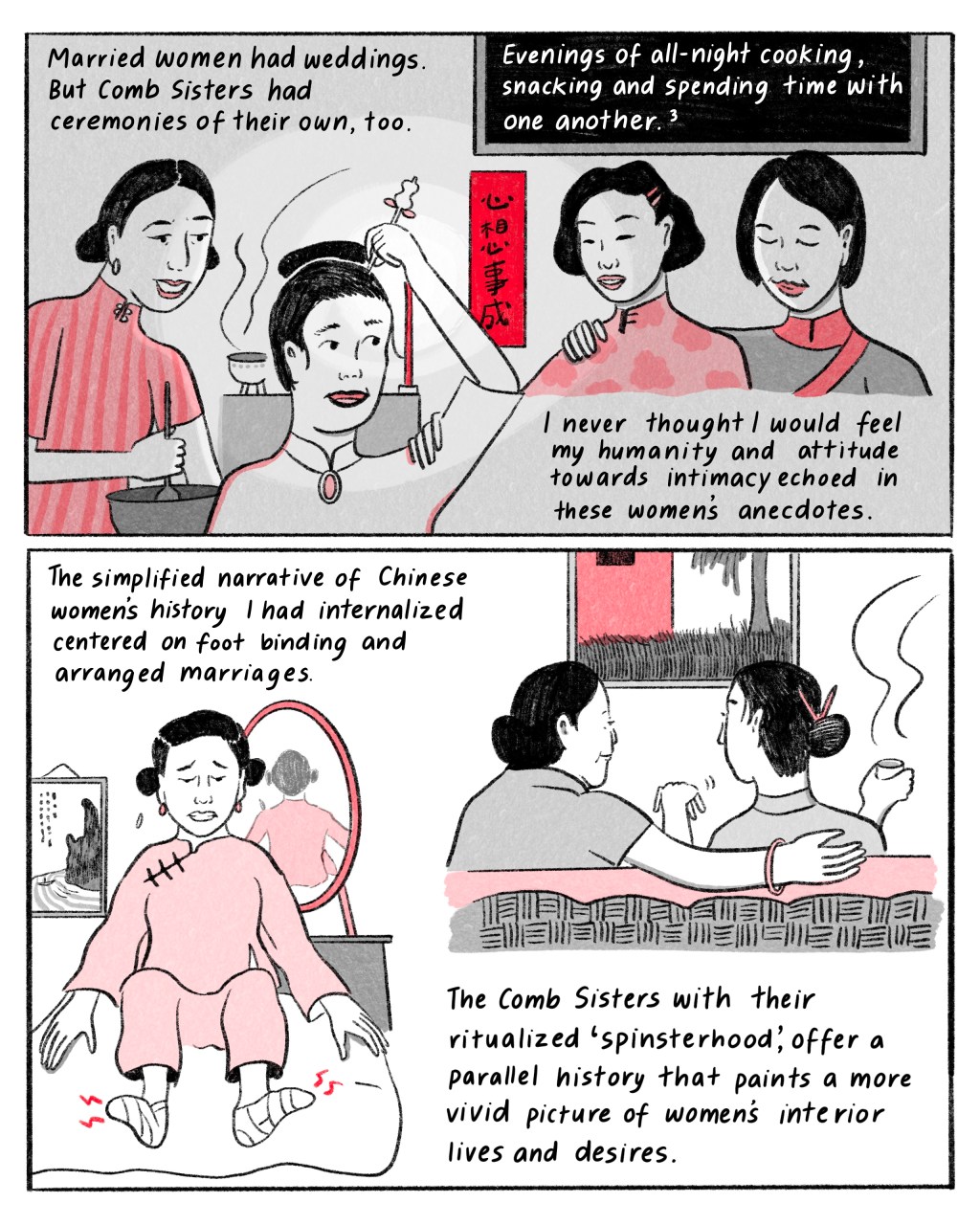
While these two comics give an account of Kaitlin’s life via female celebrities, “The Notorious Comb Sisters” creates a queer trans-temporal intimacy by weaving together her life with those of the Comb Sisters, who veered away from the heteropatriarchal course of life and found meaning in alternative kinship and webs of care. The comic opens with the narrator reflecting on her Chinese name, which carries the connotation of “wise wife, good mother” and the expectations of traditional gender roles, before turning to her desires to move sideways from the vertical trajectory of adulthood and heteronormative life milestones. The narrative shifts into the legend of the Seven Sisters, who “made a pact to throw themselves into the river” to escape the suffocating fate of marriage, evoking the narrator’s own dismay about “the societal traps” and the precariousness of not marrying in a heteronormative world. She then zeroes in on the Comb Sisters’ story, describing their “ceremonies of their own” and their “ritualized ‘spinsterhood’” to contest the dominant historiography that focuses on foot binding and arranged marriages and to connect their story to her own experience.
What makes this comic especially moving is its technique of temporal layering, which turns the visual space into a crucible that holds multiple temporalities together and, in doing so, forges unruly queer intimacies between the narrator and the Comb Sisters at the level of form. Consider, for instance, how the comic layers the visual representation of the Comb Sisters’ ceremony with a present narratorial voice that not only describes the scene but also articulates her affective responses to it (Fig. 5). In the top panel, we see the women cooking, styling their hair, touching one another’s shoulders, and smiling softly. Together, these gestures vitalise a vision of queer domesticity that operates through communal care and everyday intimacy rather than heteronormative protocols. The red banner that reads “心想事成” (may all your wishes come true) in the background further implies that the women are fulfilled by their rituals and homosocial intimacy. Meanwhile, the use of a rectangular panel signals a slower passage of time and perhaps points to a long genealogy of ritualised spinsterhood. That Kaitlin hand-draws this scene and renders it in muted pinks and corals gives it an aura of warmth and tenderness, highlighting her embodied connection with this part of history. In the narrative caption, the narrator says she “feel[s] [her] humanity and attitude towards intimacy echoed in these women’s anecdotes”, which suggests an affective vibration that traverses boundaries of time and reverberates in the narrator’s life.
The bottom panel is bifurcated to juxtapose two different historiographical approaches to Chinese women’s history. On the left, we see a foot-bound woman drawn in pain, with the mirror reflection showing her from behind, as if she cannot bear to look at herself. This visual representation dramatises her entrapment in pain and her self-erasure, illustrating the “simplified narrative of Chinese women’s history” that focuses on patriarchal control over women’s bodies. On the right, we see two women sitting together, one hand resting gently on the other’s shoulder, looking at each other rather than at the viewer. The right side highlights the tender intimacy and self-sufficient company between them, one that is not performed for any audience. The open window also stands in contrast to the mirror, suggesting an openness to different versions of futurity instead of entrapment in cycles of pain. The caption comments that the Comb Sisters “offer a parallel history that paints a more vivid picture of women’s interior lives and desires.” The unique juxtaposition of text and image, then, queerly makes space for what Carolyn Dinshaw describes as “an affective connection, for community, for even a touch across time” (p. 21), propelling the narrator to look for emotional resonance in minor women’s histories.
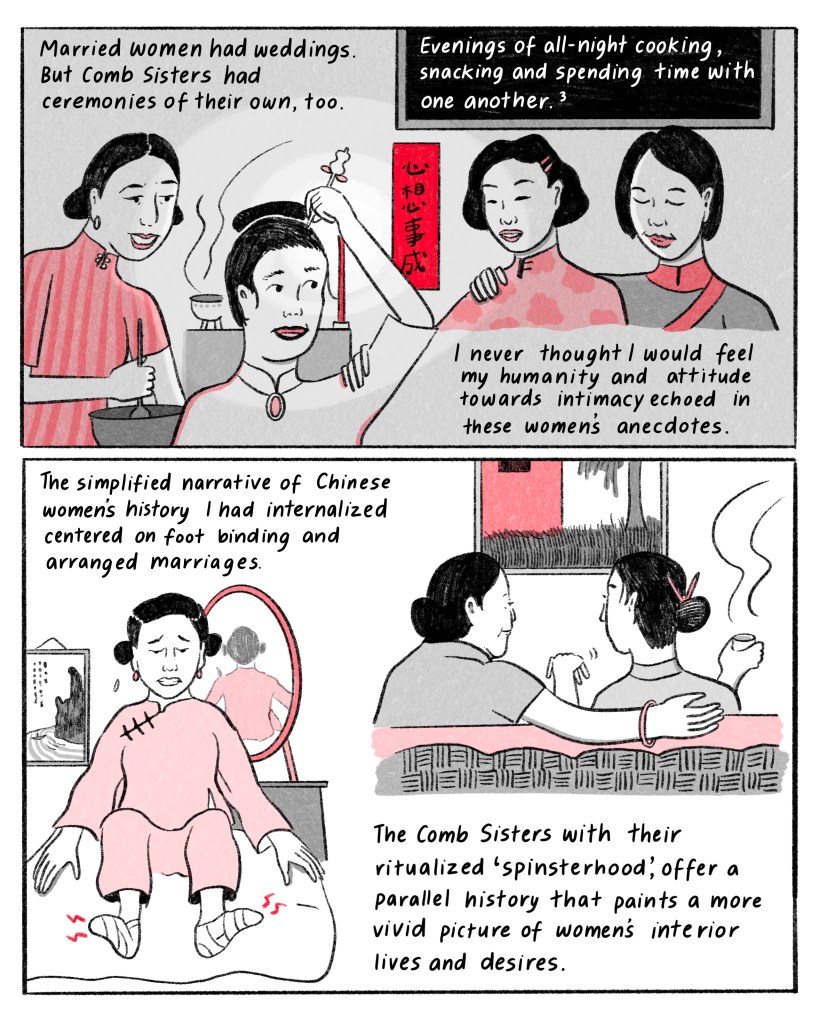
Fig. 5. “The Notorious Comb Sisters” (2022) by Kaitlin Chan, originally published in Catapult. Courtesy of the artist.
Apart from combining narratorial voice and pictorial representation, the comic experiments with another form of temporal layering: the construction of a vernacular archive of photographs. On one page, hand-drawn photographs of the Comb Sisters are scattered in a non-linear fashion across the white space. In these panels, we see women holding fans and baskets, styling one another’s hair, clasping their hands, and standing with smiling faces, while some panels are cropped or incomplete. By incorporating both quotidian and ceremonial moments, the comic makes visible different facets of these women’s lives, in difference from, and indifferent to, the monolithic official discourse on their life choices. Standing in stark contrast to the narrator’s own family photographs presented at the beginning, these photos show a non-heteronormative life choice that swerves around the patrilineal genealogy. The incompleteness of some images may gesture towards the erasure of some of these women’s histories by patriarchal forces. Given the Comb Sisters’ omission from official historiography, Kaitlin labours to hand-draw the photos, whether real or not, to piece together a vernacular archive of alternative women’s kinship, bringing into relief the abundance of their lives rather than focusing on what they lack (if there’s anything at all). The act of hand-drawing is itself a form of temporal layering, a way to reanimate histories through the graphic medium’s very embodied materiality, one that emphasises not so much evidentiary truth as affective immediacy. The photos become “a gripping index of a material, subjective, situated body” (p. 193), as Hillary Chute has it, marking the creator’s intimacy with her subjects. When readers engage with the comic, they access not only the distant past of the Comb Sisters, but also the artist’s visceral mediation of this obscure part of history. The scattered, tilted, and overlapping configuration of these hand-drawn panels, as if they were photographs tossed onto a table or tucked into the pages of a scrapbook, further heightens the sense of improvisation and intimacy, suggesting that the photographs are shuffled and arranged by the artist who has personal connections to the Comb Sisters’ lives. The comic form thus becomes a palimpsest of multiple temporalities, one that invites readers to touch, and be touched by, the dead, a transhistorical encounter that animates the queer present and opens the imagination towards alternative futurities.
The comic culminates in a powerful image where the narrator and her historical predecessor overlap with each other (Fig. 6). While the Comb Sister at the top performs the ritual of combing up and gathering her hair into a bun, the narrator at the bottom holds electric clippers to her scalp, shaves her hair, and symbolically sheds the weight of gendered expectations. As another instance of temporal layering, this overlap constitutes a visual genealogy in which the spirit of queer womanhood is inherited across generations. Crucially, it allows the narrator to speak in proximity to the Comb Sisters without coalescing them into oneness, that is, without erasing the differences between them. The bright red ribbon connecting the two figures visualises this umbilical cord of queer lineage, a thread that pulses with affective vibrancy, nourishes the narrator’s present with the past, and spins a different destiny from the familial bloodline. The aphoristic punchline that goes with the image, “A woman who’s not afraid of letting her hair ‘up,’ even if it means letting others down”, further amplifies the narrator’s spirit of willfulness, her eschewal of traditional gender roles, and her determination to choose her own queer path. Kate McCullough, in her analysis of Alison Bechdel’s graphic memoir Fun Home, points out how the panel placement and interplay of text and image enable “the articulation of aspects of a queered temporality” and “provide a generative medium for queer world making and a potentially reparative one at that” (p. 378). “The Notorious Comb Sisters” leverages these formal properties of comics to make imaginable a form of queer inheritance that is at once generative and reparative, letting the narrator and readers frolic between and across porous temporal boundaries and inhabit a queer world that the straight timeline suffocates. In so doing, it untethers the Comb Sisters’ deaths from their fixed temporality and releases them to a temporal space that can be animated and reanimated again.
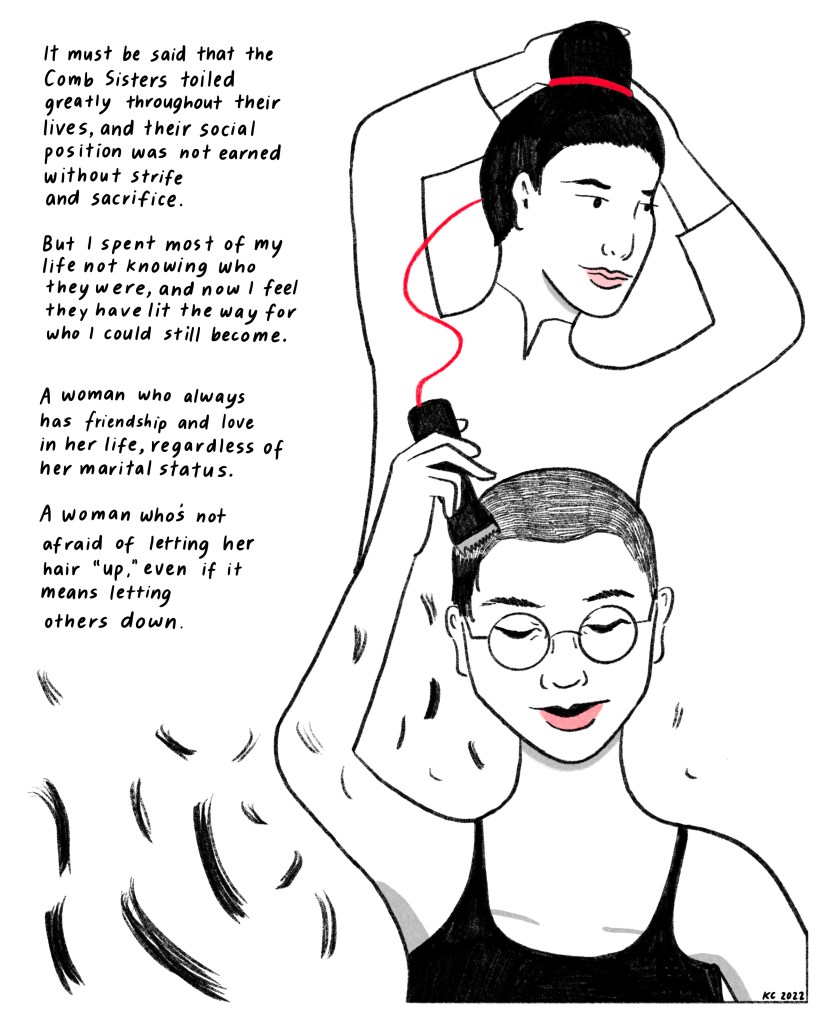
Fig. 6. “The Notorious Comb Sisters” (2022) by Kaitlin Chan, originally published in Catapult. Courtesy of the artist.
Where “The Notorious Comb Sisters” reaches across time towards an ancestral figure, “Remembering Nancy Seki” reaches towards an artist who has left the world for good, whose work the narrator seeks to keep alive in a eulogy steeped in love and longing. Like the previous comic, this is a work in which she speaks nearby another female figure, a pioneering Japanese eraser print artist and sharp-witted television columnist. But what sets this work apart is its use of the graphic medium to mourn the loss of Nancy Seki and, at a self-reflexive level, to make an argument about art-making. The comic weaves together Nancy’s school days, her obsession with radio shows, her aesthetic labour of eraser carving, her karaoke singing, and the narrator’s commentary on her career and life choices.
Akin to “The Notorious Comb Sisters”, this comic is likewise intermedial, but this time it juxtaposes frames from a documentary with graphic, high-contrast reproductions of Nancy’s self-portraits. While the four documentary frames from Nancy Seki’s Room serve as indexical traces of Nancy’s aesthetic labour and material evidence of her art-making, the eraser self-portraits feature her “eye marks and chin wrinkles”, representing her unflinching defiance of normative feminine expectations of “girlishness and cuteness”. They resonate with the declaration at the opening that Nancy “dared to live her own way” in a “misogynist, hyper-capitalist world”, embodying her acts of self-authoring within a heteropatriarchal world that restricts her gendered expression.
The comic’s juxtaposition of documentary frames and self-portraits registers her career and character in sumptuous detail and irreducible plurality, honouring how she saw herself and how she wanted to be seen. But what compels me most is the relation between documentary image, self-portrait, and mourning. If those self-portraits reproduce the finished products of Nancy’s labour, Fig. 7 visualises that labour in progress, with Nancy’s hand carving an eraser and the face emerging on the eraser, illustrated in Kaitlin’s idiom. Here, the self-portrait is a graphic remediation rendered in the comic artist’s hand rather than reproduced from Nancy’s original eraser. The documentary frames, by contrast, are slices of time extracted from a moving image, stilled frames that, though technically not photographs, share photography’s indexical relation to a vanished moment.
If, as Roland Barthes writes, “[d]eath is the eidos of that Photograph” (p. 15), if the photograph transposes a disjointed fragment of the past, frozen in time and “without future” (p. 90), the documentary stills similarly arrest time, holding their moments at a remove from the continuum of temporality. But the comic’s graphic remediation of the portrait does something the still images cannot: it remakes Nancy’s artwork and allows her self-image to be re-illustrated and reopened, rather than fixed as a closed record and embalmed in time. The embodied medium of comics allows the dead to be reinscribed, intimately and subjectively, again and again.
If Nancy’s self-portraits give us her face, the comic’s gutter gives us her absence, registering the emptiness of loss; at the same time, soliciting readers’ imaginative labour to bridge the chasm between life and death, however unimaginable that crossing may be. In her beautifully crafted essay “Too Close for Comfort”, Elizabeth Freeman, through a reading of Tom Hart’s Rosalie Lightning, contends that “the gutter, at once deeply connective in the way that only a magical mystery tour can be and also emblematic of loss and lack, exemplifies both surfeit and separation.” The gutter, then, constitutes a formal structure that mediates the dialectic of presence and absence, life and death, the visible and the invisible. Across the biographical panels that visualise Nancy’s past, the gutters invite readers to fill in the gaps and stitch together a continuous narrative of her life, imagining her moving through time and co-authoring her presence. Here, the act of closure becomes a gesture of “hyperrelationality”, to use Freeman’s word, one that encourages readers to conjure Nancy as a living subject. But the gutter is also the negative space that embodies the temporal gap between life and death. While in one panel we see Nancy singing karaoke with her friend, holding a microphone and a glass of wine, the stars and music notes shimmering with liveliness, in the next panel her figure is absent, leaving only the words of folklore scholar Takahiro Otsuki, who comments on Nancy’s superb coverage and potential. The gutter between the two panels, then, marks an empty void, one that severs the link between the living subject and the dead body. It is a grave, a space of absolute non-presence, where Nancy’s body is not and cannot be. But it is also a threshold, the space that nudges us, the readers, to summon our imagination, to connect the missing moments, and to cross that fractured space, impossible, and yet the reaching itself is the only way we have of holding on. To read the gutter is to stand at the edge of that paradox between presence and absence and to take on the (im)possible task of reaching towards the dead.
Ultimately, by reaching towards Nancy Seki and paying tribute to her artistic career, the narrator offers a self-reflexive meditation on the meaning of art and its relation to the queer ethics of artmaking. The comic is self-reflexive insofar as it points back to the process of artmaking: it illustrates Nancy’s hands carving an eraser, drawing attention to the body that produces the artwork and inviting readers to “touch” her hands, to feel the labour of carving, as we tap away at our phones. What Kaitlin highlights through this comic is that to make art is to construct alternative networks of care, collaboration, and mutual support. One panel shows a visual map of the network that launched Nancy’s career, built around three figures, Nancy, her friend Ichirō Enokido, and editor Seiko Ito, and floating objects, Nancy’s small eraser print, a television set through which her work reaches a wider audience, and two open books that publish her work. This visual diagram demonstrates how artmaking generates an infrastructure that connects humans and objects in a rhizomatic assemblage that does not coagulate into heteronormative genres of kinship, a network organised around collaboration, circulation, and mutual support rather than biological reproduction and hierarchy. As we read the comic, we also become part of the network that sustains Nancy’s legacy. Queerness, then, is not just an identitarian marker; it is a form of relationality, a communal way of worldmaking. The final page introduces the narrator’s closing words on Nancy Seki: “To embrace our own paths, beyond the straight and narrow, towards something wayward, something fun, something pulsing and alive.” Carving erasers and drawing comics animate the imaginative possibilities of choreographing alternative paths, together, that veer away from the straight line dictated by societal norms.
The relational worldmaking Kaitlin stages in “Remembering Nancy Seki” is one instance of a larger pattern: across the works considered here, the practice of creating comics makes queer life all the more liveable. Whether through the serialised proliferation of panels (Craig Au-Yeung), the deployment and redirection of visceral idioms (Lily Lau), or temporal layering (Kaitlin Chan), comic artists have laboured to render visible identities, desires, embodiments, and intimacies that exceed heteronormative paradigms. Comics are a particularly apt medium for imagining queerness: they let us redraw the straight line into a constellation of forms, relations, and temporalities, and turn the gutter into a (negative) space where the invisible and unbridgeable flicker into view. And it is the artists making comics who draw that queerness into being, sketching out all that is weird, wayward, and wonder-struck.
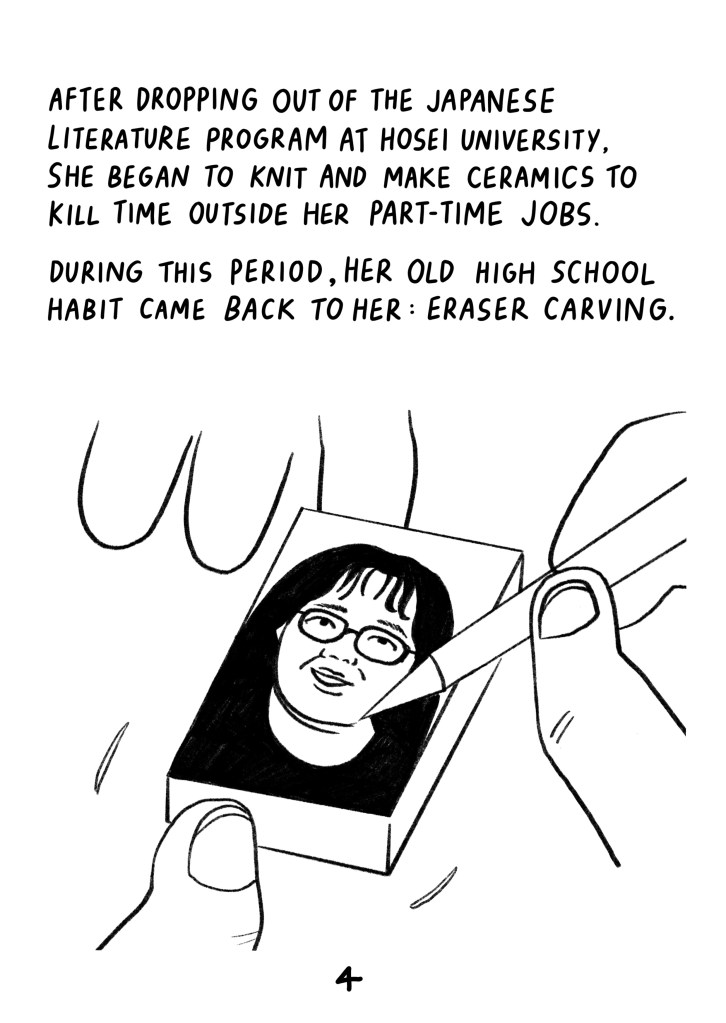
Fig. 7. “Remembering Nancy Seki” (2021) by Kaitlin Chan, originally self-published on Instagram. Courtesy of the artist.
Acknowledgements
I thank all three artists, Craig Au-Yeung, Lily Lau, and Kaitlin Chan, for producing these beautiful comics. My deepest gratitude goes to Kaitlin for her warm support and for granting me permission to reproduce excerpts of her work for this essay. I am indebted to the creators of Pre-Internet Era HKLGBTQ+ Printed Matter Archive for making available queer publications from the 1980s to the early 2000s, which has been indispensable to this essay. I am grateful to Dr Elizabeth Ho for teaching an inspiring class on graphic novels and sparking my interest in comics scholarship. Finally, of course, my thanks go to Dr Tammy Lai-Ming Ho for her generous and meticulous editing.
Bibliography
▚ Au-Yeung, Craig Ying Chai 歐陽應霽. “M and M, S and S.” Hong Kong Ten Percent Journal, Mar. 1997, p. 35. Pre-Internet Era HKLGBTQ+ Printed Matter Archive, https://www.hklgbtqarchive.com/zh/archive/319. Accessed 12 Sep. 2026.
▚ Barthes, Roland. Camera Lucida: Reflections on Photography. Translated by Richard Howard, Hill and Wang, 1981.
▚ Beineke, Colin. “On Comicity.” Inks: The Journal of the Comics Studies Society, vol. 1, no. 2, 2017, pp. 226–253.
▚ Bradway, Teagan. “Graphic Attachment: Relational Formalism and Queer Dependency.” ASAP/Journal, 27 Mar. 2023, https://asapjournal.com/node/graphic-formalism-graphic-attachment-relational-formalism-and-queer-dependency/.
▚ Chan, Kaitlin. “The Notorious Comb Sisters.” Catapult, 9 Nov. 2022, https://magazine.catapult.co/people/stories/the-notorious-comb-sisters-history-china-marriage-women-role-comic-kaitlin-chan. Accessed 12 Sep. 2026.
▚ Chan, Kaitlin. “Remembering Nancy Seki.” Kaitlin Chan, https://kaitlinchan.com/remembering-nancy-seki. Originally self-published on Instagram. Accessed 12 Sep. 2026.
▚ Chute, Hillary L. Graphic Women: Life Narrative and Contemporary Comics. Columbia UP, 2010.
▚ Dinshaw, Carolyn. Getting Medieval: Sexualities and Communities, Pre- and Postmodern. Duke UP, 1999.
▚ Fawaz, Ramzi. “Stripped to the Bone: Sequencing Queerness in the Comic Strip Work of Joe Brainard and David Wojnarowicz.” ASAP/Journal, vol. 2, no. 2, 2017, pp. 335–367.
▚ Freeman, Elizabeth. “Too Close for Comfort.” ASAP/Journal, 31 May 2021, https://asapjournal.com/node/queers-reading-too-close-for-comfort-elizabeth-freeman/.
▚ Lau, Lily Lee-lee 劉莉莉. Mom’s Drawer Is at the Bottom: Sex, Gender, Gender Politics 媽媽的抽屜在最低 : 性・性別・性別政治. The Association for the Advancement of Feminism, 1998.
▚ Ling, Tony Wei. “Cartoon Viscera.” Post45, 7 Feb. 2026, https://post45.org/2026/07/cartoon-viscera/.
▚ Mather, Jeffrey. “Hong Kong Comics: Reading the Local and Writing the City.” Wasafiri, vol. 32, no. 3, 2017, pp. 79–86.
▚ McCloud, Scott. Understanding Comics: The Invisible Art. HarperPerennial, 1994.
▚ McCullough, Kate. “‘The Complexity of Loss Itself’: The Comics Form and Fun Home’s Queer Reparative Temporality.” American Literature, vol. 90, no. 2, pp. 377–405.
▚ Muñoz, José Esteban. “Ephemera as Evidence: Introductory Notes to Queer Acts.” Women & Performance: A Journal of Feminist Theory, vol. 8, no. 2, 1996, pp. 5–16.
▚ Scott, Darieck, and Ramzi Fawaz. “Introduction: Queer about Comics.” American Literature, vol. 90, no. 2, 2018, pp. 197–219.
▚ Wong, Wendy Siuyi. “Manhua: The Evolution of Hong Kong Cartoons and Comics.” The Journal of Popular Culture, vol. 35, no. 4, 2002, pp. 25–47.
▚ Wong, Wendy Siuyi, and Lisa M. Cuklanz. “Critiques of Gender Ideology: Women Comic Artists and Their Work in Hong Kong.” Journal of Gender Studies, vol. 11, no. 3, 2002, pp. 253–266.
How to cite: Chan, Ronny. “What’s Queer about Hong Kong Comics.” Cha: An Asian Literary Journal, 14 Sept. 2026, chajournal.com/2026/09/14/queer-hong-kong-comics.

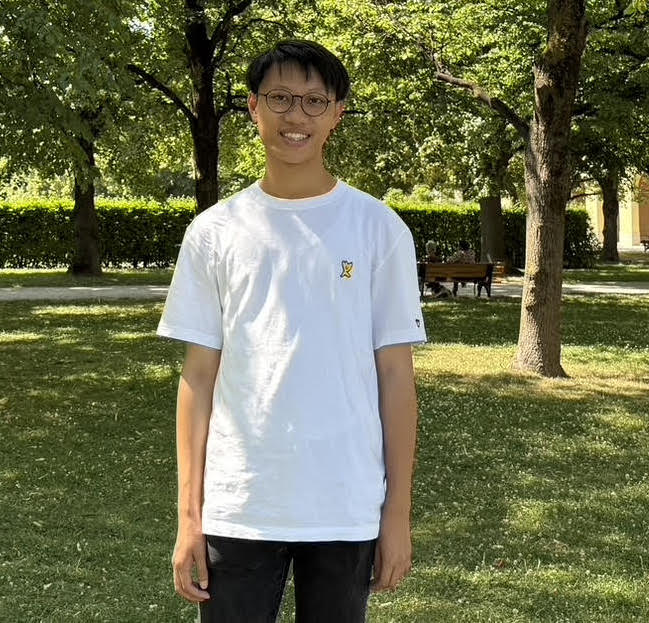
Ronny Chan is a writer and researcher based in Hong Kong. They are currently an MPhil candidate in Comparative Literature at the University of Hong Kong, with research interests spanning gender and sexuality studies, affect theory, and Hong Kong literature. Their thesis, tentatively titled “The Art of Irreverence: Queer Literature of Hong Kong”, theorises irreverence as a queer political strategy and affective tone by scavenging an underexamined archive of queer literary texts from the 1980s to the 2020s. [All contributions by Ronny Chan.]
 Cha
Cha 