
[ESSAY] “I Reported Myself to China’s Ministry of State Security” by William Grice

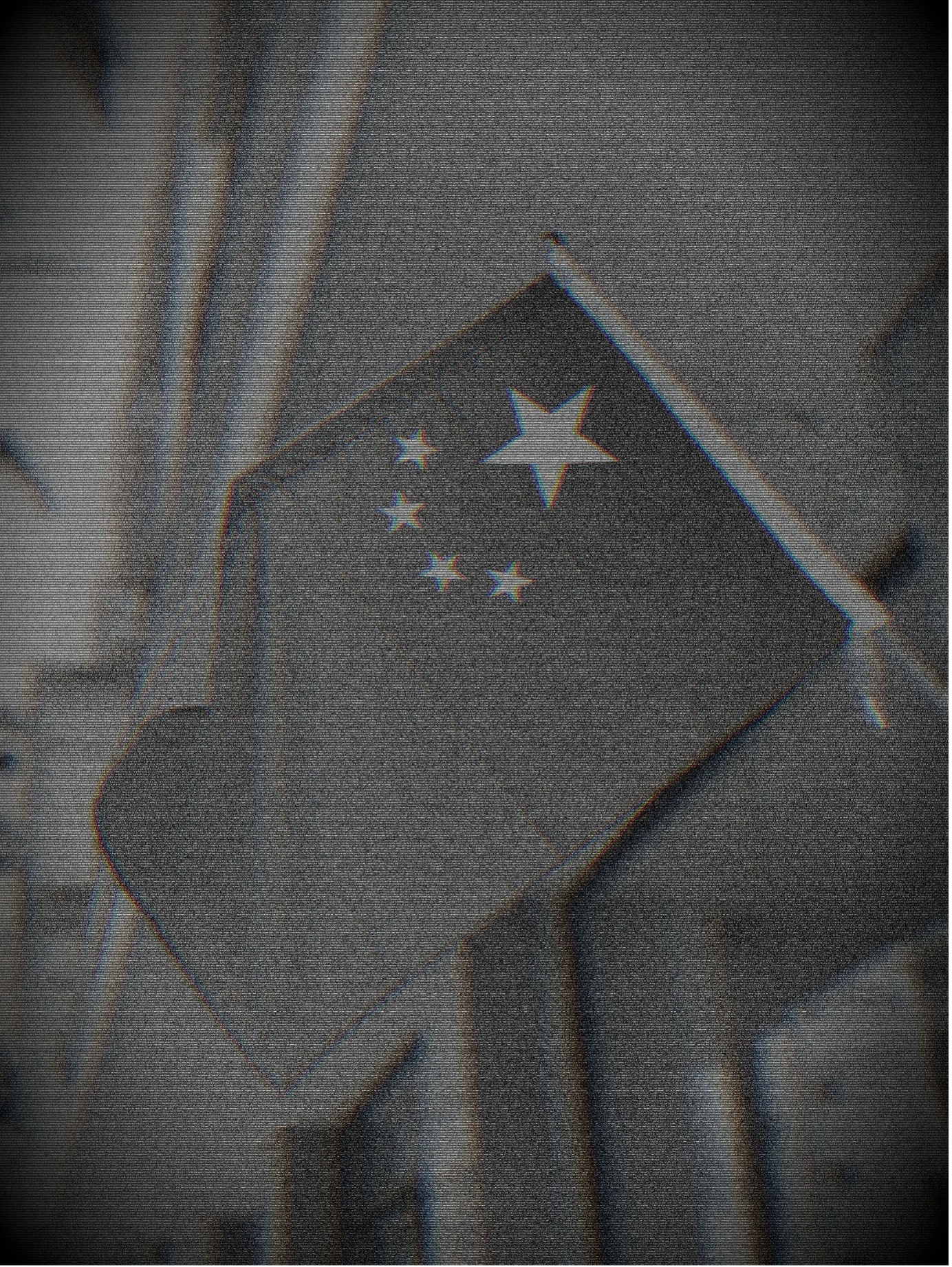
Photograph by the author, Hekou, China.
After his acquaintance ran afoul of China’s security apparatus in a netizen-led Red Guard pile-on, William Grice decided to find out what would happen if he deliberately reported himself to the CCP.
Desolation & Dictatorship
on the Edge of Shangri-La
Five years ago, an acquaintance of mine who went by the name of Jason, though his real Chinese name is Li Qixian, travelled to one of China’s most controversial places: Xinjiang Province.
He was not there, so far as I know, to expose the PRC’s persecution of Uyghurs, nor to cover the deadly Aksai Chin border clash in the Galwan Valley, part of Xinjiang in the CCP’s eyes, near Tibet.
High on the Tibetan Plateau, beside the roaring Karakash River, this solitary place lies along the G219 highway near the Indian border.
Here, biting winds, barren slopes, and the snow-capped Karakoram Mountains mirror the desolate setting of James Hilton’s Lost Horizon.
Indeed, Hilton situated his fictional Shangri-La in this real-world region: a high-altitude wilderness of thin air and unforgiving cold. I recall the novel’s grim atmosphere when Mallinson remarks, “This looks like the end of the world”, immediately before the following passage:
A moment later, chilled and shivering, they were all aware that this was so. With no sound in their ears save the fierce gusts of wind and their own crunching footsteps, they felt themselves at the mercy of something dour and savagely melancholy—a mood in which both earth and air were saturated. The moon looked to have disappeared behind clouds, and starlight illumined a tremendous emptiness heaving with wind. Without thought or knowledge, one could have guessed that this bleak world was mountain-high and that the mountains rising from it were mountains on top of mountains. A range of them gleamed on a far horizon like a row of dog-teeth.
Like Conway and his fellow passengers, my acquaintance Li found himself stranded in the region, though for very different political reasons: he had posted photographs of himself posing next to gravestones.
It was an imprudent step, for the posts quickly gained traction and triggered a wave of backlash from Chinese netizens, who accused him of insulting “martyrs“. A pile-on reminiscent of the Cultural Revolution ensued.
China’s ruthless police state responded in due course, too, with a heavy knock on the door.
Denied even the pretence of a fair trial, the Pishan County court rubber-stamped a seven-month sentence for Li on charges of “infringing on the reputation of heroes and martyrs”. Naturally.
Yet where Li stumbled into the state’s trap, I chose to walk into it willingly.
Read on.

Reunion in the English countryside, 2020: the author and Li Qixian, pictured months before a gravestone photograph sent Li to prison and, later, towards an asylum green card in America.
The Ministry
of State Security
To cross that line is to step into a vast, paranoid apparatus, one overseen by an unlikely figurehead.
Mr Chen Yixin is a slightly plump, bespectacled fellow with greyish hair and a rounded jowl. His benign smile and shrewd lips suggest a middle-aged man more partial to fine tea than Maotai shots.
He is, in fact, the Minister of State Security, though from his appearance you would hardly guess it.
Appearances aside, a man who talks about America’s “unipolar hegemony” collapsing amid “economic decline and social fragmentation”, as reported in the South China Morning Post, is not exactly a sane gentleman.
Perhaps a touch of madness is a prerequisite for a seat on the Central Committee. After all, he runs the Ministry of State Security, an agency that lurks in the deepest shadows of China’s dictatorship.
To enforce that dictatorship, his secret police rely on terrifying “invitations to tea” at home, while waging an equally relentless campaign of harassment against dissidents abroad.
For a serving British soldier, an agency like this is not merely a political adversary: the man who directs it is nothing short of the enemy.
Or, as Whitehall so delicately puts it, a “sophisticated and persistent challenge“.
He represents the antithesis of British values.
And for a description of the mentality behind such a regime, I can do no better than recall Winston Churchill’s words on totalitarian regimes from his 1938 speech, “The Lights Are Going Out“:
On all sides they are guarded by masses of armed men, cannons, aeroplanes, fortifications, and the like—they boast and vaunt themselves before the world, yet in their hearts there is unspoken fear. They are afraid of words and thoughts; words spoken abroad, thoughts stirring at home—all the more powerful because forbidden—terrify them. A little mouse of thought appears in the room, and even the mightiest potentates are thrown into panic. They make frantic efforts to bar our thoughts and words; they are afraid of the workings of the human mind.
As a mad Englishman and a writer with ink on China, I could not resist a bit of Churchillian sport: a pro-democracy provocation launched straight at Yixin’s, and Xi Jinping’s, sinister enterprise.
His ministry operates an online portal, you see, a digital snitch-box where anonymous informants can denounce their neighbours for vague “crimes” such as subverting state power or dividing the country.
So I reported myself to find out what would happen.
Filing the Necessary Paperwork
My schoolteachers used to say, “Play stupid games, win stupid prizes.” Rest assured, I had no desire to win the ultimate prize: I planned to report my journalism, not a dossier of personal identifiers.
Yet as I hovered over the submit button, a memory surfaced.
Many moons ago, when I was insufferably callow and proselytising, a Chinese friend once remarked:
When you firmly oppose something you have not experienced, have you ever thought that you are the one who has been brainwashed? Your media pretends to give you objective information and you believe that your reaction is exactly what your media wants to see. Don’t you think you have become the ideological slave of your media?
The challenge stuck with me. Perhaps that is why I try not to comment on things I have not experienced first-hand. Indeed, I recently travelled to China to write an upcoming political travelogue for a quarterly periodical for the British Armed Forces.
To this day, I refuse to be a passive observer or a slave to secondary reports, and so I turned back to the screen and the task at hand: self-reporting my own experience.
Armed with a burner email address, I accessed the MSS portal to report my journalism, acting as both anonymous informant and culprit. A clear conflict of interest, no doubt, but a forgivable one.
Here is what happened next.
The Anaconda in the Chandelier:
Personal Reportage
As I filled in the form, I had already guessed the result: silence. I have not read Perry Link’s essay, “The Anaconda in the Chandelier“, in full, but I know its metaphor well enough to predict how this ends.
The power of the ministry is that it does not need to strike to intimidate. The anaconda simply rolls one dull, heavy eye towards me, a foreigner not worth the effort, yet the gesture is enough to send a shiver.
But where there is a bureaucracy, there is a form, and I dutifully fed the monster its paper anyway.
It was a masterpiece of Orwellian customer service. Before you can even report a threat to the motherland, the form demands meticulous administrative discipline: separate entries for “Address” and “Contact address”, full corporate affiliations, and the exact “Urgency” of your paranoia.
The darkest comedy lay in the crime selection, where a drop-down menu lists offences ranging from “espionage”, “subverting state power”, and “dividing countries [sic]” to merely “other”.
I ticked the box for informant anonymity, then set about populating the accused’s profile. In the 500-character box for “Concrete content“, I detailed my offending work of journalism.
It was a literary essay for Cha about China, Hong Kong, and an old pen-pal.
Reaching “Informants related information” and “Remarks”, I paused. I chose to offer up a meagre breadcrumb trail about my editor and general journalistic process, while disclosing nothing sensitive.
Finally, I was invited to attach up to five supporting files, with MP4s, FLAC audio, or compressed ZIP archives recommended.

The Ministry of State Security’s official reporting platform, where anonymous informants are invited to turn in their neighbours for vague crimes against the state. (Screenshot)
I clicked submit, the page refreshed, and that was that.
Churchill’s Mouse
and Yixin’s Anaconda
No midnight knock came; no black sedans pulled up my drive.
In the end, my little Churchillian “mouse of thought” slipped past Yixin’s proverbial anaconda.
Perhaps the Minister of State Security’s secret police do not think such writing worth much trouble. I certainly will not test that assumption: needless to say, I will not be holidaying in the PRC again anytime soon, just in case the Ministry decides to settle in for a long wait.
But here is the saving grace of a beast so paralysed by its own paranoia.
It controls the room only for as long as everyone stays quiet. The CCP’s serpent may sit up there in its chandelier, heavy, cold, and watching, but it must move fast to catch a mouse.
And this one is already long gone.
How to cite: Grice, William. “I Reported Myself to China’s Ministry of State Security.” Cha: An Asian Literary Journal, 7 Sept. 2026. chajournal.com/2026/09/07/state-security.


William Grice is a British writer and English teacher based in the Far East, and a British Army Reservist. He writes on education, migration, and geopolitics, with work published in outlets including American Thinker and EL Gazette. Visit his website for more information. [All contributions by William Grice.]