

[FICTION] “Three Travelling Portraits: India” by Matt Reeck

Also read “No Moral at Its End”,
Matt Reeck’s essay
on “Three Travelling Portraits: India”

Preeti (Delhi)
I FLEW INTO INDIA on December ninth. I was going to stay at the Fulbright House for several days while I recovered from jetlag. When I got to the Fulbright office, Bharathi, the secretary, told me I had to share the guest room with another scholarship guy, Mark.
Mark was a dissertator in anthropology. His squarish face, serious glasses and two-day stubble all fit my stereotype of an Eastern European intellectual (those high-minded suffering people) and in response to my inquiries, he admitted his parents were Czech. He started asking me questions.
…… What do you think of Asheesh Nandy?
…… —Who?
…… Gayatri Spivak?
…… —Doesn’t she colour her hair funny?
…… Mircea Eliade?
…… —Never heard of him.
…… Derrida?
…… —French.
…… Nietzsche?
…… —German, a tricky name to spell.
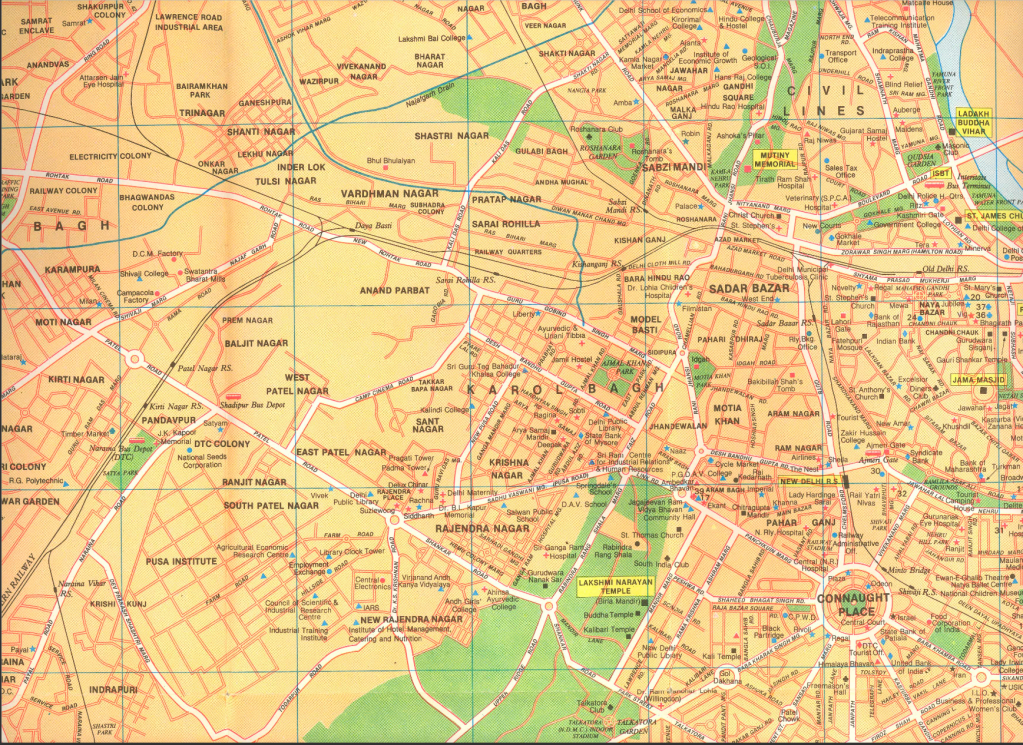
Once he realised he was paired with an intellectual inferior, Mark quickly retired to bed to read The Lord of the Rings. (OK, so he was reading The Lord of the Rings…) Faced with a new silence, I called my contact, the friend of friends, multiple degrees of remove. Preeti. She told me to come over. She lived in Def Col. While I didn’t have a car, I knew enough to get there by rickshaw. Main Market, A Block in front of Barista.
…… Barista?
…… —You don’t know Barista?
…… Uh, no.
…… —I thought you’d been to India before.
…… A while ago. And then, last summer, Udaipur.
…… —They don’t have a Barista in Udaipur?
…… They don’t have a lot of things in Udaipur.
…… —OK, anyway, it’s a coffee shop, you can’t miss it, a big orange and brown sign, I think, yeah, orange and brown.
I got there without any problems. A narrow one-way lane loops around the market and serves as a cruising strip. Cars scooted by, over-amplified music blaring from speakers. I was pacing back and forth in front of Barista when Preeti pulled up in her small white Fiat. She honked the horn, waved, then darted into the alley separating the coffee shop from the South Indian restaurant Swagat (“Welcome”), outside of which a man stood in a blue uniform, the security presence.
She told me to get in quickly. On the phone we had talked about going to see Monsoon Wedding and now apparently we were late. Once I got into the car, she barely looked at me, by which I inferred she was disappointed in my non-movie-star-like appearance. In one hand, she had her mobile phone, which she soon gave to me, as she reached for the jar of fingernail polish on the dash. Some rock group, maybe even American, was invigorating the car’s atmosphere with its electric guitars, drums and vocal whining. As she applied the brilliant red polish, the car veered left. She yanked the steering wheel back to straight. The music abruptly stopped, and the cassette burped out of its player.
“Would you please flip that?” she said. Then she explained, “I can’t bear to be in a car without music. Silence makes cars seem so hollow, just four wheels and an engine. It’s horrible to be reminded you’re careening down the road in a metal box. I have to have music, don’t you?” But without waiting for an answer, she began again, “Uh, Matt, I hate to ask this of you, but could you steer? I thought I’d be able to put this polish on while driving, but obviously I can’t. What do you think of the colour, it’s not too slutty, is it? I like red. But I hate it when people think I’m a slut because of it. I mean, Matt, it is just nail polish, but then probably they don’t mean that… Do you think it’s wrong to be a slut?” She turned her entire body to me, decidedly less startled than I was about the current driving arrangement, she with her foot on the gas; I with my right arm steadying the wheel, my eyes shooting out the windshield, my adrenal glands pumping out their manna.
“You’re nervous, aren’t you?” she asked, sensing my unease. She took the steering wheel with her hands, scrunching her thighs together to keep the jar of polish, its top unfastened, firmly stationed there. She dug the wheel into the palm of her left hand, making sure to keep the fingers well apart, the polish safe from smudging. She spun the car through the lanes, and then, with a final thrust of the accelerator, followed by an equally precipitous clench of the brakes, stopped the car in front of a wall, its stolid face tracing up and down the block, interrupted only by gates that marked the entrances to small driveways.
“Here we are,” she said. “Welcome.” She turned in my general direction to smile. Then she extricated herself from her seat, keeping the jar of polish in her left hand, her fingers extended, the black sequins of her halter-top jiggling merrily. She brushed through the half-open gate, riding atop her cork platform sandals, and walked past the car parked in the small drive. She opened the door directly behind it, a door that led into her portion of the house, a cramped and windowless add-on rented as an apartment.
“Juhi, we’re back!” she said, streaming through the door. I was several steps behind her. She was talking as fast as an auctioneer. “This is Matt, I told you about Matt, right?”
I was still holding her mobile phone. A small stack of books rested against one wall. At first glance, I saw Robert Ludlum, Bapsi Sidwa and the most famous English book in India, Jonathan Livingston Seagull. There was a mirror positioned on an empty stereo box. A narrow table stood to the side, covered by a faded blue terrycloth bath towel, on top of which lay a tangle of assorted jewellery, earrings (hoops and studs), bracelets, rings, nose-rings, necklaces. Other boxes, half-empty or stuffed with clothes, made the floor an obstacle course.
“Ya, I was here, remember?” Juhi asked. She was shorter than her sister, but had the same features, long neck, prominent nose, a bushel of black hair. She was rummaging in a box at the head of the single bed positioned against the wall. Behind the bed hung a curtain, pushed slightly back to reveal another bed and, on top it, a pillow propped against the wall.
“You were there when he called?” Preeti asked, not remembering clearly. “Oh, yes, of course, Matt,” she said, swiveling to find me. I offered the phone to her. She motioned that I should put it down on the table. “This is my sister, Juhi. Juhi, where is Adil? Matt just got in. Juhi, what do you think of this colour?” She displayed the nails of her left hand. “Matt wouldn’t tell me if it’s slutty or not.”
“Slutty?” Juhi asked, not bothering to look up from her search.
Preeti turned toward me again, “Sit down, Matt. Don’t look so startled. Did you think guys are the only messy ones? So like a guy to think so.”
“I hadn’t…” I began, although I wasn’t sure what I was going to object to, the room’s disorder, her driving, or my general sense of what was going on.
“But you were thinking…” Preeti led me on. Then she stopped and looked at me, confused for the first time about what I might really be thinking.
Before she could continue, Juhi rose from her hunched-over stance above the box. “I can’t find my shirt,” she complained. Her hair, collected in a rubber band, fell across her chest. She tossed the bundle back over her shoulder.
“Which one?”
“You know, the one I was wearing the other day.”
“Which “other day,” Juhi? You’re so dense. There’re hundreds of “other days.” How do you expect me to know which “other day” you’re talking about?”
“The other day when we went out shopping at GK. With Annandini. And Prashanth.”
Preeti was sitting on the bed, her back against the wall, her feet dangling off the bed’s side. She was applying polish to her right hand’s nails. “Oh, that one,” she said, though her tone suggested she didn’t in fact know. Then she said, “The one you just wore? Why don’t you wear something different? Once you start wearing one shirt, you never stop. It takes someone like me to tell you to stop wearing it. Stop wearing it, yar!” She brayed, laughing, pleased with her humour.
“I can’t believe I lost it,” Juhi said. “It was my favourite shirt.”
“Oh, get over it!” Preeti said unsympathetically. “You have a new favourite shirt every week. And where is Adil? Your friends are always late.”
Juhi found a pack of cigarettes. She went over to the small table and scrounged through the jewellery. She found the lighter. Preeti sprung from the bed, her fingers extended. She snatched the pack from her sister, “Juhi! I told you to stop smoking!”
Juhi grabbed the pack from her sister. She pouted, “Why should I listen to you? You smoke just as much as I do.”
Preeti feinted for the pack, but Juhi brought it behind her back. “But I’m older than you,” Preeti said. “I have to protect you. Smoking kills! Please, Juhi, don’t!”
I heard a soft knock at the door and turned. A young, handsome Indian guy, younger than me by maybe five years, walked in. I still hadn’t sat down. I moved to the side.
“Adil! Where have you been?” Preeti screeched. “Now we can’t go! We’re too late.”
“Where’re we going?” Adil asked good-naturedly. “I thought we were going to a party. It’s not even ten yet.”
“OK, Adil, but then Matt called,” Preeti motioned to me. “And so we decided to go for Monsoon Wedding.”
“But you’ve already gone for that.”
“Shut up, Adil. Don’t you know how to be a host? Matt just flew in from America, and we thought we’d take him for a film.”
“Wouldn’t he have more fun at the party?”
“Adil, Adil, Adil,” Preeti said, shaking her head. Then she raised her right hand and gave it a shake.
We were in fact too late for the film. Juhi called the theatre in Saket and found out that the last showing had already started. Adil recommended again that we go to the party. All four of us piled into Preeti’s car, although once inside (Juhi and Adil up front, with Adil driving), she told me it was really Juhi’s. I couldn’t follow the route that Adil took. We could have been anywhere in New Delhi. One road blurred into another. Juhi and Preeti gave instructions from their seats, “Yahan se nikalo, juldi, Adil, juldi, nahin, right right, left nehin, kis se tumhen chalana sikha? You’re a bloody bad driver, Adil!“
Then we arrived. The area had houses even larger than those in Preeti’s neighbourhood, and the luxury of trees as well, under which a long row of cars was parked. A desiccated lawn separated the two facing stretches of houses. Underneath the distant streetlamps, guards wandered back and forth with their ancient lock-and-load rifles, castoffs from one of the World Wars. Each house had a broad wall encasing its yard. They were miniature citadels. We walked into one of these compounds, and Adil looked back at me, smiling. I smiled back, naively, unprepared for what was to follow.
I didn’t see Preeti for a month after that. I moved into a one-bedroom apartment in South Delhi, way down Aurobindo Marg near the Institutional Area.
I saw Preeti by accident. I had gone to CP to go to The Book Worm. I stopped by Nirula’s (famous for its no-egg ice cream) for a sundae. Preeti was coming out when I was going in. She was with a guy, not Adil, nor, as far as I could remember, anyone else from the party.
She was pushing open the door, talking over her shoulder. I was reading the book I had just bought. We almost collided.
“Excuse me,” I said before I realised the situation.
“Oh,” Preeti said, flinching. I looked up. I stood holding the book splayed open, my thumb pressing into its binding. “Oh, Matt,” she said. “What are you doing here?”
“Hi,” I said, still not up-to-speed on what had just occurred.
“I tried to call you,” she began. “Where did you go? No one at the number you left knew anything about you. They were so snotty, the Fulbright House, no? The guards, I think I was speaking to some people like that, they pretended they didn’t know you.” She indicated the guy at her side. “This is Adarshit. He works with me. Adarshit, this is Matt. From America.” She smiled.
“Hello.”
“Hi.”
“Anyway, Matt, you need to give me your number. Actually, what is it? Let me write it down. Adarshit, do you have a pen? Why did you run away like that? Anyway, Matt, your number?”
I wanted to talk to her. I thought I needed to talk to her. I needed to understand certain things. I asked if she could step inside for a minute, away from Adarshit.
Inside the air-conditioner was blasting. It was glacier cold.
“You should have told me you were taking me to an orgy,” I said, nearly yelling so she could hear me over the overly vigorous refrigeration.
Preeti’s big eyes shot even wider than usual. So we disagreed. “An orgy? I wouldn’t call that an orgy, Matt. You surprise me. Hasn’t the Sexual Revolution happened in America?”
“It’s not really even that,” I went on. “It’s just that you should’ve told me so I could’ve been prepared.”
“Prepared for what? A party? That’s ridiculous!”
“I just wasn’t ready for any of that.”
“Any of what, Matt? You’re being so vague.”
“You know, all of it. Any of it.”
“What, Matt? Why are you pretending to be such a prude? Haven’t you ever had sex before? What’s so new about that? I don’t mean to be rude, Matt, but India is not medieval any more, you know. Is that what you were coming for? So you could be comfortable in the medieval past, rajas, ranis, natives hunkering over their pathetic little village fires? I meet so many Americans who just don’t know what India is all about!”
This was too much information and delivered too suddenly. I didn’t think she was portraying me accurately, and yet I wasn’t sure. Others had asked me, “Why are you in India?” I didn’t exactly know. But at least I knew I didn’t require India to be medieval.
“No,” I said. “And yes.” I wanted to answer her questions, and to be precise, convincing.
“No? Yes?” she asked. “What are you talking about? You’ll have to give me more than that. I need to get back to work.”
I answered the questions, “No, I don’t want to travel back in time, to the medieval past. And yes, I have had sex. But four people having… And you…” But I didn’t want to mention that. The memory!
“What? Me? Come on, Matt, it’s OK if you don’t like that stuff. No one’s going to judge you.”
“You and Juhi and…” Still, the memory.
“Oh, Matt, it’s all for fun, you know. That is what life is all about. Fun. If you don’t have a little fun now and then, you’re going to die young, or worse, old, horny and bitter. You know, all work and no play? Now give me your number. I’ll ring you, OK?”
)
Meera (Raipur, Chhattisgarh)
LOVE WAS IN THE AIR. Or sort of. I read somewhere that there’s no country more disco than India, and while I’m not sure what the writer meant by this, you might be shocked to know how many Indians believe, despite the realities of their lives, in an inflated romantic ideal of love.
I was living in the Aurobind Apartments, opposite the Ashram. They’re DDA flats (Delhi Development Authority), which means low-income housing.
Mr HM Javed owned a handful of apartments in the complex, and I was living in one. A Muslim from Kolkata, Javed Bhai had gone to Saudi Arabia to work in off-set printing. He’d come back with enough money to open up several clothing stores in Old Delhi near the Jama Masjid. Then, with profits from these, he’d bought some apartments, renting them out to students at the nearby universities and polytechnic institutes. He’d spruced up my apartment so that it was pleasant, except for the inconveniences of having no fridge, heat or phone.
I’d been living there for two months before I met anyone else in the complex, I suppose because everyone was minding their own business, like in big cities most anywhere.
One morning I was riding out on my bike when I looked up and saw a guy my age smiling down from a balcony. He said “hi,” and I responded in kind. He invited me up to his room for tea, and I accepted. Within minutes Anurag had invited me to his home state of Chhattisgarh to attend a friend’s wedding, that of one of the three guys sharing the room with him.
Anu’s brother-in-law happened to be in Delhi on business, and so the three of us travelled together back to Durg, where he and Anu’s sister lived. We got off the train on a clear morning. Muscular white clouds were pulsing through the sky toward their real destination somewhere to the northeast. It had rained the day before, and the air was cool and the streets still damp. Not many white people get to Chhattisgarh (just look in The Lonely Planet Guide to India, you’ll find nothing), and so the cycle-rickshaw driver, dutiful to his role as astonished native, insisted on getting my autograph, which I gave him, with a flourish, when we arrived at the doors of Anu’s sister’s house.
Anu’s sister was having problems with her husband, the same man who had seemed so friendly during the train ride. But then seeing her living situation, I could imagine how problems were sure to arise: she lived in a modest two-storey house with three other couples, her husband’s parents, and the household’s children, who numbered fourteen. On top of that, she was the youngest housewife, which meant she was going through the requisite hazing, getting the hardest work shoved her way. Anu and his sister soon turned to talk about his marriage. Then one afternoon, Suneel, another of the guys living in the Aurobind Apartments flat (they were all from Chhattisgarh), came in to give Anu an invitation to his brother’s wedding, which, inconveniently, fell on the same day as the wedding we were going to attend in Kanker. One of his roommates was getting married! The brother of another roommate was getting married! Anu was setting in motion the mechanisms that would see his wedding come about in six short months! So, love. Or the Indian version.
After Durg, Anu and I stayed four days at his old hostel at the Raipur Science College. We met up with a friend, Villis, who, although at the time was a student in the Engineering College across the road, was somehow still the Science College’s Student Body President. His father had named him after the famous British cricketer Bob Willis, and Villis had upheld his father’s hopes for an athletic son by being the captain of the Chhattisgarh handball team, which the previous year had advanced to the national championship. (He showed me a newspaper clipping to prove it, complete with Villis in mid-air, steadying the ball to throw it toward the goal.) He was known to be a player of a different sort, too, a lady’s man, and had, he said, four girlfriends.
“Anurag, sir,” he said, loosening the tie that he wore around campus. He was the year behind Anurag in school, and now that his friend was back, he relished adding a sarcastic edge to the sycophantic title “sir.” They were discussing plans for the night. They had to visit Suneel’s family’s house. They had to visit some of Anurag’s other friends. “But there is a conference I have to go to,” Villis announced. “There will be professors and industry men from all over the world, Australia, Africa, Europe. There’s going to be a party afterwards with free liquor. We’ve got to go.”
By the time we showed up at the party, Villis’s advising professor was already drunk. He was talking to a German woman, one of the few women there.
“My family says I am a failure because I am here in Chhattisgrah. ‘Chhattisgarh? Where is that?’ they ask. But I say, ‘So? What is Bihar? What do you have to brag about? Bihar is even worse than Chhattisgarh, Laloo Yadav, dhaku, and now his wife, and she cannot even read! Those badmash!’”
When he saw Villis approach, he broke off his monologue, “Villis, Villis! At last you have come.” He waved us over, “Come here, this is Mrs Berg from Germany.” He leaned conspiratorially toward Mrs Berg, who was wearing a garish lime green sari that fit like a cocoon. He forgot the drink in his hand, almost spilling its remaining contents onto her. Villis reached down to steady the glass.
“Mrs Berg,” the professor continued, “Villis is one of my finest students. The best, I would say, but he is right here and I do not want him to become proud. My mother warned me that arrogance leads to a man’s ruination. Just think, if I told Villis that he is my best student, then he would go around like he was Shahrukh Khan, no? Then his work would fall off. He might not even graduate, right? Villis is collecting Master’s degrees. There is no worthwhile work for him in this world. He is on his third, and he says his last!”
We stood around the seated duo. Mrs Berg’s expression revealed close to nothing, not even letting on if she understood what was being said by Villis’ professor, blathering on in his drunkenness. I was looking around at the food tables set up at the back of the hotel’s gardens. Anurag and Villis were looking around for the drinks.
“Mrs Berg, I should not be telling you this, but you remind me of my mother,” Villis’ professor continued. “You have the same placid eyes. One cannot say too much about placid eyes. I would give up everything for a woman with placid eyes. They are such a comfort. Has anyone told you that you have the most astonishing placid eyes, Mrs Berg?”
“Placid?” Mrs Berg repeated, with an absurd accent. “No von has ever told me zat.”
“And you look very lovely this evening in your traditional Indian costume, yes, very lovely, Mrs Berg, very lovely.”
“Really?”
Villis interrupted, a grin on his face, “Professor, how is your wife?”
Mrs Berg’s expression snapped like a fisherman’s reel. Her smile vanished. The professor would have to work to repair that.
“Villis, my wife is fine per usual,” he answered. “Why don’t you go say hello to her? She is here, somewhere. Do find her, and give her my regards, as well.”
Villis scanned the partiers. Small groups had sprung up, cliques of Australians here, subspecialists in diamonds there, or opals, rubies, gold. Villis spotted her, seated in a chair apart from the others, on the patio near the hotel’s rear. She had been watching her husband the whole time.
Villis waved, and she gave a meagre smile in response. He began walking toward her. Anu motioned toward a waiter bearing drinks, indicating he’d be back. I followed Villis, who in his trek across the lawn picked up two chairs, one with either hand, carrying them to where his professor’s wife was sitting. They had already begun talking by the time I arrived.
“He has been talking to that monstrous woman the whole time, nearly two hours now,” she said. “I cannot stand it. What does he see in her? She is a great giant of a woman in a horrid sari. I think a man should laugh at her rather than ask her to marry him. He hasn’t done that yet, has he?”
Villis smiled sadly.
“There is no reason to smile, Villis, you have no idea what it is like to be married to that man.”
“No,” Villis admitted. Then he turned to me, the necessary introductions. “Matt… America…”
“Hello,” she said. “I am Villis’s professor’s wife. Call me Meera.” Then she turned to Villis, “I don’t know how long I can stand this, watching him prey upon these foreign women. It is so disgusting. Is he so blind that he cannot even tell if they are pretty or not?”
Anurag came over with a tall glass of a green viscous liquid. A tiny Hawaiian umbrella floated on top.
“Villis, let’s go do something!” Meera suddenly suggested, placing his hand on the arms of her chair.
“You mean leave?”
“He’ll never remember. He’ll never remember this evening.”
“But…” Villis began. He laughed. “I haven’t had anything to drink yet!”
“Steal a bottle. But let’s go. I can’t stand sitting here any longer.”
Anu slurped down his suspicious green drink, Villis stole a bottle of Royal Stage whisky and we walked out of the party while Villis’s professor continued to talk to Mrs Berg. Villis drove Meera on his motorcycle, and Anu and I followed on another. At first we weren’t going anywhere, driving through the dark roads on the town’s edge. Then we passed through the town’s centre, with the new five-storey hotel lit up, Christmas lights strung along the windows on each floor. We drove around the lake where the eastern edge of town nestled. We stopped on the lake’s far side, the lights of the town glowing across the water. We sat on the bikes looking into the water’s reflective pane. A water buffalo stood several feet away, in another world altogether, one removed from human folly.
Anu and I got off our bike. He opened what Indians called the “dickey,” the small compartment attached to motorcycles where you stuff papers, bottles, or whatever small things you have with you. He got out the bottle of whisky. “Villis,” he said, smiling, holding out the bottle, “You take it.”
“You’re not really going to drink that, are you?” Meera asked, standing to the side. The night’s air was chilly, and she wrapped her dupatta firmly over her shoulders.
Villis accepted the bottle and began chuckling, “You’re the one who said to steal it!” He held the bottle out to her, but she shook her head. “I thought you wanted some,” he lied. “That’s why I stole it.”
“Oh, yes, I’m sure that’s what you thought,” Meera replied sarcastically. It seemed as though her spirit had been beaten down, and she dreamed of something different, far away. “Mister Matt,” she turned to me. “Don’t think I do this normally. But Villis is a good boy. Sometimes I feel I have to get out or I will go crazy, and Villis helps me. You Americans think love is so easy, just find someone and fall in love. You don’t know what it’s like to be married to someone you don’t know. Shrikant is not the right man for me, but what can I do? It was fated. Maybe if I lived somewhere else, I could do something. But not in Raipur. Not in Chhattisgarh. And not in Bihar, where we are from.”
“You should go to Delhi,” Anurag suggested, accepting the bottle back from Villis. “Things are different there.”
“Me? Alone in Delhi?” Meera laughed in astonishment. “I could never do that. I haven’t been east of Patna, or west of Kanpur!”
“Yeah, what are you talking about?” Villis asked. He seemed to resent the idea of sending Meera to a far-off city. Then he said to Anurag, “You’re planning to move back here anyway.”
Anurag tipped the bottle back and swallowed. His Adam’s apple bobbed several times. Then he took the bottle from his lips and gasped. His eyes were glassy.
“I wasn’t talking about me,” he replied to Villis. “Delhi is too crowded. People are too anxious. They have no peace of mind.”
“Yes,” Meera agreed automatically.
Then something occurred to Anurag. “But Matt is there,” he said. “You could stay with him.” He slapped me on the back, trying to convince us all of the worth of his idea.
“Oh, yes,” Meera answered. “I am sure that would work very well for Mister Matt.” Her tone was opaque again. Suddenly the breeze picked up, and through the dark I could see her shiver. The buffalo continued to stand fixed in its place. “You boys are all alike. Mix with liquor and watch the brilliant ideas fly!”
)
Bubaloo (Bhanupratappur, Chhattisgarh)
THE NEXT MORNING SANJAY SHOWED UP, walking over the college’s cricket pitch, as we were coming back from a roadside breakfast of tea and omelettes. He was returning from Pune, where he’d gone to look for work. He was short and very dark. He disliked being short and very dark. He used the kind of skin-lightening cream that leaves its consumers scarred for life. Sanjay was going back to his village, which was on our way to Kanker, and so he invited Anu, Villis and me to come along.
Bhanupratappur has only one major intersection. Our bus stopped there. After Villis descended, he kissed the ground. He was still sick from drinking the previous night. Throughout the trip, he’d hung his head out the window, joining the other nauseated passengers in their attempts at vomiting, though he managed nothing more than wishful ribbons of drool.
Bhanupratappur means something like the “town of the sun’s greatness,” and while folks in Chhattisgarh like to point out that the weather in their state is especially hot, Bhanupratappur, at least when we arrived, was very pleasant. It felt like a mountain resort. The night sky shone with stars, and the smell of pine cleansed the air.
Sanjay lived with his mother and older brother, who was away at the hospital in Raipur because his wife was having a baby. (His father had died several years earlier.) His mother had a disfiguring overbite, and yet she had a quiet elegance, perhaps the sort that only rustics and the truly unselfconscious can have. She called Sanjay “Goodoo.” Sanjay had posters up on his walls, the centrepiece being the former Miss World Aishwarya Rai. The others included a beautiful young Indian woman in T-shirt and jeans, lying on a bed, a pen in hand and a pad of paper near her elbow. A preternaturally large tear hung on one of her glossy cheeks. In a corner, there were the words, “I miss you.” It was pathetic. Sanjay was obviously deep in the shit of yearning.
As soon as his mother left the small four-room house to visit friends, Sanjay began to talk about this girl he knew. I couldn’t decide to what extent he was exaggerating. He said her parents had died, and she’d only her brother who didn’t let her do anything. He held her as a virtual slave. Occasionally her brother would go to Raipur on business. Sanjay said he’d started calling her a month before, with Sanjay’s part of the conversation full of sexual innuendo.
The four of us gathered in his room. Anu, Sanjay and Villis crowded onto the bed, their bodies flung this way and that over each other’s. I sat alone in a chair, the stony Westerner, unfit to wrap my body into the mix. Despite my protests, Sanjay decided to use me as a lure to get this girl to come out.
hey baby
I’ve got someone here I want you to meet
he’s an American
he’s tall
of course I know you’re not like that
can we come over do you think
after ten
OK there’s two other guys with me
no they’re Indians
no from Raipur
yeah they’re nothing to worry about
if you know someone, then sure
of course whatever you like
Sanjay hung up the phone and started jumping around on the bed. He was shouting and whooping and hollering.
“Sanju, what did she say?” Villis asked, pulling on Sanjay’s trouser-leg. Sanjay jumped off the bed and came up to where I was sitting, stupefied, trying to imagine what the rest of the evening was going to entail. Sanjay knelt before me, clasping my legs, “Thank you, Matt, oh, I am so happy you came!” Then he rose and turned to Villis, “What do you think she said? Why do you think I’m jumping around like a monkey? The sweet, sweet girl said “yes”!”
There was a moment’s silence. Then Anu asked, “All of us?” An incredulous smile hung on his lips.
Sanjay’s smile brightened, “She asked if she could bring some friends too!”
“No!” Villis said in disbelief, rising to his knee, straightening out his polo shirt. “You can’t do that here, someone will know.”
“Oh, you don’t know this girl,” Sanjay said. He rose from the floor and repositioned himself on the bed. “She’s craftier than the four of us put together.”
“But…” Anurag began, before breaking out in wide-brimmed laughter. The flavoured, sweetened tobacco he was chewing nudged over his teeth; he had to shut his mouth quickly to prevent it from dripping. “Sanjay, we can’t do this!”
“Why not, bhai?” Sanjay rose to his knees. “No one cares. We’re all in the same shit, you know. We’re starved for excitement. Hey, half of us are in with the Naxalites, half of our brothers have murdered someone. Do you think she would do anything she didn’t think she could get away with?”
“She’s not a virgin?” Villis asked.
“Virgin? Who’s a virgin?” Sanjay sat down, waving the question away with his hand. “We all did it in the fields years ago. What else is there to do?”
“But,” Anu was thinking about something. “I don’t like it, Sanju. Isn’t there somewhere we could go? What if her brother comes back?”
“Oh, her brother’s in Raipur. He’s a clod anyway. He’s probably shagging her himself.”
Then Sanjay thought of something. “I know what we could do! We’ll go to Charre Marre!”
“Where?”
“Charrrrrrre Marrrrrre, yar!” Sanjay boomed, rolling the r’s so long that the name became a joke. “Haven’t you heard of it? No, you big-city guys wouldn’t have heard of the best waterfall in India!”
He turned around and jumped from the bed. He shook his head in mock disgust, brushed through the drape that served as the room’s nominal door. Then instantly he came running back in, yelling, his eyes stretched wide. He jumped onto the bed where Anu and Villis were reclined. “What’s wrong with you guys? Don’t you want to get laid?”
Sanjay revealed his stash of condoms. He threw two to each of us and, laughing, stuffed four into his own pocket. He called up the girl once more, whispering into the receiver. The plan was set.
We needed three motorcycles. Sanjay said that the girl was bringing one friend. He was going to borrow his brother’s motorcycle, then ask a friend to borrow two more. He went out and returned half an hour later.
“Those bastards!” he said, dramatically sitting down, holding his head, then pulling at his hair. “Why can’t they do a guy a favour?”
“What happened?” Anu asked. He was smoking a cigarette, and he blew the smoke outside the window.
Sanjay seemed like he was about to cry. Then he went up to Anurag and grabbed his shirt. “Why don’t I have friends like you in this town? Why does everyone treat me so bad?”
Anurag pulled back his head. “What? I can’t figure you out, crazy boy. Tell us what happened.”
“Crazy boy…” Sanjay repeated Anu’s words, pretending to be crestfallen. “Is that what you think?” He scrunched his face up into a grimace of despair.
“What?” Anu asked.
“What?” Sanjay repeated, as if he didn’t understand what Anu was asking him. Then he relaxed his hands from Anu’s rumpled shirt.
Villis yelled from where he was sprawled on the bed, “Tell us!”
Sanjay threw up a finger to his lips, indicating that Villis shouldn’t talk so loud. “Where do you think you are, Bob Villis? Delhi? You shouldn’t yell in a village!”
He moved over to the bed. His expression changed. “I was just shitting you. It’s all worked out. Vajpayee’s coming, too. We’ll have to sit three on one of the bikes. Anu, you’ll have to go over to Vajpayee’s to get a bike. Then you two will walk them out to the intersection. I’ll go to her house. Villis, you and Matt take our bike. You guys will go ahead to the gate. I’ll bring the girls.”
“What about the guardhouse?” Villis asked.
“No one will be there. The Charre Marre road dead-ends in the hills. No one comes from there, no one goes to there.”
*
It was a quarter to ten when Sanjay left. Then Anurag left, and Villis and I followed. Sanjay’s mother was back and had fallen asleep in her bedroom. It felt like school as we snuck out into the night.
Outside the air was fresh and invigorating. Villis pushed up the bike’s kickstand, and we started to weave the motorcycle, still not started, toward the intersection. The lanes were empty. Only the dimmest noises came from behind half-shuttered windows, with weak light nudging against their slats.
Vajpayee and Anurag were waiting for us at the rendezvous site. Vajpayee was short, like Sanjay, but had a firm build, evidently the product of a lot of time doing press-ups, sit-ups and the bizarre Indian version of squat-thrusts. He nodded, and we pushed ahead to the gates. The suspense was little, as the village was asleep. Everyone was at home. Shops that would be open during the day were quiet, their corrugated iron fronts pulled down. We reached the gate. The guardhouse was empty. We bypassed the gate, walking beneath a tree that overshadowed the road with a fantastic charm. For several minutes we waited in the shadows, then we heard noises. Sanjay appeared with two girls.
He rushed up to us. “Hurry, hurry,” he said. “Look, Villis, let me drive this one. You get on the back. Vajpayee, you take Anurag and Gauri. And Bubaloo, you can drive, can’t you?” One of the girls nodded. “So you drive Mister Matt, OK?”
We got onto our designated bikes. Sanjay was the first to start his bike’s engine, which purred into life like an affectionate kitten. The bike shot ahead, swerving wildly. He and Villis glanced over their shoulders. Sanjay was smiling his crazy, knowing smile, and Villis waved. Sanjay accelerated, and they disappeared into a dip in the road, with Villis’s hand, still raised, the last thing we could see.
Anurag looked at me. I was sitting rigidly behind Bubaloo, afraid to put my hands around her waist. The three on Anurag’s bike were adjusting themselves, and Anu grinned at me, giving me a thumbs-up meant either to indicate his own happiness at sitting in front of Gauri or to encourage me, alone with Bubaloo. Then Vajpayee revolved the handgrip, throwing petrol into the engine, and their bike bumped ahead, rushing into the dark, its red taillight streaking behind.
Bubaloo was either stalling or didn’t know how to start the bike. Once the others were out of sight, she turned to look at me. She was, surprisingly or not, smiling.
“Mister Matt, do you speak Hindi?” she asked in Hindi. I nodded. She had a dark oval face. Her teeth had occasional gaps that American orthodontia would have over-corrected. Her eyes matched her grin, both high in wattage.
“You know,” she went on. “I’m not just Sanju’s friend. He likes to pretend he owns me, but it’s not true.” Then she pushed petrol into the engine and nailed the starter. The sudden motion sent me rocking back. My hands slipped from her waist, but she retrieved them quickly, stuck them one by one to her stomach, bare between her sari and her tight-fitting short-sleeved blouse. Then we veered down the road.
The moon was nearly full. It lit the road, except where the forest grew dense, shooting up on both sides, casting us into deep but momentary darkness. The wind was sprawling over me, and my hands on her stomach felt like those of a doctor, monitoring the ins and outs of a patient’s breath. Bubaloo hadn’t tied up her hair, and it was blowing into my face. I changed my position to look over her right shoulder, and she realised that her hair was bothering me. “Sorry,” she turned against the wind to say over her shoulder. “I’ll fix it just now.”
We crossed a bridge, which seemed like a gratuitous gesture of civil engineering, as underneath it lay only wan rivulets between sand banks. Then she pulled the bike over to the side and turned it off. The land’s features were faint. The hills were building as we went south, and large boulders lay amidst the fallow fields, which abutted the forest’s pocketed canopy. I took my hands from her stomach and inched back on the bike. She got off and turned. As she looked at me, she raised her hands to her head and pressed down her hair along her temples, smoothing it back with one hand at a time, using the other to collect her hair behind her head. Her sari was faded, and her plastic flip-flops were falling apart. She had slim toes, free of rings.
“What are you looking at, Mister Matt?”
“Please don’t call me that,” I said, without answering her question. “Even if you’re joking.”
“Then what should I call you?”
“Just Matt.”
“But that’s not a very Indian name.”
“I’m not very Indian.”
She finished weaving her hair into a bun, which she secured with a stick, picked up from alongside the road. “No, you’re not Indian,” she continued. “But you speak Hindi. Anyway, that doesn’t mean that when you’re in India you shouldn’t have a good Indian name.”
“A good Indian name…” I muttered.
“Like Rajkumar. How do you like that, Rajkumar?”
Ugh was how I liked that. (It meant “prince.”) She was standing in the moonlight with her hands on her hips. Her dark stomach rose and fell.
Then I said, “You can call me Rajkumar if you tell me your real name.”
“Who said Bubaloo isn’t my real name?”
“Is it?”
“Why not?” Suddenly she got back on the bike. Then without further warning, she started the bike again, and we were off.
We didn’t catch up with the others until we found them parked near the small thatched Shiv temple. It was at the end of the passable road. Gauri was sitting on one of the bikes, her dupatta wrapped around her waist like a giant Christmas bow. Sanjay, Anurag and Villis were standing near her, sharing a joint. They passed it through Gauri, who took a drag every time it went through her hands.
The road to this spot had become increasingly marred with versions of what, had they been smaller, would have been potholes. (They were more like yawning caves.) The sharp turns and frequent bumps had thrown me repeatedly against Bubaloo, and despite my best intentions, my worst fears were realised.
She cut the engine, and a moment of silence intervened as we got used to the new decibel of sound. Then the noise of the forest’s insects reared up, and reality was restored.
I didn’t want to get off the bike in my present situation.
“Hey, Bubaloo,” Sanjay spoke. “There’s only one road here. What happened to you? We were thinking about sending Vajpayee back to find you.”
“My name’s not Bubaloo,” she said, teasingly. She got off the bike. I kept my hands low. “It’s Rajkumari,” she said, then turned to point at me. “And he’s Rajkumar.”
Sanjay started laughing loudly, too loudly. I was unprepared for Bubaloo to implicate me in her scheming. Sanjay turned to Anu and slapped him on the shoulder, “Come on, Anurag Uppadhay, we’ve got to get away from these fools.”
“Hey!” I shouted. I wanted to tell them the truth, It’s not what you think, nothing happened, she’s joking, you know what that means, joking? But no one was paying attention.
Sanjay walked off into the dark. He yelped like a wild animal. Anurag followed him.
Vajpayee and Villis stood around the bike, as Gauri got off. She cinched her dupatta more firmly around her waist, then began to walk gingerly forward.
“Arré!” Villis said, putting his hand out to steady her. “You shouldn’t have smoked so much.” Vajpayee walked ahead, and Villis shouted up to him, “Hey, wait! Your joint was too strong for Gauri. She can barely stand up.” Vajpayee stopped on the far side of the Shiv temple, remote in its own darkness, its custodian, absent.
“Come on,” he encouraged Gauri.
“It’s OK,” she said. “I just needed to get on my feet again. I’ll be fine, I think. I’m just not used to it.” Then she burst out laughing. Villis started laughing too, but then she regained her balance and they walked on.
I got off the bike, turning away from Bubaloo to readjust my trousers. When I turned, she was walking toward me, her flip-flops clapping against her heels. Then she stopped next to me. “Why are you doing that?” she asked.
“Doing what?”
“Why did you turn away from me?”
“From you? I was just waiting.”
“Really?”
“Look,” I said. “I don’t know what Sanjay told you. I tried to tell him ‘no’ when he called you, but…”
“Don’t worry about Sanjay.”
“Right.” I didn’t know if her comment was reassuring or not.
Suddenly she reached into my pocket.
“What’re you doing?” I yelled.
She found the condoms, which she pulled out quickly. She held them up and gasped. Without any warning, she turned and ran. “Catch me if you can!” she yelled over her shoulder.
“Don’t!” I yelled. I ran after her, catching her easily, grabbing her arm. But she shifted the condoms to her other hand and, in a brisk motion I couldn’t be sure about, seemed to toss them into the forest.
I released her. She was laughing. Then she calmed herself and put on a serious expression.
“Now you don’t have to worry,” she said.
That was true.
“God knows you’re crazy,” I said, half out of relief, half out of fear.
But those words upset her. She took a step closer to me. “Crazy? Crazy?” she repeated. “That’s all that people out here say, “she’s crazy, she’s crazy…” I’m sick of people calling me crazy. If they lived my life for a day, I’d like to see what they’d be saying! Anyway, what about you, Mister Rajkumar-ji? What are you doing out here? If I’m crazy, then what about you?”
I almost felt like apologising. I had noticed how the word “crazy” took on a particularly sinister tone in India, maybe because there weren’t any psychiatrists to diagnose the really crazy ones. But before I could say anything, she strode ahead, and I didn’t stop her. The road climbed higher. The gravel road wide enough for a vehicle petered out into a dirt path. A gap appeared in the foliage to the left. There the hillside dropped sharply. Bubaloo took off her flip-flops, placed them at the path’s side, and started climbing down. I followed.
The hillside was steep and dark. The moonlight couldn’t cut through the thick branches of the canopy. I had to keep my hands out to the side, grabbing at tree trunks and the elastic branches of saplings, which I would pull back as I lowered myself down the slope. Gradually I heard the sounds of the waterfall. Water rushed over an escarpment, water crushed against water at the escarpment’s base, forming a pool. Over the water’s sound, I could occasionally make out voices. Bubaloo was pushing down the slope faster than I could go, and soon she too became only a collection of intermittent sounds, more proximate than the others. Then I found myself at the bottom in a clearing. Huge boulders lay in an irregular array before a briskly flowing stream, backed in turn by more boulders and then the sharp rise of the hills. I couldn’t see anyone, but I could hear the waterfall to the right. I jumped onto the first boulder, then I performed similar leaps, one, two, three, and I reached a broad flat surface of rock-slabs that functioned like a smooth, rock beach. Further to the right, the waterfall’s water plunged into the pool. I stood there a moment, looking for the others. No one was in sight, and at first I couldn’t hear anything above the water’s crashing. Then I caught voices higher on the hill, near the waterfall. Then I sensed someone’s presence. I spun around. Vajpayee was leaning against a boulder, his knees raised, his bare feet on the rock’s surface. His shoes sat next to him. He was smoking. The tip of his joint glowed red when he inhaled.
“Where’s everyone?” I asked.
He held out the joint to me.
I shook my head. “Where do you get that stuff?” I asked pointlessly.
He snapped his wrist back and forth, offering the joint to me again.
“Everyone out here smokes,” he said.
This time I took the joint from him and held it.
“Are you Shaivite?” I asked, a stupid question. I didn’t want to get high.
“Shaivite, Vaishnavite, Hindu, Muslim, Christian, Sikh… it doesn’t matter.”
He held his hand out for the joint. I quickly took a drag and passed it back. The smoke caught in my throat, and I just managed to spit it out before being seized by a coughing fit.
“Where’re Anurag and Villis?” I asked.
“They all went up to the falls.”
“Have you seen the girl?”
“Bubaloo?”
I nodded.
“No,” he said. “Why?”
“Do you know her?” I asked.
“Sure, we went to school together.”
“And Gauri?”
“Yeah.”
“How can they come out like this?”
“Bubaloo doesn’t have a family. Just her arsehole brother. And Gauri, well, I don’t know.”
“Are they like Sanjay says they are?”
“I don’t know,” Vajpayee said, flicking the spent joint over the rocks into the water. “What did he say?”
“That they’re for sale.”
Vajpayee started to laugh. I couldn’t see what was funny. But it took him a while to control himself.
“What?” I asked.
“No, no, yar,” Vajpayee said. “Nothing like that.”
Then I heard laughter. I looked toward the falls. Anurag and Villis had stripped to their underwear. They were standing near the edge of a boulder. They were looking down into the pool some thirty feet below and nudging each other toward the precipice. Then Anurag pushed Villis more forcefully. Villis’s arms sprang above his head, extending to the sides to secure his balance. But he couldn’t. He teetered off the boulder’s side, sending his arms up again, this time spiralling like the wings of a baby bird cast too soon from its nest. Villis hit the water’s surface with the sound of a small explosion. Anu was clapping, shouting his congratulations, praising Villis’s unintended courage. Then from higher up in the trees behind the falls, Sanjay was yelling out his own praise. A girl’s voice followed, and Sanjay’s voice lowered, then fell silent. Then Anurag jumped. He thumped into the pool and resurfaced, shouting, spouting water from his mouth. Sanjay yelled, “Don’t kill yourselves, you idiots! Don’t do anything I wouldn’t do, you hear!” Then he began a deliberate cackle. Then he whooped once, then nothing.
I looked back at Vajpayee. “I’m going back,” I told him. “I don’t know where Bubaloo went.”
He nodded. I began to trace my way back, climbing the first boulder, then leaping, one, two, three, four, a different route to the trailhead cutting up the hillside. The first several steps of the ascent were nearly vertical. I struggled, grasping at the vegetation. I could hear Anu and Villis shouting at each other back at the pool, and my own breathing was heavy from exertion. The forest was silent. I continued up the hillside, alternately climbing, my hands on the soil, and walking. I stopped to catch my breath. Then I heard something in the brush to my side. Suddenly someone was standing behind me, a stick pointing into the small of my back.
She spoke like a bandit queen, “This is a stick-up. Give me all your money.”
“Are you serious?” I asked, still panting from the climb.
Then in a motion I hadn’t foreseen, she spun me around and tripped me. I landed hard on the ground, and she flung herself on top of me. “Now what do you think?” she asked, with an ambivalent expression.
I tried to throw her off, but she jammed a leg between mine and thrust an elbow into my chest.
“What’re you doing?” I asked, panting.
“What do you think?”
Her body pressed on top of mine. It was a sort of diplomacy unfamiliar to me. I attempted an
answer, but something caught in my throat.
I tried to squirm free, but she had adroitly pinned me. Her mouth hung an inch above mine, her breath damp and hot. Shit, I said to myself.
She giggled, and her body quivered. A tingling sensation rose from my toes and spread through my thighs. Just as I was about to give in, she jumped off and rushed into the forest, laughing. I sat up. Her laughing stopped. She was still nearby. I could hear her breathing heavily, but I couldn’t see her. I was about to call out, when she said, “Just like a child, no?”
She laughed again, then I heard her running down the hill.

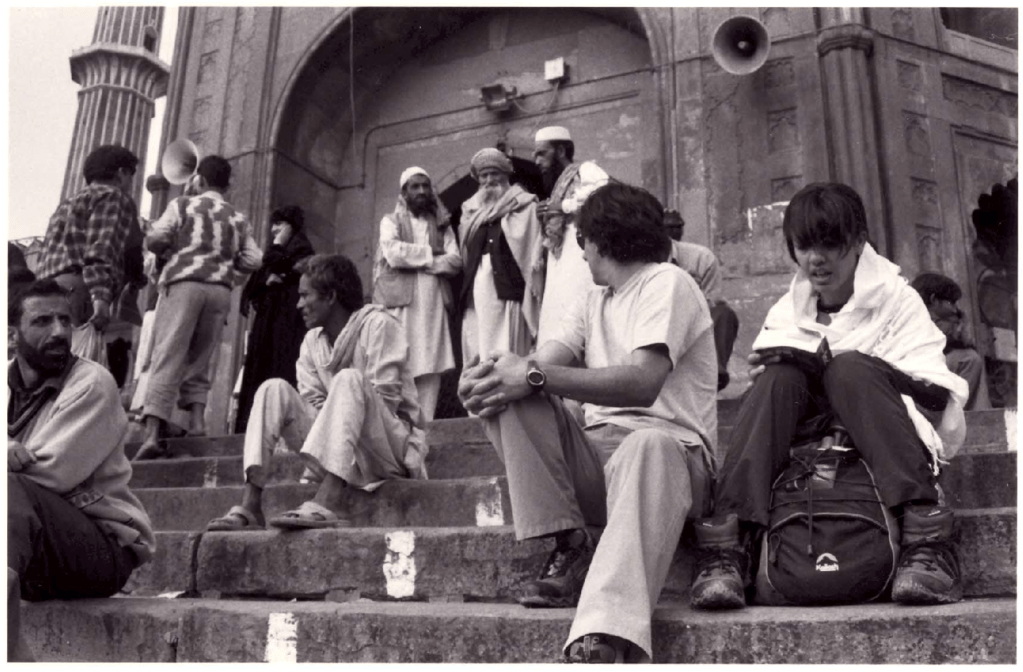
Also read “No Moral at Its End”, Matt Reeck’s essay on “Three Travelling Portraits: India”.
How to cite: Reeck, Matt. “Three Travelling Portraits: India.” Cha: An Asian Literary Journal, 14 Jul. 2026. chajournal.com/2026/07/14/travelling-portraits.


Matt Reeck‘s website describes him as a translator, poet, and scholar, though he is considering changing it to a translator, writer, intellectual, and dissident. A Guggenheim Fellow in Translation, he translates from Hindi, Urdu, French, and Korean. His poetry, translations, essays, and reviews have recently appeared, or are forthcoming, in A Public Space, Fence, Harp & Altar, The Diagram, On the Seawall, Jacket 2, Himal, Wasifiri, and Hopscotch Translation. This is his first published work of fiction. [All contributions by Matt Reeck.]
 Cha
Cha 