

[ESSAY] “No Moral at Its End” by Matt Reeck

Also read Matt Reeck’s story
“Three Travelling Portraits: India”.

When I wrote “Three Travelling Portraits,” I was interested in depicting some of the sexual tension that I had experienced and witnessed in India in the non-married twenty-something crowds where I had found friends.
This story is auto-fictional in the sense that there is a main character named Matt, and many of the other characters have the names of people I met and who became my friends. But what I wanted to depict in this and other stories that I wrote at the time, namely, the underlying tension between the sexes, is never dramatised exactly as events happened.
This goal of representation dovetailed with other goals, or interests. I was interested then as now in using travel writing to dramatise experience, whether through fiction, autofiction, or non-fiction. My feeling is that the typical American short story, as taught in MFA programmes and published by brand-name magazines and publishing houses, abides by the same set of rules as novels, which includes the paradox that though the drama is nominally fictional, there must be a moral at its end for the reader to be satisfied and for the verisimilitude to hold. That goes against the basic paradigm that says the fairy tale, or tale in general, is thought to have a moral but that sophisticated, modern, realist fiction does not.
… travel writing truly doesn’t have a moral at its end, it just has the end of a plot chain, and the return of the hero, or anti-hero.
I would say that travel writing exposes this conceit in realist fiction because travel writing truly doesn’t have a moral at its end, it just has the end of a plot chain, and the return of the hero, or anti-hero, to where they came. By contrast, it’s impossible to imagine a realist novel that just ends without cinching all the previous action into a neat, and I would say, moral, bow. So, whatever the sexual tension, and dysfunction, between the sexes that “Three Traveling Portraits” depicts in these three separate populations (the big city, the small town, and the village), it’s not meant to be moralising. It doesn’t have a “point,” and I’m not an academic expert on the subject, so I only have decades of experiences to draw on to dramatise this tension, or dysfunction.
)
Then as now, I also had an interest as a white American man who has travelled to India more times than I can count to write something about my experience because there aren’t contemporary narratives that speak to what that “generic” experience might look like. There are plenty of narratives about Indian NRIs (non-resident Indians), whether written by men or women, coming back to India and witnessing discomfiting things. There are colonial travel narratives, usually British, but they are sanitised of any sexual encounter, unless they are cast in the most unbelievable, exotic terms.
My experiences have been that sex in contemporary India is omnipresent, banal, dysfunctional, polarised, and at times aggressive, even violent. This isn’t meant to contrast with some wonderful American ethic, because the same could be said of the US, and it isn’t meant to generalise in some officious way about all Indian experience. I’m speaking from my experience.
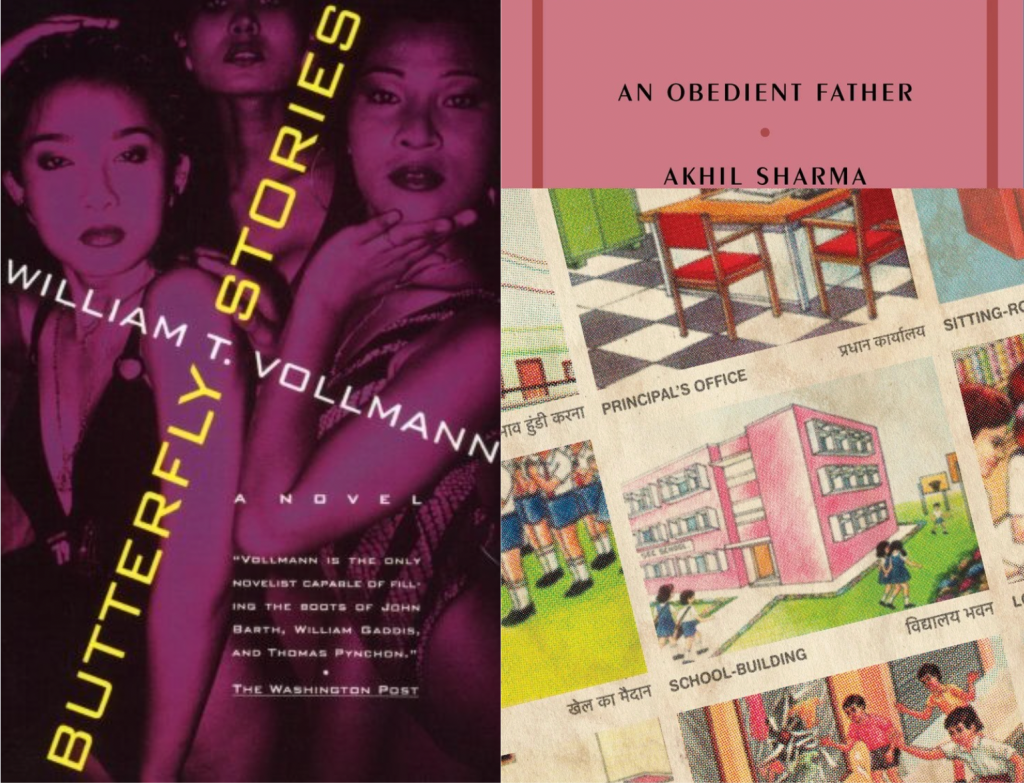
At the time, I had been reading William T. Vollmann’s Butterfly Stories (1994), that had these representational qualities, which seemed honest and direct in a way that I admired. And I had read Akhil Sharma’s The Obedient Father (2001), with shocking scenes of familial sexual child abuse, which also seemed to me to shift the paradigm about Indian fiction from the fantastical (magical realism) and the spiritual to the concrete, banal, and amoral, in helpful ways.
)
I write against what I see to be implicit bans. So, one would be a white man writing about sex in India. Another ban would be against rendering a depiction, even if true to my experience, that would strike readers as negative, sexist, dysfunctional, polarising, etc. I wanted to write characters that weren’t necessarily appealing but captured some element of my experience. Lastly, I wanted to write about a particular perspective that I noticed in myself. I want to live life as a moral exemplar for my own conscience’s sake and now for my family’s, but how could I write about something I see as basically negative (a dysfunctional sex drive, a dysfunctional relation of the sexes) if I stood away from it, a judgy American other? So, as a white man attracted to South Asian women (if I can even say that), and as a basically straight man whose sexual experiences in India have taken place while hanging out mostly with both straight and but sometimes gay men, how would the position of complicity weigh on a subject’s consciousness, if only in the role as a silent witness? But also, there is the assumption that the Westerner is somehow more sexualised than the Indian, which is a twisted perspectival imposition. These are the questions I was trying to raise through the character named Matt.
I’m tired of morality fables by bourgeois writers that skirt by under the banner of realist novels.
I’m tired of morality fables by bourgeois writers that skirt by under the banner of realist novels edited to promote the easing of the moral guilt of bourgeois readers. And I was tired then that there were no perspectives on this banal aspect of Indian life from the vantage of someone like me, a white American man.
That said, I never sought publication until now because I was afraid that these perspectives would be judged harshly, that the various bans I attempted to breach would hold, true to form. Now, it’s not the sexual mores of contemporary India, or the battle of the sexes, and the negative mentalities and experiences that may grow from this, that got me interested again in seeking publication for this story, but the other elements, which may seem of a secondary order, namely, writing against the moral fable of today’s novels and novels-in-miniature, the MFA short story; and my interest in the nuances of travel writing as a broad form of writing.
Translators are forced to write a mea culpa for each translation, stating that all the errors are the translator’s, never the author’s. I refuse to comply, on principle. So, instead, here, as an author, I’ll offer a mea culpa: these are my ideas, they may be wrong. Any errors in ideation or execution are my own!
Also read Matt Reeck’s story “Three Travelling Portraits: India”.
How to cite: Reeck, Matt. “No Moral at Its End.” Cha: An Asian Literary Journal, 14 Jul. 2026. chajournal.com/2026/07/10/no-moral.

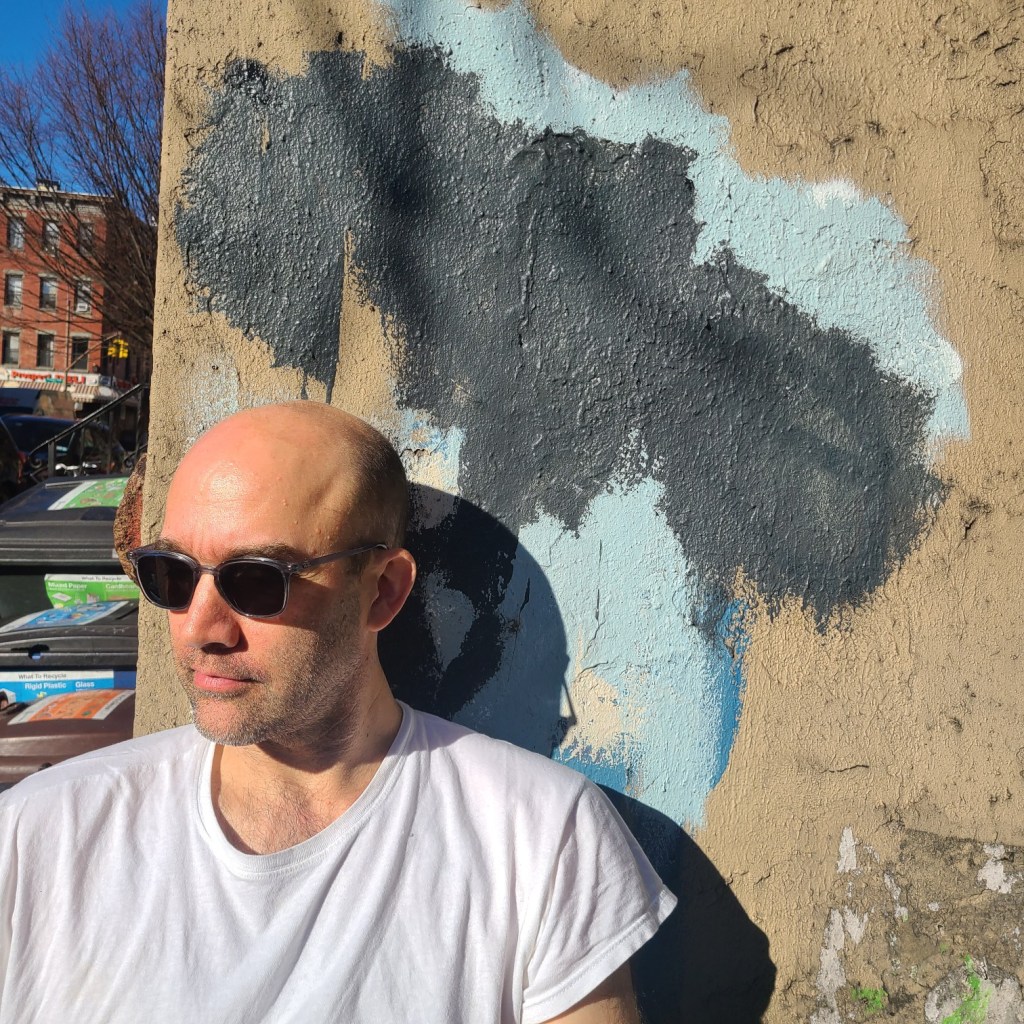

Matt Reeck‘s website describes him as a translator, poet, and scholar, though he is considering changing it to a translator, writer, intellectual, and dissident. A Guggenheim Fellow in Translation, he translates from Hindi, Urdu, French, and Korean. His poetry, translations, essays, and reviews have recently appeared, or are forthcoming, in A Public Space, Fence, Harp & Altar, The Diagram, On the Seawall, Jacket 2, Himal, Wasifiri, and Hopscotch Translation. This is his first published work of fiction. [All contributions by Matt Reeck.]
 Cha
Cha 