

茶 FIRST IMPRESSIONS
茶 REVIEW OF BOOKS & FILMS
[FIRST IMPRESSIONS] “Resurrecting the Memories of the Chinese Passengers on the Titanic: Steven Schwankert’s The Untold Story of the Titanic’s Chinese Survivors” by Susan Blumberg-Kason
Click HERE to read more about The Six on Cha.
Steven Schwankert, The Six: The Untold Story of the Titanic’s Chinese Survivors. Simon & Schuster, 2025. 240 pgs.

Des Voeux Road was the address of eight passengers aboard the Titanic, although until recently their identities were all but unknown.
As Steven Schwankert writes in his new book, The Six: The Untold Story of the Titanic’s Chinese Survivors, stories of the Titanic‘s survivors and deceased have been told and retold over the last century, but the only recounting of the six Chinese survivors, and the two who perished, has been not only inadequate and incorrect, but too often nonexistent.
When the Chinese passengers on the Titanic have been remembered, it has been for two things: first, they were branded as stowaways; second, the six who survived were thought to have dressed as women to bypass the call for “women and children first” as the ship was sinking. Schwankert dispels both myths and resolves other mysteries surrounding the eight Chinese passengers.
As he writes at the outset of The Six, most of the earliest Chinese immigrants in the United States came from Taishan in southern China. The same held true for the Titanic‘s passengers. So why the Des Voeux address?
As Schwankert explains, for any man in southern China, usually meaning Taishan, finding employment overseas around the turn of the last century would often mean passing through the British port of Hong Kong:
Upon arrival in Hong Kong, Taishan men found their way to the western end of Hong Kong Island, along Des Voeux Road West. Here they found a series of boarding houses, employment agencies and remittance offices catering for them. Men just in from the sea or some other assignment mixed on the street with the new arrivals. Some would visit shops to restock, then go to a restaurant for a decent meal before their next ship set sail. An employment agent could get a young man a job on a ship for a fee (the agent also collected a fee from the ship for recruiting each new mariner.) Given the vast number of ships moving in and out of Hong Kong, someone wanting a job on a ship need not wait long to find employment.
All eight of the Chinese passengers were listed together on the ship’s log, but it was not easy for Schwankert to identify these passengers, as their names were listed in an incomplete way. Instead of using the passengers’ surnames and two given names, the ship’s log only included the surnames and one of the two given names.
According to Schwankert, the Chinese passengers held third-class passage on the Titanic, sailing from England to the United States, because they were employed by the Donald Steam Ship Company, and would probably then sail on to Cuba or Jamaica. Owing to the Chinese Exclusion Act of 1882 and subsequent American laws that further restricted Chinese immigration to the United States, it would be highly unlikely that these men would have been able to stay on in America to work:
In New York, they would meet SS Annetta, a Donald Line fruit boat or cargo ship that mostly carried foodstuffs that was leased to the Atlantic Fruit Company. Upon arrival in New York, Titanic was due to stop at the Ellis Island Immigration Station, where customs and immigration officials would register and inspect Third-Class passengers. The Chinese would receive particular scrutiny; although few Chinese passed through Ellis Island, it was still a major US port of entry and they would be required to prove their travel status and undergo a medical examination before proceeding further and meeting their ship.
But the Titanic never made it to New York. Schwankert tells this part of the story in an especially chilling way.
The White Star Line had built the Titanic as the largest passenger ship of its day, believing it had learned enough from previous shipping accidents, also fatal, to design and build the Titanic to withstand collisions. The captain of the Titanic, Edward J. Smith, had been involved in an accident with another White Star ship, the Olympic. Although no one died in this accident, a collision with another vessel, Smith was rewarded with command of the Titanic‘s maiden voyage, which would be his last before retirement.
Schwankert writes that the two Chinese passengers who died, Len Lam and Lee Ling, knew another passenger, known on the roster as Fang Lang, but who usually went by the name Fong Wing Sun. Schwankert learned the most about Fong during his research, tracing the years after Fong stopped working on ships in 1920. He spent many years in Chicago, and in 1952 he moved to Milwaukee. He became an American citizen in 1956 and only then decided to look for a wife. He was 62 years old. Friends in Hong Kong introduced him to the 23-year-old Tom Ah Fong. The marriage was not a happy one.
The cover of the book includes a blurb from James Cameron, the Oscar-winning director of the film Titanic. Schwankert had met Cameron before he began writing The Six and contacted him again for his research on this book. One of the most fascinating parts of this book comes at the end, when Schwankert writes about his research, not only on this book but also on Poseidon: China’s Secret Salvage of Britain’s Lost Submarine, a book he published a decade ago about finding a lost submarine off the coast of Weihai. With both The Six and Poseidon, Schwankert produced award-winning films with Arthur Jones about these wrecks.
Schwankert has certainly found a topic in Chinese history with universal interest, worthy of both books and film. Perhaps there is another shipwreck he has yet to find.
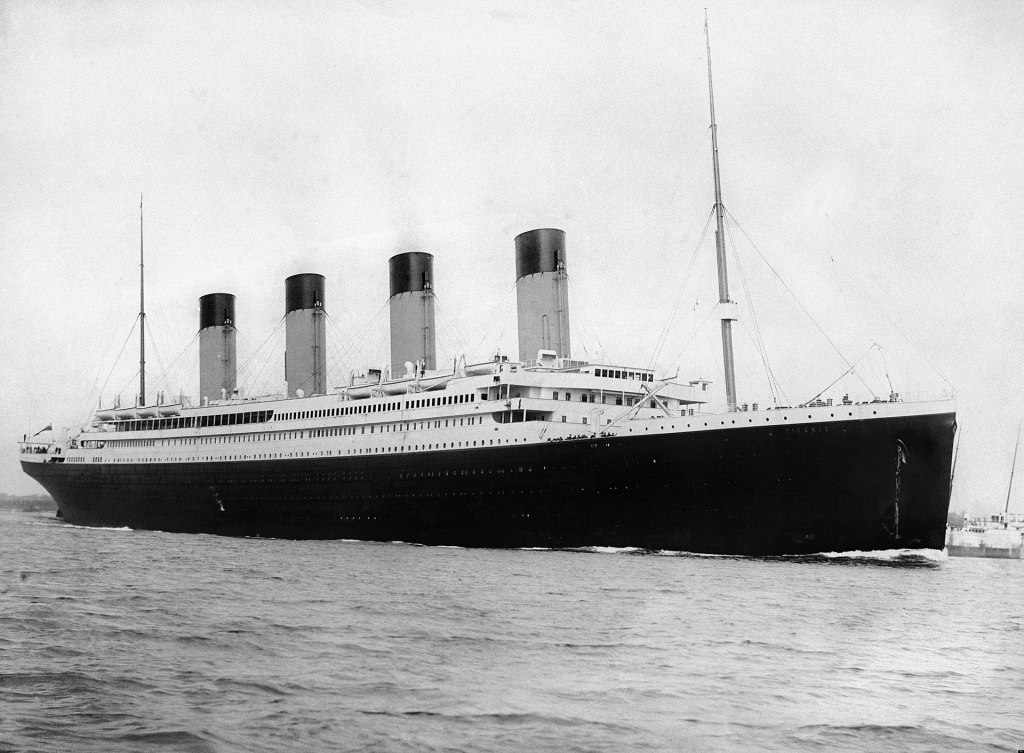
The Titanic
How to cite: Blumberg-Kason, Susan. “Resurrecting the Memories of the Chinese Passengers on the Titanic: Steven Schwankert’s The Untold Story of the Titanic’s Chinese Survivors.” Cha: An Asian Literary Journal, 8 Jul. 2026. chajournal.com/2026/07/08/the-six.



Susan Blumberg-Kason is the author of Bernardine’s Shanghai Salon: The Story of the Doyenne of Old China, a 2023 Zibby Awards finalist for Best Book for the History Lover. She is also the author of Good Chinese Wife: A Love Affair With China Gone Wrong and the 2024 Zibby Awards winner When Friends Come From Afar: The Remarkable Story of Bernie Wong and Chicago’s Chinese American Service League (University of Illinois Press, 2024). She is the co-editor of Hong Kong Noir and a regular contributor to the Asian Review of Books, Cha and World Literature Today. Her work has also appeared in the Los Angeles Review of Books and PopMatters. Visit her website for more information. (Photo credit: Annette Patko) [Susan Blumberg-Kason and ChaJournal.]
 Cha
Cha 