
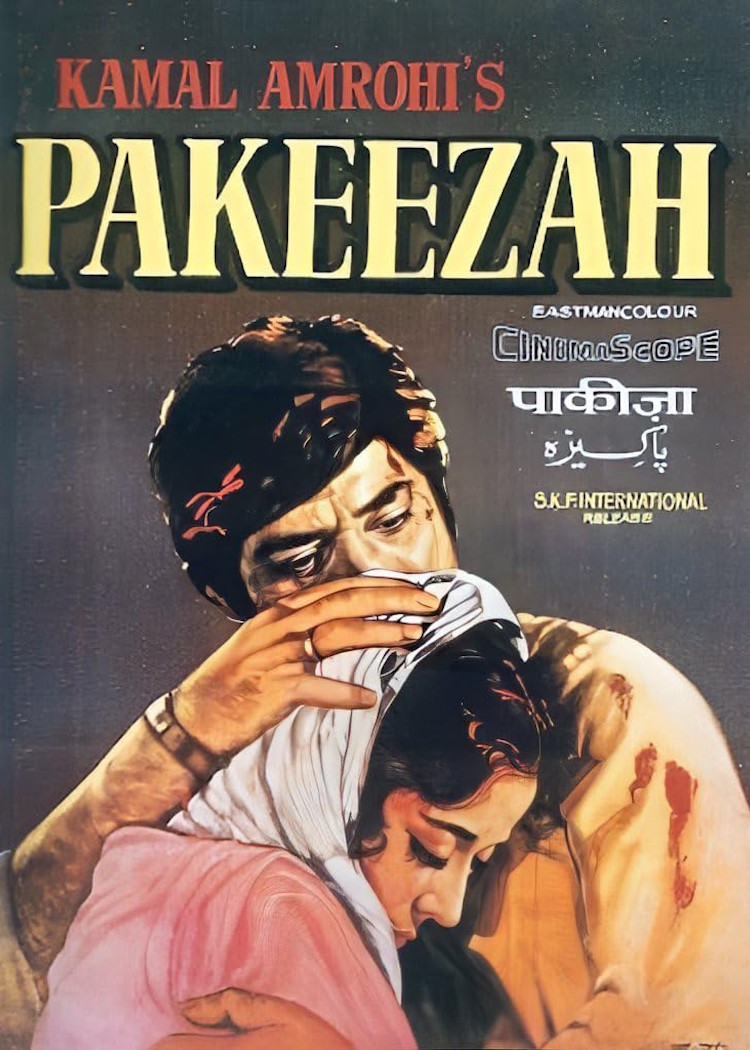
茶 FIRST IMPRESSIONS
茶 REVIEW OF BOOKS & FILMS
[FIRST IMPRESSIONS] “Old Anklets, Modern Cages: What Pakeezah Still Gets Right About Being an Indian Woman” by Swapna Sanchita
Kamal Amrohi (director). Pakeezah (Pure One), 1972. 147 min.
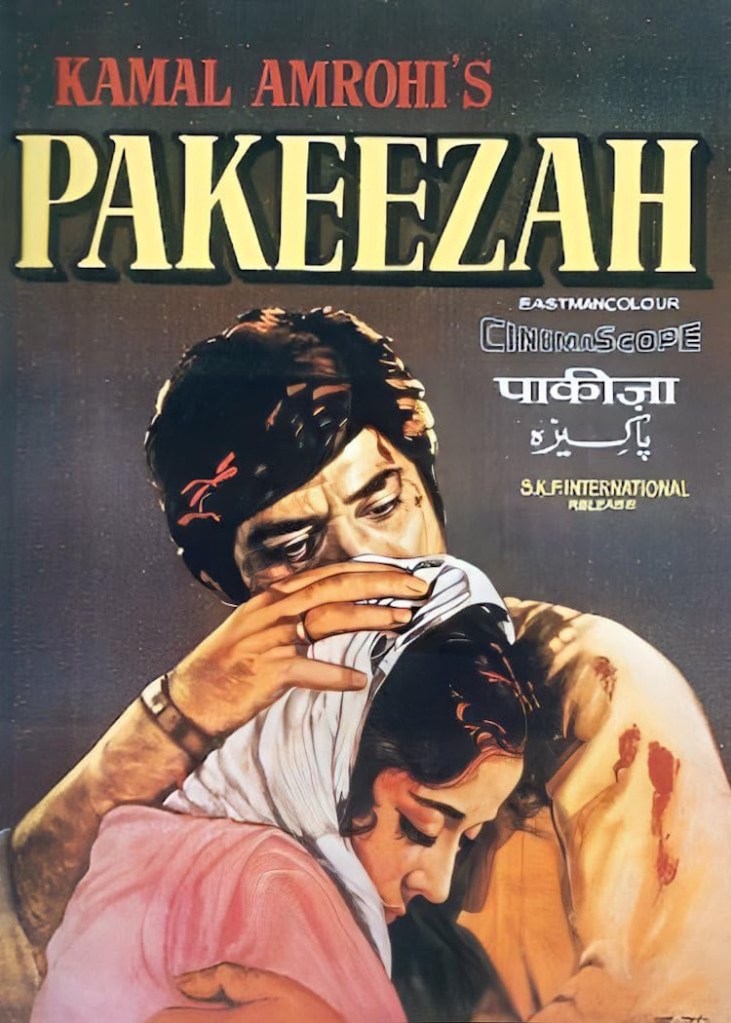
There are films that sit in the background of your childhood like old family albums.
There are films that sit in the background of your childhood like old family albums, and not just metaphorically for those of us who grew up watching films on VCRs. For years, Pakeezah was something similar. I remember my mother’s eager anticipation when it was to be aired on Doordarshan, the state broadcaster and the only channel available to a great many of us before 1990 in India. She and my aunt appeared utterly mesmerised, while a younger, impatient version of me rolled my eyes at what I thought was quintessential, slow-moving Bollywood melodrama.
But the other night, semi-reclined in my bedroom with a cup of ginger tea, I decided to watch Kamal Amrohi’s 1972 magnum opus. At 47, living through a career, a marriage and the chaotic balancing act of being a so-called modern woman in India, Pakeezah didn’t just play on my screen; it completely broke my heart.
The sheer emotional gravity of this film isn’t something you can fully grasp until you’ve seen a bit of the world and understood how deeply society loves to cage women. On the surface, it is a beautifully shot, tragic romance about Sahibjaan, played by Meena Kumari, a Lucknow tawaif (courtesan), and Salim, played by Raaj Kumar, a man from an aristocratic family who embodies unconditional love. But underneath the gorgeous silk clothes and fountain-lit courtyards lies a suffocating study of alienation and yearning.
When you look at Meena Kumari’s eyes in the musical sequences, it feels as if you aren’t just seeing an actress playing a part but witnessing a woman carrying her own real-life exhaustion and sorrow onto the screen. Every time the distant train whistle blows, symbolising a world outside her prison, a world of respectability, the ache in her character is palpable.
Salim leaves her a note: “Aapke paon dekhe, bahut haseen hain. Inhe zameen par mat utariyega… maile ho jayenge” (I saw your feet, they are very beautiful. Don’t put them on the ground… they’ll get dirty). Romantic, yes, but her feet are the very tools of her livelihood and exploitation; she dances on floors sticky with the gaze of men who praise her art but will never marry her.
Pakeezah means “The Pure One.” How ironic, then, that society labels Sahibjaan as “impure” because of her lineage and her life at the kotha (the brothel). Yet, as the layers peel away, you realise she possesses the only truly pure soul in the entire film.
The hypocrisy of the upper-class patriarchs, who sneak into the brothels at night but deny them in disgust during the day, is sickening. When Salim tries to marry her and officially names her Pakeezah, it triggers her deepest identity crisis. She runs away because she has been brutally conditioned to believe that her past will permanently stain his pure world.
Watching Sahibjaan internalise societal shame is infuriating, yet deeply recognisable. We may no longer live in the 19th century, but how many modern Indian women still carry the invisible baggage of “what will people say?”
While the film technically gives us a triumphant happy ending, with Salim’s wedding palanquin defying all social conventions to rescue her, Amrohi delivers a stroke of brilliant, bittersweet realism in the very last frame. As Sahibjaan’s palanquin departs the brothel, bearing her toward freedom, the camera lingers on a young girl at the balcony, her wistful gaze fixed on the departing bride.
One woman escaped her destiny, but the system remains untouched.
That one final shot strips away the comforting illusion of a perfect Bollywood fairy tale. One woman escaped her destiny, but the system remains untouched. The young girl on the balcony represents the next generation, waiting in the wings, destined to inherit the same anklets, the same lecherous patrons and the same heartbreak. It is a haunting reminder that individual liberation does not mean systemic change. We might have corporate boardroom seats, financial independence and a modern voice, but the structural walls of the old world haven’t crumbled; they’ve just been painted over. Women are fighting the same old battles under the guise of modern progress.
Having seen this brilliant film, I had to look into it a little. Kamal Amrohi spent sixteen obsessive years meticulously crafting the film as a grand, perfectionist tribute to his wife and muse. A terminally ill Meena Kumari channelled her real-life heartbreak into Sahibjaan, delivering her legendary swansong just weeks before passing away. Composer Ghulam Mohammed created the film’s timeless, soulful soundtrack but tragically died broke before ever seeing his work become a masterpiece.
Coming to Pakeezah at this stage in my life made me realise it isn’t a melodrama at all. It is pure, unfiltered visual poetry about a woman’s fight for dignity. It hits entirely differently when you’ve lived a little.
How to cite: Snachita, Swapna. “Old Anklets, Modern Cages: What Pakeezah Still Gets Right About Being an Indian Woman.” Cha: An Asian Literary Journal, 8 Jul. 2026, chajournal.com/2026/07/08/pakeezah.



Swapna Sanchita is a poet, storyteller and educator. Despite her background in engineering and management, she has rediscovered her passion for literature and has since become the author of five children’s books and a poetry collection, Des Vu. Her poems have appeared in Muse India, Green Ink Poetry, Trouvaille Review and elsewhere. Swapna loves chocolate, coffee and books, not necessarily in that order.
 Cha
Cha 