
茶 FIRST IMPRESSIONS
茶 REVIEW OF BOOKS & FILMS
[FIRST IMPRESSIONS] “Between Branding and Belonging: Re-Imagining Creative Cities in Twenty-First Century Asia” by Suyin Haynes
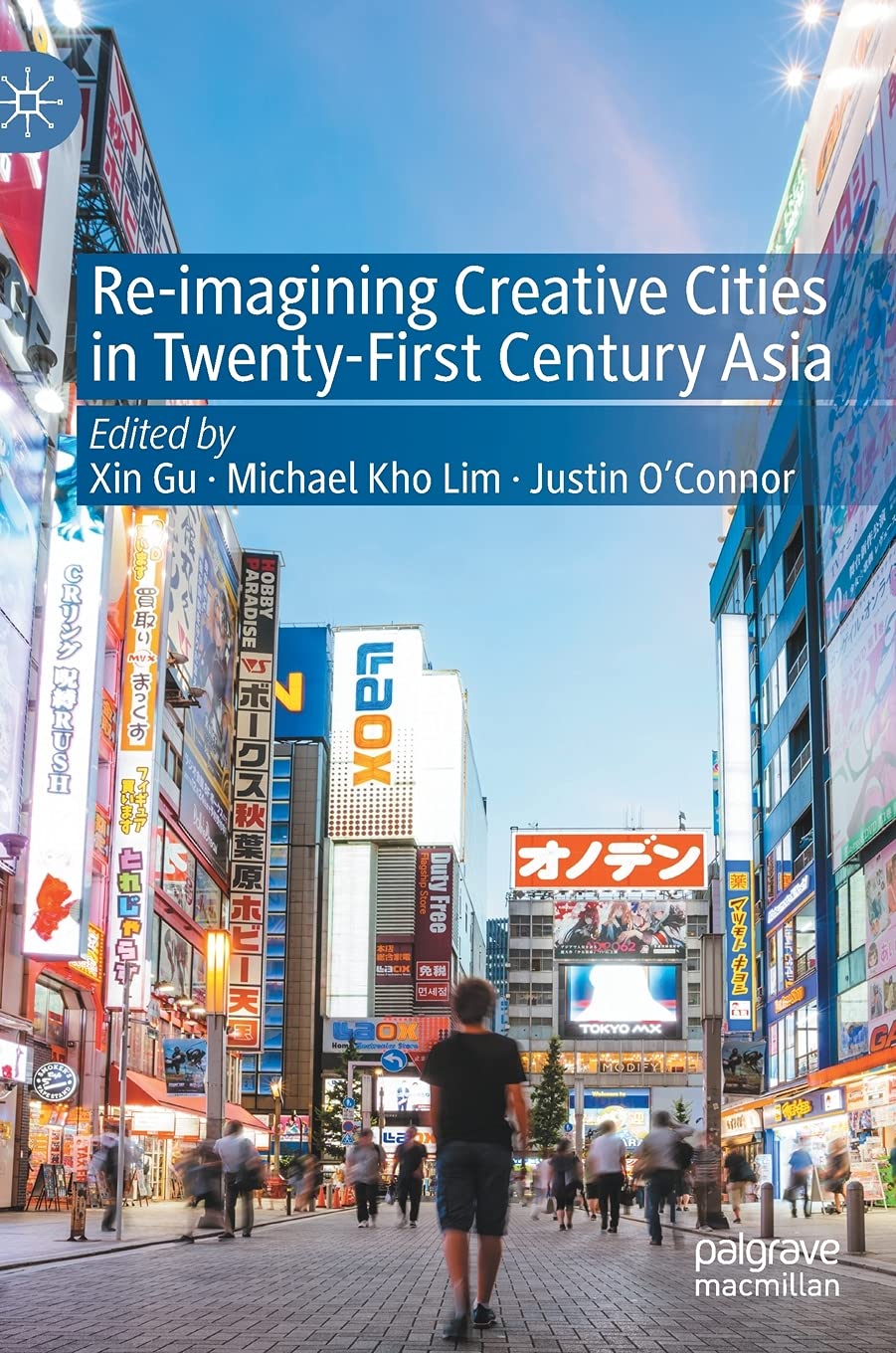
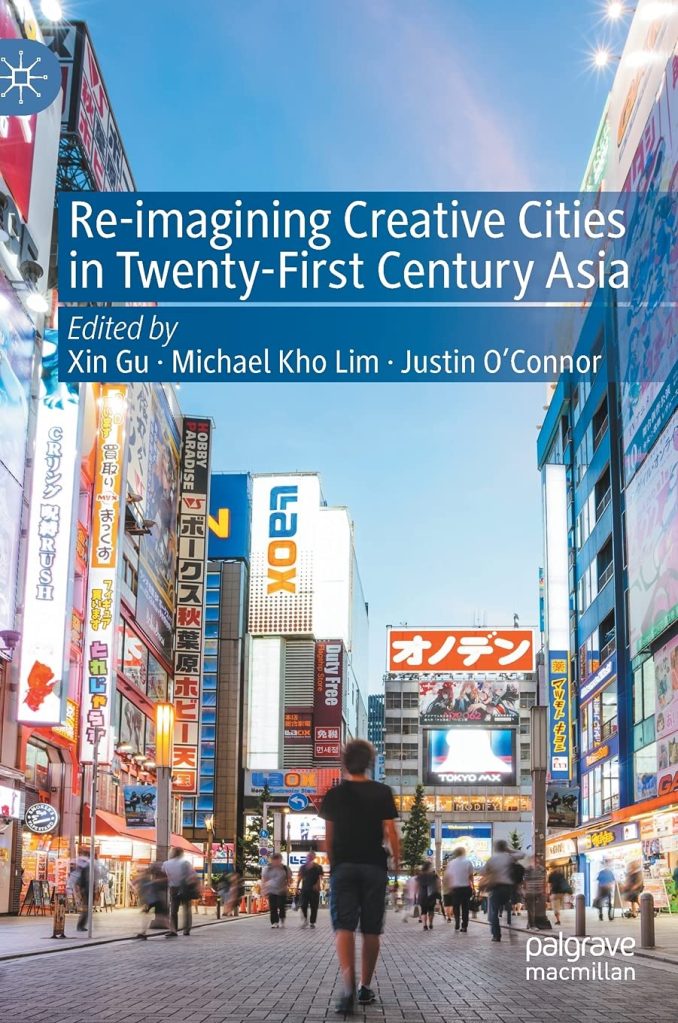
Xin Gu, Michael Kho Lim, and Justin O’Connor (editors). Re-Imagining Creative Cities in Twenty-First Century Asia, Springer, 2020. 325 pgs.
In November 2022, on one of my annual trips to visit my Malaysian maternal family in George Town, Penang, my cousin excitedly told me she wanted to take me somewhere I had not been before. “I think you’ll really like it,” she said. “It’s super artsy lah, lots of cool creative things to see.”
The space she brought me to was Hin Bus Depot, a 1940s bus depot turned creative community hub, located on the bustling main road of Jalan Gurdwara. In the twelve years since reopening and rebranding, Hin Bus Depot has become home to a thriving creative community of independent artists, working individually and collectively to stage exhibitions, events, and artistic interventions of all kinds.
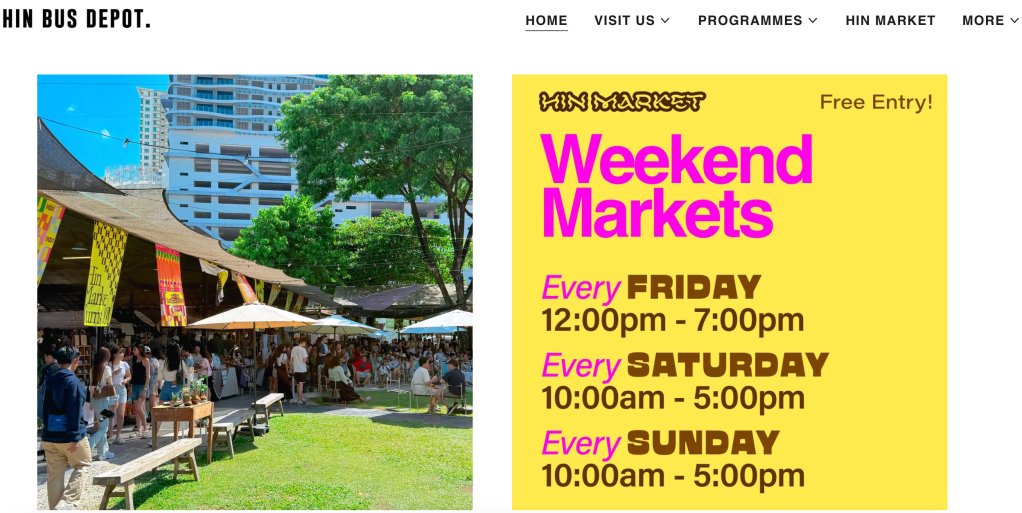
We visited on a Saturday, when a Christmas-themed market was in full flow, with illustrators and craftspeople selling handmade decorations, cards, and gifts. In the exhibition space, with its cavernous ceilings and peeling paintwork, an audiovisual installation showcased a collaborative project between arts practitioners in Borneo and the United Kingdom, highlighting forms of cultural heritage specific to both places and the connections between them. Over the same weekend, the twelfth edition of the George Town Literary Festival was taking place. There was an additional liveliness to the atmosphere in town, one I couldn’t quite recall experiencing in the same way during visits through my childhood and adolescence.
)
Hin Bus Depot, and more broadly George Town’s transformation over the last two decades into a creative city within a postcolonial context, is the focus of a chapter contributed by Zaki Habibi in Re-Imagining Creative Cities in Twenty-First Century Asia, edited by Xin Gu, Michael Kho Lim, and Justin O’Connor. Spanning case studies from urban architecture in the Philippines to the politics of the Greater Bay Area project in Guangdong-Hong Kong-Macau to an emerging creative culture of music in Ambon City, Indonesia, the book situates the concept of the creative city beyond Western debates and explores evolving processes and practices specific to the region.
The editors revisit the way in which the “creative city” as a concept emerged in the 1990s, alongside new creative industries born of industrial development and modernisation. Several contributors draw on American sociologist and economist Richard Florida’s creative class theory, which argues that creative cities are economically revitalised by a specific class of talented creatives. This class requires a creative city to meet its needs, and such concerns have become a significant factor in urban planning and development since the early 2000s.
The book’s central concern, however, is the particularity of creative classes across different locations in Asia. As the editors suggest, Asian cities have been largely absent from broader creative city discourse, yet their inclusion introduces a new dimension to scholarship on the subject.
The book’s strength lies in its ability to demonstrate and argue for a distinctly Asian approach to creative cities through a range of closely researched case studies. We see how cities have deployed effective branding strategies to market a popular imagined image in order to attract urban regeneration funding and planning, as in Michael Kho Lim’s chapter on Bonifacio Global City in the Philippines. In Jiun-Yi Wu’s chapter on Tainan City, Taiwan, and Phitchakan Chuangchai’s chapter on Chiang Mai, Thailand, the authors make clear arguments about the pressures that rapid growth places upon local cultures and communities, particularly when those cultures are part of the very commodification that underpins a city’s branding as a “creative city.” And in Habibi’s chapter on George Town, interviews with members of the creative collectives inhabiting Hin Bus Depot reveal how they have disrupted state-led programmes that romanticise the city’s cultural memory, forming their own organic artistic space in doing so.
)
As someone interested in cities, particularly in their representation and reimagination, I found the volume a fascinating and wide-ranging read. Yet, while the authors argue that Asian cities have been underrepresented in creative cities literature, there is a notable imbalance of representation within the book itself: only one contribution focuses on a city in South Asia (an exploration of the Bollywood industry in Mumbai by Anubha Sarkar), compared to three chapters located in Seoul. This reflects a common difficulty in literature about “Asia” more broadly, in that what constitutes Asia is its own imaginary space, dependent on one’s perspective.
It is also worth noting that this book was published in 2019; several of the issues and fault lines identified within its chapters will no doubt have been dramatically altered or exacerbated by the impact of the COVID-19 pandemic. Such developments would provide rich material for a second volume of follow-up essays and case studies.
Having spent most summers and Christmases in Penang while growing up, I had never quite conceptualised George Town as a city; perhaps my view was shaped by the experience of living in London for most of the time. Yet in reflecting on the activity of my 2022 visit, and in reading this work, I see how distinct George Town’s character as a city is, and the tensions that exist between the different communities and stakeholders involved in directing its image and identity. The sixteenth edition of the George Town Literary Festival is forthcoming in November; in researching for this essay, I looked up its website for further information. Bold lettering displays this year’s apt theme: cosmopolises.
How to cite: Haynes, Suyin. “Between Branding and Belonging: Re-Imagining Creative Cities in Twenty-First Century Asia.” Cha: An Asian Literary Journal, 15 Jun 2026, chajournal.com/2026/06/15/creative-cities.



Suyin Haynes is a Malaysian British writer, researcher, and educator based in London, focused on storytelling at the intersections of identity, culture, and underrepresented communities. She is a Lecturer in Journalism at City St George’s, University of London, and is completing an MA in Southeast Asian Studies at SOAS, with a focus on film and visual culture. [All contributions by Suyin Haynes.]
 Cha
Cha 