
茶 FIRST IMPRESSIONS
茶 REVIEW OF BOOKS & FILMS
[REVIEW] “Family, Failure, and Historical Memory in Sagisawa Megumu’s The Running Boy and Other Stories” by James Kin Pong Au
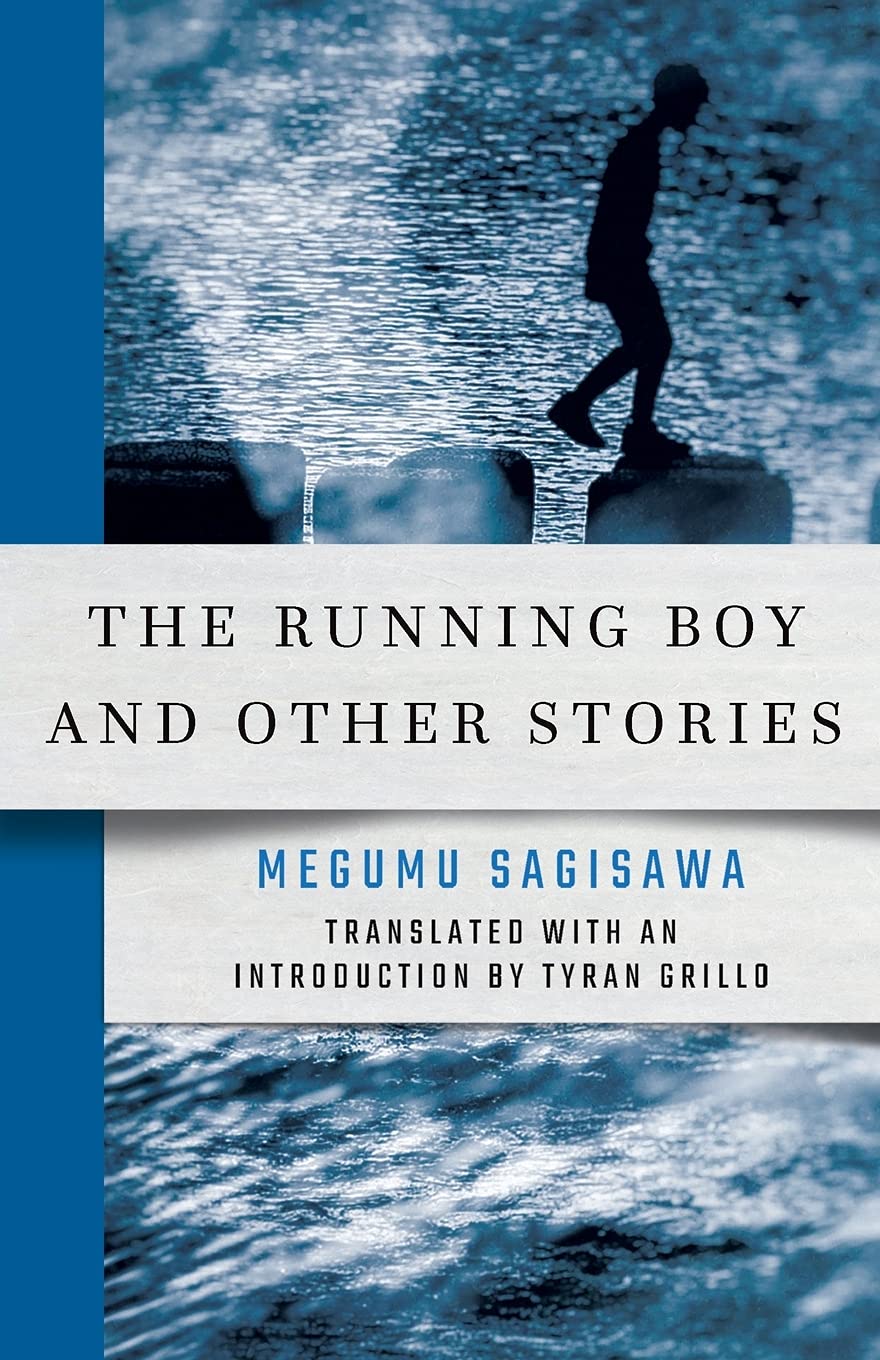
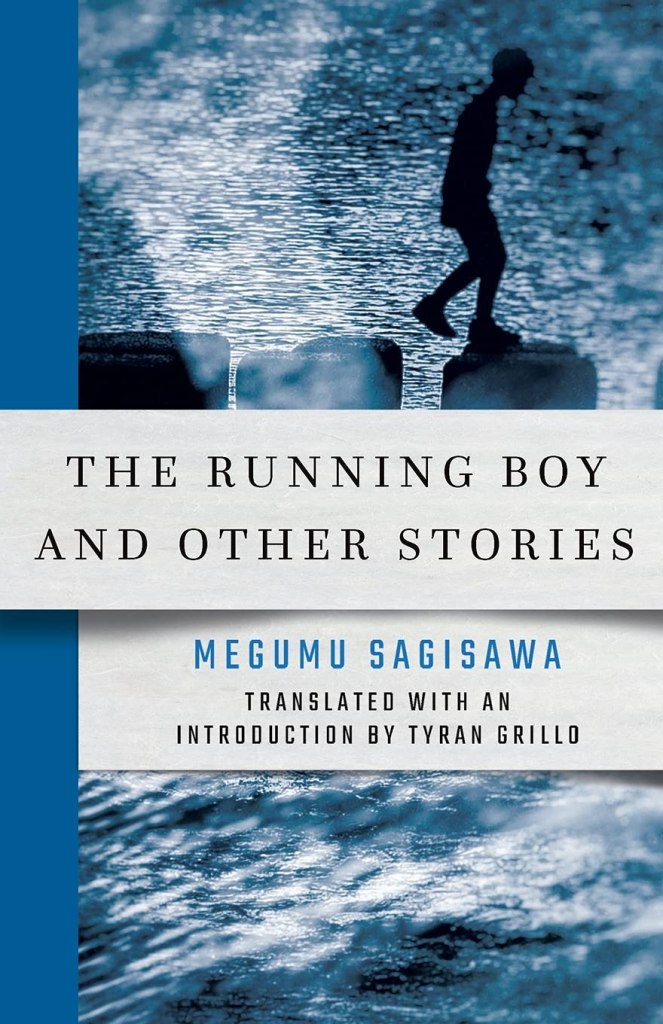
Sagisawa Megumu (author), Tyran Grillo (translator). The Running Boy and Other Stories, Cornell University Press, 2020. 122 pgs.
My first impression after reading “The Running Boy” (『駆ける少年』, 1987) and the two other stories, namely “Galactic City” (『銀河の町』, 1989) and “A Slender Back” (『痩せた背中』, 1991), is a profound sense of nostalgia, or a lingering sense of loss. This impression arises not only from the setting of each story but also from the depiction of the social backgrounds to which the characters belong. For instance, in “Galactic City”, the first story in the collection, the reader is immediately introduced to “Oba-chan” (or auntie or elderly woman), the aged proprietor of a snack bar. As the translator notes in the introduction, the snack bar emerged shortly after the end of the Second World War to serve American soldiers during the Allied Occupation. However, the narrative reveals that its prime has long since passed, with its regular customers gradually disappearing due to old age. A particularly acute sense of insecurity arises from Oba-chan’s confession, almost a helpless lament, that her establishment will stand empty once all her regulars have died. Tatsuo, the protagonist, functions as a younger observer in his thirties, bearing witness to the decline of this once thriving establishment.
Yet Tatsuo himself appears haunted by the past. Despite his distinguished educational background, which enabled him to secure a position at a highly sought after company, he was deceived by a university classmate in an investment scheme seven years earlier. As a consequence, he was compelled to change workplaces repeatedly, while Kyoko, his girlfriend and former colleague, also left her job and eventually became a hostess. Undoubtedly, the investment fraud experienced by the characters parallels Japan’s bubble economy of the late 1980s and early 1990s, a period characterised by a vast asset bubble.
Similarly, in “The Running Boy”, although the second story assumes the form of a mystery, in which a son, Tatsushi, uncovers an irregularity in his grandfather’s family name within a death register during a visit to his father Ryūnosuke’s temple, it also demonstrates how the family has been shaped by a broader historical context. His grandfather Tomoto’s life with a mistress whom he brought back from Manchuria after the end of the Second World War, the triangular relationship among Tomoto, the mistress, and Fumiko, and Ryūnosuke’s failure in the publishing business all correspond to the wider trajectory of Japan, from the Second World War through the period of economic miracle to the bubble economy.
Tatsushi runs in pursuit of the truth behind his family genealogy, but on a deeper level, he also runs after his own father.
It is likely because of this inherited familial burden that Tatsushi, like his father, establishes a company of his own, even while facing financial crisis. When one examines the kanji in both Tatsushi’s name, “龍之”, and his father Ryūnosuke’s, “龍之介”, the first two characters are identical. The public misreading of Tatsushi’s name causes him unease, yet his pursuit of a similar career path, together with his attempt to trace the authentic family history of his father and grandfather, suggests otherwise. This is why the word “running”, or kakeru (駆ける), carries a double meaning. On a surface level, Tatsushi runs in pursuit of the truth behind his family genealogy, but on a deeper level, he also runs after his own father, who, albeit implicitly, is the object of his imitation.
If “The Running Boy” is a story about Tatsushi’s attempt to shorten the distance between himself and his father, Ryūnosuke, then “A Slender Back” presents the opposite. Ryōji Nakata distances himself from his troubled father in Takasaki and has lived in Tokyo since high school, learning of his father’s death only at the age of twenty two. Like Ryūnosuke in “The Running Boy” and Tatsuo in “Galactic City”, Ryōji’s father also experiences a significant failure in his career, as the once aggressive stockbroker reaches his nadir during the oil crisis. At this point, Ryōji’s mother divorces him. As Ryōji himself observes, or perhaps as the narrator encourages him to perceive, the trajectory of his father’s life is closely bound to Japan’s economic growth and decline, after which his father descends into hardship and becomes addicted to sleeping with random women.
Later, Machiko, a young woman perhaps around ten years older than Ryōji, comes to live with them, bringing a brief period of stability before his father’s destructive habits intensify once more. In this final story, the reader encounters Machiko only through Ryōji’s limited perspective. He learns that she was an orphan, with no one to care for her before coming to live in Takasaki. When Ryōji’s father begins returning home increasingly late, Machiko attempts suicide by cutting herself. Ryōji initially believes that she remains simply because she seeks someone to rely upon, but he ultimately realises that he is mistaken. She loves his father, Oisan.
Ryōji’s departure from Takasaki may be understood as an attempt to evade everything, including the fraught relationship between Machiko and his father. Yet such a withdrawal may also be interpreted as a rejection of the past. When the three stories are read together, it becomes apparent that although the protagonists respond differently to their pasts, Tatsuo’s passivity following the investment scam, Tatsushi’s active uncovering of a buried family history, and Ryōji’s retreat from it, they all share a common nexus in which personal memory and national history converge, namely the bubble economy, the oil crisis, and the post war period. This may be understood as Megumu Sagisawa’s broader project, to examine the past by situating characters from diverse backgrounds across different narratives.
)
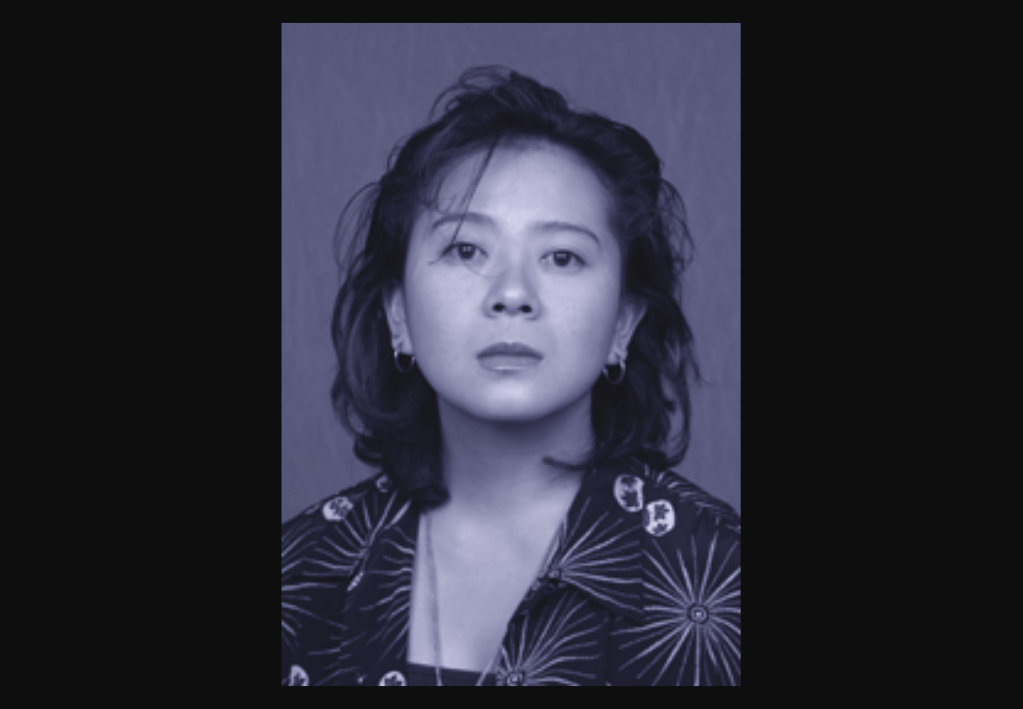
Sagisawa Megumu (1968-2004)
Extending the analysis beyond this collection to Sagisawa Megumu’s other roughly contemporaneous stories, such as “The Deceased” (『帰れる人々』, 1989) and “The Path by the River” (『川べりの道』, 1987), one finds that the characters are similarly bound to troubled pasts. The former centres on the theme of “place of belonging”, or ibasho (居場所), which Murai, the protagonist, has lost due to his father’s involvement in a scam leading to bankruptcy, much like Tatsuo in “Galactic City”. The latter likewise depicts a fractured family in which a father meets his son Gorō once each month to provide him and his half sister with an allowance.
Even one of Sagisawa’s most light hearted stories, “Teenage Summer” (『ティーンエイジ・サマー』), in which Harata and his high school friends reunite after graduation, evokes a sense of nostalgia, particularly through the depiction of how the characters skip classes to watch Diner, the 1982 American comedy drama film, at a cinema in Meguro.
)
Returning to The Running Boy and Other Stories, what may render this collection challenging for English language readers to fully appreciate is its strongly localised elements. For example, for Japanese readers it is relatively straightforward to associate residents of Setagaya with affluence, while working as a hostess in Shinjuku, as Kyoko does in “Galactic City”, carries specific social and economic connotations, particularly in relation to Kabukichō’s vibrant night life. Without such cultural and geographical awareness, these place names in translation may remain empty signifiers, however effective the translation itself may be.
Ultimately, The Running Boy and Other Stories presents characters who cannot easily disentangle themselves from either family or history, rendering nostalgia in Sagisawa not merely a sentimental mood but an inescapable confrontation with the past.
Bibliography
▚ Megumu, Sagisawa (2024 [2018]). Kaerenuhitobito [The Deceased]. Kōdansha.
▚ — (2015). “Tineji sama” [Teen-age Summer], Gendai shōsetsu kuronikuru 1990-1994. Kōdansha bungei bunko, pp. 17-54.
How to cite: Au, James Kin-Pong. “Family, Failure, and Historical Memory in Sagisawa Megumu’s The Running Boy and Other Stories.” Cha: An Asian Literary Journal, 12 May 2026, chajournal.com/2026/05/12/running-boy.



James Kin-Pong Au holds Master’s degrees from Hong Kong Baptist University and the School of Oriental and African Studies (SOAS), University of London. He is currently a PhD candidate at the University of Tokyo, where he is writing his dissertation on the relationship between history and literature through close readings of East Asian historical narratives from the 1960s. His research interests include Asian literatures, comparative literature, historical narratives, and modern poetry. In his leisure time, he writes poetry and studies Spanish, Korean, and Polish. He teaches literature in English as an assistant professor at Tama Art University. [All contributions by James Kin-Pong Au.]
 Cha
Cha 