
茶 FIRST IMPRESSIONS
茶 REVIEW OF BOOKS & FILMS
[REVIEW] “Chungking Dreamin’: A Review of Giorgio Biancorosso’s Remixing Wong Kar-wai” by Mario Rustan
Click HERE to read all entries in Cha
on Remixing Wong Kar-wai.
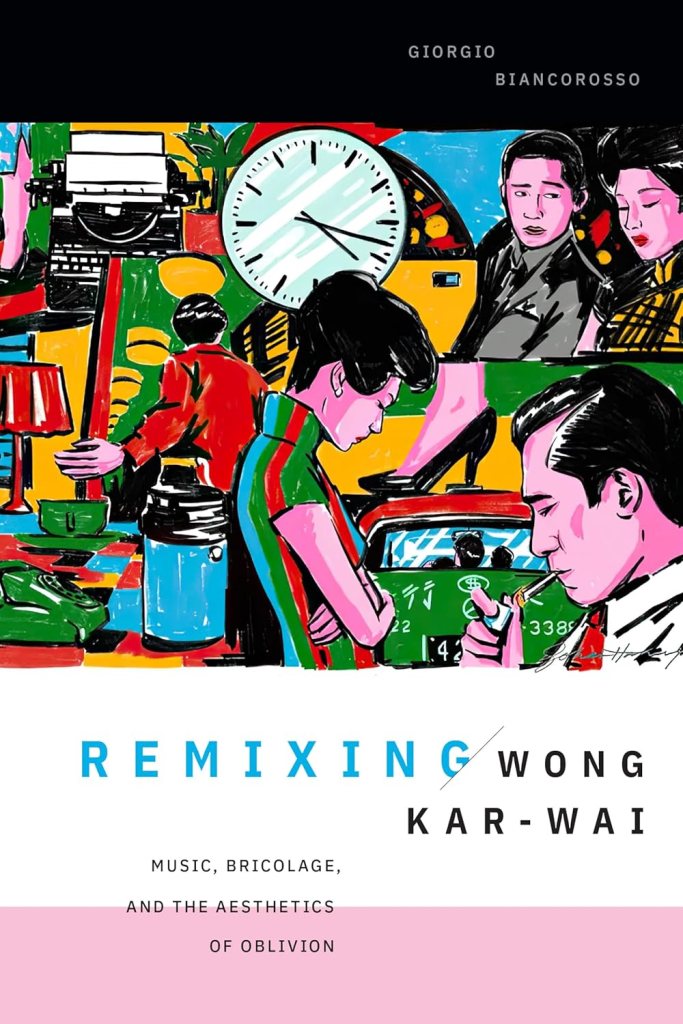
Giorgio Biancorosso. Remixing Wong Kar-wai: Music, Bricolage, and the Aesthetics of Oblivion, Duke University Press, 2025, 240 pgs.
If one had asked Western students in 2006 to name a Hong Kong film director, the responses would likely have included John Woo, Tsui Hark, and Wong Kar-wai. Woo was the most prominent name, owing to his Hollywood action films of the 1990s, while Tsui defined Hong Kong action cinema during the same decade and also directed two American films starring Jean-Claude Van Damme. Wong, meanwhile, was the preferred choice among arthouse audiences, known for his sombre romantic works.
Wong Kar-wai distinguished his films through their beautiful and atmospheric visuals, a reliance on script improvisation, a profound engagement with both contemporary and historical Hong Kong, and distinctive selections of Western music alongside Cantopop reinterpretations of popular songs. Giorgio Biancorosso, Professor of Music at the University of Hong Kong, examines the musical choices, underlying philosophies, and technical strategies that shape Wong’s use of music in his films.
The title reflects the three principal themes of the book. First, the author seeks to “remix” Wong Kar-wai. This involves analysing the films and their music through the lens of remixing techniques, which also serve as the titles of the book’s chapters, while the overall narrative follows the linear progression of Wong’s filmography.
Second, the concept of bricolage. Bricolage, a French term meaning “do it yourself”, refers literally to the result of tinkering. Biancorosso provides illustrative examples such as photomosaics, Picasso’s Bull’s Head, constructed from bicycle parts, and the work of the Japanese painter Yasumasa Morimura, who inserts his own face into reproductions of famous portraits.
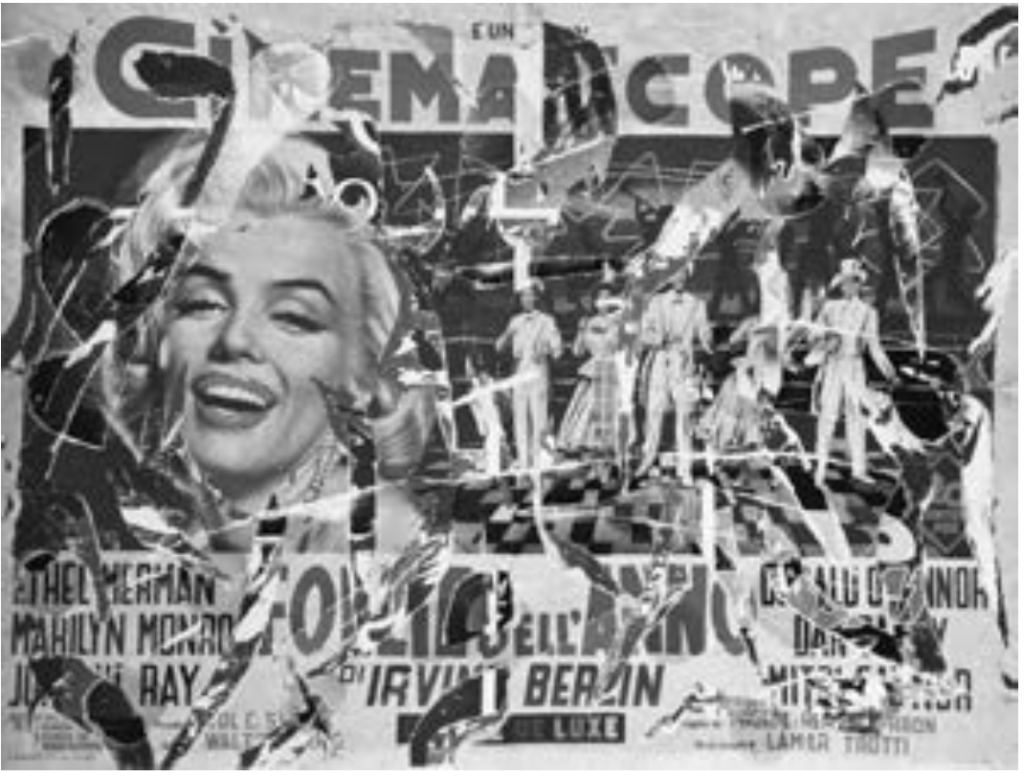
Mimmo Rotella, Cinemascope / Marylin (décollage, 1963)
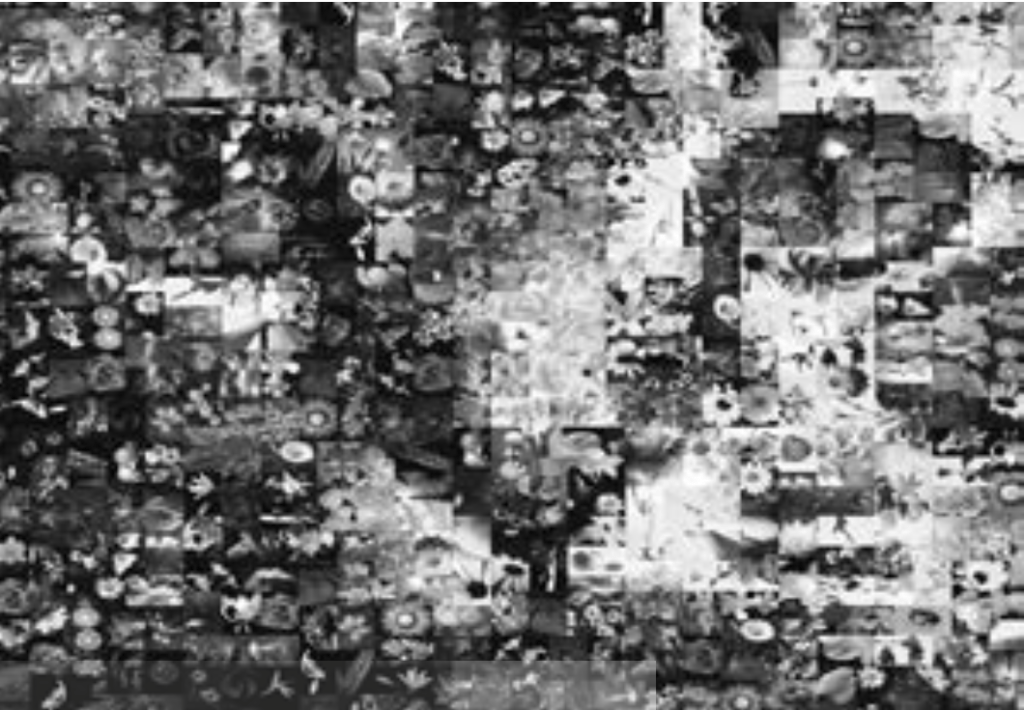
Photomosaic
The book examines Wong’s deployment of musical tracks from other films within his own, and the meanings these acquire not only within the narrative but also for his audience. The central thesis is that Wong has created new works of art through his soundtracks, rendering the selected tracks more closely associated with his films than with their original contexts.
Finally, the “aesthetic of oblivion” encompasses multiple interpretations: the oblivion experienced by his characters amid the turbulence of the narrative, the effacement of source music within characteristic Wong Kar-wai moments, and perhaps the gradual disappearance of the Hong Kong depicted in his stories.
For ease of reference while reading, a playlist of Wong’s selected songs is available here.

Andy Lau, Maggie Cheung, & Jacky Cheung:
Poor, Beautiful, & Tragic

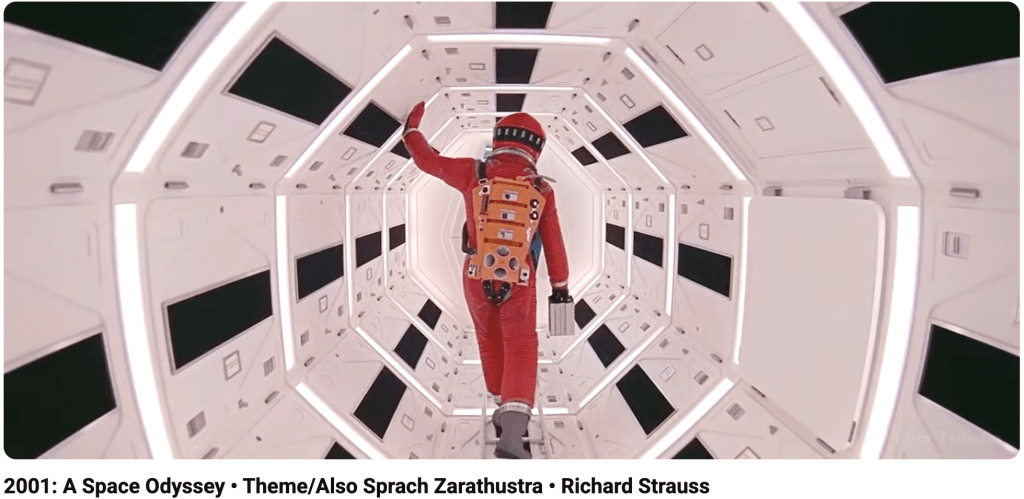
Biancorosso identifies Richard Strauss’s “Also Sprach Zarathustra”, as used in Stanley Kubrick’s 2001: A Space Odyssey (1968), as a groundbreaking instance of employing pre-existing music in place of an original score. To this day, most audiences associate its opening passages with the apes and the monolith from 2001, while advertisements and short videos continue to reinforce this association some sixty years later.
Wong Kar-wai was born in Shanghai in 1958, and his family migrated to Hong Kong when he was five. His elder siblings were unable to join them before the closure of the border between China and Hong Kong, and he grew up in relative isolation within a city marked by linguistic and cultural diversity.
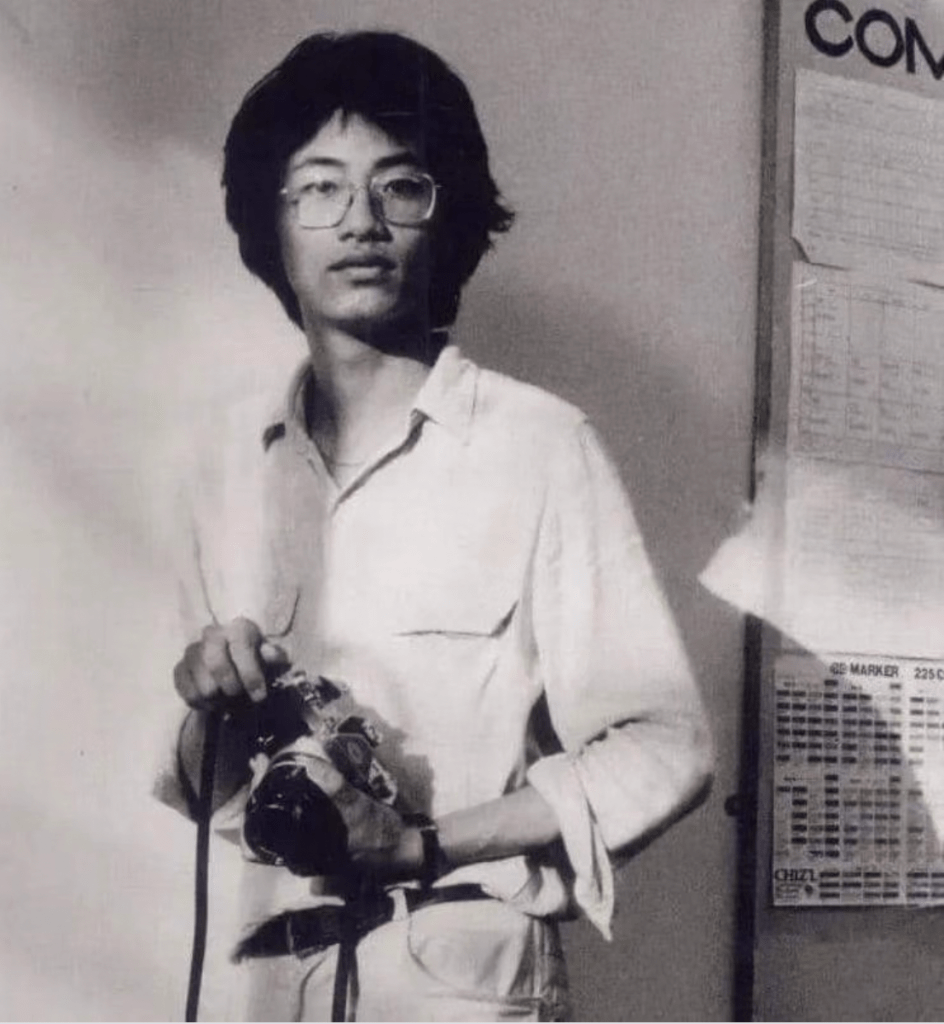
A picture of a young Wong Kar Wai, circa 1970s. Via
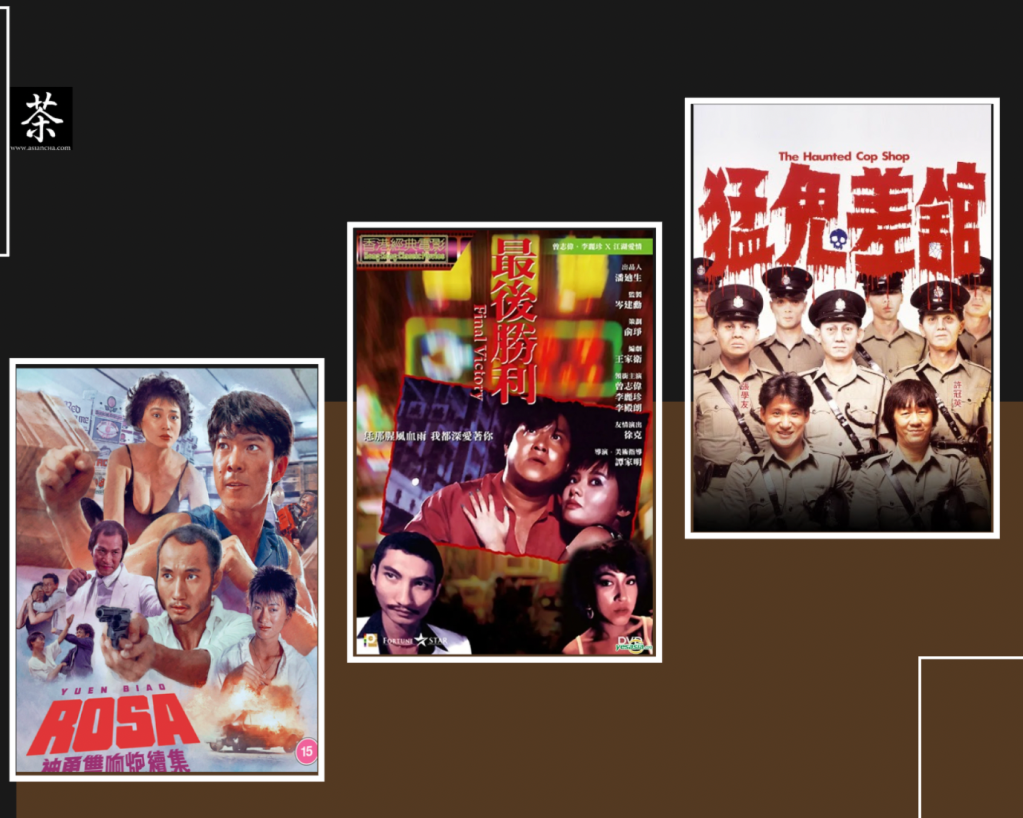
He began his career as a trainee at TVB in the early 1980s, later establishing himself as a screenwriter for films that differ markedly from the contemporary perception of his arthouse cinema. Viewers familiar with Asia Extreme action and horror films such as Rosa (1986), Final Victory (1987), and The Haunted Cop Shop (1987) might be surprised to discover his authorship.
John Woo’s A Better Tomorrow (1986) ushered in a golden age of Hong Kong cinema after 1986, and Wong introduced a distinctive variation on the gangster film with his directorial debut, As Tears Go By (1988), starring the young idols Andy Lau, Maggie Cheung, and Jacky Cheung.
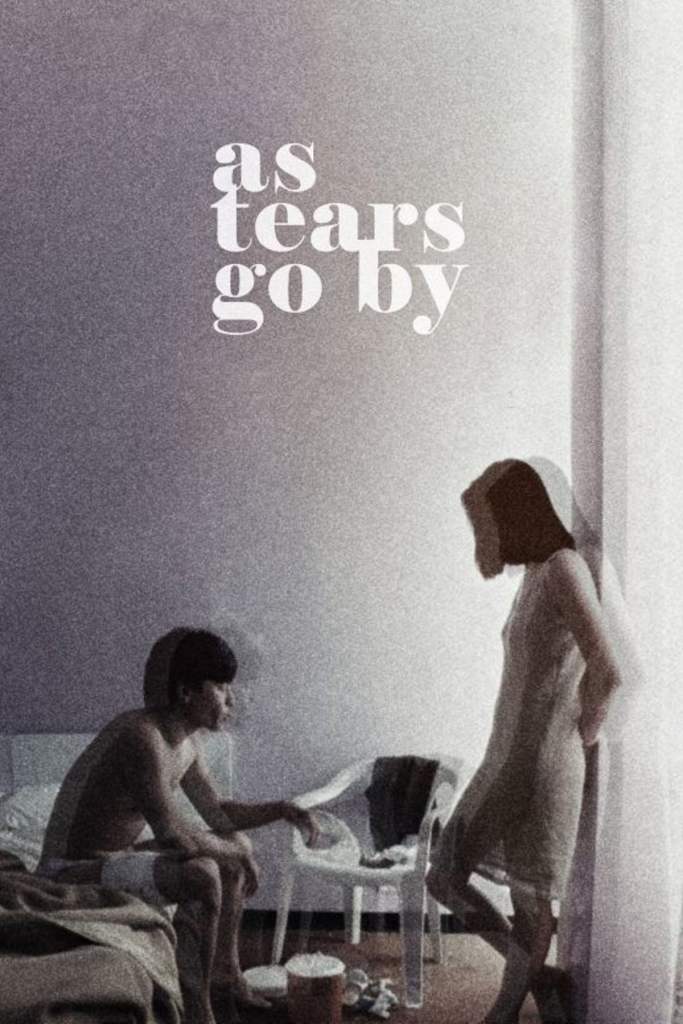
Andy Lau and Maggie Cheung
The first notable “Wong Kar-wai moment” occurs in the on-screen kiss between Lau and Cheung, set to a Cantonese cover of “Take My Breath Away” performed by Sandy Lam. The love theme from Top Gun (1986) had become part of Hong Kong’s street sound in the mid-1980s, and here it serves to convey the intensity of a romance between two modest figures, a debt collector and his waitress cousin from Lantau Island. This scene effectively recontextualises “Take My Breath Away” as a sonic emblem of Mong Kok rather than coastal California.
His second film, Days of Being Wild (1990), reunites the same principal cast and revisits a similar theme: the working class navigating the intersection of unresolved romance and violence. Set in the early 1960s, the romantic motif between the characters played by Lau and Cheung is Xavier Cugat’s “Perfidia”, a piece that was widely familiar in Hong Kong at the time through performances by Filipino bands in restaurants and hotels. Notably, the latter part of the film sees the characters departing Hong Kong for the Philippines, lending the musical choice an added layer of resonance.
DJ Wong Kar-wai
Chungking Express established Wong as Hong Kong’s foremost arthouse director on the international stage in 1994, aided in part by its historical moment. Hong Kong, despite, or perhaps because of, the imminent end of British rule, became a focal point of 1990s globalisation. It was a cosmopolitan port shaped by diasporic networks that transformed Chinatowns into localised versions of Hong Kong, supported by affordable international travel and a dynamic exchange of cultural goods, including Hong Kong films circulating in the West and Western music reaching Hong Kong audiences.
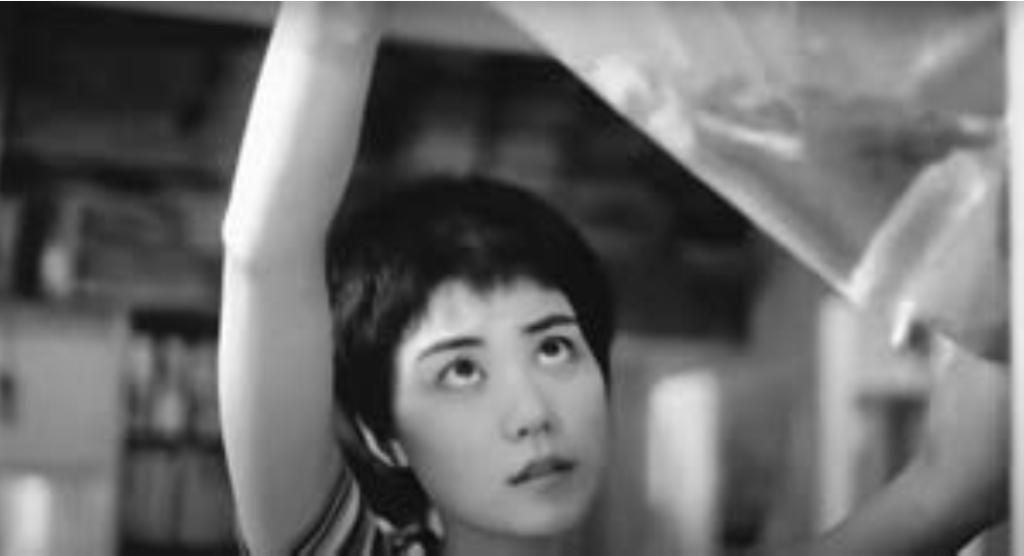
Faye Wong as herself in Chungking Express.
This globalised milieu forms the thematic core of Chungking Express, which presents two interconnected stories set in Chungking Mansions and Lan Kwai Fong. Both locations are sites where locals and foreigners intersect, yet they differ markedly in social composition and reputation. A prominent element of the soundtrack is a Cantonese rendition of “Dreams” performed by Faye Wong, while the original version by The Cranberries enjoyed popularity on Hong Kong radio during the film’s production.
Biancorosso observes that, prior to the international prominence of Hong Kong actresses and models in the late 1990s, flight attendants were widely regarded as the city’s most glamorous women, as they travelled globally and were compensated for doing so. The goods and ideas they brought back contributed to the formation of new cultural trends. This context informs the character played by Valerie Chow, a flight attendant who ends her relationship with a police officer, portrayed by Tony Leung Chiu-wai as Cop 663. Meanwhile, the central character Faye, played by Faye Wong, works in a snack bar yet aspires to become a flight attendant herself.
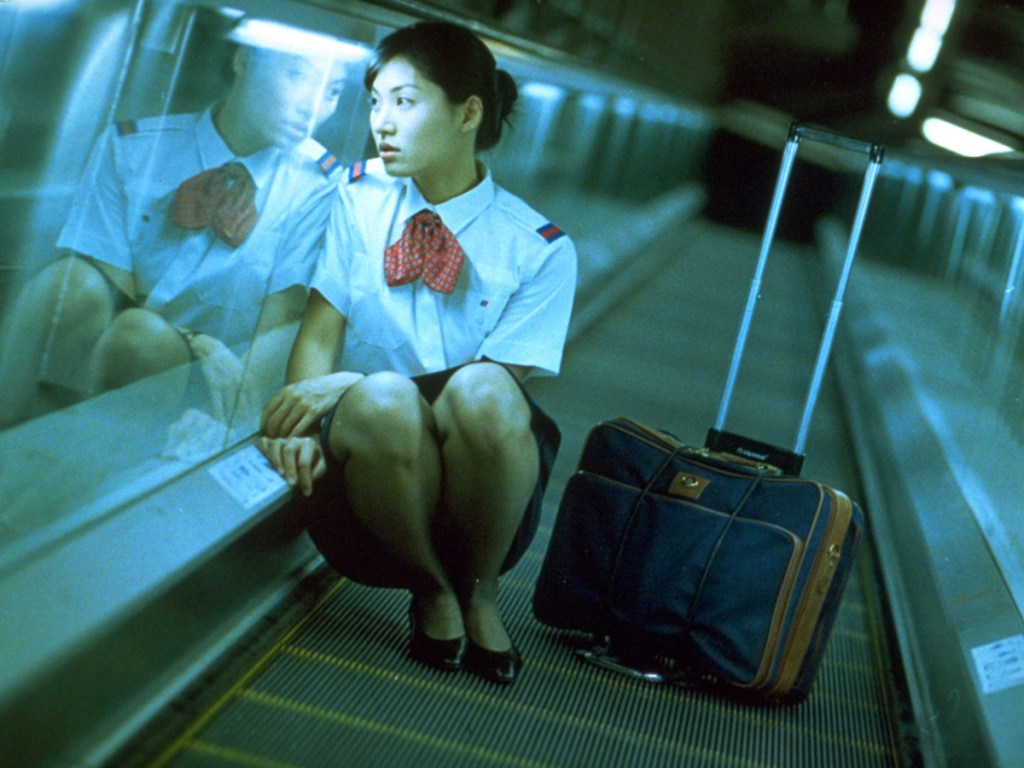
Valerie Chow plays a flight attendant in Chungking Express who ends her relationship with a police officer, Cop 663, portrayed by Tony Leung Chiu-wai
Chungking Express also incorporates the reggae track “Things in Life” by Dennis Brown and “Baroque”, a 1992 composition by Michael Galasso. Neither appears on the official soundtrack, which instead features The Mamas and the Papas’ “California Dreamin’”, Dinah Washington’s rendition of “What a Diff’rence a Day Made”, and Cocteau Twins’ “Know Who You Are at Every Age”. Indeed, Wong Kar-wai played a role in popularising the dream-pop sound of Cocteau Twins in Hong Kong, at a time when the genre’s prominence in the United Kingdom was already waning, and he influenced local artists such as Candy Lo.
Chungking Express originated as a creative diversion from Ashes of Time (1994), Wong’s ambitious foray into the wuxia genre, a project that proved so time-consuming that it yielded not only this companion piece but also a parody featuring the same cast, The Eagle Shooting Heroes (1993). His resourcefulness in producing two ancillary works while grappling with a single, demanding production is noteworthy, even if Ashes of Time became his first directed film to receive mixed reviews and a lukewarm audience response, despite its award recognition.
In 2008, Wong revisited this wuxia project with Ashes of Time Redux, prompted by the international success of the genre in the early 2000s and perhaps by renewed interest from mainland China. The original 1994 score, which bore traces of a spaghetti-western influence, was replaced with an orchestral approach reminiscent of Crouching Tiger, Hidden Dragon (2000), complemented by cello solos performed by Yo-Yo Ma.
The Grandmaster
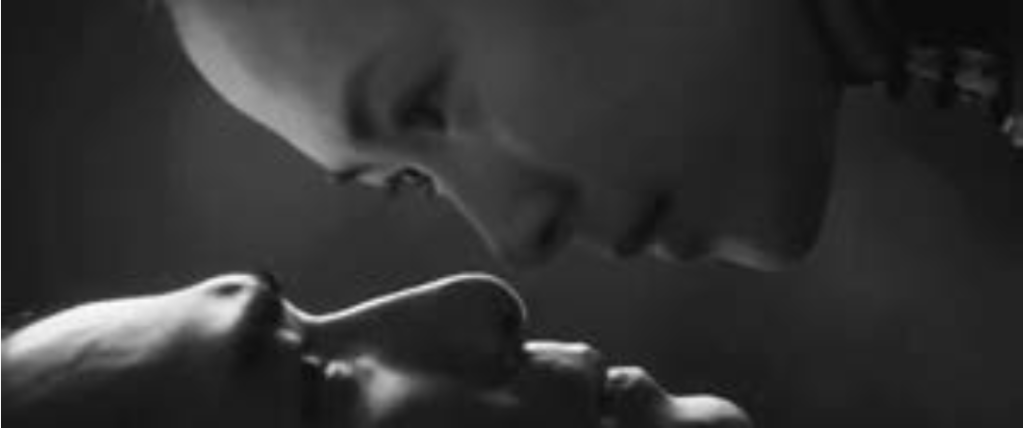
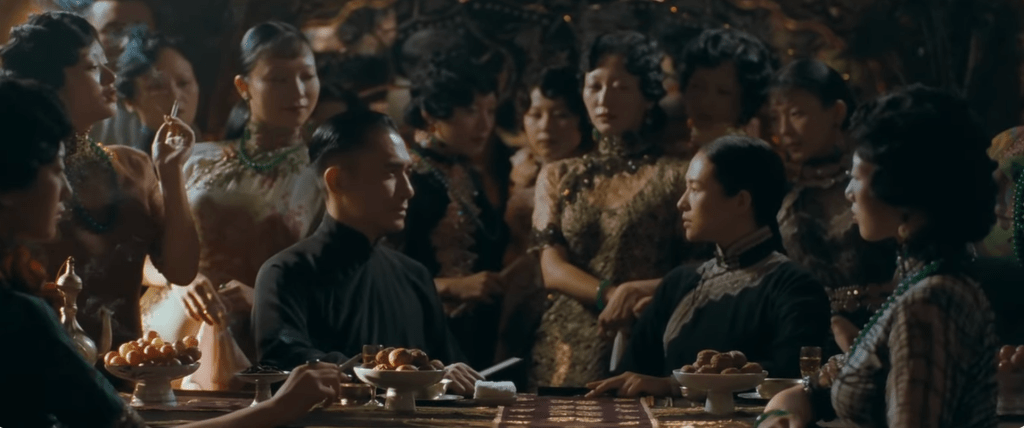
Love in midflight in The Grandmaster.
Wong rode the Asia Extreme wave of the early 2000s, when Western investors co-produced his films with the aim of securing entry into Cannes and Venice. In the Mood for Love (2000) is set across Asia, from Hong Kong to Cambodia, and continues the stories of Tony Leung Chiu-wai’s Chow Mo-wan and Maggie Cheung’s Su Li-zhen from Days of Being Wild (Leung’s character remains unnamed in that earlier film). The protracted production period became a factor in Cheung’s divorce from the French director Olivier Assayas. The title was derived from Bryan Ferry’s 1999 ballad “I’m in the Mood for Love”, as Cannes required Wong to submit his overdue entry under a distinct title.
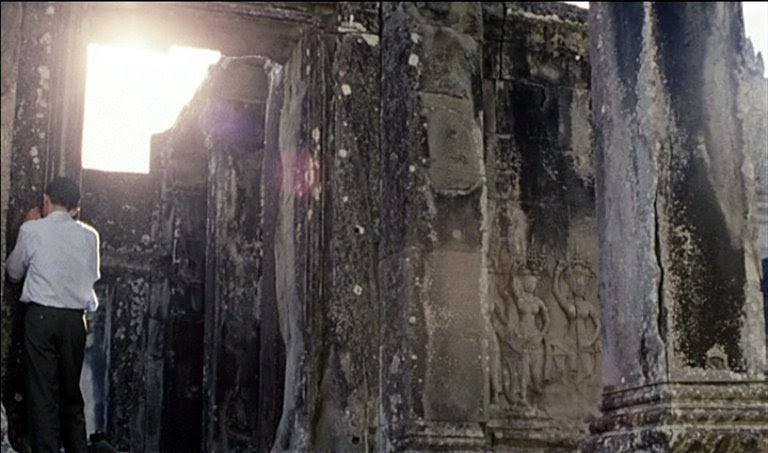
Cambodia, In the Mood for Love
The trilogy concludes with 2046 (2004), in which Cheung’s Su Li-zhen is replaced by Gong Li, presented as another woman bearing the same name. The title refers to a science-fiction novel written by Chow Mo-wan amid the riots of 1967. As is widely recognised among Hong Kong audiences, 2046 marks the final year of the territory’s Special Administrative Region status under China. The film reflects upon the end of British Hong Kong through the emotional dislocation of its characters, within an international co-production that includes Shanghai Film Corporation. Cugat’s Perfidia returns, alongside two versions of the Cuban classic “Siboney”, performed by Xavier Cugat and Connie Francis.
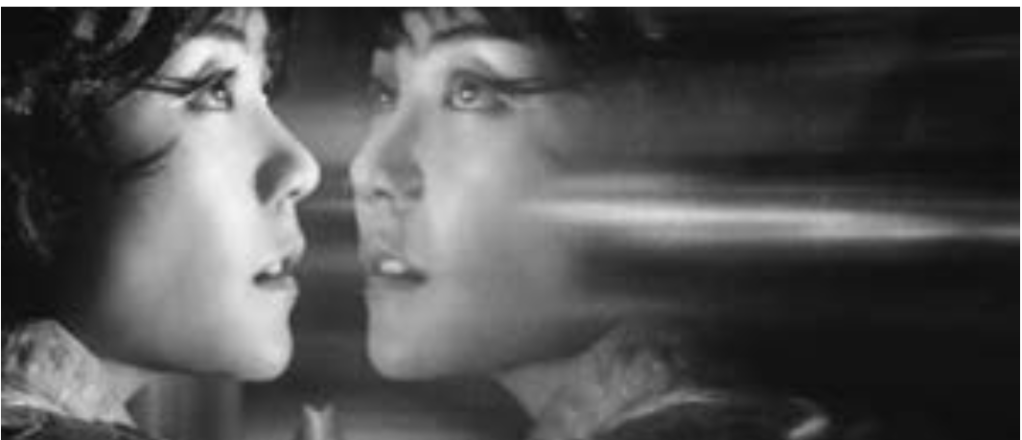
The attendant (Faye Wong) moving to the sounds of “Casta Diva” in 2046
Like many Hong Kong actors and directors, Wong ultimately accepted the incorporation of Hong Kong cinema into the broader framework of Chinese cinema. His most recent film, The Grandmaster (2013), is a biographical account of Ip Man. Although relatively unfamiliar in the West, it achieved considerable popularity in China and contributed to the restoration of Zhang Ziyi’s star status following the fluctuations of her career in the 2000s.
Biancorosso argues that, in determining the soundtrack of The Grandmaster, Wong completes a full circle in relation to the composers who influenced him. He had previously included Yumeji’s Theme in In the Mood for Love, originally composed for a 1991 biographical film about the Japanese poet and painter Takehisa Yumeji, and subsequently engaged Shigeru Umebayashi to score both 2046 and, somewhat paradoxically, this anti-Japanese film.
Also incorporated are works by Ennio Morricone, including “La donna romantica”, which functions as a form of love theme within the film, and “Deborah’s Theme” from Once Upon a Time in America (1984). The latter operates as a layered reference, evoking Wong’s early gangster films, Morricone’s signature spaghetti-western idiom that informed the score of Ashes of Time, and the connection to Tsui Hark’s Once Upon a Time in China (1991), centred on Ip Man’s predecessor Wong Fei-hung. A medieval Christian hymn, “Stabat Mater”, does not appear on the official soundtrack, yet Stefano Lentini’s score achieved popularity in Hong Kong during the era of iTunes downloads, partly owing to its association with a sensual scene.
This exemplifies what Wong Kar-wai ultimately accomplishes. Italian and Japanese compositions are woven into a martial-arts film centred on a patriotic Chinese figure, and yet the synthesis appears entirely coherent to his audience. Once again, viewers come to associate these musical pieces with his films and their defining moments, rather than with the earlier works in which they first appeared. This, as Biancorosso contends, is the essence of Wong’s creation of bricolage through his soundtracks.
The book concludes somewhat abruptly, without a formal concluding chapter, a choice that may reflect the author’s own discretion. While this review is written from the perspective of an amateur viewer and listener, the book itself concentrates on the aesthetics, methods, and philosophy of film soundtracks, particularly the processes of repurposing, homage, reinterpretation, and the eventual redefinition of songs so that they become associated primarily with the director, whether intentionally or otherwise.
How to cite: Rustan, Mario. “Chungking Dreamin’: A Review of Giorgio Biancorosso’s Remixing Wong Kar-wai.” Cha: An Asian Literary Journal, 1 May 2026, chajournal.com/2026/05/01/remixing-wong-kar-wai.


Mario Rustan is a writer and reviewer living in Bandung, Indonesia. [All contributions by Mario Rustan.]
 Cha
Cha 
