
茶 FIRST IMPRESSIONS
茶 REVIEW OF BOOKS & FILMS
[REVIEW] “Kit Fan’s Goodbye Chinatown and the Politics of Taste” by Jonathan Han
Click HERE to read all entries in Cha
on Goodbye Chinatown.
Kit Fan, Goodbye Chinatown, World Editions, 2026. 268 pgs.
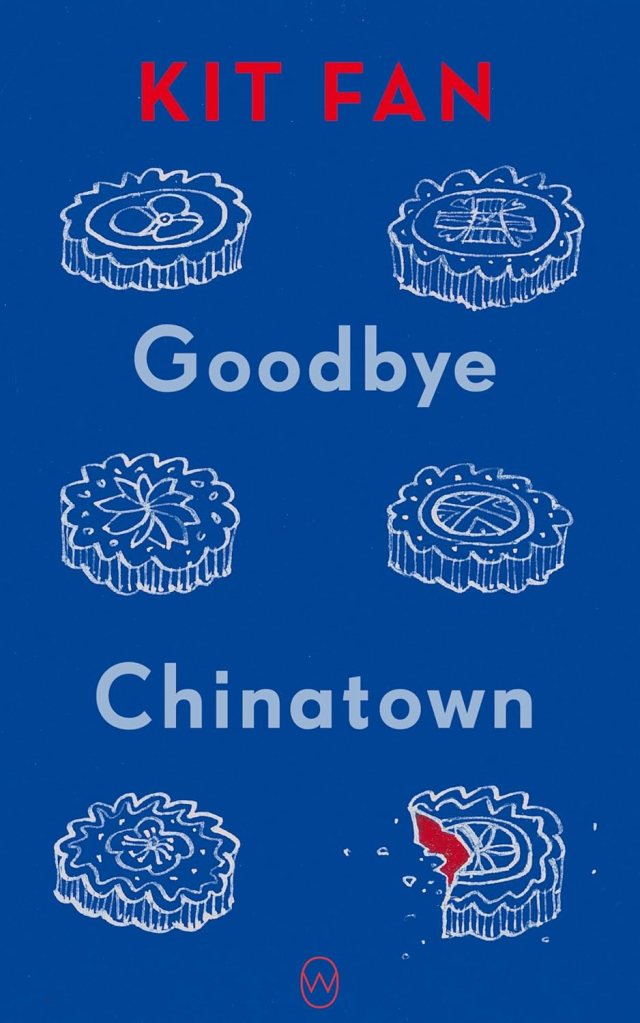
Why is Kit Fan’s Goodbye Chinatown capable of inspiring so many of my contemporaries to write, at times at considerable length, about it?
Counting this one, mine is the fifth review of Goodbye Chinatown published in Cha. I have never believed in such a thing as too much criticism, whether favourable or unfavourable, especially given the potency of the book and the high quality of the reviews published thus far. However, this frequency raises the question of why the novel is capable of inspiring so many of my contemporaries to write, at times at considerable length, about it.
The first explanation lies in the diversity of the book’s settings, which shift according to where Amber, the novel’s protagonist, has chosen to establish herself. Her first restaurant, Luna, opens in London’s Chinatown at roughly the same time that her father’s restaurant, the Golden Palace, closes. This generational transition mirrors a corresponding shift in culinary approach. Luna’s fusion menu, featuring Aleppo chilli and soft-shell crab, stands in marked contrast to the commonly appropriated Cantonese fare found in other Chinatown restaurants, many of which have been acquired by Mainland Chinese investors. In private conversations, Amber’s father, Mr Fan, is described by Mrs Fan as:
[a] conformist, that’s what he is. Every business decision he made about The Golden Palace was to suit what people think Chinatown should look like, should taste like—the red lanterns, the Peking ducks, the fortune cookies.
Amber’s culinary decisions, however, set her on a different trajectory. She attracts the attention of Celeste, the daughter of a major real-estate developer who has been acquiring property in Chinatown. Her involvement, both as investor and adviser, subsequently leads Amber to work at Shanghai’s Shangri-La. There, Amber becomes the only woman chef in Asia to hold two Michelin stars. Although her life in Shanghai is described largely in passing, it parallels that of her family in Hong Kong. For example, Amber’s son, Bobby, imagines whether the silence in Shanghai “tastes as delicious as the silence in Hong Kong.” The thought of his mother in another city then unfurls:
I hear the lonely traffic in her city, the occasional car whooshing past, the ring of a bell on a bicycle, a hawker calling Xiaolongbao, Xiaolongbao, an ambulance siren in the distance and a cat meowing.
The transition between each sound is remarkable. Each element is tangentially associated with the next, either through its aural qualities, the “xiao” and the “meow” and the fluctuating pitch of a siren, or through its relation to the broader soundscape of the traffic. The asyndeton culminates in a scene that is both aurally and visually rich, and highlights Bobby’s distinctly cinematic view of the world and of his mother.
The complex relationships between members of the Fan family form another crucial strand of the narrative. Amber becomes pregnant at the age of 18 and, rather than raise Bobby as his mother, chooses to conceal her true identity. Bobby instead grows up believing that Amber is his sister, identifying Amber’s parents as his own, and struggles to come to terms with the truth once it is revealed. Such a family dynamic might seem drawn from a sensationalist tabloid, yet Kit Fan’s careful handling of the characters, their reconciliations and their estrangements, renders the improbable entirely credible. Food becomes the principal mode of communication, an apt choice given Amber’s profession. At the lowest point in their relationship, Amber sends her son a recipe for a burger he once enjoyed, which he then attempts to recreate. Later, after her restaurant Luna closes, Amber and her father, Mr Fan, bond over cooking the remaining ingredients and distributing the food freely. Bobby distils this parallel between Amber’s understanding of food and her approach to relationships:
She tries her best, mostly sharing her latest recipe ideas or her struggles to shape a menu. I think she has confused food with love from a very young age. I don’t blame her. We all love food, but what exactly is love?
Placed near the centre of the book is the recipe titled “Bobby’s Burger”. The puréed gherkins, the pineapple bun, and the beaten duck egg all contribute a Michelin-quality touch. Admittedly, the rump steak, as the meat for the patty, is somewhat lean for my own preference, yet what proves especially effective is the postscript at the end of the recipe: “I know you don’t want to talk to me, but I’ll keep saying sorry. I love you to pieces.”
Kit Fan’s writing is at its most delectable when it attends to food. This may help to explain why the second half of the novel reads somewhat flatter, as the focus shifts away from the kitchen. In its place, Hong Kong and its politics come to the fore. By the second chapter, “Kong Hong University of the Chinese”, the family is already beginning to fracture. Celeste and Amber’s working relationship, once purely commercial, acquires a political dimension. The prose itself alters markedly, shifting from Amber’s close-third-person perspective to Bobby’s first-person narration, briefly interrupted by a redacted transcript of a police interrogation.
The moon, a classic Chinese motif, assumes a life of its own in Goodbye Chinatown.
What remains consistent throughout each part of Goodbye Chinatown are the motifs that Kit Fan employs. These motifs effectively guide the reader through the prose, even if they risk becoming somewhat overemphatic. The moon, a classic Chinese motif, assumes a life of its own in Goodbye Chinatown. It appears at the very beginning of the text, during the night of Mid-Autumn, both in the restaurant’s name “Luna” and as a metaphor for Amber herself.
Eating was travelling, she thought. Beluga caviar, Hokkaido sea urchins, Gascon foie gras and white Alba truffles—all the world’s luxury foods had humble origins. The more deeply she mastered the art of cooking, the freer and more estranged she felt.
Full or crescent, the moon, too, was always estranged.
Later, at the end of the “Luna” chapter, the moon reappears:
The sky was completely empty, not a trace of cloud or jet stream. The moon was new, nowhere to be seen.
Then, once more at the conclusion of the book, as Mrs Fan leaves the airport in a taxi,
the taxi driver asked where she wanted to go. “Just drive around for an hour,” she said, leaning against the window and tilting her head up towards the light-polluted sky, unable to find anything she recognised except the moon emerging through the clouds, so bright it lifted her spirits. She wasn’t looking for the moon or anything in particular; she just wanted to be driven around in the sleepless city.
A more exacting reader might regard the repetition of the motif as somewhat on the nose. Yet its careful placement, within the quieter moments of the book and at points of contemplation, evokes the pain and solidarity so prominent in the poetry of Li Bai, the songs of Teresa Teng, and the older myths of Chang’e. For a text that poses fundamental questions about identity and home, Chinese literary tradition becomes a crucial marker.
Given the quality of the prose, the succulent descriptions of Chinatown food, and the wide-ranging themes, it comes as no surprise that each review has thus far identified a different aspect of the text that speaks to it. Jason S. Polley’s review traces the connection between Goodbye Chinatown and Kit Fan’s earlier novel Diamond Hill, reading the fracturing of the Fan family as an allegory for Hong Kong. Susan Blumberg-Kason extends this line of thought by examining how each generation of Amber’s family reflects the city’s transformation. Jennifer Eagleton returns the focus to the depiction of a declining Chinatown and the complexities of the Hong Kong diaspora in London. Angus Stewart’s essay, the first published in Cha, evokes the salivating senses by relating Hong Kong cuisine, so prevalent in the text, to themes of class and the marginalisation of a microculture. These reviews, together with my own, although not in direct conversation, form a body of discourse that seeks to inform the curious reader as they engage with the book, a service that, like the restaurants described in Goodbye Chinatown, appears increasingly endangered by present-day realities.
Earlier this month, the Hong Kong Review of Books announced that it would go on hiatus. Last year, the Shanghai Literary Review concluded its ten-year run. Other strongholds, journals and their editors, have thus far preserved a space in which the art of literary criticism might continue to flourish, albeit at considerable and often irrecoverable cost. To find solace, I return to T. S. Eliot’s “Last Words”, published in the final volume of The Criterion, where he affirms:
For this immediate future, perhaps for a long way ahead, the continuity of culture may have to be maintained by a very small number of people indeed—and these not necessarily the best equipped with worldly advantages. It will not be the large organs of opinion, or the old periodicals; it must be the small and obscure papers and reviews, those which hardly are read by anyone but their own contributors, that will keep critical thought alive, and encourage authors of original talent.
And so we are encouraged, both by the book itself and by the work of others. These five reviews of Goodbye Chinatown do not merely offer distinct perspectives, but stand as proof of life, sustained by a cultural ecosystem centred on a single organism, that of the journal.
How to cite, Han, Jonathan. “Kit Fan’s Goodbye Chinatown and the Politics of Taste.” Cha: An Asian Literary Journal, 29 Apr. 2026, chajournal.com/2026/04/29/kit-fan-goodbye-chinatown.


Jonathan Han is a Hong Kong-based writer. His work has appeared in Essays in Criticism, Hong Kong Review of Books, and Asian Review of Books. His chapbook Quinquennial was published by Pen and Anvil Press. Follow his Substack @jhantheman. [All contributions by Jonathan Han.]
 Cha
Cha 