
茶 FIRST IMPRESSIONS
茶 REVIEW OF BOOKS & FILMS
[FIRST IMPRESSIONS] “On Breathing Space: Sound, Memory, and the Quiet Weight of Francis Catedral’s My Third Home” by Nur Hasanah
Francis Catedral (director), Rumah Ketigaku (My Third Home), 2025. 21 min.
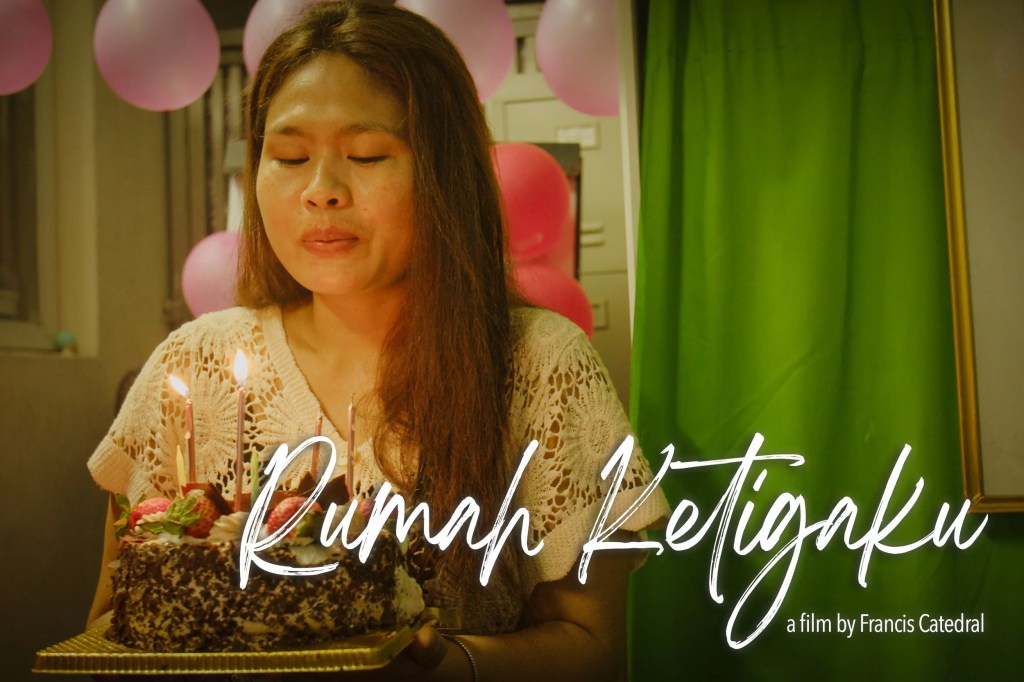
My Third Home opens with a familiar day in Hong Kong, an overpass somewhere in Kowloon, stacked between buildings on all sides, with traffic moving slowly underneath. A pedestrian crossing signal sounds, slow and unremarkable, just another part of the city’s urban audio, cueing people to stop and wait. Yet the sight and the sound evoke an embodied reminder to remain still, a somatic memory resurfacing from another time. I wonder how other former migrant domestic workers who sat and watched with me experienced the film during the screening in Yogyakarta. For me, there is something quietly disorienting about it: back in Indonesia, the freedom to cross whenever one pleases is simply part of moving through the world, a chaotic and unmanned one. The insistence of the signal is a small but distinct constraint on the body.
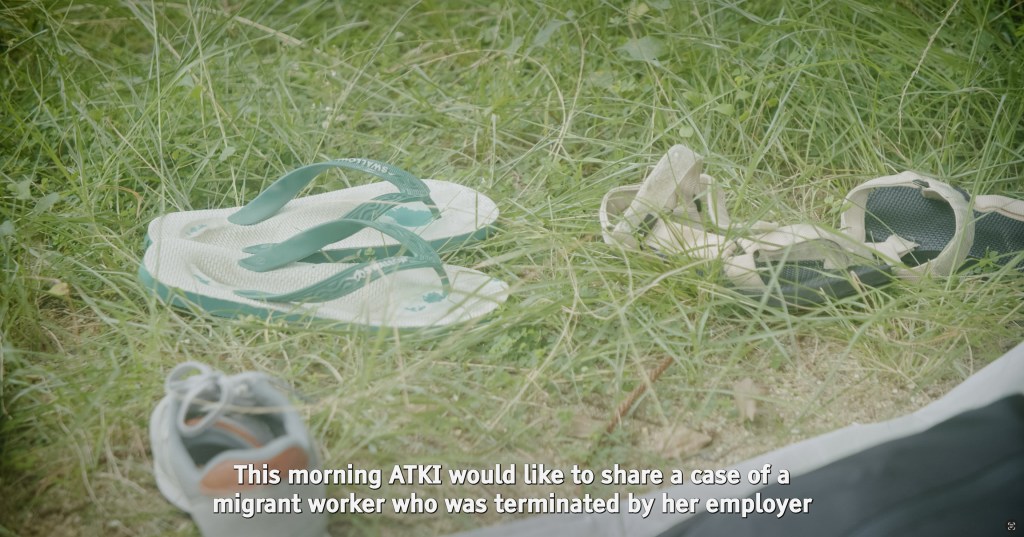
She ended up at Bethune House, a shelter in Hong Kong for migrant workers caught between legal disputes and uncertainty.
The film then follows Yuliani, an Indonesian migrant domestic worker who lost her job after falling ill. It was her employer’s decision, not hers to make. She ended up at Bethune House, a shelter in Hong Kong for migrant workers caught between legal disputes and uncertainty, with nowhere else to go. The film establishes early on that the first home belongs to God, the second is Indonesia, and the third, a borrowed and transient one, is Bethune House. It is neither sacred nor native, but real enough for now.

Francis Catedral lets Yuliani’s experience surface gradually through the unfolding of everyday life, conveyed by means of sound, space, and light. When the pedestrian signal returns in the latter part of the film, its rhythm has changed. It quickens, becoming sharper and more directive. It no longer blends into the background; it instructs us to move. It marks when movement is permitted and must be completed. The signal does not simply indicate when to cross, but dictates how time is to be inhabited: briefly, urgently, on cue. Watching it, I felt an urgency, an embodied need to check the time, to move, to be somewhere.
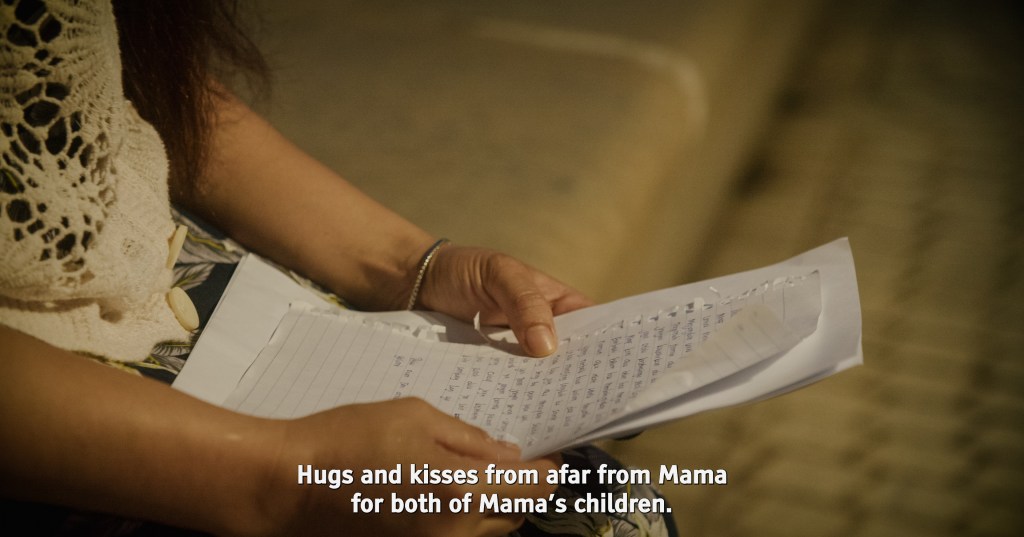
… community, solidarity, hope, and the small dignities that persist within constrained conditions.
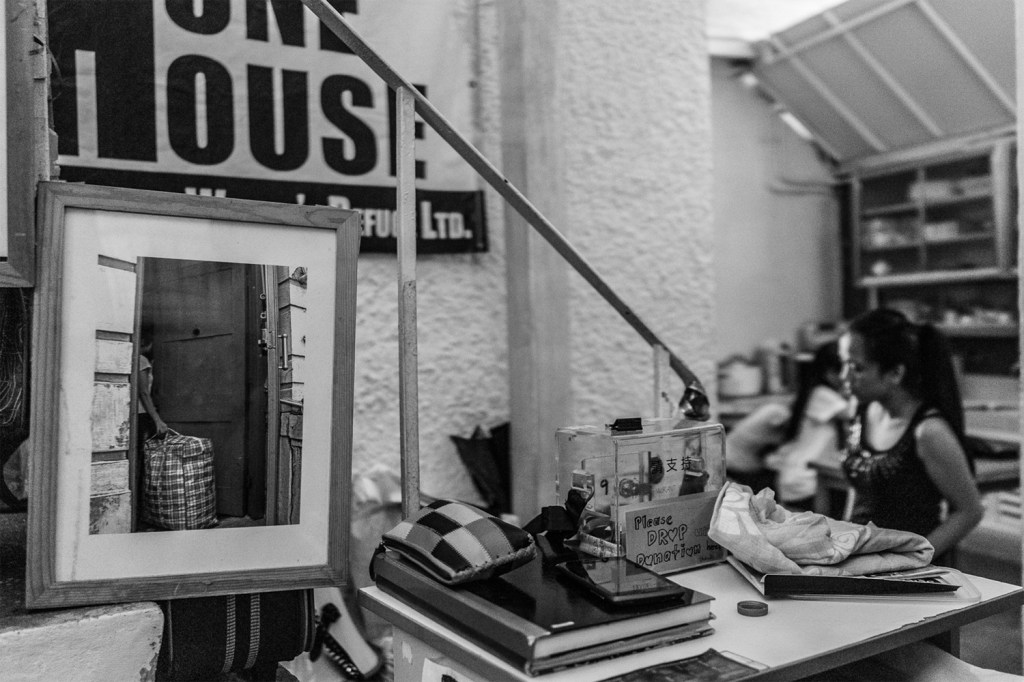
Inside Bethune House, which I have never visited in my six years of living in Hong Kong, space is rendered with precision. Rooms appear densely occupied: boxes stacked against walls, lockers filled with personal belongings, people sitting in very close proximity, objects arranged not for display but for functionality. Lives are compressed into small containers and stacked together. The yellowish tint that washes over these interiors lends the space a quality that is at once intimate and airless. There is a moment when Yuliani cries during the briefing before her trial. What is unmistakable is the cumulative effect: the cramped spaces, the yellowish tint, and the visible suffering together produce a feeling of suffocation and entrapment. Yet the film does not allow this suffering to become the centrepiece. What emerges alongside it is something quieter: community, solidarity, hope, and the small dignities that persist within constrained conditions.
It was here that Francis remarked, “How good it is to be home.”
I watched the film in Yogyakarta, at a small gathering of former Hong Kong migrant domestic workers who had returned home, sitting on the ground with Francis and Sringatin, drinking iced cincau. The screening moved quickly from a seemingly distant viewing into a shared space of recognition. Reactions travelled across the room: quietness in moments of familiarity with Hong Kong as a space for labour and struggle, followed by questions in others. It was here that Francis remarked, “How good it is to be home.”
There is nothing mundane in that statement, brief as it is. Home here is not merely an elusive, abstract, and ideological notion of belonging. It is something measured through space: through air, distance, and the ability to move without constraint. In contrast to the compressed interiors of Bethune House and the regulated tempo of Hong Kong, home comes into view as a space where the body is no longer held in readiness, waiting for cues. Having been back in Indonesia for many years, I found his words unexpectedly resonant. What returned was not merely a specific memory, nor necessarily a sense of victory, but an alternative experience of space: openness, greenery, coastline, and the presence of air. Home, in this sense, is not only where one is from, but how space is experienced, whether it allows for breath.
Yet this notion cannot remain uncomplicated. If home is where breath returns, why must it be left? Migration is not simply a movement between confinement and freedom, but part of a larger structure that binds these spaces together. Yuliani’s termination, her displacement into Bethune House, and her long wait for justice are not exceptional. They are structural. Yet they are lived and embodied through familiar repertoires of sound, sight, and movement, carried across time and borders.

How to cite: Hasanah, Nur. “On Breathing Space: Sound, Memory, and the Quiet Weight of Francis Catedral’s My Third Home.” Cha: An Asian Literary Journal, 27 Apr. 2026. chajournal.com/2026/04/27/third-home.

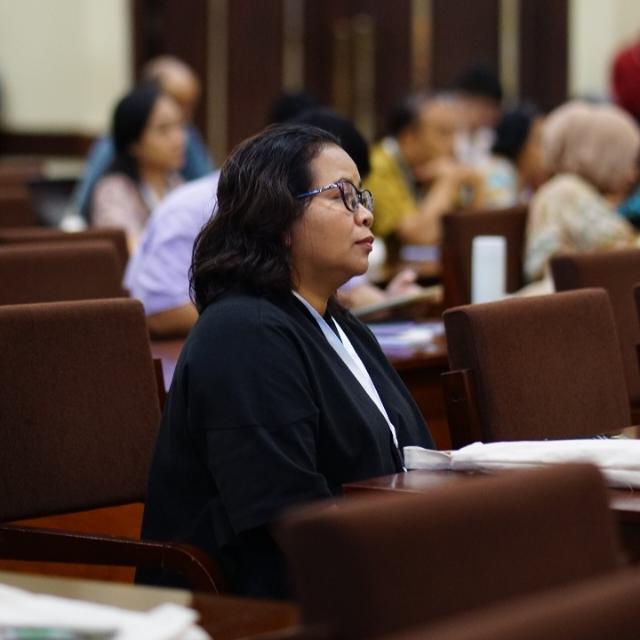

Nur Hasanah is a writer and community worker based in Yogyakarta. A former migrant domestic worker who spent a six-year period in Hong Kong, her work focuses on the experiences of migrant domestic workers, drawing on both lived experience and community engagement. She holds degrees in English Literature and American Studies.
 Cha
Cha 