
[ESSAY] “Meeting the Moment: The Intimacy of LingJiun Wang’s Photography” by Julia Merican
In Passing (2019 – present)
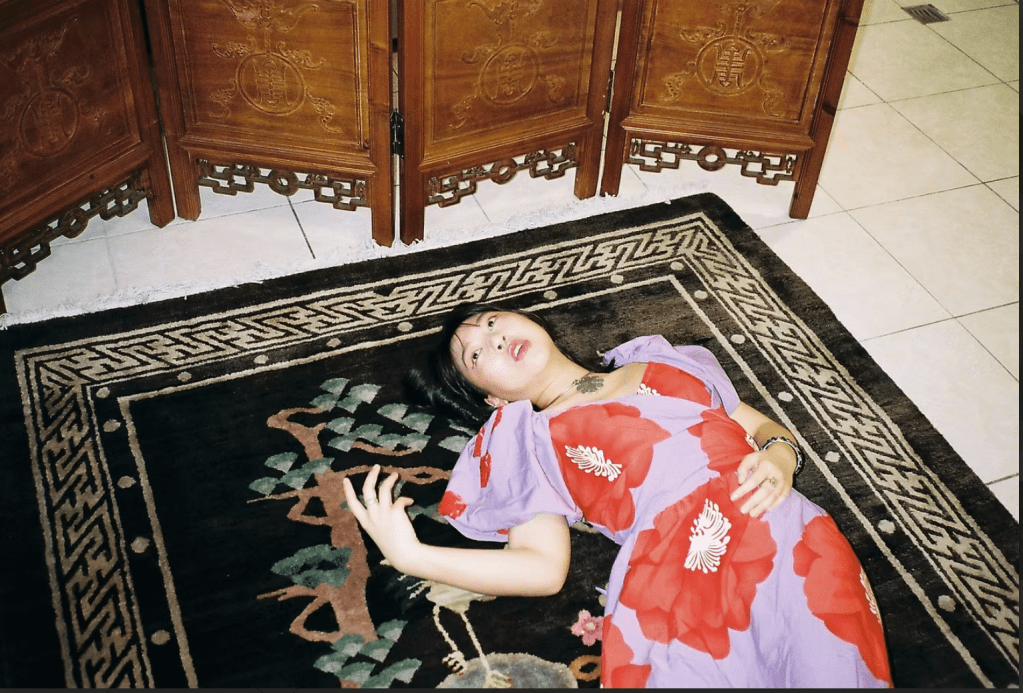
I am looking at a photograph by LingJiun Wang. In it, a woman lies on a dark rug, which in turn rests on a tiled floor. Her lilac dress, sprayed with enormous red flowers, forms a striking contrast against her onyx backdrop. She is looking upwards at something, her mouth slightly ajar. One palm rests on her stomach, while the other curls into a claw on the rug’s slender embroidered tree, its green leaves shaped like paper fans. A small embroidered pink flower touches her hipbone, almost the same shape and size as the silver flower on her necklace. Behind her, a wooden screen hems the rug, creating an enclosure.
The scene is at once gorgeous and unsettling. I cannot tell whether the woman is playing dead or merely daydreaming. Either way, it makes me feel like a voyeur, as though, by looking, I am trespassing upon an image from someone else’s memory.
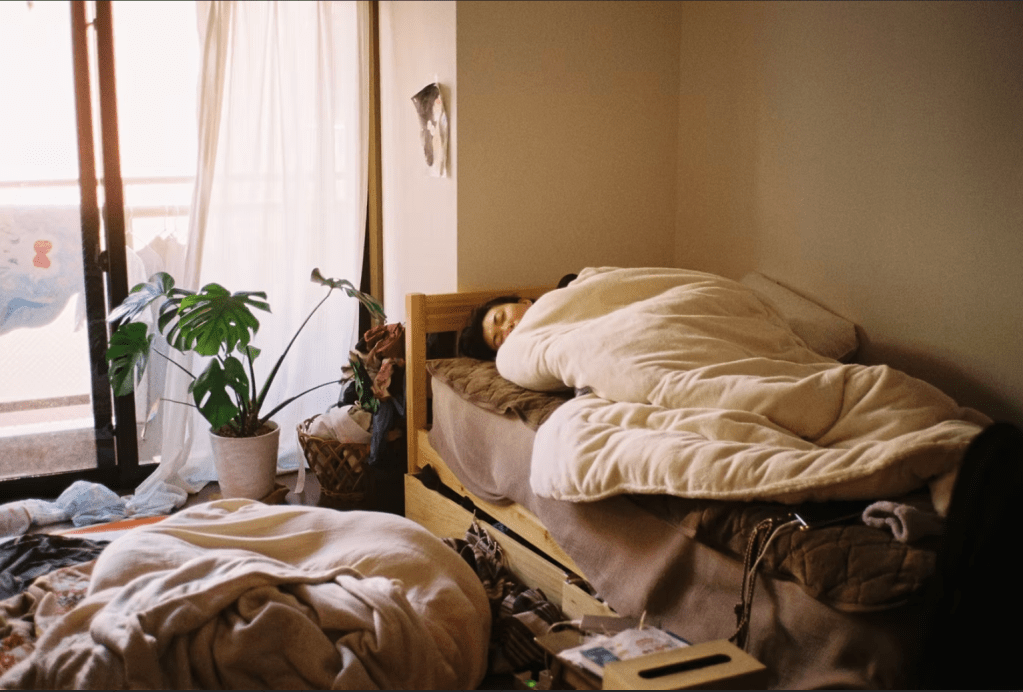
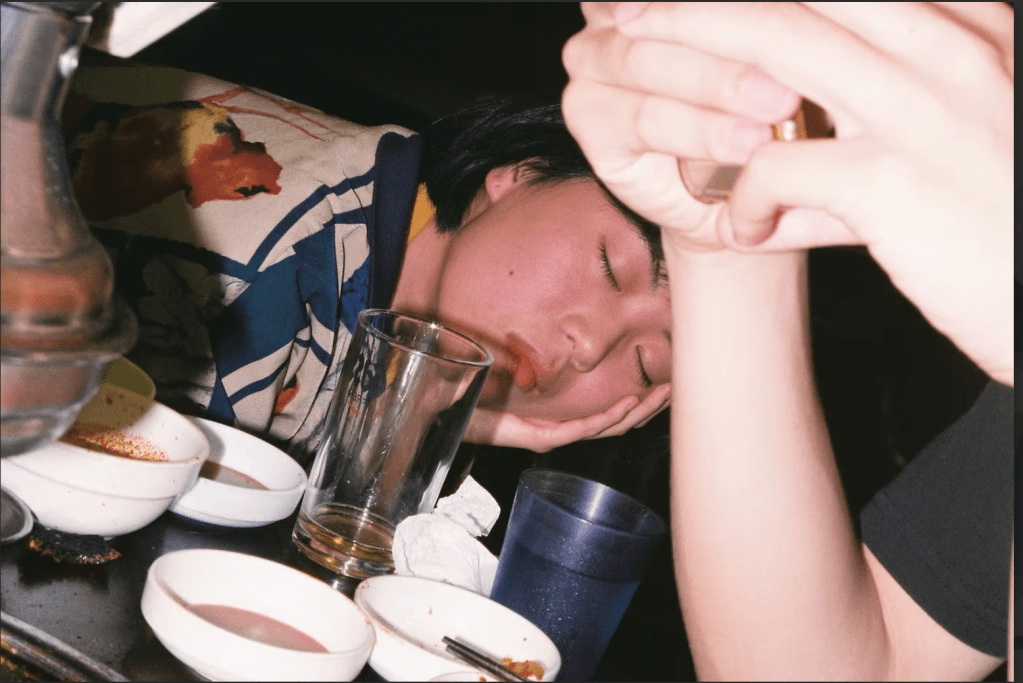
Wang often photographs people in states of repose. In Passing, an ongoing project from 2019, captures fragments of young-adult life in her native Taiwan. I rifle through these images: someone tucked into bed in a messy bedroom, soft morning light creeping through the apertures of a monstera; a woman sprawled on a couch, her right foot kicking the air, her hands forming a hammock beneath her head; a sleeping face cradled in someone’s palm behind an empty glass of beer and the remnants of a shared meal.
In Passing (2019 – present)
In Passing (2019 – present)
In Passing (2019 – present)
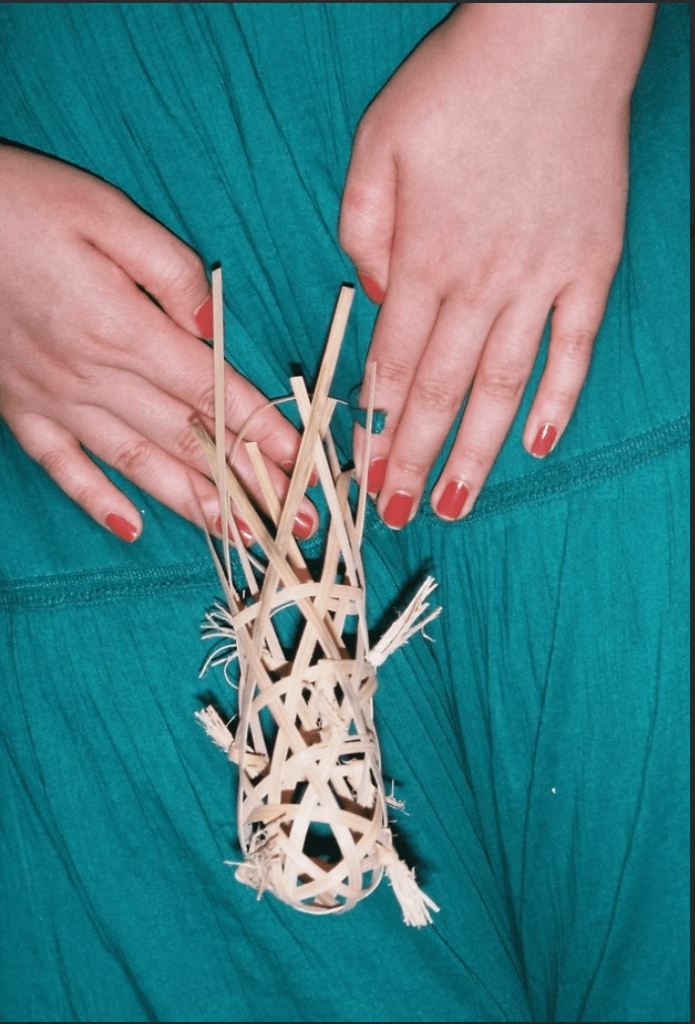
In Passing (2019 – present)
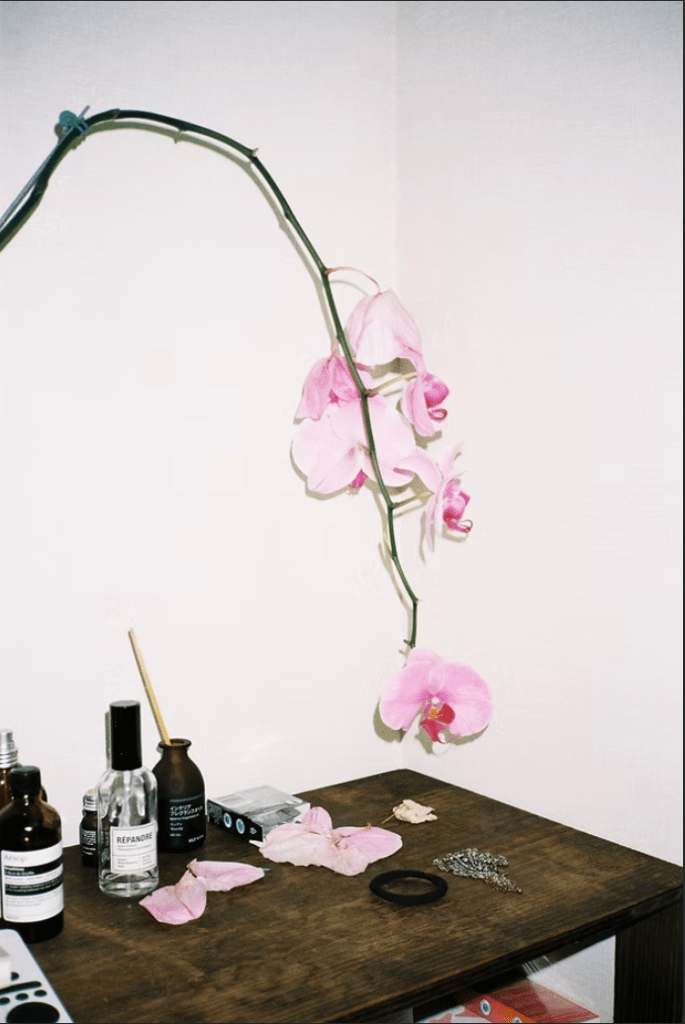
In Passing (2019 – present)
… lingering a little longer, looking a little deeper, returning to the same person or place over many years.
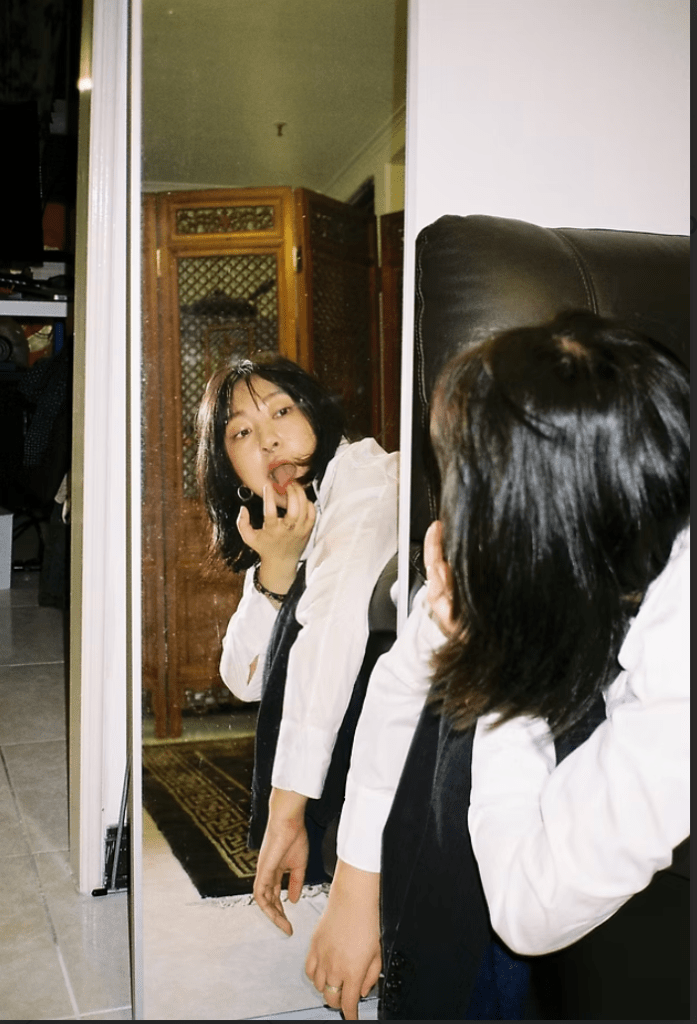
The quiet beauty of Wang’s compositions lies in how their apparent simplicity conceals a meticulous attention to detail. Scrolling through her work, I am struck by the intimacy of her gaze, and by how carefully modulated this tenderness remains. There is closeness, but rarely intrusion. Even in the most intimate images, a man dozing in a karaoke bar, a slouching woman checking her lipstick in a mirror, hands with painted nails resting on someone’s lap beside a woven ornament, I sense a thin membrane of distance, as though the photographer remains conscious of not crossing the line between witnessing and declaring.She has spoken about this tension herself. “I feel I am a little afraid of getting too close,” Wang admits, citing photographers such as Nan Goldin, whose work she associates with fractured moments of intimacy, and Ren Hang, whose images she experiences as almost overwhelming in their proximity. Her creative response is not to retreat, but to circle the edges of this boundary with vigilance. “The moment I am being stopped by myself, I try to cross whatever is holding me back,” Wang tells me. She appears to do this not through grand gestures, but through small acts of persistence: lingering a little longer, looking a little deeper, returning to the same person or place over many years.
)
This negotiation between distance and proximity has become more pronounced in the evolution of her art. If In Passing is rooted in friendship and the drifting, provisional quality of youth, Echoes confronts disappearance. Begun around 2020 and further developed when Wang returned to her childhood home in Pingtung, southern Taiwan, the series documents the interior of a house that has since been demolished. In these photographs, the space is devoid of inhabitants. Instead, I encounter sofas and lunar calendars settled into the corners of rooms, worn kitchen surfaces with dishrags and a rice cooker, a portable fan oscillating in a doorway as the clock reads 11:30. Wang describes a deliberate decision to remove people from the scene, yet I do not experience their absence as a void. The spaces seem to retain the forms of those who once passed through them, whether leaving for good or simply stepping away to fetch a glass of water.
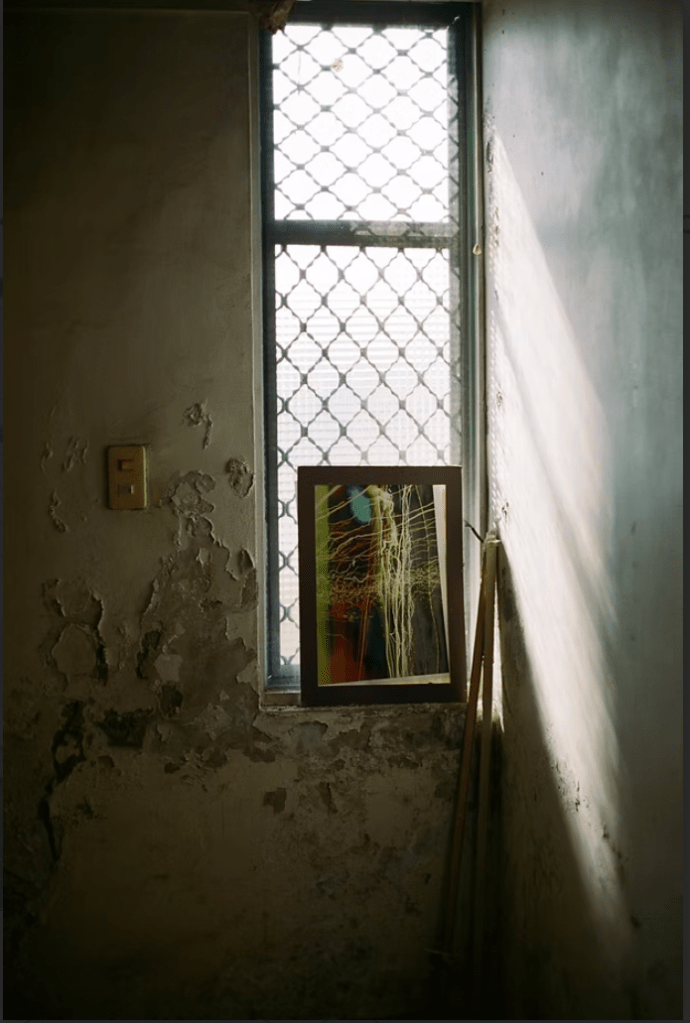
Echoes (2020 – present)
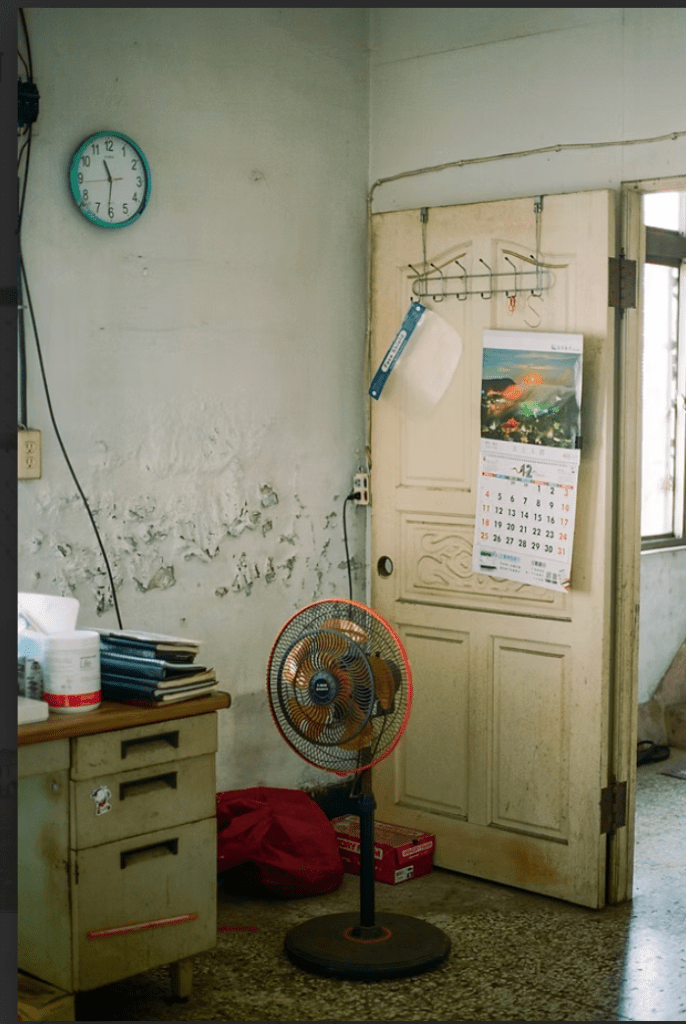
Echoes (2020 – present)
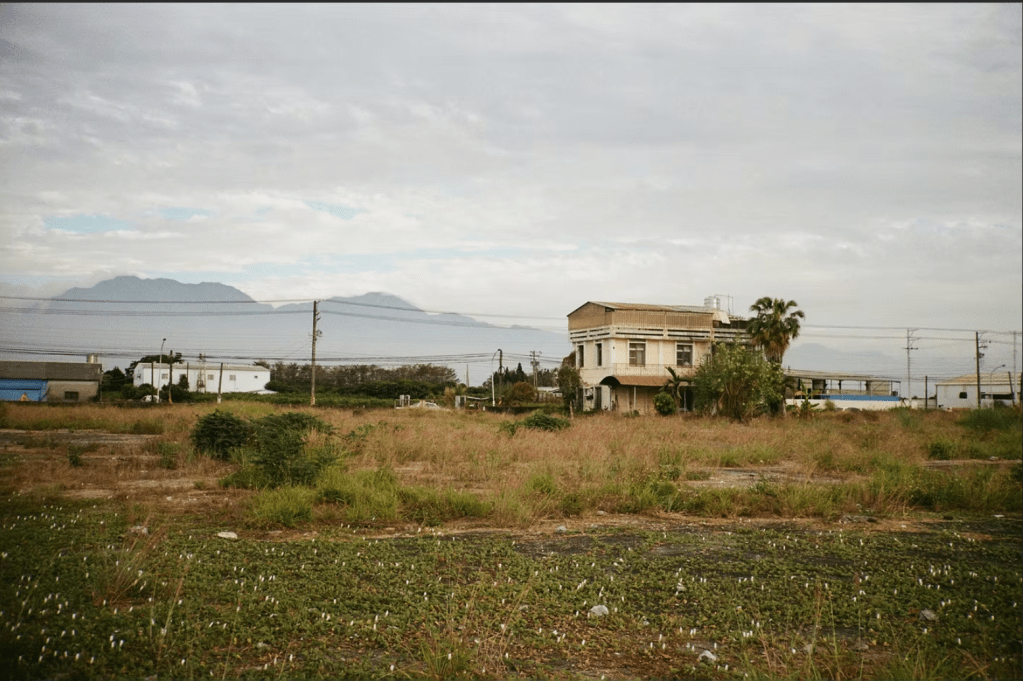
Echoes (2020 – present)
It was only after moving to London for her MA that Wang began to view environments in this way. Alone, without the social fabric that had once provided her subjects, she found herself drawn to rooms, workplaces, and domestic details, searching for subtle traces of life. For Wang, place is not a mere backdrop but a psychological architecture, the material that shapes reality. In Echoes, her childhood home, once her grandfather’s factory office, as a landscape portrait of its isolation suggests, becomes both a family archive and a document of a vanishing landscape.
)
This same tenderness runs through Liu’s Family, a series composed in 2023 with the relatives of a friend in rural southern Taiwan. Wang’s research into family portraiture across cultures quietly informs these depictions of intergenerational care and cohabitation. They feel slower and more composed than In Passing, yet no less intimate. In these images of washing vegetables and recording a grandchild’s blood pressure, I find myself observing the tiles of the kitchen sink, the spacing of bodies, and the family heirlooms within glass cabinets as closely as I study their faces.
Wang’s preference for film, its simplicity, its surrender to delay and chance, underpins her practice. She speaks of relinquishing control, of attempting to capture the moment when her subjects shape the contours of these portraits alongside her. Perhaps this is why her photographs feel less like constructions and more like encounters, not capturing life, but meeting it where memory, place, and presence briefly converge: in the moment.
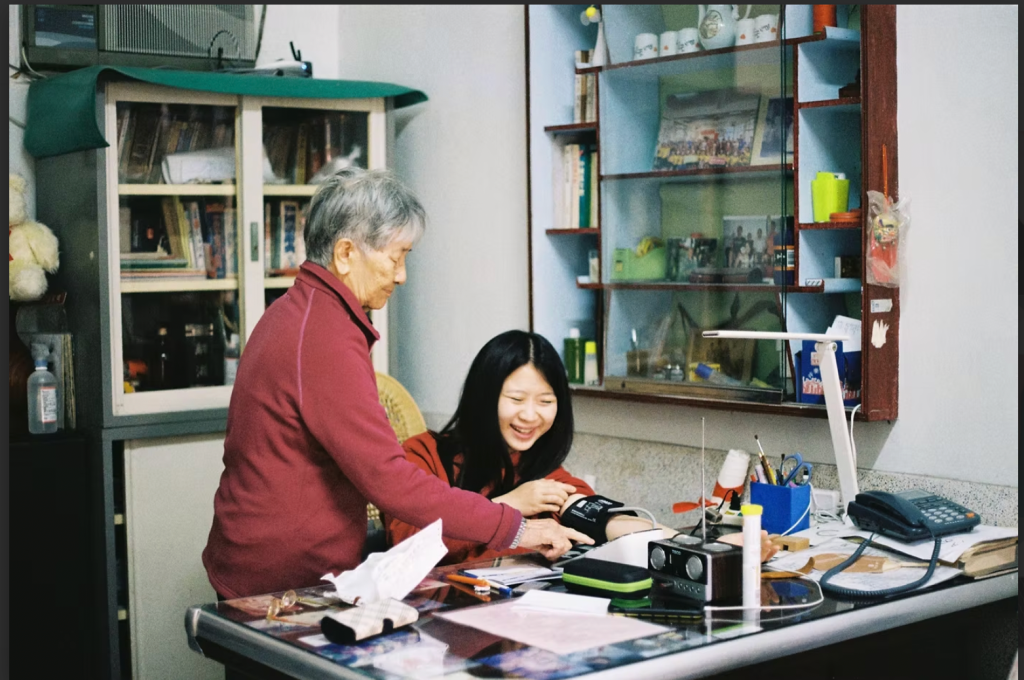
Liu’s Family (2023)
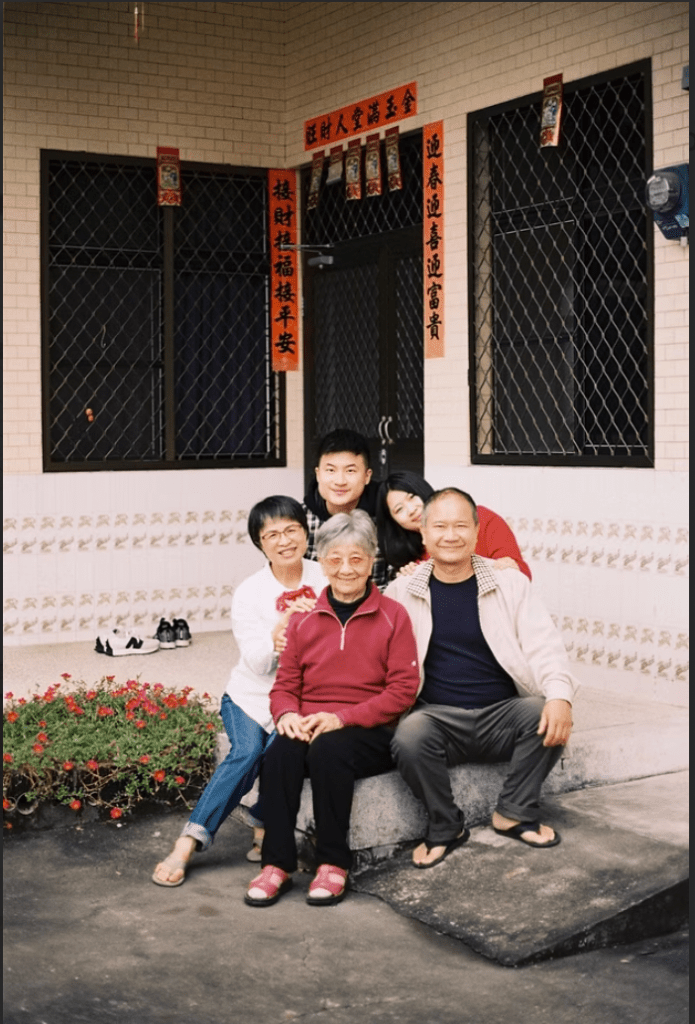
Liu’s Family (2023)
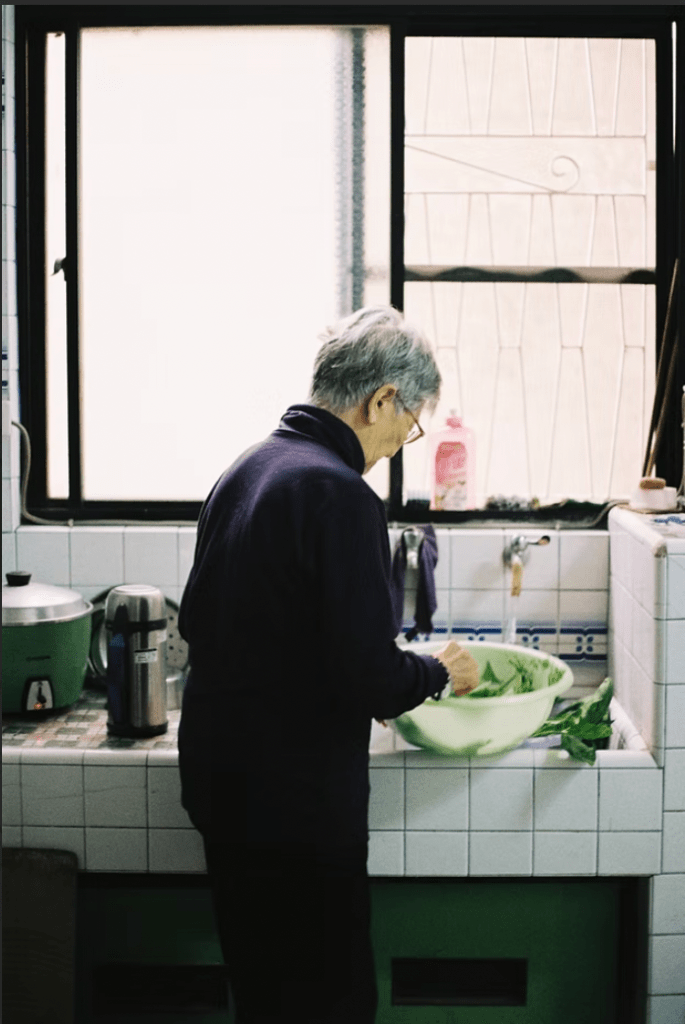
Liu’s Family (2023)
How to cite: Merican, Julia. “Meeting the Moment: The Intimacy of LingJiun Wang’s Photography.” Cha: An Asian Literary Journal, 27 Apr. 2026. chajournal.com/2026/04/27/lingjiun-wang.

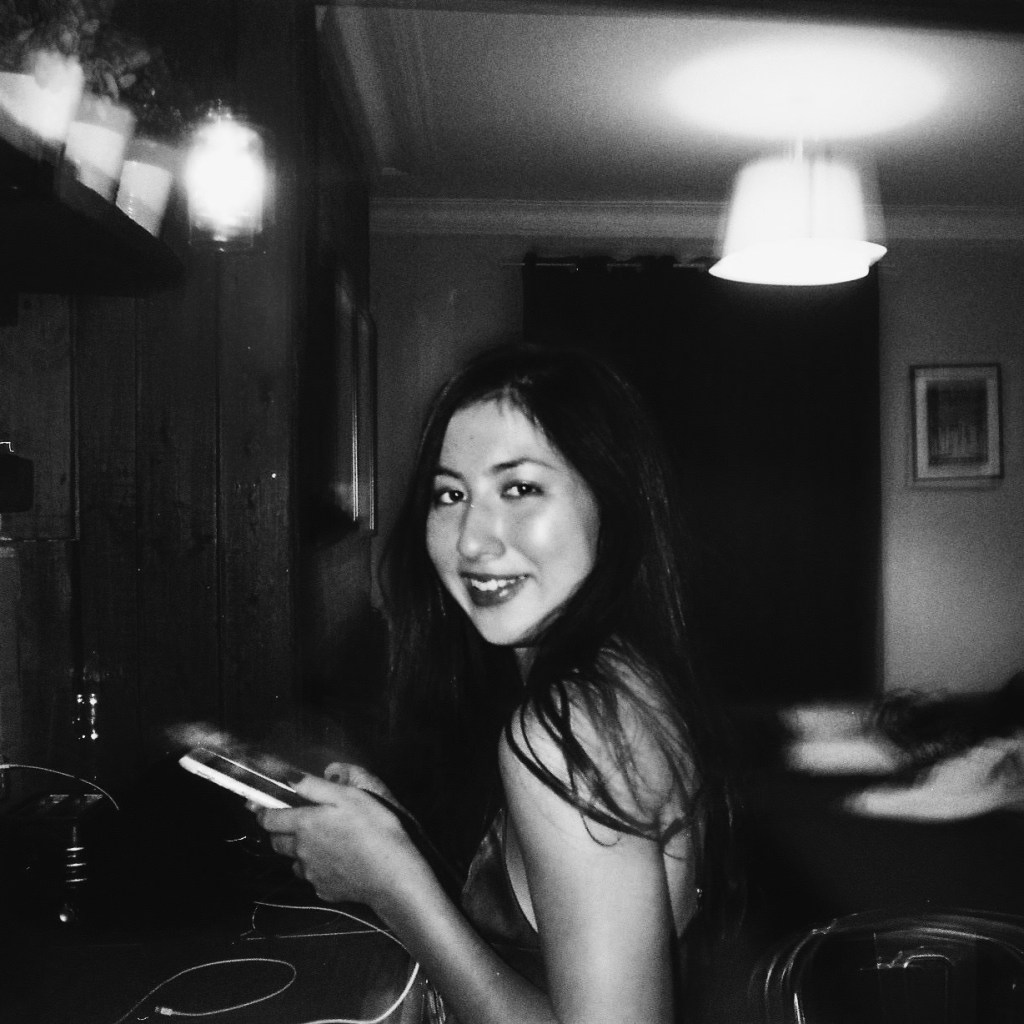
Julia Merican is a writer living between Kuala Lumpur and London. In 2026, she will publish her first two books with Antigone Editions and MA BIBLIOTHÈQUE. She writes an occasional newsletter, Glimmers and Inklings. [All contributions by Julia Merican.]
 Cha
Cha 