
茶 FIRST IMPRESSIONS
茶 REVIEW OF BOOKS & FILMS
[FIRST IMPRESSIONS] “History and Anachronism in Christopher Smith’s Samurai with Telephones” by Raymond K. Nakamura
Christopher Smith, Samurai with Telephones: Anachronism in Japanese Literature, University of Michigan Press, 2024. 242 pgs.
The term “anachronism” is most often used by people nitpicking a film for erroneously including something from an inappropriate time, or by people in medieval European costumes drinking mead at a festival organised by the Society for Creative Anachronism. In Samurai with Telephones, however, Japanese scholar Christopher Smith argues that anachronism can serve many other intentional and interesting applications, as illustrated by numerous examples from a variety of media within Japanese culture.
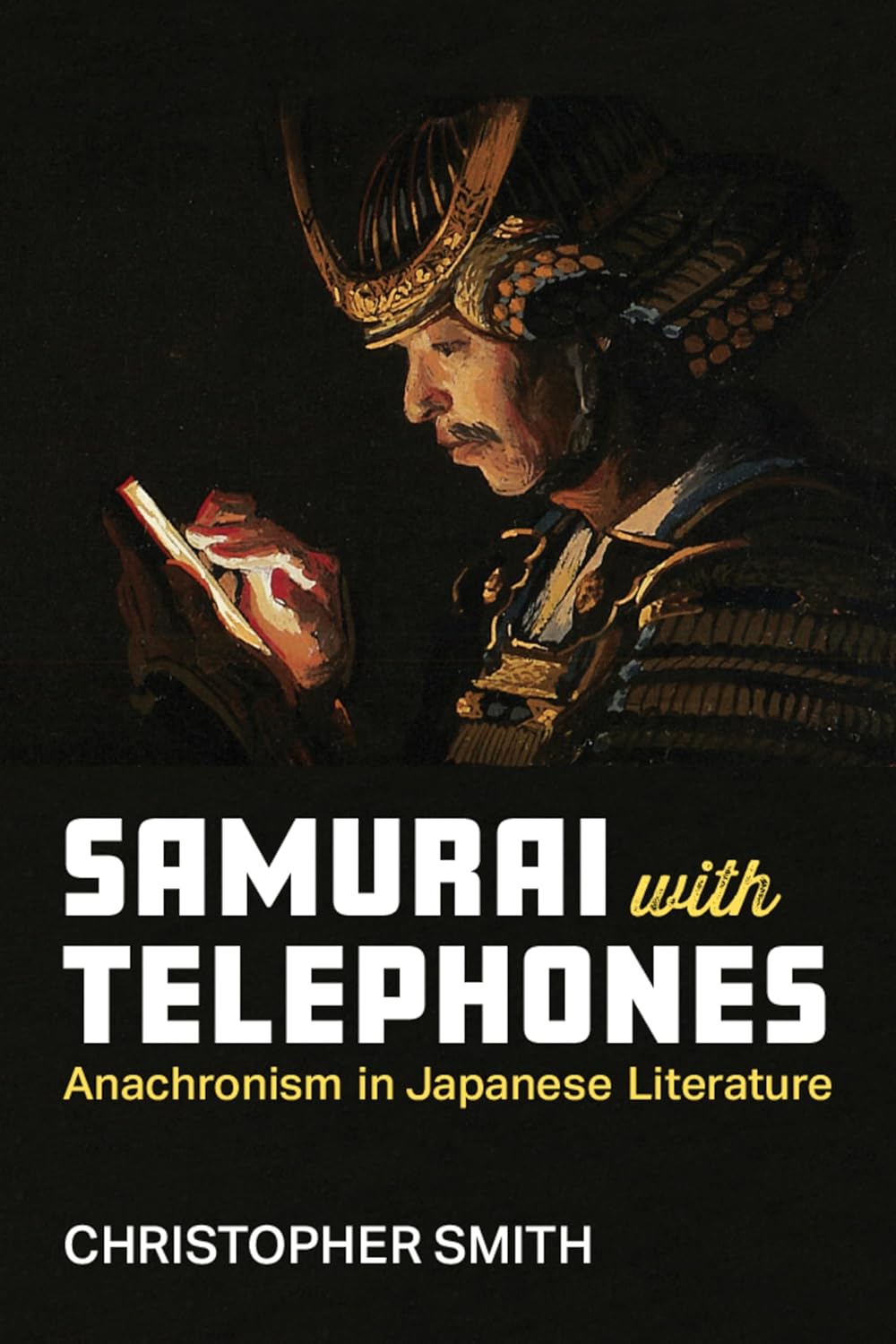
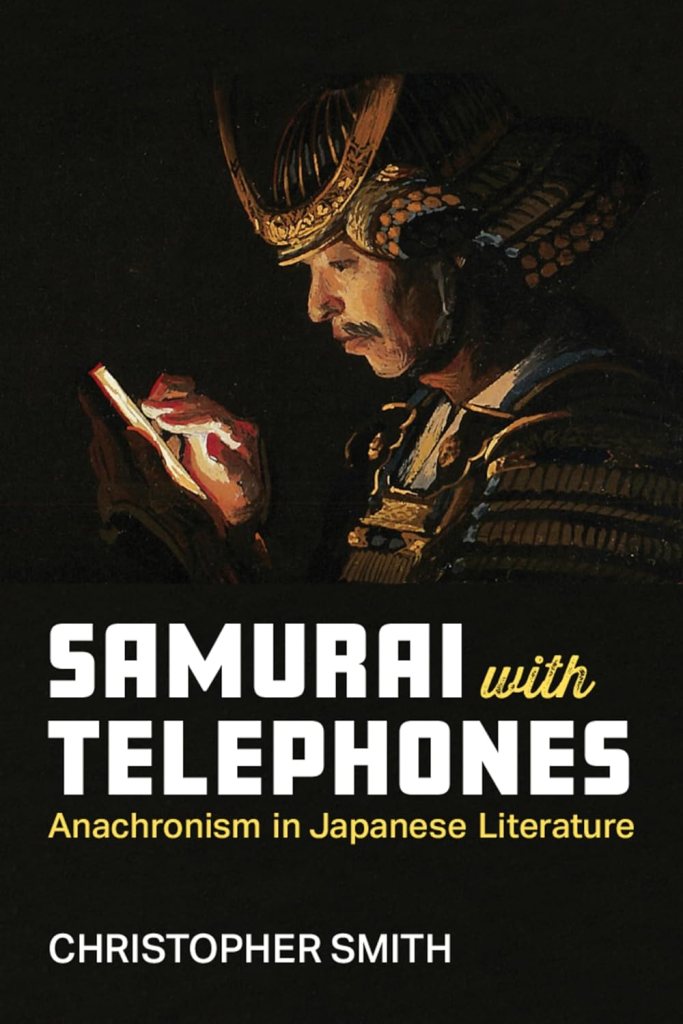
Smith himself points out that samurai did, in fact, temporally overlap with Alexander Graham Bell’s patenting of the telephone. Nonetheless, Samurai with Telephones seems a perfect title for a book on anachronisms in Japanese culture, juxtaposing a samurai, the quintessential image of historical Japan, with the telephone, an object so characteristic of modern times. The cover of the book features a 2020 painting by the Japanese artist Noguchi Tetsuya of a samurai looking at the glow of a smartphone (The Tap), but the original inspiration for the title came from a scene in the epic manga about Japanese history, Hi no Tori (Phoenix), the unfinished life’s work of the “god of Manga”, Tezuka Osamu.
The scene involves a historical event set in 1184, well before the invention of the telephone, after Minamoto no Yoshitsune kills his former ally Kiso no Yoshinaka. In Tezuka’s version, Yoshitsune then absurdly picks up a telephone to inform his brother that their treacherous deed has been done. Tezuka uses such anachronisms throughout Hi no Tori, not only for humour, Smith argues, but also to draw attention to the fabricated nature of history and the motivations of those who tell it, such as the Japanese government. Artistic anachronisms can act as “radical sites of instability”, opening up new perceptions of history.
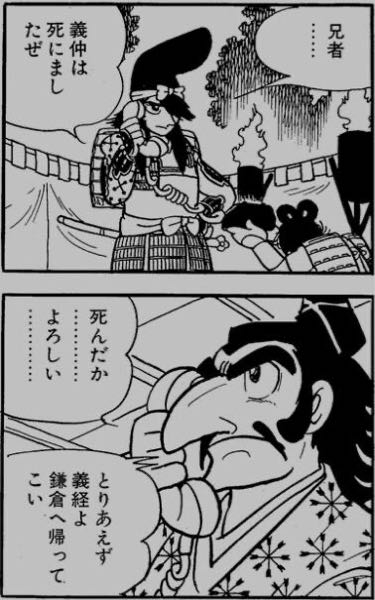
The speech bubbles (right to left) would be roughly: 1) Yoshitsune Minamoto: “Older brother…” “Yoshinaka has died.” 2) Yoritomo Minamoto: “Dead, eh? Good.” “Anyway, Yoshitsune come home to Kamakura.”
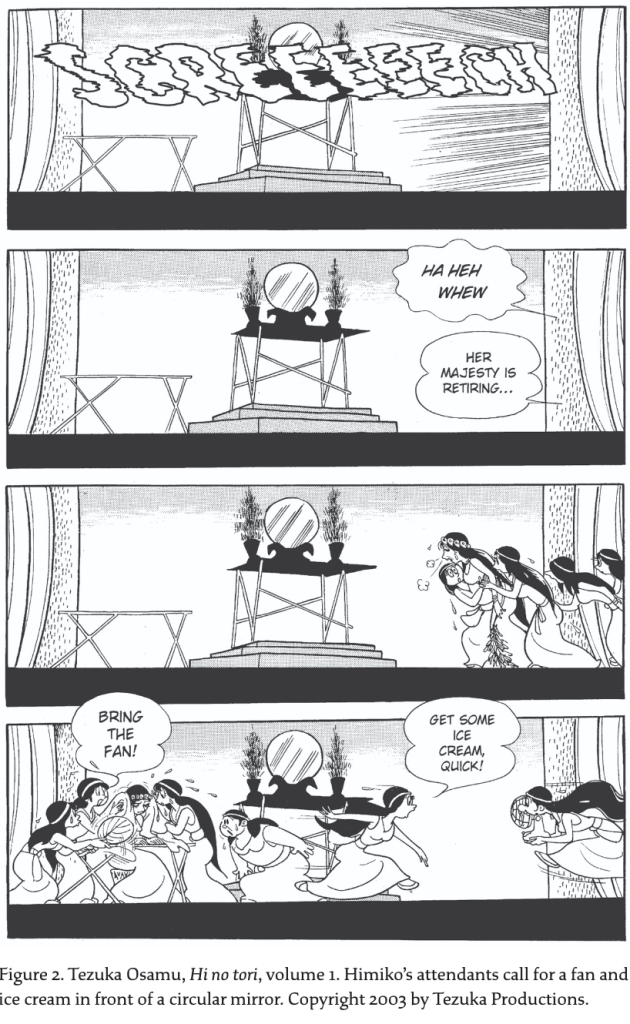
Tezuka uses such anachronisms throughout Hi no Tori, not only for humour, Smith argues, but also to draw attention to the fabricated nature of history and the motivations of those who tell it.
Smith suggests that the intent to rewrite the past is often part of a more troubling agenda.
Smith sidesteps the trope of time travel, instead focusing largely on examples of historical fiction that intentionally incorporate anachronisms. He divides these into two broad categories: “monologic anachronism”, where history is rewritten into a single narrative, and “dialogic anachronism”, in which disjointed temporal elements are kept distinct but intermingled. Monologic instances are probably harder to detect unless one already has the background knowledge to evaluate them. Smith suggests that the intent to rewrite the past is often part of a more troubling agenda. He does not explicitly discuss American politics, but, given that he works at the University of Florida, in a state that has recently attracted attention for attempts to reshape historical narratives, the implication is difficult to ignore. Dialogic approaches, in contrast, tend to be more evident in their juxtaposition of anachronistic elements. Smith devotes considerably more time to exploring such examples and to showing how they can raise questions about traditional interpretations of the past, issues of Japanese identity, and contemporary conditions.
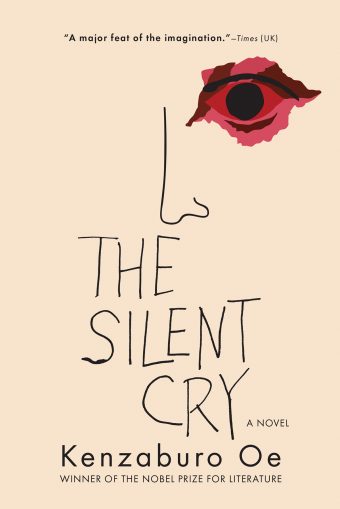
Smith also discusses a novel by Oe Kenzaburo, The Silent Cry (more literally translated from the Japanese as “Football in the First Year of Man’en”), in which two brothers appear to personify contrasting approaches to the past. One brother seems to reimagine their regional history in order to justify his present behaviour, while the other is intent on confronting his understanding of the past with the destructive actions he observes in their community.
Most of the other works that Smith examines adopt one approach or the other, with many favouring the dialogic. In the course of discussing anachronism, the text introduces the reader to a wide range of stories and forms within Japanese culture. Smith explores how relatively recent works of literature, manga, film, and anime that depict the past incorporate modern anachronisms both for humour and as a means of commenting on Japanese identity and social trends. While the use of anachronism might appear to be a postmodern device, Smith also considers earlier forms, including bunraku and kabuki, produced during the Edo period and set in an even more distant past, yet featuring anachronistic contemporary characters and settings to connect that past with their own time. This roundabout strategy for commenting on the martial regime offered the advantage of plausible deniability, thereby reducing the risk of severe punishment.
Although Smith focuses on Japanese culture, his discussion of anachronism has broader applicability and has made me more conscious of its presence elsewhere. For instance, I recently read Unsheltered by Barbara Kingsolver and appreciated its use of parallel narratives in alternating chapters, set in the same house a hundred years apart in the eastern United States, which creates an interesting resonance in its exploration of marriage, class, gender, and politics.
I would therefore suggest that, if you are considering reading Samurai with Telephones, now is as good a time as any.
How to cite: Nakamura, Raymond K. “History and Anachronism in Christopher Smith’s Samurai with Telephones.” Cha: An Asian Literary Journal, 24 Apr. 2026. chajournal.com/2026/04/24/samurai.


Raymond K. Nakamura is a writer, cartoonist, and educational consultant, when he is not walking the dog or washing the dishes. While reading, he enjoys drinking cha, tea, or chai. This third-generation Japanese Canadian lives in Vancouver, Canada, on the unceded traditional territories of the Musqueam, Squamish, and Tsleil-Waututh Nations, with his patient spouse, ambitious daughter, and feisty dog. He is the author of the picture book Peach Girl, published by Pajama Press, and posts daily comics on social media under @raymondsbrain. [All contributions by Raymond K. Nakamura.]
 Cha
Cha 