
茶 FIRST IMPRESSIONS
茶 REVIEW OF BOOKS & FILMS
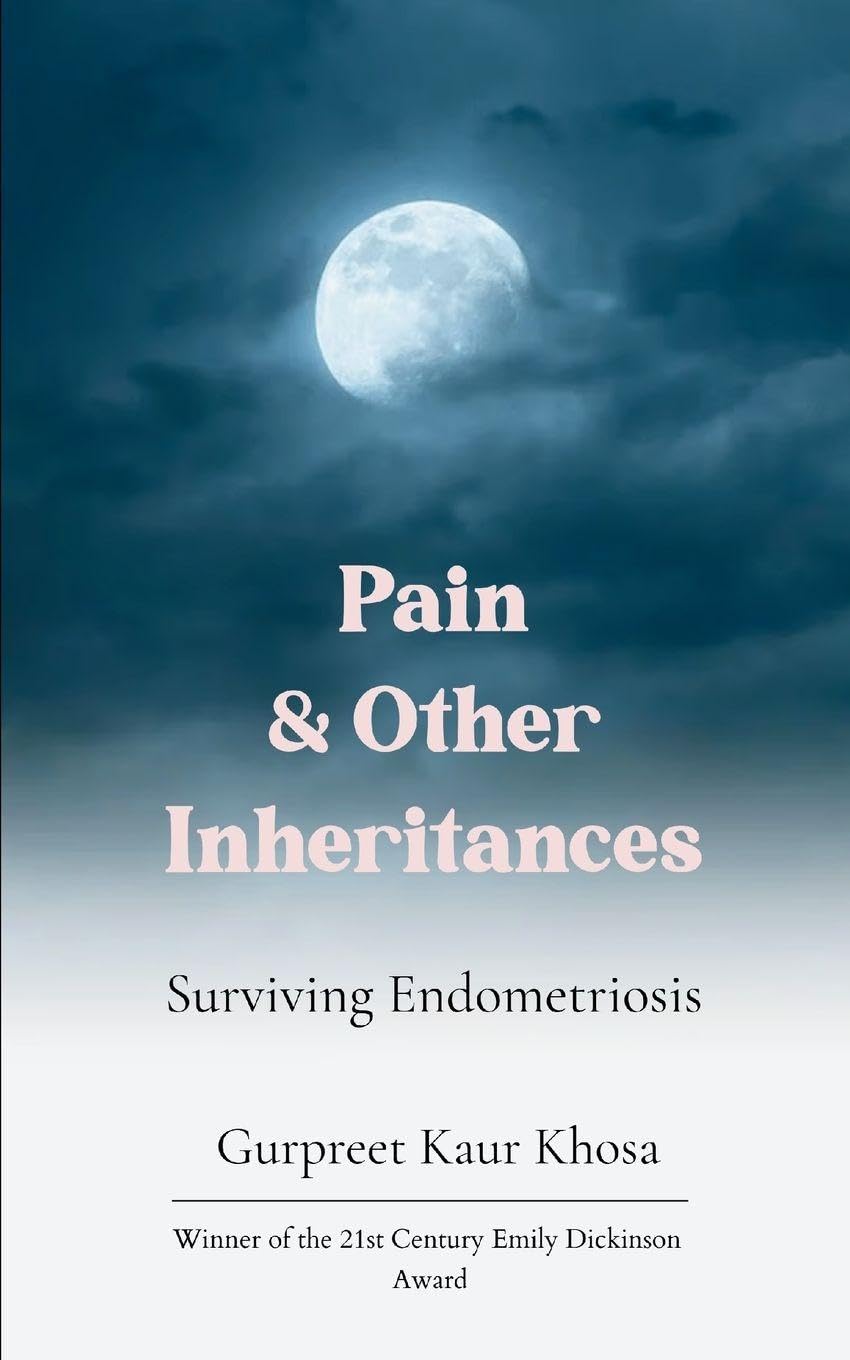
[FIRST IMPRESSIONS] “Pains, Survival, and Self-Publishing: Gurpreet Kaur Khosa’s Pain & Other Inheritances” by Michael Tsang
Gurpreet Kaur Khosa. Pain & Other Inheritances, BookLeaf Publishing, 2025. 50 pgs.
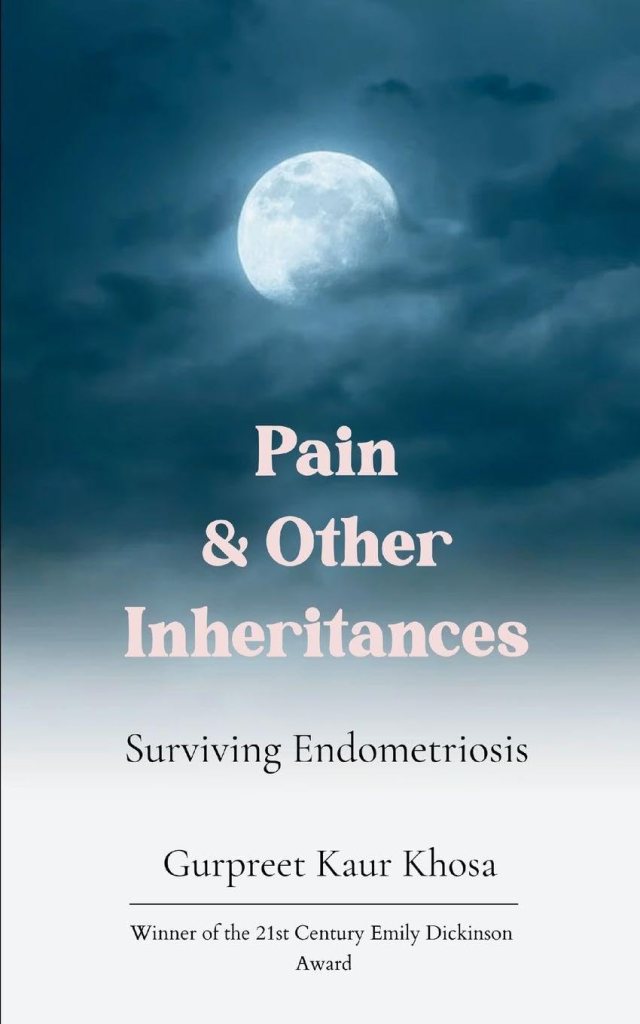
This collection stands as both a testament to survival in the face of endometriosis and a love note to Kaur’s younger self.
Endometriosis affects approximately 190 million women worldwide, as Gurpreet Kaur Khosa notes in the Preface to her first poetry chapbook, Pain & Other Inheritances. Women’s pain, however, remains taboo in many cultures, including within Kaur’s South Asian heritage in Singapore. It is also persistently dismissed by modern medicine and insufficiently expressed in creative writing. This collection stands as both a testament to survival in the face of endometriosis and a love note to Kaur’s younger self as she endures two decades of hardship.
With just 21 poems, this is a quick read, yet the imagery and messages are unapologetically traumatic as well as defiantly resilient. To name “pain” as an inheritance is heartbreaking; it gestures towards Kaur’s, and by extension many endometriosis patients’, experience of acute and chronic, physical and psychological suffering so profound that it becomes an indelible part of their being. Drawing on personal experience, the poems convey a chilling accuracy in their depiction of medical details involved in endometriosis treatment, from hormones to drugs. The body, battered by scars, burns, and bruises from medical procedures, is then “stitched in whispers” (“Labour”).
Anyone living with a chronic or lifelong illness will recognise this reality: at the end of the day, one alone must endure the physical pain. Even the most loving family may help alleviate some psychological suffering, and as Kaur later shows, such familial support cannot be taken for granted, but the body itself bears the physical ache in solitude: “the body doesn’t bargain / It ruins”, until one day, pain “came like a second heartbeat” (“Random Gods Die Quietly”).
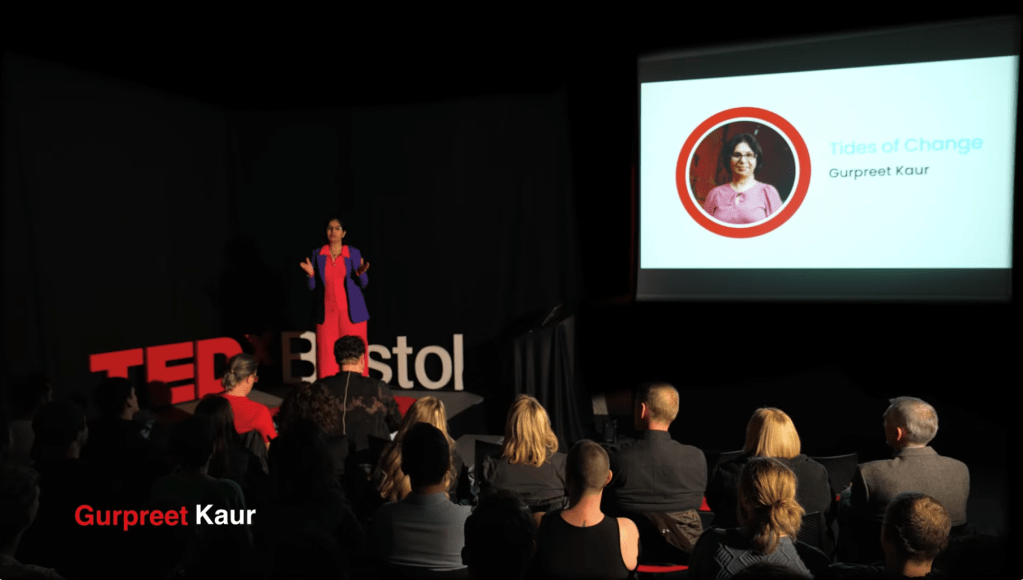
At times, Kaur explores the darker theme of dismissal. What happens when one is dismissed by one’s medical team? In conjunction with her TED talk on endometriosis, Kaur delivers a pointed critique of modern medicine’s gendered bias against women’s subjective experiences of pain. In response to clinical procedures that require patients to quantify their suffering on a numerical scale, Kaur asks, “What number means / I am crawling to the toilet […] What number is death / Not a metaphor / But the mercy I bargain for at 3am?” (“Rate Your Pain on a Scale of 1-10”). This is not melodrama; rather, it is through confessional poetry that Kaur articulates what cannot be adequately expressed within the authoritative structures of medicine.
What happens when one is dismissed by society? In a country “allergic to the broken”, where the “economy does not have patience”, those in remission may still be labelled “unfit” or “fragile” (“Citizen, Denied”). The survivor’s body, mut(il)ated, becomes a “map no country claims”, as they may be deemed “not employable” (“Cartography of Exile I”).
Kaur reveals how particular familial dynamics can intensify suffering.
And what happens when one is dismissed by one’s own family? Drawing on her experience as the unwell daughter in an Asian household, Kaur reveals how particular familial dynamics can intensify suffering, as “[w]hat they call hysteria / Is simply survival” (“Not Human Enough”). Beyond Kaur’s own experience, such responses are entirely plausible when illness becomes long term. Unable to “taste the acid in my bones”, their “disapproval [is] sharper than scalpels” (“Inheritance”).
Illness is a universal human experience, and thus readers may find points of empathy within these poems. Yet the full extent of the agony and anguish Kaur has endured remains ultimately incommunicable. It is, in many ways, a solitary battle. And yet, miraculously, the final poems gesture towards hope: “Every scar is an anthem / Every wound a manifesto” (“Final Inheritance”).
Finally, it must be noted that this collection is self published. Self publishing has become increasingly common, with some statistics suggesting that the number of books published in the UK reached 200,000 in 2025. For some, self publishing is liberating, allowing for free expression without the intervention of gatekeepers within the publishing industry. For others, it reflects a perceived decline in editorial standards. Kaur, who holds a PhD in English literature from a British university, is undoubtedly aware of the considerable challenges involved in securing publication. Her decision to self publish may suggest a lack of confidence either in herself, in the literary community, or in both. However, this should not consign these poems to obscurity. Rather, the real cause for regret is not the mode of publication itself, but the fact that such a significant work merits broader recognition and more comprehensive promotion. It is hoped that the Cha community will begin to engage in a thoughtful and constructive discussion on self publishing.
How to cite: Tsang, Michael and Jennifer Wong. “”Pains, Survival, and Self-Publishing: Gurpreet Kaur Khosa’s Pain & Other Inheritances.” Cha: An Asian Literary Journal, 21 Apr. 2026, chajournal.com/2026/04/21/inheritances.

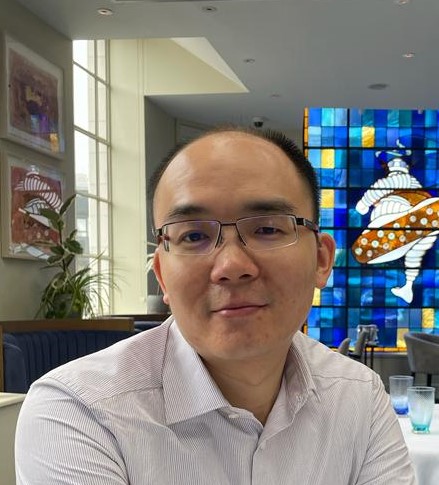
Michael Tsang is an academic, a writer, and for the first time ever, he can call himself an “artist”. His creative works can be found in Cha, Wasafiri, Where Else: An International Hong Kong Poetry Anthology among other places. He teaches literature and popular culture of East Asia at Birkbeck, University of London. [Michael Tsang and chajournal.blog.] [Cha Staff]
 Cha
Cha 