
茶 FIRST IMPRESSIONS
茶 REVIEW OF BOOKS & FILMS
[ESSAY] “Poetry as Archive: Creativity, Political Commitment, and the Everyday in Tammy Lai-Ming Ho’s If I Do Not Reply” by Hannah Steurer
Click HERE to read all entries in Cha
on If I Do Not Reply.
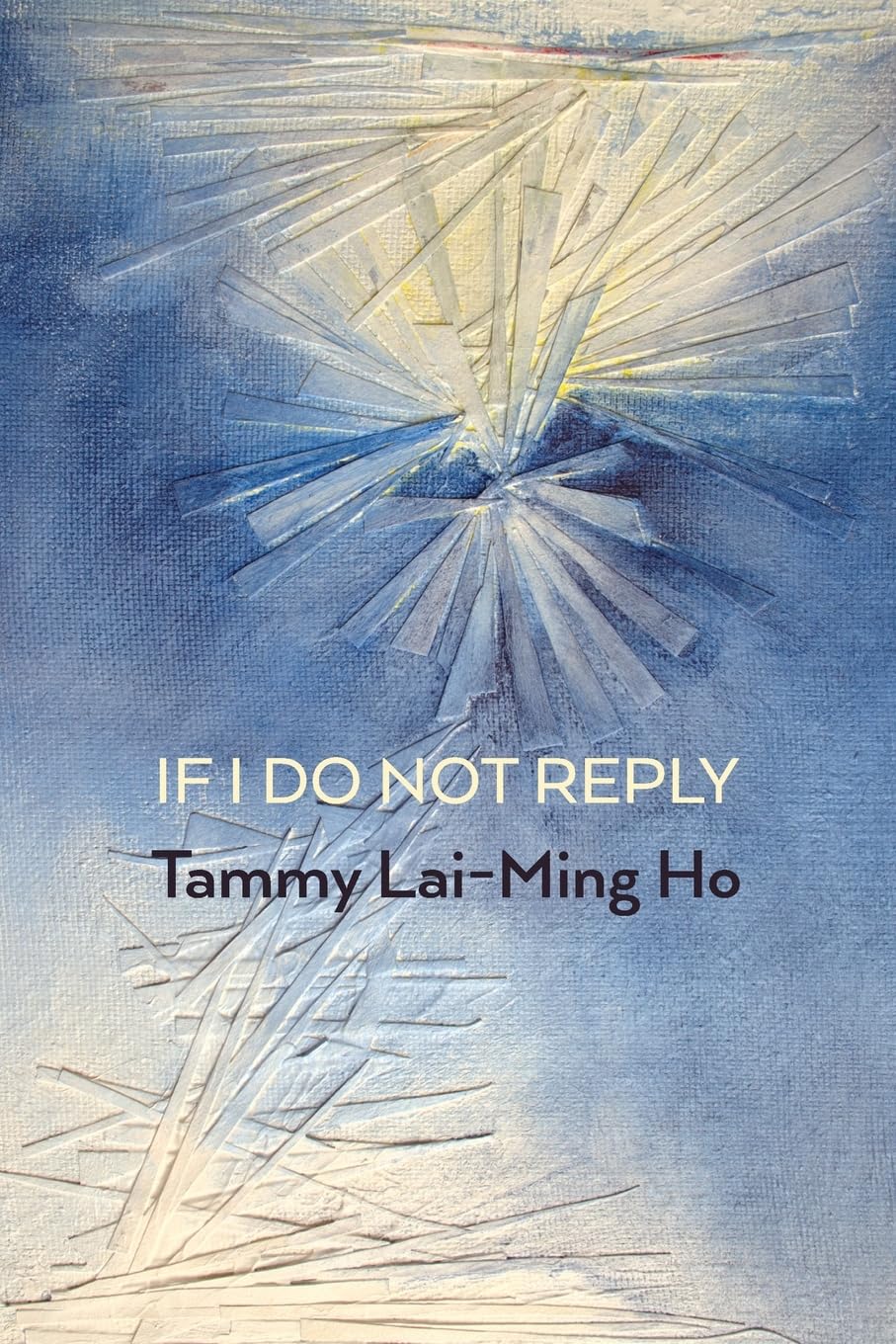
Tammy Lai-Ming Ho, If I Do Not Reply, Shearsman Books, 2024. 110 pgs.

Tammy Ho in Chicago, November 2024
How can art reflect political engagement, and how can it itself become the site of such engagement?
The questions of whether and how art can function as a form of political and social expression in response to injuries and crises that resist repair are among the most pressing in contemporary cultural thought. What intrinsic potential for political expression and action do different forms of art and cultural practice possess? How can the individual perspective of an artist shape a social collective and enter into dialogue with it? How can art reflect political engagement, and how can it itself become the site of such engagement? These are the questions that animate the most significant debates on creativity and commitment, and they are questions to which different political systems, and different political moments, permit markedly different answers.
These questions are brought into sharp relief by the work of the Swiss theatre director Milo Rau, whose stagings of mock trials and dramatisations of crimes against humanity have made him one of the most provocative political artists working today. The Congo Tribunal (Das Kongo-Tribunal, 2017), perhaps his most celebrated work, exposed the economic violence and political impunity driving the conflict in the Democratic Republic of Congo, using the trial format to place corporations, governments, and international institutions in the dock before a theatrical public. More recently, The Vienna Trials (Wiener Kongresse, 2024), staged as part of his inaugural season as artistic director of the Wiener Festwochen, extended this practice to Austrian political life, subjecting the far-right Freiheitliche Partei Österreichs (FPÖ) to a theatrical reckoning before a jury, with real lawyers and witnesses participating in a city-wide “Free Republic of Vienna” that Rau proclaimed as a space for the negotiation of social realities. In February 2026, Rau’s Trial Against Germany (Prozess gegen Deutschland) was staged at Hamburg’s Thalia Theater, centring on the question of whether banning the AfD, as a far-right German party, is legally warranted. The court trial, a fundamentally non-artistic form originally designed to adjudicate justice and injustice, the reparable and the irreparable, is here appropriated as a space of open public deliberation on stage.
Under conditions of authoritarianism, repression, and surveillance, art must find other means of processing and resisting the experience of political violence.
Yet such forms of direct political theatre are not available in every political system. Under conditions of authoritarianism, repression, and surveillance, art must find other means of processing and resisting the experience of political violence. It is precisely this problem, of what art can do, and what lyrical speech in particular can achieve under conditions of political repression, that stands at the centre of Tammy Lai-Ming Ho’s third poetry collection, If I Do Not Reply. The collection spans the years 2019 to 2022, from the eruption of the Anti-Extradition Law Amendment Bill protests, the largest series of demonstrations in Hong Kong’s history, through the Covid-19 pandemic and the restrictions and silences it imposed. At one point in the collection, Ho poses the question directly to Hong Kongers—and addresses the question of the ethical necessity of resistance: “Do we turn a blind eye, or do we fight?” The poems themselves constitute an answer, demonstrating that the “fight function” of poetry can take many forms, among them witness, elegy, memory, and the lyrical inscription of collective experience.
)
In Ho’s collection, the geographical space of Hong Kong becomes both subject and protagonist. Born in Hong Kong and long associated with its literary community as a scholar, editor, and poet, Ho has described the city as her “eternal home.” If I Do Not Reply positions Hong Kong not merely as a setting but as a kind of agent in its own story, a city with a voice, a soundscape, and a political unconscious. One of the most distinctive features of the collection is Ho’s deployment of the urban soundscape: the sounds of protests, of crowds and streets, of a city under pressure, flow into and through the poems. These sounds are at once documentary and emotional, collective and personal. They belong to the city as a whole and to Ho’s own embodied experience of it. The result is a layered set of experiences held in tension within the poems: the experience of living through the city’s political crisis; the experience of writing those moments into text; and the experience of reading those texts as poetry. Together, these layers constitute what we might call the political dimension of lyrical speech, the way in which the poem makes available, to a reader who was not present, the texture and urgency of events that were.
This “we” is the voice of Hong Kong people as a collective, a resistance community constituted from many individual voices.
The voice that speaks in If I Do Not Reply is often a collective one. The first-person plural (“we”) is strongly present throughout the collection. This “we” is the voice of Hong Kong people as a collective, a resistance community constituted from many individual voices (in which the lyrical subject is included just as much as the readers). The polyphony of that collective is enacted in part through the soundscape: the protests, the chants, the city’s ordinary noise, all rendered in the lyric medium as both testimony and form. The poems thus demonstrate two modes of connection between creativity and political commitment. On the one hand, they bear witness to the political commitment of Hong Kongers, documenting events and experiences from the position of a participant-observer. On the other hand, the poems themselves, as aesthetic objects, are political statements, acts of resistance and preservation in their own right. As Ho writes: “poetry can mean, be, and stay […] We are what we are made of: / desperation and unbeatable will.” In this formulation, poetry is not a representation of political commitment but a mode of it.
The dialogic character of the lyric, its play of speaker and addressee, and its constitutive address to an imagined interlocutor raise further questions about who is speaking and to whom. Ho’s deep engagement with translation and multilingualism adds a further dimension to this dialogue. Her collection resonates with what the Senegalese philosopher Souleymane Bachir Diagne, in his book-length essay From Language to Language. The Hospitality of Translation (De langue à langue: L’hospitalité de la traduction, Albin Michel, 2022), describes as the hospitality of translation: the idea that to translate is to offer, in one language, hospitality to what has been thought in another, thereby creating reciprocity, fighting against asymmetries, and encounter across linguistic difference.
Ho is herself an active literary translator, and her editorial work, particularly as editor-in-chief of Cha: An Asian Literary Journal, has consistently championed a practice of cross-linguistic hospitality. This concern with language, encounter, and plurality is equally central to Barbara Cassin’s Nostalgia: When Are We Ever at Home? (2016), to which Diagne contributed a foreword. Cassin’s meditation on exile, language, and belonging, reading Homer and Virgil alongside Hannah Arendt’s argument that language rather than territory constitutes a homeland, speaks directly to the predicament of a Hong Kong poet writing in English about a city that, as Shearsman Books aptly describes it, occupies an “uncomfortable position” between different worlds. The possibility that one’s home is a language rather than a place, and that language itself can be both refuge and resistance, runs through If I Do Not Reply as an implicit philosophical claim.
)
If I Do Not Reply is also, in an important sense, a lyric archive. The poems were largely composed during the 2019 protests, with some written during the later lockdown period. Ho wrote under what might be described as a self-imposed compositional constraint (contrainte, in the Oulipo sense): she resolved, wherever possible, to record her experiences and observations in urban space each day, thereby accumulating a personal lyrical record of protest events, an “archive of the everyday.” From these daily notes, often “signed” with the date on which they were first written, the poems eventually emerged in their final form. Prior to the collection’s publication by Shearsman Books in May 2024, versions of some of the poems appeared in journals including Asia Literary Review, Berfrois, and BLARB (Blog of the Los Angeles Review of Books). This sequential process of publication, from notebook to journal to book, reflects a deliberate commitment to making accessible a documentary-poetic account of Hong Kong’s political crisis, told not from a journalistic perspective but from a poetic-aesthetic one. The lyric and the archive, ordinarily thought of as distinct and even antithetical modes, the one subjective, the other objective, the one ephemeral, the other enduring, are here brought into productive conjunction.
The archival dimension of Ho’s collection connects it to broader theoretical discussions of what “archives of protest” might mean as a critical category.
The archival dimension of Ho’s collection connects it to broader theoretical discussions of what “archives of protest” might mean as a critical category, that is, how poetry and other aesthetic forms can preserve, transmit, and give voice to experiences that institutional or journalistic archives may fail to capture. This is a question of particular urgency in the Hong Kong context, where the political transformations of recent years, above all the imposition of the National Security Law in June 2020, have rendered the preservation of dissident memory increasingly precarious. Ho’s poems function as a lyric archive: a subjectively constituted, formally shaped record that transforms personal observation into collective testimony. Where documentary archives aim at objectivity and completeness, the lyric archive preserves subjectivity, texture, and affect, qualities that are irreducible to official record and that may, in the end, prove the most resilient forms of political memory. The collection’s third section closes with the verse “to forge a new Hong Kong.” Written from the vantage point of 2019, in a moment of extraordinary collective courage and extraordinary political risk, these words articulate a desire for a future against all odds.
How to cite: Steurer, Hannah. “Poetry as Archive: Creativity, Political Commitment, and the Everyday: Tammy Lai-Ming Ho’s If I Do Not Reply.” Cha: An Asian Literary Journal, 3 Apr. 2026, chajournal.com/2026/04/03/do-reply.

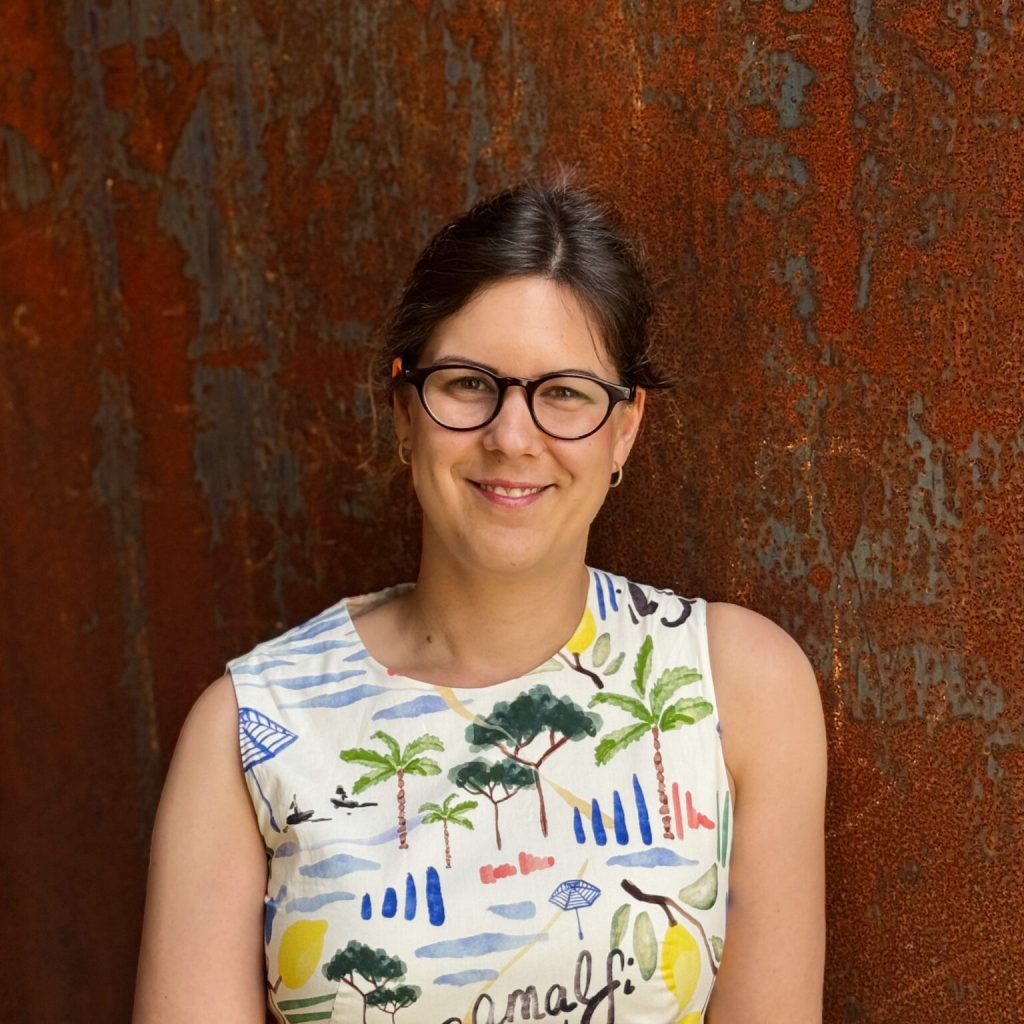
© KHK CURE
Hannah Steurer is the Programme Director for the research focus on experience at the Käte Hamburger Centre CURE at Saarland University; her work focuses in particular on the poetics of experience as it relates to epidemic diseases. She is also interested in urban modes of writing, material cultures, and dream aesthetics, especially in French and Italian literature. She studied Romance languages and German studies, earning her PhD in 2020 with a dissertation titled Tableaux de Berlin: Französische Blicke auf Berlin vom 19. bis zum 21. Jahrhundert (Tableaux de Berlin: French Views on Berlin from the Nineteenth to the Twenty-First Century), which received the Dr Eduard Martin Prize. Following her doctorate, she held a postdoctoral position in the research training group “European Dream Cultures”, funded by the German Research Foundation. In 2022, she joined the Excellence Programme for Women in Academia at Saarland University.
 Cha
Cha 