
茶 FIRST IMPRESSIONS
茶 REVIEW OF BOOKS & FILMS
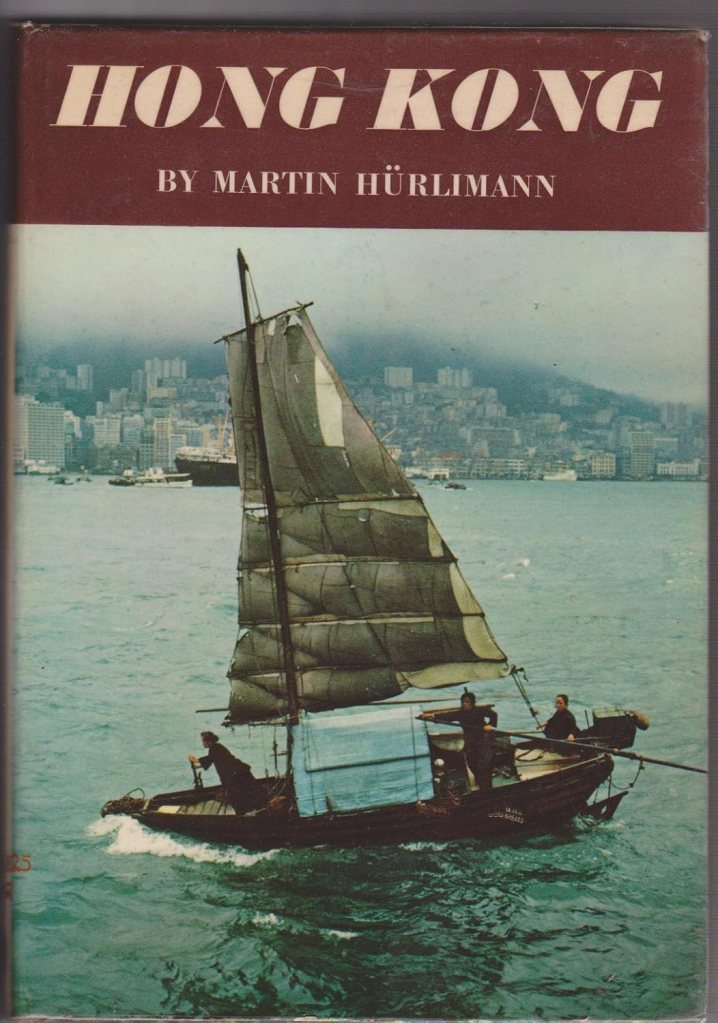
[REVIEW] “King of the Hong Kong Kids: Martin Hürlimann’s Hong Kong” by Simon Patton
Martin Hürlimann. Hong Kong, Thames and Hudson, 1962. 139 pgs.
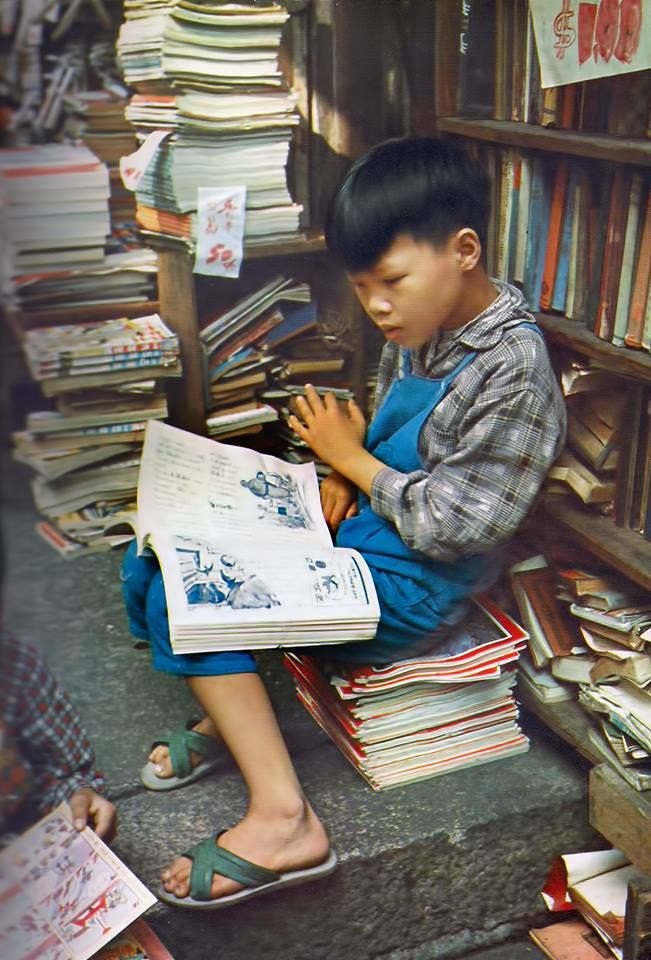
From Martin Hürlimann’s Hong Kong
My sense is that Martin Hürlimann’s Hong Kong is primarily about the people of Hong Kong. Since it was issued within Atlantis Verlag’s “Städtebände” series of city volumes, the structure of the book follows the conventions typical of that programme. These volumes usually combined human, cultural, and urban themes with photographic surveys of the city’s characteristic spaces and infrastructure.
Accordingly, the book includes photographs that document Hong Kong’s physical setting. These are arranged in sections such as “In the Harbour of Hong Kong”, “On the Streets of Victoria”, “Around Hong Kong Island”, and “In the New Territories”. Hürlimann handles such material expertly, yet he truly convinces the reader-viewer of his excellence in the pictures he groups under the heading “DIE KINDER VON HONGKONG” (The Children of Hong Kong).
He scarcely ceases to amaze with his ability to capture the absorption of children in their reading, their games, or the simple pleasure of one another’s company.
Here he scarcely ceases to amaze with his ability to capture the absorption of children in their reading, their games, or the simple pleasure of one another’s company. He was able to do this because, in the 1960s, children in Hong Kong still lived a large part of their lives outdoors, gathering on stairways, in the sheltered arcades of shops, or, as in the image featured in this report, in small bookstalls. As the relevant caption puts it: “Auf den Treppen der Pottinger Street finden die Buchstände eifrige Besucher”, that is, “Bookstalls find eager visitors on the steps of Pottinger Street”.
I cannot read German and, if you cannot either, this poses no obstacle to a deep enjoyment of the work. The written material included here, judging from my random sampling with an online German to English translator, appears to be largely informational in character and can therefore be found elsewhere in English. If you do know German, however, it is clear that you will have a rich mine of Kongological information at your fingertips.
Two sections that particularly appeal to me are “In den New Territories” (In the New Territories) and “Tempel” (Temple). In the former there are several images of impeccably kept fields near Clearwater Bay Road and Fanling, one of a walled village in Kam Tin (which appears to have part of its moat intact), and five images taken on the island of Cheung Chau, including a crowded market scene and an aerial photograph captioned “wie sie sich beim Anflug Hongkongs von Westen her zeigt” (as seen from the approach to Hong Kong from the west [sic]).
The section on temples is very small, containing only two photographs. One depicts the ever popular Wong Tai Sin Temple in Kowloon. The second shows the principal Tin Hau Temple in Sai Kung and gives some idea of how the area must have appeared before the waterfront development took place. It is quite similar to the following image, taken by Bryan Panter in 1957.
Another special feature of the book is the group of photographs collected under the heading “FLÜCHTLINGSSIEDLUNGEN” (Refugee Settlements), including a very ramshackle squatter village built on the side of a hill. As a contrast, Hürlimann also provides several photographs of the new housing estates, often constructed side by side like wafer biscuits stacked inside their packet. This was the beginning of the massive urbanisation that took place in Hong Kong after 1949. At this stage, however, the apartment blocks were still largely limited to six or so storeys, and the residential skyscrapers of today had yet to appear.
Is this something many makers of photographs do, I wondered, conceal themselves within the images they take of other people and places?
After reading and viewing Hong Kong, I was intrigued enough to want to find out more about Martin Hürlimann. I was even more intrigued to discover that there is not a single photograph of him to be found on the internet. Is this something many makers of photographs do, I wondered, conceal themselves within the images they take of other people and places?
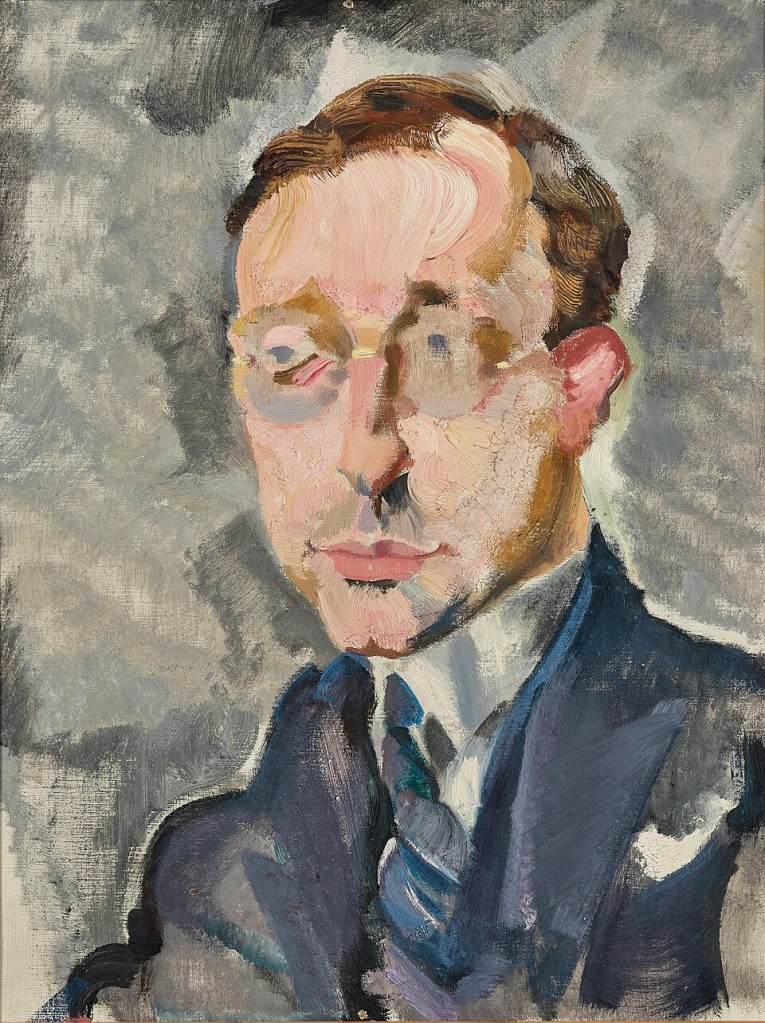
In many ways, Hürlimann’s work left me yearning for some lyrical evocation of Hong Kong. Such writing is, in fact, rather difficult to find, and to date I have encountered only traces of it in the writings of Martin Booth on the Buddhist temple of Po Lin—in three of his books, The Dragon and the Pearl (1994), Hiroshima Joe (1985), and Gweilo (2004)—and in G. S. P. Heywood’s Rambles in Hong Kong (1938).
It reveals something of the natural beauty of Hong Kong that stands on the brink of being lost to us forever.
Yet there is one colour photograph captioned “Die Bucht von Sai Kung” (Sai Kung Bay) that compensates for the absence of poetry elsewhere. Taken from the top of a hill, it shows green fields descending towards the foreshore, then blue, sparkling seawater, numerous small islands covered in verdant foliage, and beyond them the taller, darker mountains of the larger islands, which gradually dissolve into both sea and sky at the shimmering line of the horizon. Its impact is all the more powerful because it reveals something of the natural beauty of Hong Kong that stands on the brink of being lost to us forever.
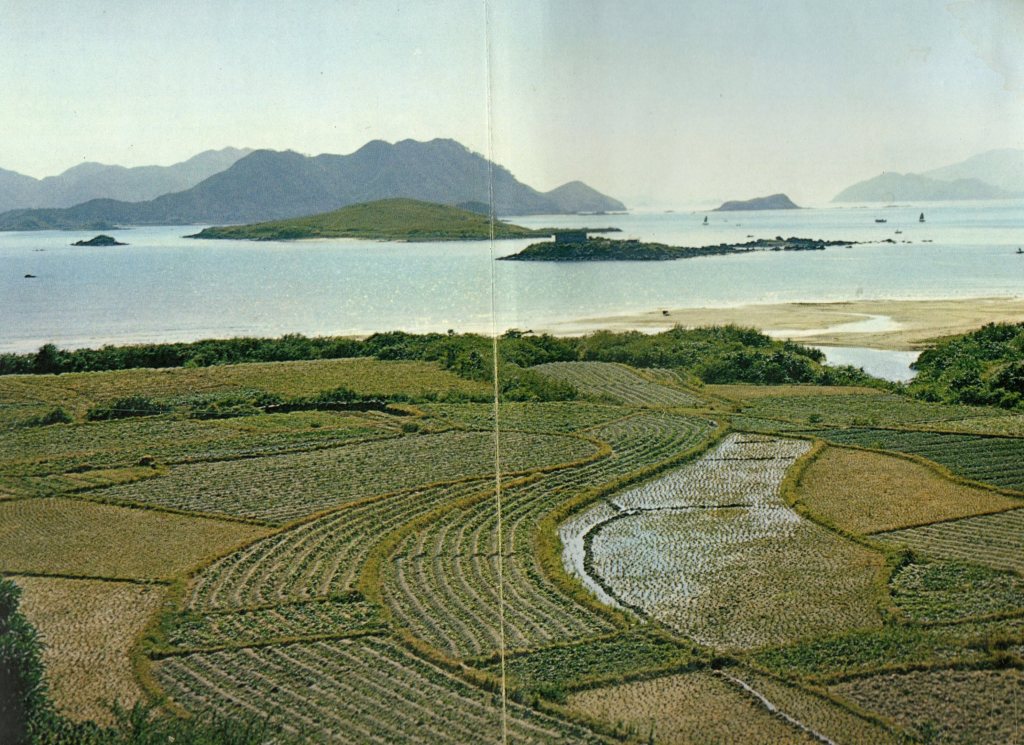
“Die Bucht von Sai Kung” (Sai Kung Bay)
How to cite: Patton, Simon. “King of the Hong Kong Kids: Martin Hürlimann’s Hong Kong.” Cha: An Asian Literary Journal, 16 Mar. 2026. chajournal.com/2026/03/16/martin-hurlimanns.

Simon Patton was born in suburban Melbourne, Australia, in 1961. Left-handed and temperamentally introverted, he developed an interest in poetry at about the same time that he began listening regularly to the radio. His first attempt at writing, composed at the age of fourteen, was a song titled “At the Beach Party”. In 1980 he entered university intending to study poetry, but in his second year he changed direction and began studying Chinese instead. This shift later shaped much of his literary work. In 1997 he received an invitation, sent by fax, to travel to Hong Kong to work as an editorial assistant at Renditions: A Chinese-English Translation Magazine. He held the position during three separate periods in 1998, 1999, and 2000. The experience proved formative and sparked a lasting interest in Hong Kong literature and culture. From 2002 to 2008 Patton co-edited the China domain of Poetry International Web together with the Chinese poet Yu Jian. During this period he helped introduce a range of contemporary Chinese poets to a wider international readership. In 2011 he left city life and settled in rural Central Victoria, where he continues to live with his partner near Chinaman Creek, sharing the landscape with a cat, chickens, goldfish, and a Sealyham terrier. [All contributions by Simon Patton.]
 Cha
Cha 
