
茶 FIRST IMPRESSIONS
茶 REVIEW OF BOOKS & FILMS
[REVIEW] “Inheritance and Reinvention in Kit Fan’s Goodbye Chinatown” by Jennifer Eagleton
Click HERE to read all entries in Cha
on Goodbye Chinatown.
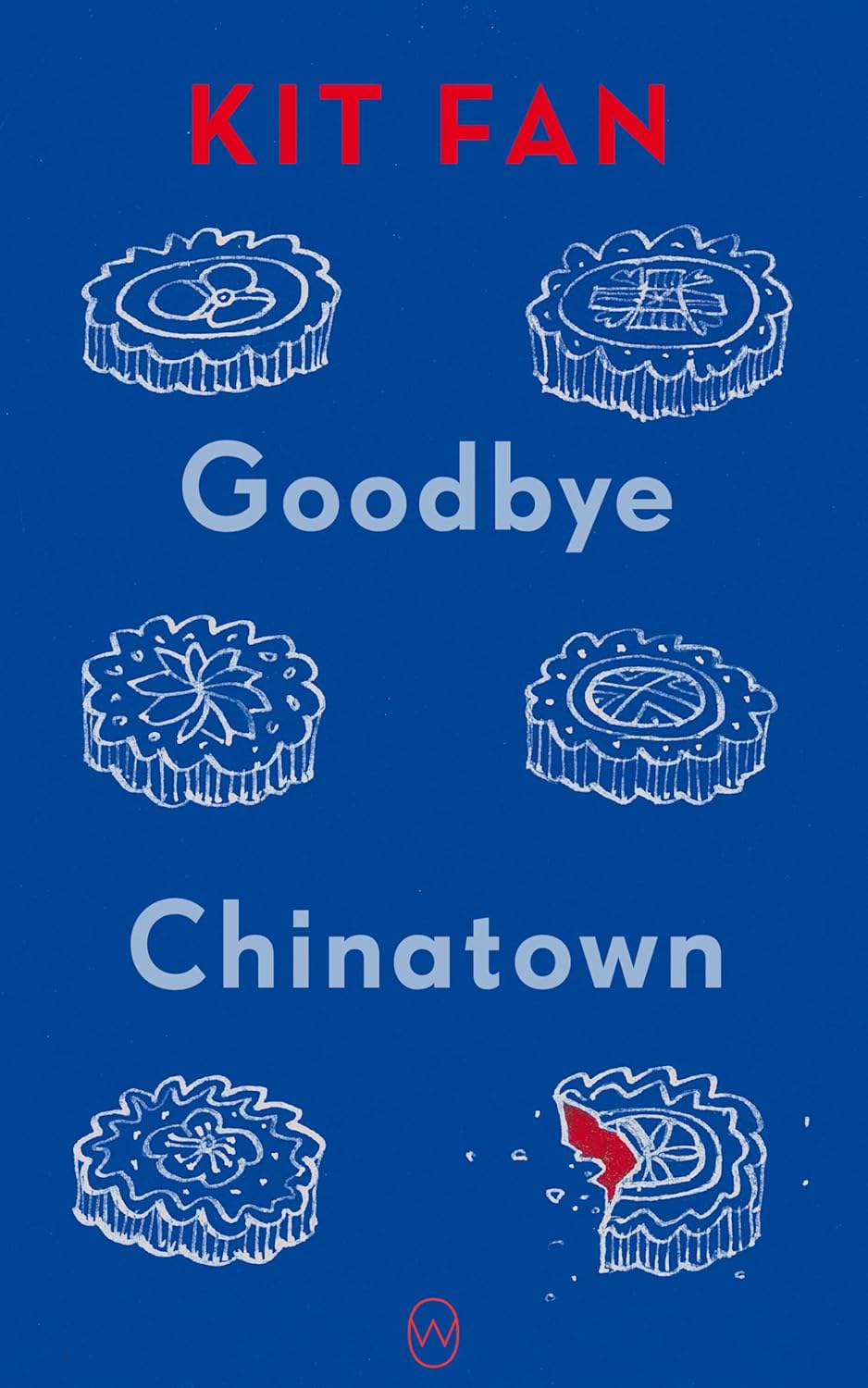
Kit Fan, Goodbye Chinatown, World Editions, 2026. 268 pgs.
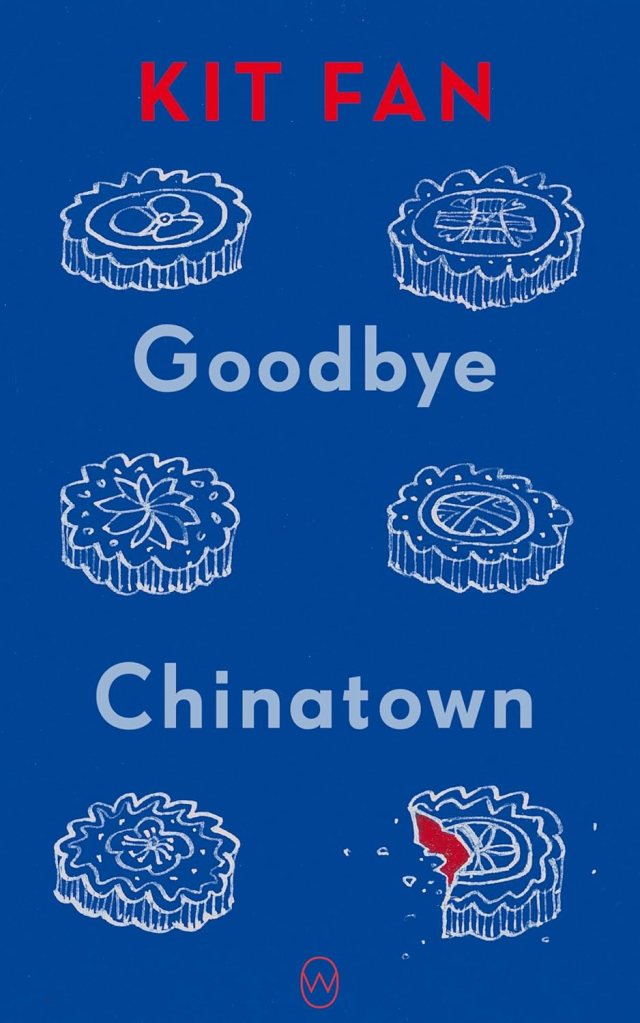
The main protagonist of Kit Fan’s second novel Goodbye Chinatown is totally focused on what she has always done best, “finding her voice on a twelve-inch dinner plate”, as she confronts a personal cultural struggle between tradition and change as an ethnic Chinese, a Hongkonger living in the United Kingdom in the 2000s, expressed through food.
Amber Fan, a young Oxford-educated chef, opens the first Chinese-fusion eatery in London’s Chinatown following the failure of her father’s traditional restaurant, The Golden Palace. Her parents decide to return to Hong Kong, while Amber remains in London alone. A wealthy and politically connected Mainland Chinese woman called Celeste becomes interested in the business, later advising Amber and bankrolling it over the years.
The first section of the novel, “Luna 2001”, addresses Amber’s ambition to push culinary boundaries in order to develop a distinctive Chinese-fusion cuisine in her restaurant, Luna. As Amber says, “If her food were an accent, RP would be the last thing she was aiming for.” Her flavours “had to be unfenced, borderless. Eating was travelling, she thought”, yet when one looks at her menus, the Chinese elements are often difficult to identify in the elaborate names of the dishes. Despite the accolades of food critics, “The more deeply she mastered the art of cooking, the freer and the more estranged she felt.” Perhaps this is “why Amber’s food tasted so good, the way she converted absence into something strange and wholesome”, as Amber’s emotions become embedded in her dishes. When the financial crisis unfolds in 2008, Chinatown enters a period of decline and Luna approaches collapse. In her distress, Amber begins to push flavours to the edge of nonsense, with every dish becoming “an act of self-harm”.
Celeste convinces Amber that she should open a restaurant in Shanghai as a place of the future. The restaurant, “Shangri-la”, also offers innovative food and also earns Michelin stars, and despite her initial reluctance Amber begins partially to agree with Celeste about the potential of working on the mainland. This section, entitled “Shanghai 2007-2008”, is not as fully developed as the “Luna 2001” section and consequently feels rushed. Although her business in Shanghai appears to be flourishing, Amber remains conflicted about her identity and about the dynamics of her family as she moves repeatedly between China, the United Kingdom, and Hong Kong.
This is a period marked by intergenerational challenges. The novel reveals the differences between Amber, who was largely raised in London, and her parents, particularly her father, who represents continuity, and her mother, who acknowledges the present. It also maps the silences and secrets that often exist between parents and children who have lived through vastly different political and social realities. There appears to be a new genre of Hong Kong fiction that addresses these realities, with politics either in the background or placed in the foreground, as in the recent Everyday Movement by Gigi L. Leung.
The third section of the novel, “Hong Kong University of the Chinese 3 June to 2 July 2019”, feels rushed and less successful than the first half of the book, where the focus rests largely on Amber, her parents, and her son. In the earlier chapters, the political situation in Hong Kong remains largely in the background, whereas in this section politics is foregrounded, and the restaurant business is rarely mentioned. Instead, Amber’s son assumes a more prominent role, having previously appeared mainly as a minor character. The fourth section, “Po Fook Hill 2019”, is also set in Hong Kong and centres on Amber, her mother, and Amber’s son, Bobby, addressing questions about how to confront the future in a time of uncertainty.
The final section, “Three Lives January 2020”, again focuses on the relationships among members of the family, the changes taking place in Hong Kong, and Amber’s future restaurant plans. Amber has thrown herself into her career in order to escape the upheavals of family separations and reunions. By the end of the novel, however, she simplifies her cooking, abandoning the pursuit of Michelin stars and elaborate ingredients in favour of more homely fare, while her mother decides to remain in Hong Kong and face the changes that have taken place since 2020. Amber “had tired of walking on a tightrope years ago” of pushing culinary boundaries and “wanted to feel her feet on solid ground again”. In other words, she no longer wishes to be “innovative” merely for validation in the present, nor to treat tradition as something fixed in the past simply because it is considered “authentic”.
Too often so-called “Chinatowns” are declining spaces, functioning largely as tourist food courts. “There is permanence in transience,” Celeste says, “and nothing sells like transience.” Yet one may question whether this is truly the case. Amber’s father is portrayed as a conformist to tradition: “Every business decision he made about The Golden Palace was to suit what people think Chinatown should look like, should taste like, the red lanterns, the Peking ducks, the fortune cookies.” This novel offers a refreshing perspective on the complexities of the Hong Kong diaspora in England in the 2000s, situated between the desire to preserve continuity during a period of profound change “back home” and the transformation of a London Chinatown.
As readers, we are left with the sense that it may be possible to accept change while preserving cultural tradition, and at the same time to continue defending the values that matter to an ethnic diaspora. In other words, the novel gestures toward a form of compromise.
How to cite, Eagleton, Jennifer. “Inheritance and Reinvention in Kit Fan’s Goodbye Chinatown.” Cha: An Asian Literary Journal, 16 Mar. 2026. chajournal.com/2026/03/16/kit-fan-chinatown.


Jennifer Eagleton, a Hong Kong resident since October 1997, is a close observer of Hong Kong society and politics. Jennifer has written for Hong Kong Free Press, Mekong Review, and Education about Asia. She has published two books on Hong Kong political discourse: Discursive Change in Hong Kong(Rowman & Littlefield, 2022) and Hong Kong’s Second Return to China, A Critical Discourse Study of the National Security Law and its Aftermath(Palgrave Macmillan, 2025). Her poetry has appeared in Voice & Verse Poetry Magazine, People, Pandemic & ####### (Verve Poetry Press, 2020), and Making Space: A Collection of Writing and Art (Cart Noodles Press, 2023). [All contributions by Jennifer Eagleton.]
 Cha
Cha 