
茶 FIRST IMPRESSIONS
茶 REVIEW OF BOOKS & FILMS
[FIRST IMPRESSIONS] “When the Strange Becomes Familiar: Making a Home in Taiwan” by Jennifer Eagleton
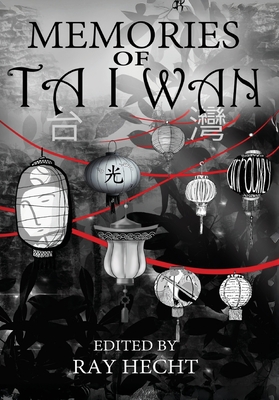
Ray Hecht (editor). Memories of Taiwan: A Comic Anthology. SLG Publishing, 2026. 266 pgs.


Memories of Taiwan, a Comic Anthology is a 267-page collection of autobiographical and observational comics by 19 expatriate artists and writers who live in Taiwan or have visited the island. Edited by Ray Hecht and published by SLG Publishing, the anthology brings together the four issues of the self-published Visions of Taiwan series.
I particularly like the way the volume opens with a brief biography of each contributor, alongside a self-portrait and a list of their stories.
The contributors write about food and festivals, transport and work, art and everyday encounters with local people. They also consider what it means to arrive as an outsider and make a home in Taiwan. No two contributors experience the island in quite the same way.
Having made my home in Hong Kong over the past 29 years, I recognise something of my own experience in theirs. What once seemed strange has gradually become familiar, and I have become an insider of sorts. If I were to return “home”, I suspect that what was once familiar would in turn seem strange. Perhaps that experience deserves a comic anthology of its own.
In “The Taiwanese Farm Adventure”, Fabienne Good shows how an unexpected invitation (p. 56) can offer a glimpse of local life before one has had the chance to make friends. Joel Fleming’s “Feng Bow the Taiwan Fireworks Festival” (p. 62) describes what it is like to take part in this annual celebration, from the “fashion trends” it inspires to the experience of having fireworks strapped to one’s body.
I enjoyed the encounters with officials for what they reveal about local bureaucracy. In “How Not to Get Your Scooter License in Taiwan” (p. 75), Hecht turns his own experience into self-deprecating comedy. In “People-watching on the Train” (p. 81), he imagines what his fellow commuters are doing, where they are going and what might be on their minds. I could easily imagine either story unfolding elsewhere in Asia.
Bronwen Shelwell’s “Green Island: Exploring an Island’s Island” (p. 99) is a personal travelogue drawn in almost photographic detail. Much of its appeal lies in Shelwell’s excitement at the boat journey, her arrival on the island and her encounters with the natural world. I also enjoyed the humour of “A Slug’s View” (p. 108), in which Shelwell considers Taiwan’s climate from a slug’s perspective and shows how humans appear to this small creature as they pass through its world.
Alongside the lighter entries are stories of loneliness, artistic uncertainty, work, health and cultural displacement. In “My Black Hole” (p. 139), Patty Hogan’s account of treatment for a serious eye condition becomes an affecting meditation on healthcare and the freedom to keep creating. Other contributors describe how they gained a foothold in Taiwan’s art world, adding another dimension to their accounts of finding their place on the island.
The anthology offers intimate glimpses of everyday life in Taiwan and traces how an unfamiliar place can gradually become home. Loose sketches, digital illustrations and black-and-white comics in a variety of styles convey details more vividly than words alone. I came away with a clearer sense of Taiwan than I have gained from reading prose alone, and I can imagine a whole series of “Memories of …” comic anthologies finding an audience.
Joe Renzella reflects on what it means to live in an unfamiliar place in “Changes” (p. 164). He writes, “Immersing yourself in an alien environment also forces you to question your assumptions, and to look at things with new eyes”. Later, he observes, “When you turn and face, the strange, new and surprising things can happen. You discover abilities you didn’t know you had, and you find inspiration in all the places you never know to look” (p. 168).
Many of us who have lived in Asia, however long or briefly, might echo Thai Martin’s reflections in “Thai in Taiwan” (pp. 245 to 251).

How to cite: Eagleton, Jennifer. “When the Strange Becomes Familiar: Making a Home in Taiwan.” Cha: An Asian Literary Journal, 29 Nov. 2026. chajournal.com/2026/11/29/memories-of-taiwan.


Jennifer Eagleton, a Hong Kong resident since October 1997, is a close observer of Hong Kong society and politics. Jennifer has written for Hong Kong Free Press, Mekong Review, and Education about Asia. She has published two books on Hong Kong political discourse: Discursive Change in Hong Kong(Rowman & Littlefield, 2022) and Hong Kong’s Second Return to China, A Critical Discourse Study of the National Security Law and its Aftermath(Palgrave Macmillan, 2025). Her poetry has appeared in Voice & Verse Poetry Magazine, People, Pandemic & ####### (Verve Poetry Press, 2020), and Making Space: A Collection of Writing and Art (Cart Noodles Press, 2023). [All contributions by Jennifer Eagleton.]