
茶 FIRST IMPRESSIONS
茶 REVIEW OF BOOKS & FILMS
[REVIEW] “Banner Women in Verse: Wilt Idema’s Anthology of Manchu Women Poets” by Ronald Gray
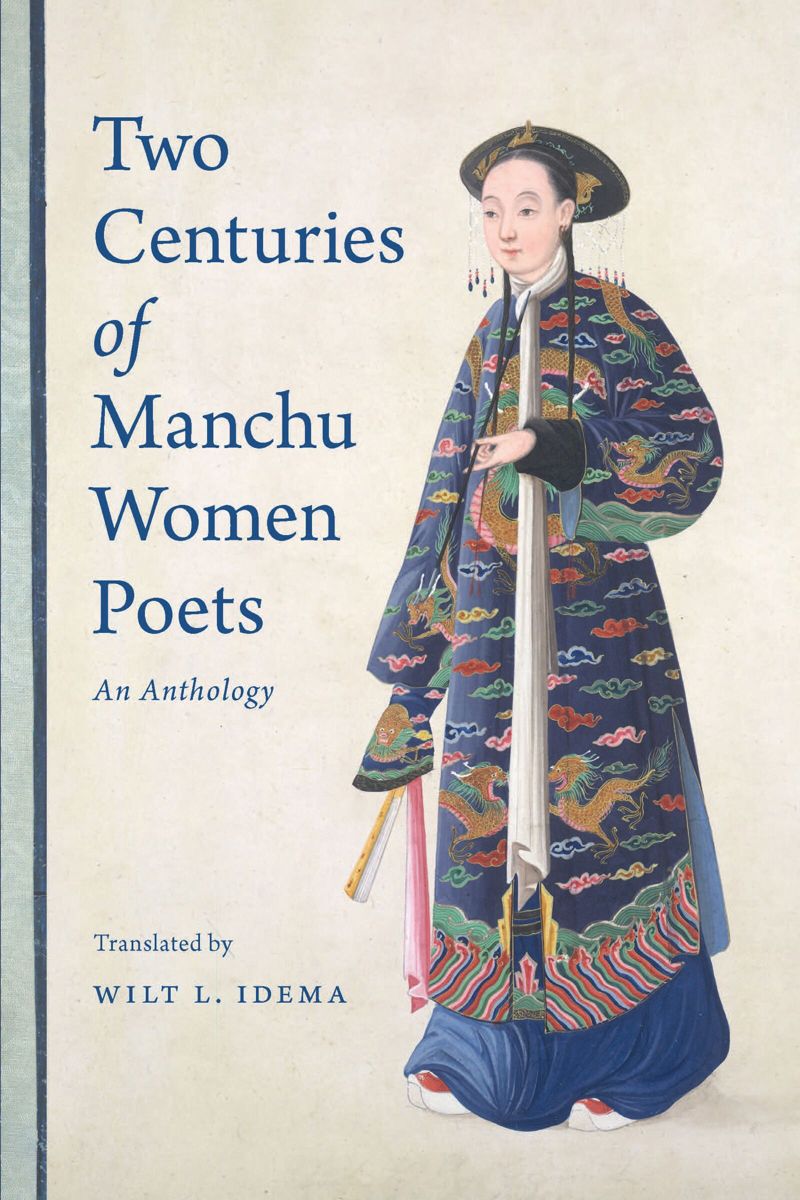
Wilt L. Idema (editor and translator). Two Centuries of Manchu Women Poets: An Anthology, University of Washington Press, 2017. 328 pgs.


Although China is renowned for its great male poets, it is not widely appreciated in the West that the country has also produced female poets of the first rank. Happily, over the past thirty years, these poets have at last begun to attract scholarly attention. Works such as the comprehensive The Red Brush: Writing Women of Imperial China by Wilt Idema and Beata Grant, Susan Mann’s The Talented Women of the Zhang Family and Precious Records: Women in China’s Long reveal that, in certain circles, it was by no means unusual for women in late imperial China to write, and even to publish, poetry. More than 3,000 Chinese women are estimated to have published their work during the Ming and Qing dynasties.

By the eighteenth century, upper-class Chinese women, particularly those in the southern region of Jiangnan, sometimes received instruction in calligraphy, painting, music and poetry, chiefly because such accomplishments were thought to enhance their marriage prospects. Although these women remained largely confined to the inner quarters of their family compounds, they were nonetheless able to pursue such activities as writing poetry and, in certain circumstances, even publishing their work. One anthology of Qing women’s literature, Correct Beginning by Ladies of the Present Dynasty, published in 1831, contains more than 1,700 poems by 933 authors.
More surprising still is the fact that Manchu women, too, published poetry during the Qing dynasty. This is the subject of Wilt Idema’s new book, Two Centuries of Manchu Women Poets: An Anthology. Idema, a distinguished Dutch Sinologist who has written extensively on Chinese literature and translated numerous literary works, observes in his introduction that little is known about the lives of Manchu women under the Qing, and that an examination of their poetry helps to remedy this deficiency. As he puts it, “By reflecting their experiences in poetry and by reflecting on their experiences in the same poetry, the women created a record of their lives.”
Idema presents writings by twenty Manchu women poets, together with biographical information about their lives. Most lived in Beijing, were born into families of officials and were married; many were widowed young. They often began writing poetry in their youth and came from families in which both men and women composed verse. They wrote in the shi style, the central form of classical Chinese poetry, and seldom composed lyrical poems.
Interestingly, in Idema’s words, “They rarely, if ever, problematize their own ethnicity. They seem to have enjoyed their privileged status as a given.” Moreover, whereas Manchu men were repeatedly urged not to forget their native tongue, Idema notes that “Manchu women were allowed to speak Chinese, read Chinese, and write Chinese. In the course of my research, I encountered only two women who had mastered written Manchu.
Like their Chinese counterparts, Manchu women poets led segregated lives and were expected to remain in the inner quarters, away from the public sphere. They, too, were educated at home in the Confucian and literary classics, and some belonged to poetry clubs, though they confined their literary contacts chiefly to other banner women. As with Chinese women poets, they often met with opposition from their families once they reached marriageable age. Both groups, moreover, favoured short poetic forms and eschewed allusion, believing in the direct expression of emotion. Yet Idema observes that, while the poetry of Manchu women shares certain features with that of Chinese women poets, “it is also highly individual as they coped with their personal experiences very much in their own way.” Unlike Chinese women poets, however, Manchu women poets had to wait until 1917, five years after the fall of the Qing dynasty, for the publication of the first work devoted exclusively to them, as Idema points out.
The book is organised around themes such as “sacrifice and friendship”, “chastity and suicide”, “mourning royalty” and “traveling throughout the empire”. The poems by widows frequently convey their grief at their husbands’ deaths and their regret at not having followed them into death sooner, “even though such behavior was officially condemned”.
Among the poems that stood out for me is the vivid “In a Village” by Lady Tongjia (1737-1809):
A bluish green fills open fields and grasses spread their flowers;
The mountain villages lack trees: no oriole that sings.
My lessons done, I idly watch the plowing of the plain
And hear across the stream the shouts that hurry on the oxen.
Another piece that caught my attention is the contemplative “An Impromptu Composition on a Winter Night” by Wanyan Jinchi (1770-1840):
The courtyard’s still, the gate is doubly locked;
The hour is late, the night air now feels chilly.
The moon is new, the flower’s shadow thin;
As autumn ages, trees just always murmur.
My slender body hates the higher headrest,
My lazy bones just love my oldest skirt.
No smoke emerges from the golden brazier:
I poke the fire to find the remnant fragrance.
Much to my surprise, the anthology even includes a poem by Lady Husihali, who wrote, among other works, poems on the great Chinese novel Honglou meng (Dream of the Red Chamber), which enjoyed immense popularity among Chinese and Manchu women alike. Written in 1860, the poem, which refers to the novel’s principal female characters, appeared in a collection entitled Emotions on Reading Dream of the Red Chamber. It reads, in part:
The single dream of these red chambers wakes up the deluded:
Don’t take the field of fame and profit for the final truth.
Those dozen beauties, golden hairpins, now have disappeared:
They are but heaps of sun-bleached bones hidden by fragrant dust.
Idema’s book is a fascinating study of a rarely explored and underappreciated subject, and it comes highly recommended.
How to cite: Gray, Ronald. “Banner Women in Verse: Wilt L. Idema’s Anthology of Manchu Women Poets.” Cha: An Asian Literary Journal, 7 Nov. 2026, chajournal.com/2026/11/07/manchu-women-poets.


Ronald Gray has taught at universities in China, Japan, South Korea, and the United States. He has written and edited seven books, three of which deal with Honglou meng. He lives in Gongju, South Korea. [All contributions by Ronald Gray.]