
茶 FIRST IMPRESSIONS
茶 REVIEW OF BOOKS & FILMS
[INCIDENTAL] “After the Credits Rolled: Crouching Tiger, Hidden Dragon and a Writer’s Awakening” by Larnchana Larkshitha Alahendra
Ang Lee (director). Crouching Tiger, Hidden Dragon, 2000. 120 min.


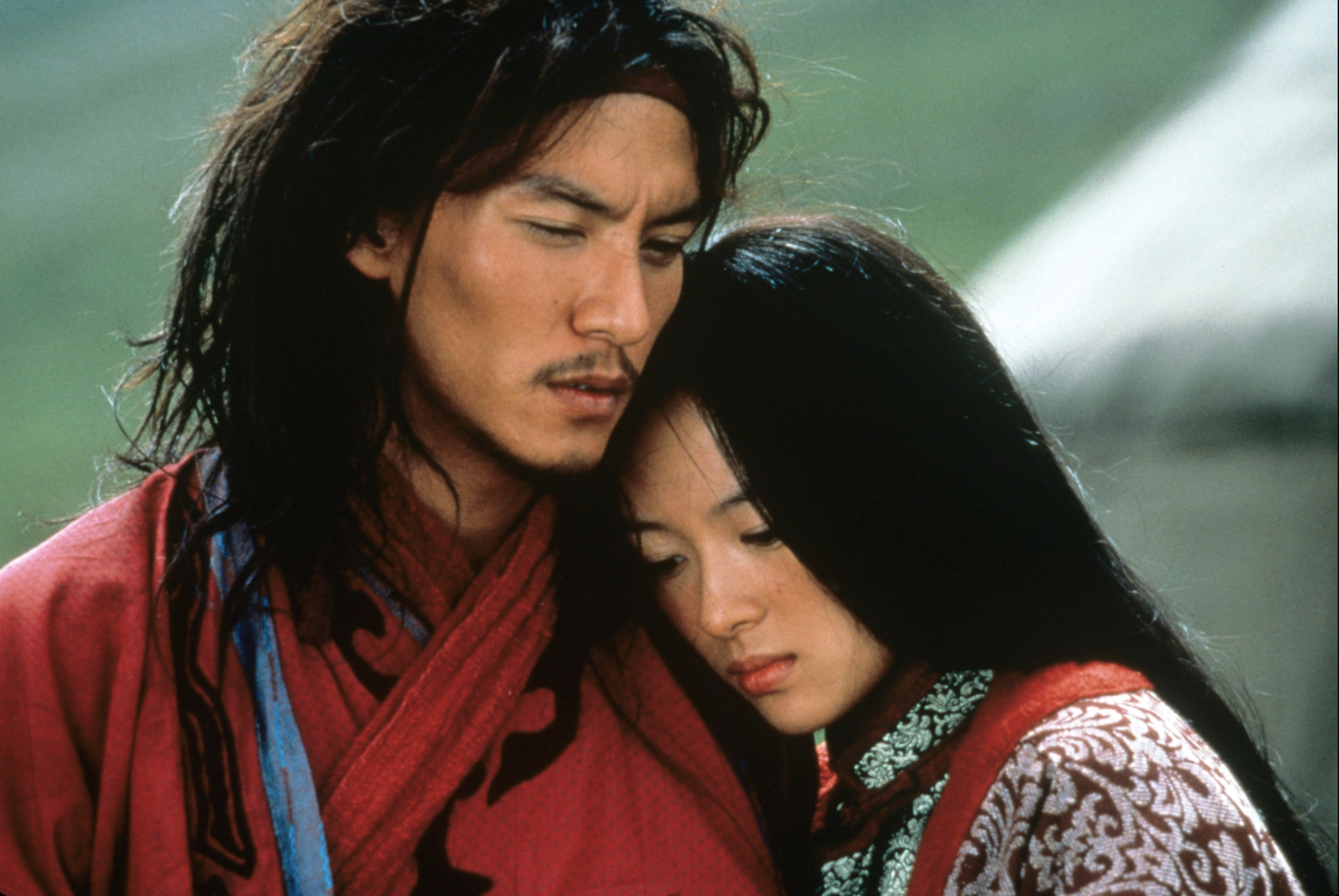
Few films can transport an audience into another world with such grace, intensity and emotional depth as Ang Lee’s Crouching Tiger, Hidden Dragon. With its intriguing MacGuffins, memorable characters, dramatic irony, mounting tension and forbidden love, the film offers a thrilling cinematic experience that lingers long after the final scene.
Ang Lee’s film arrived in cinemas in the summer of 2000, a year of great significance. In the Chinese calendar, it was the Year of the Golden Dragon; for me, it was the year my son was born and the year we bought our first flat. Lee brought the wuxia genre to an international audience on an unprecedented scale. Although wuxia films had existed for decades, Crouching Tiger, Hidden Dragon introduced many Western viewers to a world in which martial arts, ancient traditions, philosophical reflection and deeply suppressed emotions could coexist so beautifully. The film went on to win four Academy Awards from ten nominations, including Best Foreign Language Film, demonstrating that a story rooted in Chinese culture could transcend linguistic and cultural boundaries.
The casting itself was a remarkable undertaking. Malaysian-born Michelle Yeoh had to deliver her performance in Mandarin, which was not her native language, while Hong Kong-born Chow Yun-fat was more accustomed to Cantonese. Zhang Ziyi was the only native Mandarin speaker among the three leads. Bringing these performers together and making their dialogue feel natural and emotionally convincing was no small achievement. Chow Yun-fat told Time Asia in 2000 that, on his first day of filming, he needed twenty-eight takes because of his unfamiliar accent, something that had never happened to him before. Michelle Yeoh underwent more than a month of speech therapy simply to master the correct pronunciation. The unwavering dedication of the actors and the strength of their performances, supported by careful direction and choreography, produced a masterpiece that remains undimmed more than a quarter of a century later.
❧

Bruce Lee in Enter the Dragon
Growing up, I was accustomed to a diet of Hollywood films, occasionally punctuated by a Bruce Lee classic such as Enter the Dragon (1973) or one of Jackie Chan’s action comedies. Nothing, however, had quite prepared me for Crouching Tiger, Hidden Dragon. I was captivated not merely by the action but by the sharp, economical dialogue, the unspoken emotions and the cultural richness embedded in every scene. In the sequence in which Jen steals the Green Destiny, the subtle drumbeats of Tan Dun’s Oscar-winning score mimic her every move, building a suspense so taut that it makes the hairs on the back of your neck stand on end. The production design, costumes and sets immerse us in a world in which every object, gesture and landscape seems to carry meaning.
At the heart of the film are characters whose inner conflicts are as compelling as their physical prowess. Li Mu Bai, portrayed by Chow Yun-fat, possesses a quiet dignity and an unmistakable charm. His relationship with Yu Shu Lien, played by Michelle Yeoh, is charged with affection and longing, yet constrained by honour, duty and social convention. Their love is powerful precisely because it remains largely unspoken. The silences between them often communicate more than words ever could.
The young Jen Yu, played by Zhang Ziyi, provides a striking contrast. Intelligent, privileged and fiercely independent, she longs to escape the restrictions imposed upon her. Shu Lien recognises something of herself in Jen, perhaps even the freedom she once desired but never fully claimed. This recognition lends their relationship an added layer of complexity. Jen is at once admirable and defiant of convention. Her yearning for freedom is understandable, yet her refusal to accept responsibility sows chaos among those around her.
Then there is Jade Fox, whose face alone tells a story of humiliation, resentment and rage. Her frustration is visible from the beginning, and Cheng Pei-pei’s performance gives her bitterness a human dimension. She is not simply an obstacle to the protagonists but a woman shaped by exclusion and injustice. Even characters who occupy less prominent positions contribute to the film’s carefully woven emotional landscape, such as the gangsters Jen encounters in the restaurant. It is one of the film’s finest scenes, and so hilarious that, even after twenty-six years, it still has me hooting with laughter.
What makes the storytelling so effective is the tension between what the characters desire and what they believe they must do. Honour conflicts with love; freedom clashes with responsibility; tradition becomes both a source of identity and a prison. The film’s dramatic irony allows the audience to recognise these contradictions even when the characters themselves cannot escape them. Its forbidden love stories are therefore not merely romantic embellishments but expressions of a deeper struggle between individual desire and social expectations.
❧
For me, however, the most significant part of this film began after the credits rolled. It opened the floodgates of my desire to become a writer. Every artistic endeavour should inspire other artists and fuel their creative vision.
I had been an avid reader since childhood, but Crouching Tiger, Hidden Dragon awakened a different ambition. I went to the library in search of the screenplay, written by Wang Hui-ling, James Schamus and Tsai Kuo-jung from the novel by Wang Dulu, eager to understand how such an extraordinary film had been constructed. To my surprise, the script ran to only about seventy-five pages, considerably shorter than a standard Hollywood screenplay. That discovery fascinated me. How could so few pages give rise to such a vast world of emotion, movement, atmosphere and meaning?
I began to understand that the power of a screenplay does not lie in the number of pages but in the precision of its choices: a line of dialogue, a meaningful silence, a revealing expression or a carefully placed gesture. A character’s face could convey what an entire paragraph might struggle to explain. The film taught me to look beyond what was being said and pay attention to what remained unspoken.
That fascination eventually led me to spend half my savings on a scriptwriting course at NYU Tisch School of the Arts Asia, New York University’s first degree-granting campus outside New York, which operated in Singapore from 2007 to 2015. For a housewife to commit such a substantial portion of her savings to a writing course might have seemed an impractical decision. Yet I was driven by a simple conviction: if a film could move me so profoundly, I wanted to understand the craft that made it possible.
Since then, my writing journey has taken me through screenplays, novels, plays and short stories. Some of my screenplays have grown into novels, and my short stories have found their way into print. Looking back, I understand why Crouching Tiger, Hidden Dragon is regarded as one of the most luminous gems of Asian cinema and one of the greatest films of all time.
How to cite: Alahendra, Larnchana Larkshitha. “After the Credits Rolled: Crouching Tiger, Hidden Dragon and a Writer’s Awakening.” Cha: An Asian Literary Journal, 5 Nov. 2026, chajournal.com/2026/11/05/croaching.


Larnchana Larkshitha Alahendra is a Singaporean writer originally from Sri Lanka who has lived in Singapore for the past 27 years. Her short-story collection, The Café Corner, was longlisted for the Sing Lit Manuscript Boot Camp in 2022. She studied screenwriting at NYU Tisch School of the Arts Asia. She is currently working on a memoir exploring the Sri Lankan Civil War through her personal experiences. Email: larnceastro@gmail.com | Facebook: Alahendra Larnchana | Instagram: @larnceastro