
茶 FIRST IMPRESSIONS
茶 REVIEW OF BOOKS & FILMS
[ESSAY] “Last Cry: Light, Love and Everyday Evil in We’re Nothing at All” by Tin Yuet Tam
Click HERE to read all entries in Cha
on We’re Nothing at All.
Herman Yau (director). We’re Nothing at All, 2026. 128 min.


Some of us are in the gutter looking at the stars, but others, lying in the same gutter, stare into the pitch dark that swallows them. They exist, and then they cease. Their names are forgotten, reduced to a set of codes or numbers. Their homes are never havens, only makeshift refuges. Their voices are muted in the crowd. They are banished. They are nothing at all. These are the people at the centre of We’re Nothing at All: the forgotten members of our society and the shadowed corners we dare not see.
Herman Yau’s We’re Nothing at All confronts us with the chronic agony and anger of those hidden at the very bottom of society. Known for his abiding concern for underrepresented communities and commended for his realism, Yau has centred many of his films on social classes that too often go unseen. The title is at once a statement of anger and an admission of helplessness. Because the film is self-funded, and produced, written and directed by Yau himself, its cast and crew have continued to attend screenings across Hong Kong to meet and thank audiences.
The Hong Kong premiere in April 2026 was followed by official theatrical openings on the East Coast of North America in the summer, in Taiwan in early October and, finally, in Los Angeles on 16 October 2026. At the time of writing, We’re Nothing at All has received two nominations at the 63rd Golden Horse Awards: Best Director for Herman Yau, and Best Supporting Actor for Anson Kong Ip-sang of the Hong Kong boy band Mirror. Many viewers arrived at the cinema without knowing who the younger actors were, yet left stunned by the force of the plot and the dynamism of the cast. The film voices the last cry of the underserved and confronts us, unflinchingly, with social injustice.
The film opens and closes with the same bus explosion on Valentine’s Day. The blast marks the beginning of the end for the two men who detonate it, and the end of the beginning for those they leave behind. This is not a mystery that leaves us guessing who the passengers are; rather, the film seeks to show why these two men were pushed to the edge and driven to their fatal decision. The protagonist, Lung Sir (played by Patrick Tam Yiu-man), is a retired forensic detective whose past casts a shadow over him and those around him. Seemingly carefree, yet required to solve the case within three days, Lung Sir works tirelessly to discover what happened before the explosion. Assembling the evidence piece by piece, he uncovers the intertwined story of two young men, Fai (played by Anson Kong) and Ike (played by ANSONBEAN). Rejected by society and weighed down by endless disappointment, Fai and Ike have always lived in the shadows, unnoticed and uncared for. The injustices that befall them accumulate like snowflakes. “Snowflake” is among Fai and Ike’s last words, inscribed in one of the film’s pivotal scenes, and a chant of rage from characters who have reached the lowest point of their lives. The words are:
IN AN AVALANCHE, NO SNOWFLAKE IS INNOCENT.
ON THIS BEAUTIFUL DAY, WE END OUR NOT-SO-BEAUTIFUL LIVES.
Since watching the film, a question has stayed with me: are we the snowflakes, or the forces that form them? Do we appear harmless while in fact pushing others to the edge, without even acknowledging their presence? For me, We’re Nothing at All is powerful not merely because it is a Hong Kong film made with great dedication, but because its message transcends the language and geography of its production. The film poses a question to all of us seated before the screen: are we victims of social injustice, or are we complicit in perpetuating an unjust social system?
With this question in mind, I will devote the rest of this review to three central themes in the film: light and darkness, love and vulnerability, and everyday evil and helplessness.

Light and darkness

Fai and Ike are two of the film’s many characters who live in tragedy. Raised in a dysfunctional family, Fai has learnt to internalise his rage and has been consumed by countless rejections and disappointments. For a long time, he has lived in darkness and in a state of invisibility. His neighbourhood of subdivided flats is filled with people living in poverty and anguish. He drifts from job to job and is continually kept down. Before meeting Ike, Fai lives alone in a cramped room with only his anger for company.
Ike, whose relationship with his parents is strained, inhabits another form of darkness. He first appears in a bar, waiting tables and cleaning the washroom. His double existence, earning a living in a dim bar by night and sketching on a pier by day, both reflects and contrasts with his closeted life. Tellingly, Ike’s sketches favour the contrast between black and white, light and darkness. Neither his family nor his casual lover, Andrew (played by Thor Lok), understands his passion for art. While Andrew believes that buying Ike’s work is a way of showing understanding, Fai is the only person in the film who fervently supports Ike’s dream without questioning the value of his art.

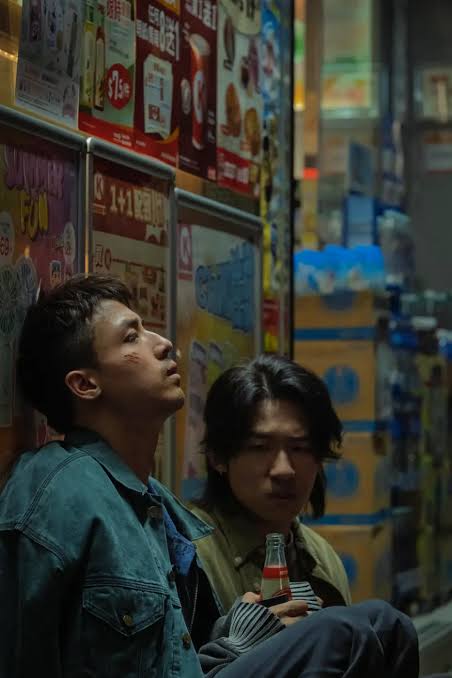
Their darkness reaches a turning point after a brief encounter on a brightly lit basketball court. Finding hope and solace in each other, Fai and Ike emerge, for a while, from the dark. They are open about their relationship in public, whether picking up takeaways or celebrating Ike’s birthday in a bar. Yet tragic events drag them back into darker spaces. The dimly lit tunnel provides one of the film’s climaxes, as Fai and Ike refuse to be looked down upon once more because of their sexuality. But the darkness, and the violent blows of those who hate them, are real. Towards the end of the film, the light that once entered their lives has vanished. They retreat to shadowy places, sitting helplessly outside a convenience store as they try to work out what to do next. Their final scene unfolds in a space at once enclosed and open: the bus. Holding hands, the couple declare their existence one last time in broad daylight, summoning their tragic end. Fai and Ike cannot escape the fate and darkness that have sealed them in.
Love and vulnerability
The characters in We’re Nothing at All win the audience’s empathy, despite being complex and far from flawless. Fai is blunt and Ike is sensitive, yet they are bound by the commitment they find in each other. Both grew up in loveless environments rife with misunderstanding. Each finding his own way to get by, they have known the pain of fending for themselves. Eventually, however, they discover that their vulnerability can be accepted by another person. Commitment is the bedrock that steadies them against this vulnerability and defines their relationship. In this film, commitment is twofold: first, the resolve with which Fai and Ike choose each other; second, Fai’s appreciation of Ike’s artistic endeavours, expressed in the line 不過我好鍾意你呢份執著 (“But I love your commitment”), in which 執著 is translated as “commitment”. This acceptance of vulnerability is also evident in the tunnel scene, where Fai and Ike are left exhausted and utterly deflated after being physically assaulted because of their sexuality and their relationship. Amid their wails and cries, their final embrace is a vow to protect each other until their last breath.
Juxtaposed with Fai and Ike’s love is that of Lung Sir and his wife, Ah Lai (played by Kearen Pang). A couple with struggles of their own, Lung Sir and Ah Lai likewise find their bond in vulnerability. Forgiven and accepted by Ah Lai, Lung Sir makes a different choice from Fai and Ike, even though all three have been pushed to a similar edge. This does not imply that Lung Sir and Ah Lai are in any way better than Fai and Ike; rather, through their characterisation, this second couple reveal another possibility, one in which love and vulnerability triumph over hardship.
Everyday Evil
and Helplessness
With its traces of realism, the film does not shy away from depicting everyday evil. There is theft in a bar, blatant discrimination by a doctor against the lower classes, domestic violence and murder, abuse and assault in many forms, and pervasive irresponsibility. Fai epitomises the victim of everyday evil. To make ends meet, he works long hours on construction sites, yet he must constantly fight for the wages he is owed. Early in the film, Fai and his co-workers are told they will not be paid because the contractors are nowhere to be found. When they join a labour demonstration, they face complaints of obstructing traffic. When Fai becomes the last protester still sitting in, determined to reclaim his wages, he is warned once again that he will be arrested if he persists. Angered by his co-workers’ powerlessness and lack of resolve, Fai is forced to give in, but he leaves with the words: “This is because all of you chickened out. That’s why he walked all over me.” Fai is a lone figure who has fought all his life and suffered at the hands of those who lose their nerve. Still, he wants to survive, and he does his best. His eyes change with his circumstances: the determination in them as he walks into the cha chaan teng to secure a job as a waiter; their sympathy as he seeks to protect Ike from being disowned by his parents; their bloodshot gaze when he discovers that his mother (played by Amanda Lee) has once again been beaten by his monstrous father (played by Ben Yuen); and, finally, their trembling before the explosion. Clouded and battered by constant helplessness, Fai is devoured by everyday evil.
Who Adds the Final Straws? Who is Bound by Fate?
Having inferred that the bus explosion was a suicide attempt, the audience follows Lung Sir and his team as they investigate the bombers’ motives and backstories, and the evil and cruelty they have suffered and witnessed. From the men’s beginnings to their final act of blowing up the bus, the film acts as a thread that draws all the pieces together.
Although the explosion is the film’s pivotal event, its true focus is the final straws that lead to it. From the outset, Fai has repeatedly sought to take his own life; his very first appearance leads to a suicide attempt. He is surrounded by poverty, sorrow and violence. Ike, likewise, is beset by discrimination and temptation. Because of his sexuality, he no longer feels part of his family, and he weeps in anguish after being rejected by his parents and called a “sick freak” by his father. Fai and Ike are mired in society’s constant rejection. Yet the final straws keep accumulating, and the world drains away their last shred of hope.
The sound of an off-screen explosion is followed immediately by Candy Lo’s song “God Bless”, and the film’s title, We’re Nothing at All, appears on screen in capital letters for the first time. It is more than just the name of the film; it is the last cry of those in the gutter, voicing their final protest against a cruel world.
How to cite: Tam, Tin Yuet. “Last Cry: Light, Love and Everyday Evil in We’re Nothing at All.” 26 Oct. 2026, chajournal.com/2026/10/26/nothing-at-all.


Tin Yuet Tam is a Hongkonger who writes about arts and culture. She has written critiques on performing arts in Chinese, for example, her theatre critiques can be found in Hong Kong Repertory Theatre’s Repazine. She has also been writing poetry, reviews, interviews, and essays in English. Tin Yuet’s poetry has been featured in Canto Cutie and Voice & Verse Poetry Magazine. When she is not writing, you might find her strolling along the streets for hours just to immerse herself in cities. She currently resides in Toronto, Canada. Find her work on Instagram: @walk_talk_chalk [All contributions by Tin Yuet Tam.]