
[ESSAY] “Between Singapore and Yogyakarta: A City to Visit, A City to Live In” by Dhinie A Ryhilda
I don’t remember exactly which MRT station I got off at that day in Singapore. I only remember deciding to stop somewhere at random and walk. I wasn’t looking for a landmark or a place I had seen on TikTok. Instead, I found myself wandering through a neighbourhood, passing rows of HDB blocks and small shops, until I stumbled upon a tea shop that would become one of my favourites in Singapore. It was in the middle of a neighbourhood in Toa Payoh.
There was nothing particularly spectacular about the place. It was not somewhere I would have put on a tourist itinerary. And perhaps that was what made me like it. After that day, I became increasingly curious about Singapore beyond the places usually presented to visitors. I started getting off at different MRT stations and walking around Ang Mo Kio, Marymount, Tiong Bahru, East Coast, Clementi, and other neighbourhoods. I went to wet markets, local bookstores, and hawker centres. I liked seeing a city through what people eat, buy, carry home, and do every morning. There is, of course, no written rule saying that tourists cannot walk through neighbourhoods, so I kept going. In fact, I became slightly obsessed with the idea of finding the Singapore that existed beyond its attractions.
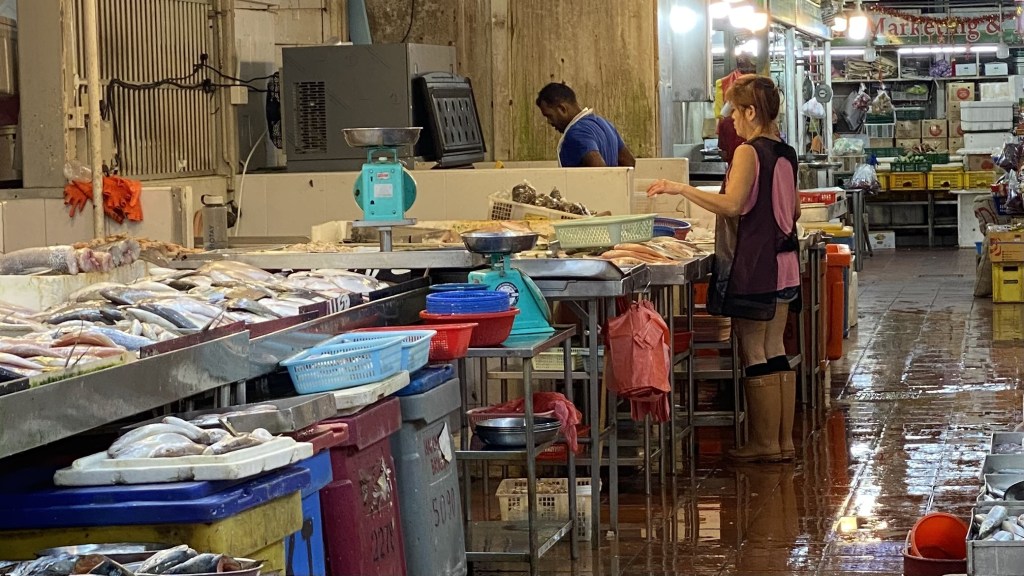
A wet market in Singapore
But one morning at a wet market, something small unsettled me. An aunty selling fish smiled at me and offered me what she was selling. For a moment, I froze. I was a tourist. I couldn’t buy the fish. Where would I even cook it? I politely declined, but the encounter stayed with me. It was a strangely simple interaction, yet it made me question what exactly I was looking for. I had gone to the market because I wanted to see everyday life. But what happens when things that were valuable because they were ordinary become valuable because tourists find them interesting? I did not have an answer. The feeling was difficult to put into words, so for a while it remained neatly stored in the notes app on my phone.
The deeper I went into neighbourhoods that were not designed as tourist destinations, the less certain I became about what I was actually experiencing. I had initially thought that leaving the obvious tourist sites meant I was getting closer to the “real” city. But perhaps the distinction was not that simple. Yes, I was still a tourist.
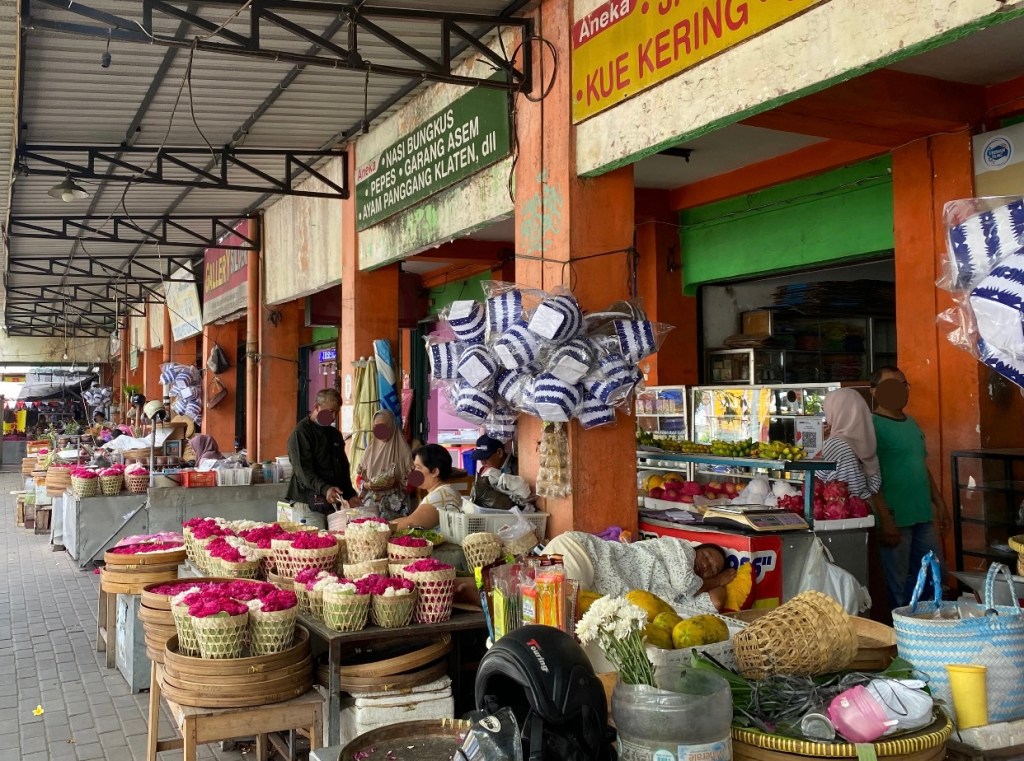
A month later, I returned to my Wednesday morning class in Yogyakarta. The 7 a.m. class was not something I usually looked forward to, but that morning’s discussion gave me a way to understand the discomfort I had carried back from Singapore. We were talking about tourism in Yogyakarta, the city where I currently live. The conversation began to move beyond tourist attractions and towards the things that make a city liveable: water, land, housing, roads, neighbourhoods, and the everyday routines of the people who live there.
One of the studies we discussed was by Mohamad Yusuf and Intan Purwandani on what they call the “ecological politics of water” in Yogyakarta. The study shows that water is not simply something people use for drinking, washing, or other everyday needs. In Javanese society, water can also carry social, cultural, and spiritual meanings. But tourism adds another layer to its use. Citing earlier research, the authors note that each hotel guest can require at least 350 litres of clean water a day, excluding swimming pools. As hotel development continues, groundwater becomes a resource shared and sometimes contested between residents and the tourism industry.
The discussion made the issue feel less abstract. Water is something everyone needs, but not everyone needs it in the same way, and not everyone has the same access to it. What had sounded like a technical question about tourism infrastructure was also a question about how people live in the city.
Then we moved to another study, also by Yusuf, which asks how far tourism development can go before residents begin to feel its costs. The study surveyed 1,687 residents around Malioboro, Kraton, and Prawirotaman. While residents generally recognised the economic benefits of tourism, they also reported concerns about traffic, pressure on recreational resources, and disruptions to everyday life. The study also found limited community participation in tourism development. Using Doxey’s Irritation Index, Yusuf places residents in Yogyakarta at the “irritation” stage, where tourism is no longer experienced only through its benefits, but increasingly through the frustrations that come with its growth.
Listening to the discussion, I started thinking again about the notes I had made after that encounter at the wet market in Singapore. At the time, I could not quite put the feeling into words, so I had left it there, saved on my phone. Now, sitting in that Wednesday morning class, I was beginning to understand what had unsettled me. I had gone to the market because I wanted to see everyday life. But everyday life itself could not simply be separated from tourism. A wet market may not be a tourist attraction. A neighbourhood may not appear on an itinerary. A residential street may have nothing to do with sightseeing. Yet all of them exist within a city whose land, water, infrastructure, businesses, and housing are also shaped by the ways tourism develops.
This made me wonder whether responsibility can rest entirely on tourists. It is easy to tell visitors to be more respectful, support local businesses, or look beyond the attractions. But many of the changes brought by tourism are shaped by decisions that individual visitors cannot make, such as where tourism infrastructure is built, how land and water are managed, and how much development a neighbourhood can accommodate. These are decisions that require more than individual responsibility. They require those who plan and govern the city to think carefully about what kind of development they want to make possible, and for whom. When tourism starts getting in the way of everyday life and residents begin to feel increasingly irritated by it, perhaps it is time to rethink how we build it. Looking at Yogyakarta, tourism cannot be separated from the people who live there, the local economy, the community, and the natural environment. They are all part of the same living system, and changes in one can affect the others.
Perhaps that was what I had been trying to understand in Singapore all along. I thought that by leaving the landmarks behind, I was stepping outside tourism and getting closer to the “real” city. Instead, I was learning that the boundary was not so clear. Tourism does not begin at the entrance to an attraction and end when we leave it. It can reach into the neighbourhoods we walk through and the spaces where ordinary life takes place.
I still think about the aunty at the fish stall. I was looking for something interesting in the ordinary. She was simply selling fish.
A city can be a destination and a home at the same time. The irony is that tourists can always leave when the experience is over, while residents cannot simply escape the changes that tourism brings to the city they call home. In Yogyakarta, for instance, the people living with the effects of tourism are not visitors passing through. They are the ones who stay.
How to cite: Ryhilda, Dhinie A. “Between Singapore and Yogyakarta: A City to Visit, A City to Live In.” Cha: An Asian Literary Journal, 22 Sept. 2026, chajournal.com/2026/09/22/city-to-visit

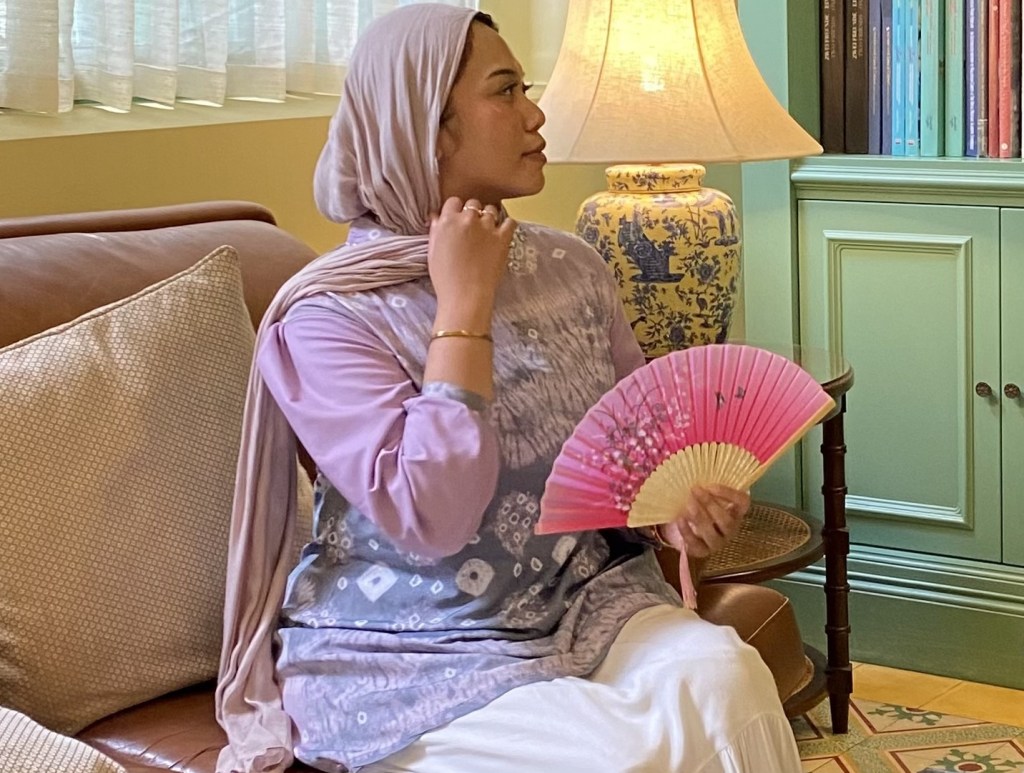

Dhinie A Ryhilda is currently a master’s student studying “humans and their behaviour”, they say (read: anthropology). They are always collecting little observations, writing them down in their notes, and probably overthinking them later while looking for answers. Most of their writing has appeared in academic papers or project-based work as a social researcher. Lately, they have been trying to make room for more personal writing, turning ordinary encounters, fleeting observations, and questions that refuse to leave them alone into stories.
 Cha
Cha 