
[ESSAY] “Between Two Names” by Wayne Mok
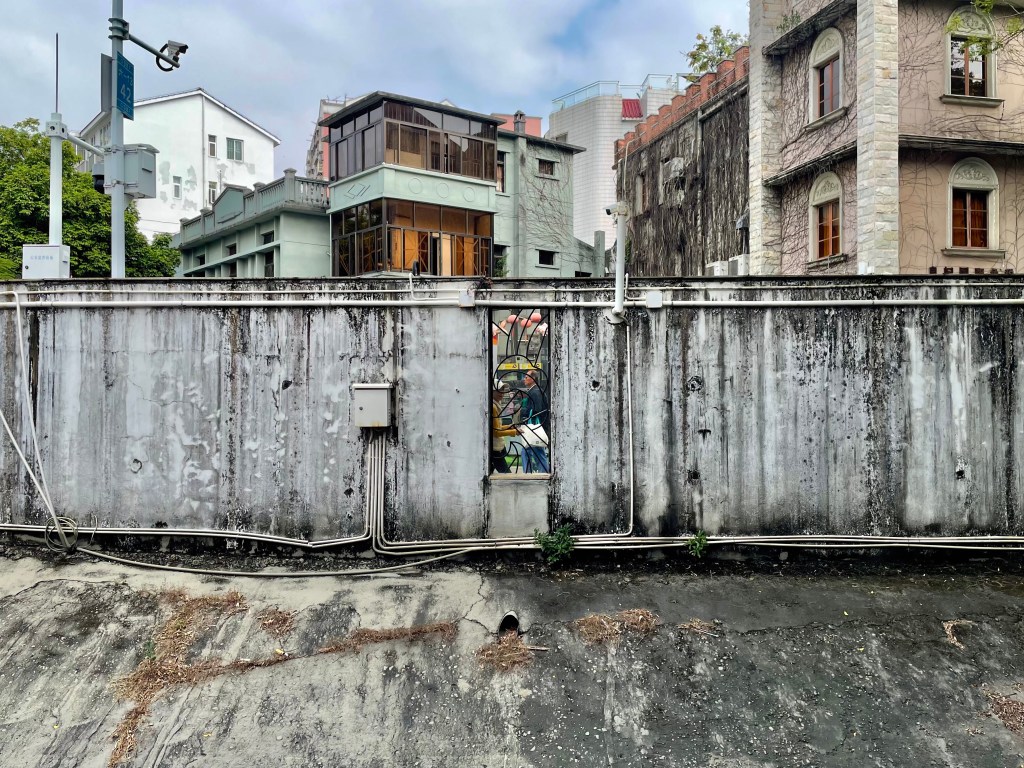

“Wayne could be a Vietnamese name too.”
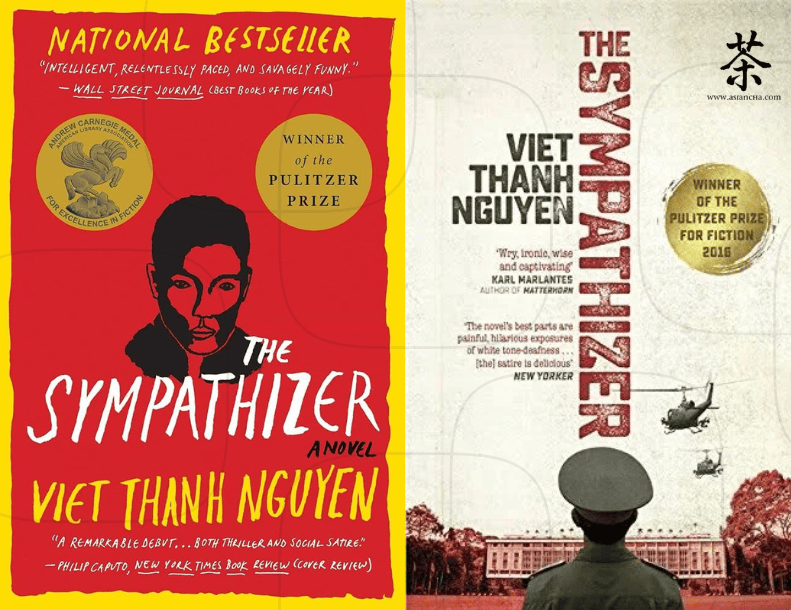
I clutched my copy of Viet Thanh Nguyen’s The Sympathizer and waited while he chatted with the couple ahead. It was my first time attending a book signing, and I had no idea what the proper etiquette was. What do I even say to a Pulitzer Prize winner in the short amount of time it takes to sign a book? The line behind me snaked past the bar towards the bathrooms.
“Wayne?” he asked, attempting to make out my handwriting on the Post-it note.
“That’s right,” I replied.
I passed him the book and watched as he penned my name before signing his underneath. I was expecting him to hand the book back, but he held onto it. “Who gave you your name? Did you choose it?” he asked.
“My parents. After John Wayne,” I said. “Definitely not Bruce Wayne,” I added.
He laughed. “Bruce Wayne would’ve been cooler. Are you Vietnamese?” he asked.
I shook my head. “I’m from Hong Kong.”
“Wayne could be a Vietnamese name too,” he said, handing over the book with a handsome smile.
◉
My name is Wayne, but that is not my only name. My name is also 穎, Chinese, meaning intelligent or outstanding. In Cantonese, its pronunciation differs minutely from the English “Wayne”: Wing.
Born in the 1980s, as the people of Hong Kong looked towards the handover in 1997, to parents who had completed their tertiary education in the States, I was given names designed for the transnational future of my family, Hong Kong, and the world: the English name Wayne, after the quintessential American hero, to traverse the West, and the Chinese name 穎 to navigate the future of Hong Kong, a city of two-character given names waiting to be returned to a country where single-character names were popular at the time.
Looking back, I appreciate how prudent my parents were. In the West, I never needed to explain or spell out my English name, except to non-native English speakers. Unlike other Hong Kongers who had phoneticised Chinese names as part of their legal English names, I never had teachers mispronounce my name when calling the roll, nor did I have issues at immigration with mismatched names or complications with text fields that were not long enough. In the Chinese-speaking world, my name was common and not gender-specific, easily recognised by both Cantonese and Mandarin speakers, and in the Chinese diaspora, my Chinese name was a way to save face, allowing others to pronounce my English name easily without needing to know how to spell it.
◉
That night after the book signing, I couldn’t stop thinking about my names, the decisions behind them, how they had shaped who I was, and the way they sounded, looked, were pronounced and recognised. I thought having two names was a privilege, something that helped me navigate my life in various parts of the world and live a life that was truly transnational, but what are names? Are they purely utilitarian, or do they convey a sense of who we are as embodied persons? Or are they, possibly, even the means through which we are understood and known?
Of course, this question is a question of language and semiotics. Swiss semiotician de Saussure, in his work on meaning-making, speaks of language as the mediator between what we say and what we think; language is the dynamic between sound and thought, relating the signifier and the signified. I had never imagined my name being a Vietnamese name. In my mind, it had always felt like the most English of names, derived from wægn in Old English and reflected in the contemporary usage of the word “wainwright”. But perhaps it could be a Vietnamese name as much as it could be a Chinese name.
◉
The territory of Hong Kong has been the focus of international attention in the two decades since its handover in 1997, especially in the years following the 2014 Occupy Central movement. Ceded to the British Empire by the Qing Dynasty after the First Opium War, Hong Kong became a British colony in 1842. Over the following century, through rapid economic and industrial development fuelled by neoliberal policies and foreign investment, the territory evolved from a small fishing village into one of the Four Asian Tigers, alongside Taiwan, Singapore, and South Korea. The city was handed over to China in 1997, leaving its people to wrestle with its postcolonial legacy as well as its uncertain future, and the question of identity resonates at its core: what is Hong Kong identity? In a city whose history was, and still is, characterised by its highly transient and transnational population, what did it mean to be from Hong Kong?
My parents immigrated to Australia in the late 1980s, only to return to Hong Kong in the early 1990s. As a result of these moves, I began my formal schooling in Australia and continued at an international school in Hong Kong. In a city where the majority of the population spoke Cantonese and read Chinese, I was educated in a school that banned the use of any language except English within its gates, and there, I was called Wayne. It was only at home, where I spoke the tongue of my parents, that I was called Wing, or, more commonly, with the affectionate prefix, Ah Wing. It was at that young age that I understood I would never be able to assimilate into their lives. Having had no education in written Chinese, I could not read the same newspaper as them. At restaurants, they were the ones who translated the menu for me. But it was not only their world. While my classmates in Sunday School recited Bible verses in Cantonese, I sat in the corner with colouring books meant for toddlers who couldn’t read. With my cousins, I was teased for not understanding what they said and left out of the games they played.
When I was ten, my family moved yet again, this time to the States, where I would spend the next ten years of my life, loosely forming an Asian American identity alongside second-generation Asian immigrant children who lived the American dream. Speaking only a few words of their parents’ tongues, they revelled in their shared interest in anime, bubble tea, and video games, following each other to prestigious colleges on their way to jobs in finance and tech. I was one of them, until I was not, returning to Hong Kong after college, where, again, I faced the limitations of my own language, living like a tourist who blended in, deathly afraid of needing to open my mouth and speak with an accent that would betray my not-belonging.
◉
Viet Thanh Nguyen, in his talk that evening, spoke about the burdens of homeland that those of the 1.5 generation must carry, burdens of war, displacement, and trauma that those of the second generation do not. Perhaps it is the burden of having once called a place home. It is that act of leaving, no matter one’s age, that makes one an exile who occupies the place of not-belonging. It is the exile who is defined by what they have left and where they have arrived, occupying a liminal space, vacillating between the two yet not belonging to either. They are the ones who, with the legacy of their past, take on the burdens of the future as outsiders in a host country that they know will never be theirs. Perhaps that is what it means to be from Hong Kong, always seeking, yet never belonging.
I have two names, two languages. The lyricism of the English language, complex and diverse in its phraseology, delights my mind, while the directness of Cantonese warms my heart. How do I choose? At times, it feels like I am forced to carry the legacies of two peoples. But that is too much for one body to carry. Perhaps this is why Xu Xi and other ethnic Chinese Anglophone Hong Kong writers have all had to come to terms with writing in what exiled Jewish writers have called an “executioner’s language” rather than their own “mother tongue”. But what is a mother tongue, except the tongue in which we are formed and through which we live and find our existence?
With the implementation of an effectively trilingual, biliterate language policy since the handover, the sound of home is slowly evolving. The streets that were once alive with the harsh sounds of Cantonese, guttural and phlegmatic, have softened with the addition of the expressive and melodic tones of Putonghua, the national language of China. In this new dynamic, I am not only Wayne or Wing, but I am also Ying, somebody I do not recognise. It is then that I realise home is no longer what I thought it was, or perhaps it never was in the first place. Wayne, Wing. They are my names. I am one, I am the other, I am not one without the other. As Romanian writer Norman Manea suggests, for a writer, language is placenta, it is home, because it is only through language that we know and are known, and it is also in the physicality of language, the turning of the ear, the opening of the mouth, the vibration of the ventricular folds, that we are made to be who we are.
How to cite: Mok, Wayne. “Between Two Names.” Cha: An Asian Literary Journal, 17 Sept. 2026, chajournal.com/2026/09/17/two-names.

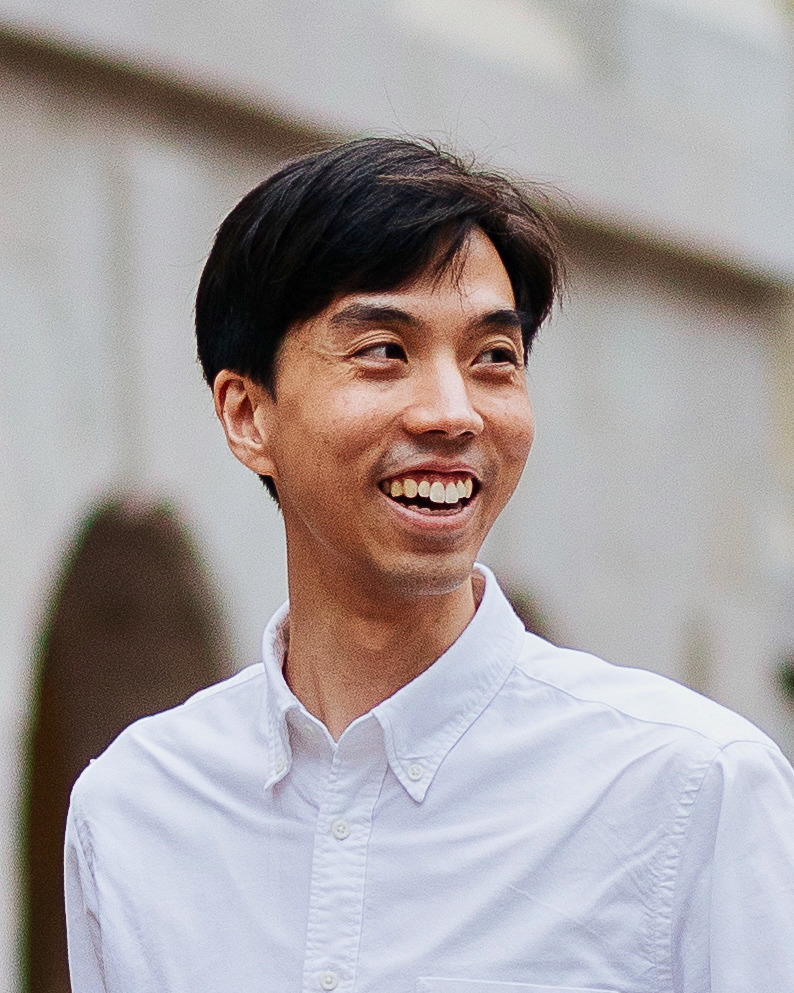
Wayne Mok is originally from Hong Kong and now lives in Sydney, Australia.
 Cha
Cha 