
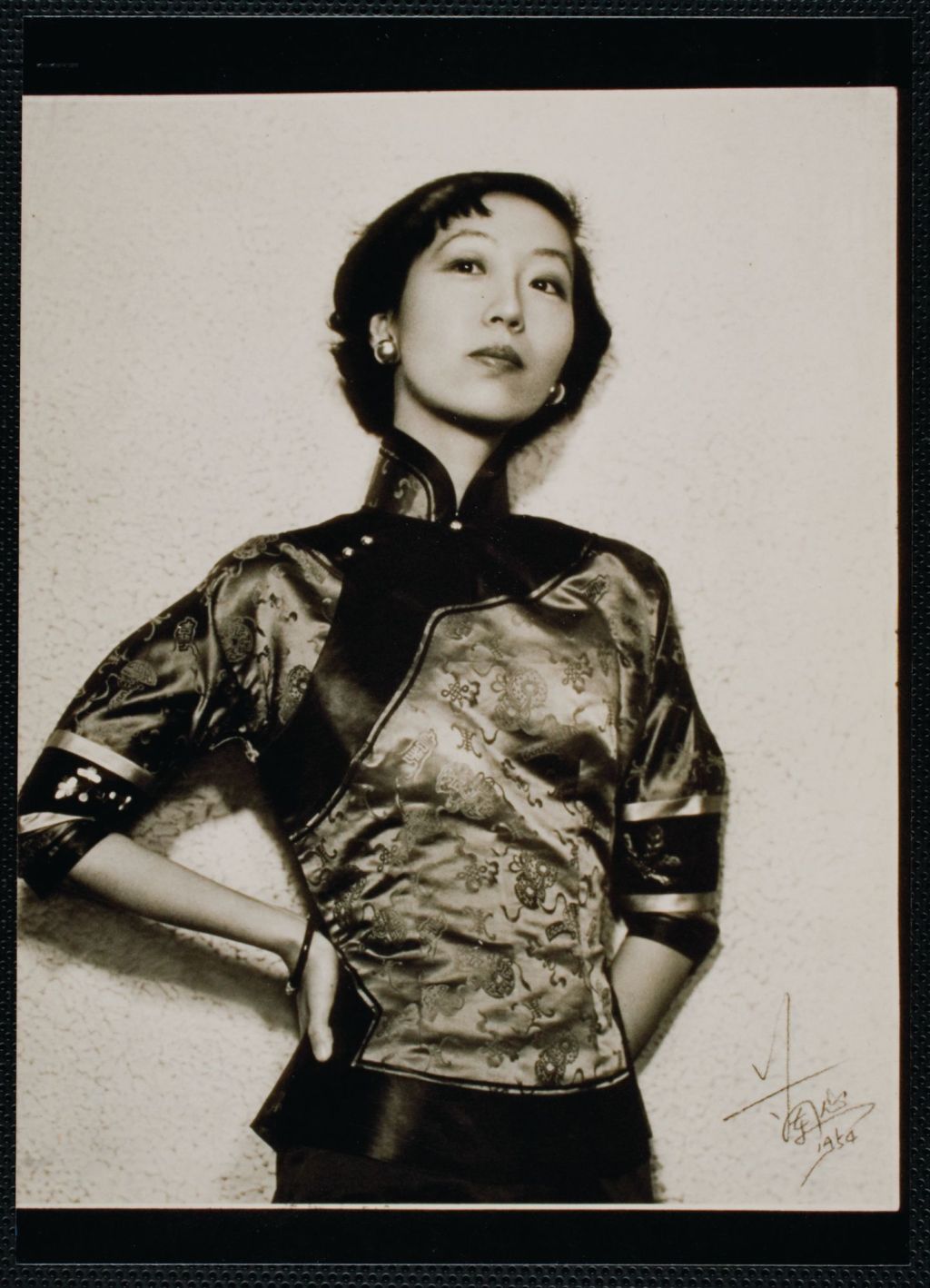
[Artist Statement] “Shanghai Flower: A Tribute to Eileen Chang” by Antzu Huang
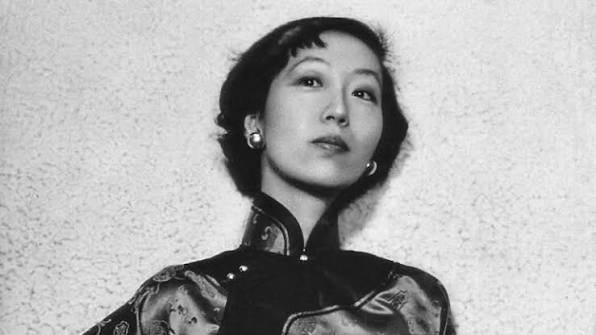
2025 marked the centenary of the legendary author Eileen Chang, one of the great figures of modern Chinese literature. In her honour, I wrote an electronic ballad, “Shanghai Flower”, as a tribute to my idol and a gift to every reader who has ever loved her work.
The song was released in four different versions: the English EDM ballad “Shanghai Flower”; the Chinese EDM ballad “上海之花”; an English ambient remix of “Shanghai Flower”, arranged and produced by an American musician; and, finally, an English ballad demo of “Shanghai Flower”.
I pay tribute to Eileen Chang by writing two original songs, one in English and one in Chinese, which share the same melody but have different lyrics telling the same story. They were arranged and produced by different musicians to give each song its own distinct identity. The concept of translating and rewriting one’s own work in another language, then continually revising it in pursuit of an ideal form, came from Chang. Much like Eileen Chang’s process of reworking and transforming “The Golden Cangue” into The Rouge of the North, and Eighteen Springs into Half a Lifelong Romance, I recreate and reimagine the same song while allowing each version to evolve into a distinct work of poetry and song.
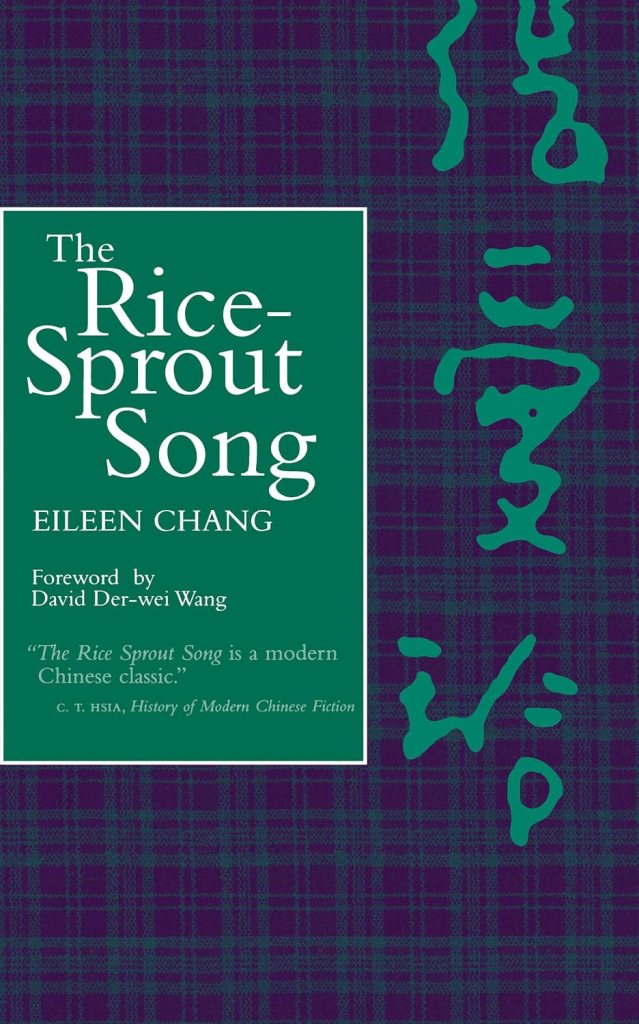
The first book of hers I read, back in primary school, was her novel The Rice-Sprout Song. The prose was beautiful, the plot moving, the imagery sparkling. I had no idea at the time that it was an anti-Communist novel about the chaos of land reform under the Chinese Communist Party. I simply read it as a love story. It was a work from Chang’s middle period, when her style had already been pared back towards simplicity, yet even so, her gift for language kept the book exquisite, its emotions rendered with extraordinary weight and nuance. It remains my favourite of her works.
From there, I moved on to the short stories in Romances. “The Golden Cangue” is, without question, her finest novella, ostensibly based on a family story she had heard second-hand, but one that clearly mirrors aspects of her own family and her own life. “Love in a Fallen City” dazzled me on first reading, though, as the critic Fu Lai publicly stated at the time of its publication, it is a novel built almost entirely from ornate prose and the clever, sharp-witted banter of an American-style slapstick comedy. I never once believed that there was real love between the two protagonists, Fan Liuyuan and Bai Liusu. In the psychologically chilling “Love after Love”, a vain and self-destructive young university student falls for the razzle-dazzle of Hong Kong high society and the charms of a womaniser. In the horrific “The Second Brazier”, a witless bride who understands nothing about sex flees her wedding night, accuses her husband of being a sex maniac, and causes him to end his own life. In the seemingly more bittersweet “Red Rose, White Rose”, a womaniser reflects on the two women in his life, the promiscuous Red Rose and the proper and prim White Rose, and realises that he made the wrong choice. A theme of incestuous longing lies at the centre of the grotesque “Heart Sutra”, in which a mother and daughter battle for the attention of the same man. What Chang wrote, again and again, were horror stories of love.
What Chang depicted was never romance itself, but wounded, distorted love and the tragedy that follows. That is why I chose “wounded romance” as the central metaphor through which to describe her life and literary universe in the lyrics of the poetry song “Shanghai Flower”.
Reading Chang as a teenager felt like reading something profound and intensely melodramatic, full of love and hatred, desire and delusion, and the raw struggle of being human. You cannot understand her stories if you have not first passed through some dark hollow of your own life.
This, to me, is what literature is: an account of how people struggle to survive, and how they hold on to goodness or lose it. It is not the kind of feel-good, moralising prose found in school textbooks.
Readers tend to classify Eileen Chang as a writer of romance, while Lu Xun is regarded as a writer of national consciousness who lambasted the decadence of old China. In my opinion, however, Lu Xun and Eileen Chang were telling stories about the same fundamental theme. Lu Xun used raw, unsparing language to attack the corruption of old China. Chang, although celebrated as a writer of romance, with grandiose depictions of her characters’ clothing and hairpieces that might appear to celebrate old China, was in fact writing horror stories about love. She showed that, within the feudal society of old China, love never truly existed at all. There were only endless struggles for money, status, power, and control.
Eileen Chang is, without doubt, one of the most gifted writers in modern Chinese-language literature. Her prose is lush and sweeping, her metaphors sharp and glittering, and her ability to capture the fleeting, feverish intensity of human emotion rivals the psychological depth of the American master Henry James.
)
These four songs are loosely based on Chang’s novellas “Love after Love” and “Love in a Fallen City”, exploring the theme of falling into a decadent romance against the perilous backdrop of war-torn China. This tribute treats the project not as a curiosity, but as a serious formal experiment. What does it mean to write “the same song twice, or four times”, in two languages that do not map neatly onto one another, while allowing all four versions to remain equally original?
The production itself crosses borders in much the same way as the songwriting does, with electronic and piano arrangements created by four teams of musicians and producers to reflect the different sensibilities of Mandarin and English, layered beneath my bilingual vocals.
The four songs have received endorsements from Crown Publishing’s rights manager, Hong Zhiyu (洪芝郁), who writes, “I am confident that Mr. Huang’s wonderful songs will be embraced by fans of Eileen Chang; we eagerly await their official release.” Moreover, Chen Fang-ming (陳芳明), a professor at National Chengchi University and a leading authority on Eileen Chang, writes, “These are odes that interpret Eileen Chang’s works, perfect musical accompaniment for reading her novels.”
These four versions of “Shanghai Flower” are my homage to a great author who inspired me with her trenchant observations of humanity and her elegant, florid prose. They are dedicated to every fan of Eileen Chang. Once you understand that her work grew out of her own tragedy, you will begin to see the starlight within it.
Eileen Chang EDM Ballad “Shanghai Flower” MV
Eileen Chang EDM Ballad “Shanghai Flower” Ambient Remix MV
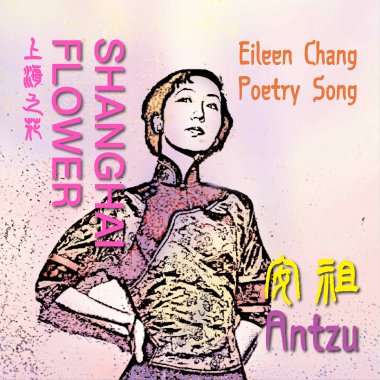
Eileen Chang Poetry Song “Shanghai Flower” (Piano Demo)
張愛玲 上海之花 (Eileen Chang “Shanghai Flower” Chinese Version)
詞/曲/演唱 Lyrics/Compoer/Vocals:黃安祖Antzu
製作人Producer:黃安祖 Antzu,Wai,Graham
English version lyrics: 黃安祖 Antzu
She flows from the river by the name of Shanghai.
She writes tales of romances with petals and spikes.
Sparkles and sorrow intertwined.
She lived out tales of wounded romance. Wounded romance.
Shanghai flower. Shanghai flower.
Extravagant and so sad.
Shanghai flower. Shanghai flower.
She’s destined to blossom and pass.
Shanghai flower. Shanghai flower.
Betrayed by romance.
Shanghai flower. Shanghai flower.
She sees the stars in her eyes.
She paints tales of infatuation and spite.
Human nature twisted and tied.
She looks into the mirror and see herself in light.
She wanders into exile. Into Exile.
Shanghai flower. Shanghai flower.
Extravagant and so sad.
Shanghai flower. Shanghai flower.
She’s destined to blossom and pass.
Shanghai flower. Shanghai flower.
Betrayed by romance.
Shanghai flower. Shanghai flower.
She sees the stars in her eyes.
How to cite: Huang, Andrew. “Shanghai Flower: A Tribute to Eileen Chang.” Cha: An Asian Literary Journal, 5 Sept. 2026. chajournal.com/2026/09/05/shanghai-flower.

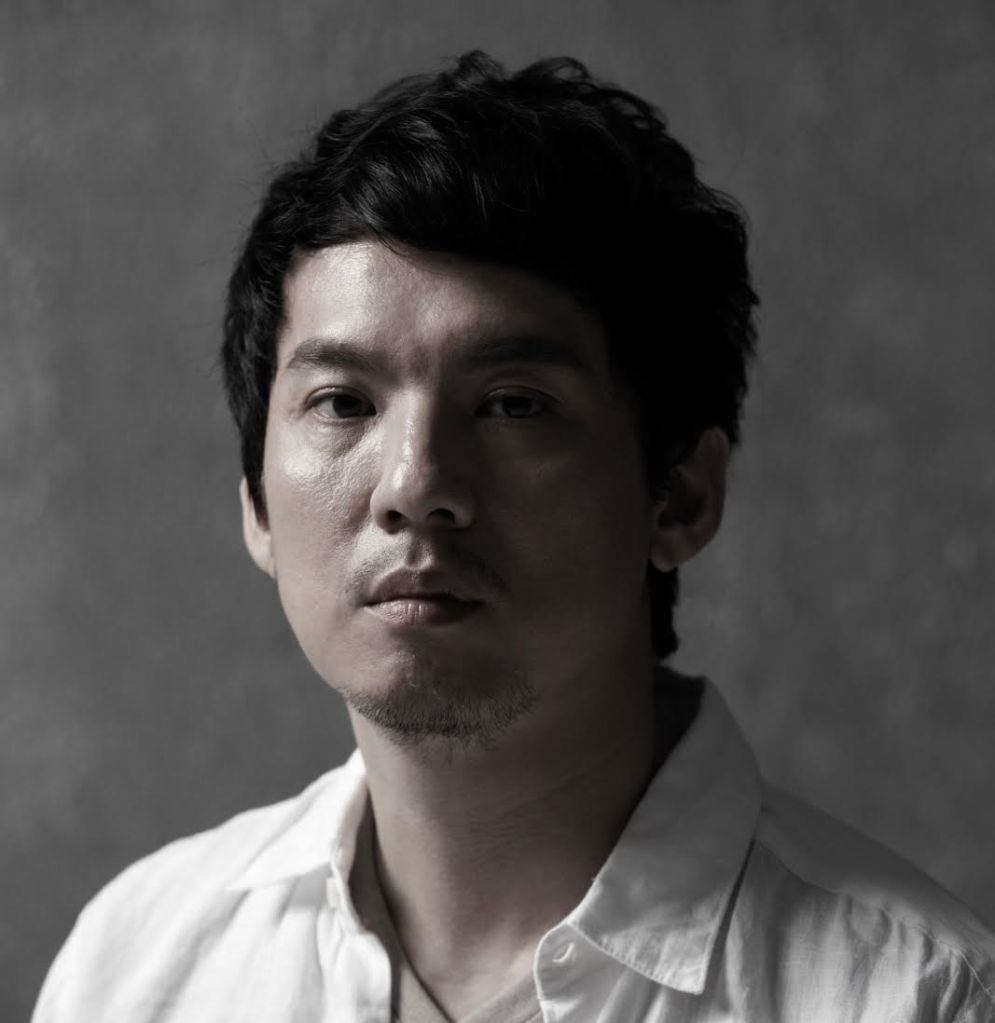
Antzu Huang / Andrew Huang (a.k.a. Troubadour Antzu, 吟唱詩人黃安祖) is a bilingual poet, singer-songwriter, producer, painter, and video director from Taiwan, known for transforming poetry into hybrid art-pop songs. He serves as Deputy Secretary-General of Taiwan’s Chinese Writers and Artists Association and as a Council Member of the Chinese Poetry Society. He has published three bilingual poetry volumes and released nine poetry albums. A recipient of Taiwan’s “National Young Poet Award”, Huang has also twice received the “Chinese Writers and Artists Award”, for “Poetry Song” in 2021 and “Composing” in 2024. Internationally, his work has been recognized by the U.S.-based Global Music Awards (GMA) across 15 rounds, with his current artist biography reporting a total of 22 awards for nine albums, one EP, and eight singles.
 Cha
Cha 