
[ESSAY] “A Look Back on Anime: Memoir, Poetics, and Literary Hedonism” by Franz Austin V. De Mesa


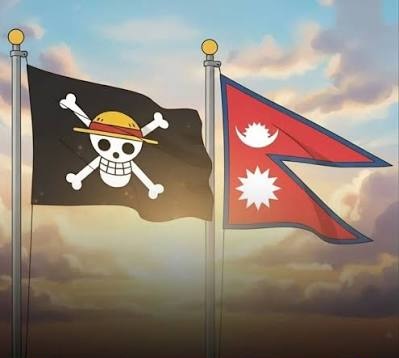
Filipinos wave a One Piece flag as they take part in a protest against corruption at Rizal Park. Photograph: Ezra Acayan/Getty Image
On 21 September 2025, at 9 a.m. in Luneta Park, I stood amidst thousands of others wearing black shirts in protest against the recent flood-control projects scandal. Congested. Constricted. My friends and I had claimed one streetlamp corner for ourselves near the Rizal Monument as waves upon waves of people surged and squeezed into every inch of space they could find, just to get closer to Roxas Boulevard, where the stage was. Everyone was holding picket signs, placards, flags, banners, and myriads of coloured umbrellas, all under the infernal heat of the Philippine sun.
There were a great number of bizarre things I witnessed that day.
There were a great number of bizarre things I witnessed that day: professors, all prim and proper, suddenly partaking in the wilderness of activism, or the stretch of EDSA highway carless, motorless, and filled with people like a mere pedestrian crossing. But none was as out of place as the sight of the iconic straw hat, bright red shirt, and yellow trousers of Monkey D. Luffy from One Piece, all the while raising the banner of the Straw Hat Pirates’ Jolly Roger in the air. Were my eyes deceiving me? Had I been isekai’d into another world, or had a bunch of cosplayers been teleported away from the SMX Convention Center? Why was One Piece at a rally?
Apparently, this was not the first time it had happened. In July and August, cosplayers and the One Piece flag had already been used as symbols of protest in countries such as Nepal, East Timor, and Indonesia. An article from The Guardian also stated that the flag “has become a symbol of defiance and hope for Gen Z protesters across Asia”, a universal icon that transcends the barriers of language and culture among Southeast Asian countries (Ratcliffe).
Anime is no longer seen as an odd, cultish hobby practised only by obsessive geeks.
What a strange time to live in, I thought to myself, when the realms of fiction and reality intersect and blend so seamlessly, each influencing the other. Anime is no longer seen as an odd, cultish hobby practised only by obsessive geeks, otakus, and weeaboos. Now, it has become part of the mainstream, entering the domains of the popular and the political. It has emerged from the underworld, no longer deemed merely another sordid hobby, an “escapist fantasy”, or, gods help us, a fad. Anime has become real.
)

Anyone who has ever met me will know that I love anime. I have loved anime ever since I was a child, watching Shugo Chara! and Ouran High School Host Club with my Ate Cesca in pixelated glory on an ancient piece of technology called a DVD player. This was the early 2000s, the time of My Chemical Romance, The Black Eyed Peas, Sam Raimi’s Spider-Man, and the PlayStation 2. Before the days of Netflix and high-speed digital streaming, the DVD player was the god of entertainment in our household. We respected it. We depended on it. We gave it praise. We would wipe each disc with care, removing every speck of dust, and pray each time the screen went black that everything would work normally. Ate Cesca often travelled hours away with my dad to look for cheap pirated DVDs in Quiapo, like a grand scavenger hunt. Then she would return with a huge batch of Japanese dramas, rom-coms, Ghibli films, and, most especially, anime.
The first anime I binged to completion was Blood+. “You might like this,” Ate Cesca told me, and though I was sceptical at first, from the moment the opening song started playing with its enchanting, hypnotic guitar riff, I knew I was in for something unique. Blood+ was not colourful or comedic like Naruto or Dragon Ball Z or any of the popular shows at the time. It was dark, gritty, and grungy, like an Evanescence song come to life. Set in provincial Okinawa, Blood+ was about a high-school girl who protects her hometown from ghouls, vampires, and other dark forces of the night with a special katana coated in her own vampire-killing blood. And I was hooked. Fifty episodes went by in an instant, and a wave of satisfaction washed over me, but the hunger for those uniquely Japanese stories lingered. It pangs. Without even knowing it, I was completely addicted.
The god of entertainment had possessed me. I watched all manner of anime, no matter the genre or art style, so long as it scratched a specific itch in my brain. From the crime mysteries of Detective Academy Q to the action-packed Bleach to the mouth-watering baking competitions of Yakitate!! Japan. Anime was my lifeblood; anime was my breath. I watched every disc my sister had. Whether it was 30 episodes or 300, I would gobble up every piece of anime I could get my hands on.
)

It seemed that this addiction was something I had partly inherited from my parents. An article from Adobo Magazine stated that although Voltes V was not a hit in its home country of Japan, Filipino children of the 1970s loved it so much that it became the catalyst for anime culture’s emergence in the Philippines (“Tracing the History”).
I would feast on anime chaotically whenever I could.
My mum and dad grew up with Voltes V. Decades before they met, this Kapampangan boy and this Manileña girl were already connected through the analogue television screen as they waited for and watched the scheduled programme together. My mum often told me how she huddled with her cousins, her cousins’ cousins, the neighbour kids, and their cousins as they all stared in awe at the flashing, blinding lights of the sentai anime, with its laser swords and giant robots, while enduring dozens upon dozens of repetitive commercials together as a community. This trait was then passed down to my sister, who was always late to school just to catch the 6 a.m. showing of Kino’s Journey on Animax. She did this religiously for years. As for me, since I was born in the DVD age, I never really had to adhere to a schedule for anime. I would feast on it chaotically whenever I could.

It was during high school that I began to dive deeply into the classic “starter” anime pack: Death Note, Attack on Titan, Black Butler, Tokyo Ghoul, Haikyuu!!, and Kuroko no Basuke. From there, my moods and tastes in anime shifted greatly. There were the tear-jerking, realistic slice-of-life stories: Your Lie in April and Anohana. Opposite them were the comedies: Nichijou, Barakamon, and Daily Lives of High School Boys. And who could forget the anime films? Spirited Away, Grave of the Fireflies, A Silent Voice. I was living in the Golden Age of anime, but there were very few people I could talk to about it. Unlike now, anime back then still had something of a cult following, something weird, childish, or nerdy like comic books, cartoons, and cartomancy. I had to search tirelessly for my crowd, and even then, I would still feel isolated because they would talk about anime I had not watched, and I would talk about anime they had not watched.

It was only in 2016, my last year of junior high school, that anime became a national phenomenon. That year saw the advent of Makoto Shinkai’s Your Name, a box-office hit that won the hearts of Filipinos around the country. People who had been sceptical or hesitant about watching anime suddenly fell in love with it because of that film. Even my mum and dad teared up.
Then, as the years went on, anime evolved alongside the Filipino consciousness. Cosplay conventions became an almost quarterly occurrence, in SMX, in Megamall, in Alabang. Company advertisements would suddenly be littered with anime references and images of kawaii anime girls. All the while, I became interested in more philosophical anime that became the fundamental building blocks of my worldview as an atheist and as a writer: the morally ambiguous time-travelling questions of Steins;Gate, the dystopian criminal society of Psycho-Pass, the judgemental afterlife of Death Parade, the laws of equivalent exchange in Fullmetal Alchemist: Brotherhood, and the Machiavellian, ends-justify-the-means code of Code Geass. Each anime was simply teeming with knowledge, wisdom, and emotion that I could never truly get from books.
)
I suppose this is why I seldom read.
I read because it is my ammunition as a writer. I read because it is a necessary part of the work, but I do not see it as a hobby or a form of leisure. After all, imagination is spellcraft. To translate words into images and scenes in the brain is a demanding process that takes a great deal of time. Even the most pleasurable and smoothly written novel will still require some mental gymnastics, and it is simply not my idea of a fun and engaging time.
That is why I cannot really blame people who say they do not read. Here we are in an era of humanity in which stories take shape in various literary forms: aural, visual, audiovisual, interactive forms! I write fiction because I have only a modicum of talent and means compared with the great film and animation studios of our time. And the painful truth I have learnt as a fictionist is that we tend to use so many words to imitate poorly what anime and film can do in a split second. There is always the jarring sensation of using so much description to capture the instinctual and elusive, whereas anime simply shows it to you, the whole gestalt, in a sequence of gorgeous key frames, expressions, motions, and actions, all in less than a minute. It respects your time more than books do, and it does so with such decadence, such detail, such fluidity, and such force. You simply cannot look away.
Anime respects your attention.

Attention: I think this is what makes anime unique among other forms of entertainment. Anime respects your attention. It gives you a spectacle, raises the stakes, exaggerates, and dramatises into the realm of the impossible. When anime characters cry, they bawl their eyes out. When they feel fear, their eyes turn into small dots. When they feel pain, their mouths gape and let loose a blood-curdling shriek. And when they punch, it hits like a torpedo striking an iceberg. Blood splatters like water from a garden hose under too much pressure. Every frame becomes a painting that your eyes simply cannot unsee. Blink, and you might miss it. Zone out, and you might deprive yourself of witnessing something spectacular, of going “Absolute cinema!” as you raise your hands in the air. You see this more often in the recent plethora of fast-paced, bombastic, high-octane battle shonen like Jujutsu Kaisen and Demon Slayer, yet even romance shows like My Dress-Up Darling and The Fragrant Flower Blooms with Dignity have been oozing with cinematic flair, gorgeous colours, and the most delicate, subtle microexpressions! Every scene feels like a fiesta for the senses and every silence a chokehold of anticipation. Wait for it. Keep your eyes peeled. Anything can happen next!
And there is so much of it! There are tons upon tons of different anime, each with its own distinct style, form, intention, and audience. Not everyone will appreciate the slow burn of Monster, the experimentation and surreality of Neon Genesis Evangelion, or the exaggerated stylisms of Bocchi the Rock!, but every anime will speak to someone, and it may even speak to those who did not like it before but gave it a second chance. One day, an anime will simply say, “Hey! Watch me. Experience me. Either love or hate me, but just give me a chance.”
They never demand, but only tempt. They flirt; they haunt; they seduce and pull you in.
It reminds me a little of what Filipino writer U. Z. Eliserio said about short stories. Unlike the novel, which courts you and asks for your commitment to take it seriously, short stories ask only for a moment of your time. They never demand, but only tempt. They flirt; they haunt; they seduce and pull you in (p. xv). Like short stories, anime lures you in with its interesting premise, its immediacy, its beautiful visuals, and its non-committal attitude towards the viewer. “Just one episode,” it whispers. “It’s only 24 minutes. Barely half your lunch break at work.” Then, the next thing you know, you are spellbound, bewitched at the edge of your seat, sleepless in coffee-scented air at 2 a.m., and thinking of nothing but this anime, this story, and all the emotions it has manipulated you into feeling. And woe to you once you finish it, as it leaves you with a hole that can never be fully filled again. There is even a term for it: post-anime depression, or PADS, a pestilence that can be cured only by discussing it, writing about it, and watching even more anime. As the tragic last line of Cowboy Bebop tells us, “You’re gonna carry that weight.”
Some of the most recent anime I have watched have left me feeling this way: the short-lived yet extremely memorable one-off stories in Natsume’s Book of Friends, the contemplative sombreness of grief in Frieren: Beyond Journey’s End, the heartbreaking search for love in Nana and Call of the Night, and the bleak reality juxtaposed with the “what-could-have-been” fantasy of Cyberpunk: Edgerunners. I have watched so many obscure, underrated anime that everyone else in my life has slept on. I have been hurt, heartbroken, and completely elated by things I have no one to talk to about. Every anime I have watched has transformed me in some way, and it seems that every piece of writing I have produced has been influenced by them. Even this essay was inspired by a recent anime film I watched. And perhaps, in a way, this is how I am dealing with the PADS I felt for that film, along with all the bottled-up emotions I have felt for anime as a whole.
)

Tatsuki Fujimoto’s Look Back was a one-shot manga I read in college, around 2020 or 2021, in preparation for all the surrounding hype about the anime adaptation of Fujimoto’s Chainsaw Man by MAPPA. Back then, I did not really know anything about Tatsuki Fujimoto apart from the fact that he wrote Chainsaw Man. Looking at the covers, posters, and promotional material, Chainsaw Man simply seemed like a particularly gory take on the antihero, another edgy shonen series about a reimagined Edward Scissorhands, this time with chainsaws for limbs and a face, fighting demons and evil spirits lurking in Japan.
So, going into Look Back, I did not really expect anything deep or substantial. I found a digital copy of the full manga online, through a link that has since been removed for copyright reasons. I read it; I finished it in one sitting; I stared long and hard at that last panel as I let the tears flow from my eyes. That was the first time I had ever cried while reading something. I never knew such a beautifully heart-wrenching story could be written by the same guy who wrote about a degenerate chainsaw-wielding boy whose ultimate goal was to touch boobs (which I know is a shallow synopsis of Chainsaw Man, but I was still young back then).

Then, in October 2025, all those emotions suddenly came rushing back as I watched the anime film adaptation of Look Back. To summarise without spoilers, it is a story about Fujino, a fourth-grade student with a natural talent for drawing and storytelling, who one day suddenly finds herself sharing the school paper with Kyomoto, another student whose art is leagues ahead of Fujino’s. Throughout the film’s 58-minute runtime, we delve deeply into Fujino and Kyomoto’s growth as two artists who seem to be the best of friends and the greatest of rivals. We see their collaborations and conflicts, their envy and deep admiration for each other, and, ultimately, their incredible ride-or-die friendship. The film also seems to make a statement about art, answering why artists make art and why they continue to make it despite all the challenges, noise, distractions, and feelings of worthlessness and envy that come with it.
“I don’t even like drawing manga,” Fujino says in the film. “It’s a pain in the butt.” And yet she never lets the stylus go. Despite her words, Fujino continues to pursue the craft.
The last line that made me cry all those years ago, and was now making me cry again.
Like the best anime, Look Back had stunning visuals, fluid motion, incredible voice acting, heartfelt musical scores, and went beyond the confines of what the original manga panels had to offer. It breathed life into the four-panel comic strips that the main character, Fujino, wrote for her school paper, animating them in a childish, wacky art style that was exquisitely juxtaposed with Kyomoto’s more impressionistic environmental background stills. The film nailed all the emotional beats of the original story, all its warmth and coldness, and the profoundly melancholic expressions of Fujino as she looks back on everything that happened: meeting Kyomoto and becoming a mangaka, publishing volume after volume, story after story, and suddenly questioning all of it once tragedy occurs. “What was it all for?” she asks herself.
And that line. That last line. The last line that made me cry all those years ago, and was now making me cry again with Mizuki Yoshida’s amazing performance as Kyomoto’s voice actor, with that provincial twang, that subtle layer of eloquence atop staggering naivety and innocence. That last line that I keep returning to again and again during different parts of my life:
“Then why do you draw, Fujino?”
A new realisation I had after watching the anime adaptation of Look Back, years after my initial encounter with it, was just how much it resembles a poetics essay.
)
In Creative Writing, a poetics essay is a writer’s detailed and expansive explanation of their own writing. It is a literary exploration of why they write, why they continue to write, and whom they are writing for. With this fresh perspective while watching the anime, what I had initially thought was merely a tragic story about two artists suddenly became a reflection of Tatsuki Fujimoto’s own personal politics and beliefs as a mangaka. This is Fujimoto at his most personal, vulnerable, and political. During the climax of Look Back, the tragedy that befalls our characters bears a haunting resemblance to a real-life tragedy that happened just two years before the manga’s publication, and there is little doubt that this tragedy was at the very core of Fujimoto’s masterpiece.
To this day, the 2019 KyoAni studio arson attack remains in the minds and hearts of anime fans everywhere. The Guardian called it “the country’s worst mass-casualty event in decades” (Lum). CNN writes, “The Kyoto attack left fans worldwide grieving the loss of life and a studio that claimed to put its employees first and was a major force in the industry” (Annio and Yeung). Popular anime YouTuber DBZimran made a fairly recent video about the incident, which shows how people are still grieving and processing what happened. Since 1981, Kyoto Animation has been producing high-quality anime works and bringing beloved manga and light novels to life, from Full Metal Panic! to Clannad to Violet Evergarden. It has always championed the adaptation of unique and obscure stories. Then, on 18 July 2019, in KyoAni’s three-storey office building, the lives of more than thirty talented writers, animators, editors, and artists were lost because of one man’s anger at the world. When we heard the details of the news, all I remember asking was, why? Why did this happen?
Fujimoto must have been asking himself the same question. Various video essays and articles have already been made about Look Back and how people see it as Fujimoto’s response to that abominable crime. Suddenly, that fantasy sequence in the middle of the film feels so personal, so heavy, as if Fujimoto wished to rewrite the KyoAni massacre through his story in the same way that Tarantino wrote Once Upon a Time in Hollywood to reimagine the Manson murders (Wu).
As a writer myself, I know painfully well that feeling of uselessness in the face of actual tragedy. What good does my writing even do? What good is poetry or fiction against bullets and tanks, genocide and corruption? Perhaps that is why that last line hits me like a damn truck: Then why do you draw, Fujino? Fujino is literally me. The question lays bare all my insecurities, my guilt, my sense of worthlessness, and my incompetence. But still, I persist in writing. Still, I face the blank screen once again. But why? Why do artists keep making art in spite of everything horrible and sadistic they are accused of, and accuse themselves of?
The answer, as Fujimoto shows us in Look Back, is that art connects us. Art drives us to become better people, both for ourselves and for those around us. Art is the reason two diametrically opposed characters can become friends, the reason two individuals become better artists and stronger versions of themselves, and the reason each lives life to the fullest, pursuing their dreams and passions. How can we endure national tragedies if we do not have art to sustain us, “to comfort the disturbed and disturb the comfortable”, as Cesar Cruz puts it? We need art to shed light on the atrocious and the despicable; we need stories to show us a world where justice and peace can truly exist; we need fantasy to reclaim and reimagine the grief and hatred of the past, turning them into hope and passion for the betterment of the present.
)
My life would not be the way it is now, nor would I have lived this long, if not for anime.
Writer Terry Pratchett once said something profound in Hogfather, and it is probably truer in our society today than ever before: “Humans need fantasy to be human. To be the place where the falling angel meets the rising ape.” For Pratchett, we need to believe the little lies of fantasy, tooth fairies and Hogfathers, as practice for believing the bigger lies of justice, mercy, and duty (p. 422).
Like Pratchett, Fujimoto wants to tell us that these fantastical stories in anime and manga have power. The power to connect people, the power to inspire people, the power to criticise governments and authorities and bring about a kind of social change. And, strangely enough, we have already seen this influence of anime manifested around the world.

In 2019, a schoolteacher in Chile wore a Pikachu costume while taking part in the largest political march in the country’s history. Tía Pikachu, they called her, and she later became part of the assembly that wrote the new Chilean constitution. In 2020, demonstrators in Thailand carried plushies and sang the opening song of the children’s anime Hamtaro to call for the dissolution of parliament (Brinkhof). In 2024, a man stopped a knife attack on a train in Taichung City, Taiwan, and when asked why, he simply answered, “It’s what the hero Himmel would have done” (Cheng). And in 2025, an X user tweeted about the new box-office hit Chainsaw Man film, saying, “thank god I didn’t kill myself at 15, i never would have seen the peak that is the reze movie. thank you fujimoto!”
For some people, anime and manga are far from mere leisure. Anime is protest. Anime is ikigai. Anime is a reason to live.
My life would not be the way it is now, nor would I have lived this long, if not for anime. I know it sounds like an exaggeration, but it is true. Especially now that I hold a corporate job and see my life ahead as nothing but a cynical cycle of corporate career-climbing and consumerism in this corrupt and cruel world, it is becoming increasingly difficult to find reasons to keep living. What is there even to look forward to as each passing day grows busier and busier, and more of my time is consumed by unfulfilling, repetitive tasks? As more of my friends distance themselves and my loved ones die? What is there to keep me sane, to keep me breathing? Am I simply supposed to endure hell, working 24/7 until I retire for what, a pension? Travel and holidays when I am old and sick and feeble? What exactly am I living for?
I do not think I am alone when I say I often think about dying. I think this is a typical Gen Z trait, given our preference for dark humour and our tolerance for violent and depressing news. But if I died tonight, I do not think I would have any qualms about it. I would not have any regrets. Publishing a book is nice to think about, or getting married, or having a family, but really, I do not mind not being able to do any of those things. But then I think to myself, “Oh, but Jujutsu Kaisen is still ongoing. There are still a lot of Re:Zero light novels left to be adapted. I want to see Nana’s ending. I want to see this anime or that anime. I want to know what happens next. I want to see it through. If I die, then I’ll miss out.”
To say that anime has merely influenced my life is a gross misrepresentation of its value to me. The truth is, I live for anime. I would be just another cog in the machine, another brainless, emotionless zombie, if it were not for the pursuit of anime. I do not watch anime to write; I write to watch anime! I write because capitalist society looks down on literary hedonism. I write as a way to feel some sense of productivity and to have an excuse to binge a whole season’s worth of episodes in one night for “research” or “inspiration”. And I have this sudden impulse to write because I want to imitate the works I binge.
)
Anything can happen next.
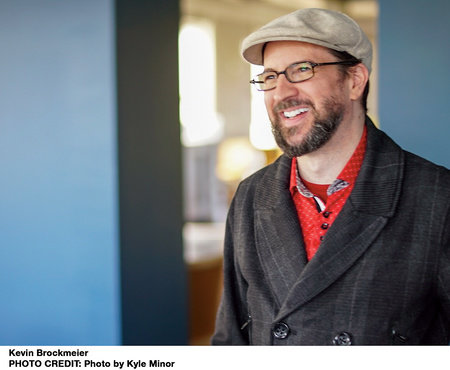
I resonate with Kevin Brockmeier, an American fictionist, who said, “I write out of gratitude for all the books I have loved” (as quoted in Kwe, p. 152), if one were to replace the word “books” with “anime”. After all, where would I be had I not watched and rewatched and loved and reloved every story, every anime I have come to know and have yet to meet? Just when I think I have seen everything, here comes another anime on my doorstep, ready to blow me away. This is the very essence of my life. Not success, not recognition, not even love, but another story. Another binge. Another series to devour and consume and cry over. Anime is an eternal curse that leaves you in search of more, an eternal longing for bigger, better stories, for deeper, bolder characters, and for more intense, more stylised, more ambitious spectacles of animation. I love anime. I love it too much to leave this world behind.
On the first and last pages of the manga Look Back, Fujimoto cleverly places the words “Don’t” and “In Anger” in the corners. These words, combined with the title, spell out “Don’t Look Back in Anger”. Perhaps this is a reminder from the author that, despite all these tragedies, despite all the anger and sorrow and despair of life, there is still something beautiful to look forward to. There are still so many stories out there I have not witnessed, so many anime I have yet to watch, and so many manga that have yet to be adapted.

Fujimoto cleverly places the words “Don’t” and “In Anger” in the corners
When I saw Monkey D. Luffy marching and shouting alongside us in protest that September day, it felt significant. How auspicious it was that no one questioned it, stopped it, or thought it insensitive, but simply embraced the absurd power it held until it became something completely normal. The Straw Hat Pirates’ Jolly Roger dissolved unremarkably into the background, along with the cosplayers who blended in with the thousands upon thousands of people in Luneta, on EDSA, and all over the world. Who would ever have expected that the selfish love I held for anime as a young, sheltered boy would someday become a universal, sociopolitical force of nature? It is completely maddening. What is next, Detective Conan investigating Philippine corruption? Ryomen Sukuna becoming a symbol of vigilante justice? Or perhaps Yagami Light will finally become God of the New World? The possibilities are electrifyingly endless!
As I look back on everything I have witnessed throughout my life regarding anime and its unpredictable power, I realise that perhaps this is the way the world tells me to hold on. Through these exaggerations, these cuts and frames and sketches, through the mixture of art and music and subtitles and voice acting, this is the way the world whispers, “Don’t die yet. There’s still so much left to see. There’s still so much potential to anticipate with each passing day.”
Wait for it. Keep your eyes peeled. Anything can happen next.
Bibliography
▚ Annio, Francesca, and Jessie Yeung. “Japan Court Sentences Arsonist to Death for Deadly Attack on Kyoto Animation Studio.” CNN, 25 January 2024.
▚ Brinkhof, Tim. “How Japanese Anime Became a Global Protest Language.” New Lines Magazine, 16 September 2025.
▚ Cheng, Ian. “It’s What the Hero Himmel Would’ve Done: Taiwanese Otaku Who Stopped Knife Attack on Train.” The Straits Times, 26 June 2024.
▚ DBZimran. “The HORRIFIC Kyoto Animation Studio Fire.” YouTube, 3 July 2025.
▚ Eliserio, U. Z. “Introduksiyon.” Tatlong Larawan at Iba Pang Maikling Kuwento. UP Press, 2022, pp. xv-xxiv.
▚ Fujimoto, Tatsuki. Look Back. Shonen Jump+, 2021.
▚ “‘One Piece’ Manga Flag Used as Symbol of Resistance in Asia.” Philippine News Agency, 29 September 2025.
▚ Kwe, Francezca. “True Lies: An Essay on Writing Fiction.” Tomas, 2021, pp. 144-167.
▚ Pratchett, Terry. Hogfather. HarperPrism, 1998.
▚ Ratcliffe, Rebecca. “A Symbol of Liberation: How the One Piece Manga Flag Became the Symbol of Asia’s Gen Z Protest Movement.” The Guardian, 24 September 2025.
▚ Wu, Xianwei. “Tatsuki Fujimoto’s Look Back One-Shot: Insensitive or Cathartic?” CBR, 23 June 2021.
How to cite: De Mesa, Franz Austin V. “A Look Back on Anime: Memoir, Poetics, and Literary Hedonism.” Cha: An Asian Literary Journal, 26 Aug. 2026. chajournal.com/2026/08/26/anime.


Franz Austin V. De Mesa is a Filipino writer from Imus, Cavite, with an unnatural appetite for anime, video games, and speculative fiction. Some of his short stories have been published in PhilStar Life, Kalazine, and Philippine Genre Stories. He won first place in the essay category at the 41st Gawad Ustetika Awards (2026) for his essay, “Why We Travel to the Underworld: Theoretical Underpinnings of a Dark Fantasy Writer”. During his undergraduate studies, he received the Best Thesis Award in BA Creative Writing in 2023 and graduated summa cum laude. He is currently pursuing an MA in Creative Writing at the University of Santo Tomas, where he is working on a collection of dark-fantasy stories for his thesis. He is also the current Director for Nonfiction of the Thomasian Writers Guild and Editor-in-Chief of its forthcoming folio issue, Bulebard: Mythopoeia.