
茶 FIRST IMPRESSIONS
茶 REVIEW OF BOOKS & FILMS
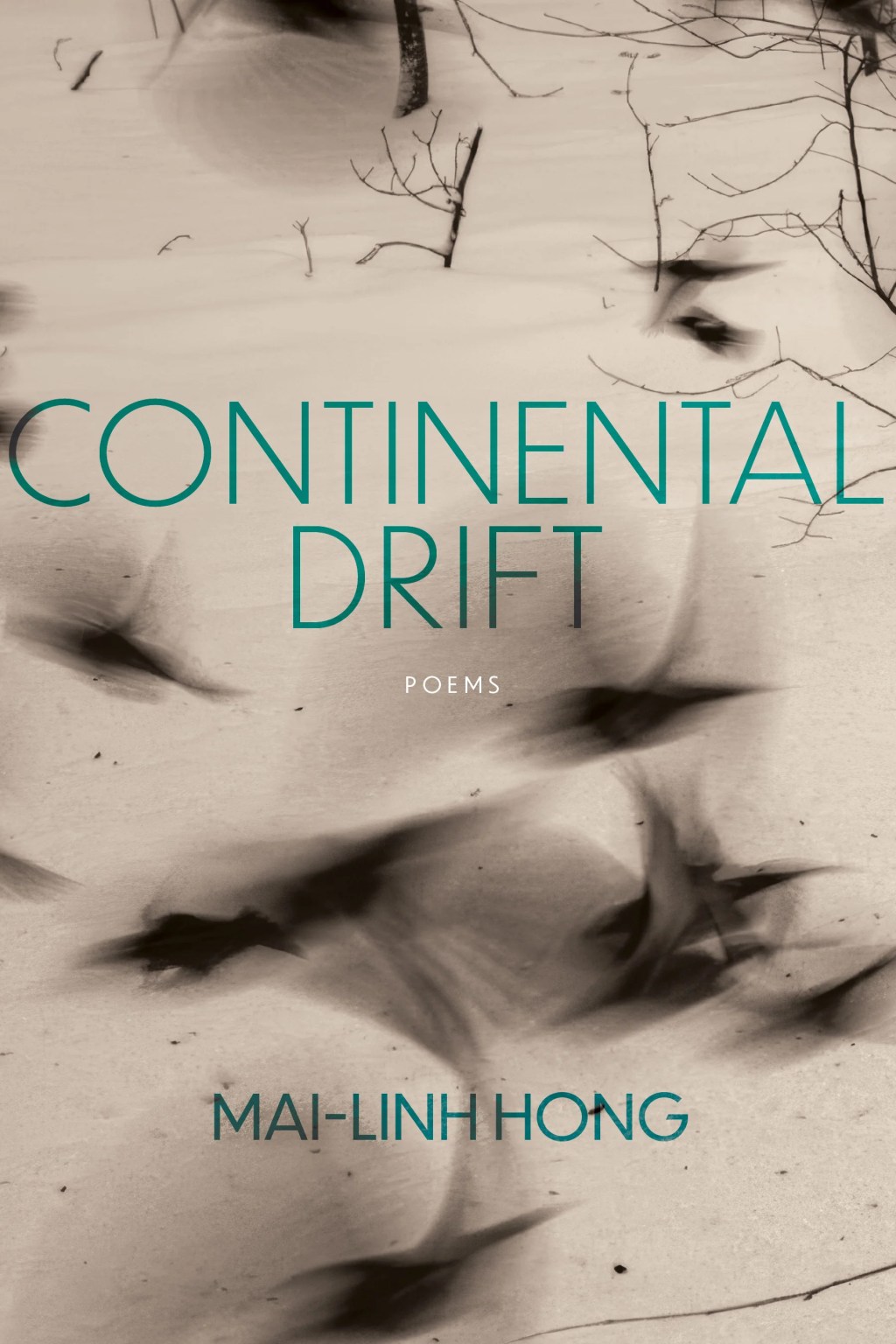
[REVIEW] “Never Finish Making Refuge: Mai-Linh Hong’s Continental Drift” by Anna Nguyen

Click HERE to read all entries
on Continental Drift.
Mai-Linh Hong. Continental Drift, Trio House Press, 2026. 108 pgs.

There is a kind of diasporic narrative I yearn to write. I am not sure exactly what this narrative, or this poetry, might be, but I remain on the lookout for it. I read and write in search of it; when I cannot find it, I repeat the two-step process.
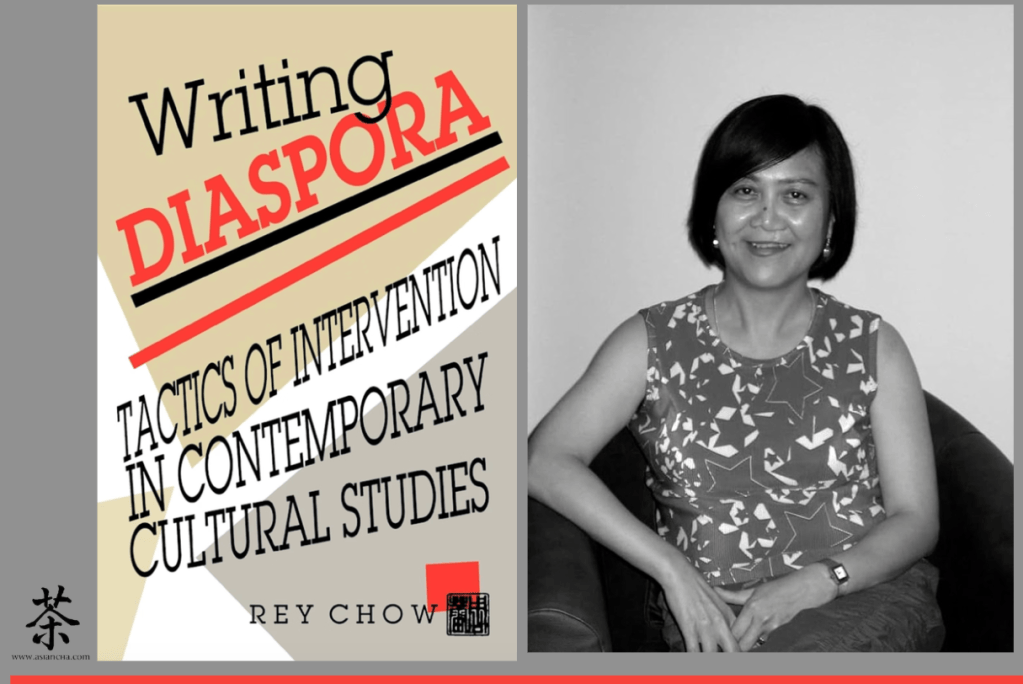
A certain fear has remained with me since I read Rey Chow’s extraordinary Writing Diaspora: Tactics of Intervention in Contemporary Cultural Studies. Her introduction opens with the sinologist Stephen Owen, who complained that “contemporary Chinese writers are sacrificing their national cultural heritage for a ‘translation’ that commodifies experiences of victimization” (1993, p. 1). Owen criticises these writers for valuing translatability, which he characterises as a kind of performed ethnicity. Chow, however, reads this charge as a demand for absolute authenticity, a word that makes writers shudder. Moreover, Owen’s demand is rooted in a geographical captivity that continues to divide the West from the non-Western Other.
Of the many insights offered by Chow’s rigorous analysis, I am most appreciative of her insistence that diaspora should not be read merely through the frameworks of race, gender, and class. Nationhood must also be considered as intertwined with literary discourse (p. 103). Although naming difference has been used as a means of granting the marginalised some access to the centre, Chow, like others, argues that “these categories of difference are often used in such a way as a way to stabilize, rather than challenge, a preestablished method of examining ‘cultural diversity’” (p. 108).
The question of writing from one’s experiential knowledge then arises. Writing about Chinese intellectuals, Chow asks what counts as knowledge and, perhaps more importantly, “how is knowledge related to the state-as-government?” (p. 81).
)
I had Chow’s questions in mind while reading Mai-Linh Hong’s collection Continental Drift, which deftly captures the diasporic displacement caused by nations’ singular, normative visions of democracy and their enactment through conquest. The collection is arranged into sections titled “in the drift”, “in the fault”, “in estuary”, and “in the after”. Its poems refuse linearity. After all, linearity assumes a form of progress that erases and censures more than it recognises. State violence never ends, and the poems drift and move. Their speaker is never restful or at ease, whether in remembrance or in landscapes that have also been marked by the cruelty of the state. The epigraph, taken from Brenda Hillman’s “A Geology” in Cascadia, astutely summarises what we can expect from the collection: “A geology breaks in half to grow.”
We see this in the first poem, “Delta”, whose opening lines cleave together the geographical significance of the landscape and the relationality of the environment: “A landscape is mined in more ways than one / of emerald strangeness / What unfurled in silence may soon rupture / a birth place” (2026, p. 3). The quietly powerful language continues: “Rivers deposit ancestors into our dreams / as faces of light… Sitting up in bed, elders reach out and call me cháu / though I do not know them” (p. 3).
The attempt at place-making comes in waves. In the following poem, “What we lost may come ashore”, the speaker notes different forms of loss through the language of water, which acquires its own spatial character through stories of war refugees and forced migrants seeking new places to call home. The speaker says, “I had you to lose / at sea, though you refused / to lose me” and “I did not know… my mother was lonely / in America until I saw her / in Vietnam: laughing…” (p. 7). The speaker has lost her mother twice, first “abstractly, like losing a right not needed / yet”, and then “in flesh / and there was no more blank loss” (p. 7). References to water continue: “a continent sprang / back, its rock shore / jettisoned where brine swirls / dark and clean and furious. / How we hunger at doorways / that open to water / without boats” (p. 7).
The concept of time, both ecological and colonial, also shapes the poem’s drifting in and out of Vietnam and its resettlement in Virginia. The final lines of “What we lost may come ashore” ripple with beauty: “This is how / lost time surfaces: strange / shapes rudder through night / of my tinkering mind / to flounder in shallows / come morning” (p. 8).
In the prose-poem letter “Dear Dì My”, the speaker’s aunt has died. “When you died, Vietnam fell away from me” (p. 21), the speaker writes. The speaker recalls being a student in Charlottesville, Virginia, studying in the university library when something resembling an earthquake occurred, “though we lived in a place that did not have earthquakes, as far as we knew” (p. 21). The speaker learns that “The Piedmont region of Virginia has faults few knew about arrayed across what geologists call the Virginia Seismic Zone. We had been living on borrowed tectonic time, studying for exams, shopping for groceries, hugging friends hello, then goodbye, believing earthquakes happen over there, in California or Haiti or Turney, never here. Meanwhile, tension grew among the plates we could not see” (p. 21). That “borrowed tectonic time” was felt along the East Coast, although the epicentre lay near the residents of the Piedmont region.
)
After the earthquake, the speaker’s sense of place changes. “Now I know the mountains, the valley, the grass lawns, and the roads are all fractured deep down… There is a map beneath the map we know” (p. 22). The letter writer acknowledges that the earthquake is a metaphor, a beautiful one, for the aunt’s death. Dì My’s death causes the narrator’s life to shift: “Everything I could see was where it had been, but the gravity had changed” (p. 22).
Hong’s poems maintain a balance between empathetic tenderness and political urgency. The final poem, “Fifty Years Later”, commemorates 30 April 2025, the fiftieth anniversary of the fall of Saigon. At a shop, the speaker buys doughnuts from a Cambodian woman on a winter-nipped autumn morning. As the speaker pays for the treats, they ask, “where did the fall go?” of “the woman who twinkles / like my mother” (p. 77). The word “fall” then becomes an exploration of the fallen capital: “It had been / almost fifty years since we / lost one war, years / before I was born in the city that fell, / but I remember / because we lost another / every year since” (p. 77).
The speaker admonishes NPR for reminding “us / Kissinger is alive / (until finally, thank God, one year he isn’t) / because men who break / us never die. / But neither do we” (p. 78). At another moment, the speaker calls the nation to account: “for some reader / in some future almost- / free almost-democracy / while our nation / bends to men who want & want & take & take, / who banish ghosts / because they know they’d never / survive ghosts like ours” (p. 81).
This final poem is long and unfolds across numerous stanzas and pages, giving its language room to move. It is not only about the fall of Saigon, but also invokes continuing political upheavals and genocides: “Each time a nước / shatters, its shards come to life / as refugees / who look like us / but not, hoping in boats / likes ours but not” (p. 79).
What I seek in poetry, both my own and that of others, can be found in Hong’s provocation: “We / never finish / making refuge” (p. 81). In the penultimate stanza, there is an imperative:
Make refuge
make refuge
make refuge
make refuge
make refuge
make refuge—
see how it
dismantles (p. 84).
How to cite: Nguyen, Anna. “Never Finish Making Refuge: Mai-Linh Hong’s Continental Drift.” Cha: An Asian Literary Journal, 3 Aug. 2026, chajournal.com/2026/08/03/drift.

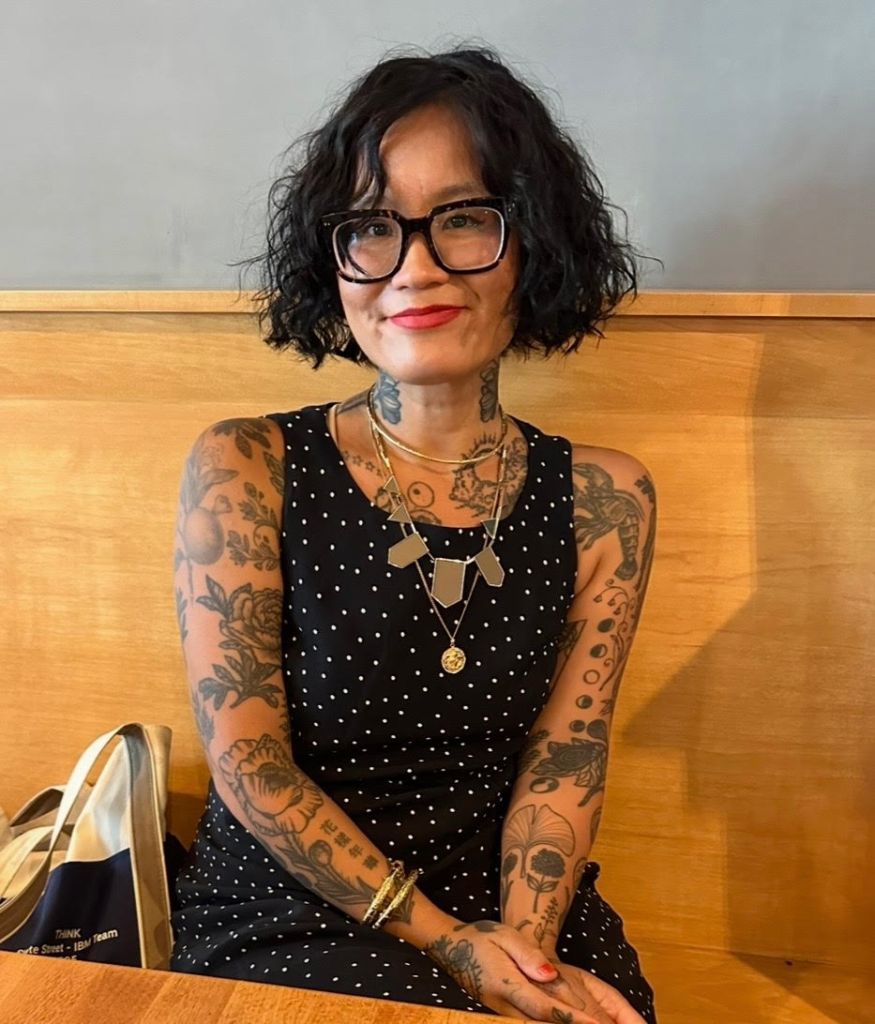
Anna Nguyen left her PhD programme and reworked her dissertation into a work of creative non-fiction while studying for an MFA at Stonecoast, University of Southern Maine. Her work brings together literary analysis, science and technology studies, and social theory to examine institutions, language, expertise, citation practices, and food. She is currently undertaking a second MFA in poetry at New England College, where she also teaches first-year composition. She is the host of the podcast Critical Literary Consumption. [All contributions by Anna Nguyen.]
 Cha
Cha 