
茶 FIRST IMPRESSIONS
茶 REVIEW OF BOOKS & FILMS
[REVIEW] “Crabs in a Glass Ceiling Barrel: Kelly Yang’s The Take” by Raymond Pun
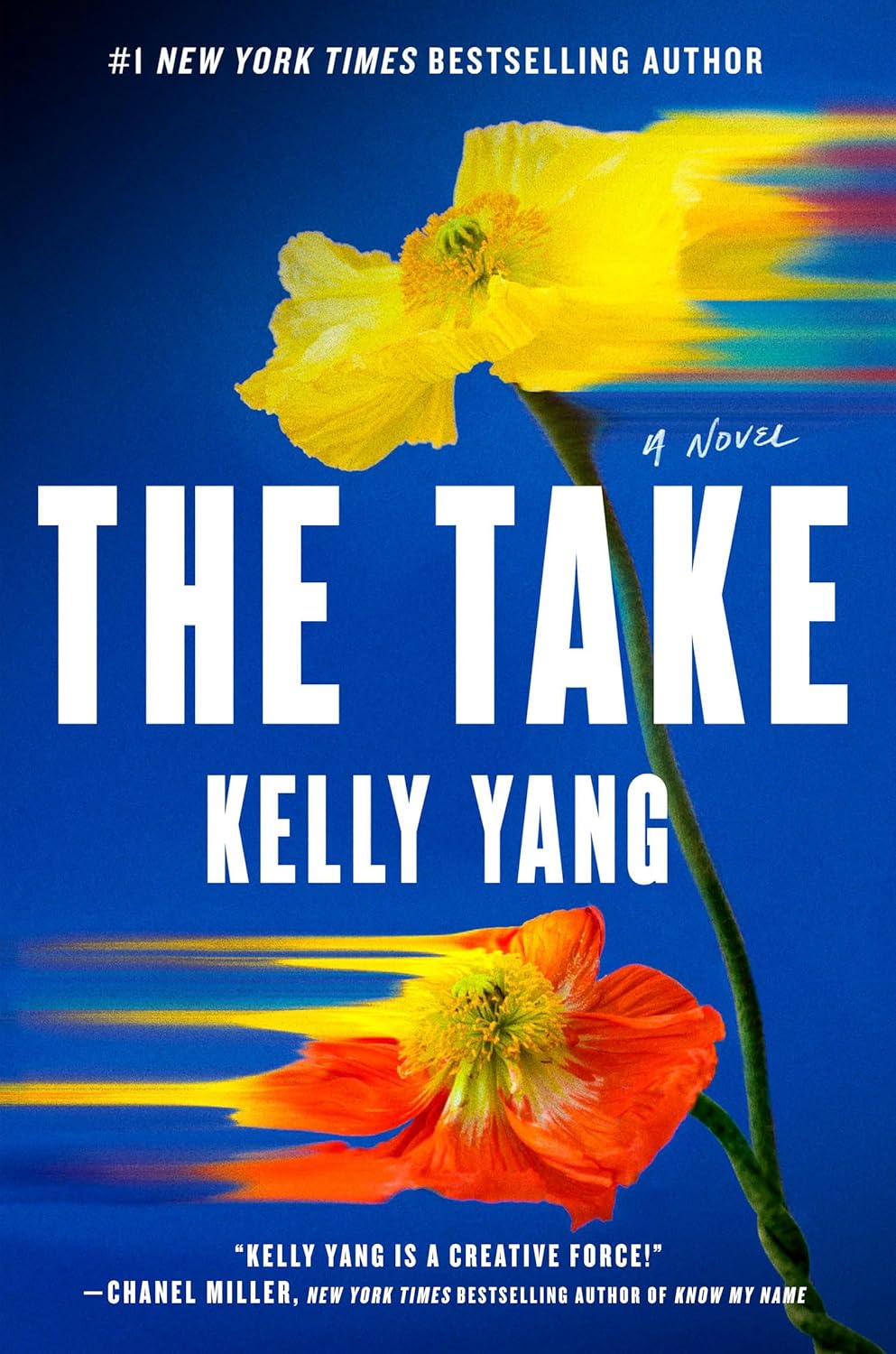
Kelly Yang. The Take, Penguin Random House, 2026. 368 pgs.
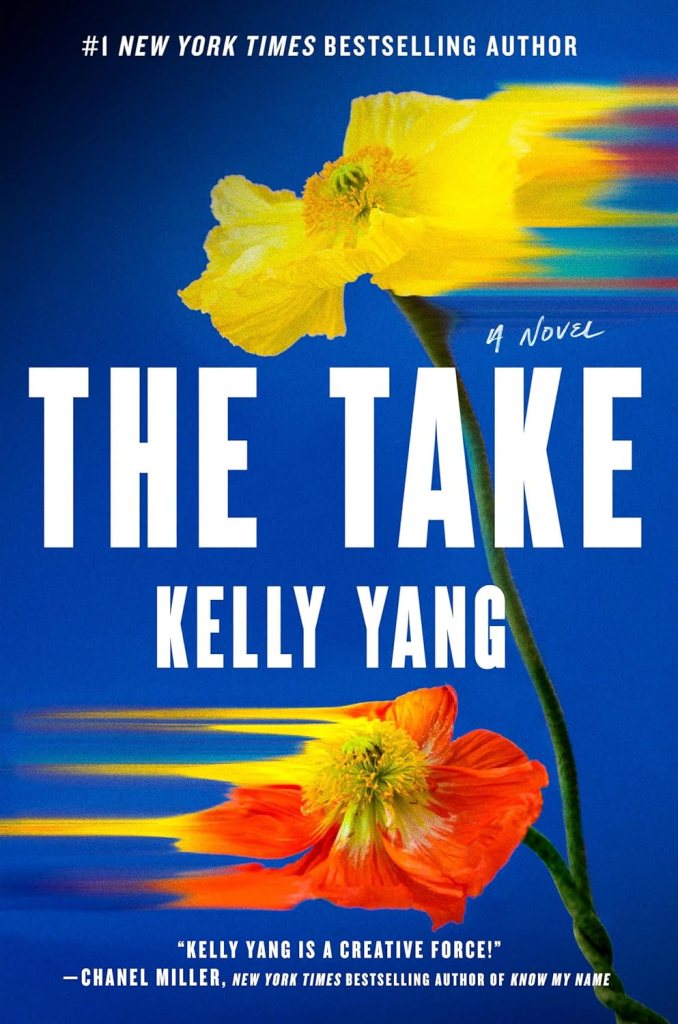
The Take, the first adult fiction by Kelly Yang, the critically acclaimed author of Front Desk (2018) and other notable young adult titles, is a story about two very different women striving to make a difference in their lives. Interwoven by their ambitions and creativity, one seeks to make it as a writer whilst the other desires to be youthful again. Much like recent psychological horror films such as The Substance (2024) and Slanted (2025), in which the protagonists crave to be someone else, their fear of ageing or failure drives them to take desperate, life-altering measures.
In this novel, the two protagonists meet in a very ordinary way through an advertisement in which Ingrid Parker, a white woman experienced in the entertainment industry, seeks a young assistant willing to undergo an innovative blood transfusion within the biohacking sphere. Maggie, a Chinese American writer struggling in her Master of Fine Arts writing programme, agrees to this transfusion because, like many graduate students, she is living in debt and looking for a breakthrough in her writing career. What initially appears to be a symbiotic opportunity for both proves to be a complex and parasitic relationship, layered in trauma, guilt, shame, and spite.
Each chapter adopts the perspectives of its characters in turn, showing how their relationships with family and friends, the workplace, and their surroundings shape their realities and choices. Eventually, their paths cross, and readers gain a clearer sense of their interpersonal dynamics. Maggie, hoping to earn money to pay off her debt and support her working-class Chinese immigrant parents in Las Vegas, finds a “lucky break” in Ingrid’s request to exchange blood and receive mentorship. Unfortunately, the transfusion has deep consequences for both characters, producing particularly adverse side effects for Maggie, who grows physically older over time, whilst Ingrid enjoys the benefits of renewed youth in Los Angeles, where she is based.
)
… crabs in a barrel will pull down other crabs that attempt to escape.
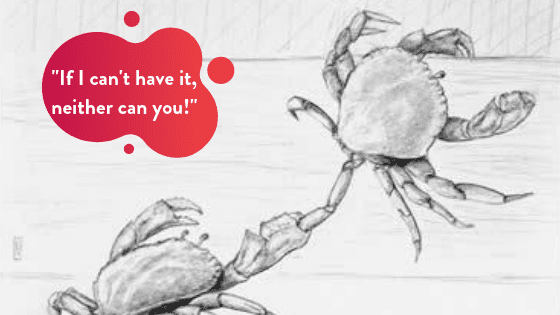
When reading this novel, the “crabs in a barrel mentality” (conceptualised by the writer Walter Lionel George in his 1911 novel A Bed of Roses) comes to mind as a metaphor for human competition: crabs in a barrel will pull down other crabs that attempt to escape; that is, when an individual within a group is undermined, sabotaged, or “pulled down” by others, that individual cannot succeed.
The conflict between the two protagonists is neither obvious nor natural; it is a gradual process. Their relationship becomes strained over time through misguidance and negligence. Ingrid faces her own crises at work, where she encounters the glass ceiling and is constantly ignored or slighted by her male colleagues and executives. Yet Ingrid has also repeatedly tokenised and disregarded the grievances of women of colour in the entertainment industry. In a sense, Ingrid is the crab pulling others down, whether they are fellow actresses or Maggie herself. Ingrid’s relationship with her husband and adult children is equally tense for many reasons; she carefully navigates her life by deploying different tactics and connections, yet continues to endure dismissiveness. It is not always clear whether Ingrid recognises that her own actions and lack of accountability cause harm to others, but her ambition drives her to make decisions that benefit solely herself.
Themes that arise from this novel include gatekeeping, mentorship, and authenticity. Maggie, aspiring to be a writer, experiences these issues both directly and indirectly through Ingrid. Her ambition to be a successful writer is driven by her pursuit of prosperity for her family and friends. Maggie is a giver, generously offering to others even when her gifts are declined or rejected. Ingrid, on the other hand, is a taker; she will claim what she believes belongs to her.
The experiences of Chinese Americans and immigrants in the United States are not overtly apparent in the narrative, yet readers may deduce how Maggie’s parents communicate their cultural values through dialogue; her parents are fixed upon Maggie’s career goals and health but do not fully understand her working situation. There is a degree of cultural misunderstanding or miscommunication between Maggie and her parents. Maggie experiences some form of mentorship from Ingrid but frequently feels she cannot be authentic, afraid of how Ingrid might perceive her and the cultural differences between them. Ingrid, at times, subtly “gatekeeps” or withholds opportunities and information from Maggie and others as a means of demonstrating power and access.
Perhaps this is a survival tactic or a trauma response rooted in the cut-throat entertainment industry, or perhaps it is simply a desire to control others. Coming from Las Vegas, Maggie had no connection to the glamorous world of Hollywood before meeting Ingrid.
)
Since the 1870s, Chinese immigrants from Guangdong had settled in Las Vegas, Nevada, to work in mining camps and on railroad construction, as well as to build new lives. There are countless stories and a rich history of Chinese immigrants in Las Vegas, where labourers harboured dreams, hopes, and aspirations for a better future for themselves and their families in Nevada and in China. Often working long, gruelling, and intensive hours whilst being exploited, discriminated against, and rendered invisible, these labourers have also greatly contributed to and shaped America’s future. Even thirty years after the Chinatown Massacre in Los Angeles on 24 October 1871, one of the largest mass lynchings in American history, in which 19 Chinese residents died, another violent incident took place in Nevada, approximately 400 miles away.
On 15 September 1903, in Tonopah, Nevada (a town three hours north of Las Vegas), the Tonopah Riot took place, during which white labour union members demanded that Chinese immigrants leave the town. Chinese immigrants lacked legal protection and experienced severe discrimination at the time; this anti-Chinese incident lasted one day, during which Chong Bing Long, a laundry owner, died in a mob attack.
Whilst the novel does not reference these historical moments, it reminded me of Maggie’s own plight in trying to create a better future for herself and her family in Las Vegas, yet frequently obstructed by those like Ingrid, who possessed the resources to determine others’ fates. This psychological violence and abuse unfold in different ways throughout the plot, as Ingrid comes to perceive Maggie as a threat.
What if both were men, or one was a man and the other a woman?
The novel is centred largely on the dynamics between its two characters, yet there were moments when I found myself wondering how the plot might diverge if both were women of colour, specifically two Asian Americans, or if the dynamic were reversed or mixed in terms of gender; how would other cultural elements and external factors shape the interpersonal conflicts? Would the crab-in-a-barrel metaphor still hold? How would Maggie perceive an older Asian American woman who is well connected economically and culturally? What if both were men, or one was a man and the other a woman? Would the dynamics and issues still play out similarly? The novel raises many fascinating scenarios for readers to consider.
Readers with an interest in psychological thrillers, and in the themes of mentorship and gatekeeping, may find Kelly Yang’s The Take to be an engaging and enjoyable work of fiction that draws on contemporary issues of work, power dynamics, and the evolving relationship between two women from different cultural and economic backgrounds. Neither character is defined solely by her relationship with others; each is driven by her own ambitions and aspirations, and by what it truly takes to succeed on her own terms.
How to cite: Pun, Raymond. “Crabs in a Glass Ceiling Barrel: Kelly Yang’s The Take.” Cha: An Asian Literary Journal, 19 May 2026, chajournal.com/2026/05/19/the-take.



Raymond Pun is an education librarian based in the United States. His writing and reviews have appeared in The Huffington Post, The Immigration and Ethnic History Society’s Blog, The Library Journal, and Booklist. Pun holds an Ed.D. from Fresno State, a Master of Library Science from CUNY Queens College, and an MA in East Asian Studies and a BA in History from St. John’s University. [All contributions by Raymond Pun.]
 Cha
Cha 