
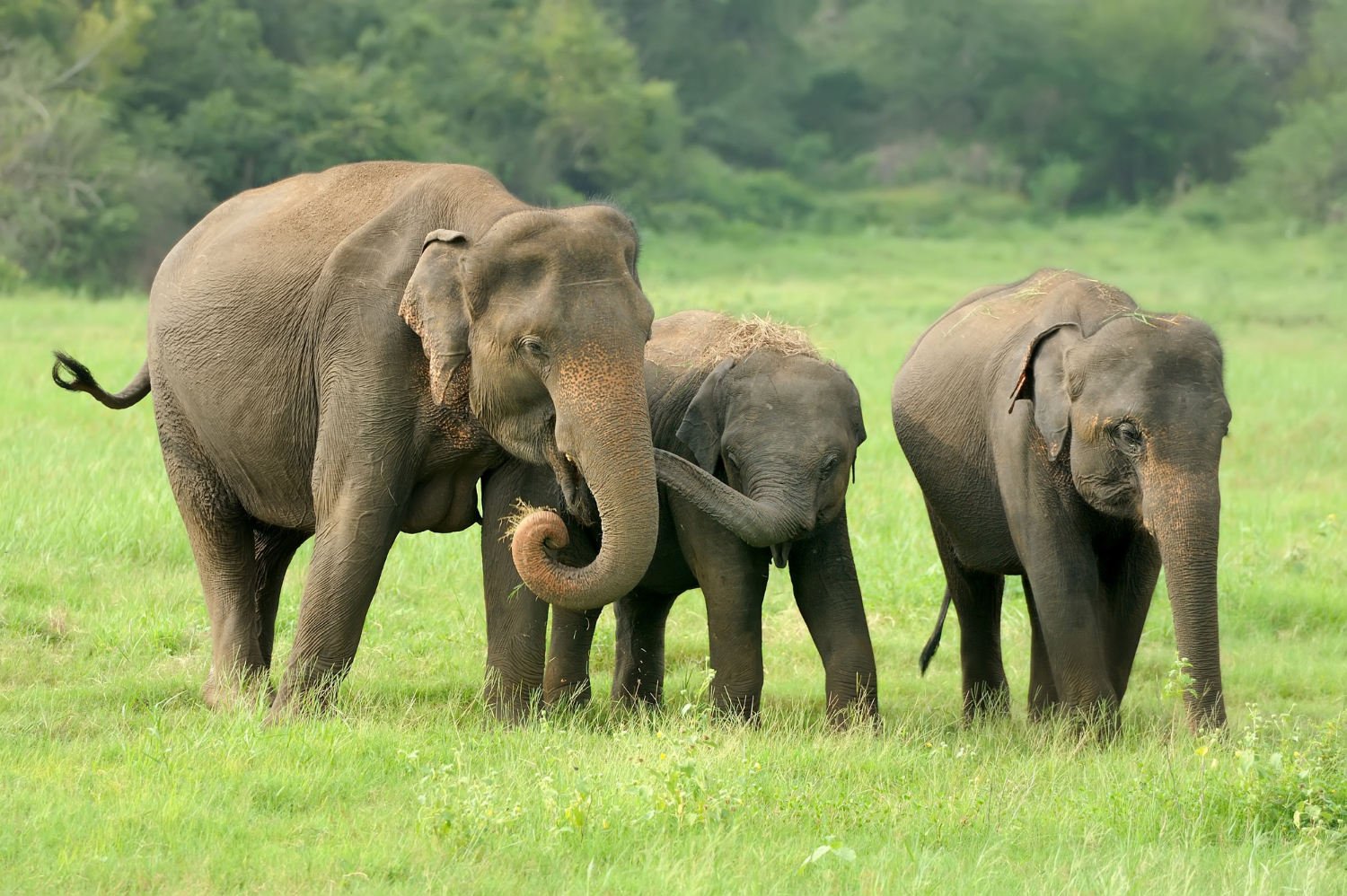
[ESSAY] “Of Elephants and Peoples” by Aishwarya Narayanan

Periyar Tiger Reserve is located in the South-Western Ghats of India, administratively falling under the Idukki, Kottayam, and Pathanamthitta districts of Kerala. Encompassing 925 kilometres of protected wilderness, the Reserve is home to a wide range of flora and fauna. Its populations of the royal Bengal tiger and majestic Asian elephant are major crowd-pullers, drawing in hordes of curious tourists year after year.

The reserve
Enchanted by the possibility of finally sighting an elephant in the wild, I found myself in Kumily, a small town in Thekkady in Kerala, which serves as the gateway to the vast expanses of the Periyar and the many promises that it holds. Despite several valiant attempts to catch sight of these majestic creatures, the elephants remained elusive, shrouded in an air of mystery, commanding respect and reverence. What I discovered instead was a masterclass in conservation, sustainability, and community, concepts which I have extensively worked on and studied, but scarcely understood.
For somebody who professes to work in the realm of sustainable trade, I was caught woefully unprepared for how the idea of sustainability plays out in real life. Working in the law-and-policy space, my understanding of sustainability is centred around hyper-regulation and industrial policy, negotiation strategies, trade-and-sustainable-development chapters in free trade agreements, and the occasional discussion around trade-restrictive environmental measures at multilateral fora. This ostensibly lofty background notwithstanding, I was in for something of a reality check.
Sustainability is not merely a concept or a buzzword, it is a way of life.
In the great tropical forests of the Periyar and the small adjoining town of Kumily, sustainability is not merely a concept or a buzzword, it is a way of life. The area itself is heavily dependent on tourism, catching the eye of many a straggler drawn in by the promise of a rare opportunity to spot a wild elephant, and many others whose tour operators include Thekkady as a brief stop in their widely popular Kerala itineraries. Despite increasing tourist footfall over the decades, the area has managed to retain much of its local, rustic charm, and tourism remains strictly managed.
)

Periyar Lake
As far as sustainable tourism goes, the Reserve leads by example. Unlike most national parks and wildlife sanctuaries in India, Periyar does not offer jeep safaris or any road-based transport options for wildlife spotting. Boat safaris on the Periyar Lake are the most popular means of observation, with the likelihood of spotting herds of wild animals grazing along the banks particularly high during early mornings and late afternoons.
For more adventurous travellers, the Reserve offers a host of eco-tourism activities, ranging from nature walks to border trekking, bamboo rafting, and buggy rides. The most intrepid may venture out on a night safari. Each of these activities is tightly regulated, with group sizes not exceeding fifteen persons, limited departure times, higher price points, and clearly marked trails. Despite the wide variety on offer, visitor engagement remains restricted to the buffer zone of the forest. Groups are closely supervised, accompanied by experienced guides and forest rangers, with armed guards positioned at the rear to protect both man and wildlife.

Herd of wild bison crossing the trail
Walking trails are decided impromptu based on animal movement. My own trek through the forest was spontaneously re-routed when our group encountered a herd of wild bison heading towards the grasslands during lunch hour. Meals are limited to fruit and simple sandwiches served in re-usable steel boxes. Due care is taken to ensure that wildlife is not disturbed by human interference. During dry periods, dried-up grass hills are deliberately burnt as a precautionary measure to prevent wildfires.
Beyond the fringes of the Reserve, human civilisation flourishes. Populations living near its borders have historically depended on the forest both directly and indirectly. Village eco-development initiatives have become a key pillar in supporting livelihoods in these areas. Participatory forest management and climate-resilient farming strategies form the cornerstone of efforts to promote economic growth while enabling long-term conservation.

The outskirts of the Reserve
Just beyond the borders of the Reserve lies a large tribal area. Here, traditions are fostered and cultures preserved. Visitors are offered the opportunity to witness tribal arts and dance forms through carefully curated activities.
There is a sustained effort to involve communities in conservation and sustainability initiatives. Forest guides and park rangers are locally hired. Hailing from nearby communities, they are intimately familiar with the terrain, cognisant of both the hidden treasures and the lurking dangers of the forest.
Beyond the protected forest area, the town of Kumily offers numerous examples of community-driven, holistic attempts at sustainability. Despite a marked increase in tourism, the town retains a distinctly local character. While a few major brands are present, the accommodation landscape is overwhelmingly dominated by family-run homestays, often tracing their roots in the region across generations. Practices governing these homestays are co-ordinated through committees with active participation from owners and operators.

A scrumptious breakfast
Government initiatives incentivise local development, offering commissions and financial rewards for promoting eco-tourism activities. Despite catering to visitors from across the world, the food remains authentic. While restaurants attempt to accommodate a wide range of Indian and global palates, local cuisine is consciously prioritised. Opportunities to sample Kerala staples such as puttu, appam, parotta, and a wide variety of meat and seafood dishes abound. It is rare to encounter the infamous butter chicken on a menu.
The town appears to have withstood the passage of time, firmly anchored against the tides of change.
Fresh tropical fruit is plentiful. The sheer variety of bananas, displayed in myriad colours and sizes, both fascinates and delights the weary onlooker. Local culture, tradition, and identity have been zealously preserved through sustained effort. The town appears to have withstood the passage of time, firmly anchored against the tides of change.
)
Examples of sustainable living are evident in everyday life. Plastic waste is carefully segregated, with distinctive bottle-shaped collection points scattered across the town. On a quiet evening walk through a nearby village, I observed an elderly man gently admonishing a young schoolgirl for incorrectly disposing of a toffee wrapper.
The town’s ecosystem is largely run by locals. They operate the shops, manage the tours, and staff the restaurants. Languages are actively taught and preserved through deliberate instruction. School curricula include Malayalam, Hindi, and English from an early age. While residents are fluent in English and Hindi, there remains a strong attachment to the mother tongue. Given its proximity to the Tamil Nadu border, Tamil is also readily accepted in daily life.
At the heart of all this lies a strong sense of community. The locals are open and welcoming. Familiar haunts are long-standing and frequently visited. Despite my limited Tamil and near-absent Malayalam, I was received with warmth and genuine affection.

A comfortable and welcoming space
A small café with polished wooden panelling and an excellent selection of freshly brewed tea stands just outside the entrance to the Reserve. It serves as a gathering place for the town’s youth, and I soon found myself a regular there. A restaurant where I dined twice remembered my name and my order. A fruit vendor near the bus stop insisted on offering me the finest produce and the sweetest coconut water. The homestay where I stayed was cosy and comfortable, its owners treating me as one of their own, the atmosphere warm and inclusive.
A call for a state-wide strike against recently enacted labour codes, widely perceived as unfavourable to workers, was met with complete compliance. The town appeared to unite in collective action. Having witnessed many protests before, this level of cohesion came as a profound surprise.

The forest is alive and breathing
A deep sense of ownership permeates the community, accompanied by trust and accountability. This extends to every aspect of life; the forest, the town, the people, and their shared identity and heritage. Here, the forest is not a passive ecological entity. It is alive, its presence felt in every rustle of the wind. For the townsfolk, it is integral to existence, revered and respected, protective and sustaining.
A lone sambar deer occasionally wanders from the forest into the town. The locals observe it with quiet delight.
A lone sambar deer occasionally wanders from the forest into the town. The locals observe it with quiet delight, maintaining a respectful distance. It roams through the streets at night before returning to the forest, its curiosity gently satisfied.
While I came to Periyar in search of elephants, what I found instead was a profound sense of belonging. As someone accustomed to the pace and anonymity of life in Delhi, this experience challenged my assumptions. It was only during my flight home that I realised I had not once thought of packaged snacks, a small but telling indicator of the completeness of life in Kumily.
)
Now, returning to Delhi and preparing for the India-AI Impact Summit, I am deeply grateful for this brief interlude of peace and reflection. The irony is difficult to ignore. While we gather in conference halls to debate the environmental impact of large-scale data centres, there exists a world where sustainability is not an abstract ideal, but a lived reality.
It may be time for lawyers, academics, and policy-makers to reconnect with this reality, beyond the confines of formal conventions and declarations.

My only elephant encounter…
As for my unsuccessful attempt to sight elephants, logic suggests that Bandipur or Kaziranga might offer better chances. Yet, I find myself drawn back to Kumily, with its welcoming people, close-knit communities, and unwavering commitment to sustainability, all set against the enduring mystique of the Periyar forests.
Until next time.
How to cite: Narayanan, Aishwarya. “Of Elephants and Peoples.” Cha: An Asian Literary Journal, 18 May 2026, chajournal.com/2026/05/18/elephants-peoples.


Aishwarya Narayanan is a lawyer, scholar, and policy analyst based in New Delhi, India. She has worked extensively on trade and economic policy, digital governance, and sustainable development. Her principal interest lies in examining the intersection of trade, sustainability, and development, and the ways in which these ideals are reflected in the real world. Driven by a passion for travel, food, and writing, she aspires to build bridges between people and places, one experience at a time.